October 13, 2026 · Texas Autopsy Services
Death of an Expert Witness and What It Means for a Case
Learn what happens after the death of an expert witness, from preserving prior opinions and autopsy records to replacing the expert and keeping your case
On this page
- When an Expert Witness Dies Mid-Case
- What an Expert Witness Actually Carries Into a Case
- The Legal Rules That Decide What Survives
- Preserving the Deceased Expert's Work Product
- How a Replacement Forensic Expert Reviews the Case
- Limits on Substitution That Most Explanations Miss
- Second Opinions Texas Rules and Next Steps
When a key forensic expert dies while a case is still open, the loss reaches far beyond the next court date. The report may still exist, the transcript may still exist, and the opposing side may still have questions that were never answered live. Families and attorneys are then left with the same immediate concerns: what survives, what can be replaced, and what has to be rebuilt from the ground up.
At Texas Autopsy Services, we see this problem most clearly in death investigations, where medical findings and legal proof depend on each other. A deceased expert can no longer explain an autopsy note, defend a conclusion, or clarify what a photograph was meant to show. That is why preserving the underlying record matters just as much as preserving the opinion itself.
- Prior testimony may survive, but only if the court's evidentiary rules allow it.
- A replacement expert can help, but the new review has to be independent and well documented.
- The record matters, including reports, data, photographs, slides, and chain-of-custody documentation.
- Texas law affects timing, especially when burial or cremation is involved.
- A second opinion can be safer than adopting a prior report without review.
When an Expert Witness Dies Mid-Case
A litigation team may be working through depositions, record review, and expert deadlines when the lead forensic or medical expert dies. The report is already in the file, but the person who wrote it is gone, and everyone involved has to decide what happens next. That moment is especially hard for families, because the case suddenly feels both personal and procedural.
The first three questions
Three questions usually come up right away. First, do the expert's existing opinions still matter? Second, can another qualified witness step in? Third, how does the case move forward without losing the medical foundation that was already built?
Those questions don't have simple answers. The outcome depends on the court's evidence rules, the quality of the surviving record, and how much of the original analysis can be verified from documents, photos, lab work, and other preserved materials. A death investigation can't be reconstructed from memory alone, especially when the missing expert is the only person who explained the work in court or in deposition.
Practical rule: the stronger the paper trail, the easier it is to evaluate what the deceased expert actually supported and what a successor can responsibly say.
For families and counsel, that means the immediate task isn't to argue the substance of the case. It's to secure the record before it fragments. If the preserved file is complete, a court may still be able to use prior testimony or permit a successor review. If the file is thin, the case becomes far more difficult to defend or challenge with confidence.
What an Expert Witness Actually Carries Into a Case
An expert witness is not just a scheduled speaker. In forensic work, the expert brings specialized training, interpretation of medical and scientific findings, and a method for turning records into opinions that a court can evaluate. That is true whether the witness is helping an attorney, a family, or a public authority understand cause of death and manner of death.
The historical record shows why this role matters. A review in the National Institutes of Health's PubMed Central archive describes Lord Mansfield's 1782 decision in Folkes v. Chadd as a major milestone because it recognized that an expert could give opinion evidence based on facts supplied by other witnesses. Earlier homicide trials show how limited medical proof once was, with many cases lacking medical witnesses or autopsy reports entirely. By the nineteenth century, reliance on medical evidence had increased substantially, and autopsy reports appeared in a growing share of trials PubMed Central review.

Why losing the expert is more than losing a witness slot
A deceased expert takes more than a date on the docket. The loss includes interpretation, continuity, and the ability to connect medical observations across time. If the expert reviewed an autopsy, toxicology, histology, or scene evidence, that analysis may have shaped the entire legal theory.
For attorneys who need to evaluate expert qualifications, our expert witness qualifications overview helps frame how forensic expertise is assessed in practice. For families, the important point is simpler. The expert may have held the only structured explanation of what the medical evidence meant, and that explanation can't be recreated by title alone.
An expert's value is the bridge between raw evidence and a reasoned conclusion.
That bridge is what can disappear when the expert dies. The records may still speak, but only if they're complete enough for another qualified reviewer to read them correctly.
The Legal Rules That Decide What Survives
The legal system separates two issues that people often blend together. One issue is whether the deceased expert's prior testimony can still be used. The other is whether someone else can take over the expert role and offer a fresh opinion. Those are not the same thing.
Depositions, admissibility, and Rule 702
Under Federal Rule of Civil Procedure 32(a)(4), a deposition may be used for any purpose if the court finds that the witness is dead, so long as the deposition otherwise meets admissibility requirements and the opposing party had notice and an opportunity to participate Federal Rule of Civil Procedure 32. That rule helps preserve testimony, but it doesn't erase other evidence limits. The statement still has to satisfy relevance, foundation, and any applicable hearsay or reliability rules.
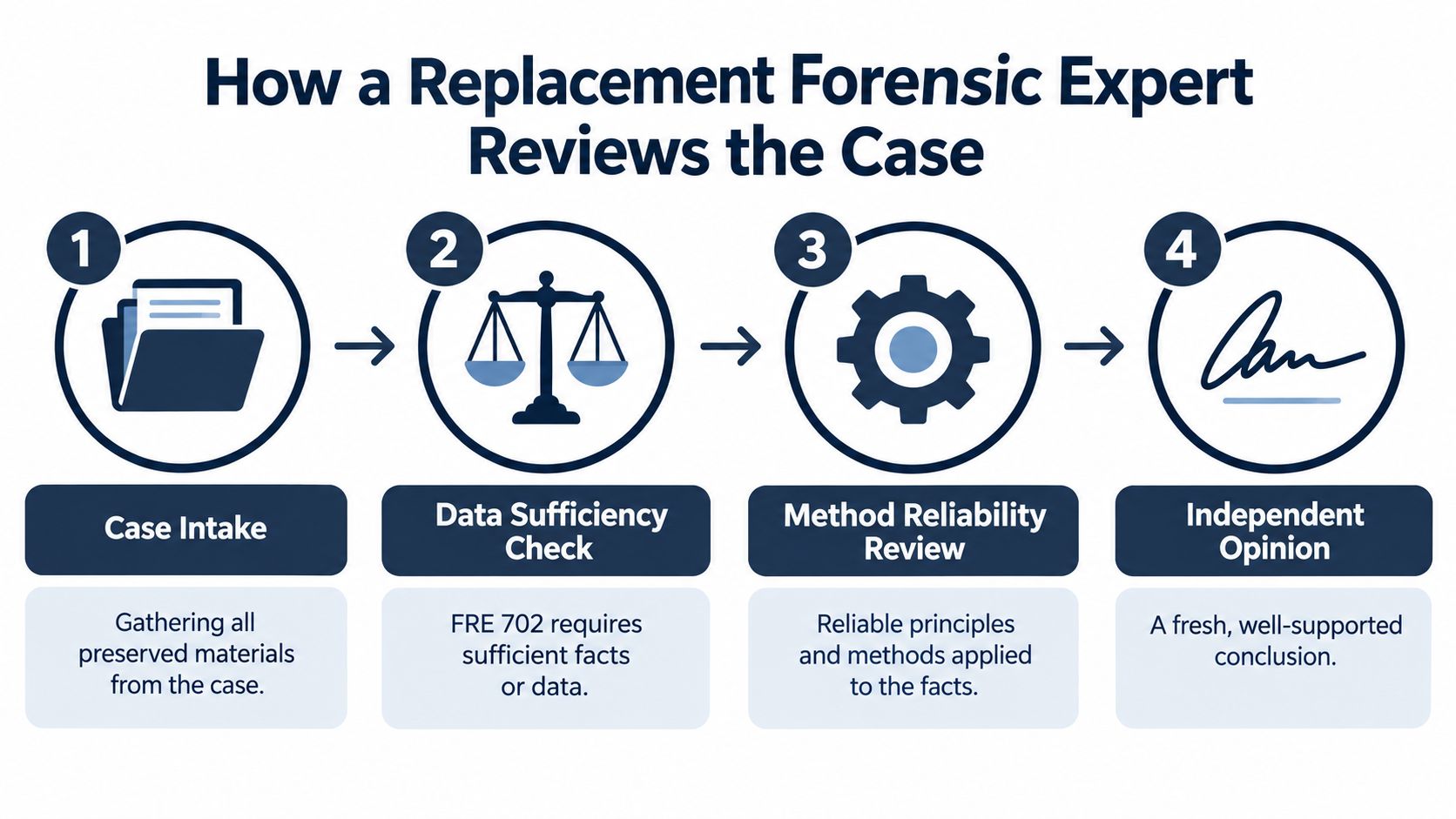
That's where Federal Rule of Evidence 702 matters. Expert opinions still have to rest on sufficient facts or data, reliable principles and methods, and a reliable application of those methods to the case facts Federal Rule of Evidence 702. A transcript can preserve words. It can't, by itself, prove that every underlying conclusion remains sound.
What counsel should preserve
In practice, the safest file is the fullest one. Counsel should keep:
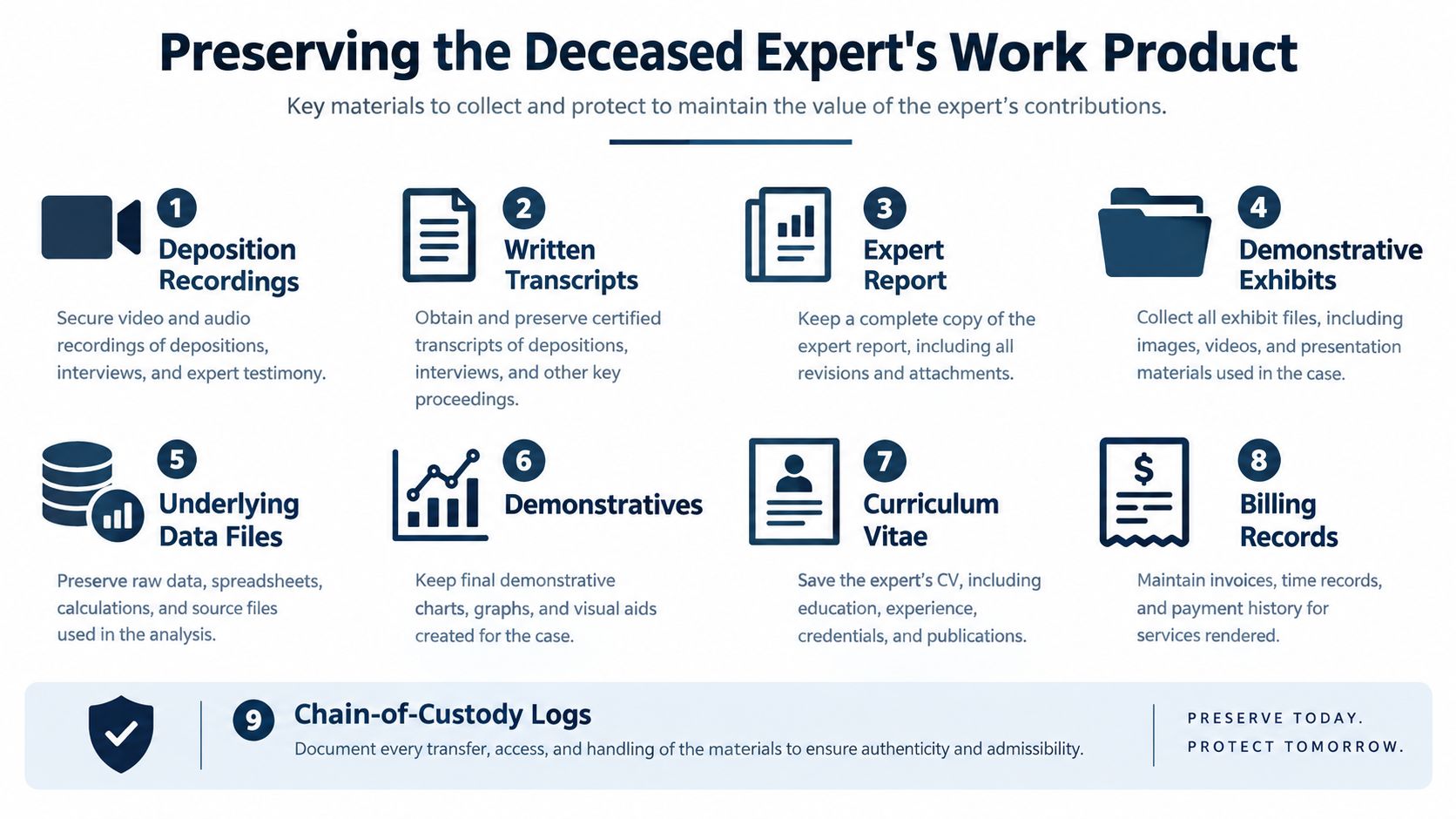
- Deposition recordings and transcripts so the exact testimony survives.
- The written report so the original opinions remain visible.
- Exhibits and demonstratives so the witness's visual explanations don't disappear.
- Underlying data files and supporting records so another reviewer can test the reasoning.
- Curriculum vitae and billing records so disclosures and work history stay intact.
- Supplementation history so changes to the opinions can be tracked over time.
For confidential expert exchanges and attorney work product, keeping client exchanges confidential is a useful reminder that preservation and privilege often need to be handled together.
The legal rule doesn't turn a dead expert into a live witness. It gives the court a framework for deciding what parts of the record can still be used without unfairness or speculation.
Preserving the Deceased Expert's Work Product
A dead expert's file should be treated like evidence, not like an old correspondence folder. Once the person is unavailable, the paperwork, files, and specimens become the only reliable way to test what the expert witnessed and stated. In forensic death cases, that record is often broader than a civil expert file because the medical foundation matters so much.
Build the preservation package in layers
Start with the testimony record, then move down into the source material. Keep the deposition recording, written transcript, final report, exhibits, demonstratives, underlying data, curriculum vitae, billing records, and all disclosed supplementation history. If there were prior drafts or amended opinions, preserve those too so later reviewers can see how the analysis evolved.
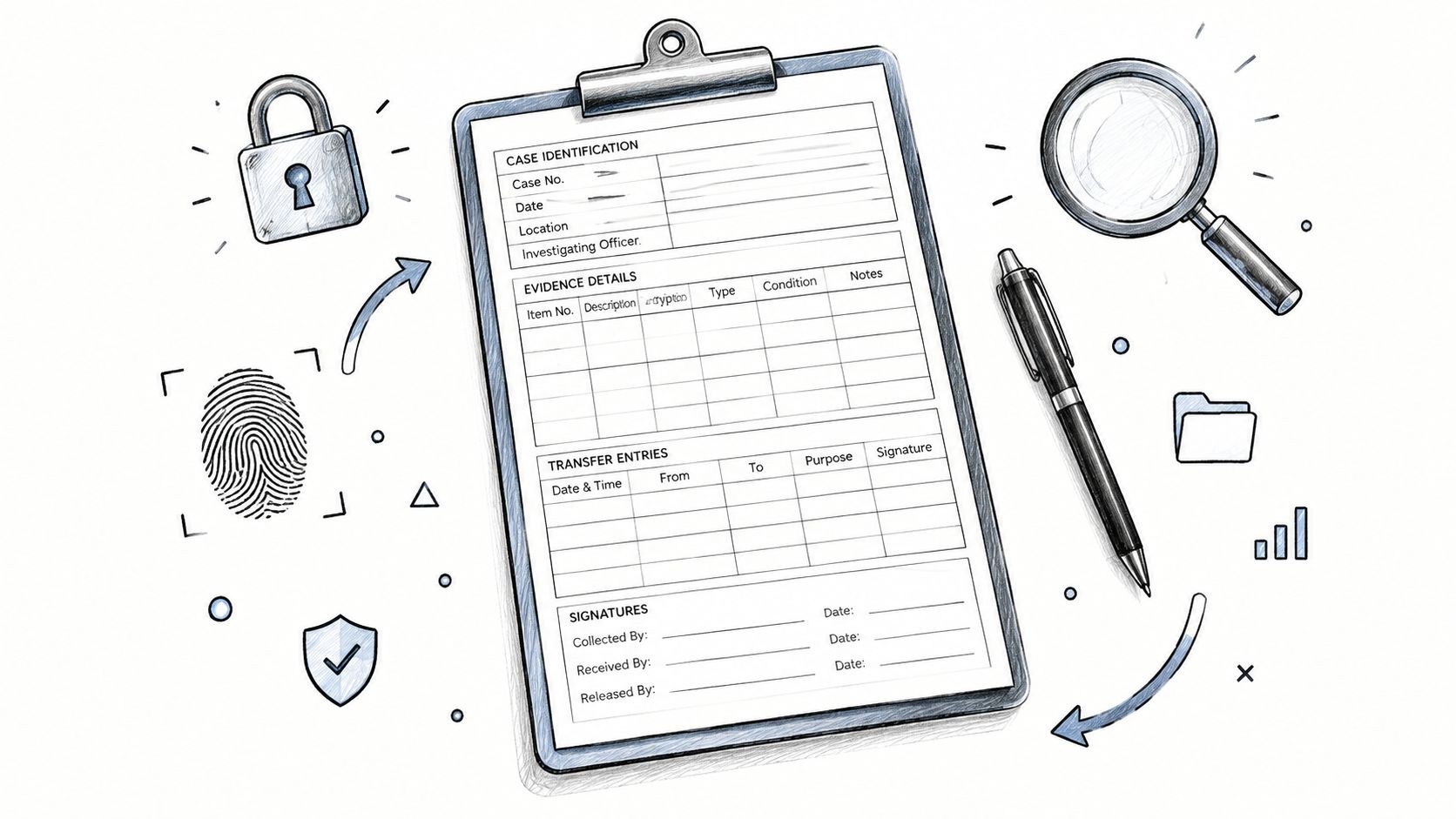
Then secure the forensic materials themselves. That includes the complete autopsy report, scene and investigative records, photographs, radiology and digital-imaging files, histology slides and blocks, toxicology results, specimen inventory, and chain-of-custody documentation. If any of those items are missing, the successor expert needs to know that right away.
Practical rule: if a conclusion can't be traced back to a document, specimen, image, or test result, treat it as unverified until proven otherwise.
Understand chain of custody in plain language
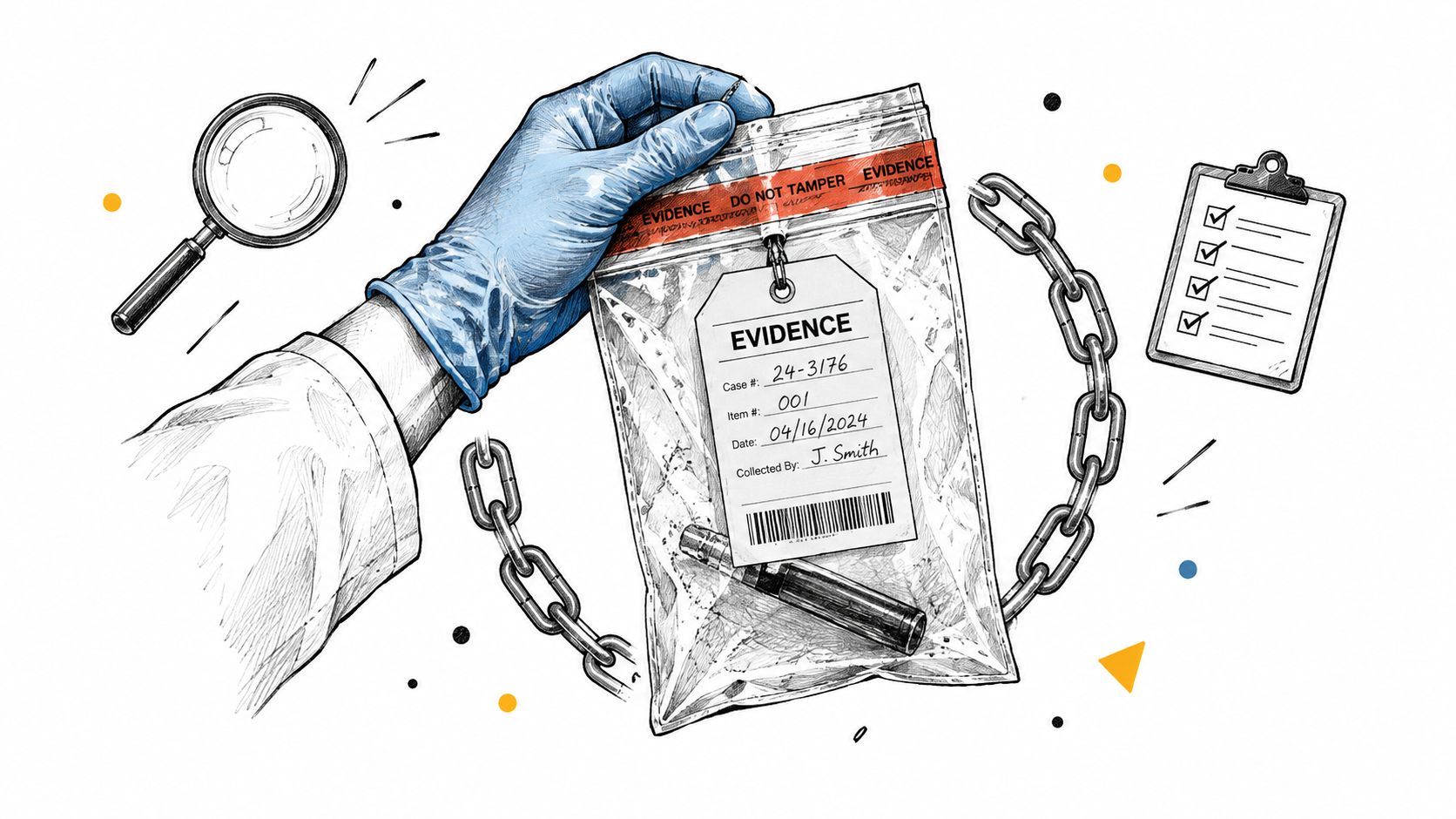
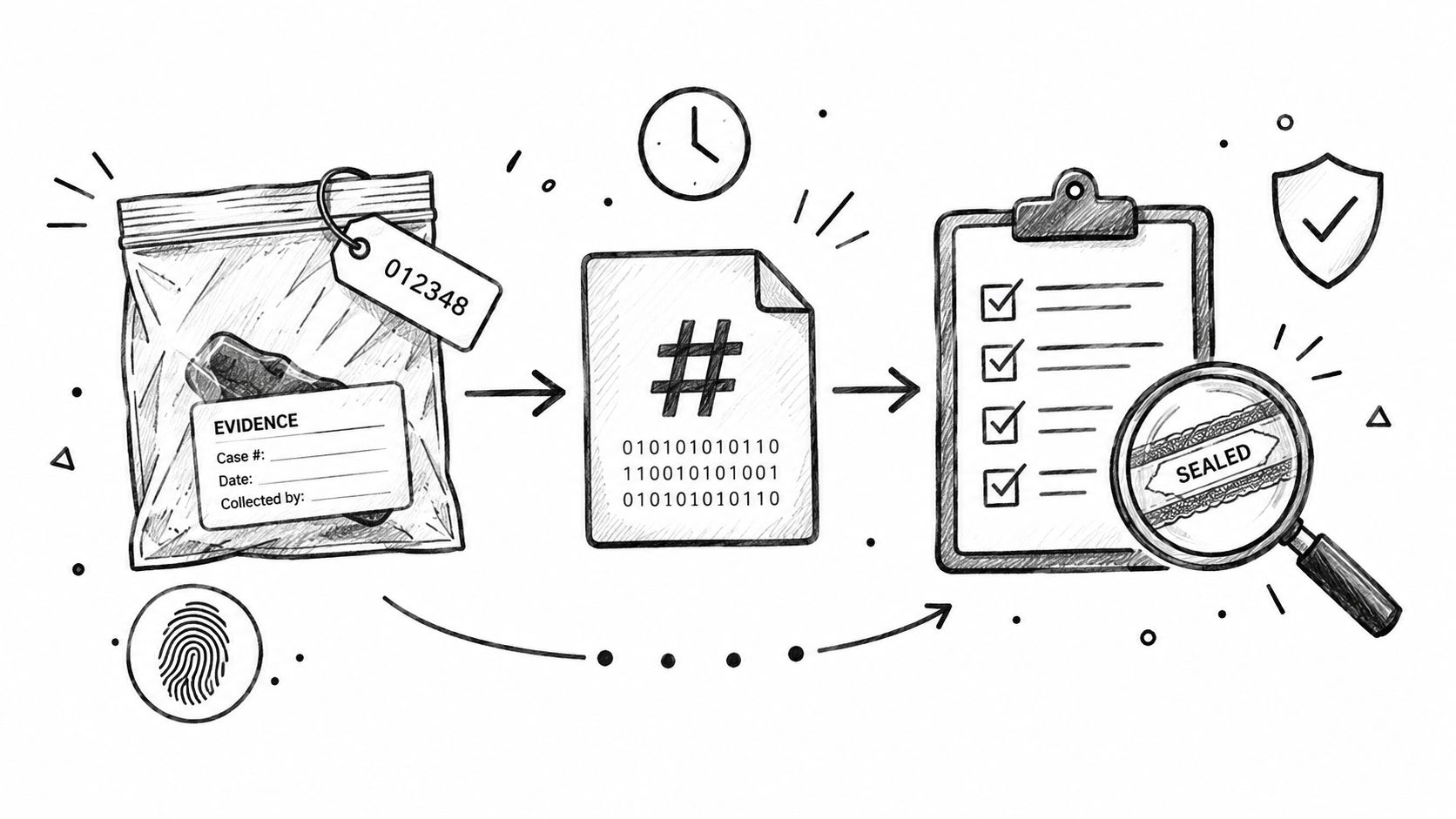
The National Institute of Standards and Technology says chain of custody for trace evidence begins when an item is collected and continues until final disposition. Its guidance calls for the collection date and time when appropriate, who collected the item, a description of the item, a unique identifier, and the item's location. It also requires secure, controlled-access storage and responsibility for everyone who handles the evidence NIST trace evidence recovery guidelines.
That matters because autopsy specimens, toxicology samples, and related images are only useful if their handling can be tracked. NIST also explains that forensic experts have to find evidence in a usable state and preserve it properly before they can testify competently about it NIST evidence management guidance. If the record doesn't show where something came from, who handled it, and when, its value in court drops quickly.
How a Replacement Forensic Expert Reviews the Case
A replacement expert should not merely echo the deceased witness. The new reviewer has to work from the preserved materials and reach an independent conclusion, or clearly say where the record is too thin to support one. That is especially important in forensic pathology, where the autopsy, images, slides, toxicology, and investigative history all have to fit together.
Start with the full record
The successor pathologist should obtain the entire file, not just the final report. That means the autopsy report, scene notes, photographs, radiology and digital-imaging files, histology slides and blocks, toxicology, molecular testing, specimen inventory, chain-of-custody logs, deposition transcripts, and any correspondence about the opinions already disclosed. If the file is incomplete, the gaps need to be identified before anyone tries to rely on the conclusions.
A helpful way to think about this is in three layers:
| Layer | What it answers |
|---|---|
| Medical findings | What was observed, measured, and sampled |
| Scientific support | What tests and images back up those observations |
| Legal continuity | What can still be proven, reproduced, or explained |
Test whether the opinion can be rebuilt
The next question is whether the original conclusion can be reproduced from what survived. If specimens still exist, confirm whether they can be tested again. Check the storage conditions and every transfer. Compare the stated opinions against the photographs, lab results, and notes to see whether the analysis holds together.
That review has to be independent. Our expert-witness preparation guidance covers why the pathologist's own review process matters when a case moves from records to testimony. The same principle applies here, because a new witness must be able to explain how the preserved materials support the final opinion.
A successor opinion is only as strong as the surviving material behind it.
If some observations lived only in the deceased expert's memory, the successor should say so plainly. A court can weigh supportable findings differently from opinions that can't be verified. That honesty protects the record and avoids turning another person's work into an unsupported transmission.
Limits on Substitution That Most Explanations Miss
A common mistake is to assume that a new expert steps in and restarts the case. That isn't how substitution usually works. Courts often allow a replacement when death makes the original expert unavailable, but the new witness generally has to address the same subject matter and use a materially similar methodology.
A replacement isn't a blank slate
The new expert can conduct a fresh review, but a fresh review isn't a license to introduce a new theory. If the prior expert was disclosed on a specific forensic issue, the substitute usually has to stay within that lane unless the court allows a broader change. A significant shift in theory can create prejudice and invite exclusion fights.
The harder issue is what happens to the deceased expert's concessions. Courts may preserve admissions, limitations, or unfavorable statements instead of letting the new witness wipe them away. That can matter more than many people expect, because a substitute can't just pretend the original witness never answered the hard questions.
What the dead expert can't do anymore
A deceased expert can't return to the stand. That means no new testimony, no clarification of ambiguous language, and no explanation of later-discovered evidence. Existing reports or transcripts may still be considered depending on the jurisdiction and the procedural posture, but admissibility and weight are separate questions.
Prejudice enters the picture at this point. If the opposing side relied on the original witness's concessions, a substitute who tries to move the goalposts can trigger exclusion risk. If the new expert stays close to the preserved evidence and explains only what can be independently verified, the record is usually stronger and easier to defend.
Practical rule: substitution works best when it preserves continuity, not when it tries to rewrite the past.
Second Opinions Texas Rules and Next Steps
For Texas families and attorneys, the safest path is often a documented second-opinion review rather than a silent adoption of the prior report. That is especially true when burial, disinterment, or cremation timing could affect what evidence still exists. Texas Health and Safety Code Chapter 711 governs the disposition of cemeteries, human remains, and related funeral practices, and Chapter 716 provides the statutory framework for crematories, meaning investigative concerns should be addressed before cremation whenever possible Texas Health and Safety Code Chapter 711.
Compare the options before the record changes
A second-opinion review lets another qualified forensic pathologist compare the original autopsy findings, photographs, toxicology, histology, investigative history, and stated opinions. That kind of comparison is often safer than relying on a summary alone, because it tests the reasoning against the surviving evidence. It also helps identify what can still be supported and what can't.
If cremation is already being planned, the window for review narrows quickly because cremation can permanently remove the chance for a conventional postmortem examination. Families and counsel should raise investigative concerns before final disposition whenever possible. In a disinterment or exhumation scenario, chapter-specific Texas requirements may also matter, so the legal and forensic steps need to move together.
For readers who need a practical starting point, our case review resource outlines how we approach second-opinion matters with preserved records and medical evidence. It's the same principle we use in casework across Texas, where the record has to be handled carefully before any opinion is offered.
Families, attorneys, healthcare professionals, and county officials can also work with Texas Autopsy Services directly when a deceased expert's record needs review, when a second opinion is needed, or when the timing of cremation or burial could affect the investigation. We're available 24/7, and we can help determine what can still be verified before the evidence changes.
Texas Autopsy Services provides independent private autopsy and forensic pathology reviews when a case needs a clear medical answer after an expert is no longer available. We help families, attorneys, and county officials preserve the record, assess the surviving evidence, and determine whether a second opinion is medically and legally supportable. Visit Texas Autopsy Services to request guidance from our team.