October 24, 2025 · Texas Autopsy Services
Understanding a Toxicology Report Sample
Learn how to read a toxicology report sample with our clear guide. I'll help you interpret results for legal, medical, or personal clarity.

On this page
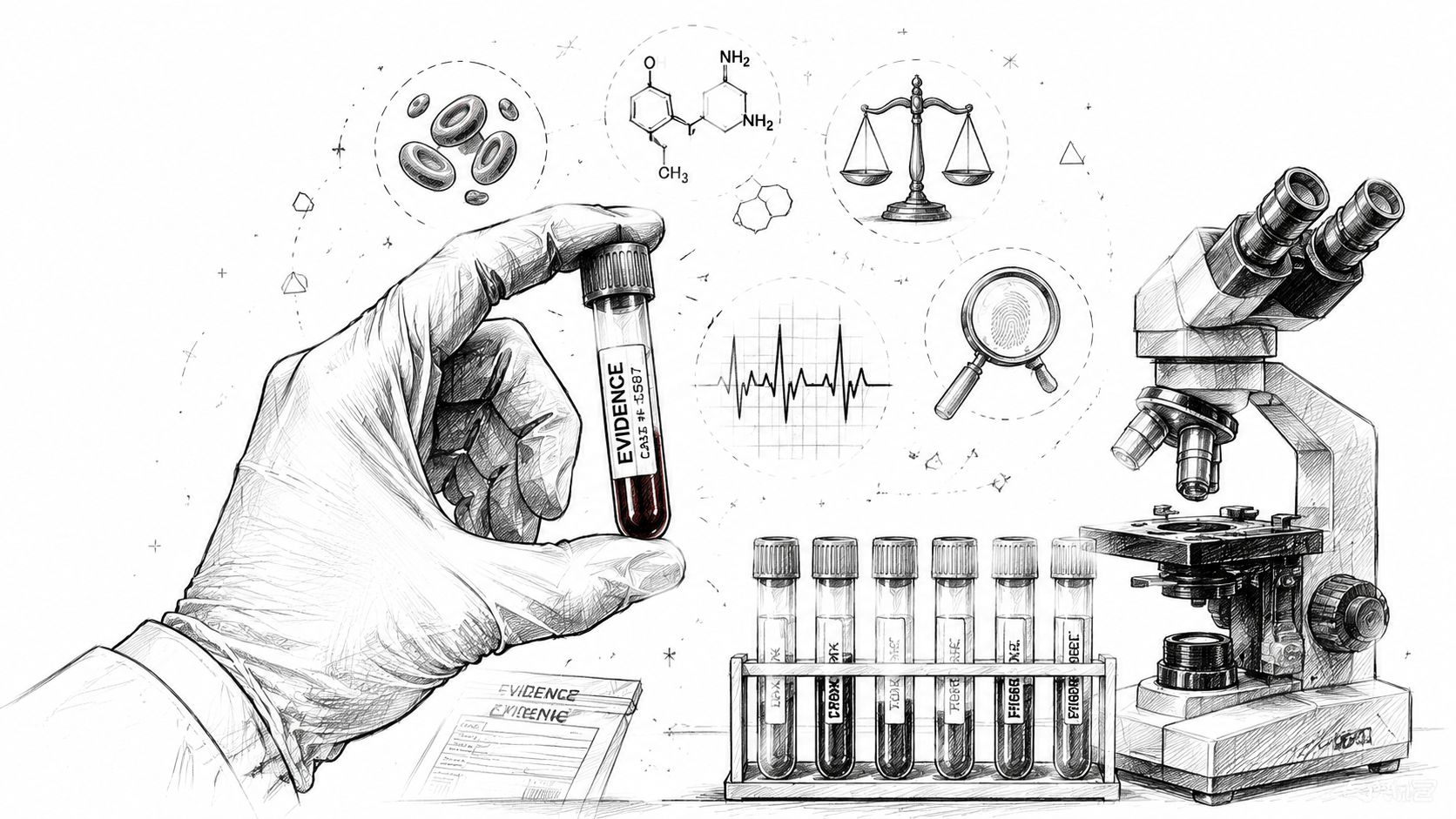
As a forensic pathologist, I rely on toxicology reports to understand the chemical story behind a person's death. This document is a structured, scientific look at the substances present in the body, detailing what was found, how much was there, and in which tissues. My work involves connecting these chemical findings with the physical evidence from an autopsy to determine an accurate cause of death. It's a critical piece of the puzzle, but one that is often dense and technical for families and attorneys.
- A toxicology report identifies and measures substances like drugs, alcohol, and toxins in the body.
- Understanding the report requires interpreting substance concentrations, not just their presence.
- Factors like tolerance, health, and drug interactions are critical for proper context.
- The chain of custody is a strict legal protocol that ensures the scientific validity of the results.
- My role is to translate this complex data into clear, compassionate, and defensible answers for families and legal proceedings.
Your First Look at a Toxicology Report

When I sit down with families or attorneys to discuss the findings of an independent autopsy, the toxicology report is often a central document. Here at Texas Autopsy Services, I know that this report can feel overwhelming if you’re not accustomed to its technical language.
My goal is to make this document understandable. We will walk through a toxicology report sample, piece by piece, translating scientific terms into plain language. It's not just a list of drugs; it’s a detailed chemical snapshot that helps answer some of the most difficult questions a family can face.
What the Report Reveals
At its core, a toxicology analysis is designed to find and measure any substance that could have played a role in a person's death. This isn't limited to one or two things. We're looking for a wide range of compounds, including:
- Prescription Medications: Drugs a doctor prescribed, like opioids, sedatives, or antidepressants.
- Over-the-Counter Drugs: Common remedies like Tylenol or allergy medicine.
- Illegal Substances: Cocaine, heroin, methamphetamine, and other controlled drugs.
- Alcohol: We measure its concentration to understand the level of impairment.
- Other Toxins: Less common but critical findings, like carbon monoxide or specific poisons.
This report provides objective, scientific data. When I combine these chemical findings with the physical autopsy and the person’s medical history, a complete picture starts to emerge. It’s what helps us tell the difference between a therapeutic dose and a fatal overdose. Sometimes, it reveals a substance we never expected, which ends up being the key to the entire case.
A Simplified Toxicology Report Sample
To make this tangible, let's look at the basic structure of a report. We'll explore each of these sections in more detail, but this will give you a solid framework. If you're looking for information on the entire process, our guide on how to get an autopsy report in Texas covers the necessary steps.
Here’s a quick breakdown of the key parts you'll find in almost any toxicology report.
Key Sections of a Toxicology Report Sample
This table serves as a quick reference guide to the standard components found in a typical toxicology report and what each part tells you.
| Section | Purpose |
|---|---|
| Case Information | This part identifies the deceased, the unique case number, and key dates. It’s the foundational information that ensures we're all looking at the right case. |
| Specimens Analyzed | Here, you'll see a list of the biological samples tested, like blood, urine, or liver tissue. Different substances show up better in different samples, so we often test several. |
| Analytical Findings | This is the heart of the report. It lists every substance found, its exact concentration, and the units of measurement (like ng/mL). |
| Methods and Instrumentation | This section outlines the scientific techniques used for testing. It’s here for transparency and to show the results meet rigorous forensic standards. |
| Interpretation/Comments | Sometimes, a toxicologist or I will add a short summary. This is where we put the numbers into context, explaining what they might mean from a medical or forensic standpoint. |
Getting familiar with this structure is the first step. Once you understand the layout, what once looked like a complex scientific document starts to feel like a tool for finding clarity and answers.
What We Test For in a Death Investigation
A toxicology analysis is far more than just a list of drugs. It’s about building a story. It provides the crucial context we need to understand the true cause and manner of death, especially when the physical autopsy doesn't give us all the answers.
When I collect samples during an investigation, my goal is to cast a very wide, comprehensive net. I am searching for any substance that could have played a role, whether it was the direct cause of death or simply a contributing factor. It's a detailed, systematic process that's absolutely critical to a thorough investigation.
The Scope of a Standard Toxicology Panel
One of the first questions families and attorneys ask is, "What exactly are you testing for?" While the specifics can change from case to case, a standard forensic toxicology panel is built to catch the most common substances we see in poisonings, overdoses, or impairment-related deaths.
Our screening process typically covers several key areas:
- Common Drugs of Abuse: This is the category most people think of. It includes substances like cocaine, methamphetamine, heroin (which we detect as 6-monoacetylmorphine and morphine), and of course, fentanyl and its many synthetic cousins that are tragically common today.
- Prescription Medications: We look for a huge range of prescribed drugs—everything from opioids like oxycodone and hydrocodone to benzodiazepines like Valium and Xanax. We also screen for antidepressants and antipsychotics, as their presence needs to be carefully cross-referenced with the person's medical history.
- Over-the-Counter Substances: You'd be surprised how often common medications are involved. Things like acetaminophen (Tylenol) or diphenhydramine (Benadryl) can be lethal in large doses.
- Alcohol: Measuring the blood alcohol concentration (BAC) is a fundamental part of almost every toxicology screen we run.
- Other Volatile Substances: This can include things like carbon monoxide from a fire or a faulty furnace, as well as various inhalants.
It's crucial to remember that a toxicology screen isn't just a "yes" or "no" test for a drug. It's a deep dive that gives us both qualitative ("what's there?") and quantitative ("how much?") information. To get a better sense of the science at work, check out our guide on what forensic toxicology is.
The Importance of the Chain of Custody
From the moment a sample is drawn at autopsy to the final signature on the report, its integrity is everything. I protect that integrity with a strict, unbroken protocol called the chain of custody.
Chain of custody is the rock-solid paper trail that documents every single step of the evidence's journey. It shows who collected it, who handled it, who tested it, and where it has been at all times, ensuring the sample is never contaminated or tampered with.
Think of it as the sample's biography. Every person who touches the evidence signs for it, creating a seamless record.
Here’s how it works:
- Collection and Sealing: Samples go into sterile containers, which are then sealed with special tamper-evident tape right away.
- Documentation: A form is immediately created with the case number, date, time, and the name of the person who collected it.
- Transfer: Every single hand-off is logged. From our facility to the lab courier, and from the courier to the lab technician—it's all recorded.
- Analysis and Reporting: The lab notes the sample's condition when it arrives and keeps its own internal logs until the final report is issued.
This isn’t just bureaucratic box-checking. It's a non-negotiable legal requirement that guarantees the toxicology results are scientifically valid and can hold up under the intense scrutiny of a courtroom. A broken chain of custody can get an entire toxicology finding thrown out.
A Step-by-Step Guide to Reading the Results
Alright, let's move from theory to practice and walk through a toxicology report together. When one of these lands on my desk, I don’t just skim it. I have a systematic way of breaking it down to build an accurate picture of what was going on inside the body.
My goal here is to show you exactly how to approach a report, section by section, so you can understand how I get from raw data to real answers. It’s about more than just reading a list of drugs; it’s about paying close attention to every detail, from the case number to the final lab results. A disciplined approach is the only way to make sure nothing gets missed.
This whole process, from the moment a sample is collected to when I see the final numbers, is incredibly controlled.

As you can see, every step is designed to protect the integrity of the sample. That secure chain of custody is what guarantees the findings you see in the final report are reliable.
Section 1: Case Information
The very first thing you'll see is the Case Information. This might look like administrative detail, but it's the bedrock of the entire report. If this part isn't 100% accurate, everything that follows is questionable.
Here’s what you’ll find:
- Decedent’s Name: The full name of the individual.
- Case Number: This is a unique ID assigned by the medical examiner, coroner, or my own office at Texas Autopsy Services.
- Date of Birth and Date of Death: These dates establish the essential timeline.
- Date and Time of Specimen Collection: This detail is critical. Some substances break down or even increase in concentration after death, so knowing when we collected the sample is vital for proper interpretation.
Think of this section as the "who, what, and when." It confirms we’re looking at the right person and grounds the entire investigation in a clear timeline.
Section 2: Specimens Analyzed
Next is the Specimens Analyzed section. This is a list of every biological sample that was collected and sent to the lab for testing. We rarely rely on just one sample because different drugs and chemicals reside in different parts of the body.
Here are some common specimens you’ll see:
- Blood: This is our most important sample. Blood shows what was actively circulating in the system around the time of death, giving us a direct window into potential impairment or toxicity. I prefer to draw it from a peripheral site, like the femoral vein in the leg, to avoid contamination or concentration changes that can happen in the central body after death.
- Urine: Great for spotting recent drug use. The kidneys are constantly filtering the blood, so urine can show us what was in the body hours or even days before death. A positive urine test tells us a drug was present, but we still need the blood levels to know if it was active at the time of death.
- Vitreous Humor (Eye Fluid): This fluid from the eye is like a protected time capsule. It's less prone to the rapid decomposition that affects other parts of the body, which makes it particularly reliable for testing things like alcohol and electrolytes.
- Tissue Samples (Liver, Brain): The liver is the body’s main detox center, so it can reveal a history of substance use. We might also test specific tissues if we suspect a localized poison was involved.
Each sample gives us a different piece of the puzzle. By looking at the findings from all of them together, I can build a much more complete and reliable picture.
Section 3: Analytical Findings
This is the heart of the report—the raw scientific data. At first glance, it just looks like a confusing chart full of chemical names and numbers. But let's break down the columns you’ll typically see.
Before we dive in, there's one principle that I cannot stress enough:
The presence of a substance does not automatically mean it caused or contributed to death. The concentration, the presence of other substances, the person’s medical history, and the physical autopsy findings must all be considered together.
The numbers are just data points. The real work comes from interpreting those numbers in the context of the entire case.
To help you navigate this section, I’ve put together a quick glossary of the most common terms you'll run into.
Common Toxicology Terms and Their Meanings
This table is a simple cheat sheet to help families and attorneys make sense of the technical language in a toxicology report.
| Term | Plain-Language Definition |
|---|---|
| Analyte | The specific drug, metabolite, or chemical that the lab was looking for. This is the substance name you see listed in the first column. |
| Concentration | How much of the analyte was found in the sample. It's usually measured in units like nanograms per milliliter (ng/mL) or milligrams per liter (mg/L). |
| Cutoff Level | The minimum amount of a substance the lab needs to find to call it a "positive" result. Anything below this level gets reported as negative, even if trace amounts are there. |
| Therapeutic Range | For prescription drugs, this is the concentration where the medication is supposed to be working as intended. |
| Toxic Range | The concentration where a substance can start causing harmful side effects or impairment. This can often overlap with the therapeutic range, especially if someone has a low tolerance. |
| Lethal Range | The concentration that is known to be high enough to cause death. This isn't a hard and fast rule; a person's tolerance and other factors can play a huge role. |
Getting familiar with these terms is the first step. When I sit down with a family to review these findings, I make sure to explain what each number means for their loved one, providing a clear and compassionate context for the results.
Interpreting What the Numbers Really Mean

Finding a substance in a toxicology report is just the first step. The real work, and where my experience as a board-certified forensic pathologist truly comes into play, is determining what that finding actually means. A number on a page is just data, not an answer.
The core question I must answer is this: Did this substance cause the death, contribute to it, or was it simply present? To get there, I have to look far beyond the report itself and consider the unique context of the person's life and body. Toxicology is never black and white.
Beyond Therapeutic vs. Toxic Ranges
Many reports will list "therapeutic" and "toxic" ranges for medications. These can be a helpful starting point, but they can also be misleading in a postmortem investigation. Those ranges are usually based on living, healthy people in controlled studies.
The reality of a death investigation is much more complex. A concentration that's perfectly fine for one person can be lethal for another. It all comes down to a handful of individual factors that can completely change the story.
Here are a few of the big ones I always have to consider:
- Tolerance: Someone who has used a substance like an opioid for years can build up a significant tolerance. Their body adapts, allowing them to function with blood levels that would easily kill a first-time user.
- Overall Health: A person with underlying issues, like heart or lung disease, is much more vulnerable. A dose that might be harmless in a healthy person could be the final straw for a system that's already compromised.
- Drug Interactions: It's rare for a death to involve just one substance. When you mix drugs, even at what seem like safe levels, they can have a synergistic effect. The combined impact becomes far greater than the sum of its parts, creating a deadly combination.
The Challenge of Postmortem Redistribution
Another tricky variable I must account for is something called postmortem redistribution (PMR). After death, drugs don't just stay put. They can leak out of tissues where they're highly concentrated, like the liver or lungs, and seep back into the bloodstream.
This process can make the drug levels in blood samples from the center of the body, like the heart, seem artificially high. That's why getting a blood sample from a peripheral site, like the femoral vein in the leg, is so crucial during an autopsy. It gives me a much more accurate snapshot of what the drug concentration was at the moment of death.
If you don't account for PMR, it's easy to misinterpret a drug's role. An incidental finding could wrongly be labeled the cause of death.
Context Is Everything
Let's imagine two cases with the exact same blood level of a common antidepressant. In one person, who has a long history of taking that medication as prescribed and has no other major findings at autopsy, that level is probably just incidental.
But in another person, who has a pre-existing heart condition and just started taking the medication, that very same "therapeutic" level could have been enough to trigger a fatal heart rhythm.
This is why my final opinion is never based on the toxicology report alone. I must weave those numbers together with the physical autopsy findings, the person’s medical history, and the circumstances surrounding their death. The chemical world we live in is only getting more complicated, with a staggering number of substances in our environment. You can get a better sense of this modern chemical exposure from insights on lastinghealth.com. This complexity makes a deep, contextual analysis more critical than ever. It's the only way to give families and legal professionals the accurate answers they deserve.
How Toxicology Reports Inform Legal and Medical Decisions
https://www.youtube.com/embed/I4hiCCK7pMI
A toxicology report is more than just a list of scientific findings; it’s a tool that provides real, tangible answers. In my work at Texas Autopsy Services, I’ve seen firsthand how these reports bring clarity to grieving families and become the bedrock of evidence for legal teams across Texas. The real-world consequences are massive, often creating a clear path forward when everything feels uncertain.
For an attorney, the findings can lock in key elements of a case, like negligence, impairment, or even intent. For a family, that same report can finally put to rest the painful, lingering questions surrounding a loved one’s death, offering a measure of peace. Understanding how these results are used is crucial for anyone involved in a death investigation.
Application in Legal Proceedings
In the courtroom, a toxicology report isn't just a piece of paper—it's objective, scientific evidence that can either cement a narrative or challenge it. A significant part of my job goes beyond the lab work; as a forensic pathology expert, I often provide testimony to help a judge or jury make sense of what the complex data means in human terms.
The applications are diverse and important:
- Criminal Cases: In cases involving DUIs, assault, or homicide, the presence (or absence) of drugs and alcohol is often a central question. The report delivers unbiased data on exactly what substances were in the system and at what levels.
- Civil Litigation: For wrongful death or negligence lawsuits, toxicology can show whether a prescribed medication was administered incorrectly or if someone was under the influence during a critical incident.
- Workers' Compensation: These reports can determine if a workplace accident was tied to substance use, which can completely change the outcome of a claim.
For legal professionals, weaving these toxicology findings into the case's timeline is a critical step. A fantastic resource on this topic explains the best practices for building a winning medical chronology template, which helps ensure all the medical facts are laid out logically and powerfully.
Impact on Insurance and Death Benefit Claims
Toxicology results also have a direct and immediate impact on administrative matters, especially when it comes to life insurance policies and other death benefits. Most policies have specific clauses that can alter or deny a payout depending on the circumstances of the death.
An independent and impartial toxicology analysis ensures that these decisions are based on sound science, not speculation. It provides a factual basis for determining whether policy exclusions related to illegal drug use or alcohol intoxication apply.
This is exactly why an objective, Private Autopsy can be so vital. It provides a completely unbiased assessment that helps ensure families receive the benefits they're entitled to, free from any potential conflicts of interest.
Providing Clarity for Families
Setting aside the legal and financial aspects, the most profound impact of a toxicology report is often a deeply personal one. It gives families concrete answers, helping them understand what truly happened in their loved one's final moments. That clarity is an invaluable part of the grieving process.
The science of toxicology is becoming more complex and more essential every year. In fact, the global General Toxicology market is expected to grow substantially by 2031, largely because of stricter regulatory standards in the U.S. and around the world. This trend underscores just how critical toxicology has become for both public health and legal accountability.
At the end of the day, my job is to translate the cold, hard data from a toxicology report into a clear, understandable, and defensible conclusion. Whether it's for a family desperate for answers or an attorney building a case, the mission is always the same: to deliver the truth through meticulous, unbiased science.
Frequently Asked Questions About Toxicology Reports
Over my career, I've noticed that families and attorneys often circle back to the same set of questions about toxicology. It's a complicated field, and getting clear, straightforward answers is essential when you're trying to understand the circumstances of a death. I’ve put this section together to address those common questions head-on.
My hope is to demystify the process by talking plainly about timelines, testing limitations, and costs. When you know what to expect, it’s easier to trust the process during a difficult time.
How Long Does It Take to Get Toxicology Results?
This is almost always the first question I get asked. While I can often perform the physical autopsy itself fairly quickly, the toxicology testing is a different story. It’s a meticulous, scientific process that just can't be rushed. A typical timeline is four to eight weeks, but that can easily change.
Several things can affect how long it takes:
- The Scope of the Tests: A basic screening for common substances is much faster than an in-depth analysis for a rare or unknown compound. If the first round of tests doesn't give us clear answers, we have to dig deeper with more specialized, time-consuming methods.
- The Lab's Workload: The accredited labs we partner with are busy, handling cases from all over the region. Sometimes, a high volume of cases creates a backlog, and that’s something we can’t control.
- Case Complexity: A case involving multiple different drugs, or one where we need to test different types of tissue samples, just naturally takes longer to piece together.
I understand that waiting is incredibly hard for families. That's why I wrote a more detailed explanation of what's happening behind the scenes, which you can read in our article about why toxicology reports take so long. My priority is always to deliver an accurate, thorough report, and that level of precision sometimes requires patience.
Why Would a Substance Not Be Detected in a Report?
It's completely understandable to be confused or upset when a substance you suspect was involved doesn't show up on the report. This doesn't necessarily mean it wasn't there. There are a few very real scientific reasons this can happen.
For one, a standard screening panel is broad, but it doesn't test for every single substance in existence. Newer synthetic drugs or unusual poisons often need very specific tests that have to be ordered separately. The global toxicology testing services market is constantly evolving, growing from USD 39.05 billion in 2024 to an estimated USD 41.24 billion in 2025 precisely because labs are always racing to keep up with new compounds. You can see more about this expanding market on Precedence Research.
Metabolism is another huge factor. The body starts breaking down substances the moment they enter the system. If enough time passed between when a drug was taken and when the person died, the amount left in the body might fall below the lab's cutoff level—that’s the minimum concentration they need to report a positive result.
What Is the Difference Between a Hospital Screen and a Forensic Analysis?
This is a really important distinction, especially when legal matters are involved. A drug screen done in an E.R. and a forensic toxicology analysis are two totally different tools built for different jobs.
A hospital drug screen is a quick check to help doctors make immediate treatment decisions. A forensic toxicology analysis is a legally-sound, scientific investigation to figure out exactly what role substances played in a person's death.
Here’s a simple way to see the differences:
| Feature | Hospital Drug Screen (Clinical) | Forensic Toxicology Analysis |
|---|---|---|
| Purpose | Guide emergency medical care. | Provide evidence for a cause-of-death investigation. |
| Speed | Fast results are the priority. | Accuracy and legal defensibility are the priority. |
| Scope | Screens for a limited list of common drug classes. | Screens for hundreds of substances and measures exact amounts. |
| Legal Standing | Not admissible in court; no strict chain of custody. | Results are legally defensible due to a strict chain of custody. |
In short, a hospital test gives doctors a clue about what they might be up against. A forensic analysis provides the detailed, verifiable evidence needed for a death certificate or a court case.
How Are Toxicology Costs Handled in a Private Autopsy?
When a family arranges for a private autopsy, I make sure we’re completely transparent about the costs. Our service packages at Texas Autopsy Services are all-inclusive.
This means the single fee you pay for the autopsy also covers the comprehensive toxicology testing we need to determine the cause of death. You won't get hit with surprise bills from a lab later on.
This covers all the standard tests for alcohol, common illegal drugs, and prescription medications. In the rare event that a case points toward something highly unusual—like a rare poison or chemical—that would require esoteric testing, we would discuss that and any additional cost with you before moving forward. My goal is to give you all the information you need to make clear decisions during a very tough time.
If you have questions about a death investigation or need guidance on the private autopsy process, please call our office. The team at Texas Autopsy Services and I are here to provide clear, compassionate, and expert answers. We serve families, attorneys, and county officials across the state of Texas.