January 8, 2026 · Texas Autopsy Services
7 Examples of Expert Testimony from a Forensic Pathologist
Explore detailed examples of expert testimony from a board-certified forensic pathologist, covering criminal cases, malpractice, and more for Texas attorneys.
On this page
- 1. Forensic Pathology Expert Testimony in Criminal Cases
- 2. Medical Malpractice Expert Testimony Based on Autopsy Findings
- 3. Perinatal and Fetal Autopsy Expert Testimony
- 4. Toxicology Expert Testimony in Drug-Related Deaths
- 5. Comparative Negligence Expert Testimony in Wrongful Death Cases
- 6. Insurance Claim Dispute Expert Testimony
- 7. Healthcare Provider Licensing and Disciplinary Hearing Expert Testimony
- Comparison of 7 Expert Testimony Examples
- Seeking Clarity Through Objective Expertise
As a board-certified forensic pathologist, my work doesn't conclude with the final autopsy report. Often, the findings from a detailed examination must be translated into clear, objective testimony that can withstand legal scrutiny. The courtroom or deposition setting is where the scientific facts of a case, the story told by the body, are explained to judges, juries, and attorneys.
- Expert testimony by a forensic pathologist translates complex autopsy findings into clear, understandable facts for the legal system.
- My role is to provide objective, scientific evidence regarding the cause and manner of death in criminal, civil, and administrative cases.
- Specific examples include testimony in homicide trials, medical malpractice claims, insurance disputes, and professional licensing hearings.
- Effective testimony relies on meticulous examination, clear communication, and an unwavering commitment to the medical evidence.
- I perform private autopsy services in Texas to provide families and attorneys with the independent, fact-based answers they need.
My experience includes providing expert testimony in a wide range of legal matters, from criminal homicide trials to civil litigation involving wrongful death and medical malpractice claims. In each instance, my goal remains the same: to present the objective truth as determined through a meticulous postmortem examination. It’s about providing clarity, not advocacy, to ensure that legal decisions are grounded in sound science.
These concrete examples of expert testimony will show how complex autopsy findings are communicated in a courtroom, how a forensic pathologist's testimony can clarify toxicology reports, and what families and attorneys can expect when scientific evidence is presented under oath. They illustrate the critical connection between the examination room and the legal system, showing how independent, fact-based analysis serves the pursuit of justice.
1. Forensic Pathology Expert Testimony in Criminal Cases
Forensic pathology is a cornerstone of the criminal justice system. As a forensic pathologist, my role is to determine the cause and manner of death through an autopsy. This work provides objective, scientific evidence that forms the basis for many criminal investigations. My testimony in court translates complex medical findings into clear, understandable facts for judges and juries.
This type of expert testimony is crucial in cases like homicides, suspicious deaths, or deaths that occur while an individual is in custody. I analyze tissue samples, toxicology reports, and patterns of injury to reconstruct the events that led to a person’s death. The conclusions I draw can either corroborate or challenge the narratives presented by the prosecution and defense, making this one of the most impactful examples of expert testimony in a trial.
Case Example: Establishing Manner of Death in a Homicide
Consider a homicide case where the cause of death is a single gunshot wound. While the cause seems straightforward, the manner of death (homicide, suicide, or accident) is often contested.
In one such case, the defense argued the victim’s death was a tragic accident during a struggle. However, during the autopsy, I identified specific evidence that contradicted this claim. I found stippling, which is unburned gunpowder that causes pinpoint abrasions on the skin, in a tight, circular pattern around the entry wound. My testimony explained that this pattern could only be created if the firearm’s muzzle was pressed firmly against the skin at the time of discharge, a finding inconsistent with an accidental firing during a chaotic struggle. I presented large, clear photographs of the stippling pattern to the jury, illustrating precisely what I meant. My testimony established that the manner of death was homicide, directly refuting the defense’s narrative and providing the jury with the scientific evidence needed to reach a verdict.
Actionable Tips for Attorneys
To effectively use forensic pathology testimony, I recommend the following:
- Retain an Expert Early: Involving a forensic pathologist early allows for a thorough review of medical records, scene photos, and preliminary reports, which can shape your entire case strategy.
- Request Comprehensive Reports: Ensure the autopsy report is detailed and provides a clear, scientifically supported conclusion on the cause and manner of death. A well-documented report is the foundation of strong testimony. You can learn more about how a forensic pathologist expert witness prepares for these situations.
- Focus on Clarity: A good expert can explain complex medical concepts, like wound ballistics or toxicology, in simple terms that a jury can easily understand. This is a critical skill to vet for.
2. Medical Malpractice Expert Testimony Based on Autopsy Findings
In civil medical malpractice cases, my role as a forensic pathologist shifts from criminal to civil justice, but the core principle of finding objective truth remains the same. When a family suspects that a loved one’s death resulted from a surgical error, a diagnostic mistake, or general negligence, an independent autopsy is a critical tool. My testimony in these cases connects the clinical decisions made by healthcare providers to the ultimate cause of death, helping to determine if the outcome was an unavoidable complication or a deviation from the accepted standard of care.

This type of expert testimony is essential for families seeking answers and accountability. By meticulously examining the body and reviewing extensive medical records, I can identify evidence of issues like surgical complications, medication errors, or anesthesia-related problems. My findings and subsequent testimony provide the scientific foundation needed to establish causation, making this one of the most powerful examples of expert testimony for holding medical professionals accountable in civil court.
Case Example: Identifying a Fatal Surgical Error
Consider a case involving a patient who died from complications two days after a routine gallbladder removal surgery. The hospital attributed the death to a sudden, unpredictable cardiac event. The family, however, was skeptical and retained me to perform a second, independent autopsy.
During my examination, I discovered evidence of a bile leak in the abdominal cavity, which led to a severe infection and septic shock. Further investigation revealed a small, overlooked perforation of the bile duct, a known but manageable complication of the procedure. My testimony explained how the surgeon's failure to identify and repair this injury during the operation directly led to the patient’s death. I presented the jury with photographs from the autopsy showing the perforation and the resulting internal damage. This objective evidence established a clear breach in the standard of care, directly refuting the hospital’s initial explanation and providing the basis for a successful malpractice claim.
Actionable Tips for Attorneys
To leverage autopsy findings effectively in a medical malpractice case, I suggest the following:
- Request a Private Autopsy Promptly: If there are concerns about the quality or impartiality of a hospital autopsy, or if one was not performed, arranging for an independent examination as soon as possible is critical to preserving evidence.
- Provide Complete Medical Records: A thorough review requires all available documents, including physician notes, operative reports, lab results, and imaging studies. This context is vital for an accurate causation analysis. You can learn more about how a medical malpractice expert witness uses these records to build a case.
- Focus on Standard of Care: Ask your expert to clearly identify the specific actions or inactions that deviated from the accepted medical standard of care and to explain how that deviation led directly to the patient’s death.
3. Perinatal and Fetal Autopsy Expert Testimony
Cases involving the death of an infant or a fetus are among the most sensitive and complex in forensic pathology. As a pathologist with perinatal expertise, my role extends beyond a standard autopsy. It involves a compassionate, meticulous investigation into the circumstances surrounding a fetal demise, neonatal death, or birth complication. This work is vital for providing answers to grieving families and clarity in potential medical negligence cases.
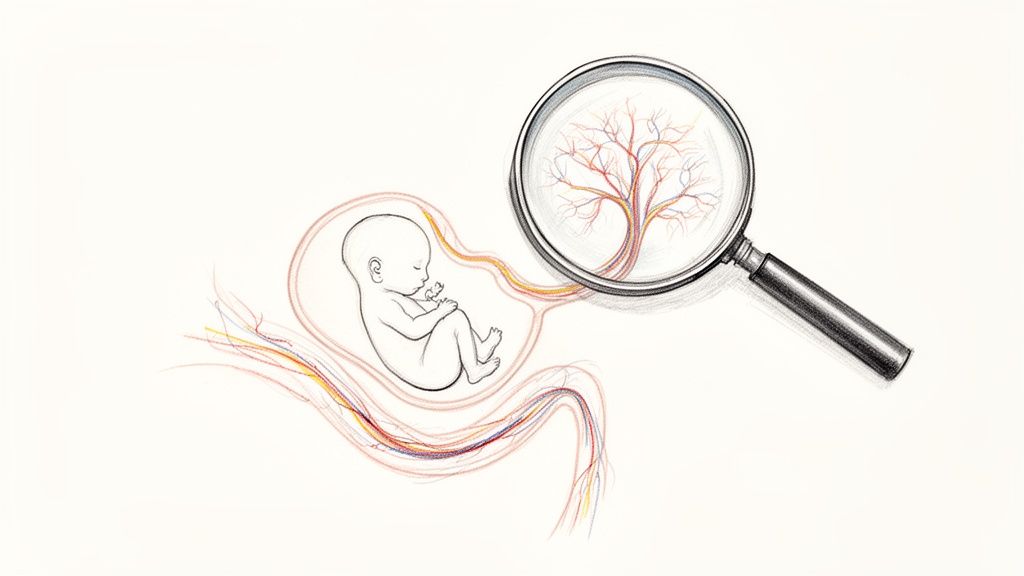
This specialized testimony is critical in cases of stillbirth, birth asphyxia, and deaths related to congenital anomalies. It requires a deep understanding of placental pathology, fetal development, and obstetric medicine. In court, my testimony helps explain often-subtle medical findings, such as placental abnormalities or signs of oxygen deprivation, that can be central to a case. These examples of expert testimony not only serve the legal process but also provide essential information for families seeking to understand a tragic outcome.
Case Example: Investigating a Stillbirth for Potential Malpractice
In a civil case, a family alleged that an obstetrician’s failure to recognize signs of fetal distress led to a stillbirth. The defense claimed the death was an unpreventable tragedy due to an unknown cause. My examination focused on the fetus and, just as importantly, the placenta.
During the placental examination, I identified multiple, chronic infarcts, which are areas of dead tissue caused by a lack of blood supply. I also found evidence of a condition called fetal vascular malperfusion. My testimony explained that these findings indicated a long-standing placental insufficiency that compromised the baby's oxygen and nutrient supply over time. I demonstrated how these placental findings would have produced clear signs of fetal distress that should have been recognized on fetal monitoring strips. By connecting the pathological evidence from the placenta to the clinical record, my testimony showed that the death was likely preventable with timely intervention, providing the scientific foundation for the family’s claim.
Actionable Tips for Attorneys
To build a strong case involving a perinatal or fetal death, I recommend these steps:
- Preserve the Placenta: The placenta is a critical piece of evidence. Ensure it is properly preserved and sent with the fetus for a complete examination by a perinatal specialist.
- Request Genetic Testing: If congenital anomalies are suspected, genetic testing can provide definitive answers about chromosomal abnormalities that may have contributed to the death. This can be crucial for future family planning.
- Emphasize Compassionate Communication: A perinatal pathologist should be able to explain complex medical findings in a clear, compassionate manner. As you can see from my work with Texas Autopsy Services, this approach is essential for supporting grieving families and providing clarity to everyone involved.
- Retain a Specialist Early: Involving a pathologist with perinatal expertise early in the process ensures all necessary evidence is collected and analyzed correctly, which is fundamental to building your case.
4. Toxicology Expert Testimony in Drug-Related Deaths
As a forensic pathologist, I often work hand-in-hand with forensic toxicologists to understand the full picture of a person's death. Toxicology is the science of detecting and interpreting the presence of drugs and other chemicals in the body. My expert testimony on toxicology translates complex lab results into a clear narrative for the court, explaining how specific substances contributed to the cause and manner of death.
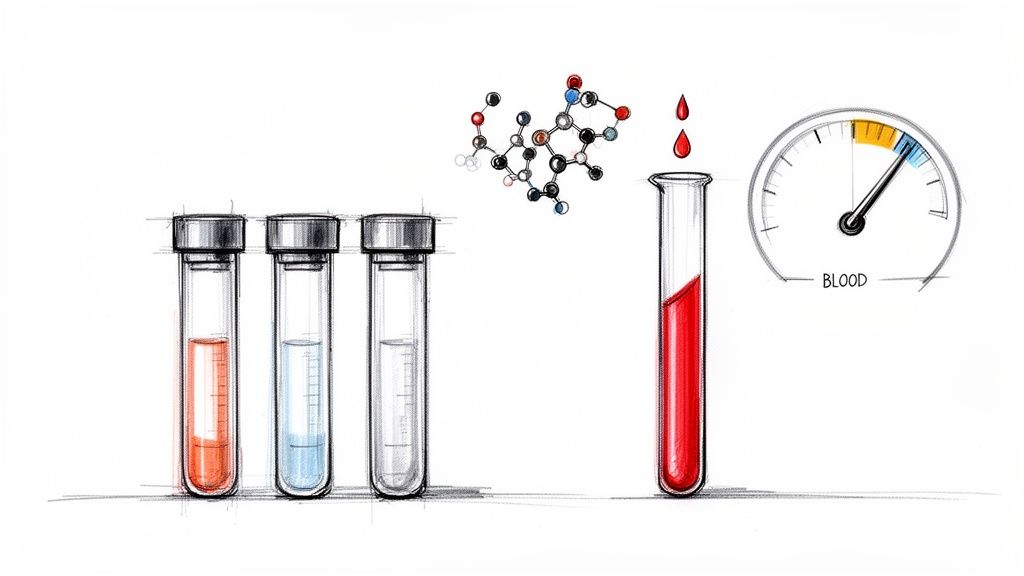
This testimony is vital in cases involving suspected overdoses, poisonings, or deaths where drugs or alcohol may have played a role, such as a DUI-related fatality. I analyze the types and concentrations of substances found in blood, urine, and tissue samples to determine if they were at therapeutic, toxic, or lethal levels. This analysis is one of the most powerful examples of expert testimony for establishing a direct link between a substance and a person's death.
Case Example: Differentiating Cause in a Polydrug Overdose
In a recent case, a young adult was found deceased with evidence of both prescription opioids and illicit fentanyl use. The defense in a related criminal proceeding claimed the death was caused solely by the victim’s prescribed medication, absolving their client who supplied the fentanyl.
My role was to clarify the cause of death by analyzing the toxicology report in conjunction with the autopsy findings. The toxicology results showed a therapeutic level of prescribed oxycodone but a lethal concentration of fentanyl. During my testimony, I explained that while both are opioids, fentanyl is approximately 50 to 100 times more potent. I presented a chart comparing the therapeutic window of oxycodone to the deadly concentration of fentanyl found in the victim's system. My testimony demonstrated that the fentanyl, not the prescribed medication, was the primary cause of the fatal respiratory depression. This scientific clarification was essential for the jury to assign culpability accurately.
Actionable Tips for Attorneys
To leverage toxicology testimony effectively, I suggest the following:
- Request Comprehensive Testing: Don't settle for a basic drug screen. A comprehensive panel that includes prescription drugs, illicit substances, and their metabolites provides a complete picture and prevents unexpected revelations.
- Clarify Lethal Levels: Ask your expert to explain what a "lethal" concentration means for the specific decedent, considering their tolerance, age, and overall health. A number on a report is meaningless without context. For more insight, you can learn more about how to interpret toxicology reports after death.
- Understand Polydrug Interactions: In cases with multiple substances, have the expert explain how the drugs interact. Sometimes, two drugs at sub-lethal levels can be fatal when combined, a critical point to establish in court.
5. Comparative Negligence Expert Testimony in Wrongful Death Cases
My work as a forensic pathologist extends beyond criminal law into the civil arena, particularly in wrongful death litigation. In these cases, my testimony helps establish a direct, scientific link between a defendant's alleged negligence and the fatal injuries sustained by the decedent. This isn't about guilt or innocence; it's about causation and liability. I analyze injury patterns and correlate them with specific acts of alleged negligence, providing objective evidence that helps a jury understand how an event led to a death.
This testimony is vital in situations like workplace accidents, deaths from defective products, or incidents involving inadequate medical supervision. My findings help civil attorneys demonstrate how a specific failure, like not providing proper safety equipment or ignoring industry protocols, directly caused the fatal outcome. By explaining complex medical evidence in clear terms, I provide the foundation for arguments about comparative negligence, making this one of the most critical examples of expert testimony for establishing liability and determining damages.
Case Example: Proving Causation in a Construction Site Fall
Consider a wrongful death lawsuit involving a construction worker who fell from scaffolding. The defense claimed the worker was contributorily negligent, arguing he simply lost his balance and that his own actions were the primary cause of death. The plaintiff’s attorney contended the construction company failed to provide adequate fall protection, a direct violation of safety protocols.
During my examination, I documented extensive blunt force trauma consistent with a fall from a significant height. More importantly, I analyzed the specific pattern of injuries. The fractures and internal injuries indicated a vertical, uncontrolled descent without any evidence of the rotational or twisting injuries one might expect if someone had tried to grab onto a structure to break their fall. My testimony explained that the injury pattern was more consistent with a sudden, unimpeded fall, such as one that would occur without a safety harness or guardrail. By presenting detailed diagrams and autopsy photographs, I demonstrated to the jury how the absence of certain injuries supported the plaintiff's claim of inadequate safety equipment. This evidence directly tied the company's alleged negligence to the fatal injuries.
Actionable Tips for Attorneys
To leverage forensic pathology testimony in civil litigation, I suggest the following:
- Coordinate with Other Experts: My findings are most powerful when aligned with the testimony of accident reconstruction or engineering experts. A cohesive narrative that connects the physical injuries to the mechanics of the incident is crucial for a jury.
- Focus on Visuals: In civil cases, clear, illustrative visuals are indispensable. Detailed autopsy diagrams, 3D models of the injuries, and high-quality photographs help jurors visualize the link between the negligent act and the fatal result.
- Prepare for Causation Challenges: The core of the defense's cross-examination will likely be to challenge the chain of causation. Ensure your expert is prepared to defend their findings and clearly articulate why alternative causes of death or injury are less likely based on the objective medical evidence. You can read more about how a private autopsy can provide this level of detail.
6. Insurance Claim Dispute Expert Testimony
Forensic pathology often extends beyond criminal law into the civil arena, particularly in disputes over insurance claims. When a life insurance or accidental death policy is in question, my role as a forensic pathologist is to provide an objective, scientific determination of the cause and manner of death. This evidence is vital when beneficiaries and insurance companies disagree on the circumstances surrounding a death, which can directly affect whether a claim is paid.
My testimony in these cases clarifies complex medical findings for arbitrators, attorneys, and sometimes a jury. Insurance policies frequently contain exclusions for events like suicide or deaths occurring during high-risk activities. An independent autopsy and subsequent testimony can provide the clarity needed to resolve these disputes, ensuring that claims are settled based on scientific fact rather than assumption. These situations are potent examples of expert testimony because they directly impact a family’s financial stability after a loss.
Case Example: Contesting a Suicide Determination for a Life Insurance Claim
I was once retained by a family whose life insurance claim was denied after the death of a loved one. The insurance company, citing a police report that suggested suicide, invoked the policy's suicide exclusion clause. The family was adamant that the death was accidental, not intentional.
I performed a second-opinion autopsy and a comprehensive review of the scene evidence and toxicology reports. The initial conclusion was based heavily on the presence of a firearm near the decedent. However, my examination revealed no classic signs of a close-contact wound, such as stippling or soot, which would be expected in a self-inflicted gunshot. Furthermore, toxicology results showed a high level of a prescription medication known to cause severe dizziness and disorientation. My testimony explained how the combination of the medication’s side effects and the absence of close-range gunshot evidence strongly supported an accidental discharge scenario over a deliberate act. My findings provided the scientific basis for the family to successfully appeal the denial, and the claim was ultimately paid.
Actionable Tips for Attorneys and Families
To navigate insurance disputes effectively with forensic pathology testimony, I suggest the following:
- Request an Independent Autopsy: If an insurance company denies a claim based on the manner of death, an independent autopsy can provide a crucial, unbiased second opinion. It is often the most direct way to challenge a preliminary finding.
- Provide All Available Evidence: For the most accurate review, ensure your expert receives the complete autopsy report from the initial examination, all police and toxicology reports, and scene photographs. A comprehensive review depends on complete information.
- Obtain a Clear Written Opinion: Ask the forensic pathologist for a detailed written opinion that directly addresses the specific language and exclusions in the insurance policy. This document is invaluable for claim appeals and settlement negotiations. You can learn more about how a second opinion autopsy can support these cases.
7. Healthcare Provider Licensing and Disciplinary Hearing Expert Testimony
My work as a forensic pathologist extends beyond criminal courts into administrative hearings that uphold medical standards. I provide expert testimony in medical licensing board hearings and other disciplinary proceedings when a healthcare provider’s actions are questioned following a patient's death. These hearings, conducted by bodies like the Texas Medical Board, determine if professional standards were violated and whether disciplinary action is warranted.
My role is to objectively analyze the medical care provided and determine if it deviated from accepted standards, directly contributing to the patient’s death. This analysis helps the board make informed decisions about a provider’s license. This function is a critical example of expert testimony, as it directly impacts patient safety and professional accountability within the healthcare system.
Case Example: Failure to Diagnose in the Emergency Room
In a case involving an emergency room physician, a young patient presenting with severe headache and fever was diagnosed with a migraine, given pain medication, and discharged. The patient died at home less than 12 hours later from bacterial meningitis. The family filed a complaint with the state medical board.
I was retained by the board to review the complete medical record, including the physician’s notes, lab results, and nursing logs. My testimony focused on the standard of care for a patient with these specific symptoms. I explained to the board that the combination of fever, severe headache, and neck stiffness should have immediately triggered a differential diagnosis that included meningitis. I detailed the necessary diagnostic steps, such as a lumbar puncture, that were omitted. My testimony established a clear deviation from the standard of care, demonstrating that a timely and correct diagnosis would have likely led to life-saving treatment.
Actionable Tips for Attorneys
To effectively use a forensic pathologist’s testimony in licensing board hearings, I recommend the following:
- Provide Complete Records: Ensure I receive all medical records, imaging, lab results, and relevant institutional protocols. A comprehensive review is essential for an accurate opinion on the standard of care. When dealing with sensitive patient data for these hearings, it is paramount to ensure that all documentation, including transcribed records, adheres to strict HIPAA regulations, as detailed in guides on HIPAA-compliant transcription services.
- Request a Detailed Written Opinion: Ask for a written report that specifically addresses each alleged deviation from the standard of care. This document serves as the foundation for your questions and my testimony before the board.
- Prepare for a Non-Technical Audience: Board members may not all be physicians. I must be prepared to explain complex medical concepts in simple, clear terms. We should practice this during preparation to ensure my testimony is understandable and impactful.
Comparison of 7 Expert Testimony Examples
| Service | Implementation complexity | Resource requirements | Expected outcomes | Ideal use cases | Key advantages |
|---|---|---|---|---|---|
| Forensic Pathology Expert Testimony in Criminal Cases | High — full autopsy, forensic interpretation, courtroom prep | Autopsy facility, toxicology, photographic evidence, board-certified pathologist, chain-of-custody | Determination of cause/manner of death; courtroom-ready scientific testimony | Homicide, suspicious deaths, custody or police-involved deaths | Strong scientific credibility; detailed reports and courtroom experience |
| Medical Malpractice Expert Testimony Based on Autopsy Findings | High — integrates autopsy with clinical standard-of-care analysis | Complete medical records, autopsy, malpractice-experienced pathologist, legal coordination | Causation opinions linking provider actions to death; support for civil claims or settlements | Surgical complications, diagnostic errors, anesthesia-related deaths | Independent second opinion; detailed causation and standard-of-care analysis |
| Perinatal and Fetal Autopsy Expert Testimony | High — specialized perinatal techniques and sensitive communication | Perinatal pathology lab, placenta/tissue preservation, genetic testing, specialized stains | Cause of fetal/neonatal death, identification of genetic or obstetric contributors | Stillbirths, neonatal deaths, birth asphyxia, congenital anomaly cases | Specialized expertise; compassionate reporting; genetic and placental insight |
| Toxicology Expert Testimony in Drug-Related Deaths | Moderate–High — lab testing plus interpretation of postmortem dynamics | Comprehensive toxicology laboratory, tissue/vitreous analysis, toxicologist/pathologist | Quantification of substances, assessment of interactions and contribution to death | Overdose deaths, polydrug fatalities, DUI/DWI, fentanyl cases | Objective chemical evidence; clarity on drug interactions and lethal levels |
| Comparative Negligence Expert Testimony in Wrongful Death Cases | High — multidisciplinary correlation of injuries and incidents | Autopsy, accident reconstruction, medical records, multiple expert consultants | Link between negligent act and fatality; survivability and proximate causation opinions | Workplace fatalities, vehicle crashes, product liability, institutional deaths | Direct causation linkage for damages; integrates with other expert testimony |
| Insurance Claim Dispute Expert Testimony | Moderate — focused on manner-of-death and policy interpretation | Autopsy/second-opinion review, policy analysis, written expert opinion, arbitration support | Clarified manner of death and evidence to resolve claim denials or exclusions | Life insurance denials, accidental death benefit disputes, suicide exclusions | Objective second opinion for faster dispute resolution; addresses policy language |
| Healthcare Provider Licensing and Disciplinary Hearing Expert Testimony | High — regulatory standard-of-care assessment and board testimony | Full medical records, institutional protocols, regulatory knowledge, expert witness prep | Opinion on whether provider conduct breached standards; support for discipline or exoneration | Licensing board hearings, disciplinary proceedings, competency reviews | Informs regulatory decisions; protects public safety; can exonerate or support sanctions |
Seeking Clarity Through Objective Expertise
Across every example we've explored, from criminal homicide trials to complex civil litigation, a single principle remains constant: the truth is found in the evidence. The purpose of my work as a forensic pathologist is to meticulously uncover that evidence, analyze it with objective scientific rigor, and present it in a way that is understandable and defensible. The examples of expert testimony detailed throughout this article are not just theoretical exercises; they represent real situations where clarity replaced confusion and facts guided outcomes.
The journey from a postmortem examination to the witness stand is built on a foundation of precision. Every observation, from the microscopic analysis of tissue to the toxicology report, contributes to a complete and accurate picture of what happened. For a family grieving an unexpected loss, this clarity can provide closure. For an attorney building a case, it provides the factual bedrock necessary for a just resolution. The power of expert testimony lies in its ability to translate complex medical findings into a clear, logical narrative that a judge and jury can follow.
Key Insights to Remember
My goal in providing these detailed examples of expert testimony is to demystify the process and highlight its critical role in the legal system. The most important takeaways are:
- Objectivity is Non-Negotiable: A forensic pathologist’s duty is to the evidence, not to a particular side of a case. My findings are the same regardless of who retains my services. This unwavering commitment to scientific truth is what makes the testimony valuable.
- Communication is Critical: Expert testimony fails if it cannot be understood. A key skill is explaining complicated medical concepts, such as cause and manner of death, in simple and clear terms without sacrificing accuracy. This bridges the gap between the autopsy suite and the courtroom.
- Context Matters: Each case is unique. The significance of a finding in a perinatal autopsy is vastly different from that in a suspected overdose. Effective testimony connects the specific evidence to the broader context of the case, whether it involves establishing a timeline in a criminal investigation or proving causation in a medical malpractice claim.
Putting Knowledge into Action
For families and legal professionals, understanding these principles is the first step toward leveraging forensic expertise effectively. Attorneys must know how to properly vet an expert, frame their questions to elicit the most crucial information, and anticipate challenges during cross-examination. Families seeking answers must feel empowered to ask for a second opinion or an independent autopsy when the initial findings seem incomplete or unclear.
This same need for clear, unbiased medical evaluation extends to other legal areas as well. For instance, challenging legal decisions often requires an expert's assessment of an individual’s health and cognitive state. Similarly, legal proceedings like contesting a guardianship often require expert medical testimony to establish an individual's mental or physical capacity to make decisions. In all these scenarios, the expert's role is to provide an objective, evidence-based opinion that helps the court make an informed determination. The principles of clarity, objectivity, and thoroughness apply universally.
Ultimately, the examples of expert testimony shared here illustrate that a forensic pathologist does more than determine a cause of death. We provide a voice for the deceased and deliver factual certainty in moments of profound uncertainty. It is a responsibility I take with the utmost seriousness, driven by a commitment to science, truth, and the pursuit of justice for every family and case I serve.
If you are an attorney, county official, or family in Texas in need of objective, defensible forensic pathology expertise, Texas Autopsy Services is here to provide clear answers. I offer independent autopsies and expert testimony grounded in board-certified experience to ensure the facts of your case are clearly and accurately represented. Visit Texas Autopsy Services or call my office to discuss your needs with professionalism and care.