November 6, 2025 · Texas Autopsy Services
What Families Should Know About the Steps in an Autopsy
Understand the steps in an autopsy with this guide from a forensic pathologist. Learn about the process from the initial review to the final report.
On this page
When a loved one dies unexpectedly, the official cause of death sometimes feels incomplete or raises more questions than it answers. In my work as a forensic pathologist, I've seen how a private autopsy can provide the clarity and certainty families need. It's a confidential, objective investigation designed to deliver science-based answers during a difficult time.
This path is often chosen by families and their attorneys when they simply need to know the truth.
- A private autopsy is an independent investigation requested by a family to determine an accurate cause of death.
- The process involves a meticulous external examination, internal organ review, and microscopic and toxicological analysis.
- I perform every examination with respect for the deceased, ensuring that an open-casket funeral remains an option.
- All procedures adhere to the strict legal and ethical standards set by the American Board of Pathology and Texas law.
- The final report provides a transparent, comprehensive, and unbiased medical narrative.
Why an Independent Autopsy Can Provide Answers
As a board-certified forensic pathologist at Texas Autopsy Services, I've performed over 1,000 autopsies. I understand the comfort a thorough, independent examination can bring to a grieving family. A private autopsy is different from one performed by a hospital or medical examiner. Those are typically conducted only when a death meets specific legal or institutional criteria.
A private autopsy, on the other hand, is requested directly by the next of kin. This distinction is important because families often have questions that go beyond the scope of a standard review. For instance, a hospital autopsy might confirm a heart attack but won't necessarily investigate underlying factors or other medical issues that could have contributed.
Common Reasons for Seeking a Private Autopsy
There are many situations where a family or their legal counsel decides an independent investigation is necessary. No matter the reason, the goal is always the same: to get a complete picture of what led to the death.
Here are some of the most common scenarios I encounter:
- Vague or Unanswered Questions: A death certificate might list a general cause like "cardiac arrest," leaving the family wondering what actually happened.
- Concerns About Medical Care: If you have concerns about the quality of treatment a loved one received, an autopsy can help distinguish between pre-existing conditions and potential medical events.
- Legal and Insurance Claims: An independent investigation provides solid evidence for wrongful death lawsuits, insurance claims, or workers' compensation cases.
- Hereditary Disease Concerns: An autopsy can sometimes identify a previously unknown genetic condition, which is vital information for the health of living relatives.
An autopsy provides a definitive medical story. It replaces uncertainty with facts, giving families a solid foundation for closure or legal action. My process is built on medical precision and compassion for every family I work with. You can learn more in our detailed guide on what an autopsy is.
My commitment is to provide an unbiased, thorough examination that adheres strictly to the standards of the American Board of Pathology and Texas law. Every family deserves clear answers, and that is what I deliver.
The First Steps: Authorization and Review
Before any physical examination begins, a series of crucial steps lays the groundwork for the entire autopsy. The process is far more meticulous than what's often portrayed in movies; this initial phase ensures the investigation is legally sound, medically informed, and handled with the utmost respect.
First, legal authorization is required. In Texas, a private autopsy can only proceed with informed consent from the legal next of kin. The Texas Health & Safety Code establishes a specific legal order for this, starting with the spouse, then adult children, and so on. My team and I guide families through this paperwork to ensure everything is handled correctly. It’s a non-negotiable first step.
Gathering the Complete Picture
With the legal authorization secured, I begin to build a complete picture of the person's life and final moments. This involves a thorough review of all available documentation. This context is critical, as it guides my examination and helps me identify what to look for.
I typically review:
- Medical Records: I examine hospital charts, physician's notes, and past diagnoses. These records can point to underlying conditions or recent medical interventions.
- Police or Incident Reports: If the death involved an accident or occurred under unusual circumstances, these reports provide a timeline and description of the scene.
- Witness Statements: What first responders or family members observed can offer crucial details about the individual’s final hours.
This review helps me form initial hypotheses. For example, a history of heart disease focuses my attention on the coronary arteries. If a report mentions a fall, I will carefully search for subtle fractures or hidden internal injuries.
Ensuring Integrity Through Chain of Custody
From the moment my team takes custody of the decedent, a strict chain of custody is initiated. This is a formal log that tracks every person who handles the decedent or any related evidence, creating a verifiable, unbroken trail.
This procedure is fundamental. It guarantees the integrity of a forensic investigation and gives families peace of mind, knowing that every step was handled with professionalism and care.
Maintaining this standard is why we partner with trusted facilities like Waterloo Mortuary. By carefully managing these initial steps of legal authorization, history review, and chain of custody, we build a solid, ethical foundation for the detailed examination to come.
The Physical Examination: A Systematic Approach
Once all preliminary steps are complete and I have a clear understanding of the case history, the physical examination begins. This is a systematic, two-phase process that requires absolute precision and respect for the individual. The goal is to identify and document every relevant finding to piece together the most accurate story possible.
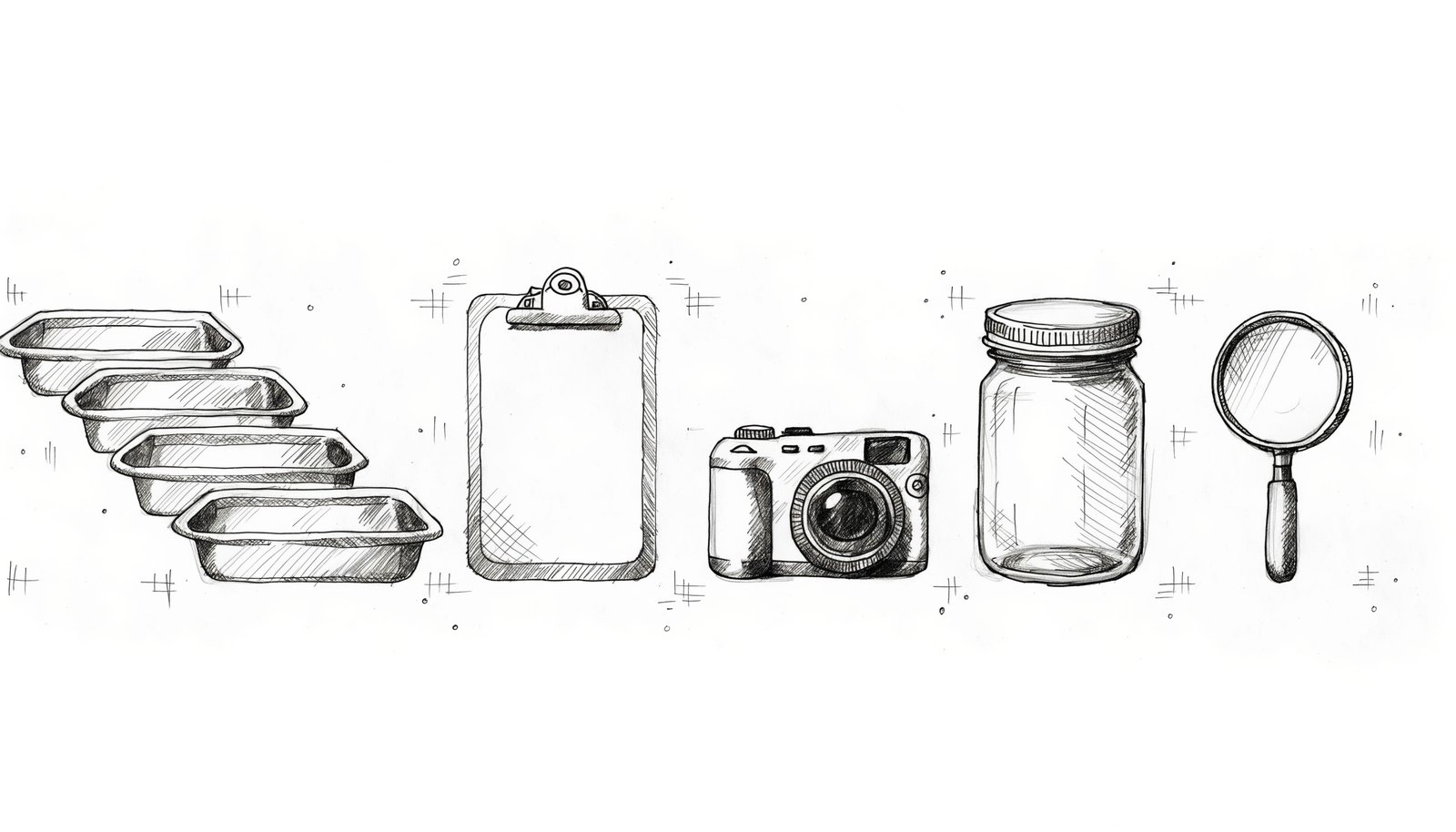
This visual guide breaks down the essential steps we take, underscoring the importance of proper authorization, a thorough history review, and a strict chain of custody.

Following these preliminary steps ensures the entire examination is built on a foundation of medical and legal integrity.
Documenting The Exterior
The first phase is the external examination. My team and I begin by carefully documenting the decedent’s physical characteristics, including height, weight, and any distinguishing features like tattoos or old surgical scars. We meticulously photograph and take notes on everything we observe.
Next, I conduct a head-to-toe inspection for any sign of injury, such as bruises, scrapes, or cuts. We also look for evidence of recent medical care, like needle marks from IV lines, fresh surgical incisions, or the marks left by defibrillator pads. These details are crucial; they provide context and help connect internal findings with what was happening just before death.
Every observation is recorded. A tiny, seemingly insignificant mark can sometimes be the first clue to a much larger issue inside the body. This makes the external review a foundational part of the entire investigation.
The Internal Examination Process
With the external review finished, I move to the internal examination. The purpose here is to visually inspect every organ and body system for signs of disease, trauma, or other abnormalities. I make a standard Y-shaped incision to open the thoracic and abdominal cavities.
This technique is the standard in pathology because it provides excellent access to all the vital organs. The incision runs from each shoulder, meets at the breastbone, and continues down to the abdomen. You can learn more about its history at Britannica.com.
From there, I carefully remove and examine each organ. The technique I use depends on the case. For instance, if a major blood vessel issue is suspected, I might remove the heart and lungs together to keep their connections intact for analysis.
Each organ is then weighed, measured, and closely inspected. I look for anything out of the ordinary, from chronic conditions like a hardened liver (cirrhosis) to acute events like a blood clot in the lungs. While this "gross" examination is critical, it is just one piece of the puzzle. You can get a fuller picture of the entire process in our guide on what a forensic autopsy entails.
This detailed internal assessment is often where the first concrete answers about the cause of death begin to surface. It lays the groundwork for the microscopic and lab tests that follow.
Phases Of The Physical Autopsy Examination
| Phase | Primary Objective | Key Procedures |
|---|---|---|
| External Examination | Document the body's external condition and identify any signs of injury or medical intervention. | - Note height, weight, scars, tattoos - Photograph the body - Inspect for trauma (bruises, cuts) - Document medical evidence (IV marks, incisions) |
| Internal Examination | Inspect all internal organs and body cavities to find evidence of disease, abnormality, or injury. | - Make a Y-shaped incision - Remove organs individually or in blocks - Weigh, measure, and dissect each organ - Take tissue samples for further testing |
These two phases, conducted with meticulous care, form the core of the physical autopsy and provide the essential data needed to determine the cause of death.
Looking Closer: Microscopic and Lab Analysis

The physical examination provides the big picture, but the most important clues are often invisible to the naked eye. To truly understand what happened, I rely on the laboratory. This is where we analyze cellular and chemical evidence that tells the complete story.
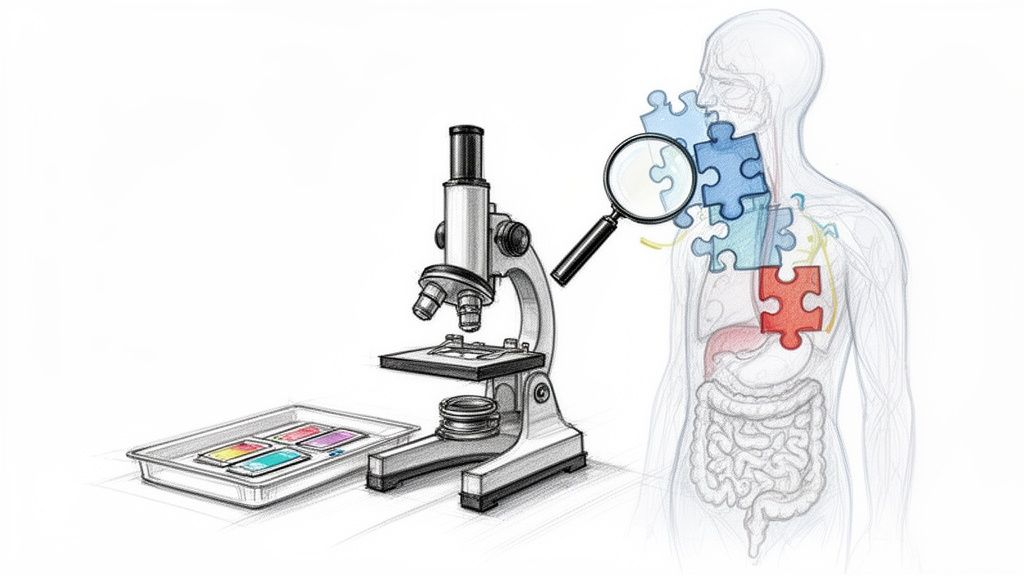
During the internal exam, I take small, carefully chosen tissue samples from every major organ. These samples are preserved and prepared for microscopic review in a process called histopathology. They are sliced incredibly thin, stained with special dyes to highlight different cellular structures, and mounted on glass slides.
The View Under the Microscope
This is where much of the diagnostic work begins. Examining these slides under the microscope allows me to see exactly what was happening inside the cells. I can spot subtle signs of disease, such as inflammation in the heart muscle (myocarditis) or the earliest signs of cancer in lung tissue.
These microscopic findings are often the missing piece of the puzzle. They can confirm a suspicion from the physical exam, uncover a hidden illness, or rule out other possibilities. This adds a crucial layer of scientific certainty to my conclusions.
This level of detail is often the deciding factor in a complex case. It’s what turns a general observation into a precise, medically sound diagnosis.
Toxicology and Other Key Tests
In addition to tissue analysis, I collect bodily fluids like blood and urine for toxicology testing. This is critical. A comprehensive toxicology screen can tell us if prescription drugs were at therapeutic levels, detect illegal substances, identify poisons or other toxins, or measure blood alcohol content.
The modern autopsy integrates these detailed lab analyses. As outlined in the scientific objectives laid out on the NIH website, this methodical sampling is now standard practice for building a complete medico-legal case.
Sometimes, I’ll order microbiology cultures to check for infections or genetic testing if a hereditary disease is suspected. All these tests help build a complete biochemical and pathological profile. Together, the microscopic and lab findings provide the final, essential pieces of evidence needed for an accurate conclusion.
Creating the Final Autopsy Report
Once the physical examination is complete and all lab results are back, I synthesize all the information into the final autopsy report. This document is a cohesive narrative that connects every piece of evidence.
My role is to connect the dots between the external and internal exams, the microscopic details from tissue slides, and the data from toxicology reports. For example, a blocked coronary artery seen during the internal exam is a major clue. When the microscope confirms that heart muscle tissue died from a lack of oxygen, those two findings lock together. This is how I build a case for the cause of death; every conclusion must be anchored in solid, verifiable evidence.
Structuring the Report for Clarity
While the report is written in precise medical terminology, I structure it to be as clear as possible for families and attorneys. It needs to be logical and transparent so anyone can follow my process.
The final document is broken down into specific sections:
- Clinical Summary: A brief overview of the person's known medical history and the circumstances of their death.
- External Examination: Documentation of the body's external condition, including height, weight, identifying marks, and any signs of injury.
- Internal Examination: A system-by-system account of the findings for each internal organ.
- Microscopic Findings: A summary of what the tissue samples revealed under the microscope.
- Ancillary Studies: Presentation of all lab results, such as toxicology and microbiology.
This methodical layout ensures there is no ambiguity.
Determining Cause and Manner of Death
The report culminates in two key conclusions: the cause of death and the manner of death. The cause is the specific injury or disease that started the chain of events leading to death. The manner classifies it as natural, accident, suicide, homicide, or undetermined.
The timeline for these final answers can vary. You can learn more about how long it takes to get autopsy results in our detailed guide.
My commitment as a forensic pathologist is to deliver an unbiased, evidence-based conclusion. The final report is a testament to that promise, providing a factual account that honors the deceased and delivers the truth to their loved ones.
Frequently Asked Questions About the Autopsy Process
Families and legal teams often come to me during one of the most difficult times of their lives. They have urgent questions, and my job is to provide clear, straightforward answers to demystify the autopsy process. Here are some of the most common ones I hear.
How long does a complete autopsy take?
The physical examination itself usually takes between two and four hours, depending on the complexity of the case. However, that's just the first step. The complete process involves reviewing medical records, waiting for detailed lab results from tissue and fluid samples, and then correlating all findings into a final, comprehensive report. This meticulous process can take several weeks. Thoroughness always comes before speed, as every conclusion must be supported by solid evidence.
Will an autopsy prevent an open-casket funeral?
No, it will not. I treat every person in my care with the deepest respect. The incisions I make are planned carefully, similar to surgical incisions, and are always closed afterward. We work closely with funeral directors, who are skilled at preparing a loved one for viewing. It's a standard part of our professional practice to ensure families can have the open-casket service they wish for.
What is the difference between cause and manner of death?
This distinction is crucial in my field. The cause of death is the specific medical reason a person died, such as a heart attack (myocardial infarction). The manner of death is the classification of how the death occurred. There are five categories: natural, accident, suicide, homicide, and undetermined. The cause of death is the "what," and the manner of death is the "how."
Who can authorize a private autopsy in Texas?
In Texas, the authority to request a private autopsy lies with the legal next of kin. The Texas Health & Safety Code establishes a specific hierarchy for who can give consent, typically starting with the surviving spouse, then adult children, and then parents. We always help families navigate these legal requirements to ensure everything is handled correctly.
The national autopsy rate has declined significantly over the decades. In 1980, the rate was 17%, but by 2020, it had fallen to just 7.4%. This trend concerns many in the medical field because autopsies are a powerful tool for understanding disease and confirming diagnoses. You can explore global autopsy statistics on Wikipedia to learn more.
At Texas Autopsy Services, my mission is to provide definitive, compassionate answers. If you have questions or need to discuss your situation, please contact my office directly for a confidential consultation. https://www.texasautopsyservices.com