October 27, 2025 · Texas Autopsy Services
Guide to Reading a Pathology Report
Learn how to read a pathology report with this clear guide from a forensic pathologist. I'll help you understand key terms and what the results mean.

On this page
- What a Pathology Report Is and When You Need One
- How to Read Each Section
- What Families and Attorneys Can Expect
- The Role of Independence and Objectivity in Forensic Pathology
- Common Misconceptions About Pathology Reports
- Ethical and Legal Safeguards in Texas
- What to Do After Reviewing the Report
- Frequently Asked Questions
TL;DR
- Pathology reports are organized into patient data, clinical history, gross and microscopic descriptions, and a final diagnosis.
- I explain each section in everyday terms and define key concepts like benign, malignant, and margins.
- Ancillary studies such as immunohistochemistry or genetic testing add depth and precision.
- Comments and addenda capture nuances and guide further testing or interpretation.
- Families and attorneys can discuss findings with clinicians or me directly at Texas Autopsy Services for clarity and next steps.
When a family reached out after a private autopsy I performed in Central Texas, they told me the report felt like another layer of uncertainty. They’d lost a loved one unexpectedly and were determined to understand every detail. As I walked them through the document, their relief was palpable. That moment reminded me how essential it is to decode each section clearly and compassionately.
What a Pathology Report Is and When You Need One
A pathology report is a detailed record of what happens after tissue or organs are examined—either in a living patient biopsy or through a private autopsy. It provides a medical-legal narrative that answers critical questions: What was the disease? How advanced was it? Did surgical margins clear the tissue? In a forensic context, it clarifies cause and manner of death under Texas Health & Safety Code Chapter 716.
Private autopsy services in Texas offer an independent, second-opinion evaluation when families or attorneys seek extra assurance. As a board-certified forensic pathologist by the American Board of Pathology, I lead each examination with strict objectivity. Our goal at Texas Autopsy Services is to ensure the findings withstand any legal or medical review.
How to Read Each Section
Pathology reports follow a standard layout. Once you know where to look, you can piece together the full story.
Patient Information and Clinical History
The report opens with patient identifiers: name, date of birth, and medical record number. Confirming these details prevents mix-ups. Next is Clinical History or Clinical Information—the background provided by treating physicians, families, or attorneys. It frames the pathologist’s examination, linking symptoms or circumstances of death to what we observe.
Gross Description
Here I describe what I see with my unaided eyes. A typical entry might read:
“The specimen is a 2.1 × 1.5 × 0.8 cm fragment of firm tan-white tissue.”
This “naked-eye” assessment sets the stage for microscopic study. If you’re new to medical terms, a medical terminology study guide can help you translate descriptors into plain language.

Microscopic Description
Under the microscope, I examine cellular details. This section notes whether cells appear benign (non-cancerous) or malignant (cancerous), and whether they’re in situ (confined) or invasive (spreading). Every adjective follows standardized definitions so any physician can interpret them the same way.

Final Diagnosis
The final diagnosis is the bottom line. It specifies disease type, grade, and other critical details. For solid tumors, a synoptic format—like a checklist—summarizes tumor size, margins, and additional parameters that guide treatment.
Precision is essential. Every term has a defined meaning in pathology.
Key Terms to Know
- Well-differentiated: Cells resemble normal tissue—tends to indicate slower growth.
- Poorly-differentiated: Cells look abnormal and disorganized—often more aggressive.
- Margins: Edges of the removed tissue. Negative margins mean no tumor at the edge; positive margins indicate cells right up to the cut line.
You can review an example pathology report to see these elements in context.
What Families and Attorneys Can Expect
When I deliver a report, I provide clear answers and welcome questions. You’ll receive a comprehensive document, often supplemented by images or diagrams. If uncertainty remains, my Comments or Addendum sections explain nuances and suggest follow-up testing.

Ancillary Studies
Ancillary studies deepen our analysis:
- Immunohistochemistry (IHC) uses antibodies to highlight specific proteins.
- Genetic analysis detects mutations or chromosomal changes.
- Toxicology testing reveals drugs, alcohol, or poisons. See my guide on how to read a toxicology report for details.
Each test boosts confidence in the final interpretation, whether for clinical care or a forensic investigation.
The Role of Independence and Objectivity in Forensic Pathology
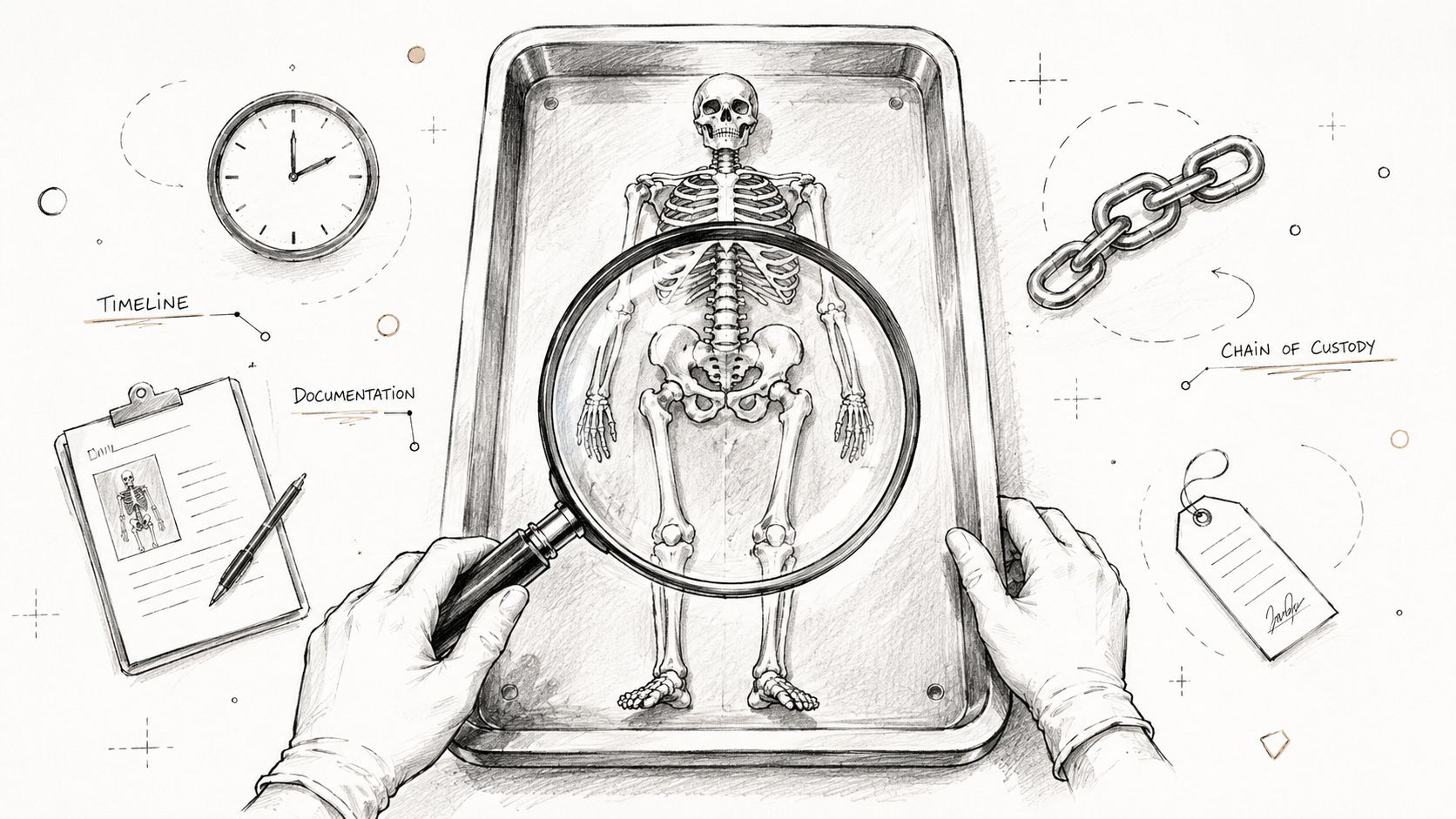
An independent review safeguards impartiality. In private autopsies, my only obligation is to the evidence and to Texas law. The Texas Funeral Service Commission and Health & Safety Codes require transparent chain of custody and unbiased reporting. That independence matters when a family or attorney seeks an opinion that stands up in court.
Common Misconceptions About Pathology Reports
Many people assume the pathologist writes the clinical history or makes treatment decisions. In reality, we interpret tissue in light of the provided information. If something seems unclear, I note it rather than guess. A study in Pathology & Oncology Research found that 65% of clinicians interpret uncertain language differently, underlining the need for precise, consistent terminology.
Ethical and Legal Safeguards in Texas
Texas law (Chapters 711 and 716) governs autopsy authority and report confidentiality. Only next-of-kin or authorized attorneys may request the full autopsy report. I comply with all TFSC standards, ensuring every step—from specimen handling to final report—meets legal and ethical requirements.
What to Do After Reviewing the Report
Your report should spark a professional conversation. Prepare questions to guide that discussion:
- Explain the final diagnosis in everyday terms.
- Are any findings still uncertain or in need of further tests?
- How do these results connect to the symptoms or circumstances?
- What are the next steps based on this report?
If doubts remain, seeking a second opinion is reasonable. My team and I can walk you through the findings and explain how they relate to legal or clinical decisions. To request a report I prepared, see how to request an autopsy report.
Frequently Asked Questions
How long does it take to get a pathology report?
A simple biopsy may return in days. A full private autopsy, including specialized tests, often takes several weeks. Thorough examination and ancillary studies ensure an accurate, defensible conclusion.
What is the difference between cause and manner of death?
Cause of death is the medical event that began the fatal chain—like myocardial infarction or gunshot wound. Manner of death is the legal classification: natural, accident, suicide, homicide, or undetermined.
Can I see confidential pathology data?
Only authorized parties—next-of-kin or legally designated attorneys—may receive full reports. Hospitals have a formal records process; private autopsy clients work directly with my office.
I understand the weight each report carries for families, attorneys, and clinicians. If you need clear, medically sound answers, contact our office for a confidential consultation. Learn more about Texas Autopsy Services.