November 28, 2025 · Texas Autopsy Services
Finding an Independent Forensic Pathologist in Texas
Searching for 'forensic pathologists near me' in Texas? Learn when you need a private autopsy and how to find a qualified, board-certified expert for answers.
On this page
- A private autopsy provides an independent, objective investigation into the cause and manner of death.
- All examinations are performed by a board-certified forensic pathologist, ensuring the highest level of expertise.
- The process is confidential, fully compliant with Texas law, and handled with respect for the deceased and their family.
- Families and attorneys receive a comprehensive, detailed report that provides clear, defensible answers.
As a forensic pathologist, my work often begins when a family or an attorney realizes the official story of a death doesn't add up. Sometimes the cause of death is listed as "undetermined," or a hospital's explanation feels incomplete. In other cases, a death occurred unexpectedly, and a government-mandated autopsy was never performed, leaving a void where answers should be.
These situations create a need for clarity. Whether for a disputed insurance claim, a potential legal action, or simply for a family's peace of mind, the goal is always the same: to find the truth. My role is to provide that truth through a private autopsy, a scientifically rigorous investigation performed independently of any hospital or government agency.
When to Seek a Private Autopsy
The decision to arrange a private autopsy is deeply personal and often made during a time of grief. My purpose is to provide objective medical facts that help you find the clarity you deserve. Families and legal professionals across Texas typically contact me when they face specific circumstances that require an independent examination. The primary objective is to obtain a definitive and unbiased cause of death investigation, particularly when initial answers are vague or when an official autopsy wasn't conducted.
This process gives families the necessary information to move forward and supplies attorneys with the factual foundation essential for legal matters.
Common Reasons for an Independent Examination
Several recurring situations prompt the need for a second opinion or a primary private autopsy.
- Unclear Hospital Findings: It's not uncommon for a death to occur in a medical facility where the cause on the death certificate seems vague or inconsistent with the person’s known health history.
- Sudden or Unexpected Death: When someone dies unexpectedly without an obvious medical reason, and the local medical examiner or justice of the peace declines jurisdiction, families are left without answers.
- Concerns About Medical Care: Serious questions may arise about the quality of care a loved one received. An objective review is the only way to determine if a medical error or negligence contributed to the death.
- Legal and Insurance Claims: A clear, scientifically supported cause of death is often a mandatory requirement for life insurance policies, workers' compensation cases, or potential lawsuits. These circumstances may also require legal advice from professionals like personal injury attorneys.
The demand for this specialized work is clear. The Bureau of Labor Statistics projects a 14% increase in job openings for forensic science technicians between 2023 and 2033, underscoring the growing importance of precise death investigation.
Table: Situations That Warrant a Private Autopsy
A summary of common scenarios where an independent forensic examination provides critical answers for families and legal counsel.
| Situation or Concern | How an Independent Autopsy Provides Clarity |
|---|---|
| Vague Cause of Death from a Hospital | Delivers a specific, medically precise cause and manner of death, replacing general terms like "cardiac arrest" with the underlying reason. |
| Suspicion of Medical Malpractice or Negligence | Provides an unbiased, evidence-based review of the medical care and documents any potential errors or omissions that may have contributed to the death. |
| Sudden, Unexplained Death (Case Declined by ME/JP) | Investigates for hidden natural diseases, toxic substances, or subtle injuries that would otherwise go undiscovered, providing a definitive explanation for the family. |
| Insurance Claim Denial or Dispute | Establishes a scientifically sound cause of death, which is critical for satisfying the requirements of life insurance or accidental death benefit policies. |
| Workplace or Environmental Exposure Concerns | Can identify evidence of toxic exposures or occupational diseases, providing the necessary link for workers' compensation claims or litigation. |
| Contradictory Information or Family Disagreement | Offers a final, authoritative report based on physical evidence, resolving disputes and giving all family members a single source of truth to rely on. |
Ultimately, an independent autopsy delivers facts, offering a clear path forward when the way is clouded by uncertainty. An independent examination adds a crucial layer of objectivity, completely separate from any hospital or government agency. This guarantees that the final conclusions are built on one thing: pure medical and scientific evidence. You can learn more in our detailed article about when an autopsy is performed.
What an Independent Forensic Pathologist Does
As a physician specializing in forensic pathology, my responsibility is to determine the cause and manner of a person’s death. But my work extends far beyond the physical examination. I am trained to analyze complex medical histories, interpret toxicology findings, and synthesize investigative reports to construct a complete picture of what occurred.
The foundation of my practice is a commitment to objective truth. Unlike a pathologist employed by a hospital or government agency, my conclusions are free from institutional pressures. This independence is the bedrock of my work at Texas Autopsy Services. It guarantees that every finding is based purely on medical evidence, providing clear answers for families and defensible facts for attorneys.
The Foundation of Trust and Expertise
Becoming a forensic pathologist requires years of specialized training after medical school. My credentials include board certifications from the American Board of Pathology in three distinct areas: Anatomic Pathology, Clinical Pathology, and Forensic Pathology. This triple certification provides a broad diagnostic foundation that I apply to every case.
The American Board of Pathology is the gold standard for certifying pathologists in the United States, setting rigorous standards for knowledge and practice.
This screenshot from the official ABPath website highlights its mission to uphold the highest standards in our field. Verifying these credentials should be the first step when seeking a qualified expert. It’s a non-negotiable benchmark for quality.
This field is highly specialized, and there are only about 750 full-time, board-certified forensic pathologists practicing in the entire United States, which is less than half the number needed to adequately serve the public. The long training path and a sharp decline in hospital autopsies, which dropped from 50% in the 1950s to just 7.4% by 2020, are major factors in this critical shortage.
From Examination to Final Report
All my work culminates in a single, comprehensive document: the autopsy report. This is not merely a list of medical terms; it's a detailed narrative explaining complex medical findings in a way that families and legal professionals can understand. My goal is to translate intricate medical science into a clear, factual story that provides definitive answers. Each report is constructed to withstand intense scrutiny in a legal setting.
This detailed report is the most critical product of an independent forensic pathologist. Understanding different medical report formats can help set expectations for the quality and detail you should receive. This document serves several vital purposes:
- For Families: It offers closure by explaining exactly what happened, often correcting misinformation or clarifying vague reports from a hospital.
- For Attorneys: It becomes a foundational piece of evidence, creating a scientifically sound basis for a wrongful death, medical malpractice, or insurance claim.
- For Public Health: Data from autopsies can identify disease trends, uncover environmental hazards, or reveal the effects of new drugs, ultimately contributing to community safety.
My role is to be an unbiased investigator for the deceased. Through a meticulous and respectful process, I provide the final, authoritative word on the cause and manner of death.
How a Private Autopsy in Texas Works
When a family requests a private autopsy, they need answers during an incredibly difficult time. The process must be clear, methodical, and handled with the utmost respect. My aim is to guide you through each step, ensuring you understand what is happening and why.
The process begins with legal authorization. Texas law is clear: the legal next of kin must provide signed consent before any postmortem examination can start. This is the first and most critical step.
Once consent is obtained, my team and I coordinate all logistics. We arrange for the dignified transport of your loved one from their location, whether a hospital, funeral home, or residence, to a licensed, professional facility for the examination. This is managed with compassion and in strict compliance with all state regulations.
The flowchart below provides a simple overview of the three main phases of the private autopsy process.

It's a logical progression from obtaining legal consent, to conducting the detailed examination, and finally, delivering a comprehensive report that gives your family the clarity you're seeking.
The Examination Phase
The autopsy itself is a complex medical procedure involving a meticulous investigation. It includes a detailed external and internal examination to document any signs of injury, disease, or other abnormalities.
During this stage, I collect small tissue and fluid samples for specialized tests. These are crucial for two main reasons:
- Microscopic analysis (histology) allows me to observe changes at a cellular level.
- Toxicology screening can identify medications, drugs, or other substances in the body.
Every piece of evidence is carefully photographed, and we maintain a strict chain of custody. This ensures that every sample and finding is documented and preserved in a way that is admissible in any potential legal setting. The core of the examination is a systematic search for objective medical truth.
Analysis and Reporting
After the physical examination is complete, your loved one is respectfully prepared for release to your chosen funeral home. My work continues for several weeks as I meticulously review microscopic findings and interpret complex data from toxicology labs. This diligence is what makes the final report both accurate and defensible.
The table below breaks down what you can expect at each stage.
The Private Autopsy Process Step by Step
| Phase | Key Activities | Typical Duration |
|---|---|---|
| Initial Contact & Consent | Consultation with family, review of medical records, signing of legal authorization. | 1-2 days |
| Transportation & Examination | Dignified transport to the facility, comprehensive external and internal examination, sample collection. | 1-2 days |
| Specialized Testing | Microscopic (histology) and toxicology analyses are performed by accredited labs. | 4-8 weeks |
| Final Report & Consultation | I synthesize all findings into a comprehensive report and schedule a meeting to review it with the family. | 6-10 weeks from exam date |
Once all data is analyzed, I create a final, comprehensive report that explains all findings in clear, precise language. I make it a priority to meet with the family or their legal representative to go over the report and answer every question. For a deeper look, our complete guide to private autopsies explains each step in greater detail.
Choosing the Right Forensic Pathologist
When you search for a "forensic pathologist near me," the expert's qualifications are paramount. You need answers that are accurate, defensible, and clearly explained. It's important to understand that not every physician who performs autopsies is a board-certified forensic pathologist, and that distinction is critical.
Choosing an expert requires careful consideration of their credentials, experience, and ability to communicate complex medical findings in plain language. This choice directly impacts the quality and reliability of the final autopsy report.
Verify Board Certification
First, check their credentials. The gold standard is certification from the American Board of Pathology. A true forensic pathologist will be board-certified in two specific areas:
- Anatomic Pathology: The foundational study of disease in organs and tissues.
- Forensic Pathology: Specialized training focused on determining the cause and manner of death in cases that are sudden, unexpected, or violent.
I hold a third board certification in Clinical Pathology, which covers laboratory analysis of blood, tissue, and other fluids. This triple certification provides a broader perspective, allowing me to connect anatomical findings with toxicology results and other lab data to form a complete, cohesive picture. Board certifications are non-negotiable; they are proof of an expert's commitment to the highest professional standards.
Assess Direct Experience and Case History
After verifying certifications, evaluate real-world experience. A pathologist's skills are refined over hundreds or thousands of cases. An experienced professional has encountered everything from straightforward natural deaths to complex cases involving subtle injuries or rare toxins.
Don't hesitate to ask how many autopsies the pathologist has personally performed. I have conducted over 1,000 autopsies, including adult, pediatric, and specialized forensic cases. This extensive experience helps in recognizing patterns, interpreting minute details, and avoiding potential errors. An expert’s case history demonstrates their ability to handle a wide range of circumstances.
Evaluate Communication and Personal Involvement
A great pathologist must also be an effective communicator. A detailed report filled with medical jargon is useless if it cannot be understood. A significant part of my job is meeting with families and their attorneys to explain my findings and answer all their questions.
You should also confirm who will be handling your case. With some larger firms, the person you speak with is not the one performing the examination. I handle every case personally, from the initial consultation to the final report. This ensures you are working directly with the board-certified expert from start to finish, providing a single, compassionate, and authoritative source for the answers you need.
Understanding the Costs of an Independent Autopsy
During a time of loss, financial uncertainty should be the last of your concerns. A private autopsy is an investment in obtaining the truth, and my commitment is to be completely transparent about the costs from the beginning.
It’s important to know that private autopsies are typically not covered by medical insurance. As this is a service requested directly by you or your attorney, the financial responsibility lies with the requesting party. For this reason, I provide a clear, all-inclusive fee structure before any commitment is made.
What Is Included in the Cost
The fee for a private autopsy covers the entire investigative process, not just the examination itself. It’s a comprehensive package designed to provide a complete and final answer with no hidden fees.
The standard fee for a private autopsy at Texas Autopsy Services generally includes:
- Professional Fee: My time and expertise as a board-certified forensic pathologist to conduct the examination and interpret all findings.
- Facility Use: Use of our partner facility, Waterloo Mortuary, for the examination.
- Standard Lab Tests: This includes routine toxicology screenings and microscopic examination of tissue (histology).
- Ancillary Staff: The assistance of trained technicians during the examination.
- Comprehensive Final Report: A detailed written report explaining all medical findings, the official cause of death, and the manner of death, plus a personal consultation to review the report with you.
If a case requires more complex or specialized testing, we will discuss any potential additional costs with you upfront and obtain your approval before proceeding.
Logistical and Transportation Factors
I provide services to families in all 254 counties across Texas. A common question is how we manage transportation, especially for those not located in Central Texas. We coordinate directly with your chosen funeral home to arrange respectful transportation to and from our examination facility. We handle all these details to ensure there are no delays or disruptions to your funeral plans.
Transportation costs vary by distance and are a separate charge. However, we facilitate all arrangements and provide a clear transportation quote based on your location so you have the full financial picture.
Serving All 254 Counties in Texas
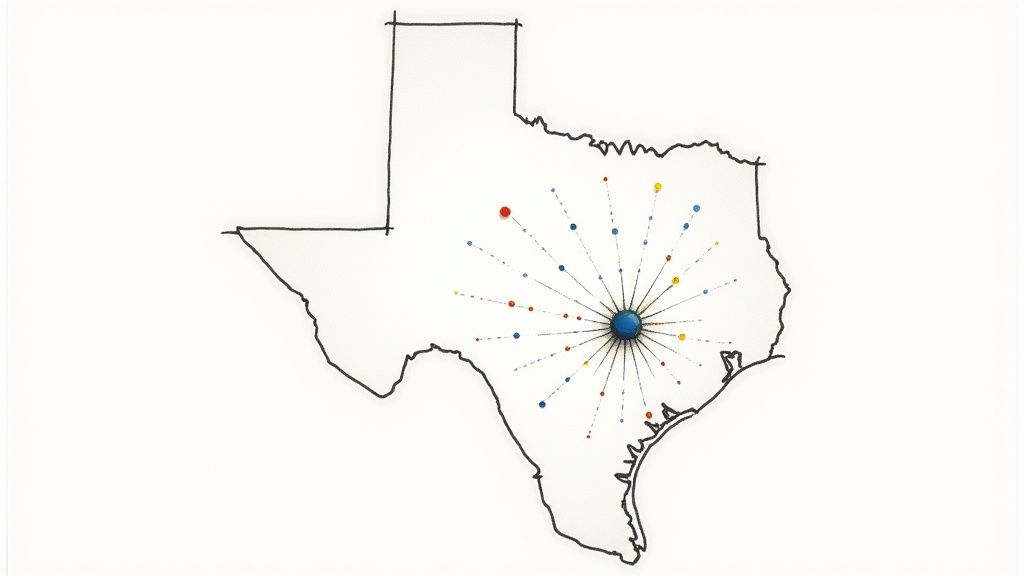
When families or attorneys need answers, their search often starts with "forensic pathologists near me." While a natural starting point, I believe true expertise shouldn't be limited by geography. I founded Texas Autopsy Services to bring premier independent forensic pathology to every family, law firm, and county in the state.
From Houston and Dallas to the quietest parts of West Texas, the need for objective truth is universal. My practice is designed to make top-tier, board-certified expertise accessible to anyone who needs it.
A Central Hub for the Entire State
My practice is structured to serve all 254 counties in Texas. We achieve this through a centralized system that manages every logistical detail. While our main examination facility is in Central Texas, our reach extends statewide. We coordinate directly with funeral homes to arrange respectful transportation, ensuring a seamless process no matter your location.
My personal expertise is the foundation of this service. As a board-certified forensic pathologist with experience in over 1,000 autopsies, I perform every examination myself. This guarantees your case receives the highest level of expert attention from beginning to end.
A Human-Centered Approach
Credentials and case numbers are important, but they don't capture the full picture. I am committed to providing a service that is both medically precise and genuinely human. I understand that my clients are often navigating profound grief or complex legal challenges. My role is to bring clarity and facts to the situation with empathy and respect.
This means I take the time to explain my findings in plain, understandable language. I make myself available to answer your questions and ensure you feel supported and informed throughout the process. The service I offer is about more than just a final report; it’s about delivering peace of mind through truth. You can see how this commitment applies to my work with individual Texas jurisdictions by learning about our approach to county forensic autopsies.
When your search for a "forensic pathologist near me" leads you here, you’ve found more than a local provider. You’ve found a dedicated statewide resource committed to scientific integrity and compassionate care.
Frequently Asked Questions
Here are answers to some of the most common questions I receive from families and attorneys considering a private autopsy in Texas.
Will a Private Autopsy Interfere with Funeral Plans?
No. This is a common concern, but the autopsy will not delay your funeral or prevent an open-casket viewing. The examination is a surgical procedure performed with the utmost care to ensure your loved one's appearance is not altered in a way that would affect a viewing. We coordinate directly with your funeral home to ensure your arrangements proceed without any delays.
How Long Does the Final Autopsy Report Take?
While I can often provide initial impressions shortly after the examination, the complete, final report typically takes several weeks. This timeline is necessary to conduct a thorough analysis of microscopic findings, toxicology tests, and all medical records. This deliberate pace ensures the final report is definitive, scientifically sound, and can withstand legal scrutiny.
Is a Private Autopsy Legally Recognized in Texas?
Yes. A private autopsy performed by a licensed physician who is a board-certified forensic pathologist is a legally valid medical procedure in Texas. The findings are documented in a formal report that can be used for legal cases, insurance claims, and other official purposes. Every procedure we conduct is in strict compliance with the Texas Health & Safety Code.
Can an Autopsy Be Done After Embalming?
It is possible, but it is not ideal. The chemicals used in embalming can interfere with toxicology results and may alter tissues at a microscopic level. However, a skilled forensic pathologist can often still identify important anatomical evidence. If you are considering an autopsy, it is always best to perform it before embalming whenever possible.
If you have other questions or need to discuss your specific situation, please call my office at Texas Autopsy Services for a confidential consultation. My team and I are here to help you find the answers you need.