November 10, 2025 · Texas Autopsy Services
What Families and Attorneys Should Know About a Pathologist Expert Witness
Discover the role of a pathologist expert witness in Texas. Learn how my expert insights into cause of death can bring clarity to your legal case.
On this page
- The Role of a Pathologist Expert Witness in Texas
- When to Involve a Pathologist Expert Witness
- What Makes a Pathologist a Credible Expert Witness?
- My Process: From Case Review to Courtroom Testimony
- Why Finding a Qualified Pathology Expert Is Challenging
- Answering Your Questions About Expert Witness Work
When the cause of a death is unclear, whether in a complex medical malpractice suit or a custodial death investigation, legal clarity can feel impossible to find. As a board-certified forensic pathologist, my role is to translate complex medical findings into a clear, evidence-based narrative for the legal system. My responsibility is to build a scientifically sound explanation of what happened, grounded in fact.
- A pathologist expert witness provides objective, scientific opinions on the cause and manner of death for legal cases.
- My work involves a detailed review of autopsy reports, medical records, toxicology findings, and law enforcement documents.
- Board certification in Anatomic, Clinical, and Forensic Pathology ensures a comprehensive and defensible analysis.
- I translate complex medical terminology into a clear, logical narrative for attorneys, judges, and juries.
- The goal is always to provide an unbiased, evidence-based medical truth to support the legal process.
The Role of a Pathologist Expert Witness in Texas

In both civil and criminal cases, the medical details surrounding a death are often the most critical and confusing pieces of the puzzle. Attorneys, judges, and jurors aren't medical professionals. They need a qualified expert to interpret the evidence and explain its true meaning. That is the essential role of a pathologist expert witness.
My primary responsibility is to offer an objective, scientifically backed opinion on the cause and manner of death. This work is meticulous, demanding a thorough review of all available materials, including:
- Autopsy reports and photographs
- Complete medical records and hospital charts
- Toxicology findings and laboratory results
- Law enforcement reports and witness statements
Translating Medical Science for the Courtroom
I function as a translator, taking dense medical language and converting it into a logical narrative anyone can follow. My job isn't to advocate for a specific outcome. It’s to present the unvarnished scientific truth as told by the evidence. This commitment to objectivity is the foundation of my work at Texas Autopsy Services and is crucial for the justice system to function properly.
This independent analysis is often the key to reaching a fair resolution. For example, in a wrongful death lawsuit, my testimony could clarify whether a specific medical error directly caused a patient's death. In a criminal case, my findings might help confirm or disprove a critical timeline of events.
My sole purpose is to clarify the medical facts, ensuring legal decisions are based on sound science, not speculation. I provide the "what, how, and why" from a medical perspective, empowering the legal system to do its job effectively.
The work I do is distinct from that of other medical professionals. The specific skills and training that define my field are something I've detailed in my article on what a forensic pathologist is. By interpreting findings from autopsies, medical records, and toxicology reports, I bring a needed level of clarity to legal proceedings that might otherwise be clouded by ambiguity.
When to Involve a Pathologist Expert Witness

Knowing the right time to bring in a pathologist is a key strategic decision for attorneys and a deeply personal one for families. My expertise is most critical when the medical facts are tangled, disputed, or simply confusing. The need for an expert pathologist often arises when the standard cause of death doesn't tell the whole story or fails to answer the most important questions.
For Attorneys: When Medical Evidence Is Foundational
For legal teams, my involvement can be decisive in cases where medical evidence is the foundation of the argument. These situations typically fall into a few key areas:
- Medical Malpractice Claims: Did the medical team follow the established standard of care? I examine the records to determine if a specific action or omission directly caused the patient’s death, connecting the events in the chain of causation.
- Wrongful Death Lawsuits: Here, the central question is whether negligence or a wrongful act was the direct cause of death. I provide the scientific backbone for that claim by meticulously examining the evidence.
- Workers' Compensation Disputes: When a death on the job is contested, my role is to determine if workplace conditions or a specific incident played a part, helping settle the dispute with objective medical facts.
For Families: Seeking Clarity and a Second Opinion
It's not just attorneys who seek my services. Families often come to me when they have lingering doubts or need a second, independent opinion. This frequently occurs when an official autopsy was not performed, or when an existing report doesn't align with what they knew about their loved one's health.
For example, a family might receive a hospital-determined cause of death that seems to contradict the patient's medical history. In other cases, they may feel that neglect was a factor and need an independent review to either confirm those concerns or provide peace of mind. I step in to provide that objective, unbiased examination of the evidence.
An independent pathologist expert witness provides a crucial check on initial findings, ensuring all medical possibilities have been thoroughly and impartially considered. This objective review is fundamental to achieving a just resolution.
In criminal cases, both prosecutors and defense attorneys rely on this expertise. A forensic pathologist’s testimony can be the linchpin of a trial. We provide evidence-based opinions on the cause, manner, and mechanism of death that can steer the entire case. With rigorous training in interpreting autopsy and toxicology reports, I can translate complex medical data into clear, understandable testimony. You can learn more about how an expert's testimony is pivotal in cases involving suspicious deaths.
Ultimately, my goal is to piece together the medical story using only hard scientific evidence. Whether I'm helping a grieving family find closure or an attorney build a solid case, my focus is always on one thing: delivering accurate, evidence-based medical truth.
What Makes a Pathologist a Credible Expert Witness?
In the courtroom, credibility is everything. When an attorney or family needs a pathologist as an expert witness, it's not enough to find someone with a medical degree. Their opinion must hold up under the intense scrutiny of legal proceedings. Not every pathologist is suited for this work; it requires a specific combination of education, hands-on experience, and communication skills.
The Significance of Board Certification
The absolute starting point for a credible expert is board certification from the American Board of Pathology. As a board-certified forensic pathologist, I know that each certification offers a unique and vital perspective for legal cases. These aren't just titles; they represent years of intense, specialized training and passing some of the toughest exams in medicine.
Each of my certifications builds on the others to create a complete framework for analyzing medical evidence.
- Anatomic Pathology: This is the foundation, the study of organs and tissues to diagnose disease. It provides a fundamental understanding of how illnesses impact the body and can lead to death.
- Clinical Pathology: This focuses on laboratory analysis, such as toxicology and chemistry. It's how I interpret lab results and understand the role of drugs, poisons, or metabolic issues.
- Forensic Pathology: This is the final piece. It applies anatomic and clinical pathology directly to death investigation, focusing on determining the cause and manner of death for legal purposes.
This combination allows me to seamlessly connect observations under a microscope with toxicology reports and the real-world circumstances of a death. You can learn more about the demanding education requirements for a forensic pathologist and see why this background is essential.
Experience and Communication Complete the Picture
Certifications are the foundation, but real-world experience builds the structure. Having personally performed over 1,000 autopsies, I've developed the ability to recognize subtle clues and patterns that a less experienced eye might miss. I've seen everything from straightforward natural deaths to incredibly complex forensic cases.
However, even the most brilliant analysis is useless if it can't be understood. A great expert witness must also be an effective translator, breaking down complicated medical science into clear, logical language for non-doctors. This is just as crucial in a written report as it is when speaking to a jury.
An expert's opinion must be authoritative, trustworthy, and, most importantly, understandable. The goal is to educate the jury, not confuse them with medical jargon.
The table below breaks down the key qualifications that ensure a pathologist's testimony is both scientifically sound and legally defensible.
Key Qualifications of a Pathologist Expert Witness
| Qualification | Why It Matters for Legal Cases |
|---|---|
| Board Certification(s) | Establishes a verified, high-level standard of medical knowledge and competence recognized by the medical community. |
| Specialization in Pathology | Ensures the expert has deep, specific training in disease processes, tissue analysis, and laboratory medicine. |
| Extensive Autopsy Experience | Provides hands-on expertise in a wide range of death scenarios, building pattern recognition and attention to detail. |
| Strong Communication Skills | Allows the expert to clearly explain complex findings to a non-medical audience (judges, juries, attorneys) without confusion. |
| Legal/Testimonial Experience | Shows the expert understands courtroom procedure, how to present evidence effectively, and how to withstand cross-examination. |
| Commitment to Ethics & Privacy | Guarantees that sensitive medical information is handled properly and all procedures are ethically sound and defensible. |
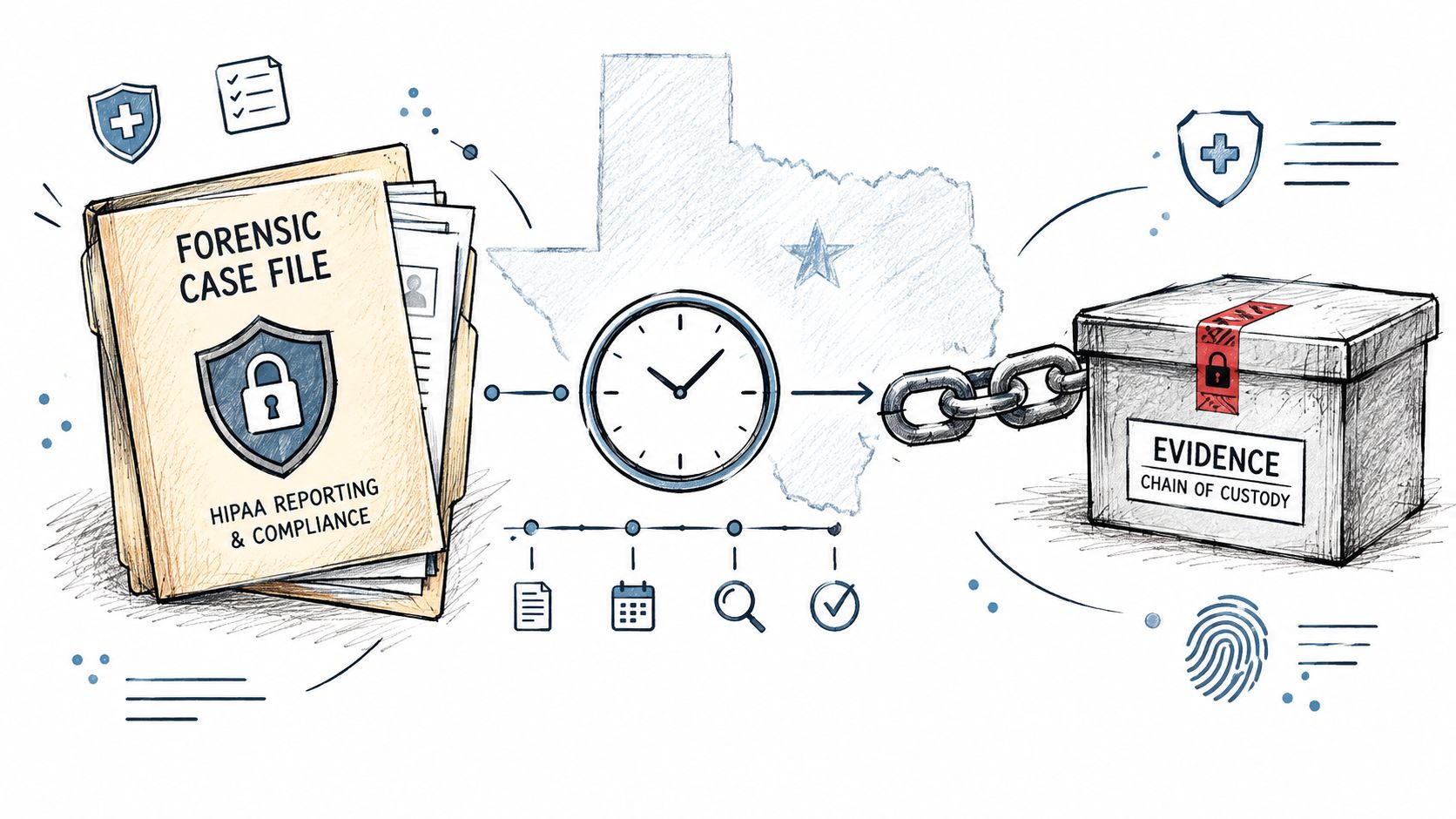
Ultimately, these qualifications build an unshakeable foundation. A skilled expert must also be meticulous about procedure and privacy, which includes a thorough understanding of HIPAA compliance principles when handling private medical records. This ensures my opinions are built on a solid base of knowledge, experience, and ethics.
My Process: From Case Review to Courtroom Testimony
Working with a pathologist expert witness shouldn't be a mysterious process. I follow a clear, methodical approach to keep you informed, whether you’re an attorney or a family member seeking answers. My work is built on thoroughness and objectivity, ensuring there are no surprises, only clear, evidence-based insights.
It all begins with our first conversation and a deep dive into the case files. This is the bedrock of my work. I carefully examine every piece of evidence: autopsy reports, crime scene photos, police records, and extensive medical charts. To get a better sense of how I handle this crucial first step, you can read more about my comprehensive medical records review process.
My main goal here is to determine if the science is sound and if I can form a solid, defensible opinion based on the available evidence.
Developing the Expert Report
After that initial review, I prepare my expert report. This document is a detailed, step-by-step account of my findings. In it, I outline the evidence I reviewed, the scientific principles I applied, and my conclusions about the cause and manner of death.
I write everything in plain language. The purpose is for lawyers and other non-medical individuals to understand it, so I break down complex pathology into clear, straightforward points. This report becomes the official record of my opinion and a vital component of the legal strategy.
This visual breaks down the core elements that make an expert witness credible and effective, from qualifications to courtroom communication.
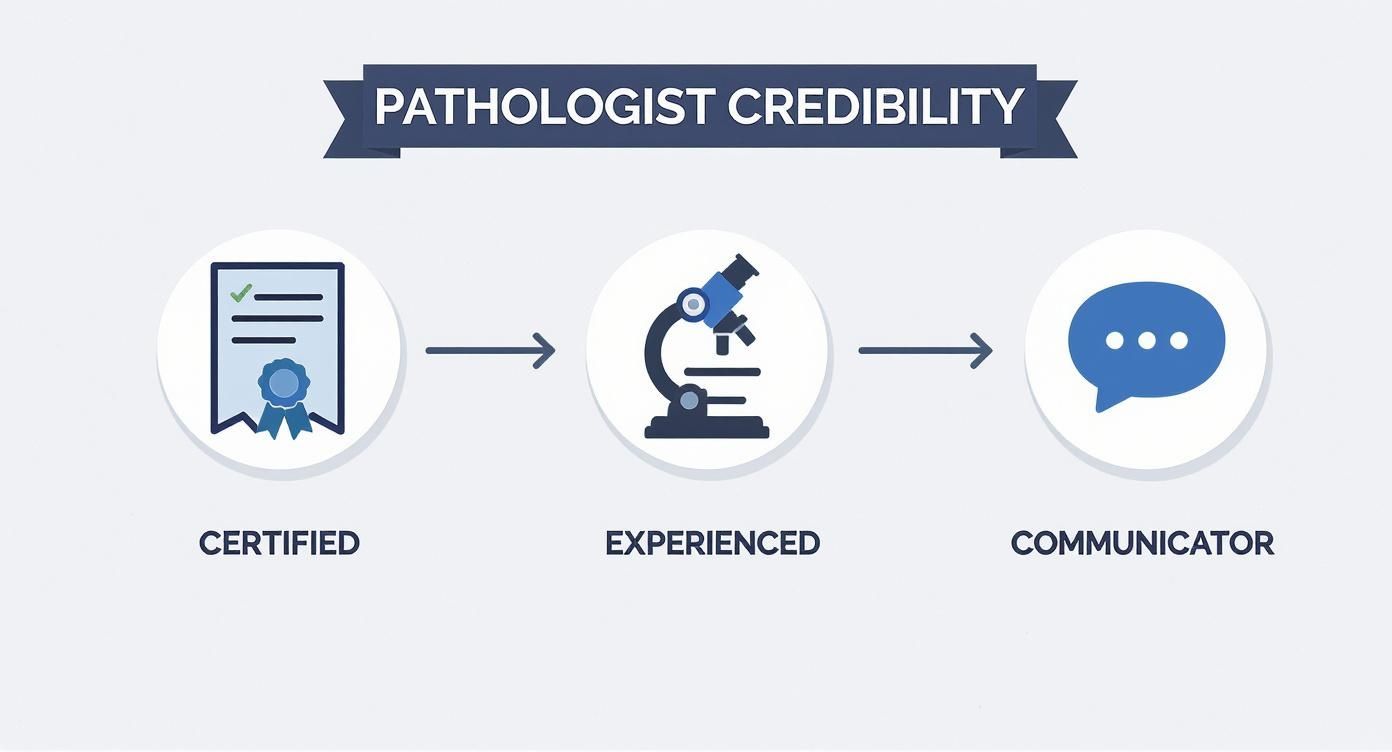
As you can see, true credibility is a blend of board certification, years of real-world experience, and the skill to explain complex science clearly.
From Deposition to Courtroom
Once the report is complete, the next stage is typically a deposition. This is where I sit down with opposing counsel and answer their questions under oath. My job here is to stick to the medical evidence and present my findings consistently.
If the case proceeds to trial, the final step is taking the stand. My role in the courtroom is not as an advocate but as an educator. I present my objective, scientific findings to the judge and jury, helping them understand the medical truth so they can make a fully informed decision.
This structured process guarantees that every opinion I provide is built on a solid foundation of meticulous review and unbiased analysis. It offers a predictable roadmap, so you know exactly what to expect as we work together to find answers.
Why Finding a Qualified Pathology Expert Is Challenging
Finding the right pathologist expert witness can feel like searching for a needle in a haystack. For both legal teams and families, this challenge can become a serious roadblock to getting clear answers and achieving justice.
One of the biggest reasons for this struggle is a documented, worldwide shortage of pathologists. This isn't a minor gap; it's a scarcity that directly slows down legal proceedings. With fewer experts available, cases can be delayed while attorneys search for someone from a small, overworked pool of specialists. This makes securing an independent, board-certified forensic pathologist not just important, but urgent.
The Numbers Behind the Shortage
The data tells a stark story. A major study from 2019–2022 examining 162 countries found a massive imbalance in the number of available pathologists.
To put it in perspective, the United States has approximately 65 pathologists per million people. In contrast, the average across Africa is fewer than three per million. While the U.S. number might seem high, this global view shows just how tight the supply is. It makes the competition for their time in legal cases incredibly fierce.
This uneven distribution means that even here in Texas, getting an expert with the right skills and availability can be difficult. The top ten countries with the most pathologists have over two-thirds of all specialists globally, which leaves many other areas underserved.
Competing Demands and Specialized Skills
It’s not just about the raw numbers. A forensic pathologist’s daily schedule is often packed with a heavy caseload of county autopsies, hospital consultations, and other professional duties.
Their unique skills are always in high demand. This makes it tough to find an expert who can dedicate the significant time and focus required for a complex legal case.
The scarcity of qualified forensic pathologists means that early engagement is not just beneficial, it's often essential. Waiting can mean losing the opportunity to secure the expert best suited for your case.
This is why being proactive is critical. Understanding this landscape helps attorneys and families see why taking immediate action is the first step toward building a strong, evidence-based case. For pathologists, techniques like optimizing your professional Google Business Profile can also make it easier for legal teams who need their specific expertise to find them.
Answering Your Questions About Expert Witness Work
I receive many questions from attorneys and families navigating this process, often during incredibly stressful times. My hope here is to clarify some common points of confusion and provide the confidence to make the right decisions.
These are real-world questions I answer every day as a board-certified pathologist.
How Is an Expert Witness Different from a Private Autopsy?
This is a frequent and important question. While both services involve forensic pathology, they serve completely different purposes.
A private autopsy is a medical investigation performed for a family. The goal is straightforward: determine the cause and manner of death to give loved ones clear answers and a sense of closure. The final report is a private medical document, shared only with the family that requested it.
My work as a pathologist expert witness, however, is specifically for the legal arena. It is less about performing a new procedure and more about providing a scientific opinion for a court case. This involves scrutinizing case files, writing a formal report for legal teams, and sometimes testifying. It is a legal consultation, not a medical service for the family.
What’s the Difference Between a Consulting and a Testifying Expert?
This distinction shapes legal strategy. The role I take on is tailored to an attorney's needs for their case.
Consulting Expert: In this role, I work behind the scenes with the legal team. I review the medical evidence and provide an honest opinion on the pathological strengths and weaknesses of their case. Everything I find is confidential and protected by attorney work-product privilege.
Testifying Expert: If a case moves forward and an attorney designates me as a testifying expert, my work becomes discoverable. I prepare a formal report with my findings, which is shared with opposing counsel. From there, I'm available for depositions and to testify in court.
Often, an attorney will engage me as a consultant first. It’s an effective way to get a candid assessment of the medical facts before deciding how to proceed.
No matter which role I'm in, my duty is always to the science. My analysis is based purely on the evidence, and my opinion never changes depending on who hired me.
What Do You Need from Me to Get Started?
To begin, I need a complete and organized file of all relevant documents. The better the information I have from the start, the more efficient and cost-effective my review will be.
A typical file includes:
- All available medical records (hospital notes, clinic visits, etc.).
- The official autopsy report, if one was performed.
- Any toxicology or other lab reports.
- Photos from the scene and the autopsy.
- Police reports and other investigative documents.
With these materials, I can perform an initial review and get a good handle on the medical merits of the case.
How Do You Maintain Objectivity in a Legal Case?
My professional credibility hinges on objectivity. As a medical scientist, my ethical obligation is to the evidence and the truth, not to the side that hires me. My job is to interpret the facts as they are.
I follow the evidence wherever it leads, even if it points in a direction my client didn’t expect. This commitment to unbiased, scientific analysis is what makes an expert witness valuable to the court. It ensures my testimony is a reliable resource for the judge and jury as they work to uncover the truth.
If you’re an attorney or a family member who needs a pathologist expert witness, you don’t have to navigate this alone. For a confidential consultation to discuss your specific case, please reach out. I am here to provide the scientific clarity and support you need.