November 9, 2025 · Texas Autopsy Services
What a Toxicology Report Is in a Death Investigation
What is toxicology report? Learn from a forensic pathologist how this test helps determine the cause of death and what the findings mean.
On this page
When a death is unexpected, the most important thing I can provide is a clear answer. As a forensic pathologist, my work is centered on finding that clarity, and a toxicology report is one of the most powerful tools I use. This report is a detailed chemical analysis of biological samples taken during an autopsy. It tells me if drugs, alcohol, or other substances were in the body and, just as importantly, in what amounts.
Here are the key takeaways about toxicology reports:
- A toxicology report identifies substances like drugs, alcohol, and poisons in the body.
- It measures the exact concentration of each substance, which helps determine if a drug level was therapeutic, toxic, or lethal.
- I collect multiple samples—like blood, urine, and tissue—because each one provides different information about substance use.
- A strict chain of custody is maintained to ensure the samples are never contaminated or compromised, guaranteeing the results are legally sound.
- As a forensic pathologist, I interpret these chemical results in the context of the physical autopsy findings to determine an accurate cause of death.
What a Toxicology Report Reveals
A toxicology report is more than a simple lab result. It's a critical piece of the puzzle that helps me distinguish between a therapeutic dose of medication, an accidental overdose, or something else entirely. The physical autopsy might show how a person died, for example, from cardiac arrest, but toxicology often explains why.
I've worked on many cases where the physical examination revealed very little. In those situations, the toxicology report provided the definitive evidence needed to understand what truly happened. It gives me a chemical snapshot of what was occurring inside the body around the time of death.
Key Components of a Standard Toxicology Report
While the specifics of every report are tied to the individual case, they all follow a standard structure. Knowing these components helps families and attorneys make sense of the findings.
Here’s a breakdown of what you'll typically find in a comprehensive toxicology report.
| Component | Description | What It Tells Us |
|---|---|---|
| Substances Detected | A list of all chemicals found, from prescription drugs and alcohol to illegal substances and poisons. | This shows what was in the person's system. It’s the result of both broad screening tests and highly specific confirmation tests. |
| Concentration Levels | The exact amount of each substance, usually measured in units like nanograms per milliliter (ng/mL). | This quantitative data is crucial. It helps determine if a drug level was therapeutic, toxic, or lethal. |
| Sample Source | Identifies which biological sample was tested—blood, urine, liver tissue, or stomach contents. | Different samples give different information. Blood shows what was active in the system at death, while urine can show drug use over several days. |
This table highlights the core data points I work with. Each piece of information is a clue that contributes to the larger picture.
A toxicology report translates raw chemical data into medical context. The numbers alone don't tell the full story; they need my interpretation as a forensic pathologist to understand their role in the cause of death.
Ultimately, this document is fundamental to any thorough and accurate death investigation. It provides objective, scientific data that can confirm suspicions, rule out possibilities, and bring needed closure. My role is to take these findings, combine them with all other evidence, and provide a conclusion that is both unbiased and medically sound.
How Toxicology Samples Are Collected and Protected
A toxicology report is only as reliable as the samples it's based on. That's why the process begins with a meticulous, standardized collection protocol during an autopsy. At Texas Autopsy Services, my work is built on ensuring every sample is collected and handled in a way that is both scientifically sound and legally defensible.
Different biological specimens tell different parts of the story, so I methodically collect a range of samples. Each provides a unique window into the deceased's physiological state at the time of death.
The Purpose of Different Sample Types
For a typical cause of death investigation, I focus on collecting a core set of samples:
- Blood: This is the gold standard. It gives me an immediate chemical snapshot, showing what substances were actively circulating in the system at the end of life.
- Urine: While blood shows the "right now," urine can reveal substance use over the past few days. It helps establish a pattern that might not be visible in the blood alone.
- Vitreous Humor: This is the fluid from inside the eye. Because it's isolated, it's incredibly stable and less susceptible to the chemical changes that happen after death. It's especially useful for an accurate alcohol level.
- Tissue: I often take samples from organs like the liver. Since the liver is the body's primary filter and metabolizes most drugs, its tissue can reveal substances already broken down and cleared from the bloodstream.
This infographic breaks down the basic journey, from the initial question to the final results toxicology provides.
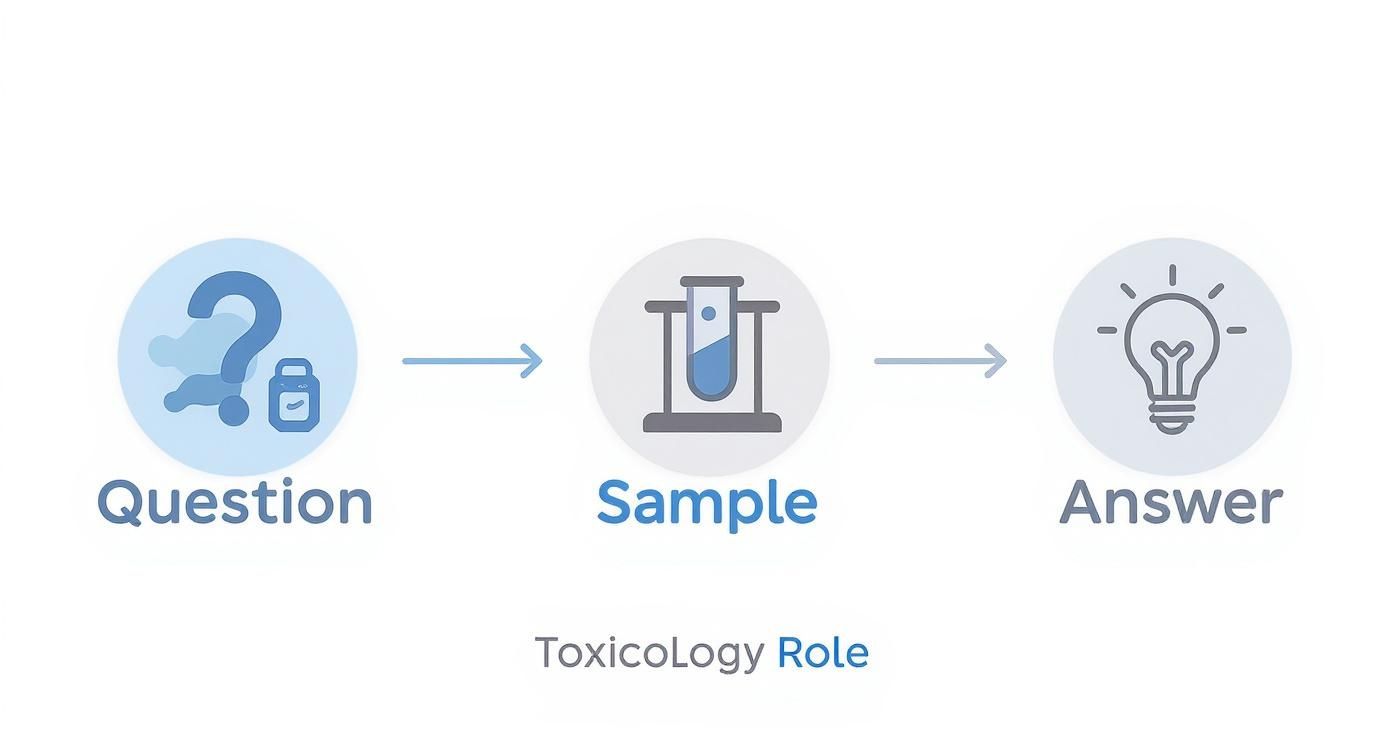
As you can see, the process is driven by a clear question, which leads to the right sample, which then gives a definitive answer through analysis.
Preserving the Chain of Custody
Collecting the right samples is only half the process. Protecting their integrity is just as critical. I do this through a strict protocol known as the chain of custody. This is a legal and scientific paper trail. From the moment I collect a sample, every person who handles it is documented.
The chain of custody is a non-negotiable procedure in forensic pathology. It creates an unbroken, documented timeline from collection to analysis, guaranteeing that the samples tested are the same ones collected, free from contamination or tampering.
This rigid process ensures my findings are scientifically valid and can withstand scrutiny in a courtroom. Every container is sealed with tamper-evident tape and labeled with unique identifiers. A log documents the date, time, and reason for every transfer. Without this, the most advanced toxicology report would be worthless.
The Science Behind Analyzing Toxicology Samples
Once the samples are collected and documented, they are sent to the laboratory. Here, the scientific analysis begins, using a two-step process that balances speed with certainty.
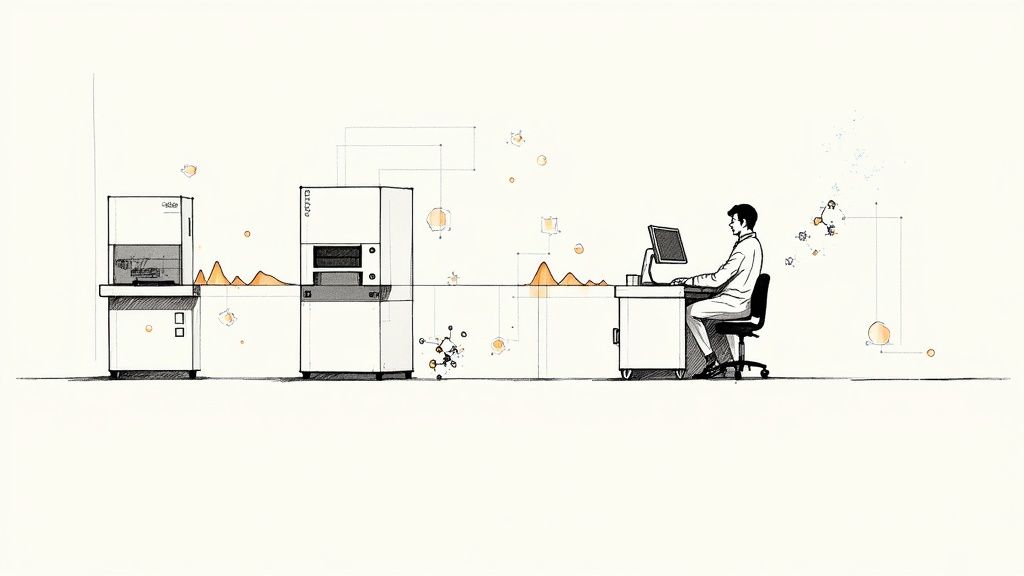
The first step is a broad sweep, what we call screening tests. We often use a technique called immunoassay to quickly check for entire classes of drugs. Think of it as a preliminary search; we are trying to figure out which drug families, like opioids or benzodiazepines, need a closer look.
From Screening to Confirmation
A positive screen is just a starting point. To get results that hold up in court and provide a definitive medical answer, we move to step two: confirmatory tests.
This is where incredibly sensitive and specific technology comes into play, usually mass spectrometry (GC-MS or LC-MS). This machinery is the gold standard. It separates every substance in the sample and identifies it by its unique chemical fingerprint.
Confirmatory testing gives us two crucial pieces of the puzzle. First, it tells us if a drug is present (qualitative). Second, it tells us how much is there (quantitative).
That second piece—the quantity—is everything. It's often the key to understanding whether a substance contributed to the person's death. This is how I can tell the difference between a therapeutic dose of a medication and a fatal overdose. For more detail on this process, you can read my guide on what is forensic toxicology.
The Future of Toxicology Analysis
The technology we use is always advancing. For instance, artificial intelligence is starting to play a larger role in predicting how certain chemicals might affect the human body. The market for AI in this field is projected to grow from around USD 635.8 million in 2025 to over USD 3.9 billion by 2032. This growth shows how much focus there is on using new tools to get faster, more accurate insights.
At the end of the day, this careful, two-step lab analysis provides the hard data. My job as the forensic pathologist is to take those numbers and interpret them, placing them into the context of the autopsy findings and the individual's medical history.
Interpreting Toxicology Results with Medical Expertise
Receiving the lab results is just the first step. The numbers on a toxicology report don’t mean much without a trained medical professional to put them in context. As a board-certified forensic pathologist, I connect those findings to the bigger picture: the person's overall health, medical history, and my discoveries during the physical autopsy.
Raw data is just that—data. It takes a deep understanding of pharmacology and physiology to determine what those numbers mean for the deceased. A drug level that’s normal for someone with a long-term tolerance could be fatal for a person taking that medication for the first time. Context is everything.
Understanding Therapeutic, Toxic, and Lethal Ranges
One of the most important parts of my analysis is determining where the concentration of each substance falls. We generally break these down into three ranges, but it's important to remember these are guidelines, not absolute rules.
- Therapeutic Range: This is the concentration you'd expect if someone is taking medication as prescribed. A drug in this range usually points to proper medical use.
- Toxic Range: At this level, the substance starts to cause harm. The person may have experienced serious side effects or significant impairment.
- Lethal Range: This is a major indicator. A concentration this high is often the direct cause of death.
These ranges aren't one-size-fits-all. They can shift based on a person’s age, weight, health, and history with a substance. My final analysis always takes these personal factors into account. To learn more, you can read about how to read a toxicology report in our detailed guide.
The Challenge of Postmortem Redistribution
Things become more complicated after death. I must always consider a phenomenon called postmortem redistribution (PMR). After a person passes away, the body's cells start to break down. This allows drugs stored in tissues like the liver or lungs to leak back into the bloodstream.
This process can make the drug concentration in blood samples look much higher than it was at the time of death, especially if the sample comes from a central area like the heart. If not accounted for, this could lead to a wrong conclusion about a drug overdose.
Because of postmortem redistribution, collecting blood from a peripheral site, like the femoral vein in the leg, is a standard and essential practice in forensic pathology. This gives me a more accurate picture of the drug levels circulating in the body at the time of death.
My expertise, backed by certifications from the American Board of Pathology, allows me to navigate these complexities. I carefully compare results from different sample sites and combine all evidence—medical, physical, and investigational—to tell the whole story. This methodical process is how I separate an incidental finding from a true cause of death.
How Toxicology Completes the Final Autopsy Report
A toxicology report is a critical piece of the puzzle, but it’s rarely the final word on its own. My job as a forensic pathologist is to assemble all the evidence into a single, cohesive narrative that explains what happened. The final autopsy report is that narrative, and toxicology provides the chemical context that holds it together.
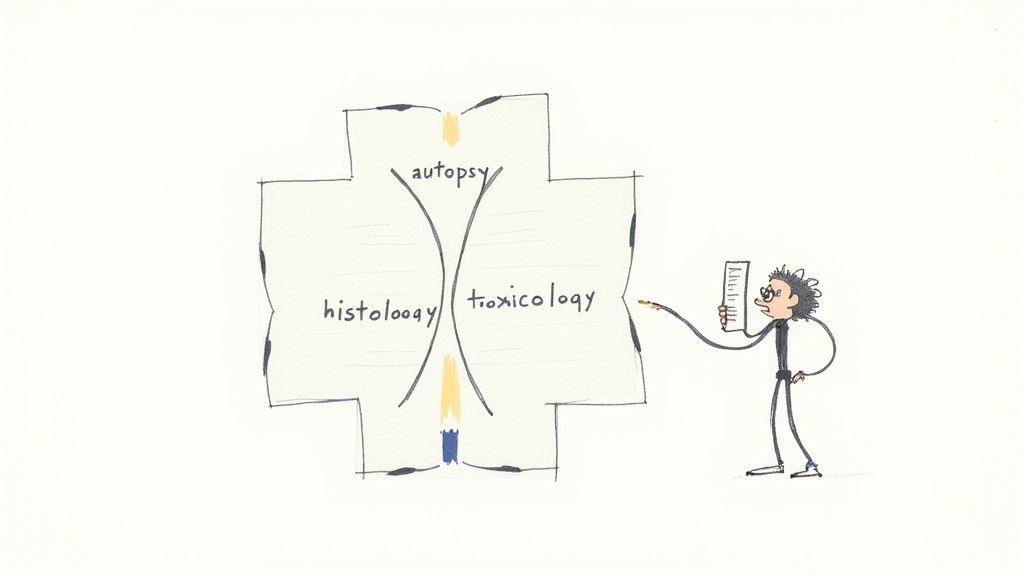
I lay out all the pieces: the physical findings from the autopsy, the microscopic analysis of tissues (histology), and the chemical data from the toxicology report. A medically sound conclusion only emerges when every one of those pieces fits together.
Connecting Chemical Data to Physical Evidence
Toxicology can be the key that confirms what physical evidence suggests. For instance, if the autopsy reveals signs of a heart attack and the toxicology report shows a dangerously high level of a stimulant like cocaine, we can connect the dots. The report explains why the heart failed.
It can also uncover a cause of death that was completely invisible during the physical exam. In cases without obvious injuries, the toxicology report often provides the only clear answer, such as a death caused by an accidental overdose of a prescription medication.
The demand for this detailed analysis is growing. The toxicology testing market was valued at USD 39.05 billion in 2024 and is projected to reach USD 67.34 billion by 2034. This growth, tracked by firms like Precedence Research, highlights how essential accurate chemical analysis has become for public health and safety.
Creating a Definitive, Evidence-Based Conclusion
Ultimately, my responsibility at Texas Autopsy Services is to deliver a definitive, evidence-based understanding of how and why someone died. The toxicology report is essential for this. It transforms a list of substances into a medically meaningful explanation.
The toxicology findings act as the final check, ensuring the cause of death is supported not just by what I can see, but also by what was happening at a molecular level inside the body.
This synthesis of information brings closure to families and provides crucial evidence for legal proceedings. It’s also why the process can feel slow; every piece of data must be carefully weighed. I’ve written more on why toxicology reports can take so long to break down the meticulous steps involved.
Answering Your Questions About Toxicology Reports
I often speak with families and attorneys about toxicology reports. I know the wait for results can be stressful, and the final document itself can be difficult to understand. My goal here is to answer some of the most common questions I hear.
How long does it take to get toxicology results back?
The honest answer is: it depends. The timeline can range from a few weeks to a few months. The complexity of the case is the biggest factor. A standard screen for common drugs is fairly quick. But if we need to search for a rare substance, the analysis takes longer.
The lab's current caseload is another factor. At Texas Autopsy Services, I prioritize accuracy above all else. Rushing is not an option. That’s why I work only with accredited labs that I trust to produce reliable results. I always keep families and their legal counsel informed about what to expect.
Can a toxicology report be wrong?
Modern toxicology is remarkably accurate, but no scientific test is perfect. That said, actual errors in accredited labs are very rare because they operate under strict quality control measures. Issues like sample contamination are why we follow a rigid chain of custody protocol.
More often, the challenge isn't a wrong result, but the correct interpretation. A number on a page means little without the full medical story behind it. This is where my role as a board-certified forensic pathologist is crucial. If something in the report doesn't align with the physical autopsy findings, we can always re-test the original samples.
What happens if a prescribed medication is found?
It’s very common to find prescribed medications during a toxicology screen. My job is to determine what that finding means. I don't just look for the presence of a drug; I look at the concentration.
I need to distinguish between a few key levels:
- A therapeutic level: The expected amount for someone taking their medication correctly.
- A toxic level: An amount high enough to cause serious harm.
- A lethal level: A concentration so high that it could be the direct cause of death.
To make this determination, I compare the lab results with the person's medical history and prescription records. This helps me understand if the medication was used as prescribed and what role it played in the cause of death.
The number of chemicals we're exposed to is staggering. A recent report noted that since the 1950s, over 100 million new chemicals have been created, and around 350,000 are actively used in products today. These substances are in our environment, which highlights why precise toxicological work is so important. You can read more in the 2025 toxicity report at lastinghealth.com. For more articles on toxicology, Salthea's blog is another good resource.
At Texas Autopsy Services, I am committed to providing answers that are not only scientifically meticulous but also clear and compassionate. If you have questions about an autopsy or need guidance during a difficult time, please do not hesitate to contact my office.