February 10, 2026 · Texas Autopsy Services
Are Autopsies Free A Texas Pathologist Explains
Are autopsies free? A board-certified Texas pathologist explains who pays for medicolegal autopsies versus the costs associated with private examinations.

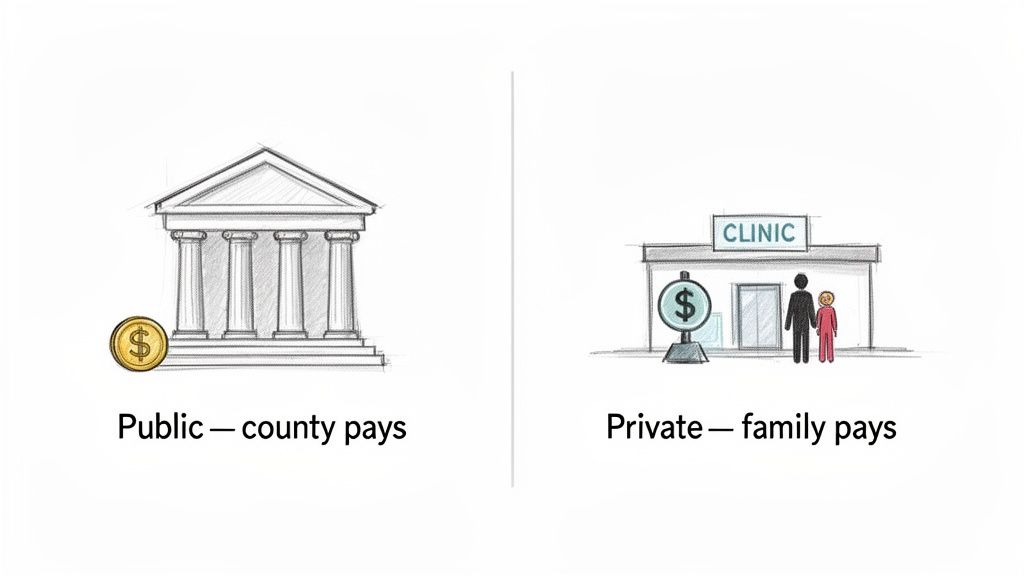
When your family is grieving, the last thing you need is more uncertainty, especially about unexpected costs. One of the first questions I'm often asked is, "Are autopsies free?" The short answer is: sometimes. It depends entirely on who requests the examination and why. If a death falls under specific legal circumstances, a government agency orders the autopsy, and the county pays for it. If a family requests one for personal clarity or legal reasons, it becomes a private medical service that the family pays for directly.
- Public (Medicolegal) Autopsies: These are required by law for sudden, suspicious, or unnatural deaths. They are performed at no cost to the family because they serve a public function.
- Private Autopsies: These are requested by families or attorneys to get answers about medical history, verify a cause of death, or gather evidence. The family or their representative covers the cost.
- Insurance Coverage: Health insurance and Medicare do not cover autopsies because they are postmortem procedures, not treatments for a living patient.
- Value of Private Autopsies: The cost provides objective, scientific evidence for legal cases, uncovers potential hereditary conditions, and offers definitive closure for families.
When an Autopsy Is Performed at Public Expense
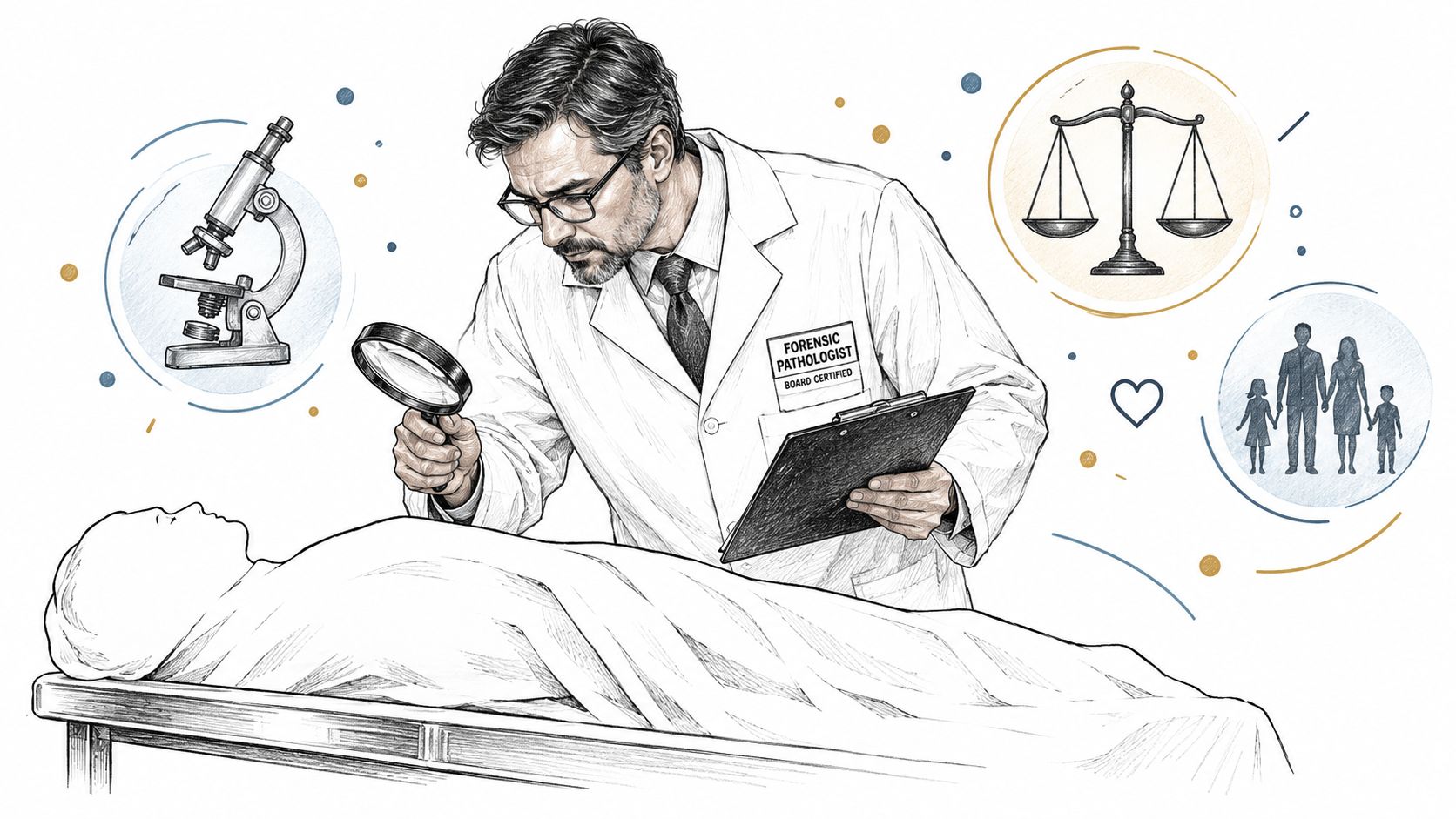
As a board-certified forensic pathologist, I perform autopsies for both Texas counties and private families. The distinction between the two is critical. A public, or medicolegal, autopsy is performed at no cost to the family because it's required by law to serve the interests of justice and community health.
The authority to order this examination lies with a Justice of the Peace or a Medical Examiner, depending on the county. Their decision is not optional; it's guided by the Texas Code of Criminal Procedure, Chapter 49, which specifies the circumstances requiring a formal inquest.
Common situations that trigger a mandatory, county-funded autopsy include:
- Sudden or Unexplained Deaths: When a person dies without a known medical reason.
- Violent or Unnatural Deaths: This covers homicides, suicides, and accidents.
- Deaths Under Suspicious Circumstances: Any death where foul play is a possibility.
- Deaths in Custody: If a person dies while incarcerated or in the custody of law enforcement.
In these cases, my role is to act as an impartial fact-finder for the county. I follow a strict chain of custody and conduct the examination according to standards set by the American Board of Pathology. My final report goes to the official who ordered it and becomes part of the public record, used by law enforcement and the courts. This system ensures every death in these categories receives a proper investigation, regardless of a family's ability to pay.
This simple chart helps visualize the decision process.

Understanding the Cost of a Private Autopsy
When a government-ordered autopsy isn't performed, or when a family needs a second opinion, they can request a private autopsy. I often explain that this is a detailed medical investigation, similar in complexity to a major surgery. You aren't just paying for a procedure; you're investing in a complete investigative process performed by an expert.
On average, a family can expect to pay between $3,000 and $5,000, though complex cases can cost more. My fee is comprehensive and covers my dedicated time as a forensic pathologist, the meticulous examination, all necessary lab work, and the creation of a thorough final report.
Several factors can shape the final cost, and I provide transparent, all-inclusive pricing so you can make an informed decision with no surprises.
- Extensive Toxicology: If poisoning or drug interactions are suspected, a complex toxicology panel is required.
- Neuropathology Examination: Cases involving dementia, seizures, or brain injury may need a specialized and time-consuming brain examination.
- Complex Medical Record Review: For individuals with a long medical history, I spend significant time reviewing all records to get a complete picture.
My goal is to deliver a definitive, medically sound conclusion. The cost reflects the expertise, resources, and time required to achieve that certainty. This service is chosen and paid for by families, and you can find more data on autopsy system funding from the National Institute of Standards and Technology. The final report I produce is a thorough, defensible document that offers value far beyond its price.
Why Health Insurance Does Not Cover an Autopsy
It's a logical question: if an autopsy is a medical procedure, why won't health insurance pay for it? The answer lies in the fundamental purpose of health insurance.

Health insurance is designed to pay for the medical care of living people. Policies cover diagnostic tests, treatments, and hospital stays intended to improve or maintain a patient's health. An autopsy, by definition, is an examination performed after death.
Because the procedure isn't treating a living patient, insurance companies and Medicare do not see it as "medical care." To them, it is an elective service. It provides answers about a death that has already happened, not one that can be prevented.
Knowing this upfront saves families from the stress of filing a claim only to have it denied. A private autopsy is a direct, out-of-pocket expense for the family or estate that requests it. This clarity allows you to focus on the real value of an independent examination: getting definitive answers, finding closure, or securing crucial evidence.
The Enduring Value of an Independent Autopsy
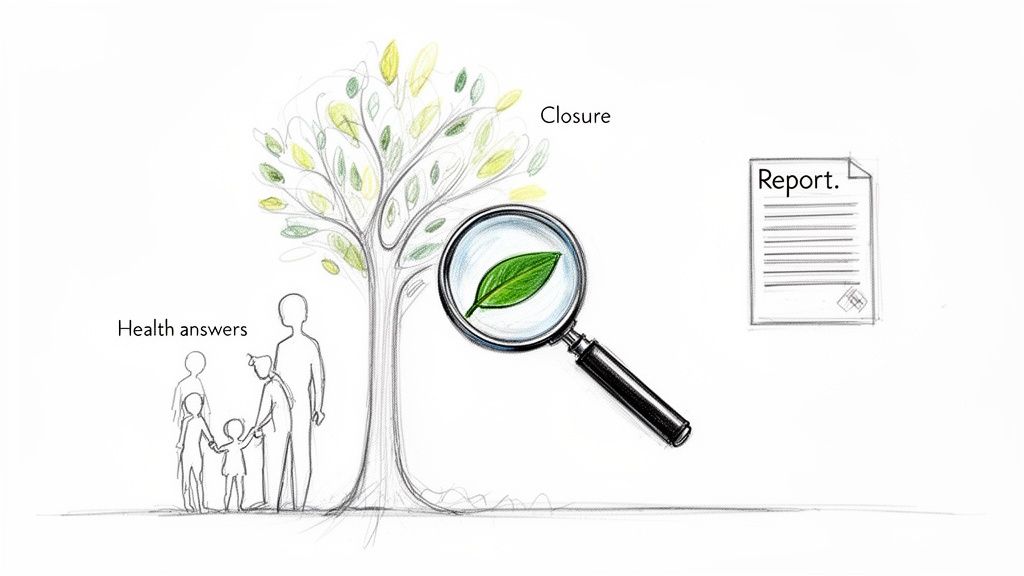
A private autopsy is a significant financial decision, but its true value often transcends the cost. Families I work with are investing in answers. Getting clear, definitive information about a loved one's final moments can be a vital first step toward healing.
Sometimes, the findings benefit the living. An autopsy can reveal hereditary conditions, such as a genetic heart defect or a predisposition to certain cancers. This knowledge is priceless, as it empowers relatives to be proactive about their own health.
For attorneys, my work provides objective, scientific evidence. The comprehensive report I deliver is a medically sound document built to hold up under legal scrutiny. It becomes the bedrock for cases involving:
- Medical Malpractice
- Wrongful Death Claims
- Insurance Disputes
As an independent forensic pathologist, my only allegiance is to the medical evidence. This objectivity makes the final report a trustworthy record of what happened. Even when a government examination was performed, a second opinion autopsy can be invaluable. My role is to produce a legally defensible document that provides clarity when it matters most.
The Shift from Hospital Autopsies to Private Services
Families often remember a time when hospitals regularly performed autopsies and wonder why that changed. For decades, the hospital autopsy was a cornerstone of medical quality control.
However, with the rise of advanced imaging like CT scans and MRIs, many felt autopsies were less necessary. The real turning point came in 1971, when the Joint Commission dropped its requirement for hospitals to perform autopsies on a minimum percentage of deaths to maintain accreditation.
Ultimately, the decline came down to finances. Autopsies are not covered by insurance, meaning the hospital must absorb the entire cost. Faced with a procedure that brought in no revenue, most hospitals eliminated their autopsy services. You can learn more about the history of this shift in medical practice.
Independent forensic pathologists like myself now fill this void. My practice at Texas Autopsy Services provides specialized expertise directly to families and attorneys who need answers the modern healthcare system isn't structured to deliver. Because my services are separate from any hospital, I can offer a completely objective examination focused on finding the truth.
Frequently Asked Questions about Autopsy Costs
Here are some of the most common questions I receive from families and lawyers.
Can I get a free second opinion on a government autopsy?
While a full, second autopsy is not a free service, a "paper autopsy" is a more affordable option. I can conduct a thorough review of the original government autopsy report, photographs, and microscopic slides. My role is to interpret the existing evidence and either confirm the initial findings, offer a different conclusion, or identify areas needing further review.
Are payment plans available for private autopsies?
I do not offer direct payment plans, as the work requires significant upfront resources for lab tests and facility use. However, families often cover the cost through personal loans, credit cards, or funds from their loved one’s estate. I provide a single, all-inclusive fee so you know the total cost from the start with no hidden charges.
Does the autopsy fee include transporting the deceased?
My fee covers the complete examination process and the final report. Transporting your loved one to my facility is a separate cost, which I coordinate through our trusted partners at Waterloo Mortuary. Your funeral director can easily manage these logistics. I will go over every potential expense with you before we begin.
Can a private autopsy report be used in court?
Yes, absolutely. That is one of the main reasons families and attorneys hire me. As a board-certified forensic pathologist, the comprehensive medical-legal document I provide is built to serve as scientific evidence. My reports, findings, and expert testimony are both admissible and defensible in legal proceedings.
If you have other questions or need to discuss your specific situation, please don't hesitate to reach out. The team at Texas Autopsy Services is here to provide clear, compassionate guidance.
Contact our forensic pathology team at Texas Autopsy Services