January 9, 2026 · Texas Autopsy Services
What Families Should Know About Who Pays for Autopsies in Texas
As a forensic pathologist, I'll explain who pays for autopsies in Texas, covering county-funded cases, private examinations, and hospital reviews.

On this page
After a loved one passes, navigating the immediate next steps is often overwhelming. One question I frequently encounter is about the cost of an autopsy. As a forensic pathologist, my first goal is to provide clarity during a difficult time. The answer to who pays for autopsies in Texas depends entirely on why the examination is needed.
- When a death is a matter of public interest, the county medical examiner orders the autopsy, and taxpayers cover the cost. There is no bill for the family.
- When a family or their legal representative requests an autopsy for personal clarity or legal reasons, the family or estate pays for the private autopsy.
- When a hospital requests an autopsy for quality control or to confirm a diagnosis, the hospital pays.
- Standard health insurance, including Medicare and Medicaid, does not cover autopsies.
The Three Paths of Autopsy Funding
The financial responsibility for an autopsy almost always falls into one of three distinct categories. Understanding which path applies to your situation is the first step toward getting the answers you need.
It works like this:
- If a death falls under the county medical examiner's jurisdiction, the public pays.
- If a family wants answers for personal reasons or for a potential lawsuit, the family pays.
- If a hospital needs to confirm a diagnosis or for quality control, the hospital pays.
Each path serves a different purpose and is funded accordingly. The distinction between a publicly funded, mandatory examination and a privately funded, elective one is critical. This concept is similar to the differences between public or private insurance models, where the funding source dictates the scope and purpose of the service.
This flowchart helps visualize how the responsibility for payment is determined.

Ultimately, the reason behind the autopsy points to the payer, whether that's a government office, a hospital, or the family themselves. Each scenario also involves different procedures and locations, which is a key factor. We've created a guide that explains where are autopsies done to help you understand the process better.
My aim here is to offer a clear, professional starting point for anyone navigating this.
Autopsy Payment Responsibility at a Glance
This table provides a quick summary of who typically covers the cost of an autopsy in Texas.
| Autopsy Type | Who Requests It | Who Typically Pays |
|---|---|---|
| Forensic Autopsy | County Medical Examiner | The County (Public Funds) |
| Private Autopsy | Family or Legal Representative | The Family or Estate |
| Hospital Autopsy | Attending Physician/Hospital | The Hospital |
This should provide a clear, at-a-glance understanding before we discuss the details of each type.
When the County Medical Examiner Orders an Autopsy
In certain circumstances, a death requires an official medicolegal investigation. This is a critical step to protect public health and uphold the law. In Texas, if someone dies unexpectedly, violently, under suspicious circumstances, or without a doctor present to certify the cause of death, a county medical examiner or justice of the peace is legally required to investigate. They have the authority to order an autopsy as part of that duty.
I've outlined the specific roles of these officials in my guide on the difference between a coroner and a medical examiner. The most important takeaway for families in this situation is this: when the county orders an autopsy, the county pays for it. The cost never falls to the family.
This is a publicly funded process. It ensures that crucial questions related to public safety or criminal justice are answered without placing a financial burden on grieving families. As a forensic pathologist who contracts with Texas counties, my role is to perform these examinations and deliver an unbiased, objective report on the cause and manner of death.
Public Funding for the Public's Interest
This is the standard across the United States. When a death has legal or public health implications, a public authority covers the cost from a tax-funded budget. The principle is that if the investigation serves the public good, the public funds it. This approach guarantees that justice and public safety do not depend on a family's financial resources.
This has long been a fundamental part of our state's medicolegal system. For historical context, a nationwide survey in the 1990s found the average government fee for a forensic autopsy was around $518, demonstrating the long-standing practice of public funding for these essential services. You can read more about these medicolegal payment findings for additional background.
Funding a Private Autopsy for Clear Answers
Sometimes, the county medical examiner may decline to perform an autopsy because the death doesn't meet the strict legal criteria for a public investigation. This can leave families with unanswered questions about their loved one's health and medical care. In these situations, I provide independent Private Autopsy services for families and their attorneys.
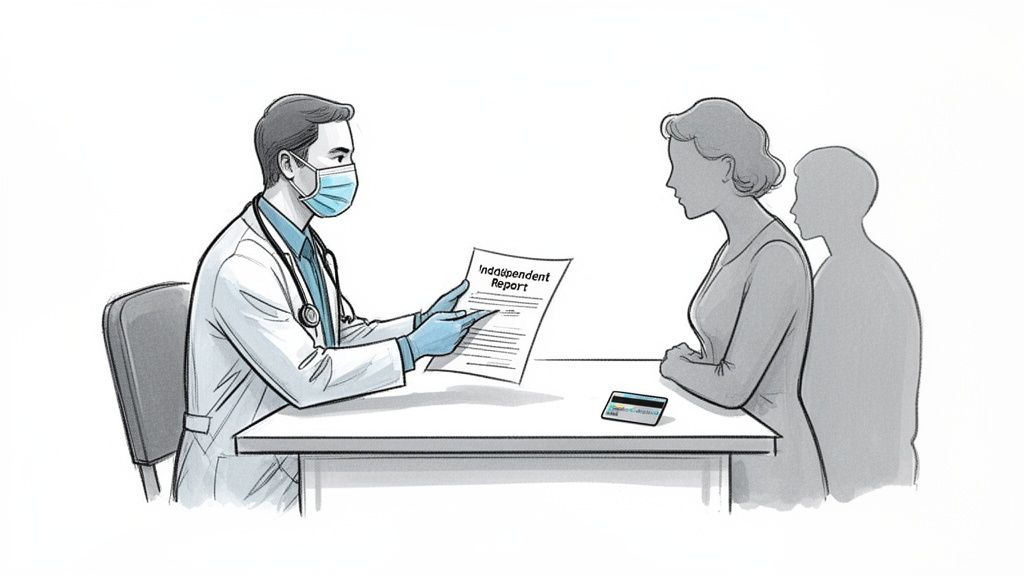
When a private autopsy is requested, the financial responsibility falls to the family or estate. It's an investment in obtaining objective, medically sound answers tailored to your specific concerns.
Why Families Choose a Private Examination
The reasons for seeking a private autopsy are personal but are almost always rooted in a need for truth and clarity. After performing over 1,000 autopsies, I've found that families typically need my help in a few key situations.
- Peace of Mind: Many families need a definitive cause of death to begin the grieving process without lingering doubts.
- Medical Care Concerns: Questions about the medical care a loved one received are common. An independent examination provides an unbiased review of the facts.
- Legal Evidence: For attorneys building a wrongful death or medical malpractice case, a detailed and objective autopsy report is often crucial evidence.
- Second Opinions: A family may disagree with the findings of a prior autopsy or feel it was not thorough enough. A second, private autopsy can either confirm the original results or uncover new information.
When you work with Texas Autopsy Services, the cost is all-inclusive. It covers my expertise as a board-certified forensic pathologist, the use of a professional facility, all necessary toxicology and microscopic tissue analysis, and a comprehensive final report. I believe in transparency, which is why I've created a guide explaining how much a private autopsy costs to give you a clear picture of the investment. This decision is about finding the resolution you need.
How Hospitals Handle Autopsy Costs
A hospital may also request an autopsy when a patient passes away during their stay. This is usually done to confirm a clinical diagnosis, for medical education, or as part of a quality assurance review. When this occurs, the hospital covers the entire cost from its operational budget. The family is not charged.
What a Hospital Autopsy Is—and Isn't
It's important for families to understand the purpose of a hospital autopsy. While it's provided at no cost, its primary function is to answer the hospital's questions, not necessarily the family's. The scope is often narrow, focusing on specific clinical inquiries related to the patient's treatment.
A private autopsy, in contrast, is a completely independent investigation designed to address a family's specific concerns and provide a comprehensive picture of the cause of death.
Historically, these "clinical autopsies" were common and considered a standard part of a hospital's operating costs. However, shifts in healthcare funding have led to a significant decline in their frequency, as they are a direct expense for the institution. A study on the history of autopsy funding provides more detail on these economic changes.
A hospital autopsy serves the institution's need for diagnostic confirmation and quality control. In contrast, a private autopsy serves the family’s need for independent, comprehensive answers. As a forensic pathologist, I ensure the latter is always the priority in my work.
Will Insurance Cover a Private Autopsy?
This is one of the most common questions families ask, and the answer is almost always no. Standard health insurance policies, including private plans, Medicare, and Medicaid, are designed to cover medical care for living individuals. Once a person has passed away, these benefits no longer apply to new procedures.
Because of this, the cost of a private autopsy is the responsibility of the family or estate that requests it. I make this clear from our first conversation so that you can plan accordingly without any surprises.
Understanding Insurance and Postmortem Exams
There are a few specific, less common situations where autopsy costs might be reimbursed.
For instance, if a death was accidental, a private autopsy may be essential for a life insurance claim. Some policies include accidental death riders, and the objective findings from an autopsy can provide the necessary evidence to ensure the claim is paid. In other situations, the cost might be recovered as part of a wrongful death lawsuit or other legal settlement.
When a death is accidental, the detailed findings from an autopsy can be the deciding factor in an insurance payout. If you find yourself facing accidental death insurance claim denials, the autopsy report often becomes a critical piece of evidence.
However, these are exceptions. You should not expect a standard health plan to pay for the service. Knowing that the financial responsibility rests with the requesting family or estate allows for better preparation.
It's helpful to understand that the system in the United States is different from those in many other parts of the world. Here, we have a clear distinction between public, government-funded forensic autopsies and private, family-funded autopsies. This separation creates the need for services like mine, which offer a detailed investigation that public systems are not structured to provide.
This model is quite different from what is seen in many low- and middle-income countries, where autopsies are often funded by public health organizations to track population-wide mortality trends. There, the question of who pays for autopsies is answered by government budgets or international donors, not individual families. For example, one study showed a verbal autopsy investigation in rural India cost just $12, covered entirely by the health system. You can see a detailed breakdown of these global funding models to see the contrast.
The American dual-track system serves two distinct needs. It ensures deaths impacting public safety are investigated at no charge to the family, while also providing a path for those seeking private, independent answers.
Frequently Asked Questions About Autopsy Costs
When families are grieving, they need clear and straightforward information. Here are the answers to the most common questions I receive about the costs associated with an autopsy.
If the County Pays for an Autopsy, Do We Get a Bill?
No. If the medical examiner or justice of the peace orders an autopsy, it is part of a medicolegal investigation funded by the county. You will not receive a bill for the procedure, toxicology tests, or the final report. This is separate from funeral home costs, which remain the family's responsibility.
Why is a Private Autopsy a Significant Expense?
The cost of a private autopsy reflects a comprehensive medical investigation, not just a single procedure.
The fee includes:
- My specialized expertise as a board-certified forensic pathologist.
- The use of a professional medical facility.
- External laboratory fees for toxicology and microscopic tissue analysis.
- The hours required to perform the examination and write a detailed, medically sound report that addresses your family's specific questions.
It is best viewed as a complete, specialized medical consultation from start to finish.
Do You Offer Payment Plans?
At Texas Autopsy Services, we require payment in full before the examination begins. This allows my team and me to proceed without delay and dedicate our full attention to the investigation. We provide a clear, all-inclusive price upfront to help families plan without the concern of hidden fees.
A private autopsy delivers an independent, objective medical report on the cause of death. While this report can become crucial evidence in a legal case, my findings are always based purely on the medical facts.
The decision to pursue legal action is separate and should be discussed with an attorney. My role is to provide the unbiased medical truth needed to make an informed decision.
If your question was not answered here, or if you need to discuss your family's specific situation, please do not hesitate to contact my office. The team at Texas Autopsy Services is here to offer clear, compassionate guidance.
You can reach us directly for a confidential consultation through our website: https://www.texasautopsyservices.com.