December 13, 2025 · Texas Autopsy Services
Where Autopsies are Performed A Guide for Texas Families
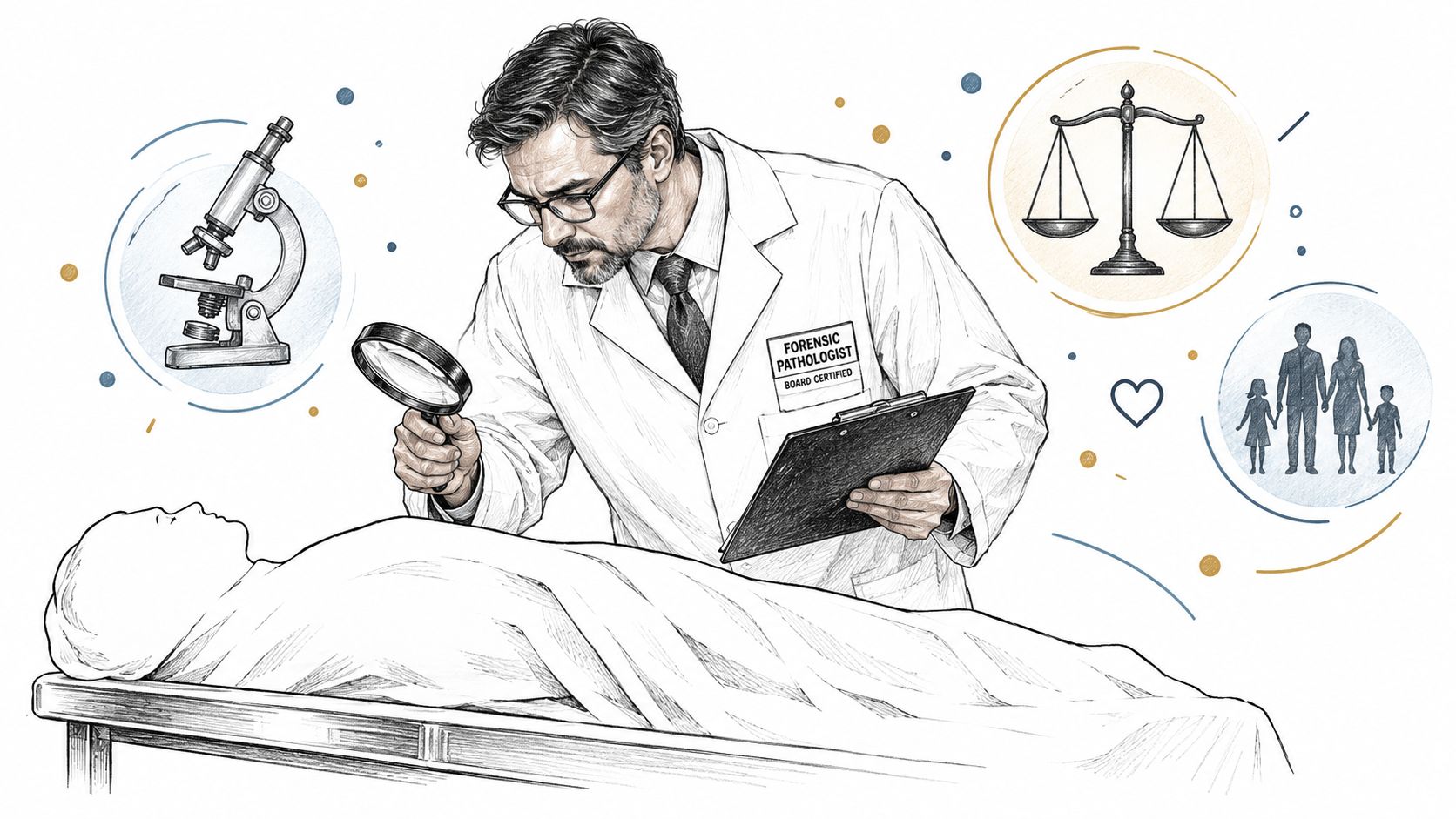
As a forensic pathologist, I'll explain where are autopsies done in Texas. Learn about county facilities, hospitals, and private labs for families.
On this page
When a family loses a loved one, finding clear answers in a time of grief can feel overwhelming. I’ve found that one of the most common questions families ask is, “Where does an autopsy actually happen?” It’s a practical question with a nuanced answer, as the location depends entirely on the circumstances of the death. It's not just one place but a network of specialized facilities, each with a distinct role.
Key Takeaways on Where Autopsies Are Done:
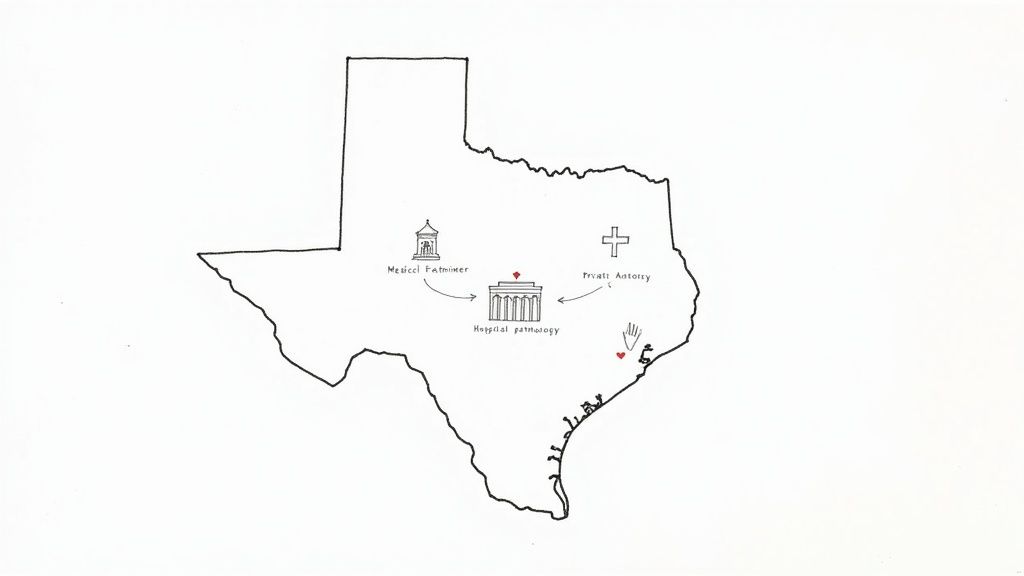
- Autopsies in Texas occur in one of three settings: a government Medical Examiner’s office, a hospital pathology department, or a private facility for independent examinations.
- The reason for the autopsy determines the location. A death that is part of a legal investigation must go to a county facility, whereas a family seeking personal answers can authorize a private autopsy. | Government officials (e.g., Justice of the Peace in Texas) |
| Hospital Pathology Lab | Focuses on clinical questions, confirms diagnoses, evaluates treatments, and aids in medical education. | Hospital physician, with the family's consent |
| Private Autopsy Facility | Provides objective answers directly to families or legal representatives when an autopsy isn't mandated by the state. | The family or their attorney |
Each of these facilities serves a vital, but different, function. A Medical Examiner's office works for the county, a hospital pathology department works to advance medical knowledge, and as a private forensic pathologist, I work directly for you.
A Closer Look at Each Option
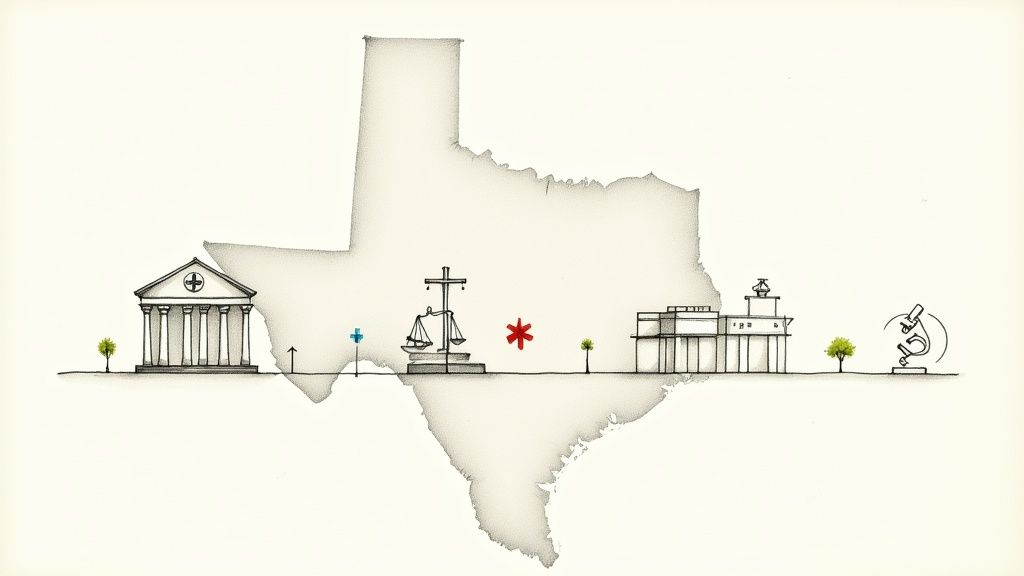
County Medical Examiner (ME) or Coroner Offices: These are government facilities. They are legally required to investigate deaths that are sudden, violent, suspicious, or occur without a physician in attendance. Their primary duty is to serve the public interest and the justice system. As a forensic pathologist who provides County Forensic Autopsies for various Texas counties, I perform these official examinations to determine the cause and manner of death for the public record. You can see which Texas counties are served by a Medical Examiner and which use a Justice of the Peace system here.
Hospital Pathology Departments: Sometimes, an autopsy is performed at the hospital where the individual passed away. This can only happen with the family's explicit consent. A physician might request one to better understand a disease process, evaluate the effectiveness of a treatment, or for educational purposes. These examinations are focused on quality control and medical advancement, not legal investigations.
Private Autopsy Facilities: What happens when an autopsy isn't legally required, but a family still needs answers? That is the purpose of private autopsy services. I conduct these procedures in professional, fully equipped mortuary facilities that ensure dignity and complete privacy. Choosing this option gives the family direct access to the process and, most importantly, the findings.
Why Autopsy Rates Have Changed
You might be surprised to learn that autopsies were once much more common. In the 1960s, the national autopsy rate was around 40%. Today, it has fallen to less than 5% for deaths that occur in hospitals.
This significant decline is largely due to the rise of advanced diagnostic tools like MRI and CT scans, along with concerns about cost. However, even with modern technology, an autopsy remains the definitive method for determining a cause of death. It provides concrete answers that a scan alone cannot always deliver.
County Medical Examiner and Coroner Offices
When a death is sudden, violent, or unexpected, it becomes a matter of public interest. In Texas, these cases fall under the jurisdiction of a county Medical Examiner or a Justice of the Peace acting as a coroner. As a forensic pathologist, I am often contracted to perform these government-ordered autopsies.
These examinations are called medicolegal autopsies. Their purpose is to serve the public by officially determining the cause and manner of death for the legal record. They are a critical component of the justice system and public health oversight.
When a Government Autopsy Is Required
Texas law is very specific about when a death investigation is mandatory. The Texas Code of Criminal Procedure outlines the circumstances, and a family cannot opt out. The decision to perform an autopsy rests solely with the legal authority in charge of the case.
The goal is to gather objective, scientific evidence for legal proceedings and public health data. It’s a structured process designed to uphold justice and protect public safety.
A county-mandated autopsy is typically required in situations such as:
- Deaths involving violence or suspected foul play.
- Suicides or cases where suicide is suspected.
- Accidents, including vehicle collisions or workplace incidents.
- When a person dies without recent medical care.
- Any death with unusual or suspicious circumstances.
In these scenarios, the autopsy is an essential tool for the state. It provides objective medical facts that assist law enforcement, district attorneys, and public health officials. My role as the forensic pathologist is to be a neutral finder of fact, documenting the medical evidence without bias.
Medicolegal autopsies are always performed at designated forensic science centers or medical examiner facilities. These are secure, specialized laboratories built to meet the strict legal requirements of an investigation, including maintaining a perfect chain of custody for all evidence. The environment is designed for precision, ensuring every finding is defensible in court.
The Role of Medical Examiners and Coroners
How Texas manages these cases varies by county. Large metropolitan areas typically have a dedicated Medical Examiner's Office staffed by physicians specializing in forensic pathology.
In many other parts of the state, a Justice of the Peace serves as the coroner. While both are responsible for investigating deaths, a Medical Examiner is a physician, whereas a Justice of the Peace is an elected official who may not have medical training. You can explore the distinctions between a coroner and medical examiner in our detailed guide.
Regardless of who is in charge, a qualified forensic pathologist is required to conduct the examination when an official autopsy is deemed necessary.
What Families Should Understand
If you are a family member, it’s important to understand that a medicolegal autopsy is not a service you can request. It is a legal procedure mandated by the state. The final report becomes a public document filed with county and state records.
This is fundamentally different from a private autopsy, where a family hires a pathologist directly to obtain answers for personal peace of mind or private legal matters. A government autopsy serves the state, ensuring that any death affecting the public is investigated and documented according to law.
Hospital Autopsies for Medical Quality and Education
Many people associate autopsies with criminal investigations, so it can be surprising to learn that they also occur within hospitals. These are known as clinical autopsies, and their purpose is entirely different—they are about answering medical questions, not legal ones.
A hospital autopsy is performed by the hospital's pathology department. Unlike a medicolegal autopsy ordered by a medical examiner, this procedure can only be performed with the family's express permission. A physician might suggest one to gain a clearer understanding of a complex illness, determine the full extent of a disease, or evaluate how a specific treatment worked.
Advancing Medical Knowledge and Quality of Care
At their core, these examinations are powerful tools for learning and improving patient care. An autopsy can reveal secondary conditions that were not apparent while the person was alive or uncover unexpected side effects of a medication. This direct feedback is invaluable for helping physicians refine their diagnostic skills and improve how they treat future patients.
Pathologists are also receiving assistance from technology. In both clinical and forensic settings, new tools like Artificial Intelligence in Pathology are helping experts analyze tissue samples with greater precision.
It’s true that the availability of sophisticated MRI and CT scans has contributed to a decline in hospital autopsies. However, even the best imaging technology cannot always provide the definitive answers an autopsy can. It remains the gold standard for diagnostic accuracy, focused solely on improving medical science and patient care.
The Decline in Hospital Autopsy Rates
Over the past fifty years, the number of autopsies performed in U.S. hospitals has decreased dramatically. In the 1950s, the rate was approximately 50%. Today, it is closer to 4% of all hospital deaths.
Why the significant change? The cost, which often exceeds $3,000, is a major factor. Additionally, physicians now rely heavily on advanced imaging, which can identify many conditions before death. Globally, autopsies are most common in the medical examiner systems and university hospitals of more developed countries.
Despite being less common, the hospital autopsy still provides significant value. It serves as a final quality check for the medical field, offering closure to families and critical lessons to the healthcare professionals dedicated to their work.
It's also crucial to understand the difference between this procedure and a private autopsy, which a family arranges independently. While both require consent, a hospital autopsy is performed to meet the institution's goals for quality control and education. A private autopsy, in contrast, is performed entirely for the family's benefit. The results of a hospital autopsy are added to the deceased's confidential medical record and used to educate the next generation of physicians.
Getting Independent Answers with a Private Autopsy
When the law doesn't require an autopsy, or when a family needs a second opinion, a private autopsy is often the only way to obtain definitive answers. This is the core of my work at Texas Autopsy Services. I provide independent, medically precise examinations directly for families and their attorneys, entirely separate from any government or hospital system.
A medicolegal autopsy serves the state, and a hospital autopsy serves medical education. A private autopsy is different. It is requested, authorized, and funded by the family, and its sole purpose is to answer their questions.
Where is a Private Autopsy Performed?
One of the first things families ask is, “Where do you actually perform the examination?” It’s a valid question rooted in concern for dignity and privacy. It's important to know that private autopsies are not conducted in government morgues or busy hospital pathology labs.
I perform every examination in a controlled, specialized environment. We partner with fully equipped and licensed mortuary facilities, such as the Waterloo Mortuary Partnership, that are specifically designed for this work. These spaces provide several crucial benefits:
- Complete Privacy: The entire process is confidential. Access is strictly limited to my team and any individuals authorized by the family.
- Dignified Handling: The facility is designed to ensure the deceased is treated with the utmost respect at all times.
- Medical Precision: The environment adheres to the highest medical standards, with all the necessary equipment for a thorough and accurate examination.
This controlled setting allows the procedure to follow strict medical protocols while always maintaining the dignity your loved one deserves.
The Power of an Independent Examination
The single greatest advantage of a private autopsy is its independence. Because the family or their attorney engages my services directly, my findings belong exclusively to them. The final, detailed report is a confidential document and is not part of the public record, which is a key distinction from a government autopsy.
This independence is critical in several situations:
- Questions About Medical Treatment: Families may have concerns about the care a loved one received. An independent review can establish the medical facts.
- Confirming the Cause of Death: An official cause of death might seem incomplete or inconsistent with what the family observed. A second examination can either confirm the findings or reveal new information.
- Legal and Insurance Needs: Attorneys often require an independent examination to provide objective medical evidence for a lawsuit or to settle an insurance claim.
- Finding Peace of Mind: For many families, the simple need to know is the most important reason. An autopsy can provide a sense of closure that only concrete answers can bring.
To learn more about the specific situations where this service can be invaluable, please see our guide on what a private autopsy service entails.
Having performed over 1,000 autopsies, I firmly believe that every family has a right to the truth. A private autopsy gives them control over the investigation and makes their specific questions the highest priority.
The entire process is structured around the family’s needs. My work isn't just about providing medical data; it's about delivering clear, understandable explanations that bring clarity during an incredibly difficult time. This direct and compassionate communication is a cornerstone of my practice, with the ultimate goal of providing unbiased, medically sound facts you can trust.
A Step-by-Step Guide to the Private Autopsy Process
When a family is grappling with loss, they shouldn't have to navigate a confusing or intimidating process. That’s why I guide every family and attorney through the exact steps we’ll take, ensuring they feel informed and supported from our first conversation. The goal is to bring clarity during a difficult time, handling every aspect with the precision and respect your loved one deserves.
It starts with a phone call. A family member or their attorney contacts my office, and we discuss what happened. We review any existing medical records and, most importantly, identify the specific questions they hope an autopsy can answer. This initial consultation is crucial because it sets the direction for the entire examination.
Getting Started: Authorization and Logistics
Once a family decides to proceed, the first official step is signing an authorization form. This is the legal document that grants me consent under Texas law to perform the autopsy. It is an essential requirement that ensures the entire process is compliant.
With the authorization secured, my office coordinates all logistics. We work directly with the funeral home, hospital, or medical examiner's office to arrange dignified transportation to a dedicated facility, like our partner, Waterloo Mortuary. We manage these details seamlessly to prevent any delays to your family's funeral arrangements.
This chart provides an overview of how the process unfolds.
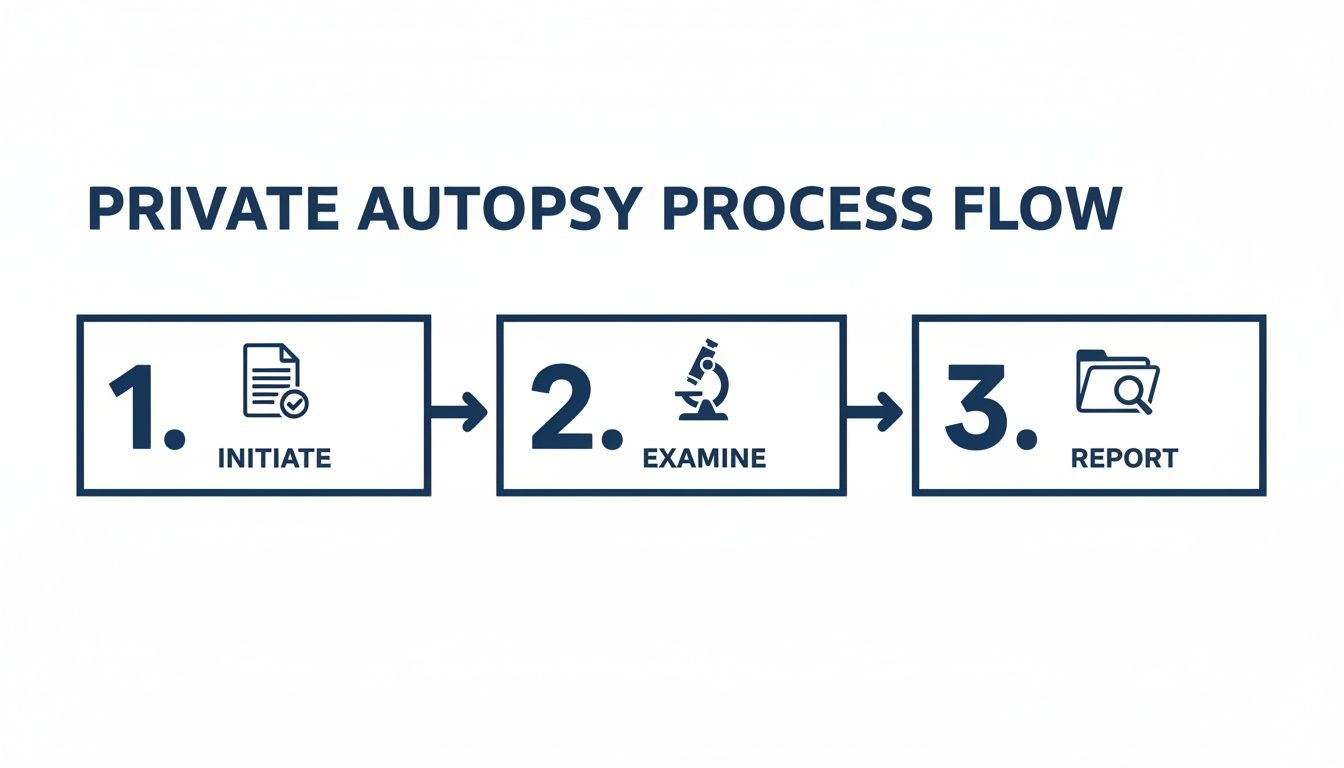
As you can see, it is a structured medical procedure, moving methodically from the initial consultation to the detailed examination and, finally, the comprehensive report.
What Happens During the Examination?
The autopsy itself is a careful and systematic medical examination. I begin with a thorough external review, documenting physical details and noting any signs of injury or illness. I then conduct an internal examination of all organ systems.
During this process, I collect small tissue and fluid samples. These are vital for microscopic analysis (histology) to observe cellular activity and for toxicology testing to identify any medications or other substances. I document every step with detailed notes and photographs, creating a complete and verifiable record.
My sole focus during an examination is to gather objective medical evidence. As a board-certified forensic pathologist, my duty is to interpret that evidence without bias to determine a definitive cause of death and provide answers.
After the examination is complete, the decedent is respectfully prepared and released to the family's chosen funeral home. It’s important for families to know that the procedure does not prevent an open-casket viewing or other funeral services.
The Final Report: Clear Answers
The final phase involves synthesizing all the information. I meticulously review my examination findings, the results from microscopic analysis, and any toxicology reports. This information is then compiled into a single, comprehensive written report.
This isn't a document filled with medical jargon. I write it in clear, understandable language, explaining the cause of death and providing the context the family needs. This final report is completely confidential and is delivered only to the family or their attorney—it is their private information.
It's interesting to see how practices differ globally. In the European Union, autopsies are typically performed in public hospital mortuaries. While EU autopsy rates were between 15-25% in the 1990s, they fell to around 10% by 2020. This shift is partly due to clinicians relying more on advanced radiological methods. You can read more about these global autopsy trends on ec.europa.eu.
Common Questions About Autopsy Locations and Procedures
When a family considers an autopsy, they often face many pressing concerns. The questions I hear most frequently are practical and urgent. Over the years, I've learned that providing direct, straightforward answers is the best way I can help.
My goal is to clarify the logistics and reduce uncertainty. Knowing what to expect can bring a measure of stability during an overwhelming time.
How Long Does a Private Autopsy Take?
This is usually the first question on everyone's mind. The physical examination is completed efficiently, typically within a few hours. Afterward, your loved one is released directly to your chosen funeral home.
The in-depth work happens after the examination. We often need to analyze tissue samples and, in some cases, wait for toxicology reports from the lab. This part of the process can take several weeks. You can generally expect the comprehensive final report to be ready within 30 to 60 days. I never rush this phase; accuracy is more important than speed.
Will an Autopsy Delay Our Funeral Plans?
No, a private autopsy should not interfere with your family's plans for a funeral, viewing, or cremation. My team and I work with respect and efficiency to ensure your loved one is released to your funeral director without any significant delay.
We take great care to ensure that all incisions are professionally closed and completely concealed by clothing. This means an open-casket viewing is still entirely possible if that is your family's wish. We coordinate directly with the funeral home to make the process seamless.
How Much Does a Private Autopsy Cost?
This is a key difference between a county autopsy and a private one. A medicolegal autopsy ordered by a coroner or medical examiner is funded by taxpayers. A private autopsy is paid for by the family or the attorney representing them. The cost can vary based on the complexity of the case and the extent of specialized testing required, such as toxicology or histology.
At Texas Autopsy Services, I provide a clear, all-inclusive quote from the beginning. There are no hidden fees. This quote covers my professional services, use of the facility, transportation coordination, and the detailed final report.
Who Receives the Final Autopsy Report?
The final autopsy report is a completely confidential document. It belongs exclusively to the person who requested and authorized the procedure. This is a crucial distinction, as a government autopsy report is often considered a public record.
When you authorize a private autopsy, you retain complete control over the findings. The detailed report is delivered only to you or your designated representative, such as your attorney.
For families navigating a potential wrongful death claim, the findings in an independent report can be indispensable. Objective medical evidence is vital, especially when facing the Texas wrongful death statute of limitations. My role is to provide an unbiased, scientifically sound report that gives you the clarity to decide your next steps.
At Texas Autopsy Services, my role is to provide clear, compassionate, and medically precise answers when you need them most. If you have questions about the autopsy process or believe an independent examination could bring you peace of mind, please do not hesitate to reach out to my office. We are here to offer guidance and support across all 254 counties in Texas.