June 28, 2026 · Texas Autopsy Services
Navigating a Pregnancy Related Death in Texas
A compassionate guide for Texas families and attorneys on pregnancy related death, its causes, the autopsy process, and legal next steps. Get clear answers.
On this page
- When a New Beginning Ends in Unanswered Questions
- Understanding the Definition of Pregnancy Related Death
- Common Causes and Underlying Risk Factors
- How Texas Officially Reviews Maternal Deaths
- The Critical Role of Autopsy in Finding Definitive Answers
- Requesting a Private Autopsy What Texas Families Can Expect
- Frequently Asked Questions About Private Autopsies
Pregnancy Related Death in Texas
- Pregnancy related death has medical and legal definitions, and the distinction matters when families need accurate answers.
- Many deaths are preventable, which makes careful review, documentation, and independent analysis especially important in Texas. According to a JAMA Network Open analysis of U.S. pregnancy-related deaths from 2018 to 2022, over 80% were likely preventable.
- An autopsy can clarify cause of death, timing, and contributing conditions when hospital explanations are incomplete or disputed.
- Texas law gives medical examiners and forensic pathologists a central role, and families may also pursue an independent private autopsy under the legal framework discussed below.
- The most useful reports are objective, well documented, and court-admissible, with clear chain of custody and findings grounded in forensic pathology.
A family leaves the hospital with a death certificate pending, a few difficult conversations, and a long list of unanswered questions. They may have been told there was severe bleeding, a sudden cardiac event, an infection, or a collapse after discharge. Sometimes the explanation is broad but not precise. Sometimes the timing itself creates confusion, especially when the death happens after delivery rather than during labor.
In that moment, grief and uncertainty often arrive together. Families want to know what happened, whether it could have been prevented, and what records or evidence should be preserved before details are lost. Attorneys and medical professionals often face a different version of the same problem. They need a medically defensible account of cause and timing, not assumptions.
Loss tied to pregnancy can also involve the death of a baby or the collapse of an expected future for the whole family. In that setting, practical emotional support matters. Some families benefit from vital support during infant loss while the medical and legal questions are still unfolding.
A clear forensic framework is beneficial. Pregnancy related death is both a public health issue and a medicolegal issue. The statistics are sobering, but a family does not live inside a statistic. They live inside one case, one person, and one set of facts that must be examined carefully.
When a New Beginning Ends in Unanswered Questions
Pregnancy related death often becomes a chain of partial explanations. A spouse hears one term from a clinician, another from a nurse, and a different phrase from a records office. The family is trying to arrange services, notify relatives, and care for a newborn or other children at the same time. Important decisions may need to be made quickly.
That pressure is one reason clear definitions and independent review matter. In forensic pathology, the task is not to settle for a broad label if the underlying sequence remains uncertain. We look for the full medical story. That includes the immediate cause of death, the disease or complication that led to it, and any contributing conditions that changed the outcome.
A careful death investigation is not only about naming a diagnosis. It is about reconstructing the sequence of events in a way that can withstand medical and legal scrutiny.
Families usually need three kinds of clarity at once:
- Medical clarity: What caused the death, and what conditions contributed?
- Timeline clarity: Did the fatal event begin during pregnancy, delivery, discharge, or the postpartum period?
- Legal clarity: Is there enough objective evidence to support insurance, probate, regulatory review, or litigation?
The answers don't always come from routine hospital documentation alone. Clinical records are essential, but they are not the same thing as a forensic examination. A chart reflects treatment and observations during life. An autopsy addresses postmortem truth, including findings that were not fully recognized before death.
For attorneys, these cases often turn on details that seem small at first. A delay in recognizing hemorrhage. The distinction between cardiomyopathy and an embolic event. Whether a toxicology result changes interpretation. Whether the final classification is natural, accident, homicide, suicide, or undetermined. Those are not abstract categories. They shape legal rights and public accountability.
Understanding the Definition of Pregnancy Related Death
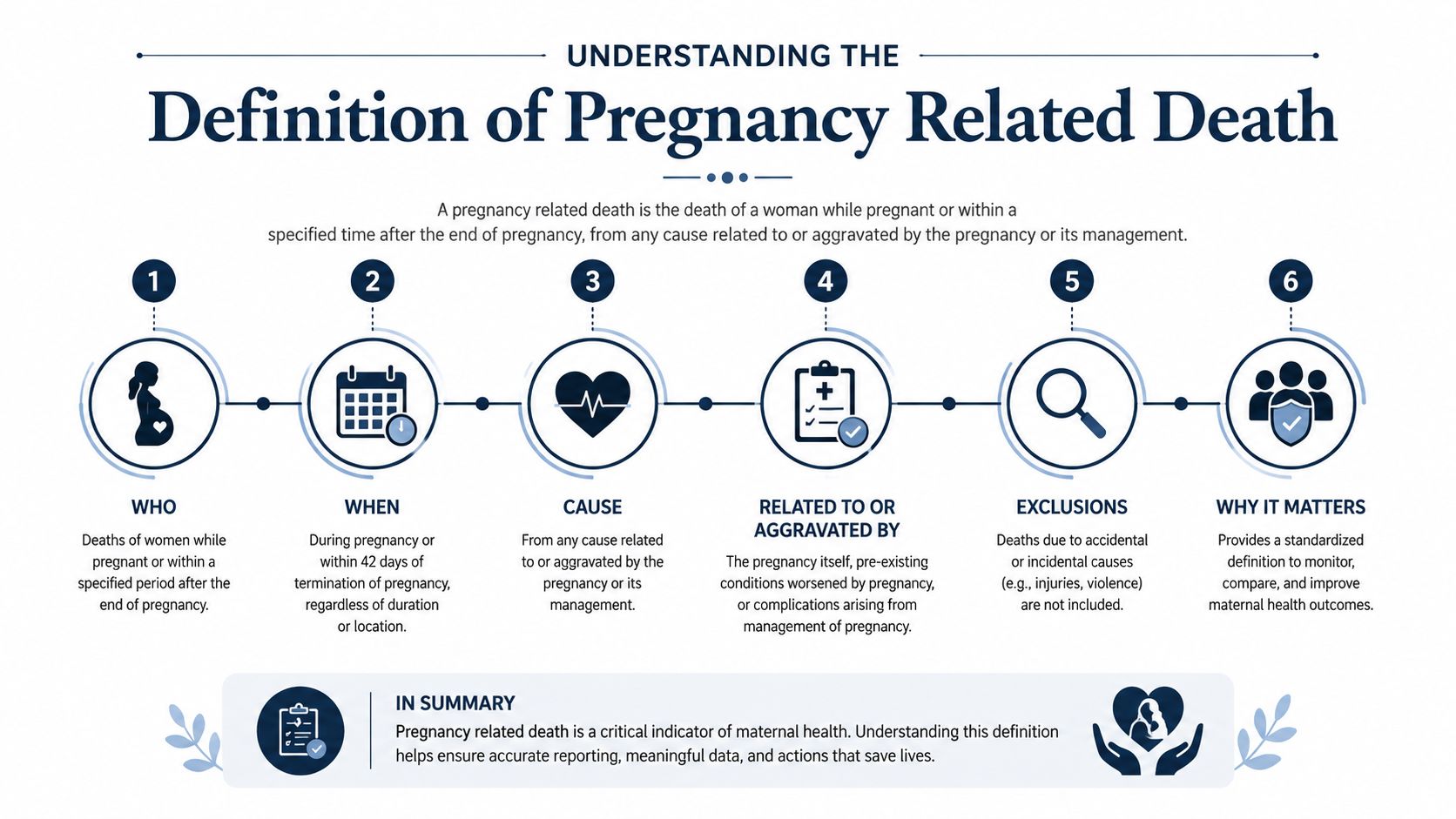
Pregnancy related death is a technical term, not a general phrase for any death that happens near pregnancy. In Texas, the definition matters because reporting, review, and legal interpretation depend on it.
According to a Texas discussion of forensic pathologists and the Texas Health & Safety Code definition, in Texas, a pregnancy-related death is defined as the death of a woman while pregnant or within 42 days of termination of pregnancy, from any cause related to or aggravated by the pregnancy or its management, except from accidental causes. That definition aligns with the CDC surveillance framework used in Texas reporting.
Why the definition matters
The phrase cause of death means the disease or injury that started the fatal chain of events. The phrase manner of death means the forensic classification of the death, such as natural, accident, suicide, homicide, or undetermined. Chain of custody means documented control over the body, specimens, records, and evidence so that findings remain reliable and defensible.
Those terms are not interchangeable. A death can have a cause of death linked to pregnancy, while the manner of death remains natural. In another case, pregnancy may be part of the factual background, but the manner of death may be homicide or suicide. Precision matters because broad language can hide the true mechanism.
Pregnancy related and pregnancy associated are not the same
A pregnancy related death requires a causal connection. The pregnancy itself, or its management, must have contributed to the death.
A pregnancy associated death is broader. It refers to a death during pregnancy or in the postpartum period, whether or not pregnancy caused the death. That distinction matters in forensic review because some deaths occur during the same time frame but arise from violence, overdose, or unrelated medical disease.
Practical rule: If the central question is whether pregnancy, delivery, postpartum physiology, or medical management contributed to the death, a forensic review must focus on causation, not timing alone.
Readers will also see the term maternal mortality in public health discussions. That term usually refers to deaths connected to pregnancy and childbirth at the population level. It is useful for tracking trends, but it does not answer the central question a family has in a single case. What happened here?
Common Causes and Underlying Risk Factors
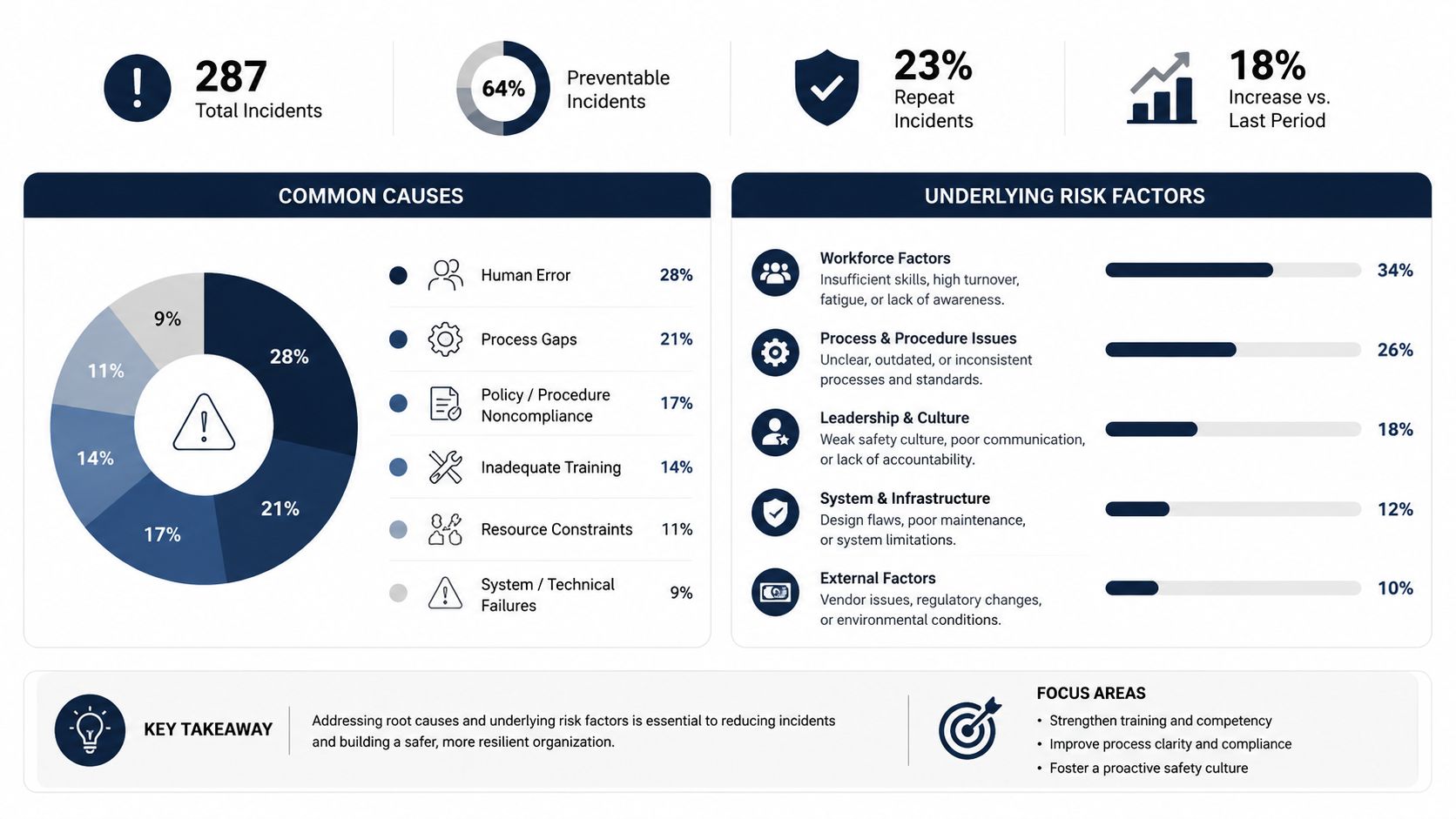
A pregnancy related death rarely has a single simple explanation. In practice, the mechanism may involve an obstetric emergency, an underlying disease unmasked by pregnancy, a delayed complication after discharge, or a failure to recognize a worsening condition in time. That is why families often need more than a broad label on a death certificate.
According to the World Health Organization fact sheet on maternal mortality, approximately 260,000 women globally died during and following pregnancy and childbirth in 2023, with about 700 women dying every day from preventable causes related to pregnancy and delivery. The same source states that about 92% of these deaths occurred in low- and lower-middle-income countries, with severe bleeding, infections, high blood pressure during pregnancy, delivery complications, and unsafe abortion listed among the primary causes.
Patterns families and attorneys should understand
The major medical categories are familiar to forensic pathologists. Hemorrhage can be sudden and obvious, or slower and missed until shock develops. Hypertensive disorders can progress to stroke, seizure, liver injury, or multi-organ failure. Infection may begin with nonspecific symptoms and then worsen quickly. Cardiovascular disease is often underestimated, especially when shortness of breath, chest discomfort, swelling, or fatigue are attributed to normal postpartum recovery.
A global and regional review published in The Lancet Global Health found that globally, maternal hemorrhage accounted for 27% of maternal deaths, hypertensive disorders of pregnancy 14%, and sepsis 10.7%. The same review reported that in high socio-demographic index regions, violence also accounts for a meaningful share of maternal deaths, including homicide and suicide. That point matters in forensic work because the differential diagnosis must stay broad until the records, scene history, toxicology, and autopsy findings are complete.
Timing also changes the medical questions.
A Commonwealth Fund primer on maternal mortality in the United States reported that 52% of all maternal deaths occur after the day of delivery. The same source noted cause-specific patterns in which infection and severe bleeding lead during delivery, while cardiovascular conditions account for many postpartum deaths. For case review, that means a stable delivery does not rule out a fatal pregnancy related process days or weeks later.
Mental health and substance use must be assessed with the same seriousness as hemorrhage or eclampsia. The Century Foundation report on the state of maternal health in 2025 states that mental health conditions, including suicide and drug overdose, are now the leading cause of maternal death in the United States. In a private autopsy setting, that can affect which specimens are retained, whether expanded toxicology is requested, and how the history is reconstructed from medical records, pharmacy data, and witness accounts.
A separate postpartum concern deserves careful attention. The March of Dimes discussion of maternal death and pregnancy-related death states that cardiomyopathy is the leading cause of death from one week to one year after birth. That finding has practical consequences. If a family is told the death was sudden and unexplained, the review should examine cardiac pathology, pulmonary edema, thromboembolism, blood pressure history, prior symptoms, and whether discharge instructions matched the actual risk.
Underlying risk factors complicate every one of these categories. Chronic hypertension, obesity, diabetes, cardiac disease, infection risk, delayed access to care, recent surgery, heavy bleeding, and prior pregnancy complications can all change the odds and the mechanism. The legal question is often narrower than the public health question. Families and counsel usually need to know what caused this death, whether warning signs were present, whether the response met the standard of care, and whether a different course of treatment might have changed the outcome.
Those questions are rarely answered by summary language alone. Hospital committees may review systems issues, but that process serves a different purpose than a case-specific forensic opinion. Families who want to understand that distinction can compare an internal quality process with an independent hospital mortality review analysis. In Texas, that difference can matter when the findings may affect litigation, insurance disputes, professional review, or the basic need to know why a mother died.
How Texas Officially Reviews Maternal Deaths
Texas does not ignore these deaths. The state has review mechanisms intended to identify patterns, causes, and opportunities for prevention. That work is important. It informs policy, surveillance, and future safety efforts.
According to a summary citing the Texas Pregnancy-Associated Mortality Review Committee findings, 75% of pregnancy-related deaths in Texas between 2015 and 2019 were due to preventable causes. The same source reported that cardiovascular conditions were the leading cause at 34%, followed by hemorrhage at 14% and infection at 11%.
What the state review process does
State review processes are designed to examine trends across many cases. They ask whether systems failed, whether earlier recognition could have changed the outcome, and whether better access to care might reduce future deaths.
That work is valuable, but it serves a public health function. It does not replace a case-specific forensic investigation. Families often need answers much sooner than a review process can provide, and they need those answers in a form that can be used in probate matters, litigation, insurance disputes, or credentialing reviews.
For families trying to understand how hospital review differs from independent medical-legal review, a discussion of the hospital mortality review process can help clarify the distinction. Internal hospital review often focuses on quality improvement. A forensic autopsy focuses on objective determination of cause and manner of death.
What families still may not receive
Even when an official review occurs, families may still be left without a detailed explanation of mechanism. They may learn that a case fits a broader category such as cardiovascular disease or hemorrhage, but not the exact sequence that led to death.
A forensic autopsy can address questions that broad review processes are not built to answer, such as:
- Mechanism: Was the death due to cardiomyopathy, pulmonary thromboembolism, hypertensive brain injury, sepsis, hemorrhagic shock, or another process?
- Timing: Did the fatal process begin before discharge, after discharge, or during a delayed postpartum decline?
- Contributors: Did medications, toxicology findings, preexisting disease, or trauma alter the interpretation?
State review helps explain patterns across populations. A forensic autopsy helps explain one person's death with the level of detail families and courts often need.
The Critical Role of Autopsy in Finding Definitive Answers
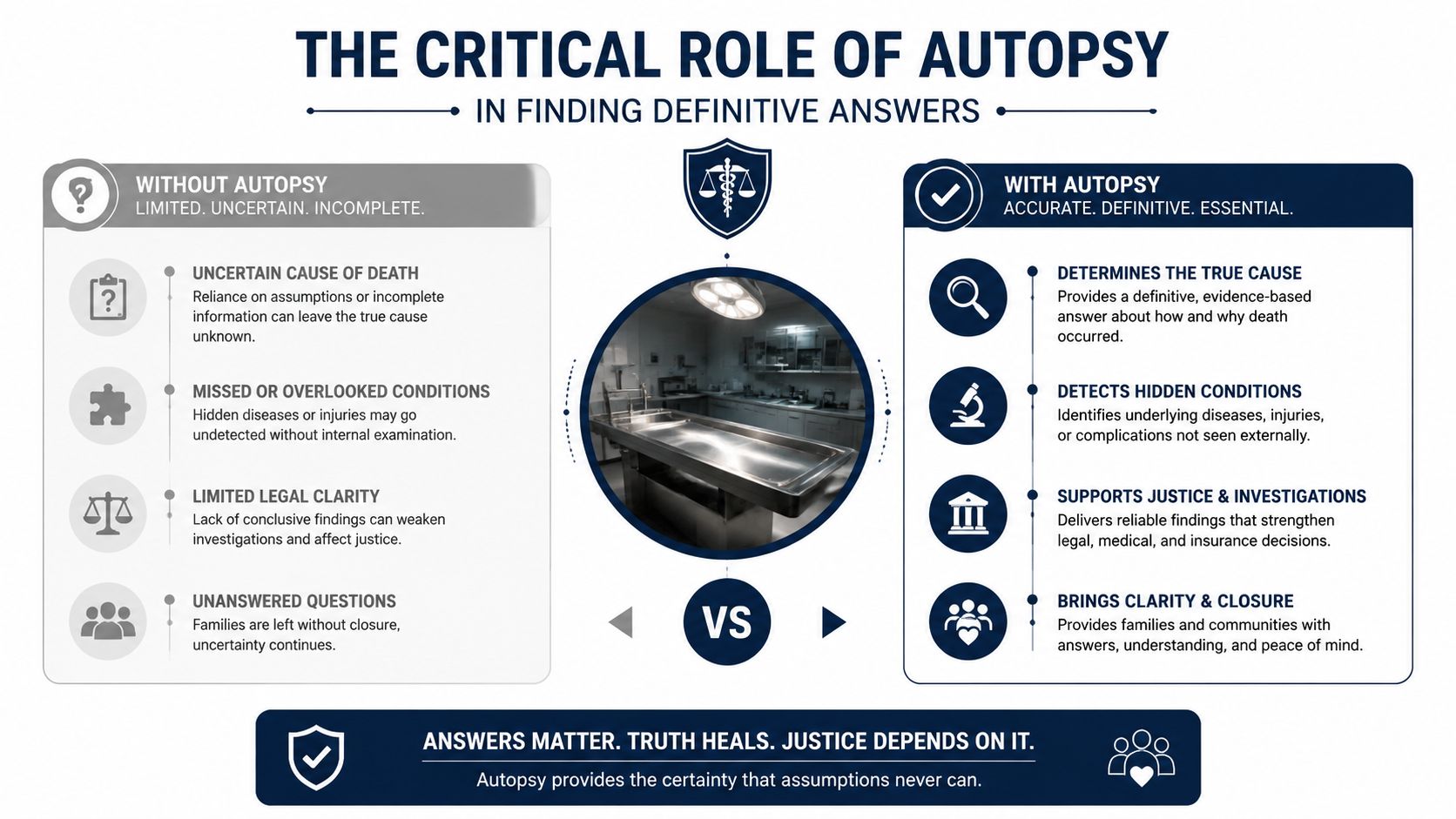
An autopsy is not a formality in a pregnancy related death with uncertainty. It can be the only way to move from probable explanation to defensible conclusion.
A complete postmortem examination may identify internal bleeding not fully appreciated before death, cardiomyopathy with subtle gross findings but decisive microscopic changes, infection with organ involvement, thromboembolic disease, medication effects, or evidence of trauma. It also allows the pathologist to correlate physical findings with medical records, laboratory data, imaging, and toxicology.
What an autopsy can establish
The practical value of autopsy is often clearest in disputed or incomplete cases. A death may initially be described as “maternal collapse,” “pregnancy complication,” or “cardiac arrest.” Those phrases describe an event, not a true diagnosis.
A forensic autopsy can help establish:
- The true cause of death: The underlying disease or injury that started the fatal sequence.
- Contributing conditions: Obesity, hypertension, infection, toxic exposure, chronic disease, or treatment-related complications may alter the interpretation.
- The manner of death: Natural and non-natural classifications require different investigative paths.
- The evidentiary record: Proper specimen retention and documentation matter if questions arise later.
Families and attorneys often compare a hospital autopsy with an independent forensic examination. A hospital autopsy may be clinically helpful, but it is not always designed around medicolegal standards. Independent review matters when neutrality, litigation readiness, and complete documentation are essential. A separate discussion of the importance of autopsy in disputed deaths is useful for understanding that distinction.
Why independence matters
The strongest autopsy reports are grounded in objectivity. They do not begin with the assumption that prior care was appropriate or inappropriate. They begin with the body, the records, the specimens, and the documented timeline.
According to the Tarrant County Medical Examiner description of forensic pathology standards, medicolegal autopsies, including those involving pregnancy-related deaths, must be performed by a board-certified forensic pathologist certified by the American Board of Pathology. That standard matters because the report may be used in court, in administrative proceedings, or in professional review.
What does not work: relying on a broad discharge summary or an informal explanation when the mechanism of death remains uncertain.
What works: a documented, independent examination with full chain of custody, histology, toxicology when indicated, and a final opinion that addresses both medical and legal questions.
For families who need a second opinion outside an institutional setting, information about private autopsies in Texas can help frame what an independent review is meant to accomplish.
Requesting a Private Autopsy What Texas Families Can Expect
When families consider a private autopsy, the first concern is usually practical. They want to know who has authority, what happens next, and whether the process will disrupt funeral plans. Those are reasonable questions, and the answers should be clear.
Under Texas Health & Safety Code guidance described by UTMB's autopsy service information, the decision to perform an autopsy in a pregnancy-related death rests with the medical examiner or forensic pathologist after review of the case, and families may also request a private autopsy through a licensed independent practice. That option matters when an official autopsy is declined, limited in scope, or not expected to answer the family's concerns.
A practical overview of the autopsy procedure and workflow can help families prepare before making arrangements.
The practical steps
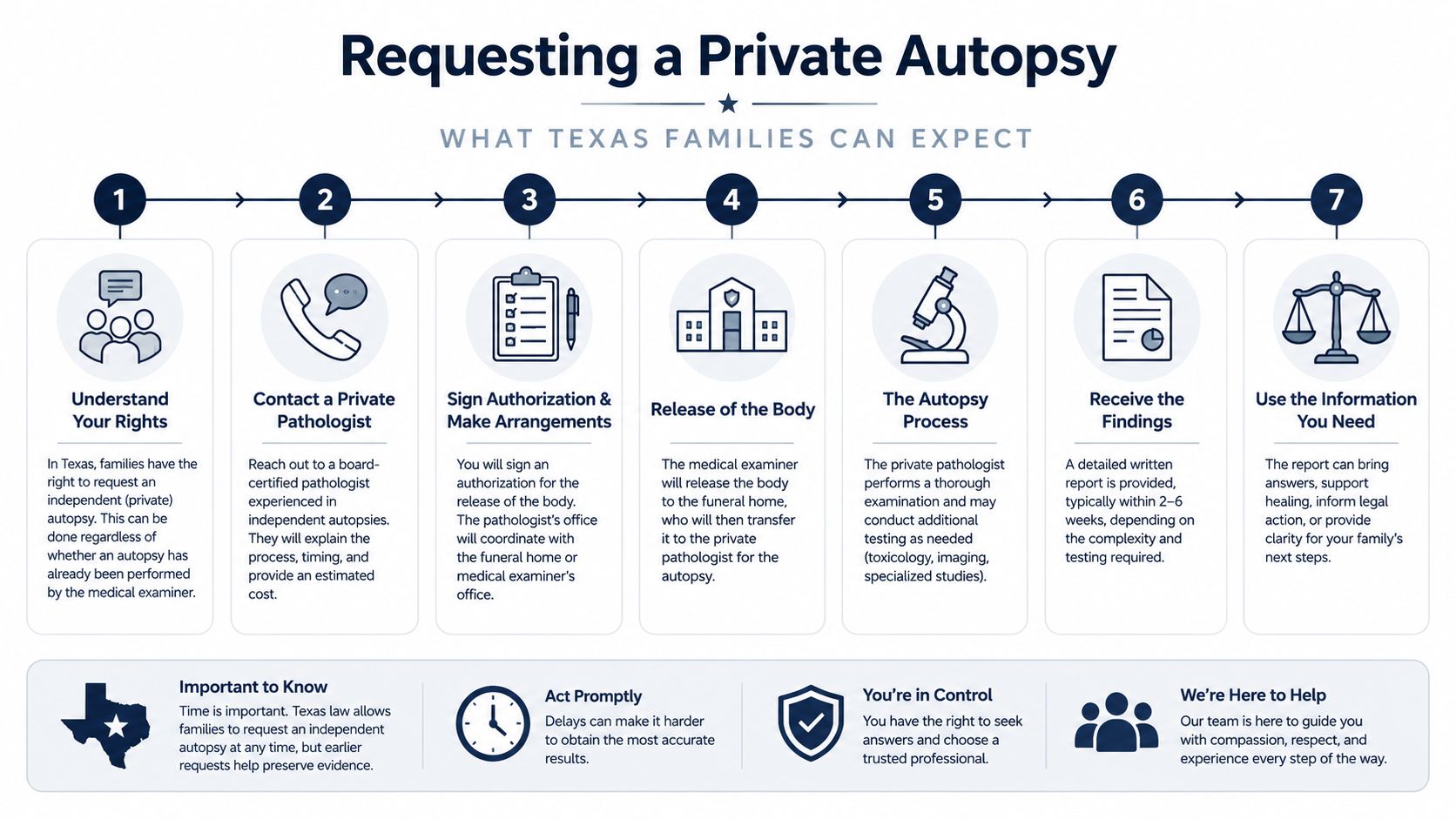
Most private autopsy cases follow a sequence like this:
Initial contact and case review
The family, attorney, or agency provides the basic facts. At this stage, the key issue is whether an independent autopsy is appropriate and legally available.Authorization and coordination
Written authorizations are obtained. The practice coordinates with the funeral home, hospital, or other facility holding the decedent.Transport and custody documentation
The body and any relevant materials are moved under documented control. Chain of custody protects the integrity of the findings.Examination and testing
The autopsy may include external and internal examination, microscopic tissue review, and toxicology or other specialized testing when indicated by the history.
This short video helps explain the process in a more visual format.
What the final report usually includes
The final written report should do more than list organs and measurements. It should explain the pathology in plain language and connect the findings to the history and records.
Families and attorneys should expect attention to these elements:
- Cause and manner of death: The report should clearly distinguish the disease process from the forensic classification.
- Supporting findings: Histology, toxicology, and record correlation should support the final opinion when those studies are necessary.
- Documentation: The report should be structured so it can be reviewed by counsel, insurers, agencies, and other physicians.
- Timing: Pregnancy related deaths often turn on whether the fatal process began during pregnancy, delivery, immediate postpartum recovery, or later.
In Texas, logistics matter too. Some practices coordinate examinations statewide. Information about county forensic autopsy coverage across Texas can be helpful for attorneys and officials in counties without local medical examiner infrastructure. Families who are coordinating disposition and transportation may also need practical support through an established mortuary relationship such as the Waterloo Mortuary pathology partnership.
Turnaround depends on testing, record volume, and case complexity. Preliminary communication may occur early, while a final opinion often requires additional review. Most cases are completed within 24 to 48 hours for the examination phase, but the final report can take longer when microscopic studies, toxicology, or extensive records review are necessary.
Frequently Asked Questions About Private Autopsies
Can a family request a private autopsy if the hospital or county did not perform one
Yes. A family may seek an independent autopsy when the legal circumstances allow it and when disposition has not made examination impossible. Timing matters. If questions remain, families should act quickly so records, specimens, and transportation can be coordinated without avoidable delay.
Is a private autopsy report usable in court
A properly documented report can be highly useful in litigation and administrative review. The key features are qualifications, methodology, complete documentation, and chain of custody. The report should be written in a way that another physician, an attorney, or a court can follow.
What does cause of death mean compared with manner of death
Cause of death is the medical reason the person died. Manner of death is the forensic classification applied to the circumstances. In a pregnancy related death, the cause might involve hemorrhage, infection, cardiomyopathy, or another pathology, while the manner may be natural or, in some cases, something else if the facts support it.
Will an autopsy always show whether malpractice occurred
No. An autopsy determines medical findings. It may reveal facts that support or weaken a malpractice claim, but legal liability requires additional analysis of clinical decisions, timing, standards of care, and causation. The autopsy is often a critical part of that review, not the whole review.
What should families preserve if they expect legal questions later
They should preserve hospital discharge papers, medication lists, prenatal and postpartum records, imaging reports if available, and any communication that helps establish the timeline. Attorneys often request the complete chart. From a forensic standpoint, contemporaneous records and secure custody of the body and specimens are especially important.
What does transparent pricing usually mean in this setting
It means the family should understand what services are included before the examination begins. The scope may include transport, the autopsy itself, specimen retention, microscopy, toxicology when indicated, and the final written report. The details should be discussed directly and documented clearly, especially if the report may be used for litigation or a second opinion review.
If your family, agency, or legal team is facing a pregnancy related death and the official explanation still feels incomplete, it's reasonable to ask for a clear, independent medical answer. Texas Autopsy Services provides private autopsy services Texas families, attorneys, healthcare professionals, and county officials can rely on for objective cause of death investigation, second opinion autopsy review, and court-admissible forensic reporting. Every examination is performed by a forensic pathologist certified by the American Board of Pathology. We serve all 254 Texas counties with direct communication, in-house licensed transport, and a careful, respectful process designed for cases where truth matters most.