June 7, 2026 · Texas Autopsy Services
Examples of Non Criminal Homicide: Texas Law Explained
Explore examples of non criminal homicide, like self-defense & accidents. We explain Texas law & when an autopsy offers crucial answers in 2026.
On this page
- 1. Justifiable Homicide in Self-Defense
- 2. Defense of Third Parties
- 3. Law Enforcement Use of Force in Performance of Duty
- 4. Accident and Unintentional Homicide
- 5. Homicide Committed During Lawful Execution of Legal Judgment
- 6. Homicide in Defense of Property and Habitation
- 7. Medical Homicide and Death During Medical Treatment
- 7-Case Comparison of Non-Criminal Homicide
- Why the Details Matter When You Need Answers
When a death is classified as homicide, many families assume that means a crime has been proved. In forensic medicine, that is not what the word means. Homicide is a manner of death that tells us one person caused another person's death. It does not, by itself, answer whether that act was criminal, justified, accidental, or legally excused.
As a forensic pathologist in Texas, I'm often asked to sort through that distinction when a family, lawyer, or agency is facing uncertainty after a sudden death. The hardest cases are often the ones that seem simple at first. A shooting may later be treated as self-defense. A death during restraint may require close review of scene evidence, medical history, and autopsy findings. A treatment-related death may raise civil questions without becoming a criminal one. For families seeking justice for wrongful death, those differences matter.
The practical answer usually comes from evidence, not labels. A careful autopsy, toxicology, injury pattern analysis, and scene correlation can clarify what happened, what likely happened, and what does not fit. That is why examples of non criminal homicide are best understood through both law and physical findings, not legal theory alone.
1. Justifiable Homicide in Self-Defense
Self-defense is the common example, and for good reason. In a lawful self-defense case, one person intentionally causes the death of another person, yet the killing may still be treated as non-criminal because the force was legally justified under the circumstances.
A real illustration comes from Washington, D.C., where Tamika Green was acquitted in 2023 after a jury found her not guilty of second-degree murder based on self-defense following a three-week trial and four days of deliberations, as reported by DC Witness on the Green verdict. The forensic lesson is straightforward. The death may still be investigated as homicide conduct, but the legal outcome can turn on whether the evidence supports a justified use of force.
What the autopsy can show
In self-defense cases, I focus on whether the body tells a coherent story. Entry and exit wounds, range of fire, sharp force injuries, blunt injuries, fractures, grip marks, and injuries to the hands or forearms may help reconstruct who advanced, who resisted, and whether there was close physical struggle.
That does not mean the autopsy alone proves justification. It rarely does. But it can strongly support or challenge a self-defense account when combined with scene findings, witness statements, and firearm evidence. The manner of death definition in forensic practice often becomes central here because homicide as a medical classification is not the same as murder as a criminal charge.
Practical rule: In a self-defense death, preserve clothing, photographs, bloodstain documentation, and weapon location. Once those details are lost, later opinions become less certain.
Real-world scenarios include a homeowner shooting an intruder during a forced entry, a person using deadly force during an armed assault in a parking lot, or an employee defending against a violent workplace attack. In each setting, the useful question is not whether the event was dramatic. It is whether the physical evidence matches the claimed threat.
For legal context around violent assault allegations that can overlap with self-defense issues, some families and attorneys also review Texas aggravated assault guidance from Law Office of Bryan Fagan PLLC.
2. Defense of Third Parties
A person may use force not only to protect themselves, but also to protect someone else. In practice, these cases often arise fast and in public. A parent intervenes in an attack on a child. A bystander tries to stop an assault. A security employee responds to a visible deadly threat.
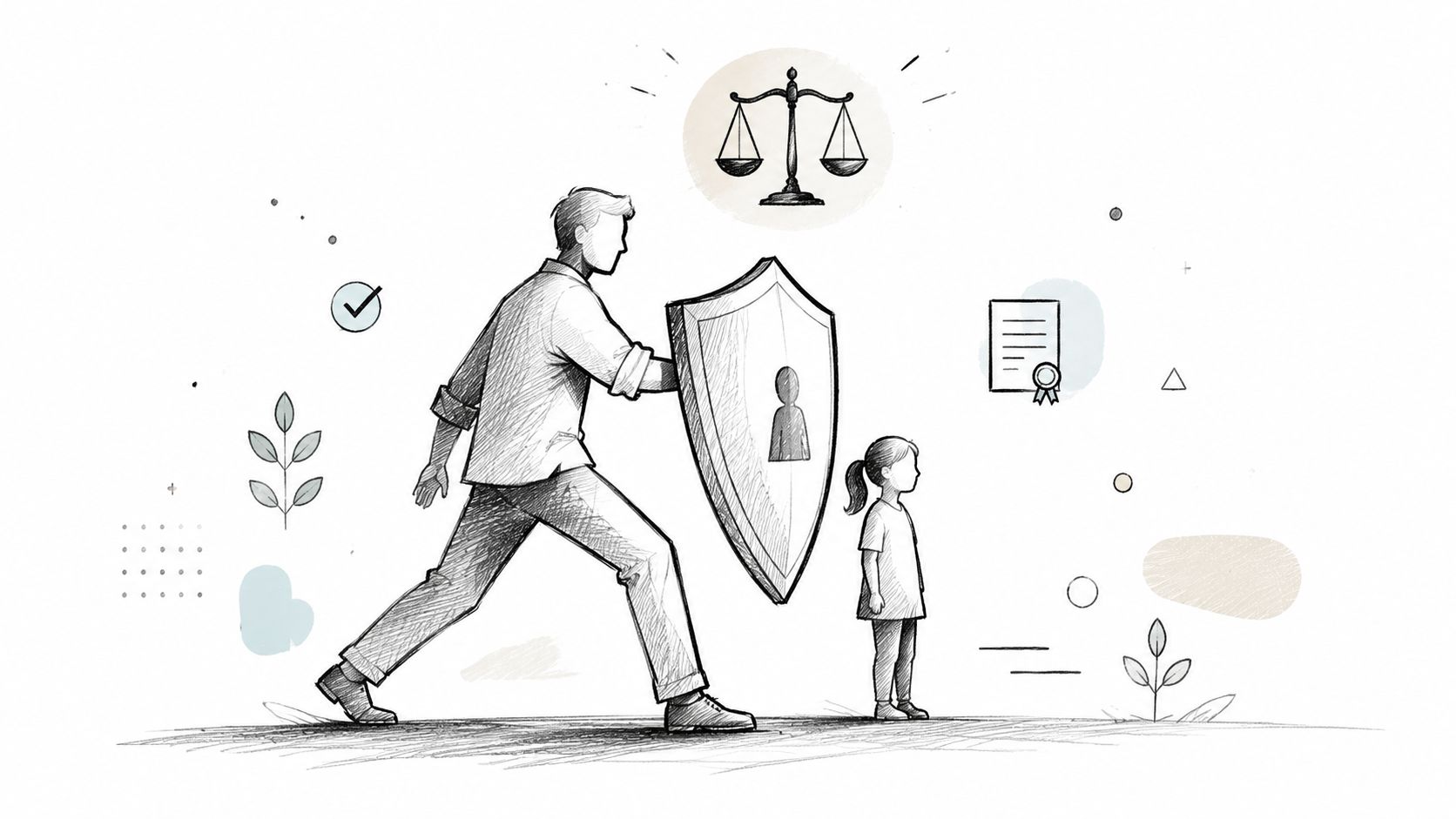
From a forensic standpoint, these cases are often about sequence. Who was attacking whom. How close the parties were. Whether the deceased had injuries consistent with being the aggressor, the defender, or someone caught in a rapidly evolving struggle.
Evidence that matters most
The autopsy may document sharp force wounds, gunshot trajectories, facial injuries, grip bruises, or injuries consistent with active assault. It may also show whether the decedent had signs of recent physical exertion, intoxication, restraint, or prior injury. I compare those findings against scene reports and available witness accounts.
The limitation is important. An autopsy can identify injuries and likely mechanisms. It usually cannot answer motive by itself. That is why these deaths need careful integration of pathology, scene reconstruction, and testimony from people who saw the event.
- Document all visible injuries: Small abrasions on the hands, forearms, and face can matter when the legal issue is whether the deceased posed an immediate threat to another person.
- Preserve context from both sides: Injuries on the defender, the protected person, and the deceased often make more sense when reviewed together rather than in isolation.
- Study weapon positioning carefully: Firearm range, stippling, blade characteristics, and blood distribution can help establish whether the intervention occurred during an active attack.
One common example is a parent who uses deadly force against someone assaulting a child inside a home. Another is a bystander who fatally injures an attacker during a violent street assault. In both, the pathologist's role is not to advocate for either side. It is to determine whether the injuries are medically consistent with the claimed emergency.
3. Law Enforcement Use of Force in Performance of Duty
Deaths involving police or other law enforcement officers demand the highest level of objectivity. They are often examined in a setting of public concern, legal scrutiny, and family grief. That makes precision especially important.
The Bureau of Justice Statistics has expressly classified legal intervention and self-defense as non-criminal homicide categories in homicide caseflow research, and that study analyzed 1,938 homicide victims in the Bureau of Justice Statistics homicide caseflow report. The practical point is that classification depends on investigation and review. It is not a shortcut label.
Why an independent autopsy may matter
In an officer-involved death, the first task is to document facts that can be tested. Wound location. Direction. Number of projectiles recovered. Soot, stippling, or muzzle imprint. Associated blunt injuries. Signs of restraint. Natural disease that may have affected collapse or resistance. Toxicology and medical history may also matter.
A private or second-opinion autopsy can be useful when the family, attorneys, or an agency needs another set of eyes on the same physical evidence. That is especially true when questions center on shooting distance, body position, possible survival interval, or whether a restraint-related death had contributing medical factors.
Independent review does not mean adversarial review. The value is disciplined neutrality.
Examples include an officer shooting an armed suspect during an arrest, a fatal shooting during response to a domestic violence call, or a death after a struggle in which use of force and medical distress overlap. What works in these cases is complete documentation and restraint in conclusions. What does not work is forcing the pathology to answer questions that belong to the court, the investigators, or the fact-finder.
4. Accident and Unintentional Homicide
Some deaths are caused by another person but are not treated as criminal homicide because the event was accidental, lacked criminal intent, or does not meet the threshold for criminal negligence. This category is where families often feel the most confusion, because the legal label can change as more facts emerge.
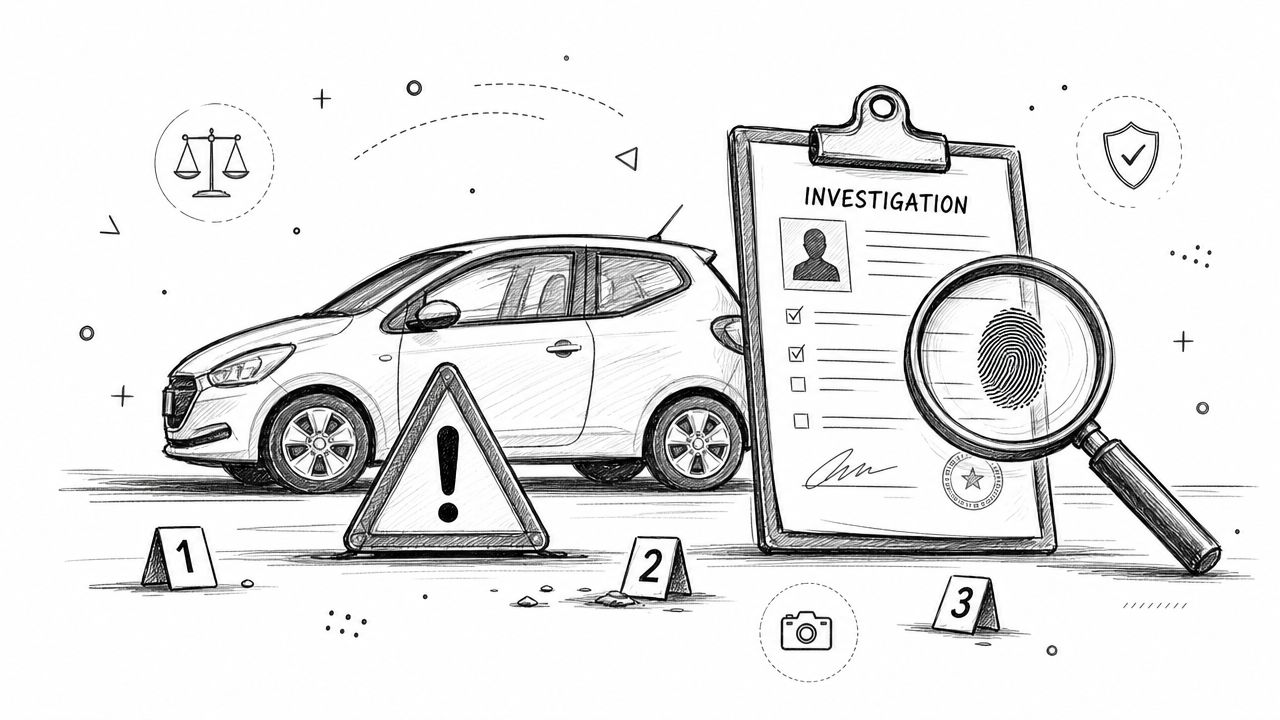
Authoritative crime reporting guidance explains that agencies exclude suicides, accidental deaths, fetal deaths, assaults to murder, traffic fatalities, and attempts from criminal-homicide counts, while some accidental deaths may still become criminal homicide by negligence, according to the Uniform Crime Reporting criminal homicide handbook summary on Justia. That is why the line between accident and homicide is often an evidentiary one rather than a purely medical one.
Where the autopsy helps most
In accidental or unintentional deaths, the autopsy often answers mechanism before it answers classification. Did the person die from blunt force trauma in a crash, carbon monoxide exposure, drowning, a fall, or a treatment complication after an incident? Once mechanism is clear, the next question is whether the surrounding circumstances suggest unavoidable accident, negligence, or intentional harm.
Toxicology can be especially important. Carbon monoxide, sedatives, alcohol, and other substances can affect both the decedent and the event that led to death. Families often benefit from a plain-language explanation of how a toxicology report from an autopsy is interpreted, because the distinction between exposure and causation is often misunderstood.
Real-world examples include a fatal workplace machinery event, a fall linked to equipment failure, or a multi-vehicle crash where one driver's act caused another person's death without evidence of intent to kill. What works here is combining pathology with reconstruction. What does not work is treating the death certificate alone as the final answer when the legal classification is still under review.
A short educational video can help some readers understand how accident investigation and medical findings interact in death review.
5. Homicide Committed During Lawful Execution of Legal Judgment
This is a legally recognized but uncommon example. When the state carries out a death sentence under lawful authority after judicial process, the death is still a homicide in the basic sense that one person or institution causes another person's death. It is not treated as criminal homicide because the act is performed under color of law.
Forensic pathologists may become involved in documentation related to cause and mechanism of death, review of records, or postmortem examination where authorized. In that setting, the work is narrow and technical. The pathologist is not reviewing the conviction. The task is to document postmortem findings accurately and neutrally.
What documentation should include
The key points are identity, procedure-related findings, immediate mechanism of death, and any observed complications or departures from expected findings. Chain of custody also matters. In plain language, chain of custody means documenting who handled evidence, when they handled it, and how it was preserved.
This category is different from the others because the legal authority is established before the death occurs. That changes the role of the forensic examination. In a self-defense or police shooting case, the central dispute is often whether the homicide was justified. In a lawful execution case, the pathology question is usually whether the medical findings are consistent with the documented procedure.
- Keep conclusions limited: The report should stay within medical findings and documented observations.
- Maintain neutral language: These cases draw strong public views, but the pathology report should not mirror advocacy from either side.
- Protect records carefully: Legal sensitivity and confidentiality concerns are often significant.
Although rare in ordinary family consultations, this remains one of the clearest examples of non criminal homicide because the death is intentionally inflicted under formal legal authority rather than private violence.
6. Homicide in Defense of Property and Habitation
Texas readers often ask where defense of property and defense of habitation fit into this discussion. These cases may overlap with self-defense, but they are not always the same. The factual question is whether the use of deadly force was legally justified in the setting of a burglary, robbery, carjacking, or unlawful entry.
In practice, habitation cases often leave strong physical evidence. Forced entry marks, broken locks, shattered glass, displaced furniture, blood transfer, and weapon location may support or undermine the claim that the deceased posed an immediate threat within a protected space. The body may show movement through a doorway, close-range firing, or injuries consistent with struggle inside the home.
What tends to clarify these cases
The autopsy can identify wound paths, range of fire, and whether there are additional injuries suggesting assault or close contact. It can also help separate a defensive shooting at entry from a later shooting after the immediate confrontation ended. That timing question can be legally important.
I advise families and attorneys not to rely on broad assumptions about what “castle doctrine” means in everyday conversation. The legal standard still turns on facts. A person found inside a residence after forced entry presents a different evidentiary picture from a person shot while retreating outside, even if both events begin with trespass.
The body often answers the timing question better than the first verbal account does.
Examples include a homeowner shooting an intruder during a nighttime break-in, a store owner using deadly force during an armed robbery, or a driver fatally injuring a person attempting a violent carjacking. What works is preserving the scene in full. What does not work is cleaning, moving, or repackaging physical evidence before it has been documented.
7. Medical Homicide and Death During Medical Treatment
This is one of the most misunderstood categories. A patient may die during treatment, surgery, restraint, medication administration, or emergency intervention, and the death may still require analysis as a homicide in the broad medical sense if another person's act directly caused the fatal injury. That does not automatically make it criminal.
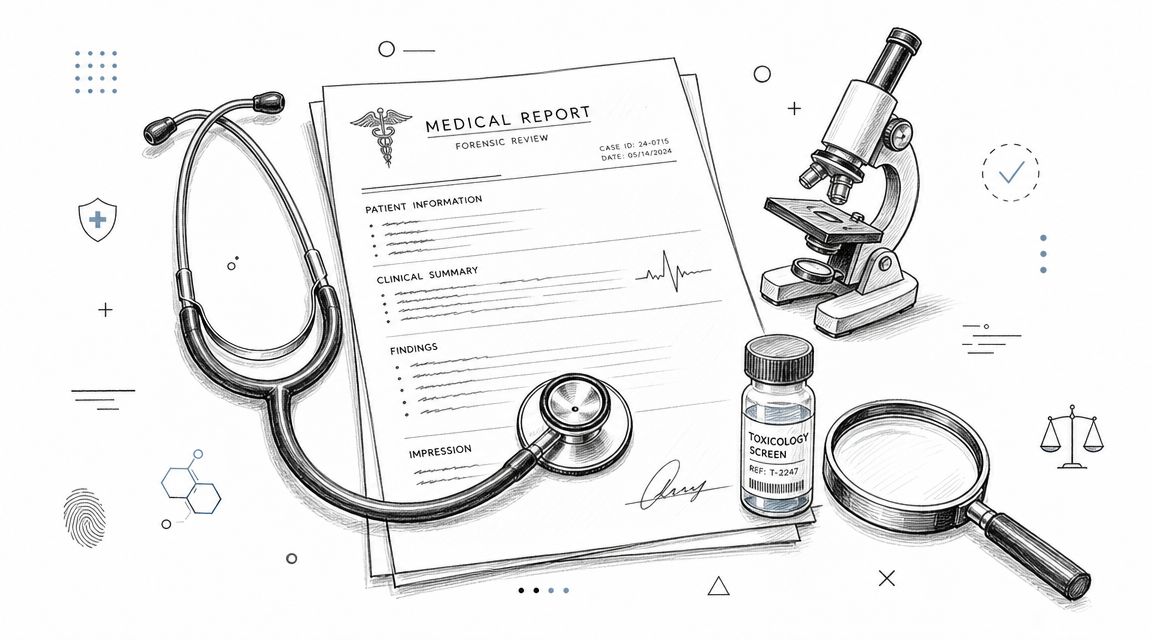
The challenge is separating outcome from culpability. A bad result in medical care may point to a known complication, a civil malpractice claim, poor communication, or a systems failure without rising to criminal conduct. In other cases, the facts may suggest gross neglect or intentional wrongdoing. The pathology does not decide liability, but it does frame the medical truth.
What the forensic review should examine
I review the body, the treatment chronology, available imaging, procedures performed, and the full clinical record. The examination may include surgical site review, device placement, internal hemorrhage, airway findings, aspiration, organ injury, and toxicology when medication effect is in question. If the dispute centers on standard of care or causation, a medical malpractice expert witness in forensic pathology may be necessary in addition to the autopsy itself.
Examples include a death during anesthesia, a fatal medication administration error, a death during resuscitation after a difficult airway, or a fatal complication of an accepted procedure. In each of those scenarios, a second-opinion autopsy can help distinguish underlying disease from treatment effect.
A broader mortality point also matters. Modern death systems often record these deaths under intentional homicide or by mechanism categories, and U.S. mortality data for 2018 through 2021 showed an average homicide rate of 6.7 per 100,000 people, with 5.2 per 100,000 involving guns, while smaller shares involved stabbing at 0.6, choking at 0.1, being struck at 0.1, or poisoning at 0.1, as summarized in the overview of U.S. intentional homicide rate data. For families, the practical takeaway is that administrative coding and legal classification are not always the same thing.
7-Case Comparison of Non-Criminal Homicide
| Scenario | Implementation complexity | Resource requirements | Expected outcomes | Ideal use cases | Key advantages |
|---|---|---|---|---|---|
| Justifiable Homicide in Self-Defense | Moderate–High: requires proving reasonable belief and proportionality | Detailed autopsy, forensic documentation, witnesses, legal counsel, expert testimony | Complete legal defense/acquittal if proven; avoids criminal liability | Imminent threat of death/serious harm in home, vehicle, workplace | Eliminates criminal liability when properly documented; favors personal safety |
| Defense of Third Parties | Moderate: must show defender reasonably believed third party was threatened | Autopsy(s), witness statements, forensic analysis, legal representation | Justified defense and acquittal if necessity shown | Protecting family, strangers, or bystanders from assault or deadly threat | Legal protection for intervenors; recognizes moral and legal duty to protect others |
| Law Enforcement Use of Force in Performance of Duty | High: subject to constitutional standards, internal reviews, public scrutiny | Independent autopsy, ballistic/forensic analysis, bodycams, administrative/legal teams | May be justified criminally but can prompt civil suits and public inquiry | Apprehending violent suspects, preventing escape, protecting public safety | Enables officers to perform duties; independent autopsy supports transparency |
| Accident and Unintentional Homicide (Non-Criminal) | Low–Moderate: focus on ruling out criminal negligence | Autopsy, toxicology, accident reconstruction, scene investigation | Non-criminal finding, cause-of-death established; possible civil claims | Vehicle crashes, workplace failures, accidental poisonings | Provides closure and definitive cause; protects innocent parties from prosecution |
| Homicide During Lawful Execution of Legal Judgment | High: tightly regulated, extensive legal procedure and oversight | Post-execution autopsy, legal documentation, corrections oversight | Lawful, non-criminal determination if procedures followed | Court-ordered capital punishment following conviction and appeals | Clear legal authority with procedural safeguards and official documentation |
| Homicide in Defense of Property and Habitation | Moderate–High: must show necessity and criminal conduct by intruder | Autopsy, scene evidence, witness statements, legal counsel | Justified if threat to habitation/property is proven; civil risk remains | Burglary, home invasion, carjacking, repeated trespass threatening habitation | Strong homeowner protections (Castle Doctrine); supports property defense claims |
| Medical Homicide and Death During Medical Treatment | High: complex medical causation and standards-of-care analysis | Comprehensive autopsy, toxicology, medical records review, medical experts | Often non-criminal if no gross negligence; civil malpractice possible | Deaths during surgery, anesthesia complications, medication errors without criminal intent | Distinguishes malpractice from criminality; clarifies cause of death for families and providers |
Why the Details Matter When You Need Answers
The phrase homicide often sounds final. It is not. In forensic work, it is a starting point for careful classification, not the end of the inquiry. That is why examples of non criminal homicide matter so much. They show that the same basic fact, one person caused another person's death, can lead to very different legal outcomes depending on intent, justification, negligence, and the surrounding evidence.
The rarity of clearly documented lawful killings also matters. One major example is justifiable homicide involving a private citizen using a firearm. The Violence Policy Center's review of FBI data reported 274 justifiable firearm homicides by private citizens in 2016, with 1,233 firearm cases out of 1,505 total justifiable homicides from 2012 through 2016, and 19 states reporting none in 2016. Those figures show that lawful non-criminal homicide exists in official records, but it is still uncommon and closely tied to documented defensive scenarios.
For families, the practical problem is often uncertainty. The initial story may be incomplete. The death certificate may not answer the legal issue. Investigators may still be deciding how to classify the event. In that window, an independent autopsy can be very important. It can document subtle injuries, clarify cause of death, preserve findings before burial or cremation, and provide an objective basis for later review by counsel, agencies, or courts.
For attorneys, the value is often evidentiary clarity. For families, it is usually peace of mind through facts, even when those facts are difficult. A sound forensic opinion cannot erase loss, but it can reduce avoidable confusion.
At Texas Autopsy Services, every examination is performed by a board-certified forensic pathologist experienced in medicolegal death investigations. Our work centers on one principle: follow the evidence carefully, explain it plainly, and treat the deceased and their family with respect.
If you need help understanding whether an independent autopsy is appropriate, you can contact Texas Autopsy Services for guidance. I work with families, attorneys, and agencies across Texas to provide objective postmortem examination, second opinion autopsy review, and clear explanations of forensic findings with dignity and care.