February 8, 2026 · Texas Autopsy Services
How Long Do Autopsies Take A Forensic Pathologist Explains
A forensic pathologist explains how long do autopsies take, from the physical exam to the final report. Learn what affects the timeline and what to expect.
On this page
- Understanding The Complete Autopsy Timeline
- The Hands-On Examination: A Meticulous Process
- Why You Wait: The Critical Role of Lab Analysis
- What Can Extend the Autopsy Timeline?
- From Data to a Definitive Document: The Final Report
- How a Private Autopsy Can Provide Faster Answers
- Common Questions About Autopsy Timelines
When families first call me, one of the first questions they ask is, "How long is this going to take?" I understand the urgency. You're searching for answers during a difficult time, and waiting is the last thing you want to do.
The hands-on part of the autopsy—the physical examination itself—is actually quite fast, usually completed in just 2 to 4 hours. The real waiting comes from the detailed lab work that follows, which can take weeks or even months. That's where the most critical discoveries are often made, and it's a process that can't be rushed if we want accurate, reliable answers.
- The physical autopsy examination is typically completed in 2 to 4 hours.
- Once the physical exam is done, your loved one can be released to the funeral home, allowing funeral arrangements to proceed without delay.
- The longest part of the process is laboratory analysis, including toxicology and histology, which can take 4 to 10 weeks or more.
- A private autopsy can often provide faster answers by avoiding the backlogs common in public medical examiner systems.
- As a board-certified forensic pathologist at Texas Autopsy Services, my role is to ensure a thorough, compassionate, and precise investigation.
Understanding The Complete Autopsy Timeline
Think of an autopsy not as a single event but as a methodical investigation with several distinct stages. It isn't unlike other complex legal and procedural matters; for example, understanding how long other intricate processes, like probate, take shows that thoroughness simply takes time. Each phase of the autopsy process builds on the last, and rushing it would mean compromising accuracy.
My work during the initial examination is focused on careful observation and collecting the evidence—the tissue and fluid samples that will tell the rest of the story. The good news is that once this is done, your loved one can be released to the funeral home. This allows you to move forward with funeral arrangements without any significant delay.
The Three Core Phases of The Process
To give you a clearer picture, the entire process breaks down into three main parts:
- The Physical Examination (2–4 hours): This is the hands-on part. I conduct a thorough external and internal examination to document everything I can see and collect all necessary samples.
- Laboratory Analysis (4–10+ weeks): This is by far the longest stage. The samples we collected are sent for toxicology testing to screen for drugs or other substances, and for histology, where we look at tissues under a microscope. It's meticulous, methodical work.
- Final Report Compilation (1–2 weeks): Once all the lab results are in, I put all the puzzle pieces together. I synthesize every finding into a single, comprehensive report that clearly states the cause and manner of death.
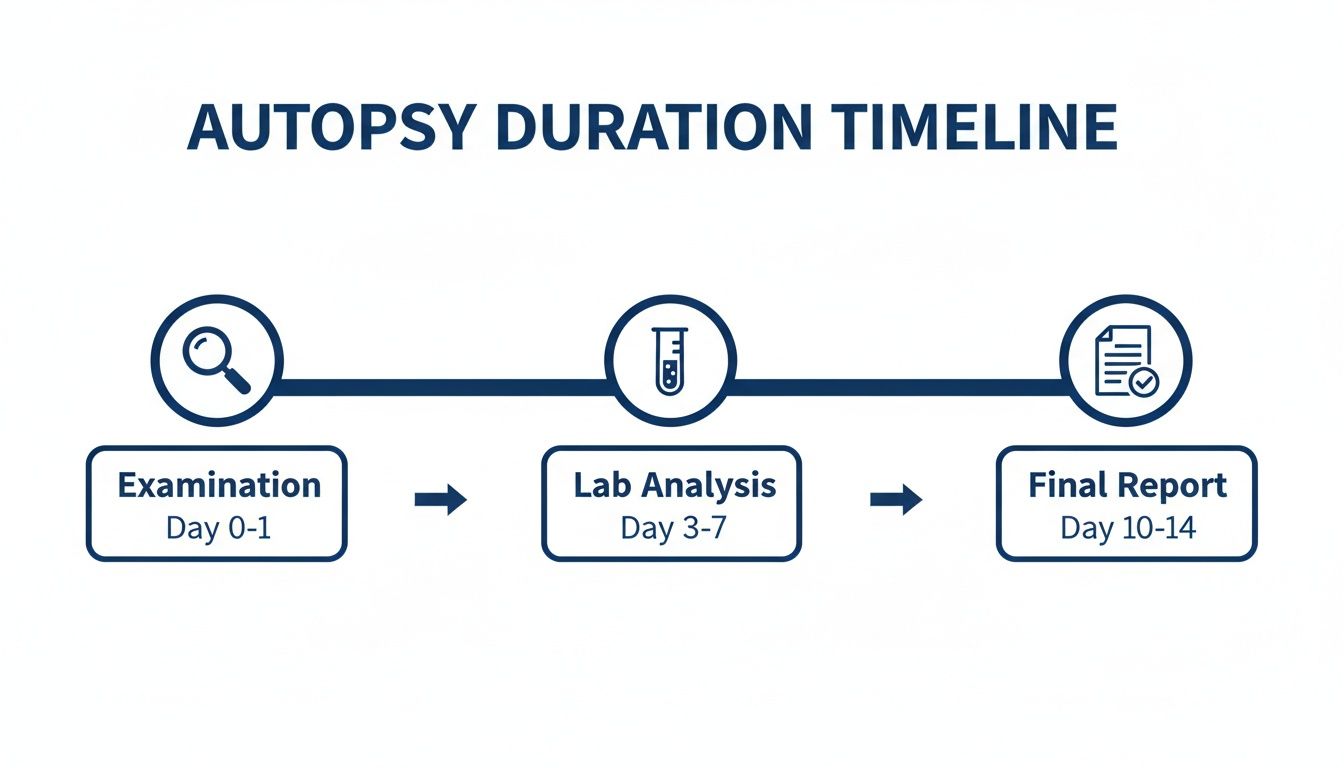
The key takeaway is that most of the "waiting" period is dedicated to careful scientific analysis happening behind the scenes. This structured approach is what ensures every conclusion is backed by solid evidence. My goal is always to set clear expectations and pull back the curtain on a process that can feel confusing and overwhelming, giving families the clarity they deserve.
Typical Autopsy Timeline Breakdown
To help visualize the process, here is a table that breaks down the major phases of an autopsy and what happens during each step.
| Phase of Autopsy | Typical Duration | What Happens During This Phase |
|---|---|---|
| Gross Examination | 2–4 Hours | The pathologist performs a detailed physical exam, documenting all external and internal findings and collecting necessary tissue and fluid samples. |
| Histology (Microscopic Exam) | 1–3 Weeks | Small sections of tissue are processed, placed on glass slides, and examined under a microscope to identify diseases or injuries not visible to the naked eye. |
| Toxicology Analysis | 4–8+ Weeks | Fluid and tissue samples are tested for the presence of drugs, alcohol, poisons, or other chemicals. This can be a lengthy process depending on the complexity. |
| Additional Specialized Testing | Varies (Weeks to Months) | If needed, samples may be sent for genetic testing, microbiology cultures, or other specialized analyses, which adds significant time. |
| Data Synthesis & Final Report | 1–2 Weeks | After all lab results are received, the pathologist integrates all findings into a final, comprehensive report explaining the cause and manner of death. |
As you can see, the timeline is driven by the careful and methodical lab work required to get definitive answers.
The Hands-On Examination: A Meticulous Process
When people picture an autopsy, they usually think of the physical examination. This is the hands-on, intensive part of the investigation. While you might wait weeks for the final report, this initial examination is typically completed in just two to four hours. In those few hours, my job is to conduct a thorough and respectful examination to gather all the initial evidence needed to piece together the full medical story.
This process is never rushed. The time it takes is directly linked to how complex the case is and our commitment to being methodical. Every step is about building a foundation of objective evidence, making sure no stone is left unturned.
The External Examination
We always start with a detailed external review. I carefully document everything I see, from basic information like height and weight to unique identifiers like scars, tattoos, and birthmarks. This step is all about creating a precise record of the person's physical state when they arrived.
I inspect every inch of the body for any signs of injury or illness. This isn't just a quick look; it's a careful, systematic observation that provides the first clues about what might have happened.
The Internal Examination
After the external review, we move on to the internal examination. This involves a systematic evaluation of all the major organ systems—the heart, lungs, liver, kidneys, and brain. The goal here is to find any anatomical issues, diseases, or injuries that weren't visible on the surface.
Each organ is carefully weighed, measured, and examined. I'm looking for signs of chronic conditions like heart disease, evidence of sudden events like a blood clot in the lungs, or even subtle changes that could point to the cause of death. This is also when I collect all the necessary samples for the lab.
The physical examination is fundamentally an exercise in evidence collection. It’s where we gather the raw materials—the tissue samples for microscopic study and the fluid samples for toxicology—that will provide definitive answers in the weeks to come.
This methodical approach ensures we have everything we need for the next stages of the investigation.
Collecting Samples for Laboratory Analysis
One of the most critical parts of the hands-on exam is collecting specimens for lab testing. This might be the most important step, because these samples are often what lead us to a definitive cause of death.
We typically collect:
- Tissue Samples: Small sections from major organs are preserved in a solution called formalin. These are sent for histology, where a specialist examines them under a microscope to spot disease at the cellular level.
- Fluid Samples: We take blood, urine, and sometimes vitreous humor (the fluid in the eye) for toxicology testing. This is how we screen for drugs, alcohol, or other substances.
- Microbiology Swabs: If we suspect an infection played a role, swabs can be taken to identify specific bacteria or viruses.
Every single sample is meticulously labeled and documented to maintain a strict chain of custody, which is essential for both medical and legal integrity. The precise work done in these few hours is what makes all the later lab analysis possible. My focus on getting this right ensures the final report is built on a solid, irrefutable foundation, which honors the deceased and gives the family the answers they deserve.
Why You Wait: The Critical Role of Lab Analysis
The hands-on examination is just the beginning. For families waiting for answers, I know the toughest part is the time spent waiting for the lab results. This isn't just a delay—it's a deliberate and essential phase of a scientific investigation.
After I’ve done the initial survey, the most critical evidence—the tissue and fluid samples—gets sent off to specialized labs for a much deeper look. Rushing this would risk the integrity of the whole investigation and could easily end up with the wrong answers.
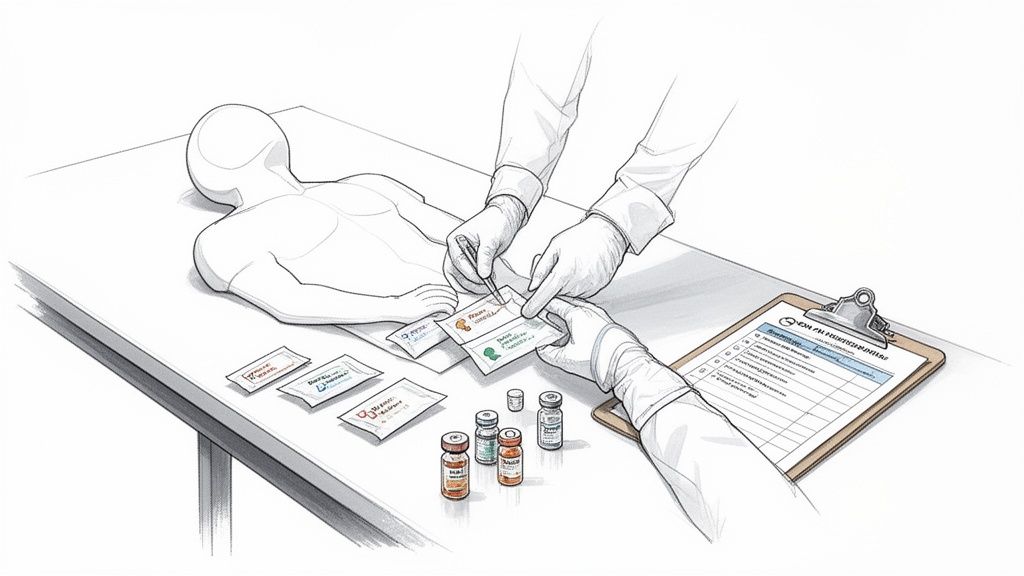
The two main pillars of this lab work are histology and toxicology. Each one gives us a different, yet equally vital, piece of the puzzle. They reveal things that are simply impossible to see with the naked eye.
Looking Closer with Histology
Histology is the study of tissues under a microscope. During the physical exam, I take small, carefully chosen samples from major organs—the heart, lungs, liver, and so on. These tiny pieces are then preserved, processed into paper-thin slices, stained with special dyes, and mounted on glass slides.
It’s under the microscope that I can see the body’s story at a cellular level. This is how we find concrete evidence of diseases or injuries that were otherwise completely invisible.
For example, histology allows a pathologist to tell the difference between a healthy heart and one with subtle muscle damage from a silent heart attack. It lets us see the inflammation in the lungs that confirms a fatal pneumonia. It’s what turns suspicion into certainty.
This is a meticulous process that just can't be hurried. Preparing the slides properly takes several days of precise lab work, and only then can the detailed microscopic examination begin. It’s fundamental to getting the cause of death right.
The Chemical Picture from Toxicology
While histology looks at the body's structure, toxicology gives us the chemical picture of what was going on inside. This involves testing fluids and tissues for alcohol, prescription medications, illegal drugs, or any other chemical substances. This is often the most time-consuming part of the entire autopsy.
Specialized labs use sophisticated equipment to screen for hundreds of different compounds. If an initial screening test flags a substance, it must be followed by a second, more specific confirmation test. This two-step process isn't optional; it’s what ensures every result is scientifically valid and can stand up in court. This detailed analysis explains a great deal about why toxicology reports take so long to complete.
The key tests involved are:
- Screening Tests: These are broad-spectrum tests designed to detect entire classes of drugs, like opioids or benzodiazepines.
- Confirmation Tests: Using highly specific methods like mass spectrometry, these tests identify the exact drug and measure its concentration in the blood or tissue.
- Specialized Analysis: Sometimes, we need to look for uncommon substances like specific poisons or heavy metals, which requires unique and often lengthy procedures.
Each of these steps adds to the timeline. The physical exam might only take a few hours, but the careful, methodical lab work that follows can take weeks. This patience is crucial because it ensures the final report is built on a foundation of complete, accurate, and undeniable scientific evidence. That commitment to getting it right is how we provide families with the definitive answers they deserve.
What Can Extend the Autopsy Timeline?
While we can provide a general timeline, every case is unique. Certain factors can add time to the process. It's not about cutting corners; it's about being thorough and getting the answers right. Understanding these potential delays from the start helps set realistic expectations.
A person's medical history is a significant factor. Someone with a long, complicated health journey involving multiple illnesses requires a much deeper dive. It takes time to carefully review years of medical records and examine tissues to figure out which condition was the final one. That investigative work can't be rushed.
Cases involving law enforcement or other agencies—what we call medico-legal cases—also have built-in delays. There's often a great deal of coordination, evidence sharing, and procedural steps to complete. This administrative side of things can easily add days or even weeks to the clock.
The Problem with Public System Backlogs
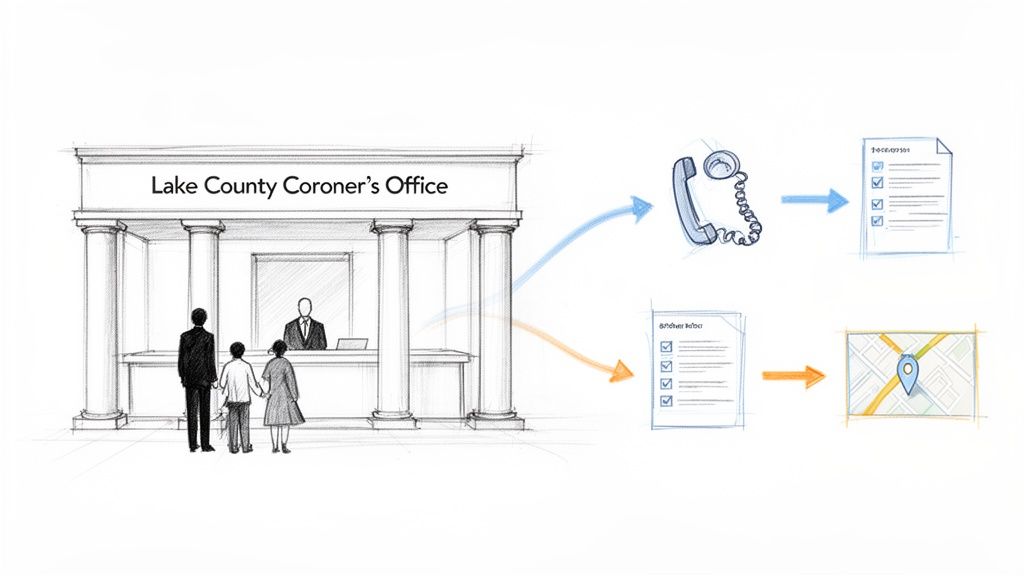
One of the biggest hurdles, especially for families dealing with a medical examiner or coroner's office, is the backlog. These public facilities are often overwhelmed—they're underfunded, understaffed, and handling a massive volume of cases. This creates a bottleneck, and cases end up in a long queue waiting for everything from the initial exam to lab testing.
This isn't just a local issue; it's a systemic problem. A large-scale survey of pathology departments in Norway, for example, found that the time to get a final autopsy report ranged from 14 days to an incredible 150 days. The median was 66 days. That huge variation shows just how much a facility's workload can impact a family's wait, a reality we see in public systems across the U.S. You can learn more about these systemic challenges in autopsy services from the study published on Tidsskriftet.no.
As a private practice, Texas Autopsy Services isn't caught in these public system logjams. We manage a focused caseload, which means we can sidestep the systemic delays that plague government facilities and deliver answers directly to families, much more quickly.
Calling in the Experts: The Need for Specialized Consultation
Sometimes, getting the right answer means bringing in another expert. Think of it like your family doctor sending you to a cardiologist for a tricky heart problem. I do the same when a case involves a highly specialized area of medicine.
Here are a few common reasons I might send samples out for consultation:
- Neuropathology: For anything involving the brain—a suspected stroke, Alzheimer's disease, or a very subtle injury—I'll send the brain to a neuropathologist. They have the deep expertise needed for a definitive diagnosis.
- Cardiovascular Pathology: If there are complex heart issues or if we need to evaluate a medical device like a pacemaker, a cardiac pathologist's opinion is essential.
- Forensic Odontology: When we need to use dental records for identification, a forensic dentist is the expert who provides that crucial analysis.
Each of these consultations adds time. Samples have to be securely shipped, and the specialist needs time for their own careful review. But this collaboration is vital for accuracy. It might extend the timeline, but it guarantees the final report is built on the best expertise available, giving families and legal teams the most reliable conclusions. In the end, the real answer to "how long do autopsies take" always comes down to the unique details of each individual case.
From Data to a Definitive Document: The Final Report
After weeks of examination and waiting for lab results, the final piece is putting it all together. This is where all the threads of the investigation are woven into the final autopsy report—the document that turns a mountain of data into a clear, legally sound conclusion. It’s my job to synthesize every finding to provide the definitive answers that families and attorneys need.
Once I have every lab result back, I sit down with the entire case file. I'll meticulously go over my notes from the physical examination, study the microscopic details on the histology slides, and analyze the raw data from the toxicology screens. It’s a process of weighing each piece of evidence, seeing how it connects to everything else, and building a complete medical story.
Crafting a Clear and Defensible Conclusion
This isn't just listing results. The real work is connecting the dots. I have to determine not only the cause of death (the specific injury or disease that led to the person's passing) but also the manner of death—was it natural, an accident, a suicide, a homicide, or is it undetermined? This final interpretation relies on experience and careful, critical thinking.
The report itself has to serve two very different audiences: medical professionals and grieving family members. It needs to be precise enough to hold up in a courtroom but clear enough for someone with no medical background to understand. It’s a delicate balance, and crafting the document usually takes several hours of focused work. Every word counts.
The final report is the culmination of the entire autopsy process. It isn't just a summary; it's the official record that provides closure, answers critical legal questions, and stands as the final, evidence-based account of a person's last moments.
This last stage highlights why the whole process can take a while. The wait isn't because a case has been set aside; it's because we're waiting for complete, accurate, and fully integrated information to provide the right answers.
What the Final Report Contains
A comprehensive autopsy report is broken down into several key sections:
- Clinical Summary: This is a brief look at the person's medical history and the known circumstances of their death.
- External Examination: Here, I document everything I observed on the outside of the body, like identifying marks, injuries, or other notable findings.
- Internal Examination: This section provides a system-by-system description of what I found when examining each organ.
- Microscopic Findings: This is where the results from histology go, detailing any abnormalities or diseases found at a cellular level.
- Toxicology Results: A full list of all substances we tested for, including their concentrations if they were present.
- Final Anatomic Diagnoses: This is a concluding summary listing the primary cause of death and any other conditions that contributed.
It's also worth remembering that the clock doesn't always start right away. A 2018 global health study pointed out that while most autopsies are ideally done within 24 hours of death, logistical delays are common, especially in rural areas. Most facilities operate during standard business hours, so a death that occurs on a Friday evening might not even begin the autopsy process until Monday morning. As you can read in the full research about these postmortem interval findings on the NCBI website, these initial hurdles can create a ripple effect on the final timeline. Here at Texas Autopsy Services, my commitment is to navigate these logistics as efficiently as possible without ever compromising the integrity of this final, crucial document.
How a Private Autopsy Can Provide Faster Answers
When families or legal teams need answers without the long waits common in the public system, a Private Autopsies service is often the most direct route. The core difference isn't the science—it's the structure. At Texas Autopsy Services, my entire practice is built to give each case the focused, personal attention that an overwhelmed public office simply can't provide.
A medical examiner’s office is like a busy hospital's emergency room, triaging a constant influx of cases. A private pathologist, on the other hand, operates more like a specialist's private clinic. We intentionally keep our caseload small. This allows my team and me to dedicate our full attention to each family, sidestepping the backlogs that cripple so many government agencies. We coordinate directly with you, ensuring clear and consistent communication every step of the way.
The Advantage of an Independent Timeline
The greatest benefit of a private service is control. We aren't bogged down by the same red tape or resource shortages that slow public investigations. This independence lets us push a case forward efficiently without ever compromising the meticulous standards of forensic pathology.
This has become more important than ever. Back in the 1940s, hospital autopsies were common, performed in about 50% of deaths. Today, that number has plummeted to just 7-9%. This massive drop, mostly due to cost and time pressures on public institutions, means fewer resources are available for the autopsies that are performed, creating longer delays. As you can read on the NCBI website, private services fill this critical void by offering dedicated capacity for timely answers.
The core value of a private autopsy is direct access and efficiency. Instead of waiting in a long queue, your case receives immediate priority, which significantly shortens the time from the initial examination to the delivery of the final report.
This focused approach means your questions get answered promptly, and the investigation moves ahead without the frustrating interruptions of a bureaucracy.
What to Expect with a Private Service
When you engage a private pathologist, you get a streamlined and personalized experience. The whole process is designed for clarity and speed, getting you answers as quickly as the science allows.
Here’s what a private autopsy with Texas Autopsy Services typically looks like:
- Direct Communication: You'll speak directly with me and my team, not an anonymous administrative office. We’re here to answer your questions from beginning to end.
- Priority Scheduling: We can usually schedule and perform the examination very quickly, often within 24 to 48 hours, cutting out the initial waiting game.
- Faster Lab Coordination: We partner with accredited private labs that don't have the same backlogs as public crime labs. This often means faster turnaround times for toxicology and histology.
- Timely Reporting: Because I manage a limited number of cases at a time, I can deliver a final report much faster than the 8 to 12 weeks (or longer) you might see from a public office.
Ultimately, choosing a private service gives you a measure of control over a process that can otherwise feel overwhelming and uncertain. Our goal is to provide the same board-certified expertise you'd find in any public office, but with the speed, communication, and personal attention your family deserves. To understand this option better, take a look at our guide on what to expect from a private autopsy service.
Common Questions About Autopsy Timelines
When a loved one passes away, the last thing you want is more uncertainty. To help clear up some of the confusion, I've put together answers to the questions I hear most often from families and attorneys about how long an autopsy really takes. These are direct answers based on my years of experience as a board-certified forensic pathologist.
Can an Autopsy Delay Our Funeral Arrangements?
This is a huge concern for most families, and it's completely understandable. The good news is that in almost every case, the physical part of the autopsy is finished within 24 to 48 hours.
Once that's done, the deceased is released to the funeral home you’ve chosen. At my practice, Texas Autopsy Services, we coordinate directly with funeral directors to make sure your plans for a funeral, burial, or cremation can proceed without a hitch. The final written report takes much longer, but it won’t hold up the service.
Is It Possible to Get Preliminary Results Sooner?
Yes, absolutely. While the final, detailed report can’t be issued until every test is back and analyzed, I can usually share preliminary findings with the legal next-of-kin right after the physical exam is finished.
These are my initial thoughts based on what I can see with my own eyes during the gross examination. It's crucial to remember that these findings are preliminary—they could change once the lab results come in—but they often provide families with some early answers and a bit of closure.
A preliminary finding offers an early glimpse into the investigation, based on the direct physical evidence observed. However, the final, legally sound conclusion can only be reached after all microscopic and chemical analyses are complete.
Does a Second Opinion Autopsy Take Longer?
Getting a second or independent autopsy can be a more involved process, which sometimes stretches the timeline. How long it takes really depends on the condition of the remains and how thorough the first examination was.
It involves a careful re-examination and a full review of all the original reports, slides, and photos. The physical procedure might take about the same amount of time, but the analysis can be much more complex. That said, as a private service, we are still able to deliver these conclusive reports much faster than you’d typically see from a public system.
What Is the Timeline Difference Between a Full and a Limited Autopsy?
A full autopsy is a top-to-bottom look at all organ systems. In contrast, a limited autopsy zooms in on a specific area of concern, like the heart or brain, based on the family’s request.
You might think a limited autopsy would be much faster, and the hands-on part usually is. However, the total time to get a final report might not be all that different. If we still need histology or toxicology for that specific area, we’re still waiting on the lab, and that’s often the biggest factor in the overall timeline, no matter how broad or narrow the exam is.
If you have more questions or need to explore your options for an independent examination, the team at Texas Autopsy Services is here to offer clear, compassionate guidance. Please contact our office for a confidential consultation.