July 15, 2026 · Texas Autopsy Services
PA Medical Examiner: Role & Private Autopsy Options
Explore the PA medical examiner system. Understand the forensic pathologist's role, death investigations, and your options for a private autopsy. Get informed.
On this page
- An Unexpected Call from the Medical Examiner
- The Role of the Pennsylvania Medical Examiner
- Medical Examiner vs Coroner in Pennsylvania
- How to Interact with the Medical Examiner's Office
- When to Consider an Independent Private Autopsy
- The Process of a Private Autopsy
- Finding Clarity and Taking the Next Step
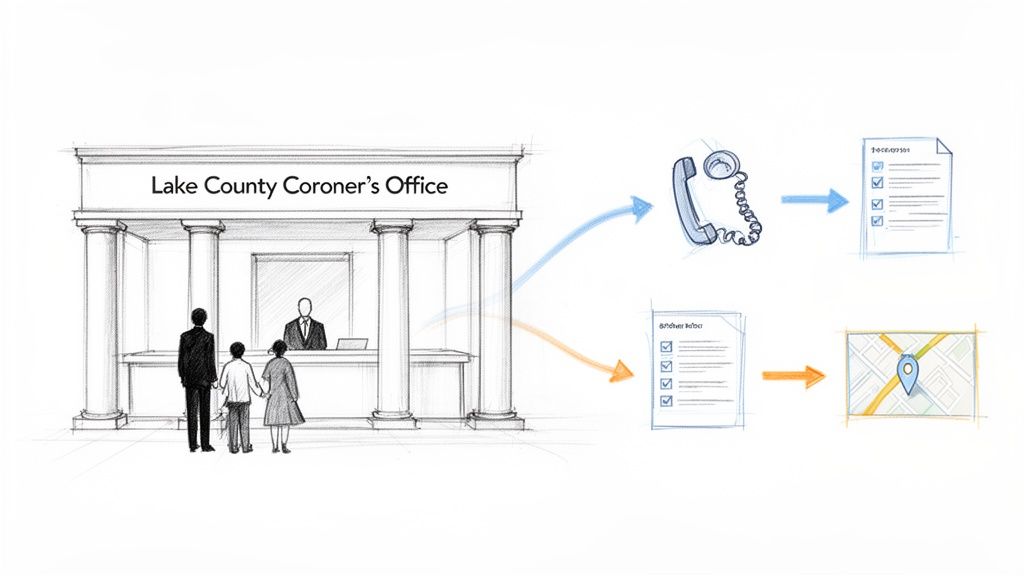
A call from a Pennsylvania medical examiner often comes at the worst possible moment. A family is still trying to understand what happened, and suddenly a government office is involved, questions are being asked, and no one is sure what happens next.
That confusion is normal. The Pennsylvania system can feel unfamiliar even to people who work around hospitals, funeral homes, or litigation. The public investigation has a specific legal role, but it does not answer every question every family or attorney may have.
- A Pennsylvania medical examiner investigates certain deaths because the law requires it, not because a family requested it.
- Pennsylvania uses both medical examiners and coroners, which can create county-to-county differences in training, process, and communication.
- The official investigation serves a public purpose, while an independent autopsy may be necessary when unanswered questions remain.
- Families should expect strict procedures around records, body release, and evidence handling because chain of custody matters.
- A complete private autopsy can provide a second, science-based review when the public process is limited, declined, or disputed.
An Unexpected Call from the Medical Examiner
The usual situation is straightforward in one sense and very unsettling in another. Someone dies suddenly. The hospital staff, police, nursing facility, or emergency responders say the death has been reported to the county. Then a relative hears a new phrase for the first time: the Pennsylvania medical examiner, or in some counties, the coroner.
At that point, families often need the same basic answers. Why is the government involved. Who decides whether an autopsy happens. When can the body be released. Who can get the report. If the official explanation feels incomplete, is there any other option.
Those are practical questions, not abstract ones. They affect funeral arrangements, estate matters, insurance claims, and sometimes the ability to understand whether a death was natural, accidental, or something else. They also affect how a family processes loss. Uncertainty can make grief harder.
Practical rule: when a medicolegal office takes jurisdiction over a death, its first duty is to determine what the law requires, preserve evidence, and protect the public record.
That public role is important, but it has limits. A county office is not designed to act as a private advocate for a family, and it is not always positioned to resolve every medical concern in the way loved ones hope. Some deaths fall clearly within government jurisdiction. Others do not. Some cases receive a full forensic autopsy. Others are reviewed, certified, and closed without that level of examination.
Families and attorneys do better when they understand that difference early. It helps them ask better questions, request the right records, and recognize when an independent second opinion may be appropriate.
The Role of the Pennsylvania Medical Examiner
A Pennsylvania medical examiner is more than an office that signs paperwork after a death. In the medicolegal system, the role is to investigate deaths that raise legal, forensic, or public health concerns. That work sits at the intersection of medicine, law, and evidence preservation.
When the law requires involvement
Pennsylvania law requires investigation of deaths that are sudden, violent, suspicious, or involve trauma, drug overdose, or contagious disease, and the legal framework also includes specific categories such as sudden infant death syndrome, unclaimed bodies, and deaths in penal institutions under Pennsylvania death investigation law summarized by the CDC.
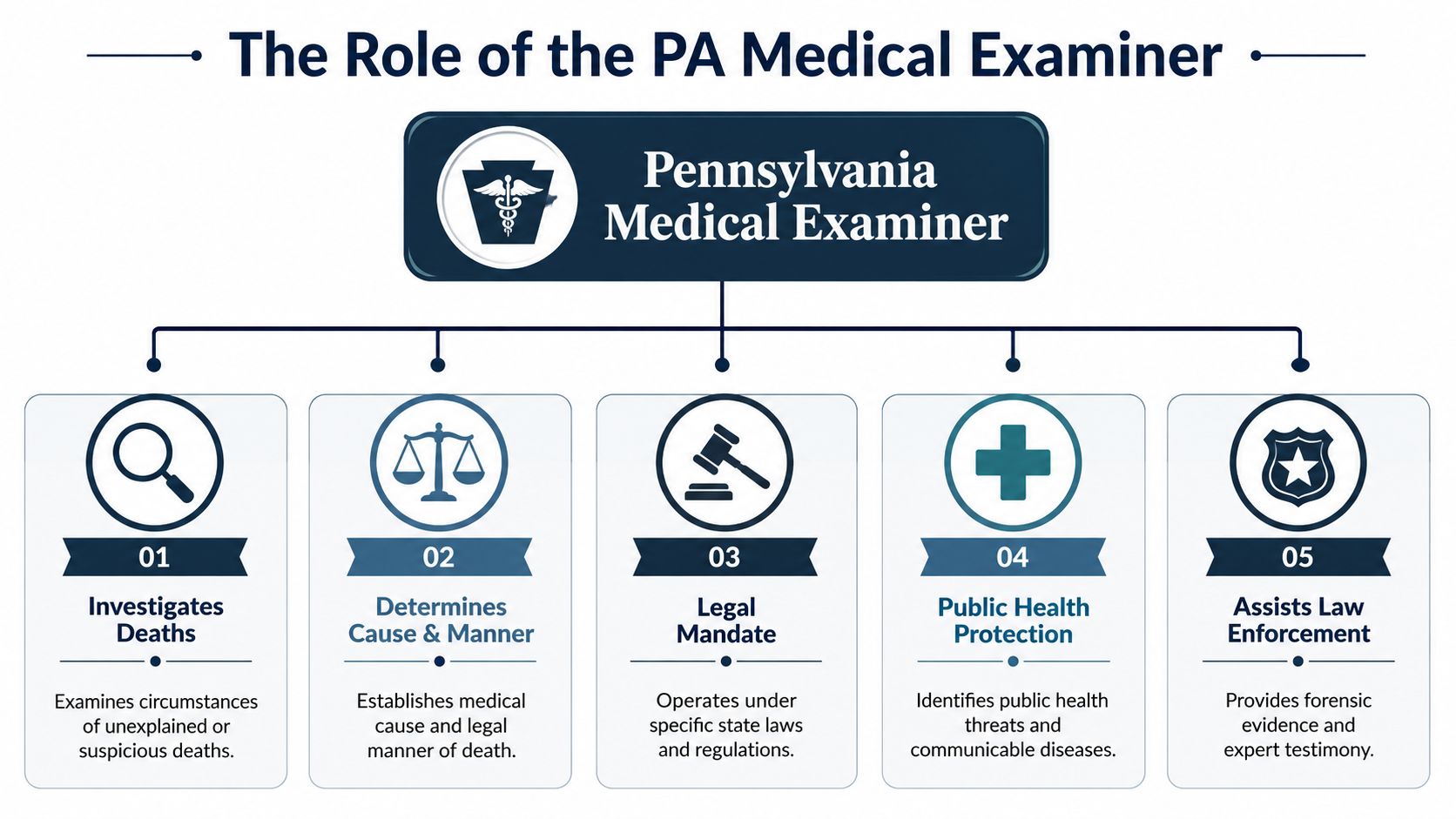
That means involvement is usually triggered by the type of death, not by a family's preference. If a treating physician cannot properly certify the cause of death based on recent medical attendance, the case may need medicolegal review. The point is to avoid missing a homicide, an overdose, a workplace injury, or a communicable disease that affects broader public safety.
For attorneys and agencies trying to streamline medical legal operations, this distinction matters. The medical examiner's office is not acting as a private consultant. It is performing a public duty under statute, with specific obligations to law enforcement, courts, and health authorities.
What cause and manner of death mean
Families hear these terms early, often before anyone has explained them.
| Term | Plain-language meaning |
|---|---|
| Cause of death | The disease or injury that led to death |
| Manner of death | The classification of how the death occurred, such as natural, accident, suicide, homicide, or undetermined |
| Chain of custody | The documented handling of the body, samples, and evidence so the findings remain reliable and admissible |
A medical examiner may also order or perform a forensic autopsy when the case requires a more complete examination. In practical terms, that can include scene review, external examination, internal examination, specimen collection, and later interpretation of toxicology or microscopy.
The public function is narrower than many families expect. It is focused on legal and medical determination, not on answering every personal or civil question that may arise after a death.
That difference becomes especially important when a family wants a broader explanation, disputes an official conclusion, or needs an independent review for litigation.
Medical Examiner vs Coroner in Pennsylvania
Pennsylvania does not use one uniform death investigation model in every county. Some counties rely on a medical examiner structure. Others use a coroner system. That is one reason people encounter very different procedures and levels of forensic specialization depending on where the death occurred.
Why the titles are not interchangeable
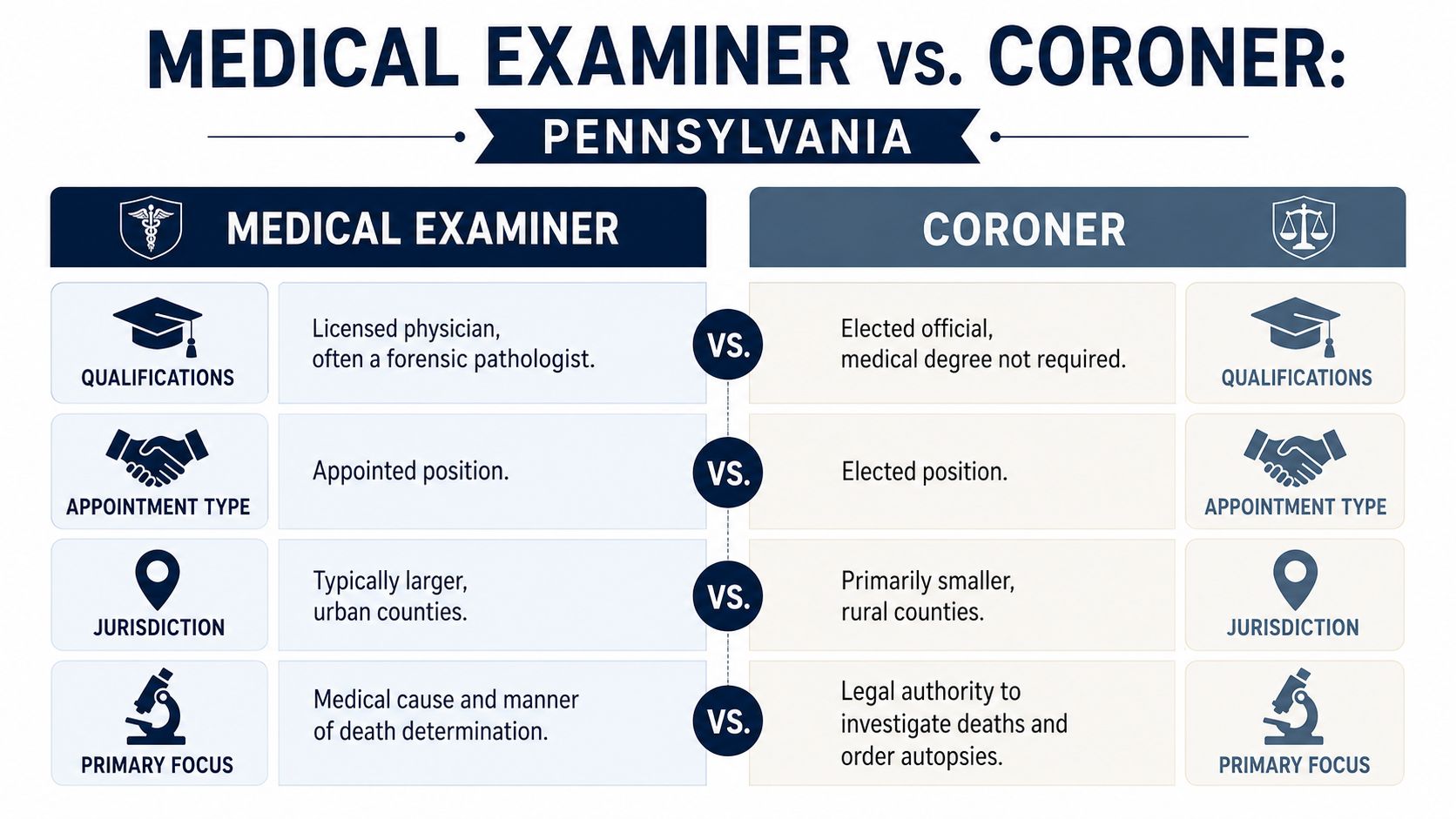
A medical examiner is generally understood as an appointed physician, often working within a forensic pathology framework. A coroner is generally an elected official, and a medical degree is not a requirement for that title. In practice, both can have legal authority in death investigation, but they do not start from the same professional model.
That difference affects expectations. Families often assume every county death investigator is a physician and every office works like a large urban forensic center. In Pennsylvania, that assumption can be wrong.
A quick comparison helps:
- Qualifications differ: a medical examiner role is tied more closely to physician-based medical evaluation, while a coroner role is an elected office.
- Appointment differs: medical examiners are typically appointed, while coroners are typically elected.
- County practice differs: larger urban jurisdictions are more likely to resemble a medical examiner model.
- Scientific resources differ: some offices have more direct forensic pathology capacity than others.
For readers who want a broader primer on the distinction, our earlier post on the difference between coroner and medical examiner provides a practical overview.
A brief visual explanation can also help:
Why the reporting gap matters
Pennsylvania also has a structural limitation that families and attorneys rarely hear about at the start. The state lacks a statutory requirement to provide statistical data or annual reports for its medical examiner system, which creates a transparency gap and means complete statewide statistics are not legally required to be compiled or released publicly, as outlined in this discussion of Pennsylvania death investigation reporting limits.
That matters because a mixed system already produces county-level variation. Without consistent statewide reporting, it becomes harder to compare workload, case acceptance, and system performance across jurisdictions. From a forensic standpoint, that means outsiders often see only the final document in a single case, without much context for how that county office is structured or resourced.
A title tells you part of the story. The office's training model, staffing, and local practice often tell the rest.
For families, the practical takeaway is simple. Don't assume one Pennsylvania county handles a death exactly the way another county does. Ask who has jurisdiction, whether a forensic pathologist is involved, whether an autopsy is being performed, and when records may be available.
How to Interact with the Medical Examiner's Office
Once a case is in official hands, communication becomes part of the stress. Families want updates. Funeral directors need release information. Attorneys may need records. The best approach is calm, direct, and organized.
What to do first
If the death occurred in Philadelphia, the Medical Examiner's Office maintains a 24-hour, 7-day-a-week death reporting line at (215) 685-7445 for time-sensitive matters, while general inquiries are handled during business hours, according to the Philadelphia Medical Examiner's Office contact information. That is a useful example of how a large office separates urgent reporting from routine communication.
Even when another county has different procedures, the same habits help:
- Write down the case information: keep the decedent's full name, date of death, and any assigned case number together.
- Identify one family contact: offices communicate more efficiently when one person relays information to the rest of the family.
- Ask the narrow question first: instead of asking for everything, ask whether the office has accepted jurisdiction, whether an autopsy is planned, and when release can occur.
- Keep expectations realistic: some answers aren't available immediately because toxicology, histology, or scene review may still be pending.
Records, status updates, and chain of custody
A medical examiner's office can usually address different parts of a case at different times. Status updates may be available before a final report. A death certificate may not match the timing of an autopsy report. Personal effects may be released on a separate schedule from the body itself.
Chain of custody explains much of that. In plain language, chain of custody means the office documents who handled the body, specimens, photographs, clothing, and other evidence at each point. That documentation protects the reliability of the case if criminal proceedings, civil claims, or later forensic review arise.
If you're struggling to sort records, questions, and timing issues, it can help to prepare a written summary before you speak with any office. Our guide on how to review my case shows the kind of information families and attorneys often gather before asking for a second review.
Ask for process, not predictions. Offices can usually explain the next administrative step even when they can't yet give a final answer.
That approach reduces frustration. It also creates a clearer record if independent review becomes necessary later.
When to Consider an Independent Private Autopsy
A public death investigation can be appropriate and still leave important questions unanswered. That is the point at which many families and attorneys begin to ask whether an independent autopsy is necessary.
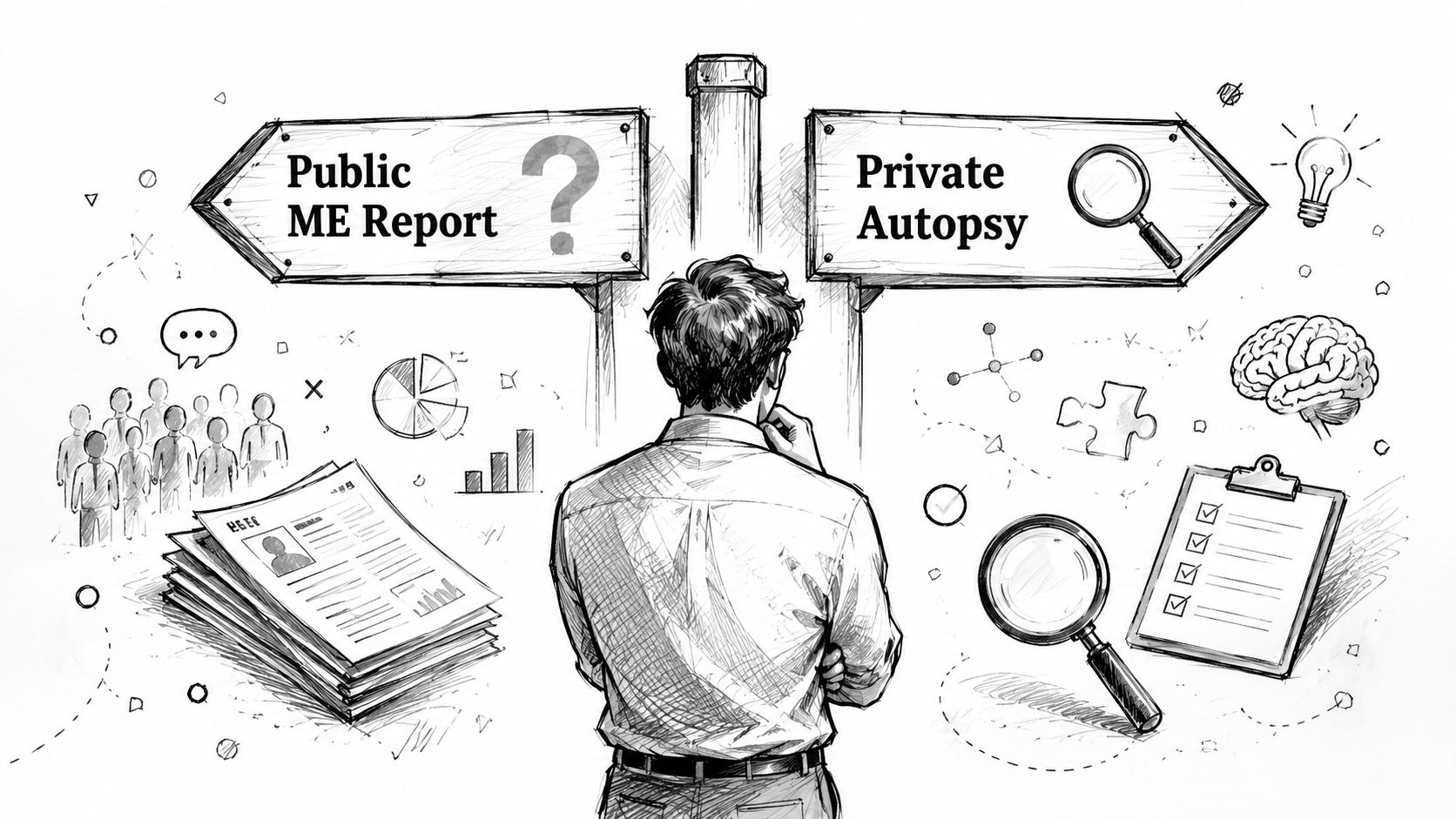
Situations where the official process may not be enough
The most common scenarios are not dramatic. They are ordinary situations with serious consequences.
A county office may decline jurisdiction because the death appears medically explained. A hospital death may not fit the county's statutory trigger even though the family still has concerns about treatment, timing, or an unexpected change in condition. In other cases, the office accepts jurisdiction but performs a limited investigation, or the final conclusions don't answer the central question the family is asking.
Attorneys often face a different version of the same problem. The public report may be enough for the death certificate but not enough for a negligence review, product liability analysis, or defense evaluation. A second opinion autopsy or record review can become important when legal standards require independent, well-documented reasoning.
Consider an independent autopsy when:
- Jurisdiction is declined: the county does not take the case, but the family still needs a forensic explanation.
- Findings are disputed: the official cause or manner of death does not fit the known timeline, medical history, or injuries.
- Litigation is possible: counsel needs an independent forensic pathology assessment rather than relying solely on the public record.
- The family needs fuller answers: even without a lawsuit, unresolved uncertainty can justify a private examination if lawful consent and timing allow.
What a private autopsy is meant to do
A useful contrast comes from Texas practice. There, the county medical examiner serves the public record and closes cases when the county's role ends, whereas an independent private autopsy serves the family and can proceed even when a case is declined by the medical examiner, with preliminary findings available within 24 hours of the examination, as described by Texas Autopsy Services.
That distinction highlights the difference in purpose. A private autopsy is not a protest against the county. It is a separate forensic service designed to answer the questions that remain after the public role has narrowed or concluded.
An independent autopsy is most useful when it is timely, lawfully authorized, and framed around a specific unanswered question.
It is not necessary in every case. But when the gap between the official process and the family's need for clarity is wide, it can be the most direct path to a medically grounded answer.
The Process of a Private Autopsy
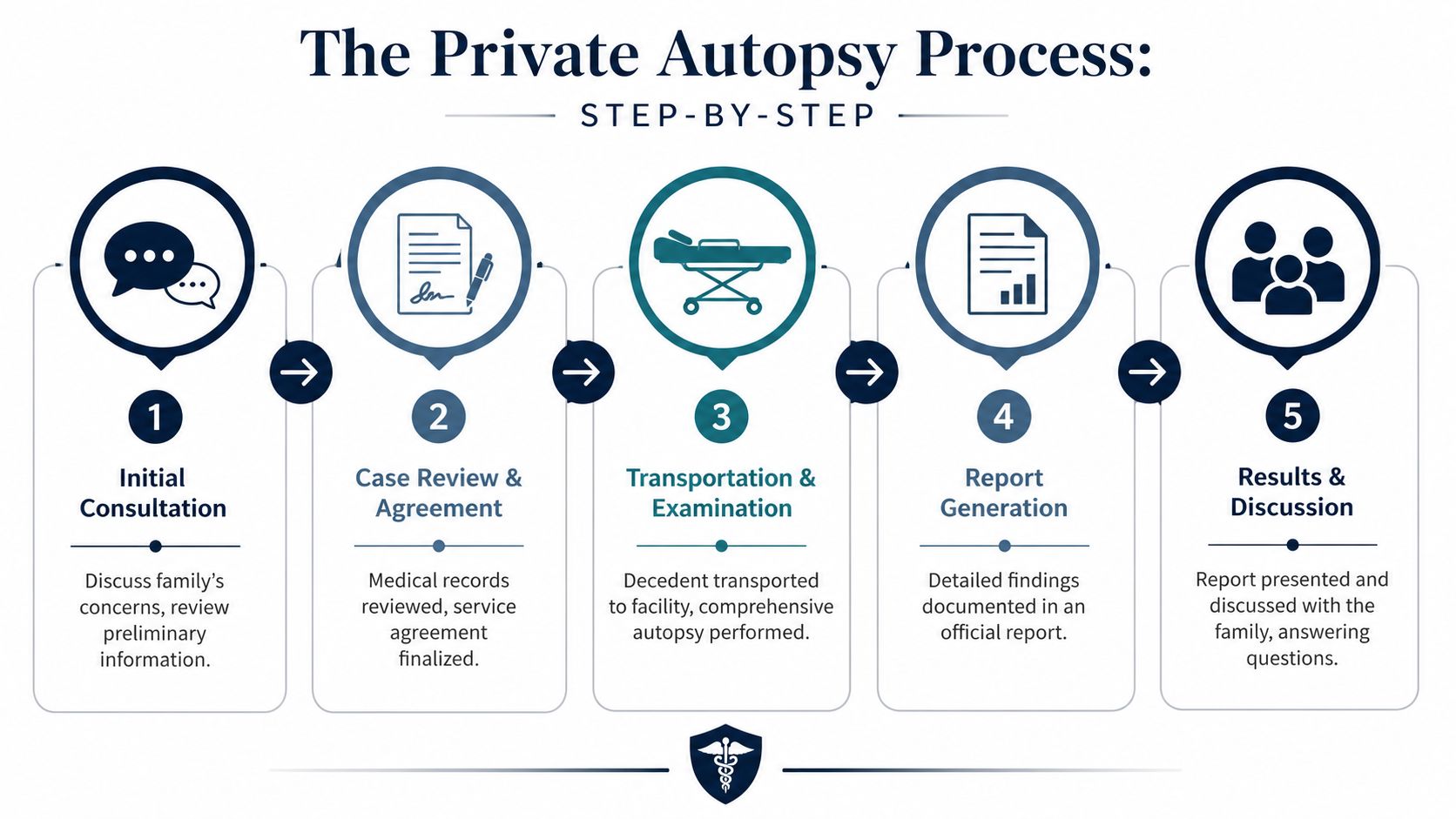
Families often imagine a private autopsy as a single event. In reality, it is a sequence of legal, medical, and evidentiary steps. The integrity of the process matters as much as the examination itself.
Consent, transport, and examination
The process begins with authority to consent. In Texas private practice, only the legal next of kin or someone designated in writing may sign the autopsy consent form, with statutory priority rules and written authorization recognized for an attorney acting on behalf of next of kin, as described by The Forensic Doc's independent autopsy consent guidance. While Pennsylvania procedures may differ by setting, the core principle remains the same. A private autopsy must be lawfully authorized.
After consent, the next questions are practical. Where is the body now. Has the county released it. Can transport occur without disrupting funeral plans. Is refrigeration being maintained appropriately. Good private practice addresses those details early because timing can affect the usefulness of the examination.
For readers who want a plain-language overview, our post on the procedure of autopsy walks through the sequence in more detail.
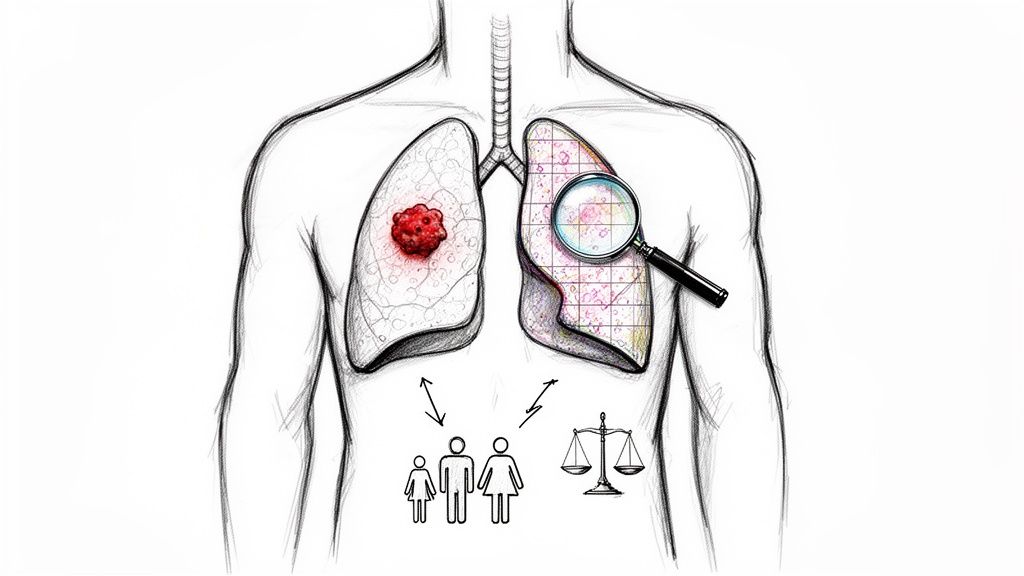
A complete forensic autopsy includes external and internal examination, systematic collection and preservation of viscera and fluids for toxicological and histopathological analysis, and photographic documentation for evidentiary use, all under strict chain-of-custody protocols, as described in the NCBI forensic autopsy overview.
Reporting and discussion of findings
That level of examination is what gives a private autopsy value. It is not just visual inspection. It is a structured medical investigation.
The reporting process usually includes several layers:
- Documented gross findings: what the pathologist observed during the examination.
- Ancillary testing: toxicology and microscopic analysis when indicated.
- Cause and manner analysis: interpretation of how the medical facts fit together.
- Written report: a formal report that may be used in legal, insurance, or administrative settings if appropriate.
Every examination we provide is performed by a forensic pathologist certified by the American Board of Pathology. That matters because a second-opinion autopsy must be both medically sound and defensible in court, not merely reassuring on a personal level.
A careful practice also communicates with restraint. Preliminary impressions may be possible before every lab result returns, but a responsible final opinion depends on the evidence collected.
The strongest forensic report is not the fastest or the most dramatic. It is the one that shows its reasoning, preserves its evidence, and stays within what the findings support.
For grieving families, that kind of transparency is often what restores trust in the process.
Finding Clarity and Taking the Next Step
The Pennsylvania medical examiner system serves an essential public function. It investigates deaths the law places under medicolegal review, preserves evidence, and helps determine cause and manner of death when the circumstances demand it. That work matters.
It is also true that the public system does not answer every private question. Families may still need clarity after jurisdiction is declined, after a report feels incomplete, or after a conclusion does not fit the medical facts as they understand them. Attorneys may need independent analysis for a case that the county office was never designed to build.
Both realities can exist at the same time. Respect for the official process and the need for a second opinion are not contradictions.
If you are dealing with a sudden death, keep your records organized, identify who has legal authority to act, and ask direct questions about what the county office has and has not done. If the core issue remains unresolved, a private autopsy may be the next appropriate step.
Unanswered questions carry weight. Clear forensic reasoning can relieve some of it.
If you need guidance after a Pennsylvania death investigation, contact Texas Autopsy Services. Our team speaks directly with families, attorneys, and agencies about whether an independent autopsy or second-opinion review is appropriate, what legal authorization is required, and what the process will involve. Every examination is performed by a forensic pathologist certified by the American Board of Pathology, with careful communication and full respect for the deceased and those left behind.