March 19, 2026 · Texas Autopsy Services
Pathology as a Medical Specialty: What the Doctor Does
Learn what a doctor in pathology does from a board-certified expert. A clear guide for families and attorneys seeking answers about the cause of death in Texas.
On this page
- A private autopsy provides independent, objective answers about the cause and manner of a loved one's death.
- Examinations are performed by me, our forensic pathology team, a board-certified forensic pathologist with experience in over 1,000 cases.
- The process is confidential, compliant with Texas law, and ensures your loved one is treated with dignity and respect.
- Families and attorneys receive a comprehensive, plain-language report detailing all medical findings.
- An independent autopsy can provide peace of mind, uncover hereditary health risks, and supply critical evidence for legal matters.
A few years ago, a family from Central Texas contacted me. Their father had passed away suddenly at a local hospital, and while the death certificate listed "natural causes," they felt something was missing. The timeline of events didn't add up, and their questions to the hospital staff were met with vague answers. They needed clarity. This scenario is one I encounter frequently. As a doctor in pathology, my role is to provide definitive, evidence-based answers when uncertainty clouds a family's grief. I am a physician who specializes in cause of death investigation. By examining tissues, organs, and when needed, performing a private autopsy, I bring medical truth to light.
What is a Private Autopsy and When is it Needed?
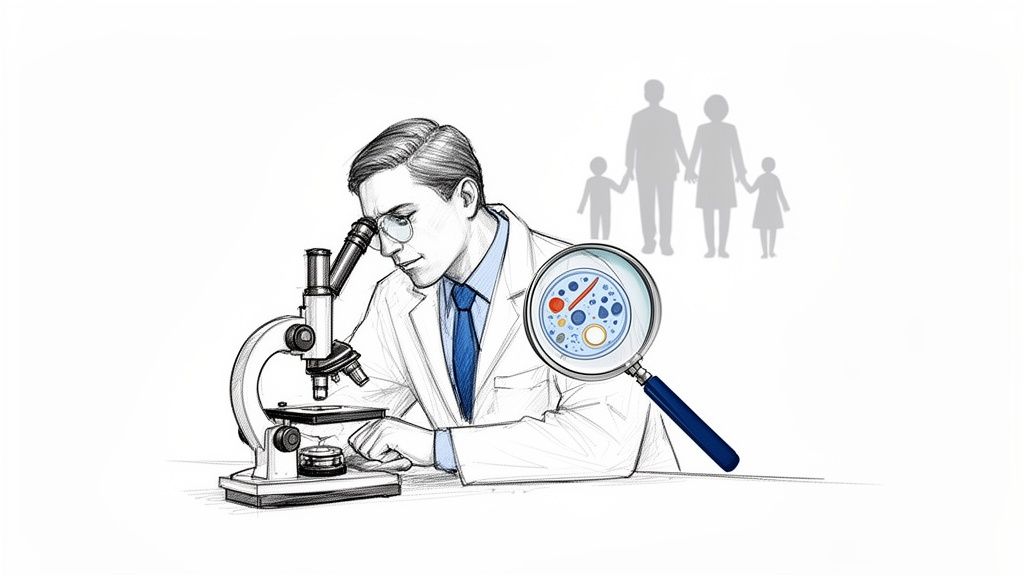
A private autopsy is a postmortem medical examination requested by a family or their legal representative, performed by an independent pathologist outside of the hospital or government system. Unlike autopsies conducted by a medical examiner, which are required by law for specific types of death, a private autopsy gives families control when they need answers.
My work as an independent forensic pathologist provides clarity in several key situations:
- When a hospital declines to perform an autopsy.
- When the official cause of death is listed as "undetermined."
- When there are concerns about the medical care a loved one received.
- When families need to know if a hereditary condition was involved.
- When an attorney requires objective medical evidence for a civil or criminal case.
You can think of my role as that of a "medical detective." My work is not just about identifying a single cause of death. It's about constructing a complete and accurate medical narrative. For instance, if a sudden cardiac death occurred, I don't stop at confirming a heart attack. I investigate the why. Was there undiagnosed coronary artery disease? A genetic condition? This detailed approach provides families with peace of mind and can reveal vital health information for surviving relatives.
What My Work Involves
As a doctor in pathology, every case is a methodical investigation. It includes:
- Gross Examination: A detailed visual inspection of organs and tissues to identify any structural abnormalities.
- Microscopic Examination: Analyzing tissue samples at a cellular level to find evidence of disease or injury invisible to the naked eye.
- Ancillary Testing: Coordinating specialized tests, such as toxicology screens to detect drugs or toxins, and microbiology to identify infections.
- Synthesizing Findings: Integrating all data points to form a conclusive diagnosis and writing a comprehensive report that clearly explains what happened.
The intense focus required for this work shows why the right tools matter. Even things like having one of the proper medical chairs designed to improve posture and precision can make a significant difference in a field that demands such meticulous attention. My ultimate goal is to translate these complex medical findings into understandable truths for you. For a closer look at this career, you can read my detailed article exploring the pathologist's job profile.
The Different Fields of Pathology
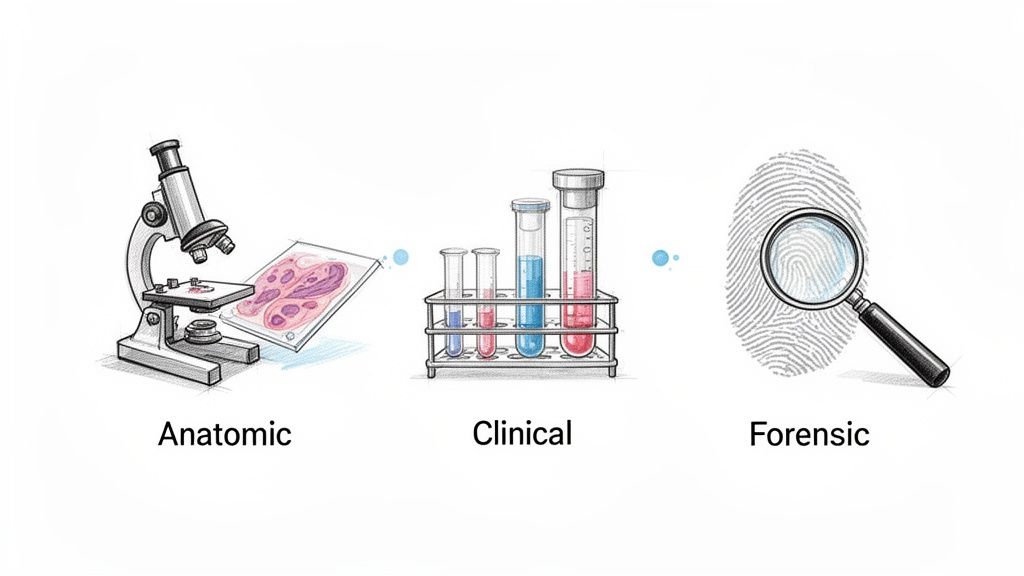
The field of pathology is broader than many realize. To understand how a doctor in pathology provides answers, it helps to know the three main specialties. My own training led me to become board-certified by the American Board of Pathology in all three disciplines, allowing me to bring a comprehensive perspective to every investigation.
Anatomic Pathology: The Architects of Diagnosis
Anatomic pathology is the diagnosis of disease through the examination of tissues and organs. When a surgeon removes a tumor or a biopsy is taken, the sample goes to an anatomic pathologist. We examine it under a microscope to determine if it's cancerous or shows signs of other diseases. This specialty is the foundation of autopsy performance, as it requires a deep understanding of how disease physically alters the body.
Clinical Pathology: The Laboratory Scientists
Clinical pathology focuses on the analysis of bodily fluids. When you have blood work or a urine test, a clinical pathologist is the expert overseeing the lab, ensuring the accuracy of the results, and interpreting them. They are specialists in chemistry, hematology, and microbiology. An anatomic pathologist might examine a slice of lung tissue, while a clinical pathologist analyzes the fluid from the lung to identify the specific bacteria causing pneumonia.
Forensic Pathology: Where Medicine and Law Meet
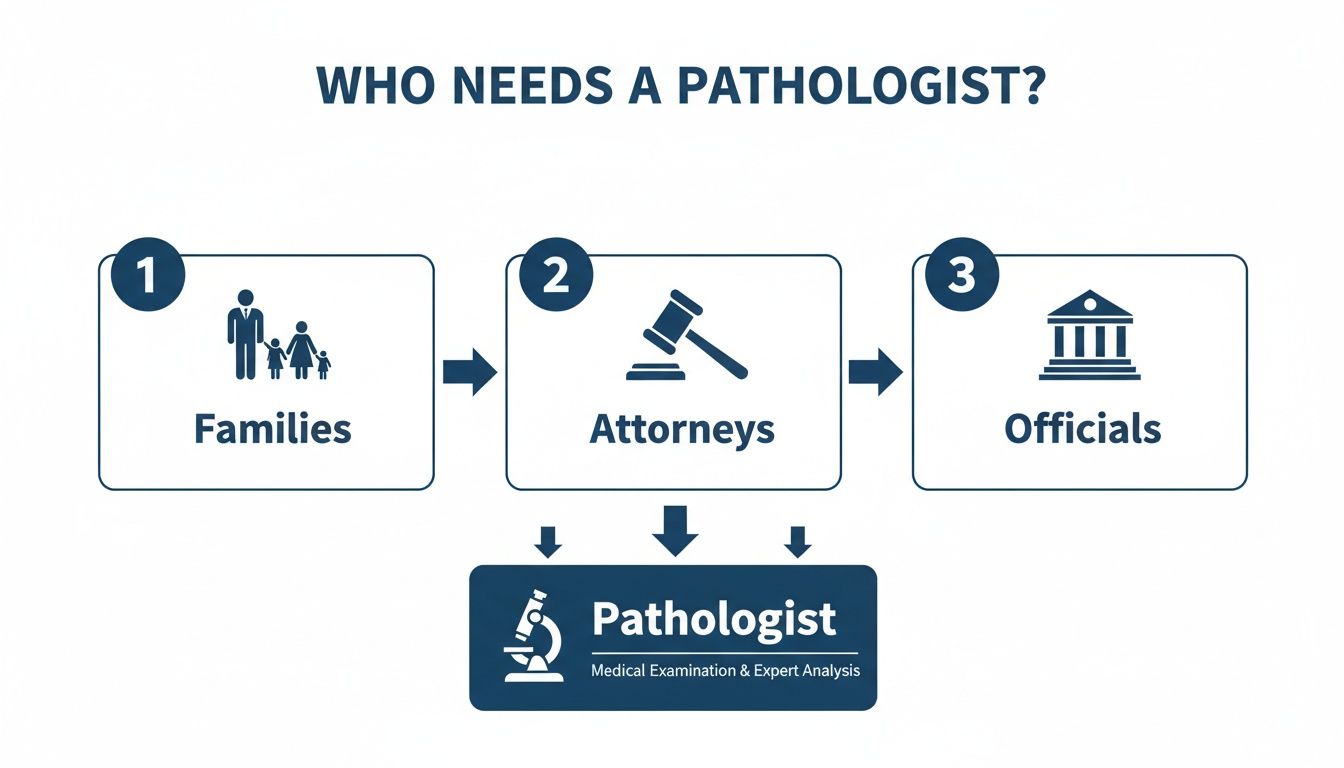
This is the focus of my practice at Texas Autopsy Services. Forensic pathology applies medical knowledge to legal questions, primarily to determine the cause and manner of death. As a forensic pathologist, my core duty is investigating deaths that are sudden, unexpected, or occur under suspicious circumstances. My examinations must withstand the scrutiny of a courtroom, which is why families, attorneys, and county officials across Texas rely on an independent forensic pathology expert for objective answers.
Each of these specialties requires years of dedicated training. You can learn more about this rigorous process in our guide detailing the steps to becoming a forensic pathologist. This extensive training is more critical than ever, as the medical community faces a growing global pathology workforce crisis. With experienced pathologists retiring faster than new ones can be trained, finding an expert with a comprehensive, triple-certified background ensures your case receives the depth of knowledge it deserves.
How the Autopsy Process Works in Texas
I understand this is a difficult time. My process is designed to be transparent and straightforward, ensuring you get clear answers while your loved one is treated with the utmost respect.
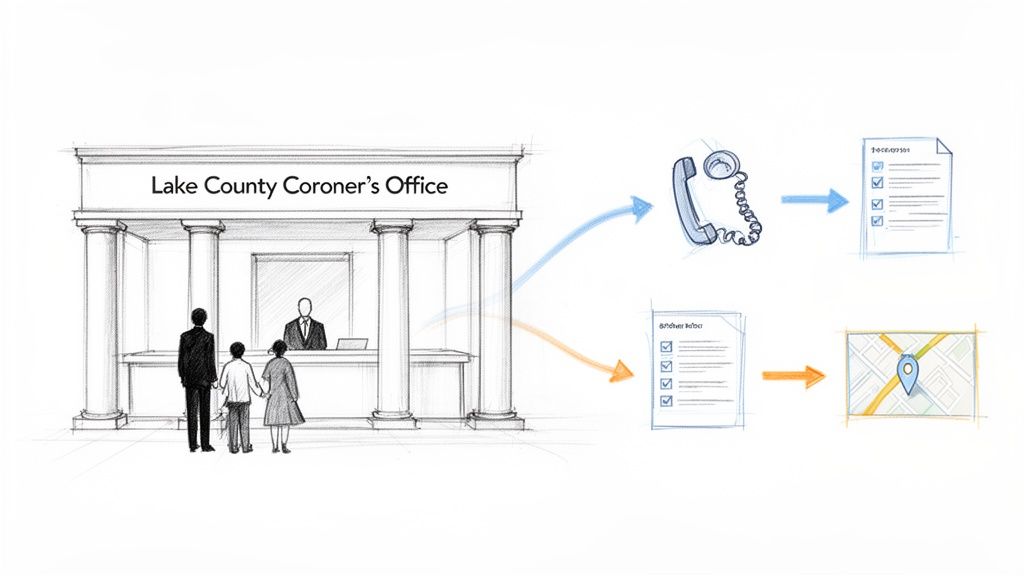
- Initial Consultation: Our process begins with a conversation. You share the circumstances of your loved one's passing, and I'll review any available medical records to understand what questions you need answered.
- Authorization and Logistics: The legal next-of-kin must provide consent for a private autopsy, as required by the Texas Health & Safety Code. I will guide you through this paperwork. My team then coordinates directly with the funeral home or hospital to arrange dignified transport to our partner facility, Waterloo Mortuary, maintaining a secure chain of custody.
- The Postmortem Examination: I perform a thorough external and internal examination to document any evidence of disease or injury. Small tissue and fluid samples are collected for further analysis. The procedure is performed with great care to preserve the body's integrity, so an open-casket viewing is still possible.
- Ancillary Testing and Analysis: The samples are sent for specialized testing, including toxicology to screen for medications or other substances, and histology, where I examine tissues under a microscope to identify disease at a cellular level.
- Final Report and Consultation: I bring all findings together into a single, comprehensive report written in plain English. My work isn't done until I've gone over the findings with you, answered all your questions, and ensured you understand the medical truth. You can learn more in our comprehensive guide to private autopsies.
The Role of Independence and Objectivity
When seeking answers, choosing the right medical expert is the most critical decision you'll make. The value of a private autopsy lies in its independence. A pathologist employed by a hospital may face institutional pressures or inherent conflicts of interest. As an independent doctor in pathology, I work for you. My conclusions are based solely on the medical evidence.
Here's what to look for in a qualified forensic pathologist:
- Board Certification: The gold standard is certification from the American Board of Pathology. A subspecialty certification in Forensic Pathology is even more important for death investigations. My board certification in Anatomic, Clinical, and Forensic Pathology reflects a comprehensive understanding of disease and its legal implications.
- Experience: Nothing replaces hands-on experience. Having personally performed over 1,000 autopsies across adult, pediatric, and complex forensic cases, I can identify subtle clues that might otherwise be missed.
- Clear Communication: A great pathologist does more than write a technical report. They must be able to translate complex findings into clear language and patiently answer your questions with compassion and precision.
The pathology field is facing a challenge with fewer doctors entering the profession and experienced specialists retiring. This makes finding a highly trained expert more critical. Digital pathology and telemedicine are helping bridge this gap, allowing experts to consult on cases from anywhere. You can learn more about the global pathology workforce and its challenges to better understand the current landscape.
Frequently Asked Questions About Private Autopsies in Texas
Families and attorneys often have urgent questions. Here are clear answers to some of the most common ones I receive.
Will an autopsy interfere with funeral plans?
No. I treat every person with the utmost respect, and my examination is conducted meticulously to ensure an open-casket viewing is still possible. We coordinate directly with your chosen funeral home to make the process seamless and support your family's wishes.
Can I get a second opinion autopsy?
Yes. A second opinion autopsy or a review of an existing one can be invaluable. A fresh, independent examination can uncover details that were missed or misinterpreted. Even if a second physical examination isn't possible, a thorough review of the original autopsy report, photos, and tissue slides can often reveal significant new findings.
What is the difference between cause of death and manner of death?
This is a critical distinction in every death investigation.
- Cause of Death is the specific medical reason a person died (e.g., "coronary artery disease").
- Manner of Death is the legal classification of the circumstances. In Texas, the options are Natural, Accident, Suicide, Homicide, or Undetermined. My job as a forensic pathologist is to determine both. For example, the cause of death may be a drug overdose, but the manner could be an accident or a suicide. The evidence tells the story.
Who can authorize a private autopsy in Texas?
Texas law, specifically the Health & Safety Code, grants authority to the legal next-of-kin in a specific order of priority: spouse, adult children, parents, and so on. Part of my service is guiding you through this step to ensure all legal requirements are met with care and respect.
If you are a family member, attorney, or county official in Texas facing unanswered questions, I am here to help you find the truth. Please contact Texas Autopsy Services for a confidential and compassionate consultation.
Learn more by visiting https://www.texasautopsyservices.com.