March 17, 2026 · Texas Autopsy Services
Unpack Inconclusive Biopsy Results What They Mean and Next Steps
We explain inconclusive biopsy results: what they mean, why they occur, and practical steps to seek clarity and next actions.
On this page
- Why Biopsy Results Come Back Inconclusive
- Your Next Steps After an Inconclusive Finding
- Finding Answers When a Death Follows an Inconclusive Biopsy
- The Critical Role of an Independent Second Opinion
- Getting Clear Answers With Texas Autopsy Services
- Frequently Asked Questions About Biopsy and Autopsy Findings
When a doctor says your biopsy results are inconclusive, it can feel like you’re stuck in limbo. You’ve already been through the stress of a procedure and the anxiety of waiting, only to receive an answer that isn't really an answer at all. It’s not a definite "cancer" diagnosis, but it’s not "benign" either. It's just uncertain.
TL;DR: Understanding Inconclusive Biopsy Results
- An inconclusive result means the pathologist couldn’t make a definitive diagnosis from the tissue sample provided.
- Common causes include a small or damaged sample (sampling error), or cells that are naturally ambiguous ("atypical").
- The skill of the clinician performing the biopsy significantly impacts the outcome; experience matters.
- Next steps often involve a repeat biopsy using a different technique, advanced testing on the original sample, or a second opinion from another pathologist.
- If a death follows a series of inconclusive results, a private autopsy can provide definitive, comprehensive answers.
A Frustrating Lack of Answers
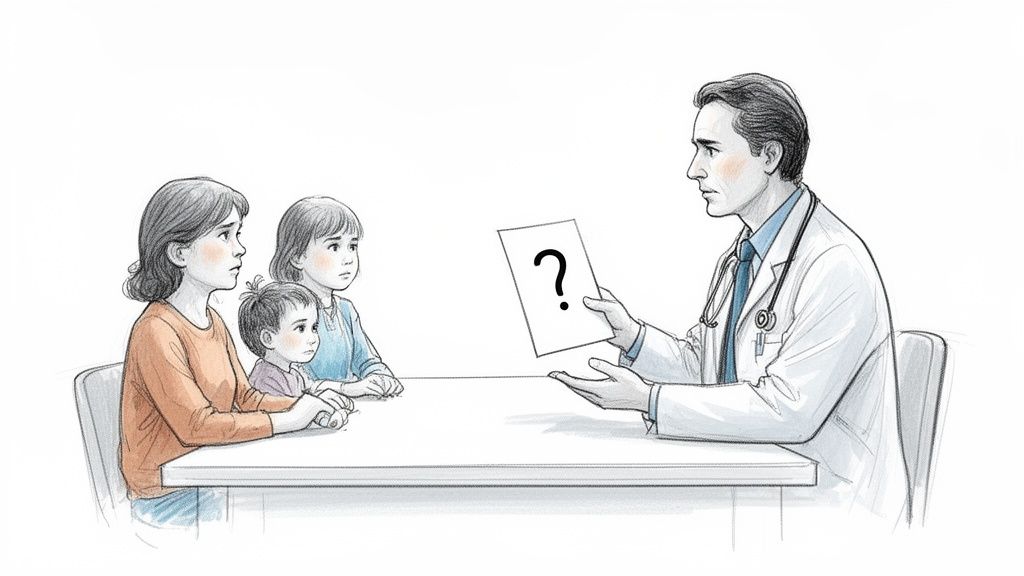
A few years ago, I consulted on a case for a family in Central Texas. Their father had undergone two separate fine-needle biopsies for a suspicious mass in his lung. Both came back inconclusive. His health declined rapidly, and he passed away without a clear diagnosis, leaving his family tormented by questions. Was it an aggressive cancer that was missed? Could a different treatment have helped? This uncertainty is a heavy burden, and it’s a situation I encounter frequently in my work.
At Texas Autopsy Services, every examination is performed by a board-certified forensic pathologist experienced in medicolegal death investigations. Our work centers on one principle: follow the evidence carefully, explain it plainly, and treat the deceased and their family with respect.
Why Biopsy Results Come Back Inconclusive
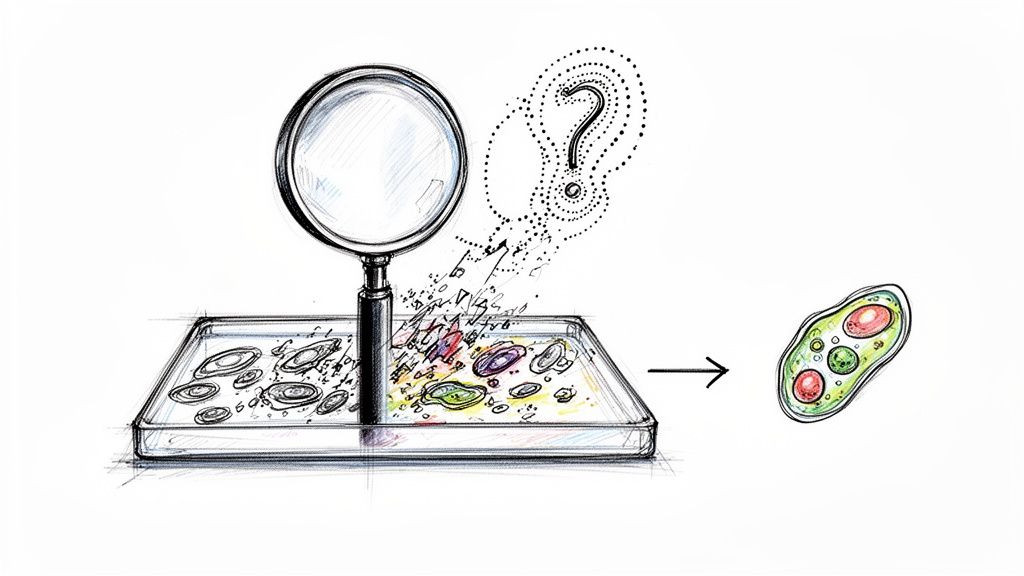
Simply put, an inconclusive biopsy result means the pathologist couldn't make a definitive diagnosis from the tissue they were given. It’s not a final verdict; it's a signal that more information is needed. My analysis depends entirely on the quality and adequacy of the sample I receive. This is a common and frustrating part of medicine, and the reasons are often technical, not a reflection of the severity of the underlying condition. Our guide on how to read a pathology report can help you better understand the language used in these reports.
Let’s walk through the most common reasons a biopsy might not provide a clear answer.
1. Issues With the Tissue Sample Itself
Most inconclusive results trace back to the specimen that arrives in my lab. My ability to provide a definitive diagnosis hinges on having enough of the right cells to analyze.
| Cause | Simple Explanation | What This Means in Practice |
|---|---|---|
| Sampling Error | The needle missed the target area. | The biopsy might have collected only healthy tissue surrounding a tumor or hit a patch of dead cells (necrosis), which offers no diagnostic information. |
| Insufficient Material | There wasn't enough tissue to test. | This is a frequent challenge with fine-needle aspirations (FNAs), where only a tiny number of cells are gathered. It's like trying to understand a book from a single, torn page. |
| Tissue Damage | The cells were crushed or distorted. | Known as "crush artifact," this can occur during the collection or transport process. The cell structures become misshapen, making them impossible for me to interpret accurately. |
An inconclusive result doesn't mean nothing is wrong. It means the sample itself couldn't provide the answer. The first question to ask your doctor is about the quality and quantity of the tissue that was collected.
2. The Cells Are Biologically Ambiguous
Sometimes, the sample is collected perfectly, but the cells themselves are unusual. Biology doesn't always adhere to textbook definitions, and some cells don't look clearly benign (harmless) or malignant (cancerous). They exist in a gray area.
In these situations, I might describe the cells as "atypical." This means they show some abnormal features, but not enough to confidently diagnose them as cancer. It presents a true diagnostic puzzle where the cells themselves are the source of uncertainty. This is quite different from an inconclusive finding in a full postmortem examination, which often arises from other factors as discussed in our guide on what "inconclusive" means on an autopsy.
3. The Role of Technique and Experience
The skill of the person performing the biopsy is critical. Consider thyroid nodules, where fine-needle aspiration is a standard diagnostic tool. A 2024 study on thyroid biopsies highlighted that inconclusive biopsy results are a persistent challenge, with a staggering 36.9% of initial results being inconclusive.
The data also underscored the importance of experience: clinicians with less than one year of practice had an inconclusive rate of 43.4%, which fell to 35.7% for their more experienced colleagues. You can review the full study on thyroid biopsy rates and operator experience for more details. This shows that even with advanced tools like ultrasound guidance, the operator's technique significantly influences the outcome.
Finally, while rare, technical issues can occur in the pathology lab. We maintain strict quality controls, but problems with slide preparation, chemical staining, or equipment can occasionally compromise a sample. At Texas Autopsy Services, we follow rigorous protocols to prevent this, but it’s a factor that must always be considered.
Your Next Steps After an Inconclusive Finding
Receiving an inconclusive biopsy result is frustrating and can be frightening. However, it's not a dead end. It’s a call for a more focused approach. The first attempt provided valuable information—it told us what didn't work. We can now use that knowledge to create a better plan. As a pathologist, my job is to find certainty, and that process always starts with a logical strategy.
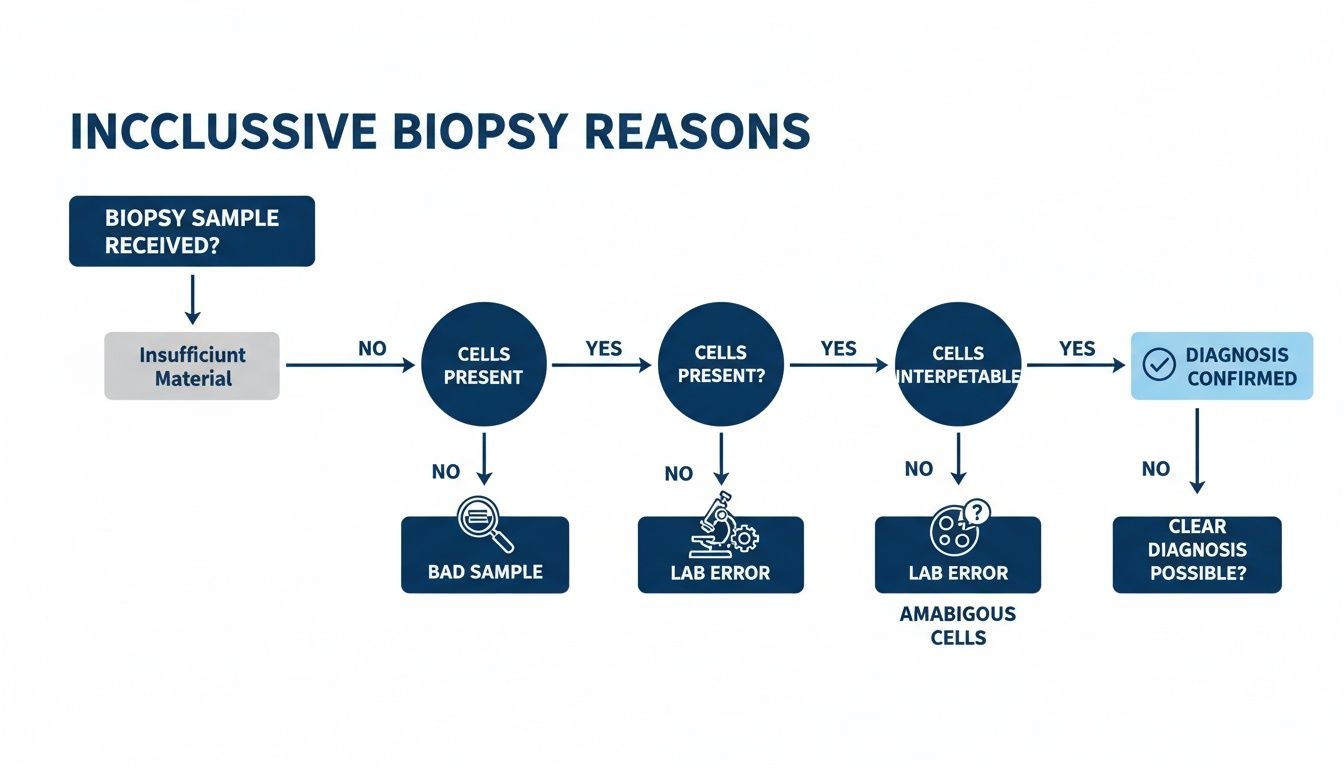
Creating a Clear Plan of Action
The first step is a direct conversation with your physician to move from uncertainty to a concrete plan. Here are the most common options:
- Repeat the Biopsy: This is often the most direct path. If the initial sample was too small or missed the correct spot, a second attempt, informed by the first, can be successful.
- Use a Different Biopsy Method: If a fine-needle aspiration (FNA) was insufficient, your doctor might recommend a core needle biopsy. This technique retrieves a larger, more intact piece of tissue, providing the cellular architecture needed for a firm diagnosis.
- Enhance Imaging Guidance: Sometimes, the needle needs to be guided with more precision. Using a CT scan or specialized ultrasound helps the radiologist target the most diagnostically relevant part of the lesion.
- Perform Special Stains on the Original Sample: If we have a good tissue sample but the cells are ambiguous, we may not need a new biopsy. We can run advanced tests like immunohistochemistry (IHC) or molecular analysis on the existing slides. These tests use specific markers to identify proteins or genes that can confirm or rule out cancer.
The Impact of Biopsy Technique on Results
How a biopsy is performed can make all the difference. Research looking at CT-guided core biopsies for suspected cancers in the chest and abdomen drives this point home. The study found that 19% of the 116 biopsies analyzed came back inconclusive.
Here’s the alarming part: upon follow-up, 64% of those inconclusive cases were ultimately found to be cancerous. That’s a significant number of missed diagnoses on the first attempt. The study identified the biopsy method as the critical factor. You can read the research on how biopsy technique affects cancer detection rates for a deeper dive. This is why repeating a biopsy isn't just "trying again." It’s an opportunity to use a more precise and effective technique.
An inconclusive finding empowers you and your doctor with new information. You now know what didn't work, which is valuable data for planning the next, more effective diagnostic step.
When an Autopsy Provides the Final Answer
In the most tragic cases, a person may pass away after a series of inconclusive results, leaving their family with a heavy burden of unanswered questions. Was a diagnosis missed? Would a different treatment have made a difference? In these situations, a private autopsy is the only way to get definitive answers.
An autopsy allows me to do what a small biopsy simply cannot. It’s a comprehensive medical examination that provides a complete picture. During a postmortem examination, I can:
- Directly visualize the full extent of a disease process.
- Take multiple, large tissue samples from every organ for detailed microscopic analysis.
- Establish a definitive cause of death based on overwhelming evidence.
For a family left grappling with "what ifs," an autopsy provides the truth. It replaces painful speculation with concrete, medically sound facts, offering not just emotional closure but the clear, unbiased answers needed for peace of mind and any potential legal resolution.
Finding Answers When a Death Follows an Inconclusive Biopsy
It’s an incredibly painful situation I see far too often. A loved one passes away after one or more inconclusive biopsy results. The family is left devastated, with a gnawing question that won’t go away: Could things have been different if we had a clear diagnosis? It's at this point that my work as a forensic pathologist becomes about finding the truth for a family that desperately needs it.
When death comes after a period of medical uncertainty, the "what ifs" can be torturous. Was it an aggressive cancer the doctors couldn't pin down? A hidden infection? Without real answers, it’s almost impossible to find closure, and important legal questions can linger indefinitely.
How a Private Autopsy Delivers Certainty
This is where a private autopsy provides the clarity a small biopsy sample never could. A biopsy is like looking at a single piece of a very large puzzle. An autopsy, on the other hand, lets me see the entire picture. It’s a complete medical investigation designed to get you solid answers.
During a private autopsy, I can:
- Directly examine every organ system. This allows me to see the full picture of a disease—how far a cancer may have spread or which organs were truly damaged by an infection.
- Collect thorough tissue samples. Instead of the tiny core from a needle biopsy, I can take multiple, large sections of tissue from any suspicious area. This ensures nothing is overlooked.
- Establish a definitive cause of death. By putting all the pieces together—from what I see with my own eyes to what the microscope reveals—I can determine a clear, medically sound cause of death.
For a family haunted by questions, this process is about replacing doubt with facts. Of course, when a death follows an inconclusive biopsy, time is of the essence. A postmortem examination must account for the natural stages of human decomposition, which is a critical part of my work.
The Role of Postmortem Examination in Medical-Legal Cases
The findings from an autopsy do more than just provide peace of mind for families; they are often crucial in a legal setting. For attorneys working on a family's behalf, the objective evidence I uncover is invaluable.
An autopsy report isn’t just an opinion. It’s a factual record of the body's condition at the time of death. It gives you the unbiased, scientific evidence needed to either confirm or challenge a claim of a missed diagnosis.
My job as a forensic pathologist, certified by the American Board of Pathology, is to be completely objective. I serve the truth that the medical evidence shows me. I provide attorneys with a detailed, comprehensive report that clearly explains the final diagnosis, the timeline of events that led to the death, and the official cause and manner of death. This documentation is the bedrock for building a case and ensuring every decision is based on hard evidence, not guesswork.
The Critical Role of an Independent Second Opinion
Getting a second opinion on a pathology finding, whether for a living patient or after a loved one has passed, can be one of the most important steps you take. It’s not about questioning the first doctor's effort. It is more like bringing in a specialist to look at a complex puzzle from a new angle.
As a board-certified forensic pathologist, my work is all about finding objective, evidence-based answers. When I step in for a second opinion—either by reviewing existing biopsy slides or by conducting a full private autopsy—I start from square one. I bring a fresh perspective and a methodical process to the case, leaving no stone unturned.
Why a Second Look Matters
An independent pathologist can bring a level of focus that often uncovers what was initially overlooked. This is particularly true when you’re dealing with an inconclusive biopsy result. The value of a fresh, expert review is immense. It's similar to why people consider seeking a second opinion on major legal decisions; getting another expert medical perspective is just as crucial.
My review is built around answering a few core questions:
- Was the tissue sample truly inconclusive? Sometimes, very subtle clues are present but were easy to miss.
- Could more advanced testing provide an answer? I can assess if special stains or molecular tests might pull a clear diagnosis from the original tissue.
- Is there a hidden pattern? Having reviewed thousands of cases, I can often spot faint patterns that point to a specific diagnosis that wasn't immediately obvious.
This thorough process provides confidence that the final answer is built on a complete and rigorous examination.
A second opinion is a quality control measure. It validates correct findings and catches errors, ensuring that the final answer is as accurate as medical science allows.
The Second Opinion Autopsy A Path to Definitive Answers
When a death occurs after an inconclusive finding, a second opinion autopsy is the ultimate tool for finding the truth. This goes far beyond just reviewing slides; it involves a brand-new, comprehensive postmortem examination.
At Texas Autopsy Services, my entire focus is providing this kind of definitive review, strictly following the high standards set by the Texas Funeral Service Commission and the Texas Health & Safety Code. An independent examination gives families and their attorneys the solid ground they need. By systematically re-investigating the case from the beginning, I deliver a clear, unbiased report that can withstand tough scrutiny and give you the solid answers you deserve.
Getting Clear Answers With Texas Autopsy Services
As a forensic pathologist, I've dedicated my career to giving families, attorneys, and medical professionals the solid answers they need to move forward. An inconclusive biopsy result can leave you feeling stuck, but it doesn't have to be the end of the story. At Texas Autopsy Services, my work is to provide a clear, careful, and compassionate path to the truth.
My entire focus is on delivering objective, fact-based answers. Sometimes that means conducting a second-opinion review of original biopsy slides. Other times, it requires a complete private autopsy. In every case, I bring my full expertise as a board-certified pathologist, with certifications in Anatomic, Clinical, and Forensic Pathology, to get to the bottom of it.
Serving Every Corner of Texas
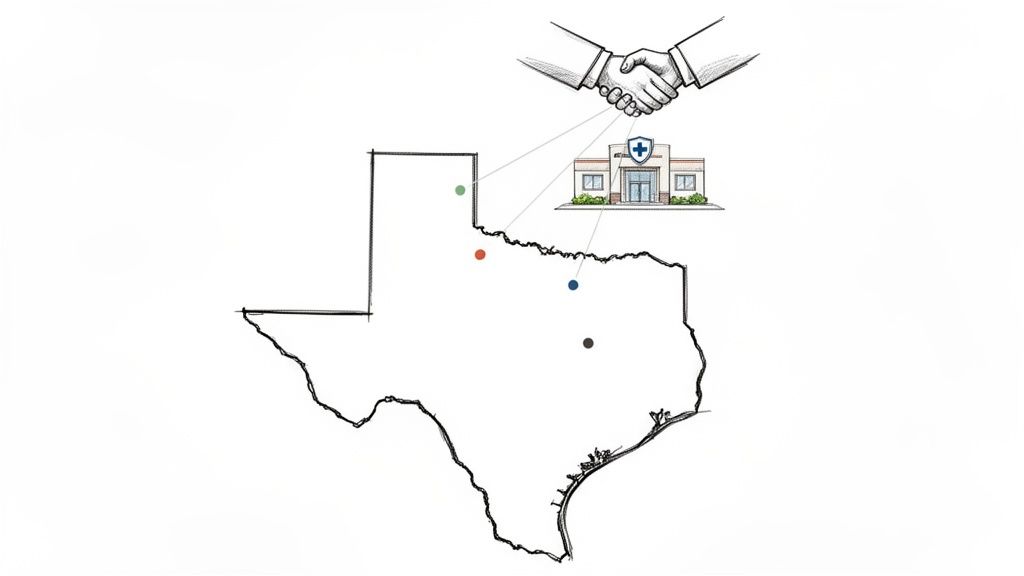
I founded Texas Autopsy Services with a simple mission: to make sure every family and agency in this state can get help from an independent forensic pathologist. We serve all 254 counties in Texas, from large metropolitan areas to small rural towns.
To do this effectively, we've built strong relationships with trusted facilities across the state, such as our Waterloo Mortuary Partnership. These partnerships allow us to perform every examination with the professionalism, dignity, and technical skill it deserves. We handle all the logistics so you can focus on what matters most.
Our Process for Finding Answers
When you contact us, we'll start with a private consultation to discuss your situation. I'll personally explain your options, whether it’s for a Private Autopsy or for County Forensic Autopsies. My team and I believe in complete transparency, so you’ll always understand what is happening and why.
Our process is straightforward and designed for clarity:
- We begin with a deep dive into the medical history to pinpoint the exact questions that need answers.
- I personally perform every examination, holding myself to the highest medical and ethical standards.
- You receive a detailed report, written in plain English, that gives you a definitive cause of death and addresses your specific concerns.
My promise is to the truth. An independent examination delivers the unbiased, evidence-based answers you need for closure, legal action, or peace of mind. Every report I write is a direct result of my commitment to scientific accuracy and compassion.
If you are dealing with an inconclusive medical finding and need a clear way forward, please contact my office. A confidential conversation can be the first step toward getting the clarity you and your family deserve.
Frequently Asked Questions About Biopsy and Autopsy Findings
When a medical report uses the word “inconclusive,” it often leads to more questions than answers. I've worked with countless families and physicians navigating this exact frustration. Here are the answers to the questions I hear most often.
What is the most common reason for an inconclusive biopsy?
Most of the time, the issue is not with the analysis but with the sample itself. We often label this "non-diagnostic," which is a technical way of saying there wasn’t enough or the right kind of material to examine. Think of it like trying to identify a car from a single blurry photo. Fine needle aspiration (FNA) biopsies, for example, collect only a small cluster of cells. If the needle misses the suspicious area, all you get is healthy tissue, which doesn't help solve the problem.
Can inconclusive biopsy slides be reviewed for a second opinion?
Yes, and I strongly recommend it. The original glass slides and the wax block containing the tissue can be sent to another pathologist for a fresh look. This is not about questioning the first doctor's skill. It's about getting more eyes on the problem, especially from a subspecialist with deep experience in that specific area of pathology. A second opinion is a critical step to ensure every possibility is considered before committing to a more invasive procedure.
How is a postmortem examination different from a biopsy?
This is where we see the biggest difference in scale. A biopsy is just a tiny glimpse, while a postmortem examination, or autopsy, is the complete picture. A biopsy is like taking one puzzle piece and trying to guess the final image. With a full autopsy, I have the entire puzzle in front of me. I can see every organ, trace the full path of a disease, and take multiple large samples from any suspicious area. This moves us from a small, uncertain clue to a comprehensive and definitive answer.
What happens if a biopsy is inconclusive even after repeat testing?
It's rare, but it does happen. Sometimes, even with repeat testing, the results remain unclear. For example, a 2025 study on preimplantation genetic testing in IVF found that even after a re-biopsy of embryos, about 0.9% still came back as inconclusive. When this happens in the body with a suspicious mass, we can't afford to leave it to chance. The next logical step is usually an excisional biopsy, which is a surgical procedure to remove the entire mass. This provides the pathologist with the whole specimen, leaving no room for sampling error and allowing for a final, definitive diagnosis.
If you are left with unanswered questions after a loved one has passed, finding the truth is essential. Please call my office at (806) 230-1889 for a confidential consultation. My team at Texas Autopsy Services is here to provide the clear, definitive answers you need.