May 28, 2026 · Texas Autopsy Services
What to Do After Blood Test: Understand Your Results
Learn exactly what to do after blood test results arrive. Get clear, actionable advice on understanding your health data and next steps for well-being.
On this page
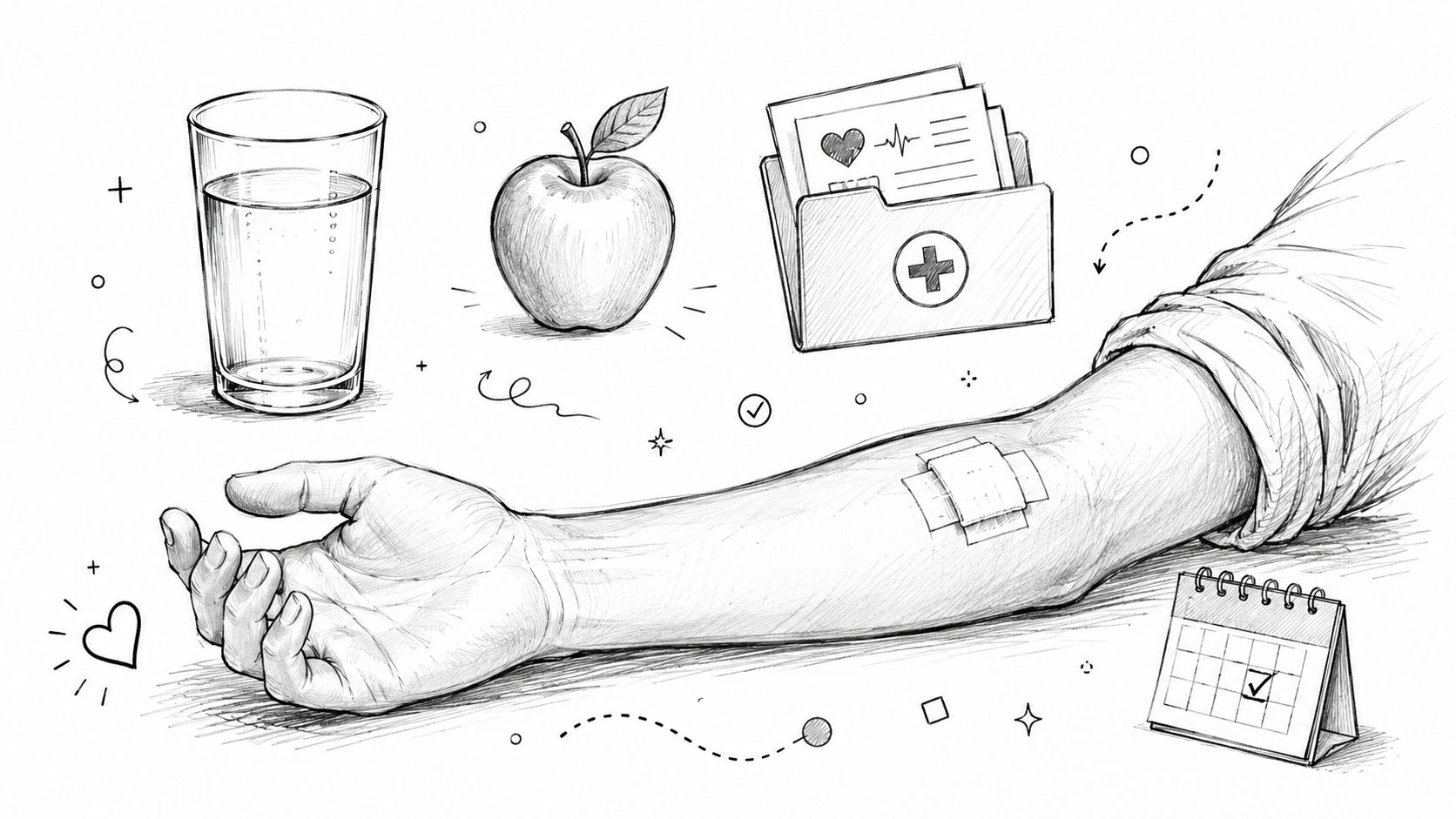
A blood test can leave people in a familiar state of uncertainty. The sample is taken in minutes, but the meaning often isn't simple. Some people feel physically fine and worry about a number they saw in a portal. Others feel lightheaded, notice bruising at the puncture site, or don't know whether they should eat, rest, or call their doctor.
At Texas Autopsy Services, every examination is performed by a board-certified forensic pathologist experienced in medicolegal death investigations. Our work centers on one principle: follow the evidence carefully, explain it plainly, and treat the deceased and their family with respect.
Guidance for Families with Unanswered Questions
Many families come to me after a death that still doesn't make sense to them. They've seen blood work in the medical record, heard a brief explanation, and been left with more uncertainty than clarity. Sometimes the issue is a sudden decline after a routine hospital stay. Sometimes it's a concern that an abnormal lab result was either overread or dismissed.
That confusion is real, and it often overlaps with grief. When people are trying to understand whether a blood test mattered, whether follow-up happened fast enough, or whether the result fit the patient's symptoms, they're often also dealing with sleeplessness, second-guessing, and spiraling thoughts. If that sounds familiar, a practical resource on coping with overthinking and anxiety may help settle the mental noise enough to focus on the facts.
In my field, unanswered questions usually aren't resolved by staring harder at one number. They're resolved by reviewing the timeline, the symptoms, the medications, the repeat testing, and the clinical decisions that followed. That same principle applies to living patients who are trying to understand what to do after blood test results come in. The first useful step is usually not speculation. It's getting the full report, confirming what was outside the reference range, and asking what the treating clinician thought it meant in context.
For readers trying to understand blood handling after laboratory analysis, I've addressed that separately in this discussion of what happens to blood after testing.
Blood work is evidence. It still has to be interpreted.
What a Private Autopsy Is and When It Is Needed
A family receives abnormal lab results, then a death follows before the picture is clear. In that situation, the question is no longer only what to do after blood test results come back. The harder question is whether those results were clinically significant, correctly interpreted, and properly acted on. A private autopsy can answer that in a way a lab report alone cannot.
A private autopsy is a postmortem examination requested by the family or legal representative rather than ordered by a county medical examiner or coroner. The value of that difference is independence. The examining pathologist is not tied to the hospital, the treating team, or the public agency's case priorities. That objectivity matters when families or attorneys need a clear medical explanation they can trust.
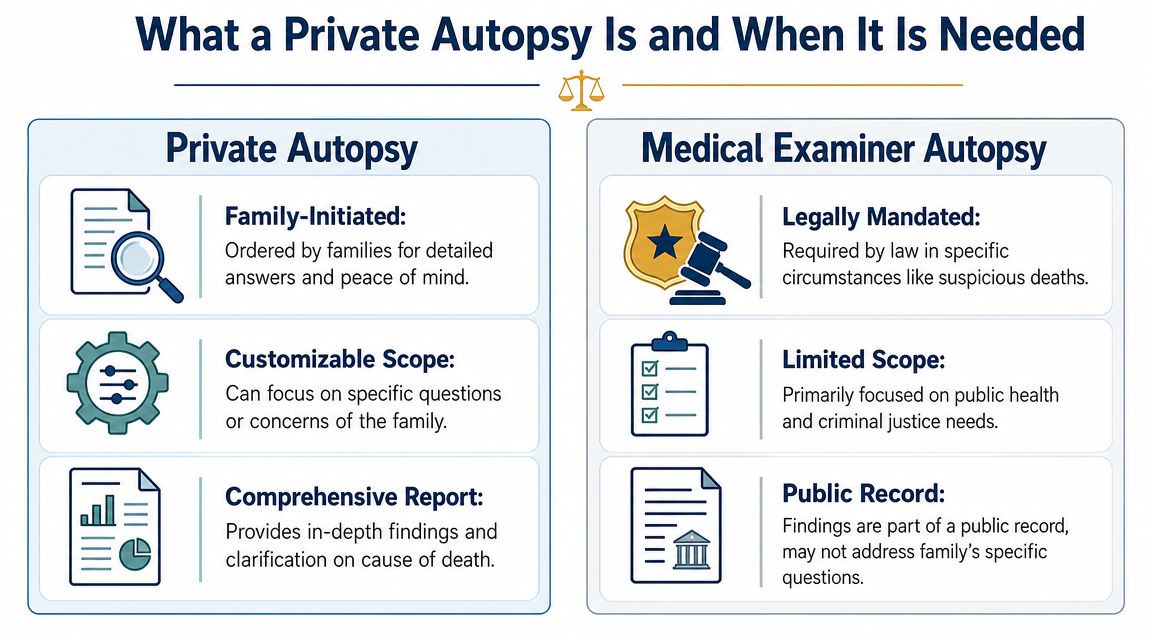
Situations where a private autopsy makes sense
I recommend considering a private autopsy when the medical record leaves a real gap between the facts and the explanation. Common examples include:
- Abnormal blood work preceded the death, but its meaning remains disputed. A lab value may have suggested infection, bleeding, organ failure, a clotting problem, or a metabolic crisis, yet no one can say with confidence whether it changed the outcome.
- No official autopsy was performed. Many deaths do not fall under medical examiner jurisdiction even when the family has legitimate medical questions.
- The official cause of death feels too general. Terms such as cardiac arrest or natural causes may describe the manner of dying without identifying the underlying disease process.
- Medical decision-making is under review. If there are concerns about delayed diagnosis, missed follow-up, medication effects, or whether clinicians responded appropriately to symptoms and labs, an independent examination helps reconstruct the sequence.
- Genetic or family risk may be involved. Sudden or unexplained deaths can raise questions that matter for surviving relatives.
- Legal or insurance review requires an independent opinion. Attorneys need objective medical findings that are separate from the treating institution and separate from the government investigation.
Families looking for a formal overview can review private autopsy services in Texas.
Why independent examination still matters
Blood tests are evidence, not conclusions. After death, the central issue is often not merely what to do after blood test abnormalities were found, but whether those abnormalities matched the actual disease or injury in the body. An autopsy examines organs, tissues, toxicology, and the full clinical timeline together. That is how uncertain fragments become a medically defensible answer.
A review published in JAMA notes that autopsies continue to identify major diagnostic discrepancies in some hospital deaths, including findings that could have changed care if recognized earlier (JAMA discussion of diagnostic discrepancies found at autopsy).
That does not prove negligence. It does establish why an independent forensic pathologist can be so important. In my work, families usually want the same thing attorneys want. A conclusion grounded in anatomy, records, and objective analysis rather than assumption.
Practical rule: If blood test results, symptoms, and the stated cause of death do not fit together, an independent private autopsy is a reasonable next step.
The Private Autopsy Process From Start to Finish
The process works best when families know what will happen before any paperwork is signed. Uncertainty is often harder than the procedure itself.
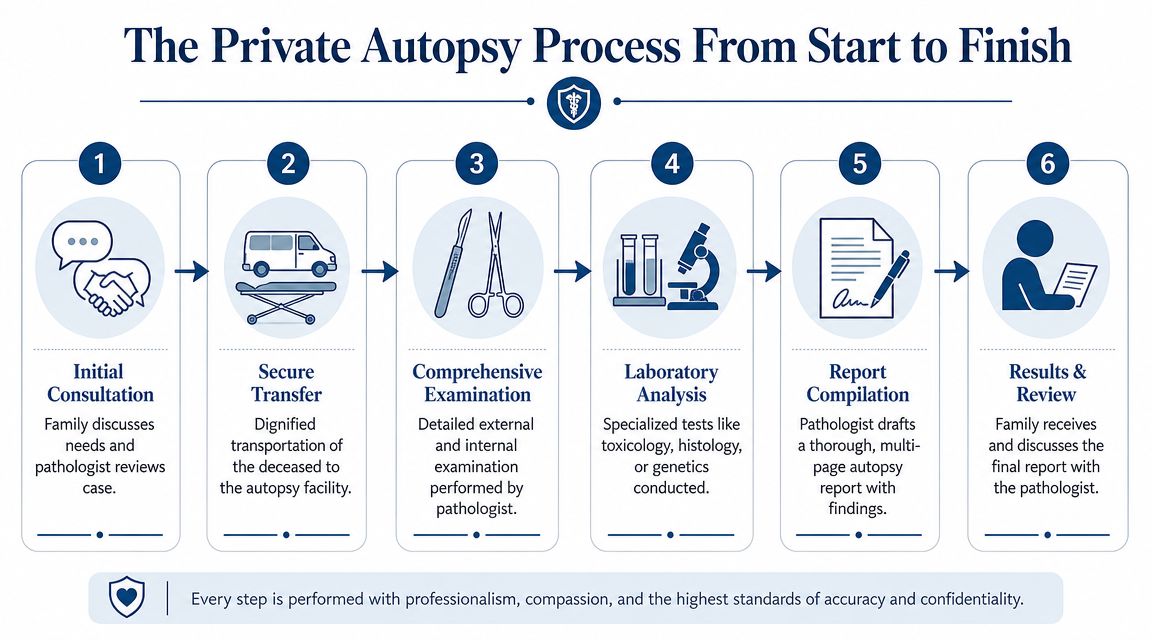
Step one through step three
The first stage is a phone conversation. I want to know the basic circumstances of death, what questions the family or attorney needs answered, whether there has already been an official examination, and what records are available. The answers shape the scope of the case.
Next comes authorization and logistics. In Texas, postmortem examination requires proper legal authority from the person who has the right to authorize the procedure. Identification, consent, and release documents need to be handled correctly. If transportation is needed, that transfer should be dignified and documented. In some cases, families coordinate through facilities such as the Waterloo Mortuary pathology partnership.
The examination itself includes an external and internal review performed with respect for the deceased. Depending on the case, I may retain tissues for microscopic study and collect samples for toxicology or other laboratory testing. These additional studies matter because gross examination alone doesn't answer every question.
Why the lab phase takes time
Families often want immediate answers. I understand that. Still, speed and accuracy can work against each other if a report is rushed.
The College of American Pathologists notes that while a preliminary cause of death can often be provided within days, a thorough final autopsy report, including all specialized tests like toxicology and microscopic analysis, typically takes 6 to 8 weeks to complete (CAP guidance on autopsy reporting timelines).
That interval exists for good reason. Microscopic slides have to be processed and reviewed. Toxicology may require confirmatory analysis. Medical records need to be correlated with the physical findings.
What families should expect at each stage
A clear process usually includes these checkpoints:
Initial review of the case
The central question is identified early. Sometimes it is cause of death. Sometimes it is whether a proposed cause fits the findings.Dignified transfer and intake
The body is received, identified, and documented. Chain of custody means the documented handling of the decedent and associated evidence from one responsible party to the next.Autopsy and specimen collection
The examination is performed in a methodical way. If blood, urine, vitreous, tissue, or other samples are needed, they are collected and preserved appropriately.Ancillary studies
Toxicology, histology, and other testing are ordered based on the facts of the case, not as a reflex in every matter.Opinion formation and report drafting
The findings are integrated into a final medical opinion. Cause of death is the medical reason a person died. Manner of death is the classification of the circumstances, such as natural, accident, suicide, homicide, or undetermined.
A careful autopsy is not only a procedure. It is a reconstruction of medical truth.
The Importance of an Independent Forensic Pathologist
Independence matters most when the answer has legal, financial, or personal consequences. If the same institution that provided care is also the only source of medical interpretation after death, families may worry that important questions won't be explored with enough distance.
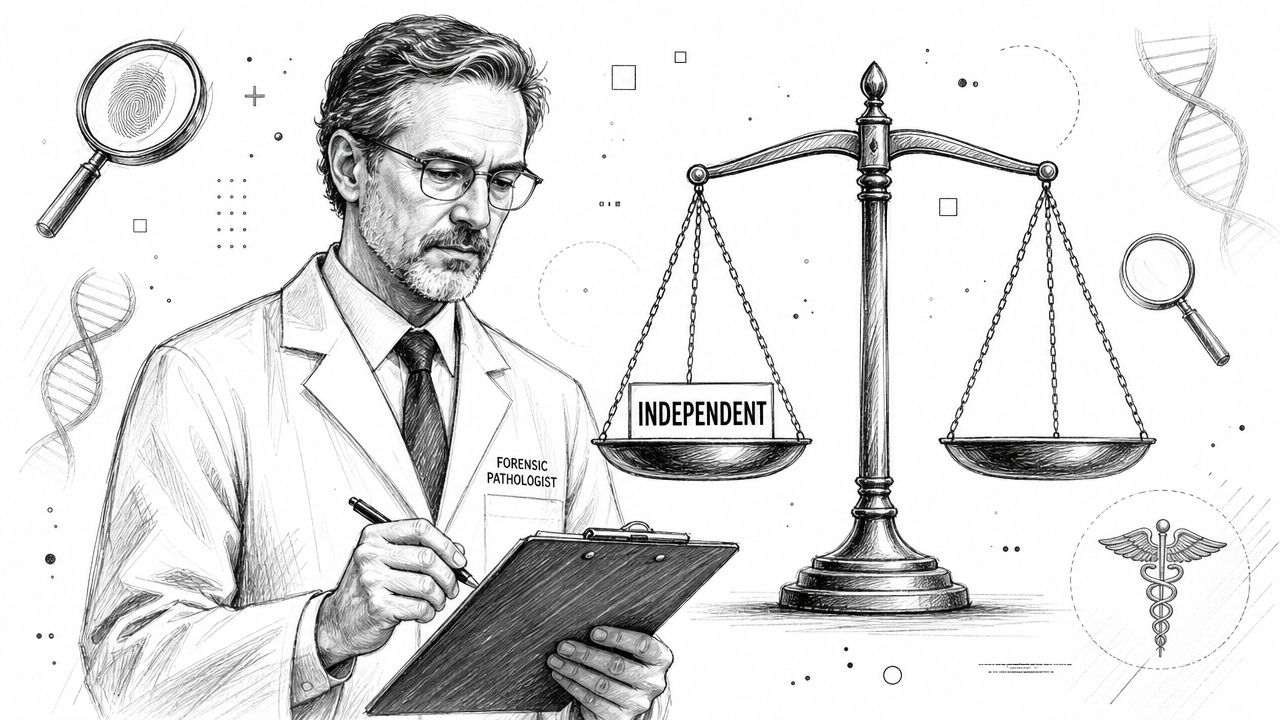
I'm board-certified by the American Board of Pathology in Anatomic Pathology, Clinical Pathology, and Forensic Pathology. Those credentials matter because forensic opinions should come from a physician trained not only in autopsy technique, but also in disease processes, laboratory medicine, and medicolegal standards. Readers who want a plain-language overview can see this explanation of what a forensic pathologist does.
What objectivity looks like in practice
Objectivity is not a slogan. It shows up in specific habits:
- Records are compared against findings. If the chart suggests one explanation and the body shows another, the discrepancy has to be addressed.
- Negative findings are documented. What is absent can be as important as what is present.
- The opinion stays within the evidence. A careful pathologist distinguishes between what is established, what is likely, and what remains uncertain.
- The requesting party does not dictate the conclusion. Families and attorneys can define the questions. They should never define the answer.
Why this matters when blood work is part of the story
A blood result before death can be meaningful, but only if it is linked to the actual disease process. In some cases, an abnormal value was part of the fatal mechanism. In others, it was incidental, chronic, or misunderstood. That's one reason I'm cautious when people ask what to do after blood test results or whether a specific number proves what happened. It rarely works that way.
The point of an independent autopsy is not to confirm suspicion. It is to test it.
Understanding Your Final Autopsy Report
Families often expect a simple letter. What they receive is usually a technical medical document. It helps to know its architecture before you read it.
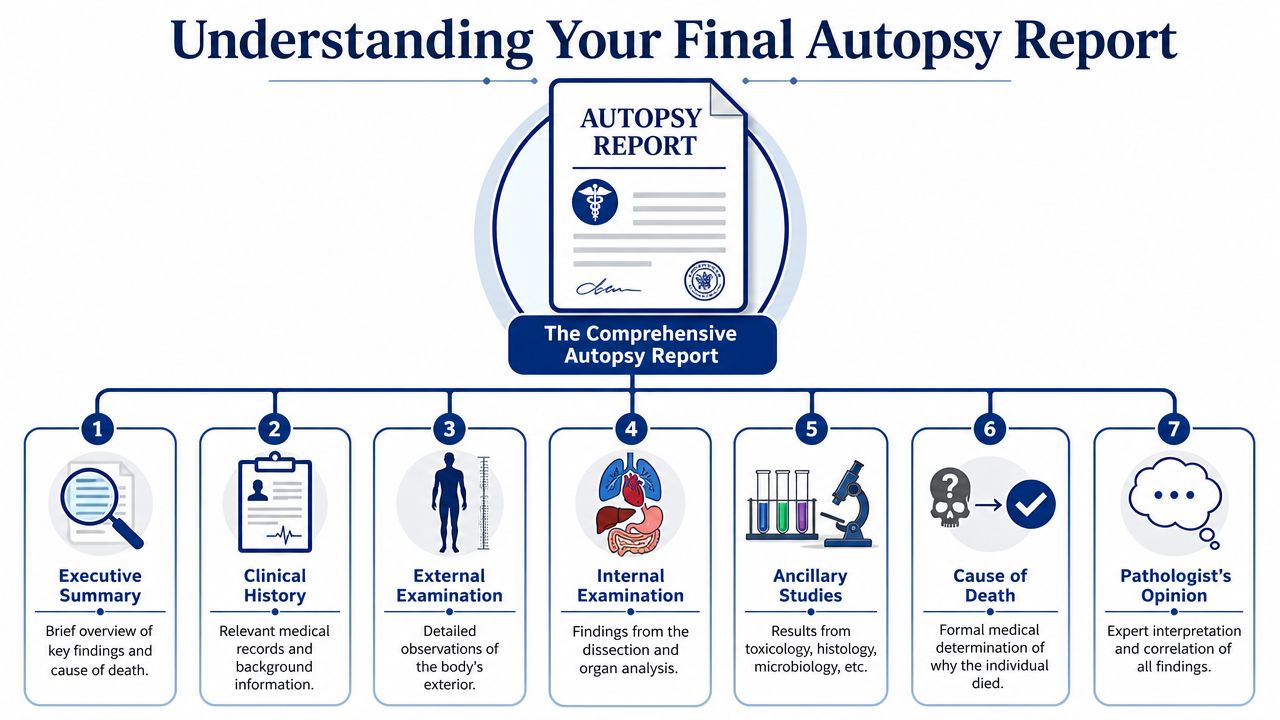
The main parts of the report
According to the College of American Pathologists, a standard autopsy report includes a clinical summary, gross findings, microscopic findings, and a final anatomic diagnosis summary (CAP description of standard autopsy report components).
In plain language, those sections mean:
| Report section | What it means |
|---|---|
| Clinical summary | The medical background and known events before death |
| Gross findings | What was seen during the examination without a microscope |
| Microscopic findings | What tissue slides showed under the microscope |
| Final anatomic diagnosis | The pathologist's structured summary of major disease or injury findings |
Terms that families should know
Two terms matter more than almost any others.
Cause of death is the medical explanation for why death occurred.
Manner of death is the medicolegal category describing the circumstances.
Toxicology and microscopy often appear later in the report because those studies need separate processing and interpretation. If you're trying to read one of these reports on your own, this guide on how to read a pathology report may help you translate the terminology before speaking with your attorney or physician.
Don't read the conclusion without reading the findings that support it.
Frequently Asked Questions About Private Autopsies
Can there still be an open-casket funeral
Usually, yes. The National Funeral Directors Association states that a properly performed autopsy does not prevent an open-casket viewing, as all incisions are made respectfully and are concealed by standard clothing (NFDA facts on autopsy and open-casket viewing).
How long does the process take
A preliminary opinion may be available before the final report, but the complete case depends on the need for microscopic review, toxicology, records correlation, and other testing. A careful answer is better than a rushed one.
Will a private autopsy answer every question
Not always. Autopsy is a powerful diagnostic tool, but medicine has limits. Some cases yield a clear cause of death. Others narrow the possibilities, rule out certain explanations, or clarify that the available evidence does not support a previously assumed conclusion.
Is a private autopsy useful for legal cases
It can be. Attorneys often use independent autopsy findings to evaluate causation, timing, mechanism of injury, and whether the medical record aligns with the pathology. The report may become one part of a larger legal review that also includes records, witness statements, imaging, and expert analysis.
What if a county or agency needs forensic autopsy support
Public entities looking for jurisdictional support can review county forensic autopsy services.
If your family or legal team is facing unanswered questions after a death, contact Texas Autopsy Services. I approach each case with the same priorities: medical accuracy, objectivity, respect for the deceased, and clear communication for the people who need honest answers.