April 26, 2026 · Texas Autopsy Services
What Do They Do With Blood After Testing?
Curious what do they do with blood after testing? A forensic pathologist explains sample processing, storage, disposal, and your rights in Texas and beyond.
On this page
- A Question I Often Hear from Families
- The Journey of a Clinical Blood Sample
- The Forensic Journey and Chain of Custody
- How Long Blood Samples Are Kept and Why
- Advanced Analysis with Retained Samples
- The Final Step Dignified Biohazard Disposal
- Understanding Your Rights as a Family in Texas
- Frequently Asked Questions About Post-Testing Samples
When I speak with families after a death, the question is often simple and profoundly human: what do they do with blood after testing? It usually comes after harder questions about cause of death, timing, or whether anything was missed. People want to know whether the sample was thrown away, stored, retested, or used for something they never approved.
That question deserves a clear answer. Blood does not follow one universal path after testing. A tube drawn in a clinic is handled very differently from a sample collected during an autopsy, and both are different from donated blood intended for transfusion.
At Texas Autopsy Services, every examination is performed by a board-certified forensic pathologist experienced in medicolegal death investigations. Our work centers on one principle: follow the evidence carefully, explain it plainly, and treat the deceased and their family with respect.
TL;DR
- Most routine clinical blood samples are tested, briefly retained for verification, and then safely disposed of under strict biohazard protocols according to clinical laboratory handling guidance.
- Forensic blood samples are handled under chain of custody, which means collection, labeling, storage, transfer, and testing are documented so the results can stand up in court.
- Retention time depends on purpose. Many labs keep samples for a limited period, and one verified summary states that most labs retain samples for 7-30 days according to Royal Berkshire guidance discussed in the privacy context.
- Stored samples can support advanced testing, including genomic analysis, where reanalysis after 3-5 years may help clarify inherited disease based on genomic diagnostic guidance.
- Donated blood follows a separate pathway. It is tested, divided into components, and stored for transfusion if suitable, as described by the American Red Cross donated blood process.
A Question I Often Hear from Families
A family once sat across from me after an unexpected death and asked, in a low voice, what happened to the blood that had been taken at the hospital. They weren’t asking for a technical lecture. They wanted to know whether there was still a way to find answers.
That concern is common, and it’s reasonable. In moments of grief, people notice details they may never have thought about before. A blood tube that seemed routine during medical care can suddenly feel central to understanding what happened.
In forensic pathology, I’ve learned that these questions usually carry more than one meaning. Sometimes a family wants to know whether a sample still exists for a second opinion. Sometimes an attorney wants to know whether the sample was handled in a way that preserves evidentiary value. Sometimes a parent wants to know whether retained blood could help identify an inherited condition that may affect surviving relatives.
Blood after testing is not just laboratory waste. In the right setting, it can be verification material, legal evidence, or the basis for later scientific review.
The answer depends on context. A routine diagnostic tube drawn for a complete blood count is generally processed, held briefly for quality control, and then discarded as regulated biohazard material. A forensic sample may be documented and preserved more carefully because the questions are different and the consequences are larger.
That distinction matters. It’s one reason families looking for clarity after a death often need someone to explain not just what was tested, but how the sample moved through the system and whether that process protected the truth.
The Journey of a Clinical Blood Sample
A routine blood tube may look simple at the bedside. In practice, it moves through a tightly controlled clinical process built to protect one thing above all else: a reliable result for the correct patient.
From collection to analysis
The process starts at the draw. The tube is labeled with patient identifiers, matched to the ordered tests, and sent to the laboratory under handling conditions that fit the type of specimen collected. Some tubes need prompt delivery. Some need temperature control. Some must be spun quickly so the serum or plasma can be separated before the sample begins to change.
Inside the lab, staff do not treat every tube the same way. Chemistry, hematology, coagulation, and microbiology each have their own workflows, instruments, and rejection criteria. A hemolyzed sample, a mislabeled tube, or a specimen that arrives too late can produce a misleading answer, so laboratories screen for those problems before reporting anything.
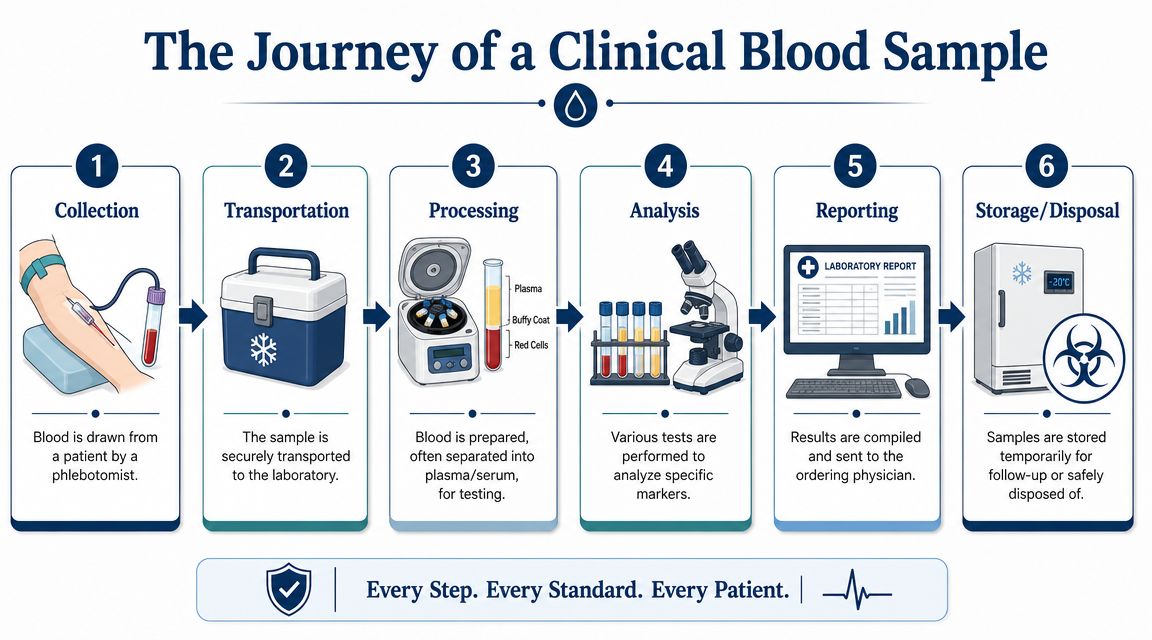
Many samples are centrifuged to separate components needed for testing. Then the appropriate analyzer measures what was ordered, whether that is a blood count, electrolytes, liver enzymes, clotting factors, or another marker tied to diagnosis and treatment. In hospital practice, the main question is straightforward. Can the treating team trust this result enough to act on it?
That review has real consequences. Physicians start antibiotics, adjust insulin, transfuse blood products, delay surgery, or send a patient home based in part on laboratory findings. For that reason, abnormal or unexpected results may be repeated, checked against quality controls, or reviewed by laboratory professionals before release.
Turnaround time varies. A stat potassium in an emergency department may be available quickly. A send-out autoimmune panel may take days because it leaves the hospital and goes to a reference lab. Families often assume delay means something went wrong. Usually it reflects the complexity of the test and the safeguards built into the system.
What happens after the result is issued
The sample is often kept for a limited period after reporting. That short hold gives the lab room to repeat a measurement, investigate an instrument flag, add an ordered test if the specimen is still suitable, or answer a clinician’s question about an unexpected result.
Then the remaining blood is discarded as regulated biohazard waste under laboratory and public health rules. In ordinary clinical care, there is usually no reason to store the tube long term once patient care, quality checks, and any allowed add-on testing are complete.
A few practical points explain why this workflow is effective:
- Accurate labeling at the start: If patient identification is wrong, every later step is built on a faulty foundation.
- Specimen-specific handling: Time, temperature, and tube type affect whether a result is medically usable.
- Pre-analytic review: Labs look for clotting, hemolysis, insufficient volume, and other problems before trusting the numbers.
- Professional verification: Instrument output does not automatically become a final report without oversight.
- Limited retention: Short-term storage supports quality control. It is not indefinite preservation.
How this differs from toxicology and forensic use
This distinction is one I often explain to families in Texas. Clinical laboratories are organized around treatment decisions for a living patient. Forensic testing asks a different set of questions, often after death, and those questions may later be examined by attorneys, investigators, insurers, or the court. Anyone who wants that foundation can review this overview of forensic toxicology and how its purpose differs from hospital testing.
The trade-offs are different. In a hospital, speed and medical usefulness are central. In a forensic setting, documentation, specimen selection, preservation, and later review may carry more weight because the result can affect cause-of-death opinions, criminal cases, and civil litigation.
Donated blood is a separate system
Diagnostic blood draws and blood donation follow different rules and different goals.
A donated unit is collected for possible transfusion into another person, so it enters a screening and processing system designed around recipient safety, component preparation, and storage. A clinical specimen drawn for diagnosis is collected to answer a medical question about the person from whom it came. After that question is answered and the brief retention period passes, the leftover sample is usually discarded.
The Forensic Journey and Chain of Custody
In forensic work, blood is not just a specimen. It may also be evidence. That changes everything about how it is collected, documented, transferred, stored, and interpreted.
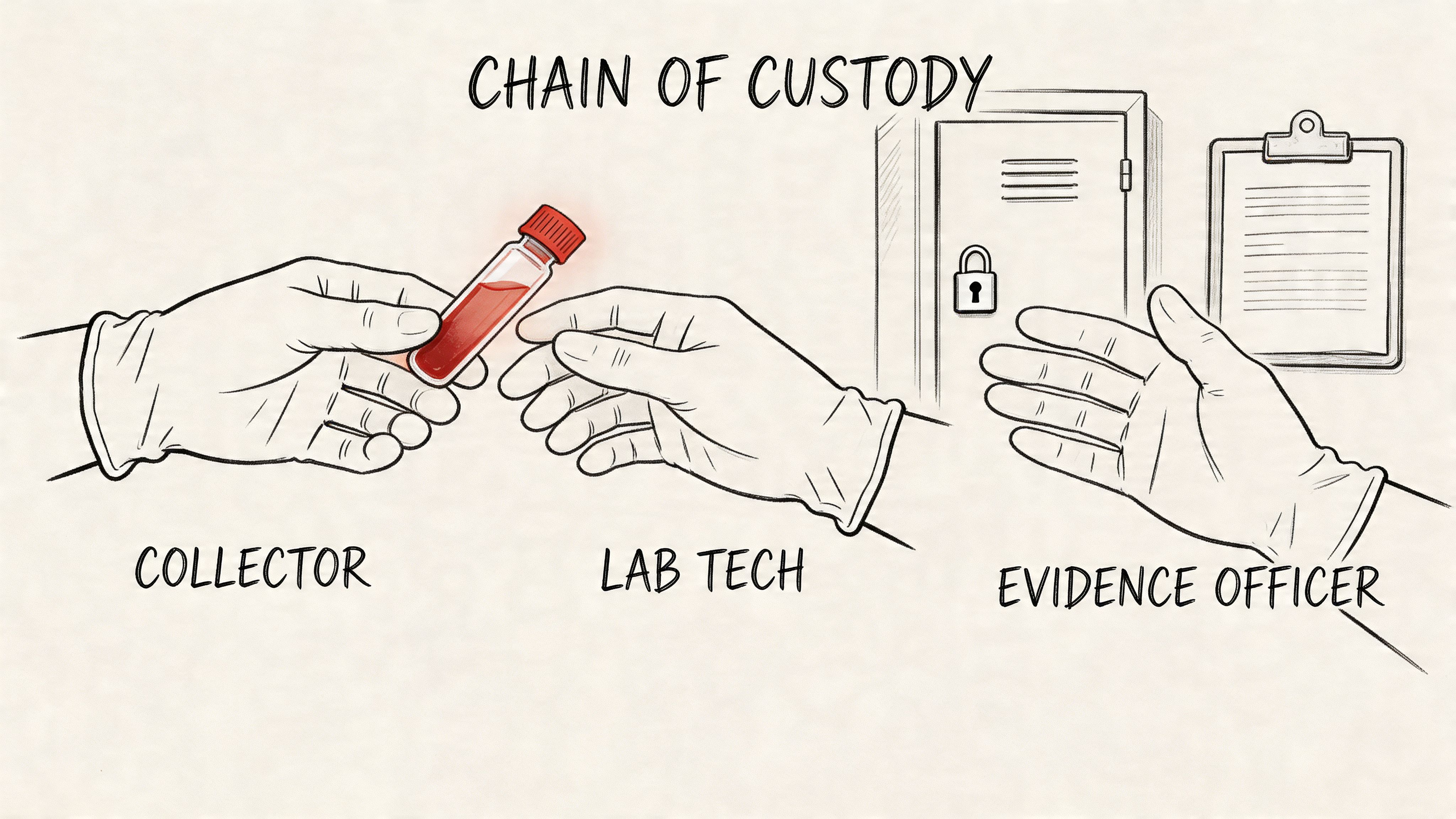
What chain of custody means
Chain of custody is the documented history of who collected a sample, when it was collected, how it was labeled, where it was stored, who transferred it, and who tested it. In plain language, it shows that the sample connected to the report is the same sample taken from the decedent, and that no undocumented break occurred along the way.
This is one of the sharpest differences between clinical practice and forensic practice. In a hospital, the central question is whether the sample supports proper patient care. In a forensic case, the question also includes whether the sample handling can withstand scrutiny from attorneys, courts, agencies, and opposing experts.
A chain-of-custody failure doesn’t always mean the science is wrong. It can still damage the credibility of a result. That’s why forensic protocols are more exacting about seals, signatures, storage logs, and transfer records.
How forensic samples are collected
During an autopsy or postmortem examination, blood may be collected for toxicology, chemistry, DNA work, or specialized review. The collection site matters. The container matters. The preservative can matter. The exact label matters.
Forensic collection usually includes these elements:
- Documented source: The record should identify where the blood came from.
- Secure labeling: The container must match the case and decedent identifiers.
- Controlled storage: Samples are stored in a way that protects integrity and limits unauthorized access.
- Transfer records: Each handoff is documented.
- Test-specific handling: Some analyses need different preservation or timing considerations.
This is also why a family may hear that a sample exists, but access is not immediate or informal. Evidence cannot be handled casually.
Why it matters in cause of death work
A cause of death is the disease or injury that started the fatal sequence. A manner of death is the category used in death investigation, such as natural, accident, suicide, homicide, or undetermined. Blood testing may bear on both.
If alcohol, medication, an illicit substance, or an untreated metabolic condition contributed to death, blood results can be central. If the case is later reviewed by another physician or challenged in litigation, the handling record matters almost as much as the chemistry itself.
For families seeking a second opinion, postmortem toxicology often becomes the focus because it can clarify whether a finding was incidental, therapeutic, toxic, or unrelated. This overview of post-mortem toxicology helps explain why sample integrity is so important once a death enters the medical-legal setting.
A short visual explanation can also help here:
Clinical and forensic handling compared
| Setting | Main purpose | Retention mindset | Documentation level |
|---|---|---|---|
| Clinical laboratory | Diagnosis and treatment | Brief retention for verification, then disposal | Strong patient identification and lab quality controls |
| Forensic investigation | Cause of death and legal reliability | Preserve for possible review, challenge, or additional testing | Detailed chain of custody and evidence tracking |
That comparison is why the answer to what do they do with blood after testing changes so much depending on where the testing occurred.
Specialized postmortem testing can extend the value of a sample
Some retained samples support analysis beyond standard toxicology. Verified background on advanced cancer liquid biopsy notes that residual blood can be filtered to isolate circulating tumor cells, and that in forensic contexts, post-mortem blood can enable analogous CTC or tumor DNA analysis for occult malignancies misdiagnosed as cardiac events, as described in this Dallas cancer blood test report.
That kind of testing is not routine in every death investigation. It is case-dependent. But it illustrates an important point. A retained blood sample can remain medically meaningful long after the initial question seems settled.
How Long Blood Samples Are Kept and Why
One of the hardest conversations I have with families happens days or weeks after a death, when someone calls and asks, “Is there still blood available if we need another test?” The honest answer is that retention is rarely governed by one simple clock. It depends on why the blood was drawn, where it was tested, and whether the case still carries medical or legal questions.
Clinical retention is usually brief
In routine medical care, blood is usually kept for a limited period after testing. Labs need enough time to confirm results, repeat a test if something looks inconsistent, and satisfy their own quality procedures. After that, continued storage often creates more burden than benefit. Refrigerated space is finite, specimen tracking takes staff time, and every retained tube remains both private health information and biohazard material.
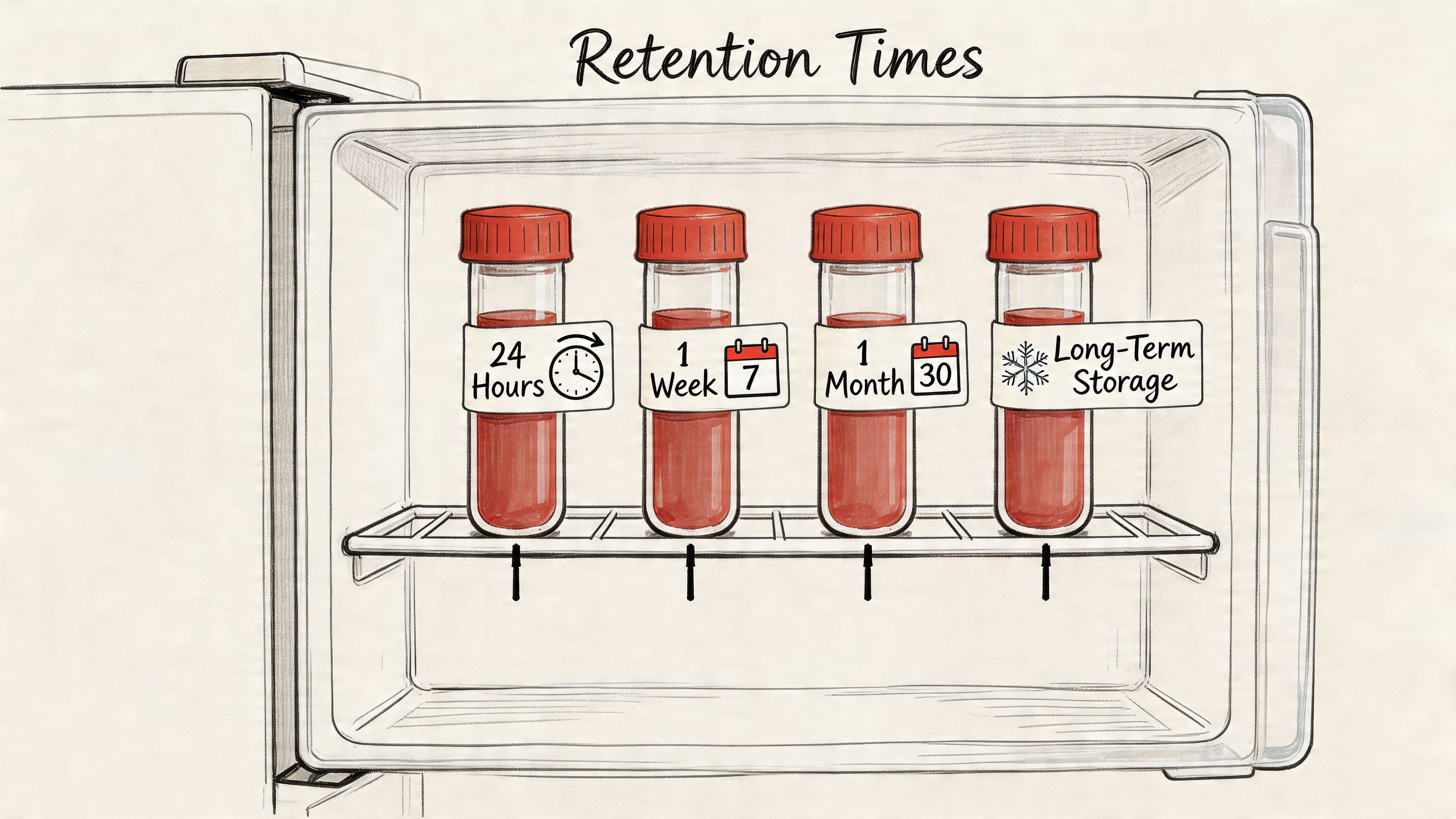
That practical reality surprises families, but it is reasonable. A clinical sample is collected to answer a treatment question. Once the result is verified and reported, the lab often has little reason to hold it longer unless policy, a pending dispute, or a request for add-on testing justifies retention.
Forensic retention follows a different timetable
Forensic practice works under different pressures. In a death investigation, a blood sample may need to support a later toxicology review, a defense expert’s independent examination, a civil lawsuit, or a challenge to the certified cause of death. Because of that, agencies and forensic laboratories often keep material longer than a hospital lab would.
The trade-off is straightforward. Longer retention improves the chance that a legitimate later question can still be answered, but it also requires controlled storage, documentation, and strict evidence handling. In my work, that decision is never casual. If a case may be contested, the value of preserving blood can be very high.
Common reasons to retain forensic blood include:
- Independent review by another expert
- Additional toxicology or DNA testing
- Civil or criminal litigation
- Late-arising questions from the family
- Verification of prior findings
A retained forensic sample preserves options. That matters when certainty is being tested months or even years later.
Privacy, consent, and secondary use
Families also ask a different question, and it is a fair one. If blood is kept, who gets to use it, and for what purpose?
In clinical medicine, leftover material may be covered by institutional policies on quality review, validation, or research use, depending on the consent process and the applicable law. In forensic practice, retained blood is usually held because it remains part of the investigative record, not because it is available for open-ended future testing. Those are very different situations, and they should be explained clearly.
A prior source in this article described future-dated developments involving consent and secondary use. Because those dates are future-facing in the source summary, they should be understood as reported developments rather than settled, current rules across all Texas settings.
For families, the practical point is simple. Ask whether the sample is still being held, who controls it, what testing has already been done, and whether any further analysis would require legal authorization, institutional approval, or next-of-kin consent. If later review may involve genetics, BacteriaFAQ's guide to DNA sequencing gives a useful plain-language overview of what that kind of testing involves.
Where confusion usually starts
Problems usually come from poor communication, not bad faith. A family may assume that “leftover blood” remains available indefinitely. A hospital laboratory may have already discarded it under routine policy. A forensic agency may still have it, but only under controlled conditions that limit release or outside testing.
That is why early questions matter. In Texas, if a family expects a second opinion, a legal review, or additional testing, they should ask promptly whether any specimen remains and what the retention policy allows. Timing can change what is still possible.
Advanced Analysis with Retained Samples
Retained blood sometimes becomes important only after the first round of testing is over. I see that in forensic practice. A death may appear medically straightforward at first, then later records, family history, or a new question from investigators points to something that was not obvious on day one.
One common example is genetic review in a child, an infant, or an adult with a sudden unexplained death. Blood that was originally collected for standard testing may later support DNA extraction and sequencing, or review of genomic data generated from that sample. As noted earlier, interpretation can improve over time, so an initial negative or unclear result does not always end the scientific question.
That possibility matters for families. A retained sample can sometimes help explain whether a death involved an inherited heart rhythm disorder, a metabolic disease, or another condition with implications for relatives who are still living.
In practice, retained material is most helpful when the follow-up question is specific:
Expanded toxicology
The first toxicology panel may answer the immediate question but leave room for later review if new medication information appears or a scene finding changes the differential diagnosis.Genetic evaluation
In sudden unexplained, pediatric, or fetal deaths, retained blood may allow testing for inherited disorders that were not suspected initially.Second-opinion review
Another pathologist may want additional laboratory correlation before agreeing with or revising the original opinion.Medical-forensic correlation
Results often become clearer after records, pharmacy history, witness statements, and autopsy findings are reviewed together.
For readers who want a plain-language foundation for how sequencing works, BacteriaFAQ's guide to DNA sequencing is a useful primer. It explains why stored DNA or stored sequence data may still have value even when no new blood draw is possible.
Retesting has limits. Blood volume may be low. Storage conditions matter. Some analytes degrade, and some tests require a type or quality of specimen that is no longer available. In forensic work, there is also a practical trade-off. Using the last remaining tube for one advanced test can mean there is nothing left for another expert to examine later.
That is why good follow-up testing starts with a focused question and a clear plan. The best use of a retained sample is not broad fishing for anything unusual. It is a disciplined effort to answer one medically or legally meaningful question with the material that remains.
The Final Step Dignified Biohazard Disposal
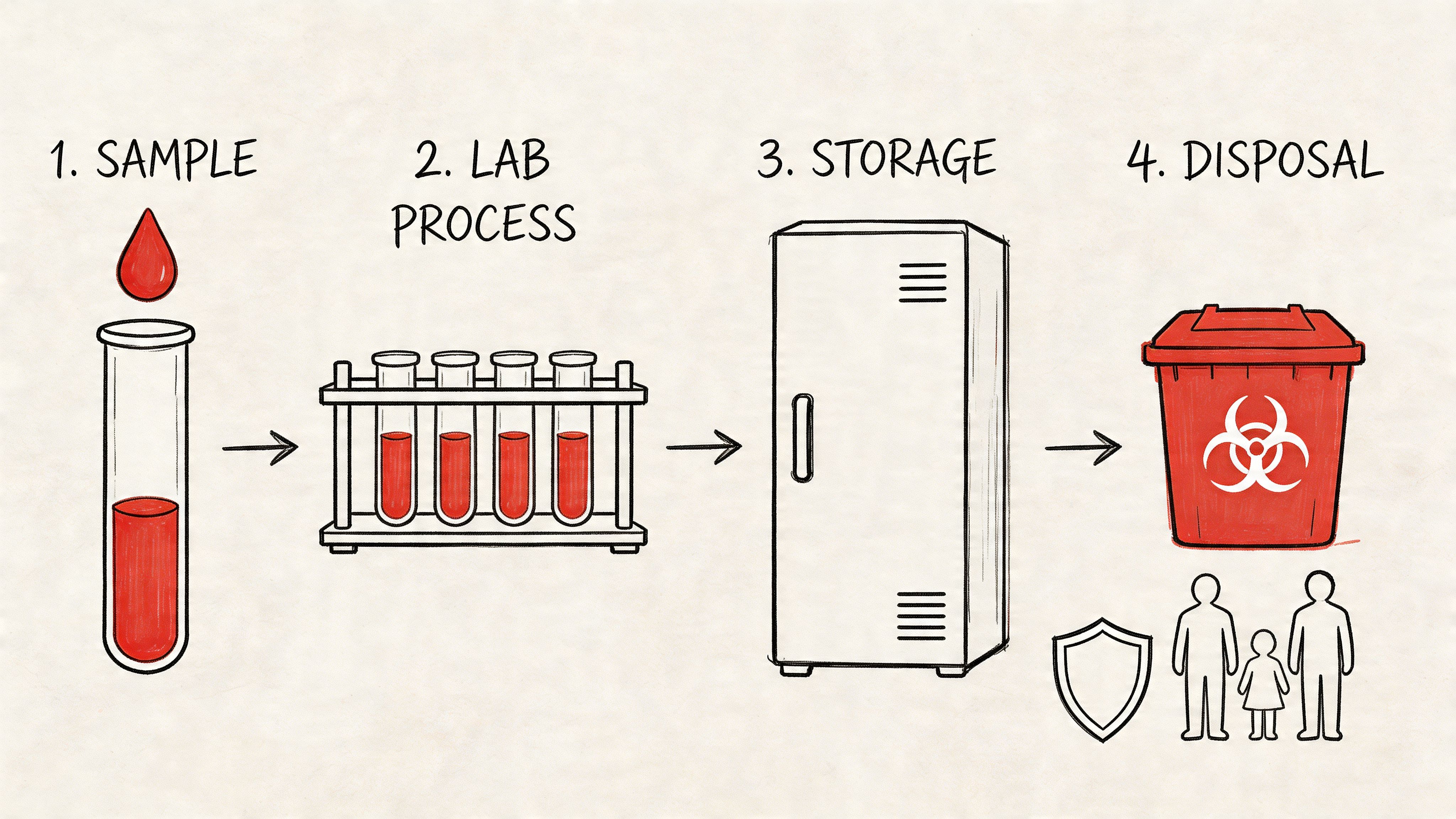
Eventually, most blood samples reach the end of their useful life. At that point, they are not kept casually, reused, or discarded like ordinary trash. They are handled as biohazardous medical waste.
That final step matters for two reasons. It protects public health, and it reflects respect for human biological material. In both clinical and forensic settings, proper disposal is part of professional practice, not an afterthought.
What safe disposal means
Once a sample is no longer needed for verification, legal preservation, or authorized follow-up testing, it is placed into regulated waste streams. The exact contractor and disposal method depend on facility policy and applicable rules, but the purpose is consistent. The material must be contained, treated, and destroyed in a way that prevents exposure and contamination.
Common features of proper disposal include:
- Segregation from regular waste
- Clearly marked biohazard containers
- Controlled handling by trained personnel
- Transfer to certified medical waste processing
- Documented destruction under facility protocols
Why families should take reassurance from this
Families sometimes worry that a loved one’s blood may be stored indefinitely or used improperly after testing. In ordinary practice, the opposite is more common. The challenge is usually that samples are not kept forever, not that they are kept forever.
The disposal process is part of the same ethical chain that begins with careful collection. If a sample still has medical or legal value, it should be protected. If it does not, it should be destroyed safely and professionally.
That balance is what good pathology practice looks like. It is careful without being careless, and respectful without becoming vague about the rules.
Understanding Your Rights as a Family in Texas
When a death occurs in Texas, families often need practical answers, not legal jargon. They want to know what records they can request, whether an autopsy report will be released, and whether any retained samples may still exist.
Start with records, not assumptions
The first step is usually to request the relevant records. That may include hospital records, laboratory records, the death certificate, and any autopsy documentation. If an autopsy was performed under government authority, release rules may differ from those in a private case, but the request process still needs to be formal and specific.
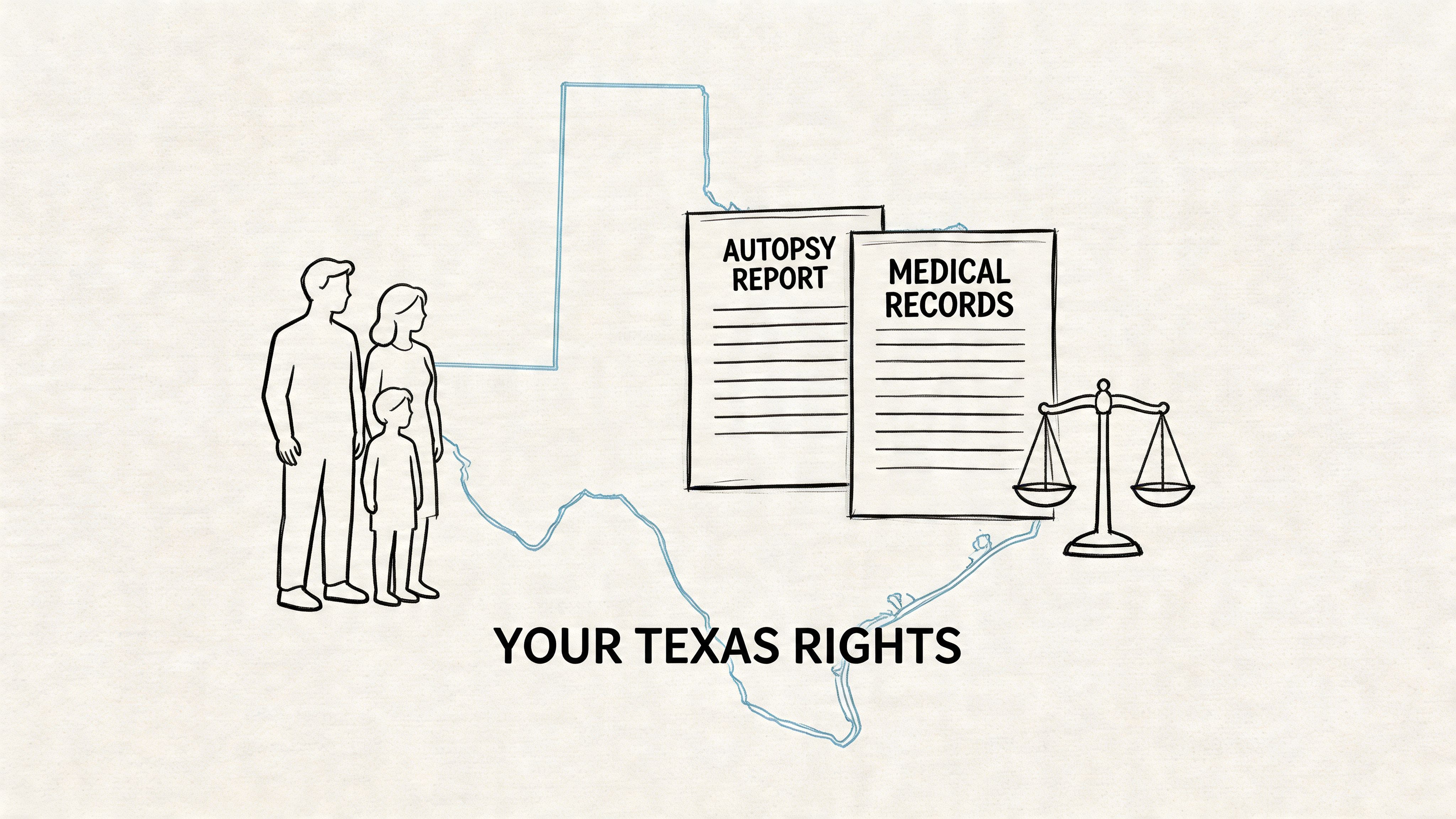
For families trying to go through that process, this guide on how to request an autopsy report in Texas gives a practical starting point.
Plain-language terms that matter
A few definitions help:
- Cause of death: The disease or injury that started the fatal sequence.
- Manner of death: The classification used in death investigation, such as natural or accident.
- Chain of custody: The record showing who handled a sample, when, and under what conditions.
These are not interchangeable terms. If a family is asking whether blood can still be tested, the answer may depend on who collected it, why it was collected, and whether chain of custody was preserved.
County cases and private review
Some deaths fall under official county authority. Others may still be reviewed independently after the official process is complete, depending on what material and records remain available. Families and attorneys trying to understand that distinction may find it helpful to compare the role of county forensic autopsies with private postmortem review.
Texas law and agency practice govern many of these steps, including release procedures and disposition rules. The Texas Funeral Service Commission and the Texas Health & Safety Code are part of that legal framework, especially in matters involving disposition, authorization, and post-death handling.
A practical note about safety and custody
When retained materials are handled, transport and surface control matter. For readers who want a general public-health reference on contamination control, expert insights on surface sanitation can help explain why facilities use strict cleaning protocols around biological material. It doesn’t replace legal guidance, but it does clarify why sample handling environments are tightly controlled.
If you believe a retained sample may matter, ask promptly, ask in writing, and ask specifically which samples were collected, whether they still exist, and who has legal authority over them.
Frequently Asked Questions About Post-Testing Samples
Families usually ask these questions after the first shock has worn off and the practical concerns set in. They want to know what still exists, who controls it, and whether anything meaningful can still be learned. Those are reasonable questions. In both hospital and forensic settings, the answer depends on the type of sample, the reason it was collected, and the rules that apply to that setting.
Can a blood sample be retested for a second opinion after a county autopsy
Sometimes. Retesting is possible only if a usable sample was retained, stored in a way that preserves its value, and documented well enough that another laboratory can rely on it. In forensic work, I care about both scientific reliability and legal defensibility. A result that cannot be tied clearly to the decedent, collection method, and storage history may have limited value, even if some material remains.
A second opinion is strongest when the reviewing expert has the records, the original laboratory findings, and access to properly preserved specimens.
Is hospital blood the same as donated blood
No. A hospital tube drawn for diagnosis is part of patient care. Donated blood is collected, processed, and stored for transfusion under a different system with different handling rules.
That distinction matters because families sometimes hear that blood can be stored for later use and assume the same timeline applies to every tube collected in a hospital or during an autopsy. It does not. Diagnostic samples are usually kept only as long as the laboratory, hospital, or investigating agency requires for medical, regulatory, or legal purposes. Donated blood follows a separate path that was discussed earlier in the article.
What if blood may be relevant to a CPS or family law matter
That question calls for precision. The key issues are who requested the testing, what authority supports that request, what type of specimen was collected, and how the result will be used.
In Texas, those details can affect whether a result is persuasive or even admissible in a legal setting. Families dealing with child welfare concerns may find it helpful to review how attorneys frame CPS drug test requests, especially where documentation, consent, and the exact testing purpose are disputed.
Can a retained sample be used for genetic testing later
Sometimes, yes. The main question is whether enough suitable material remains and whether the proposed test answers a medically sound question.
In practice, later genetic testing may be limited by sample degradation, prior handling, cost, and who has authority to approve the testing. In postmortem cases, I also advise families to ask whether preserved tissue might be more useful than blood for the question at hand.
What should a family ask first
Start with clear, specific questions. Vague requests often lead to vague answers.
- What samples were collected?
- Who has custody of them now?
- Is any sample still being retained?
- What is the process for requesting additional testing or records?
These conversations can be painful, especially when families are trying to sort out medical facts while grieving. Clear answers help. If you need guidance after a death, contact Texas Autopsy Services for a direct conversation about records, retained materials, and whether an independent forensic review may clarify the cause of death.