April 25, 2026 · Texas Autopsy Services
Pathologist Doctor Near Me: Expert Autopsy & Cause of Death
Searching for a 'pathologist doctor near me' in Texas? Get expert answers for private autopsies & cause of death investigations with dignity.
On this page
- Introduction A Guide for Families and Professionals
- What Is a Forensic Pathologist and When Do You Need One
- The Private Autopsy Process in Texas Step by Step
- Private Autopsy vs County Medical Examiner What to Expect
- Why Independence and Board Certification Matter
- Serving All 254 Texas Counties From Houston to the Panhandle
- Frequently Asked Questions From Families and Attorneys
- Contact My Office for Guidance
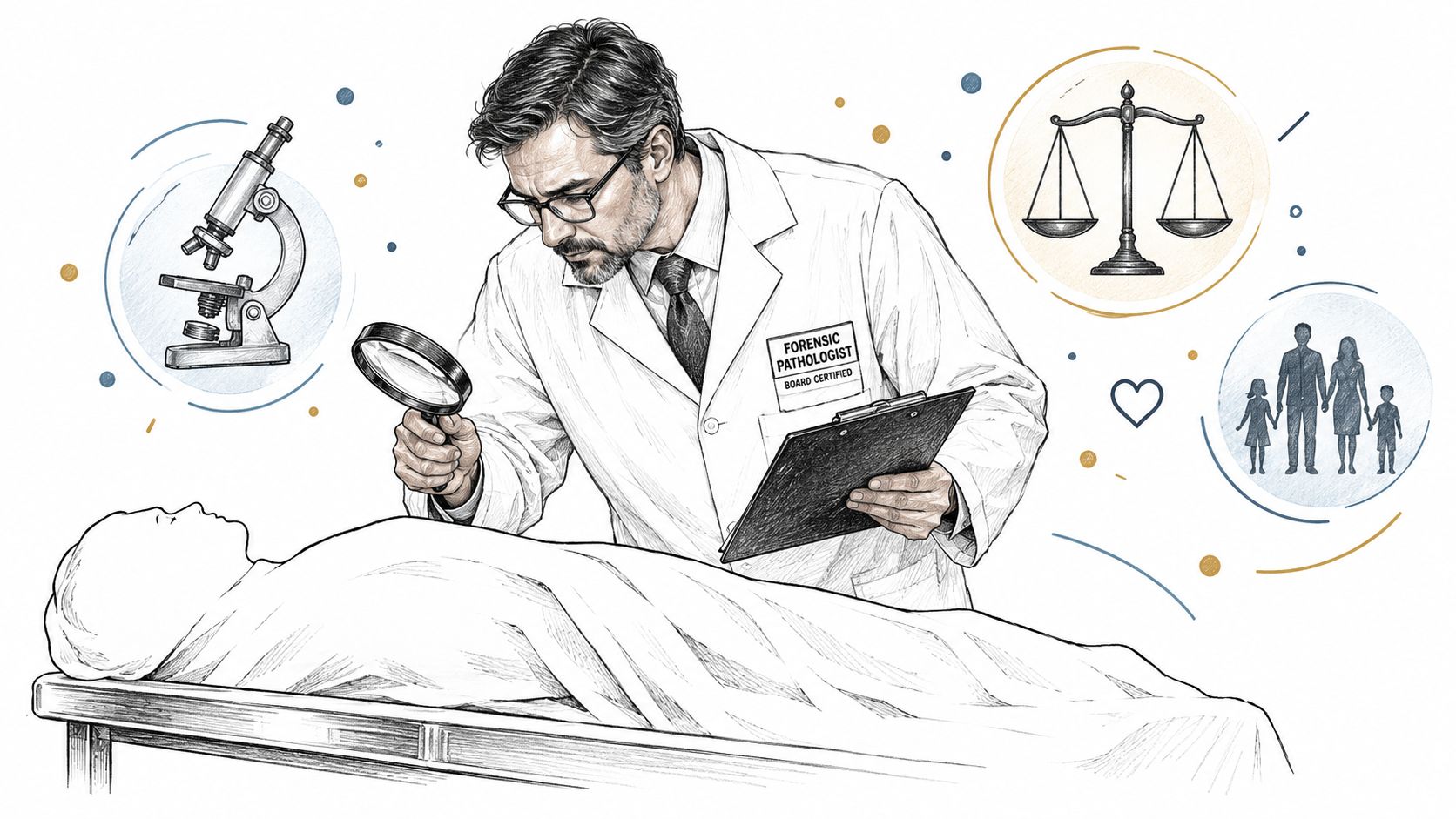
When people search “pathologist doctor near me”, they’re often not looking for routine medical care. They’re looking for answers after a death, often suddenly, often under pressure, and often while trying to help a grieving family or prepare a legal case. I’m our forensic pathology team, a board-certified forensic pathologist, and my work is to determine what medical evidence can and cannot show after death.
A forensic autopsy isn’t just a procedure. It’s a careful medical and legal examination performed with respect for the deceased and clarity for the living. Families usually come to me when the cause of death is uncertain, when the official explanation feels incomplete, or when an attorney needs an independent review grounded in medical science.
- A private autopsy can provide an independent cause-of-death investigation when families or attorneys need answers outside a hospital or county system.
- Board certification matters. The American Board of Pathology requires a 4-year residency, a 1-year forensic pathology fellowship, and rigorous exams for forensic pathology certification, as described in this forensic pathology credential overview.
- Texas law matters too. The process must be handled with proper authorization, respectful transport, and compliance with the applicable Texas legal framework.
- Independence has practical value. In disputed deaths, medical care questions, or litigation, a separate review can clarify findings and preserve objectivity.
- Access is uneven. Families in smaller communities often have a harder time finding clear information or nearby options, which is one reason local visibility and patient education matter. For medical practices trying to make essential services easier to find, these healthcare SEO strategies are a useful resource.
Introduction A Guide for Families and Professionals
Generally, one does not anticipate needing a forensic pathologist. Then a death occurs, the paperwork is confusing, the explanations don’t line up, and someone in the family types “pathologist doctor near me” into a search bar late at night.
That search often reflects urgency, but not always the same kind of urgency. A spouse may need to know whether an undiagnosed disease was involved. A parent may need an independent review before cremation. An attorney may need a medically defensible opinion that isn’t tied to the hospital, insurer, or government office already involved in the case.
I approach those calls with two obligations. First, to protect the dignity of the person who died. Second, to explain the process in plain language so families and professionals can make informed decisions.
Practical rule: The first question isn’t “Do you need an autopsy?” The first question is “What question are you trying to answer?”
A forensic pathologist is a physician trained to investigate death through examination of the body, medical records, scene information when available, and laboratory testing when needed. My role is narrower than general medicine and more exacting in one respect. I’m not treating a living patient. I’m determining what the evidence supports after death, and just as important, what it does not support.
That distinction matters because grief often brings pressure for certainty. Medicine doesn’t always allow certainty. What it can provide is a disciplined, documented, and unbiased evaluation.
What Is a Forensic Pathologist and When Do You Need One
Many people use “pathologist” as a broad term, which is understandable. A pathologist is a physician who diagnoses disease by examining tissues, fluids, organs, and laboratory findings. A forensic pathologist is a pathologist with additional subspecialty training focused on death investigation, autopsy practice, injury interpretation, and medicolegal reporting.
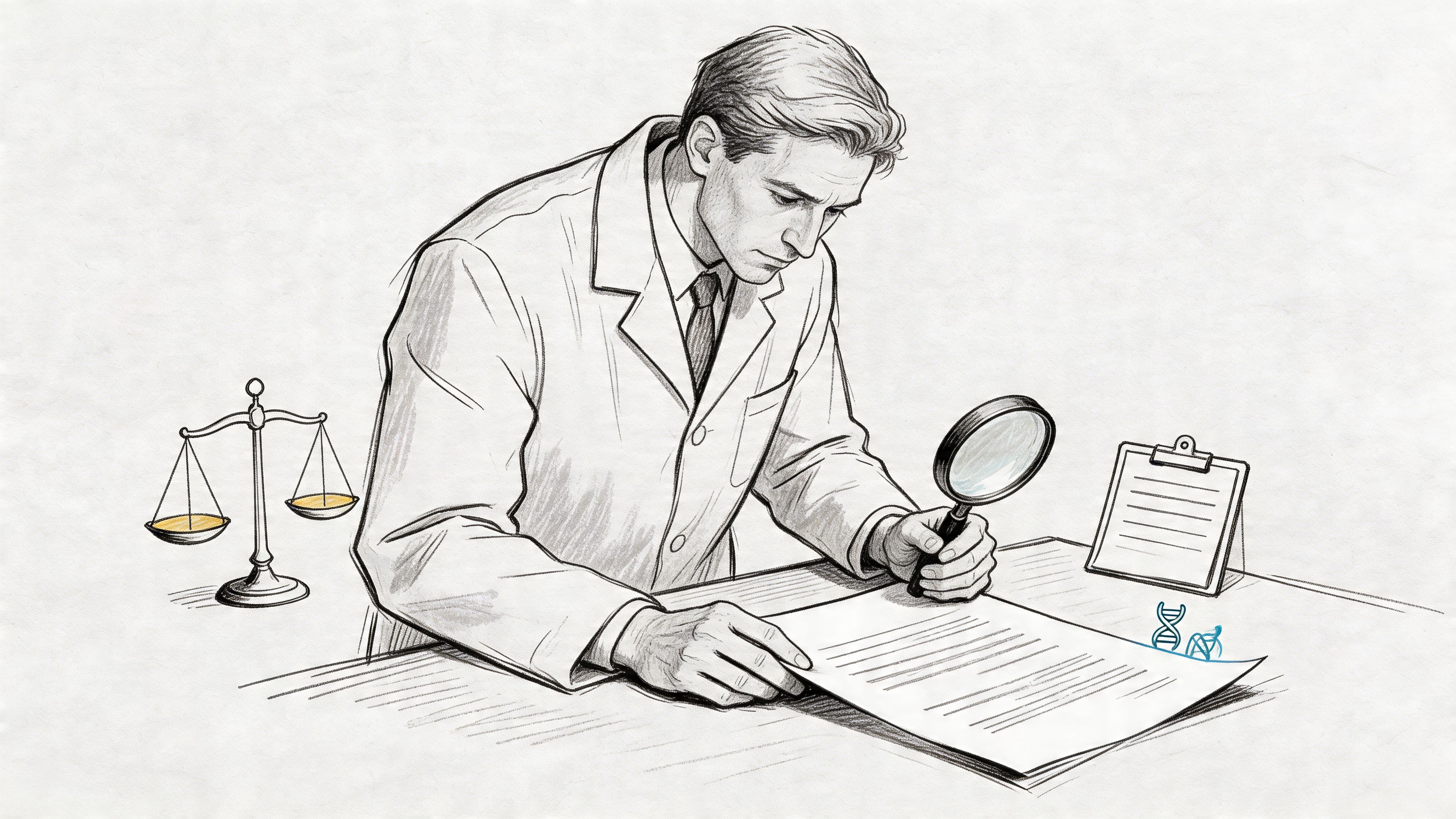
What I evaluate in a death investigation
In plain language, two terms matter most.
- Cause of death means the disease or injury that led to death. Examples include a heart attack, complications of infection, blunt force injury, or drug toxicity.
- Manner of death is the classification of how the death occurred, such as natural, accident, suicide, homicide, or undetermined.
Those two findings are related, but they are not the same. A person may die from a drug intoxication, which is the cause of death, but the manner may depend on the surrounding facts and evidence.
When a family or attorney should consider a forensic pathologist
You usually need a forensic pathologist when the case involves one or more of these circumstances:
The cause of death is unclear A death may appear sudden, unexplained, or inconsistent with the known medical history.
The family has unanswered questions Sometimes a hospital explanation is brief, technical, or incomplete. That doesn’t automatically mean it’s wrong. It may mean the family needs a fuller review.
There are concerns about injury, neglect, or medical care These cases require careful documentation and a disciplined approach to records, timing, and pathology findings.
An attorney needs an independent medical opinion In civil or criminal matters, neutrality is essential. The report must stand on medical facts, not assumptions.
Search results often fail people at exactly this point. They describe what pathologists do in general terms but don’t explain when a family should seek a second opinion or a private autopsy. That information gap has been noted in online healthcare listings that discuss pathology broadly while offering little guidance for families who question initial findings or need faster answers, as reflected in this review of Richmond-area pathology search results.
One reason I’m direct about this is that delay can close options. Authorization, funeral home coordination, and disposition plans all affect what can still be done. If cremation is planned, that timing can be especially important.
For readers who want a more technical background on the specialty itself, I’ve also written about what forensic pathology means in practice.
A short visual explanation may also help if you’re trying to understand the role before making a decision.
The Private Autopsy Process in Texas Step by Step
The private autopsy process is easier to manage when families know the sequence. Anxiety usually rises when people don’t know what happens next, who has authority, or whether the examination will interfere with funeral plans. A clear process helps.
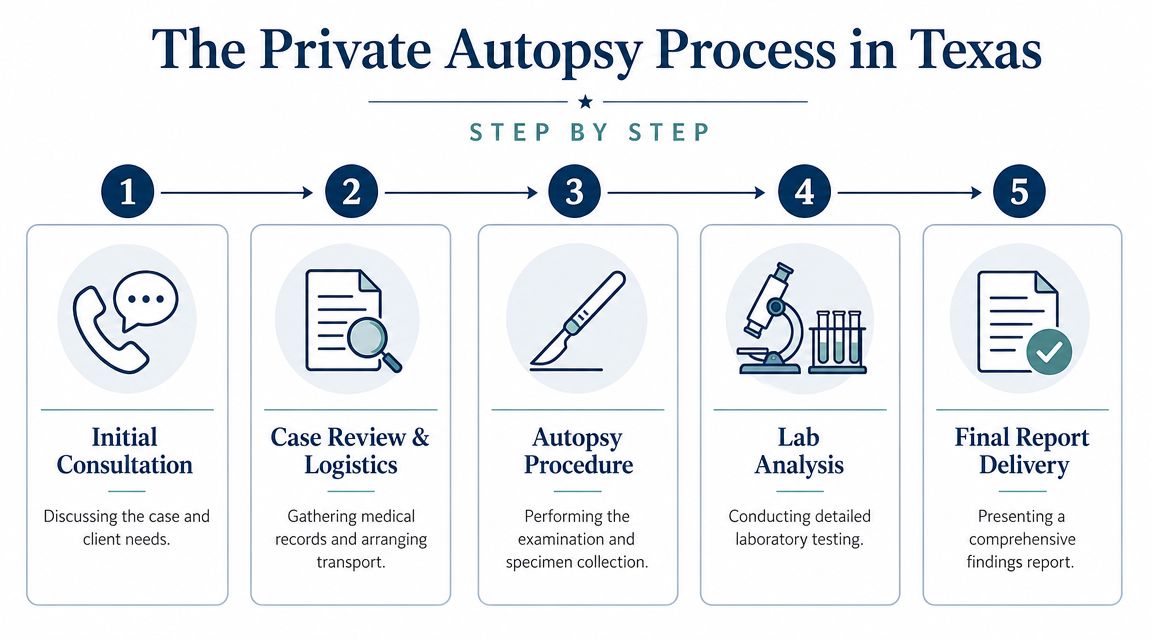
Step 1 Initial consultation and case screening
The first call is about facts and logistics. I need to know who has legal authority to authorize the examination, where the decedent is located, whether a county authority is involved, and what questions the family or attorney needs answered.
This stage also helps identify whether a private autopsy is appropriate, whether a records review should happen first, or whether another route makes more sense. Some families need a full examination. Others need a targeted second opinion based on existing reports and slides.
Step 2 Authorization and coordination
In Texas, postmortem examination must be properly authorized. That often involves the legal next of kin, the funeral home, and any institution currently holding the body. If disposition plans are already in motion, timing matters.
In practical terms, coordination often determines the difference between a smooth process and a stressful one. Transportation, release paperwork, identification procedures, and communication with the funeral home all need to be handled carefully. For families arranging an independent examination, details about private autopsies in Texas can help clarify what documents and logistical steps are commonly involved.
A well-run autopsy process begins long before the first incision. Most problems arise from authorization or transport confusion, not from the examination itself.
Step 3 Examination of the body
The autopsy itself includes an external examination and, when authorized and indicated, an internal examination. The external portion documents identifying features, visible injuries, medical devices, scars, and other findings. The internal portion examines organs and body systems to identify disease, injury, or toxicologic concerns.
This is not a hurried process. Every step is documented because findings must be medically supportable and, in some cases, legally defensible.
Step 4 Ancillary studies and record review
An autopsy doesn’t always end when the physical examination ends. Depending on the case, additional testing may include toxicology, histology, or review of medical records and investigative materials. Those studies can clarify disease processes, exposure to substances, or subtle findings that aren’t obvious at first examination.
Some families are surprised by this. They expect an immediate final answer. In reality, the most accurate answer sometimes requires waiting for laboratory work and integrating that data with the autopsy findings. A detailed walkthrough of this sequence is available in this guide to the step-by-step autopsy process.
Step 5 Reporting and communication
The final report explains the significant findings, the cause of death, and when appropriate, the manner of death. Good reporting does more than list anatomy. It connects medical findings to the actual question the family or attorney asked.
I also explain limits. If evidence is incomplete, the report should say so plainly. Precision matters more than forceful language.
Private autopsy and county autopsy are not the same process
A county-directed autopsy serves a public duty. A private autopsy serves a different purpose. It is requested by the authorized family or another appropriate party, and it can be adjusted to specific concerns such as a disputed diagnosis, a possible missed injury, or the need for independent review.
Both processes can be legitimate. They answer to different needs.
Private Autopsy vs County Medical Examiner What to Expect
Families often assume there is only one kind of autopsy. There isn’t. In Texas, a county medical examiner or justice system investigation may be required in certain deaths. A private autopsy is different in purpose, control, and communication.
That distinction doesn’t indicate one is better than the other. It means each exists for a different reason.
How the systems differ in practice
County medical examiner work is part of the public death investigation system. The county determines jurisdiction and scope. The examination is performed to answer public and legal questions tied to the death investigation.
A private autopsy is requested outside that public structure, assuming the case is legally eligible and properly authorized. The family or attorney often seeks it because they want an independent medical analysis, additional explanation, or focused attention to a specific issue.
According to the College of American Pathologists, the pathology workforce showed notable stability in its 2017 survey, with nearly 90% of pathologists working full-time and 40.6% practicing in groups of one to five full-time pathologists, a structure that supports both institutional systems and smaller independent practices across the country in different ways, as reported in the CAP overview of the pathologists' job market and compensation.
Comparison of Private vs. County Autopsy Services
| Aspect | Private Autopsy (Texas Autopsy Services) | County Medical Examiner Autopsy |
|---|---|---|
| Primary purpose | Independent medical review for family, attorney, or other authorized party | Public death investigation within county jurisdiction |
| Who controls the request | Authorized next of kin or appropriate requesting party, if legally permitted | Government authority based on statutory or investigative duty |
| Scope of questions | Can focus on specific family or legal concerns | Focused on official investigative needs |
| Communication | Usually more direct discussion about findings and process | Communication often follows county procedures and public-office workflows |
| Records focus | May include targeted review of medical questions raised by the family or counsel | Built around the county investigation and official case record |
| Use in litigation | Often sought for independent review and second opinions | May become part of the official investigative record |
What works and what doesn’t
A private autopsy works well when the family needs independence, when an attorney needs a separate opinion, or when the official process does not address the exact concern at issue. It does not work well as a substitute for county jurisdiction where the government is required to investigate.
For county officials and agencies evaluating forensic service options, information about county forensic autopsy services in Texas can clarify the role of contracted or independent forensic pathology support.
Case judgment matters: If a death clearly falls within county jurisdiction, trying to bypass that process usually creates more confusion, not less.
Why people ask for a second review
The most common reason isn’t suspicion of wrongdoing. It’s lack of clarity. Families often tell me they received an answer, but not an explanation they could understand or trust. Attorneys often say the same thing in more formal terms. They have a report, but they need an expert interpretation of whether the findings support the conclusion.
That’s where independence matters most.
Why Independence and Board Certification Matter
A family may already have a death certificate, a hospital summary, or an official report and still feel uncertain about what happened. In that moment, the value of a private opinion depends on two things: the physician’s qualifications and the physician’s independence.
I am board-certified in Anatomic Pathology, Clinical Pathology, and Forensic Pathology. That training matters because a single death investigation can require more than one skill set. The case may involve natural disease, medication effects, toxicology, laboratory interpretation, injury analysis, and the standards that apply when findings may later be reviewed by a court, an insurer, or another physician.
What board certification means in practical terms
Board certification is not a decorative credential. It reflects years of supervised training, formal examination, and continued professional accountability within the specialty.
For families and attorneys, the practical question is simple. Can the doctor distinguish between findings that are significant, findings that are incidental, and findings that only make sense after the records, slides, and toxicology are reviewed together? In forensic pathology, that judgment is the work.
It also affects how the opinion is written. A well-trained forensic pathologist documents limitations, explains competing possibilities, and stays within what the evidence can support. That protects the integrity of the opinion and often prevents a case from being pushed further than the facts allow.
Why independence changes the value of the opinion
An independent forensic pathologist does not represent the hospital involved in the care. He does not work for the insurer, and he does not answer to the family’s theory either. He answers to the evidence.
That distinction matters in Texas cases. If the death raises concerns about medical treatment, institutional decision-making, or a disputed cause and manner of death, the opinion must be neutral to be useful. A report that appears aligned with one side’s preferred outcome is easier to challenge and harder to trust.
I have performed more than 1,000 autopsies across adult, pediatric, and difficult forensic cases. Experience matters because subtle findings rarely announce themselves. They appear in patterns: a small injury that changes meaning once the histology is reviewed, a toxicology result that looks important until the medical history is added, or a natural disease process that can be mistaken for trauma by someone without the right background.
The strongest opinion is the one that remains accurate after records, microscopy, toxicology, and scrutiny all point in the same direction.
Serving All 254 Texas Counties From Houston to the Panhandle
A family in a major city can usually find medical specialists more easily than a family in a rural county. That difference is real in pathology as well. Services cluster unevenly, and geography often determines how hard it is to get answers.
Federal labor data illustrates that distribution problem. The Bureau of Labor Statistics reported wide geographic variation in pathologist employment and compensation, with some metropolitan areas showing much higher concentration than others. For example, Bangor, Maine had a location quotient of 6.42, Lexington-Fayette, Kentucky 5.55, and Tampa-St. Petersburg-Clearwater, Florida 5.41, which shows how unevenly pathology services can be distributed by region in the BLS occupational employment data for pathologists.
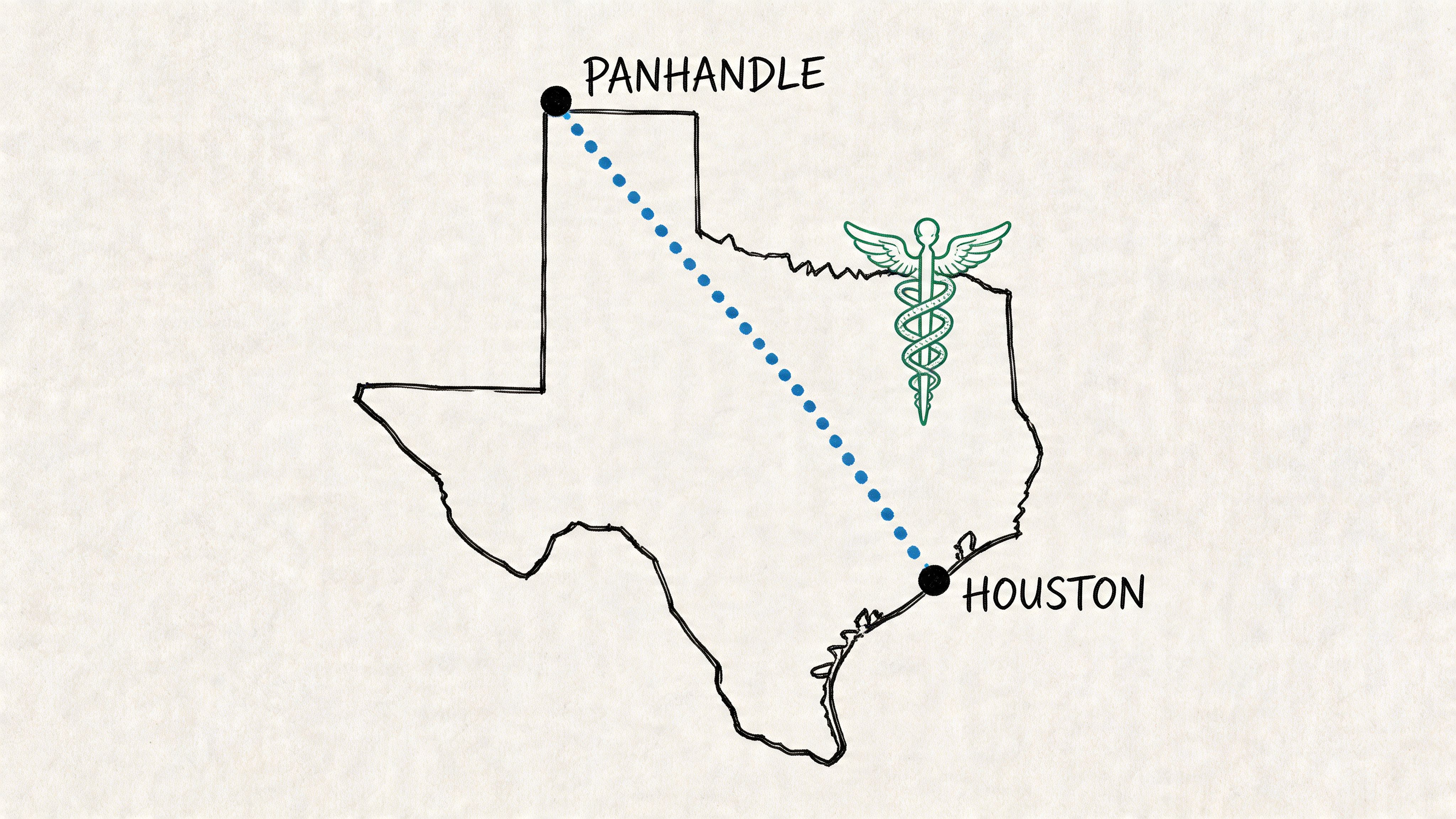
What “near me” means in a large state
In Texas, “near me” often doesn’t mean ten minutes away. It means accessible, responsive, and able to coordinate care without forcing a family to solve every logistical problem themselves.
That’s especially important for rural communities. Available online listings often focus on urban pathology groups and broad service descriptions, while offering little practical guidance for families outside major metros. That gap has been noted in coverage discussions about underserved areas and county-level access. In Texas, one way to address that problem is through a statewide service model that reaches all regions rather than only a single city hub.
How statewide access works
For families and local professionals, the process usually depends on coordination, not proximity alone. That can include communication with the funeral home, transport planning, records transfer, and a suitable examination location. My work often involves helping families understand those moving parts early, before time-sensitive decisions narrow their options.
For some cases, local funeral home relationships are part of making that process manageable. Families in Central Texas may also encounter support through the Waterloo Mortuary pathology partnership, which reflects how funeral service coordination and forensic pathology can intersect in a respectful, practical way.
Readers looking for county-by-county service information can review Texas county coverage for forensic autopsy services.
What affects timing and cost
Turnaround depends on the case itself. A straightforward examination may move more quickly than one requiring extensive toxicology, microscopy, records review, or legal coordination. The honest answer is that complexity sets the pace.
Cost works the same way. The key question isn’t whether a price is low or high. It’s whether the scope is clearly explained, including transportation, examination, ancillary testing, and reporting. Transparency prevents misunderstanding at the worst possible moment.
Frequently Asked Questions From Families and Attorneys
Can an autopsy still be performed after embalming
Sometimes, yes. The usefulness of the examination depends on the question being asked and the condition of the body. Embalming can affect certain findings and some laboratory studies, so the case must be reviewed individually before any promise is made about what information can still be obtained.
Will an autopsy prevent a viewing or funeral service
In most cases, a properly performed autopsy does not prevent customary funeral arrangements. The examination is conducted with respect for restoration and preparation by the funeral home. Families should still discuss timing and viewing plans with the funeral director so everyone understands the schedule.
Families often fear disfigurement. In routine practice, respectful postmortem examination and funeral preparation are designed to preserve dignity.
What is chain of custody
Chain of custody is the documented handling of evidence or specimens from collection through transfer, storage, and analysis. In a legal case, it helps show that materials were identified, handled, and preserved in a traceable way.
For attorneys handling wrongful death or personal injury matters, this concept is especially important because medical specimens, photographs, and records may later be reviewed in litigation. Weak documentation can create avoidable disputes about reliability.
Can religious or cultural concerns be addressed
Often, yes. Families should raise those concerns immediately. Some requests involve timing, handling, modesty, or the scope of the examination. Not every limitation can be accommodated in every case, especially if legal requirements apply, but early communication gives the best chance of respecting those needs.
What if we only want a second opinion on an existing report
That may be possible. A full repeat autopsy is not always necessary. In some cases, the right first step is review of the original autopsy report, toxicology, histology, scene information, and medical records. A second opinion should match the actual issue in dispute.
How do attorneys and families work with the same expert
The answer is clarity of role. I identify who the client is, what materials I’m being asked to review, whether the matter is consultative or testimonial, and what question I’m expected to answer. My obligation remains the same. I provide an opinion supported by medical evidence, not by the preference of the person who retained me.
Contact My Office for Guidance
A family may call within hours of a death. An attorney may call weeks later, after questions about the reported cause and manner of death start to affect a claim. In both situations, the first step is the same. I review the basic facts, identify what can still be examined, and explain the medical and legal options under Texas law.
If you are searching for a pathologist doctor near me, you likely need more than a name on a directory. You need to know whether a private autopsy is still possible, whether a second opinion would answer the true question, or whether the better course is a focused review of records, photographs, histology, and toxicology. As a board-certified forensic pathologist, I give that guidance directly and in plain language.
These conversations are confidential and respectful. They are also practical. Time matters after death, and some choices become harder if too much time passes.
If you need careful, medically grounded guidance after a death, contact my office by phone at (806) 230-1889 or use the contact information available through Texas Autopsy Services.