May 15, 2026 · Texas Autopsy Services
Pap Smear Not Enough Cells What It Means and Next Steps
Received a 'pap smear not enough cells' result? Understand what an unsatisfactory Pap test means, why it happens, and what your follow-up steps are.

On this page
Getting a message that says your pap smear not enough cells can feel strangely unsettling. It isn't clearly normal, it isn't clearly abnormal, and most patient portals don't explain much. Many people read it late at night, search the phrase, and immediately worry that something serious was missed.
At Texas Autopsy Services, every examination is performed by a board-certified forensic pathologist experienced in medicolegal death investigations. Our work centers on one principle: follow the evidence carefully, explain it plainly, and treat the deceased and their family with respect.
TL;DR
- “Not enough cells” usually means an unsatisfactory sample, not a diagnosis of cancer or a normal result.
- The issue is usually sample quality, not something you caused or something the lab is hiding.
- Repeat testing is the usual next step, often after waiting long enough for the cervical surface to recover.
- Preparation matters because avoiding certain products and timing issues can improve the next sample.
- If repeat tests are still unsatisfactory, clinicians may look for reasons sampling is difficult and consider HPV testing or colposcopy.
Understanding Your Pap Smear Result
A common scenario goes like this. You go in for routine screening, the appointment is brief, and you expect a simple normal result a few days later. Instead, your portal says something like insufficient cells, not enough cells, or unsatisfactory specimen.
That wording sounds technical and ominous, but the meaning is usually much simpler. The lab is saying, “We did not receive a sample we can evaluate with confidence.” It is a problem of readability, not an automatic sign of disease.
I often tell patients, it's like trying to identify a face in a photograph that is out of focus. The blur doesn't mean the person in the picture is unhealthy. It means the image isn't clear enough to interpret safely. A Pap smear works in much the same way. The pathologist or cytology lab needs enough well-preserved cervical cells to make a reliable judgment.
That distinction matters. A result that says pap smear not enough cells is not the same thing as normal, and it is not the same thing as abnormal. It falls into a middle category where the sample didn't answer the question.
For many people, this is also a reminder that screening is a process, not a single event. Good follow-up, good timing, and good sample collection all matter. If you're already thinking more broadly about prevention, practical reading on lifestyle changes for better health outcomes can help frame screening as one part of long-term care.
If you want a basic refresher on the test itself before sorting out this result, this plain-language guide on what a Pap smear looks for can help anchor the rest of the discussion.
An unclear Pap result often creates more anxiety than an abnormal one because people don't know how to file it mentally. The most accurate file label is “incomplete.”
What "Not Enough Cells" Actually Means
When a lab reports not enough cells, the formal term is usually unsatisfactory cervical screening result. That means the specimen does not meet adequacy standards for interpretation. The cells may be too sparse, too clumped, or otherwise not usable for a safe reading.
Think of it like a blurry photograph
A Pap smear is a screening sample, not a direct view of the whole cervix. The lab only has what was collected. If the sample is too thin, reading it would be like judging a photograph with half the image missing.
That is why clinicians do not usually treat this as reassuring or alarming on its own. They treat it as non-diagnostic. In other words, the test didn't give a dependable answer.

It happens often enough that you shouldn't feel singled out
This result is not rare. In one large ThinPrep study, 4,163 of 124,457 Pap tests were unsatisfactory, or 3.3% overall, and 90% of those unsatisfactory tests were due to too few squamous epithelial cells according to this ThinPrep adequacy study in Diagnostic Cytopathology.
That finding helps in two ways. First, it shows that this is a familiar laboratory problem, not a bizarre event. Second, it shows that the issue is usually cellularity, meaning the sample did not contain enough of the right cervical cells.
What the result does and does not tell you
Here is the simplest way to read it:
| Result wording | What it means |
|---|---|
| Normal | Enough cells were present, and no concerning changes were identified |
| Abnormal | Enough cells were present, and the lab saw changes that need follow-up |
| Not enough cells | The lab could not reliably interpret the sample |
Key point: “Not enough cells” is not a hidden code for cancer. It is the lab being careful about not overcalling or undercalling an inadequate specimen.
That caution is a good thing. In pathology, a careful “we can't interpret this safely” is more trustworthy than false certainty.
Common Reasons for an Unsatisfactory Sample
Once people hear that the problem is usually technical, the next question is reasonable. Why would a sample come back that way in the first place?
The answer is that several different things can interfere with getting a clean, readable group of cervical cells. Most have little or nothing to do with anything the patient did wrong.
The sample may simply contain too few target cells
The most common technical reason is paucity of epithelial elements. In a study of unsatisfactory Pap smears, that was the leading failure mode in 66.6% of cases, while 9.9% were limited by obscuration from blood, inflammatory cells, or mucus, and 4.4% by air-drying artifact, as described in this NIH review of unsatisfactory conventional Pap smears.
That phrase sounds dry, but it means something practical. The brush or collection device did not yield enough usable cells from the cervical surface and transformation zone to meet adequacy standards.
Blood, inflammation, and mucus can block the view
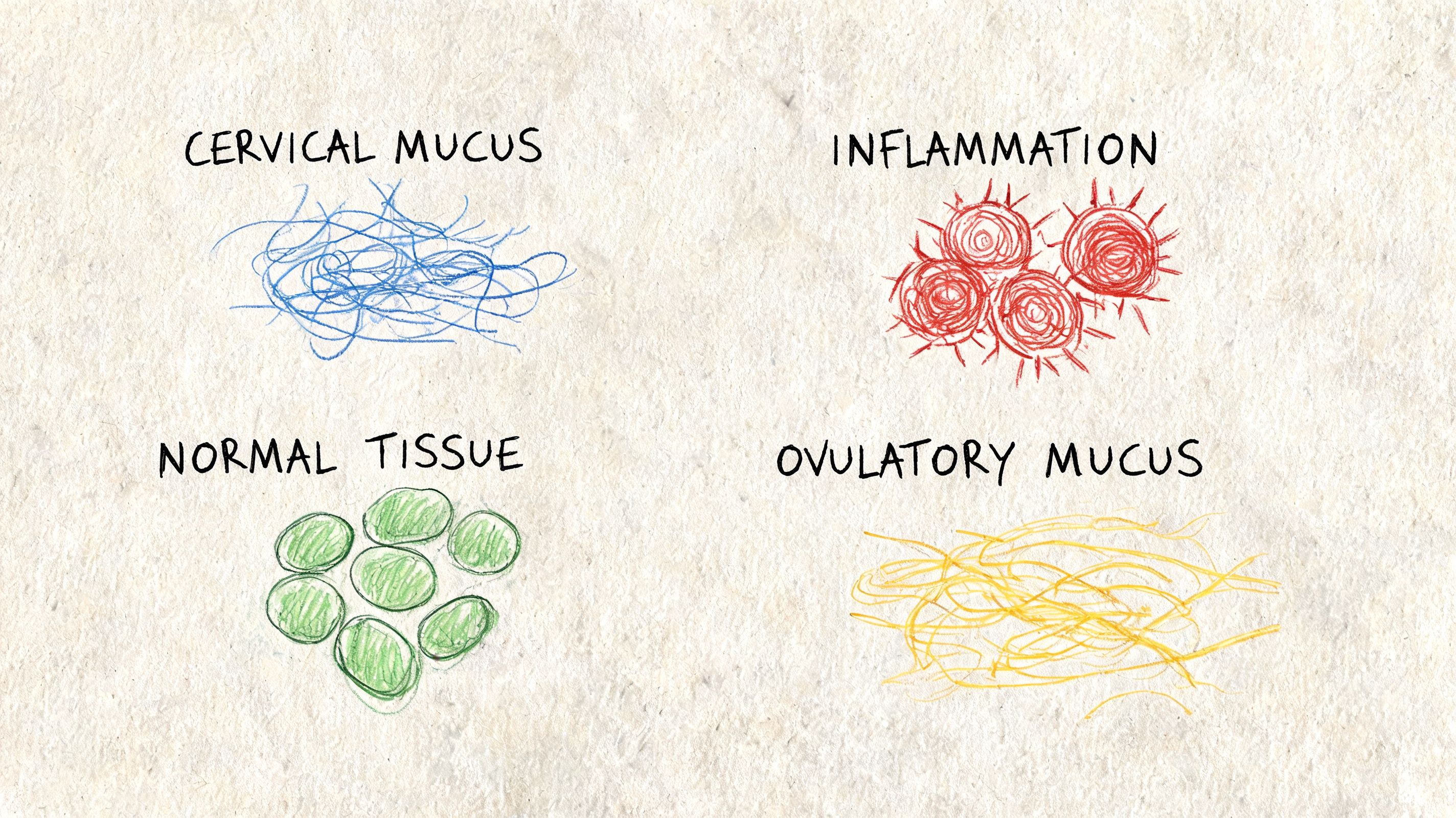
Even if some cells are present, they may be hidden. Blood, heavy inflammation, or thick mucus can partly cover the sample. When that happens, the slide or liquid-based preparation may not give the lab a clear field to examine.
This is another reason a result can be unsatisfactory without saying anything definitive about disease. The problem may be visibility rather than the cells themselves.
Age, anatomy, and tissue changes can make sampling harder
Some cervixes are harder to sample well. In older patients, tissue atrophy can reduce cellular yield. Inflammation, cervical erosion, healing changes, and a transformation zone that is difficult to access can also interfere.
A practical way to think about this is that the cervix is not a flat, perfectly exposed surface. The clinician has to reach the right area and collect enough intact cells from it. Some bodies make that easier than others.
Common categories behind the result
- Low cellularity: There just weren't enough squamous cells in the specimen.
- Obscuring material: Blood, mucus, or inflammatory debris blocked interpretation.
- Collection artifact: Cells were present but not preserved or transferred well.
- Body-related factors: Atrophy, anatomy, or tissue changes made sampling more difficult.
Most unsatisfactory Pap results are best understood as a specimen-quality issue. That framing removes a lot of unnecessary blame and confusion.
Your Next Steps After an Inadequate Pap Test
You get the message that your Pap smear had "not enough cells," and the first question is usually simple: what happens now?
In most cases, the next step is to repeat the test on a schedule your clinician recommends. The first sample was incomplete, so the goal is to collect one the lab can properly read.

Repeat testing is usually the standard plan
An inadequate Pap is generally treated as a non-diagnostic result. In plain terms, the test did not answer the screening question. Repeating it gives the lab a new sample with a better chance of containing enough visible cervical cells.
Timing matters. Some screening programs recommend waiting before the repeat so the surface cells of the cervix have time to replenish. Harvard Health also notes that repeating the test is the usual response when a Pap sample has insufficient cells in this Harvard Health explanation of insufficient Pap cells.
That delay can feel long. It has a practical purpose. A repeat done too soon may run into the same problem again.
Why you should not ignore the follow-up
A repeat Pap is often reassuring, but it still matters to complete it. An unreadable test is a little like a blurred photo. The answer is not to guess what the picture shows. The answer is to take a clearer picture.
That is why clinicians treat follow-up as unfinished screening rather than as a final all-clear. If you have had abnormal bleeding, prior abnormal Pap results, HPV positivity, menopause-related dryness, or previous cervical procedures, those details may change how quickly your clinician wants to reassess things.
If medical wording in test reports tends to blur together, it can help to review a plain-language guide to what biopsy report wording can mean. Different tests answer different questions, but learning how pathology reports are structured often makes the whole process less confusing.
Other factors your clinician may consider
Your clinician may recommend more than a simple repeat swab, depending on your age, symptoms, screening history, and local protocol. Possible next steps can include:
- HPV testing: This may add useful context if the Pap sample itself was limited.
- Reviewing symptoms and prior results: Bleeding after sex, pelvic pain, prior cervical treatment, radiation, or repeated inadequate tests can change the plan.
- Colposcopy in selected cases: This is not automatic after one inadequate Pap, but it may be considered if the result happens more than once or if other risk factors are present.
This is the part many patients overlook. If you have had more than one inadequate result, it is reasonable to ask a more specific question: "What are we changing this time to improve the sample?" That might mean adjusting timing, addressing vaginal dryness, using a different collection approach, or deciding whether another test would be more informative.
If you need a local clinician for repeat screening or follow-up discussion, a women-focused practice with expert care for women's wellness may be useful, especially if you've had a confusing sequence of prior results.
A short visual explanation can also make the pathway easier to follow:
Practical rule: Treat an inadequate Pap as a test that still needs a clear answer. Schedule the follow-up, ask how to improve the next sample, and speak up early if this has happened before.
How to Prepare for Your Repeat Pap Smear
A repeat test can feel discouraging, but it also gives you a second chance at a better sample. This is the part where many patients regain a sense of control.

A simple preparation checklist
Harvard notes that insufficient cells can happen if a clinician cannot retrieve enough cells or if vaginal douching occurred shortly before the test. With that in mind, a practical repeat-test checklist usually includes:
- Avoid douching beforehand: This can interfere with the sample and reduce what the lab can evaluate.
- Ask about vaginal products: If you use vaginal medications, creams, or moisturizers, ask your clinician whether to pause them before the test.
- Consider timing: If you're menstruating or expect bleeding, call the office and ask whether they want to reschedule.
- Mention prior inadequate results: That history may change how the clinician approaches the repeat collection.
- Bring up menopause or dryness: These details can matter because they may help explain low-cellularity samples.
What to tell the clinician before the swab is taken
Small details are useful here. Tell them if you have postmenopausal dryness, prior cervical procedures, prior radiation or chemotherapy, pelvic discomfort, or if you had trouble with prior screening collections.
That gives the clinician context. It may also help them choose a better collection approach or decide whether additional testing should accompany the repeat Pap.
What not to do emotionally
Don't treat preparation as a test you can fail. Sometimes the repeat sample is still difficult despite doing everything right. The goal is to improve the odds of a readable specimen, not to create another reason to blame yourself.
A good collection depends on the patient, the timing, the cervix, and the technique. You're only one part of that equation.
What if a Repeat Test Is Also Unsatisfactory
This is the part most short articles skip, but it matters. A second unsatisfactory result can be more upsetting than the first because it no longer feels like a one-time fluke.
Persistent inadequacy doesn't automatically mean something dangerous is present. More often, it suggests that something about the cervix or sampling conditions is making collection difficult over time.
When repeated low-cellularity results deserve a closer look
Evidence summarized in a review of inadequate Pap follow-up notes that when inadequate results keep happening, clinicians may need to think about factors such as atrophy or an inaccessible transformation zone, and may consider HPV testing or colposcopy for a clearer diagnosis, as discussed in this review on inadequate cervical smear follow-up and persistent issues.
Examples include postmenopausal tissue change, a narrowed cervical opening, prior treatment effects, chronic inflammation, or anatomy that limits access to the target area.
What clinicians may consider next
A persistently unsatisfactory pattern often leads to a broader conversation rather than just another identical repeat.
- HPV testing: Helpful when cytology remains difficult to interpret.
- Colposcopy: Allows a more direct look at the cervix if screening remains unresolved.
- Evaluation of contributing factors: Tissue atrophy, prior therapies, or structural access issues may be part of the picture.
In pathology, this is similar to any other inadequate sample. If a tissue sample is too limited to support a firm conclusion, the next step is often repeat sampling or a different method. The same principle appears in this explanation of what a biopsy report can mean when the sample is limited.
A persistently inadequate result is still a result worth acting on. It tells the care team that the usual route has not answered the screening question.
Frequently Asked Questions
Does pap smear not enough cells mean cancer
An unsatisfactory Pap result means the lab did not have a clear enough sample to read with confidence. It does not diagnose cancer. It means the screening question is still unanswered.
If it does not mean cancer, why can't I ignore it
Because a blurry test cannot reassure you.
A Pap smear works a bit like trying to judge a photo that is out of focus. The problem is not that the photo shows something bad. The problem is that it does not show enough detail to call it normal. That is why follow-up matters. As noted earlier, repeat testing is recommended because an inadequate sample can miss changes that only show up when the right cells are collected.
Is this result my fault
Usually, no.
People often worry they prepared incorrectly or did something during the exam to cause the result. In reality, sample quality can be affected by blood, inflammation, mucus, age-related tissue changes, anatomy, dryness, or simple collection difficulty. Preparation can improve the odds of getting a readable sample, which is useful to know if you are facing a repeat test, but many causes are outside your control.
Will I always need another Pap, or could I need more than that
A repeat Pap is common after this result. If repeat samples keep coming back inadequate, your clinician may change the plan instead of repeating the same step again.
That might include HPV testing, a closer exam of the cervix, or treatment of a factor that is interfering with sampling, such as significant dryness after menopause. The goal is to answer the screening question clearly, not to keep doing unreadable tests.
Why does pathology language sound so alarming
Pathology reports are written for accuracy first. Labs use careful wording to state what they saw, what they could not assess, and where uncertainty remains. That style can sound cold even when the message is just, “we need a better sample.”
If you have ever looked at a report and felt lost in the wording, this plain-language example of a pathology report shows how technical phrasing can be translated into everyday English.
If you're dealing with a pathology report, a limited specimen, or another medical finding that feels technical and hard to interpret, Texas Autopsy Services provides educational resources grounded in pathology and clear medical communication. My work is focused on postmortem and forensic pathology rather than personal gynecologic care, but careful explanation matters in both settings. When medical language is unclear, a direct conversation with the treating clinician is the right next step.