May 8, 2026 · Texas Autopsy Services
What Does a Pap Smear Look For? A Clear Guide
Wondering what does a Pap smear look for? This guide explains the screening for cervical cancer, HPV, and cell changes, plus what your results really mean.
On this page
A Pap smear is a screening test that primarily looks for precancerous or abnormal cells on the cervix that could, if left untreated, lead to cervical cancer. It's meant for early detection, not for diagnosing cancer on the spot, and more than 95% of people treated for precancerous cells found by a Pap smear do not go on to develop cervical cancer.
That's why this test can feel emotionally confusing. You may be opening a reminder in your patient portal, seeing the word “screening,” and wondering whether this means your doctor is looking for cancer, HPV, an infection, or all of the above. As a physician, I've found that much of the fear comes from not knowing what the test is designed to find.
A Pap smear is named after Dr. George Papanicolaou, who developed it in the 1940s. Its core job is simple. A clinician collects cells from the cervix, the lower part of the uterus that opens into the vagina, and a laboratory examines those cells for changes that don't look normal.
If you remember one point, make it this one: a Pap smear is usually a search for warning signs, not proof that something dangerous is already present.
Why This Simple Test is So Important
Many people first think about a Pap smear when they get a reminder message and feel a small wave of dread. That reaction is common. Pelvic exams can feel vulnerable, and the idea of “waiting on results” often makes people assume the test is looking for bad news.

What makes the Pap smear so valuable is that it gives clinicians a chance to find changes before cancer develops. According to Cleveland Clinic's explanation of the Pap smear, the test primarily looks for abnormal cervical cells, and more than 95% of individuals treated for the precancerous cells found by a Pap smear do not develop cervical cancer.
A screening test, not a verdict
That distinction matters. Screening looks for early clues. Diagnosis comes later, if needed, with more focused follow-up such as a closer exam or biopsy. When patients hear “abnormal,” they often jump straight to “cancer,” but those are not the same thing.
Practical rule: A Pap smear is best understood as an early warning system for the cervix.
The test has also become one of the most important tools in preventive gynecology because it catches cell changes when treatment is still straightforward. In everyday practice, that means a routine office test can interrupt a disease process long before it becomes life-threatening.
Why reassurance and accuracy both matter
Anxiety around cervical screening is real, especially if you've had an abnormal result before or know someone who has faced cervical cancer. Good education helps because it replaces vague fear with something more concrete. If you want a patient-centered resource focused on support for cervical cancer diagnosis, that guide may also be helpful alongside your own clinician's advice.
From a pathology standpoint, this is what I want readers to understand clearly: the Pap smear is not looking for a dramatic, late-stage problem. It is looking for subtle cellular changes early enough for medicine to do something useful about them.
The Search for Abnormal Cells Not Cancer
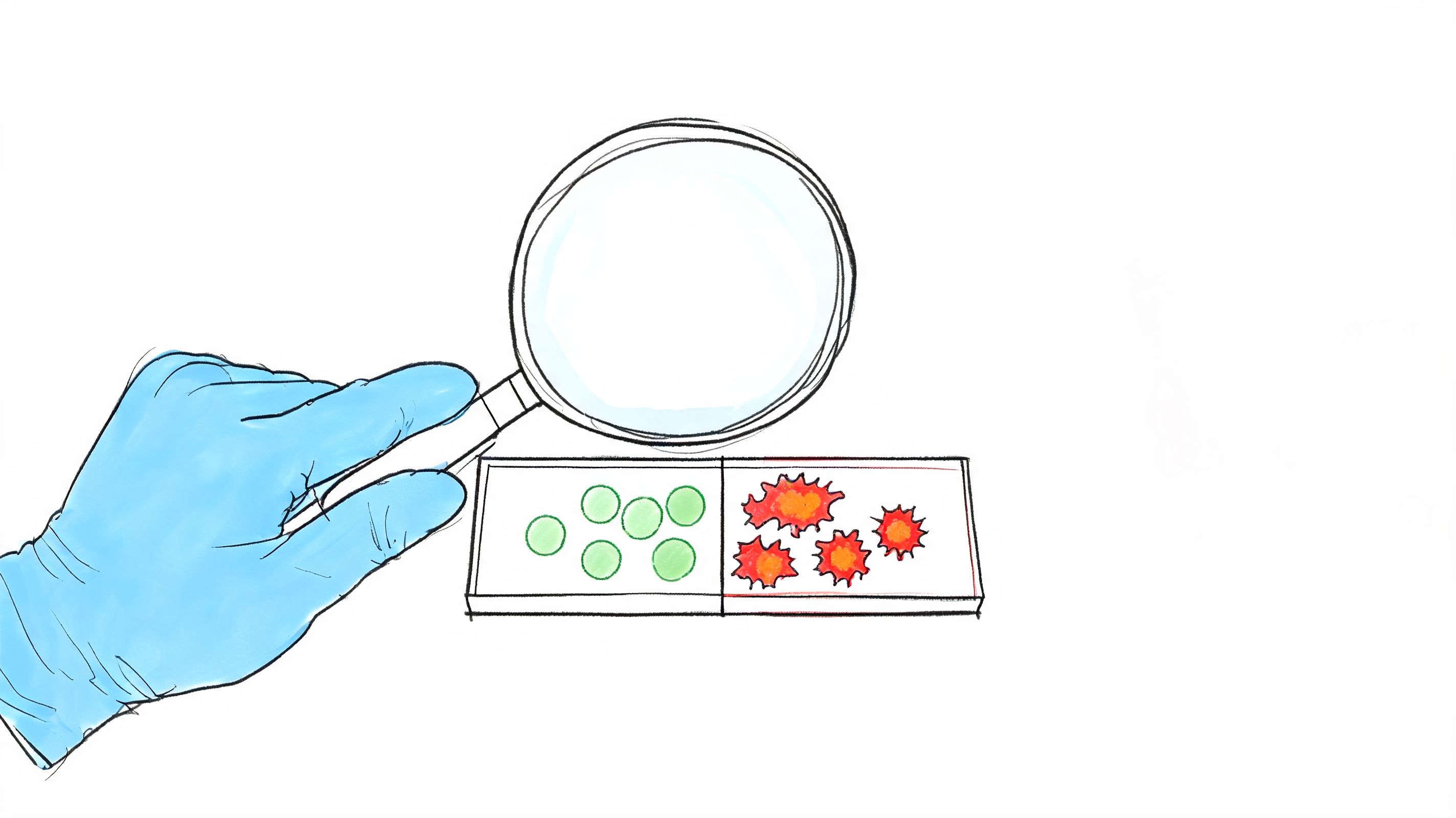
To understand what a Pap smear looks for, focus on the specific cells it samples. The test collects cells from the surface of the cervix, then a lab examines them for early changes in shape, size, and pattern that can happen before cancer develops.
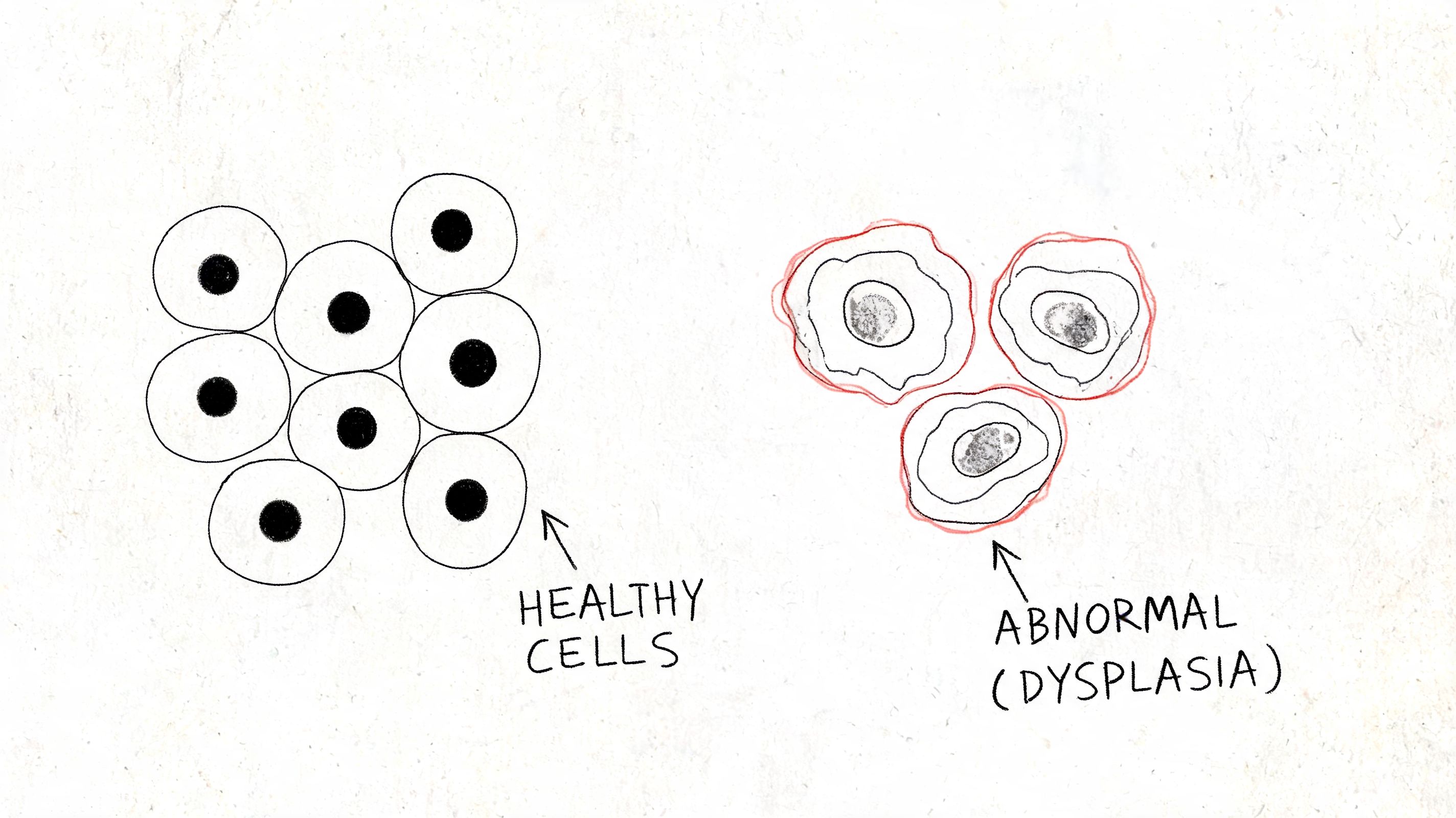
The cervix is the small, lower part of the uterus that opens into the vagina. During a Pap test, your clinician gently brushes or scrapes a small sample from that area. Under the microscope, the question is straightforward: do these cells look typical for a healthy cervix, or do they show dysplasia, which means abnormal cell change?
What “abnormal cells” actually means
This is often the part that causes the most worry.
An abnormal Pap result usually means some cervical cells look different from expected. It does not mean a pathologist saw a tumor on the slide. More often, it means the lab found changes that range from mild to more pronounced, and your clinician uses that information to decide whether you need routine follow-up, repeat testing, or a closer look.
Viewing it as early wear on a single floor tile helps clarify the process. While the floor remains intact, that specific area requires attention before a more significant issue arises. This is why Pap testing is so important in practice. It identifies cell changes at an early stage, when follow-up is typically more manageable and more effective.
What a pathologist sees
In the lab, the cells are processed on a slide or in liquid-based preparation and reviewed carefully. The person reading the sample looks for specific features, such as whether the nucleus appears enlarged, darker, or irregular compared with a normal cervical cell. Those details help separate healthy-looking cells from cells that may need follow-up.
If you have ever opened a report and felt lost in the terminology, that reaction is completely understandable. Pathology reports are written for precision first. A guide on how pathology report terms translate into plain English can make that wording easier to understand. For Pap results, the practical question is usually simpler than the medical language makes it sound: do you need routine screening again, or do you need another step?
An abnormal Pap result usually means “these cells need follow-up,” not “you have cervical cancer.”
What else the test may notice
A Pap smear can sometimes show changes associated with HPV or signs of irritation and certain infections, but its main job is still cell screening. It is looking at how cervical cells appear, not trying to diagnose every gynecologic symptom or infection in one test.
That distinction matters because HPV is one of the main drivers of cervical cell changes over time. If you want broader background on the connection between viruses and cancer risk, this article on preventing viral cancers offers useful context.
For you as a patient, the key takeaway is simple. A Pap smear is searching for early cell changes on the cervix, so your care team can decide whether you need reassurance, repeat screening, or closer evaluation.
Distinguishing Between a Pap Test and an HPV Test
You may leave an appointment thinking, “I had a Pap smear,” then later see an HPV result in your portal and wonder if something extra was found. That confusion is common because these tests are often collected during the same pelvic exam, using the same cervical sample, but they answer two different medical questions.
A Pap test examines the cervical cells themselves. An HPV test checks for high risk types of human papillomavirus, the virus that can cause those cells to change over time.
A simple way to sort them out is this: the Pap looks at what your cervical cells look like today. The HPV test looks for a risk factor that can affect what happens later.
A side-by-side comparison
| Test | What it looks for | What it tells you |
|---|---|---|
| Pap test | Abnormal cervical cells | Whether cell changes are present |
| HPV test | High-risk HPV | Whether the virus linked to cervical cancer risk is present |
| Co-testing | Both cells and virus | A broader screening picture |
For many patients, the hardest part is not the sample collection. It is trying to understand what each result means for them. If your Pap is normal, that usually means no abnormal cells were seen in the sample. If your HPV test is positive, that means a virus linked to cervical cancer risk was found, and your clinician will decide whether you need repeat testing or a closer exam based on your age and full screening history.
That distinction matters because the two results can be mixed in different ways. You can have a normal Pap and a positive HPV test. You can also have mild cell changes on a Pap even though no high risk HPV is found on the same screen. Your clinician reads those pieces together, much like putting lab findings and symptoms together before making a treatment plan. If medical reports tend to feel cryptic, seeing an example of a pathology report and how it is organized can make that format feel less intimidating.
Why doctors often order both
Using both tests gives a clearer picture of current cell health and future risk. The Pap answers, “Are there abnormal cells right now?” The HPV test answers, “Is the main viral cause of cervical cell changes present?”
That combination can be reassuring when both are negative. For you, that usually means the lab did not see abnormal cells and did not detect the high risk virus types the test checks for. In practical terms, it often supports returning to routine screening rather than needing immediate follow-up.
Why HPV causes so much worry
HPV carries emotional weight that a Pap result usually does not. Patients often worry that a positive result means cancer, infidelity, or something they should have noticed sooner. Medically, a positive HPV test means a common virus was detected. It does not tell you that cancer is present.
What matters next is whether the virus is one of the high risk types and whether it is linked to cell changes on your cervix. That is why follow-up recommendations can range from “come back at the usual interval” to “repeat testing sooner” or “let's do a colposcopy for a closer look.”
If you want broader context on how viruses can affect cancer risk, this overview of preventing viral cancers explains the connection in plain language.
A positive HPV test means your clinician should watch this more closely. It does not mean you have cervical cancer.
Your screening plan may change with age because HPV infections are especially common in younger adults and often clear on their own, while persistent high risk HPV becomes more informative over time. So if your report lists both Pap and HPV findings, the question to ask is simple: what does this combination mean for my next step?
Decoding Your Pap Smear Results
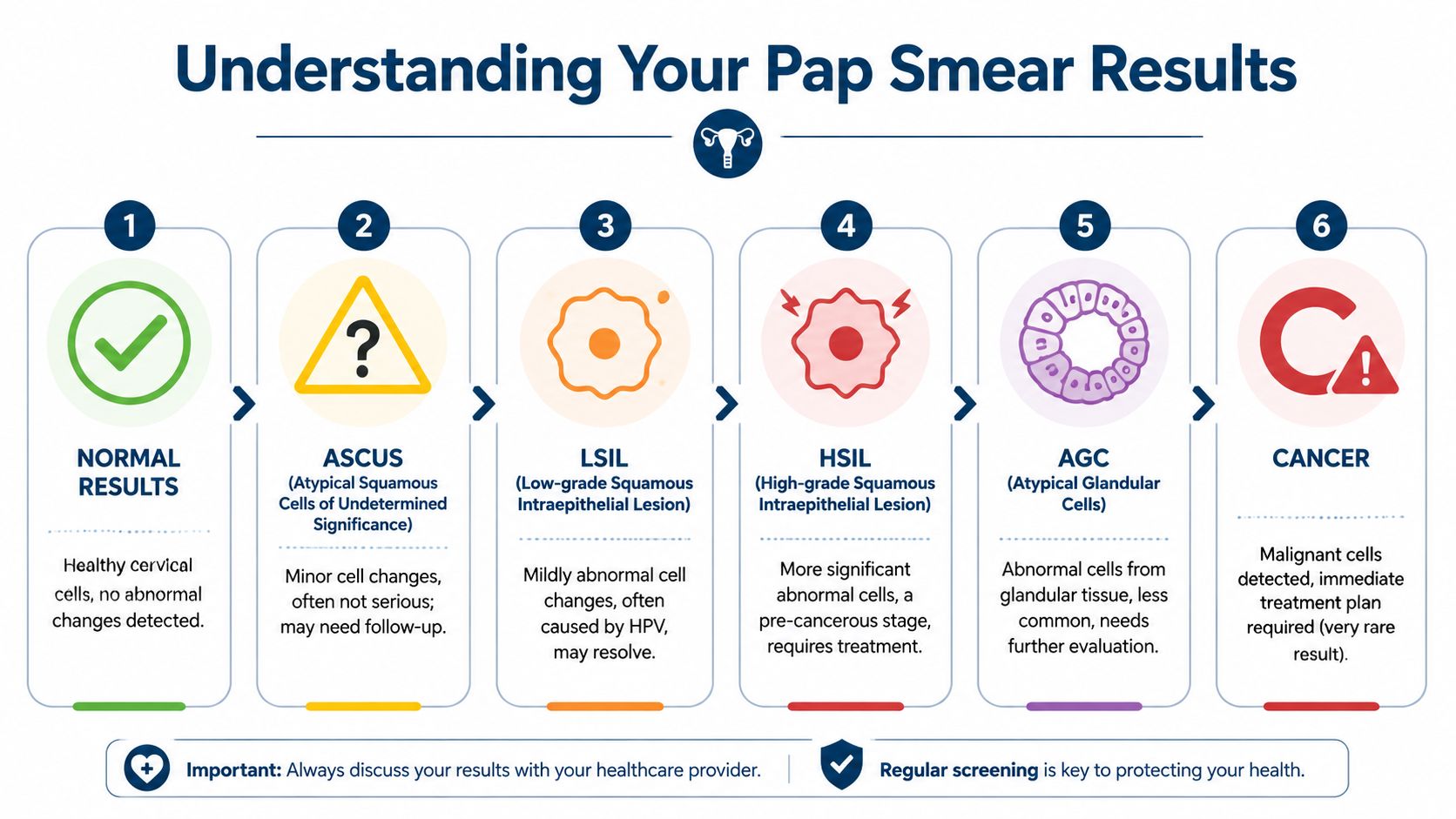
The hardest part for many patients isn't the exam. It's seeing the report afterward and trying to understand the wording. Pap smear results are classified using the Bethesda System, which is a standard way to describe what the lab saw on the slide.
This visual summary helps frame the common result categories before you read the details below.
Normal
A normal result means the lab did not identify abnormal cervical cells in the sample. In plain language, the cells examined looked reassuring.
That doesn't mean “never think about this again.” It means stay on the screening schedule your clinician recommends.
ASC-US
ASC-US stands for atypical squamous cells of undetermined significance. That phrase sounds far more frightening than it usually is. It means some cells looked a little unusual, but not clearly enough to place them into a more definite abnormal category.
In practice, this often leads to repeat screening or HPV testing, depending on your age and prior results. It is better thought of as an “uncertain but usually low-level finding” than as a major warning sign.
LSIL
LSIL means low-grade squamous intraepithelial lesion. The National Cancer Institute notes that LSIL often reflects a transient HPV infection that may resolve on its own, while HSIL represents more significant changes that require follow-up.
For many patients, LSIL means mild changes. It does not mean cancer. It does mean your clinician will decide whether monitoring alone is appropriate or whether a colposcopy is the safer next step.
HSIL
HSIL means high-grade squamous intraepithelial lesion. This is a more serious result because the abnormal changes are more pronounced and more likely to progress if not treated.
That wording can be scary, but it is still describing a precancerous process, not necessarily invasive cancer. The value of finding HSIL on a screening test is that it gives your care team a chance to act before cancer develops.
What this means for you: HSIL usually calls for prompt follow-up, but prompt follow-up is exactly how cervical cancer is prevented.
Here is a short video many patients find useful before discussing results with their clinician.
AGC and less common results
You may also see AGC, which means atypical glandular cells. These are cells from glandular tissue rather than the squamous cells more commonly discussed in Pap screening. AGC usually needs further evaluation because glandular abnormalities deserve careful attention.
Some patients also become anxious when they see a pathology-style report format. If it helps to understand how medical reports are structured, this example of a pathology report can make the layout and wording less opaque.
The emotional part of reading results
An “abnormal” result can feel personal, even though it is a lab description. The medical team isn't labeling you. They're categorizing cell findings so they can choose the right next step.
That shift in thinking matters. A Pap result is not a judgment and not a prediction of your future. It is information used to guide care.
What Happens After an Abnormal Result
An abnormal Pap smear result is common, affecting about 1 in 20 women who get screened, and it rarely means you have cancer. The CDC's Pap test statistics page also notes that 14.3 million physician office visits annually involve Pap tests being ordered or provided, which helps explain why follow-up after an abnormal result is a routine part of gynecologic care.
The usual next steps
What happens next depends on the exact result, your age, your HPV status, and your prior screening history. The common paths include:
- Repeat testing later: Mild or unclear changes may only require another Pap test or HPV test after an interval set by your clinician.
- Colposcopy: This is a closer look at the cervix using a magnifying instrument in the office.
- Biopsy: If the clinician sees an area that needs more evaluation, they may remove a very small tissue sample for lab review.
None of those steps automatically means a dangerous diagnosis. They are part of a structured system designed to sort out who needs monitoring and who needs treatment.
What colposcopy and biopsy feel like in real life
Patients often fear follow-up more than the original Pap smear because the words sound more serious. A colposcopy is a more detailed inspection. A biopsy adds tissue sampling if something looks concerning enough to check more cluesly.
If you want a practical recovery-focused overview, this discussion from Lake City pelvic health specialists on biopsies may help you know what to expect after cervical biopsy care. And if you've never seen how tissue findings are written up, this guide to a biopsy pathology report can make the terminology less intimidating.
Most follow-up after an abnormal Pap smear is careful and deliberate, not urgent and chaotic.
Why follow-up matters
The safest response to an abnormal result is not panic. It is follow-through. Cervical screening works because it connects an early finding to a plan. Sometimes that plan is repeat testing. Sometimes it is treatment of precancerous tissue. Either way, the system is built around prevention.
Screening Guidelines and How to Prepare
You get the appointment reminder, then the questions start. Am I due yet? What if I am on my period? What if the result comes back confusing again?
Those worries are common, especially if you have been through abnormal results before. A good screening plan is meant to make things clearer, not more stressful.
For many patients, cervical screening starts at age 21. Ages 21 to 29 are often screened with a Pap test every 3 years if results stay normal. Ages 30 to 65 may be screened with a Pap test, an HPV test, or both together on a schedule your clinician recommends. The exact timing can change if you have had abnormal results, treatment on the cervix, a weakened immune system, or other medical factors.
The easiest way to think about screening intervals is this: your cervix is being checked over time for patterns, not judged from one snapshot alone. If your results have been normal, the spacing is usually longer. If a past test showed cell changes or high risk HPV, your clinician may bring you back sooner because closer watching gives more useful information.
That can help during the waiting period too. If your clinician recommends earlier repeat testing, it does not automatically mean something dangerous was found. In many cases, it means they want another careful look before deciding whether anything needs to be done.
Simple preparation steps
A Pap smear is brief, and a few small steps can make the sample easier to read.
- Try to avoid heavy bleeding days: Light spotting is often manageable, but heavy menstrual flow can make the sample harder for the lab to interpret.
- Avoid vaginal creams, lubricants, douching, or intercourse right before the test if your clinician advises it: These can sometimes interfere with collecting a clear sample.
- Bring your cervical history: Prior Pap results, HPV results, pregnancies, surgeries, biopsies, or treatments help your clinician choose the right follow-up plan.
- Say if exams are hard for you: Anxiety, past trauma, pelvic pain, and menopause-related dryness all matter. Your clinician can use a smaller speculum, more lubricant when appropriate, or talk through each step slowly.
One practical tip matters more than patients realize. If you are not sure whether you should keep the appointment because of bleeding, a recent infection, or a new medication, call the office and ask. That quick call is often better than canceling on your own.
Questions patients ask most often
| Question | Answer |
|---|---|
| Does a Pap smear hurt? | Many patients describe pressure, brief cramping, or a light scraping feeling. If pelvic exams are painful for you, say so before the exam starts so the clinician can adjust the approach. |
| Can a Pap smear detect cancer? | A Pap smear looks for abnormal cervical cells. Sometimes those changes raise concern for precancer or cancer, but the test itself is a screening tool, not the final diagnosis. |
| Does an abnormal result mean I have cancer? | Usually no. It means the lab saw cell changes, and the next step may be repeat testing, HPV testing, or a closer exam of the cervix. |
| Is a Pap test the same as an HPV test? | No. The Pap test looks at cervical cells under a microscope. The HPV test looks for high risk types of the virus that can cause those cell changes. |
| Can I need follow-up even if I feel completely fine? | Yes. Cervical cell changes often cause no symptoms at all, which is why routine screening works so well. |
If you want the plain-language answer to what does a pap smear look for, it looks for early cell changes on the cervix so your care team can tell you what they mean and what, if anything, needs to happen next.