September 20, 2026 · Texas Autopsy Services
Forensic Toxicology Exam: What It Is and How It Works
Learn how a forensic toxicology exam works, from sample collection and screening to confirmatory testing, interpretation, and chain of custody in Texas cases.
On this page
- What a Forensic Toxicology Exam Actually Does
- How Forensic Toxicology Became a Formal Discipline
- Sample Types and How They Are Collected
- Screening and Confirmatory Testing Methods
- Why a Positive Result Does Not Equal Cause of Death
- Chain of Custody for a Defensible Toxicology Result
- Toxicology in Texas Practice and What to Expect Next
Author: Texas Autopsy Services
Role: Independent private autopsy and forensic pathology practice serving all 254 Texas counties
- A forensic toxicology exam is not a single drug screen. It is a documented process of collection, detection, confirmation, and interpretation.
- A positive result does not automatically establish cause of death. The meaning depends on specimen type, medical history, scene information, and postmortem changes.
- Specimen choice matters. Peripheral blood is generally preferred when concentration matters, while urine is mainly a detection matrix and vitreous humor can help reduce some postmortem artifacts.
- Chain of custody matters as much as chemistry. If handling, labeling, sealing, and transfer records are incomplete, even a technically correct result can lose evidentiary value.
- In Texas, toxicology can become part of the formal autopsy record. Texas law treats the toxicology report as part of the autopsy report when it is performed.
- Every examination we perform is done by a forensic pathologist certified by the American Board of Pathology.
A family often calls us after hearing one unsettling sentence: “The toxicology is pending.” An attorney may receive the same phrase in a preliminary death report and wonder whether that means a simple drug screen or a final answer is still missing. In both situations, the confusion is understandable.
A forensic toxicology exam sounds narrow, but in real practice it is one of the most careful parts of a cause of death investigation. It is not just about finding a substance. It is about deciding what that finding means, whether the specimen is reliable, whether the testing can stand up in court, and whether the result helps explain the death.
What a Forensic Toxicology Exam Actually Does
A forensic toxicology exam is a structured laboratory investigation used to detect, measure, and interpret drugs, alcohol, poisons, and related compounds in biological specimens collected under legal authority. The important word is interpret. Detection alone rarely answers the central question.
Most consumer-facing explanations make toxicology sound like a single panel test. That is not how serious postmortem work is done. In practice, the exam moves through a sequence that starts at the body and ends in a medical-legal opinion.
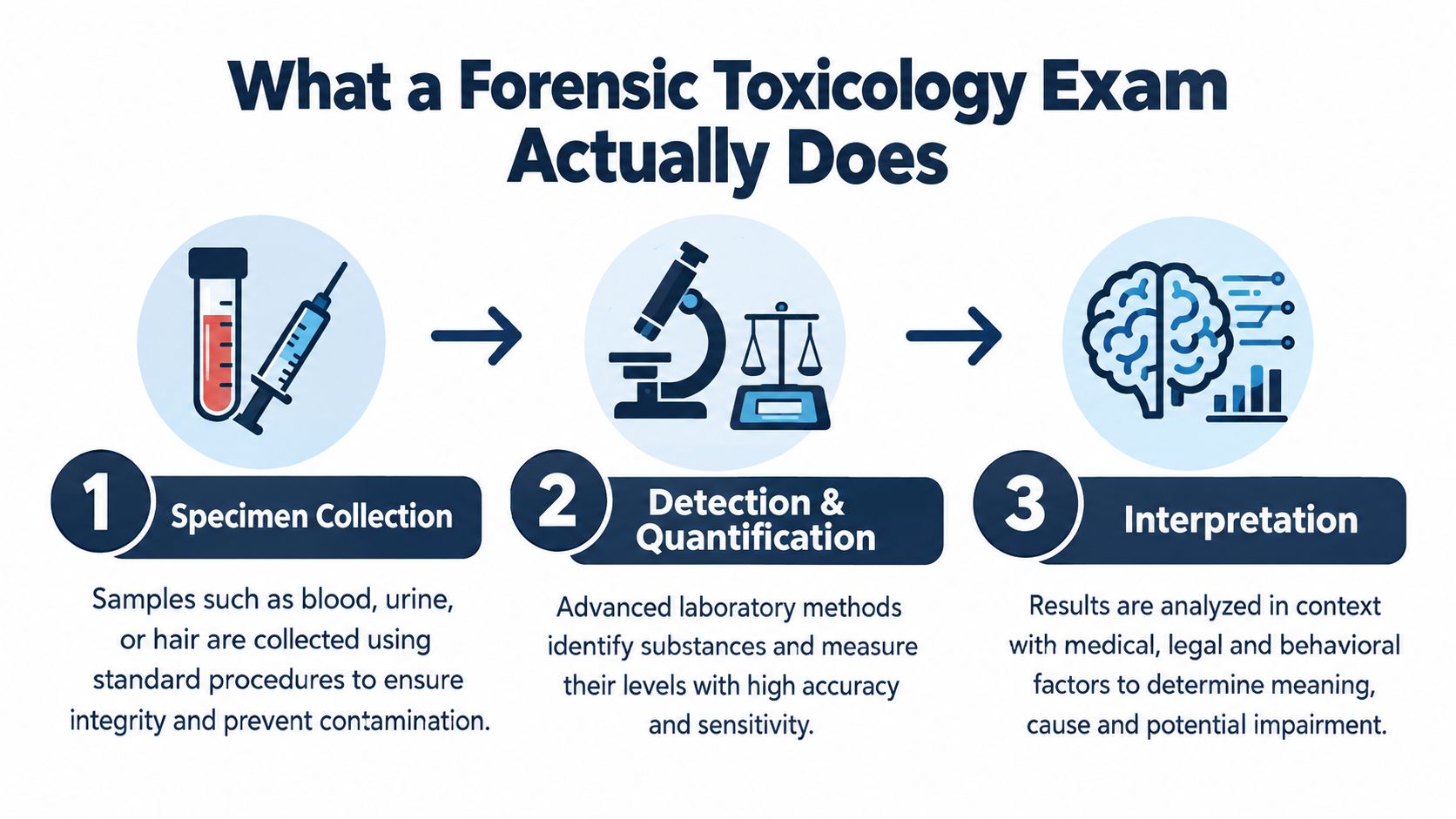
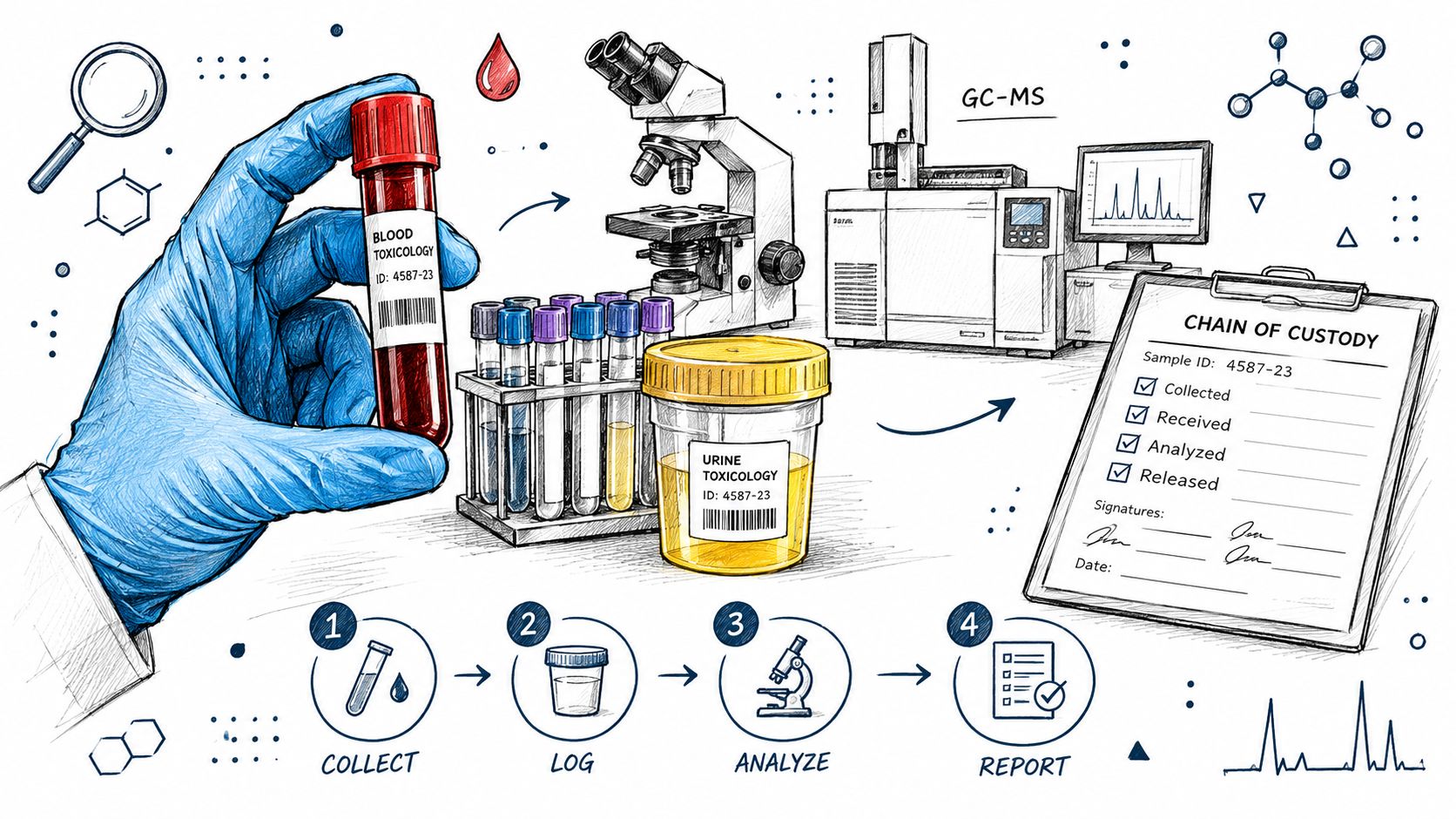
The four parts of the process
The first stage is specimen collection. Blood, urine, vitreous humor, and sometimes tissues are collected, labeled, sealed, and documented. Later interpretation begins there, because the value of a result depends heavily on where the specimen came from.
The second stage is screening. A screening method asks whether a substance or class of substances may be present above a threshold. Screening is broad and useful, but it is not the same as a final identification.
The third stage is confirmation and quantification. This step identifies the exact compound and, when appropriate, measures its concentration in a specific specimen. That is what turns a preliminary finding into a defensible laboratory result.
The fourth stage is interpretation. A pathologist or toxicology expert compares the result with the specimen type, known postmortem changes, the circumstances of death, and the decedent's medical background.
Practical rule: A toxicology report gives numbers in a specimen. It does not, by itself, give a cause of death.
Why this matters in real cases
Modern death investigation depends on toxicology far more than many people realize. In a 2023 autopsy series from Oslo University Hospital, 2,664 unique autopsy blood samples were analyzed and one or more substances were detected in 2,102 cases, a positivity rate of 79%, while samples without findings have remained around 20 to 25% since 2000 according to the same report (Oslo University Hospital autopsy statistics 2023).
That kind of frequency is exactly why the process has to be careful. A finding is common. A sound interpretation is the work.
For families seeking Private Autopsies or attorneys evaluating an independent autopsy, understanding this structure helps set expectations. “Pending toxicology” usually means the laboratory and interpretive parts are still underway, not that the case is being delayed without purpose.
How Forensic Toxicology Became a Formal Discipline
Forensic toxicology did not begin as a modern lab specialty. It grew out of poison investigations in the nineteenth century, when courts needed a scientific way to distinguish suspicion from proof. PBS traces the field's formal roots to the work of Mathieu Orfila, and describes James Marsh's arsenic test in 1836 as the first use of toxicology in a jury trial (PBS on the history of chemistry and forensic science in America).
That history still shapes what happens in a toxicology case now. The field was built to answer a legal question under scrutiny, not just a laboratory question in isolation.
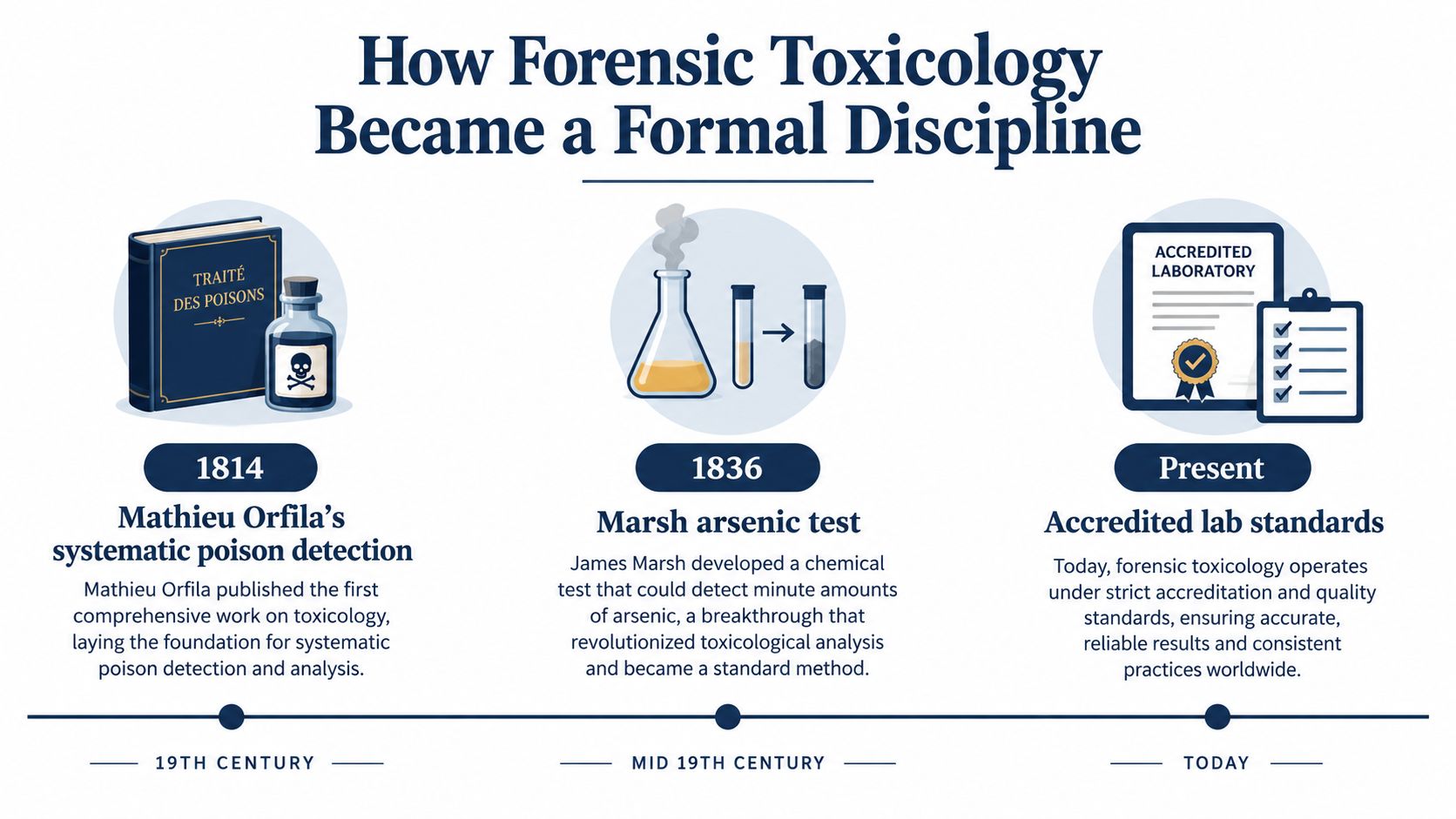
Why old poison cases still matter
The early problem was simple to state and hard to solve. If a person was suspected of being poisoned, the court needed more than rumor. It needed a method that could detect a substance at trace levels and survive challenge.
That is why reliable analytical chemistry changed everything. PBS notes that the 1836 Marsh test could detect very small amounts of arsenic, and that later tools such as spectroscopy, chromatography, and spectrophotometry expanded the range of substances that could be identified. In the United States, institutional development followed, including Massachusetts replacing the coroner system with a medical examiner office in 1877 and New York City's Chief Medical Examiner's Office beginning in 1918, with its laboratory widely regarded as the birthplace of American forensic toxicology.
The modern lesson from that history
Three features of present-day practice come directly from that background.
- Documented specimen integrity: Courts need proof that the specimen tested is the specimen collected.
- Trace-level detection: Laboratories must be able to detect substances in amounts that may matter medically or legally.
- Expert interpretation: A result has to be explained in context, not just printed on a page.
Later in this process, those features show up as chain-of-custody logs, validated methods, and opinion work by qualified experts.
A short historical overview helps some families and lawyers understand why toxicology can't be reduced to a quick yes-or-no test. The discipline was built for situations where lives, liberty, civil liability, and public confidence depend on precision.
Later developments in forensic practice can be seen in this overview.
Sample Types and How They Are Collected
The most common misunderstanding about a forensic toxicology exam is that one tube of blood answers everything. It doesn't. Postmortem toxicology works best when multiple specimens are collected and compared, because each specimen answers a different question and carries a different limitation.
Peripheral blood, central blood, and why the site matters
When concentration matters, peripheral blood is generally preferred over central blood. A recent review explains that postmortem redistribution can change drug concentrations after death as compounds move from organs into blood and soft tissues, with central sites more vulnerable to that shift. The same review states that the most defensible strategy is to prioritize peripheral blood, and that vitreous humor is often useful if peripheral blood is unavailable (review of postmortem redistribution and specimen interpretation).
In plain language, blood taken near the center of the body may no longer reflect the concentration that existed before death. Blood drawn from a peripheral site is usually less affected by that movement.
Peripheral blood usually gives a steadier basis for interpretation than central blood when postmortem concentration is being evaluated.
Urine, vitreous humor, and tissue samples
Urine is valuable, but not in the way many people think. Guidance from AccessMedicine explains that urine should be treated as a detection matrix rather than a quantitative measure of intoxication because the concentration depends heavily on hydration, renal function, and bladder status. It can extend the detection window for prior exposure, but it generally does not reliably show the degree of impairment at the time of death or collection (AccessMedicine discussion of urine in forensic toxicology interpretation).
Vitreous humor, the fluid inside the eye, is often useful because it is less affected by redistribution and putrefaction than blood. It can help when the goal is to reconstruct antemortem exposure with fewer postmortem artifacts.
Tissues such as liver, kidney, brain, or other retained specimens may help extend detection or show distribution patterns. In decomposed or difficult cases, laboratories may also consider alternative specimens as methods evolve.
For a more practical overview of collection mechanics, our discussion of forensic specimen collection procedures shows how labeling, site identification, and immediate documentation affect later interpretation.
Postmortem Specimens and Their Roles in a Forensic Toxicology Exam
| Specimen | Collection Site or Method | Detection Window | Key Limitation |
|---|---|---|---|
| Peripheral blood | Collected from a peripheral site during postmortem examination | Useful for evaluating recent circulating concentrations | Still affected by postmortem changes, though generally less than central blood |
| Central blood | Collected from a central vessel or heart-adjacent location | Useful when other blood is unavailable | More vulnerable to postmortem redistribution |
| Urine | Collected from the bladder | Can extend evidence of prior exposure | Poor indicator of timing or degree of intoxication |
| Vitreous humor | Aspirated from the eye | Often more stable in postmortem conditions | Not every substance is equally informative in vitreous |
| Tissues | Samples such as liver, kidney, or brain | May help when blood is limited or decomposition is present | Harder to translate directly into circulating antemortem effect |
Collection is also a legal step
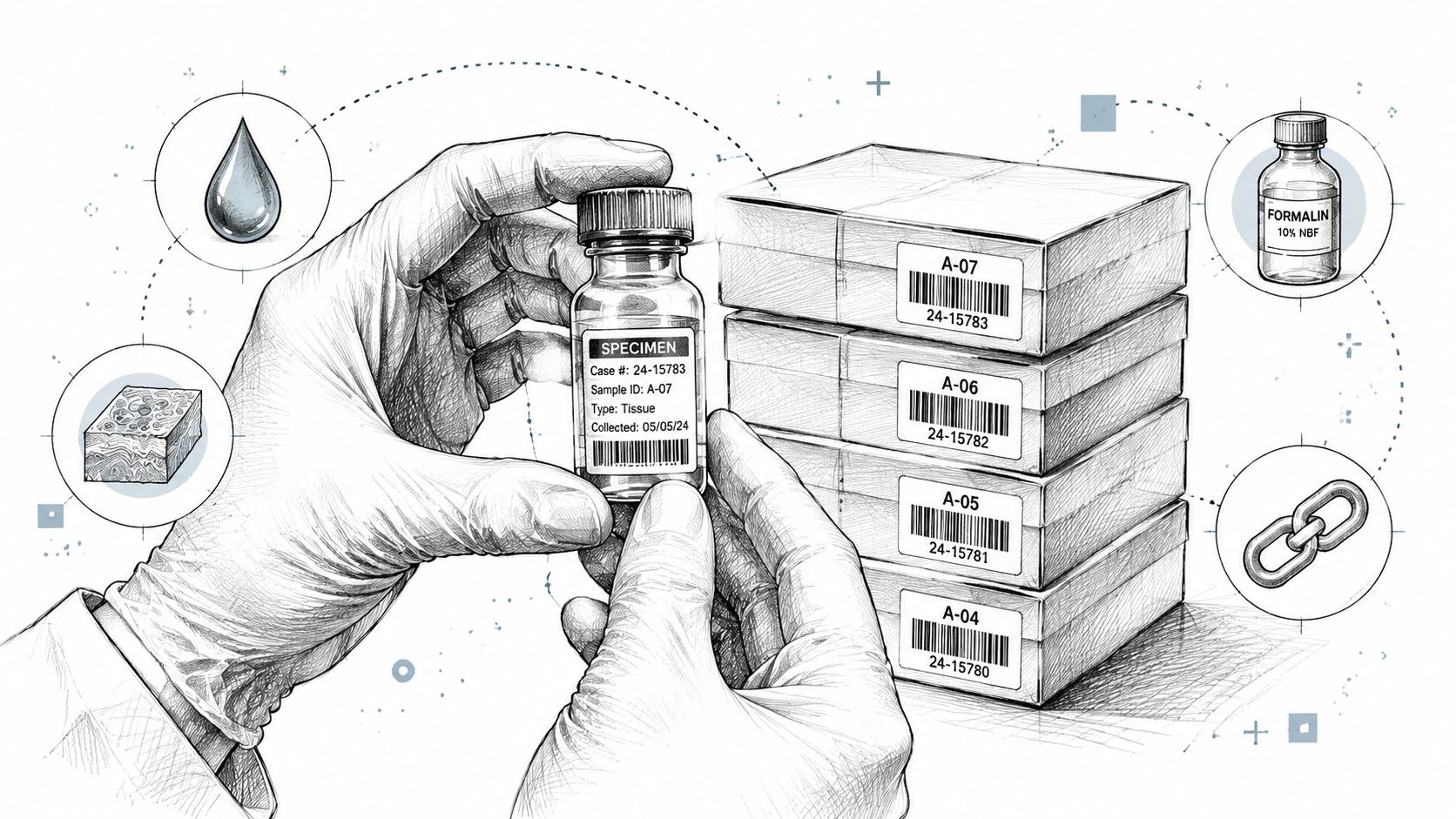
Specimens are not gathered. They are identified by case, specimen type, and collection site, then sealed and entered into chain-of-custody records. That documentation protects both the family and the legal process.
When families ask for an autopsy process explanation, this is one of the most important clarifications we give. The quality of interpretation depends in part on the quality of collection.
Screening and Confirmatory Testing Methods
Laboratories usually do not jump straight to a final report from a single broad test. They use a two-tier approach because screening and confirmation do different jobs.
Screening asks what might be there
A screening method is built for breadth. It helps identify whether a specimen may contain alcohol, a drug class, or another compound worth closer study. Depending on the case and the laboratory workflow, screening may be broad enough to cast a wide net across expected and unexpected substances.
That broad approach is useful because a death investigation may begin with limited history. The decedent may have known prescriptions, no known prescriptions, suspected illicit exposure, or no scene evidence at all.
Confirmation asks exactly what it is
A confirmatory method is narrower and more specific. It is used to identify the exact molecule and, where appropriate, measure a concentration in a defined specimen. This is the stage that supports a court-defensible result.
Current best-practices literature also emphasizes that postmortem toxicology is now as much a methods and workflow discipline as an identification discipline, including specimen collection protocols, validation for postmortem work, case-specific workflows, and multi-level data review (professional review of forensic toxicology laboratory practice).
Screening vs. Confirmatory Testing in Forensic Toxicology
| Characteristic | Screening (Immunoassay/GC-MS) | Confirmatory (GC-MS or LC-MS/MS) |
|---|---|---|
| Main purpose | Broad detection of possible substance classes or targets | Specific identification of the exact compound |
| Scope | Wider net | Narrower, targeted, and more exact |
| Result type | Presumptive or preliminary | Defensible final identification and, when appropriate, quantification |
| Court value | Useful starting point | Stronger basis for testimony and final reporting |
| Limitation | May miss some substances or raise interpretation questions | Requires targeted analytical work and careful review |
What a report means when it says not detected
“Not detected” does not always mean a substance was never present. It means the laboratory did not detect that substance in that specimen using that method at that point in the testing process. Specimen choice matters. Method choice matters too.
Attorneys looking at medication-related deaths often find it helpful to compare reported values with the distinction between therapeutic use and toxic interpretation. Our article on therapeutic drug levels explains why the same reported concentration may not mean the same thing across cases.
This is also where independent coordination matters. Texas Autopsy Services can arrange toxicology testing through accredited independent laboratories as part of a private or second opinion autopsy, while the pathologist integrates the laboratory findings into the larger cause of death investigation.
Why a Positive Result Does Not Equal Cause of Death
This is the point where families and lawyers most often need a careful explanation. A positive result may be important, but it is not the same thing as a final causal conclusion.
Recent review literature stresses that a positive postmortem toxicology result does not by itself establish cause of death and can be misleading without scene context, medical history, tolerance, and interpretation across multiple specimen types (PubMed review on current postmortem toxicology interpretation).
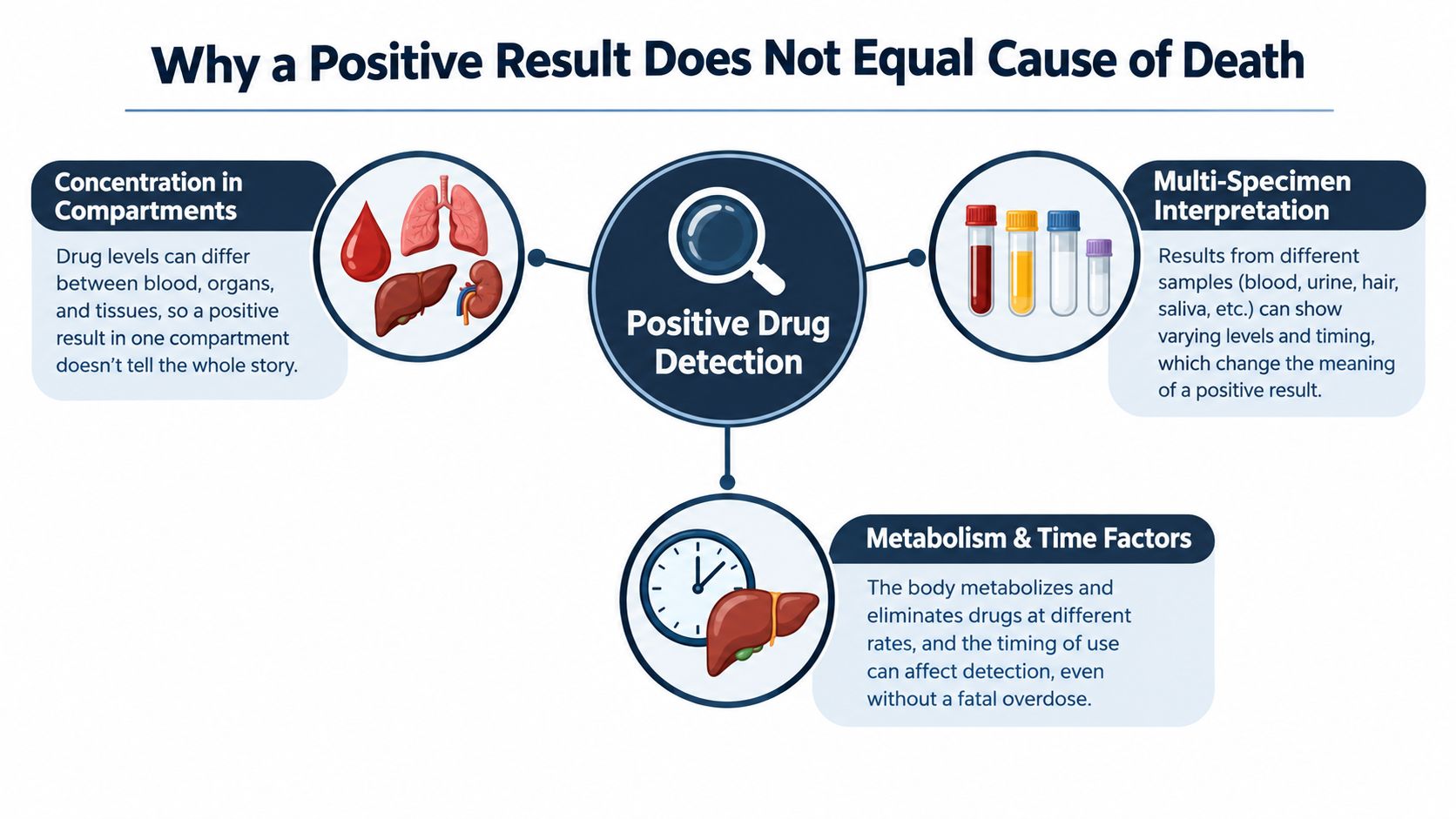
Detection is not the same as explanation
A toxicology result tells us that a substance was found in a specific specimen. It does not automatically tell us:
- When exposure occurred
- Whether the substance caused symptoms
- Whether the person had tolerance
- Whether another disease or injury better explains the death
- Whether postmortem change altered the measured level
A person may have a medication in the system at the time of death and still die from an unrelated natural disease. A person may also die from combined effects of several substances, each of which might look less significant when viewed alone.
Why context changes meaning
The same number can mean different things in different bodies. Chronic prescribed use, illicit use, recent escalation, organ disease, and interaction with other substances all affect interpretation. That is why pathologists compare the toxicology result with autopsy findings, scene evidence, and medical records.
Urine often helps establish exposure history, but it does not reliably measure intoxication. Vitreous humor may offer a cleaner interpretive window for some questions. Peripheral blood may carry greater interpretive weight than central blood. No single matrix answers every question.
Key point: Toxicology supports the cause-of-death opinion. It rarely substitutes for the full investigation.
Cause of death and manner of death are different terms
For families, two terms often sound interchangeable but are not.
- Cause of death means the disease or injury that led to death.
- Manner of death is the medical-legal classification, such as natural, accident, suicide, homicide, or undetermined.
A toxicology finding may influence either category, but only after the rest of the evidence is considered. That distinction is one reason a forensic pathology expert does more than read a lab sheet.
Chain of Custody for a Defensible Toxicology Result
Even the most careful analysis can lose value if the specimen cannot be shown to be authentic, sealed, tracked, and properly handled. In forensic work, that proof is called chain of custody.
What chain of custody means
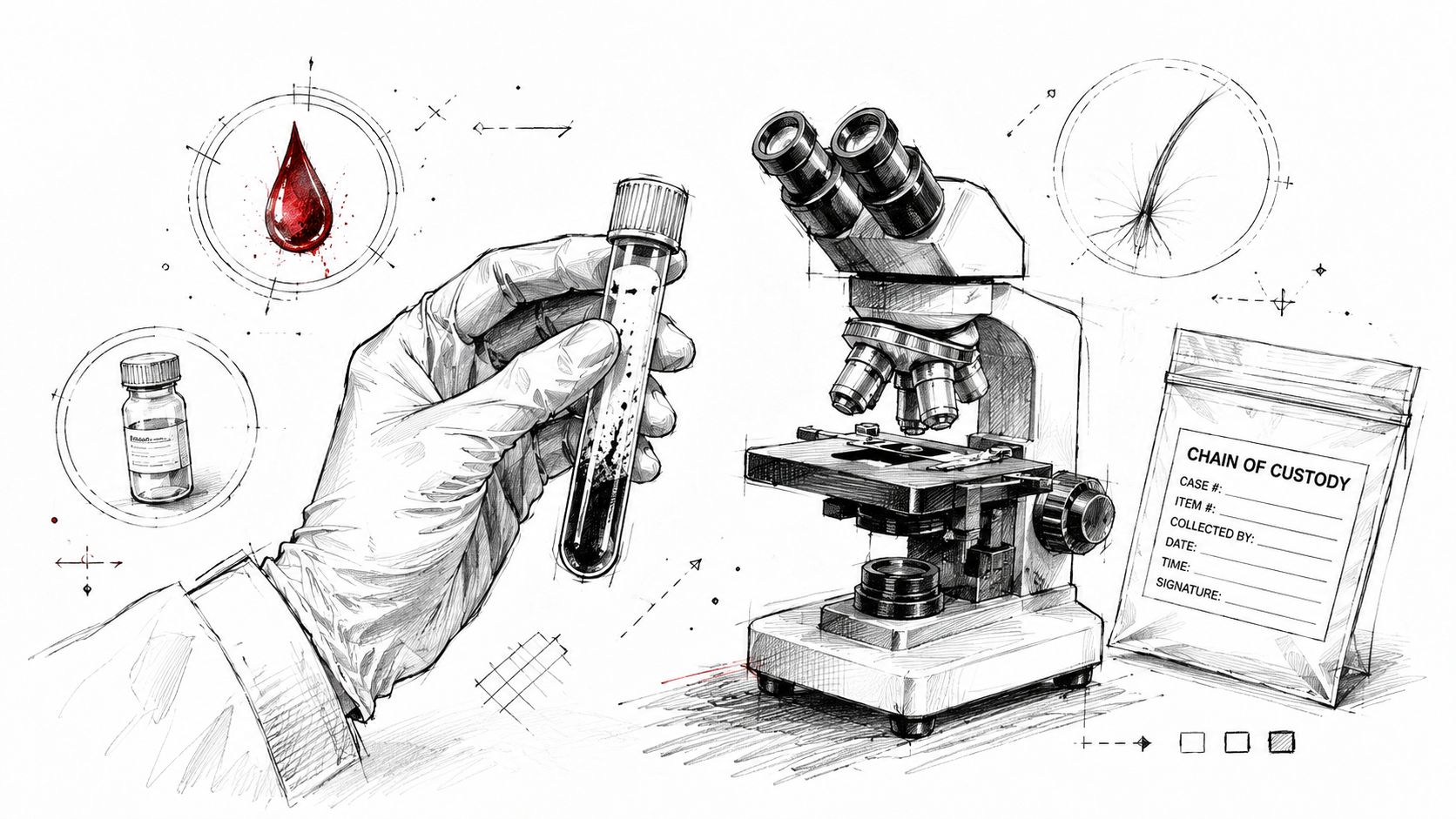
Chain of custody is the documented history of who collected a specimen, who handled it, when each transfer happened, and what was done at each step. It exists so that a court, a family, or an opposing expert can follow the specimen from collection through testing and storage.
New York State forensic toxicology standards require internal chain-of-custody documentation identifying every person who handled the specimen, the date of each receipt, handling, transfer, and action, the purpose of each action, and completion of documentation at the time of each action (New York State forensic toxicology laboratory standards).
What that looks like in practice
Proper chain-of-custody mechanics include immediate identification, labeling, and sealing. Forensic Science Simplified explains that specimens should be properly identified, labeled, and sealed as soon as practicable after collection, using unique numbered seals to track evidence through mortuary handling, laboratory testing, reporting, and storage. The same reference notes that breaks in continuity can undermine evidentiary value in court (Forensic Science Simplified guidance on forensic toxicology handling).
A typical record may include:
- Case identifiers: Case number, decedent identification, specimen type, and anatomical site
- Collection details: Date, time, and collector initials
- Security features: Tamper-evident seals or unique evidence numbering
- Transfer records: Who released the specimen, who received it, and the purpose of transfer
- Laboratory accessioning: Entry into the lab system, storage location, and analytical assignment
What can weaken a result
A defensible result can be challenged by simple procedural failures.
Unlabeled tubes create identity problems. Incomplete seals create tampering questions. Missing transfer entries create continuity problems. If storage conditions are uncertain, attorneys may question specimen stability.
For lawyers preparing for litigation, our discussion of the chain of custody form explains why signatures, dates, and transfer purposes matter as much as the final reported analyte.
In practical terms, chain of custody is not paperwork for its own sake. It is the bridge between the autopsy suite, the laboratory bench, and the courtroom.
Toxicology in Texas Practice and What to Expect Next
In Texas, families often encounter toxicology through a justice of the peace investigation, a county forensic case, or a private autopsy requested after the official system declines jurisdiction or after relatives want a second review. The legal authority for the underlying death investigation may involve Article 49.25 of the Texas Code of Criminal Procedure, while the contents of the autopsy record are addressed by other Texas law.
What becomes part of the autopsy record
Texas Health and Safety Code section 671.012 states that the autopsy report includes the toxicology report, x-rays, and photographs taken during the actual postmortem examination, while excluding investigative reports and other documents the physician may review in determining cause of death (Texas Health and Safety Code Chapter 671).
That matters because toxicology is not just an optional extra stapled to the file. When it is performed, it becomes part of the formal autopsy record.
What families and attorneys can expect
The pace of a toxicology case depends on the specimen quality, the substances suspected, and whether broad screening needs targeted follow-up. In a private setting, some initial steps may happen quickly, while confirmation and full interpretation take longer. If you hear that most cases are completed within 24 to 48 hours, that should be understood as a general timing expectation for portions of the autopsy process in appropriate cases, not a guarantee for final toxicology.
A reasonable process usually includes:
- Authorization and collection under the appropriate legal or family-directed framework.
- Laboratory testing that may begin with broad detection and move into confirmation.
- Integrated review by a board-certified forensic pathologist who weighs the toxicology with the autopsy findings.
- Reporting and follow-up for the family, attorney, physician, or agency involved.
Why board certification matters here
The American Board of Pathology states that forensic pathology certification is a one-day, computer-based exam made up of combined Written and Practical sections plus Virtual Microscopy sections (American Board of Pathology forensic pathology subspecialty certification). That structure matters because it reflects the actual work. It tests not only recall, but also interpretive judgment and image-based case review.
For families looking for an autopsy near me in Texas, or county officials needing support through County Forensic Autopsies, the practical question is not just whether toxicology can be ordered. It is whether the entire process, from collection through final interpretation, will be handled in a way that is medically careful, legally sound, and clearly explained.
Our work also depends on coordinated logistics, including specimen handling, licensed transport, and secure communication. That is one reason partnerships such as the Waterloo Mortuary Partnership can matter in the broader flow of postmortem care and documentation.
FAQ
Does a positive toxicology result prove overdose
No. A positive result shows that a substance was detected in a specimen. Cause of death still requires interpretation of the concentration, the specimen type, the autopsy findings, and the case circumstances.
What is the difference between cause of death and manner of death
Cause of death is the disease or injury that led to death. Manner of death is the medical-legal classification, such as natural, accident, suicide, homicide, or undetermined.
Why would more than one specimen be collected
Different specimens answer different questions. Peripheral blood may be better for concentration-based interpretation, urine is useful for exposure history, and vitreous humor may be less affected by some postmortem changes.
Is toxicology part of an autopsy report in Texas
Yes, when toxicology is performed, Texas law includes the toxicology report within the autopsy report.
What does chain of custody mean in plain language
It means there is a documented record showing who collected the specimen, who handled it, when it changed hands, and how it was sealed and tracked. That record helps support reliability in court.
If you need plain-language guidance about a pending toxicology result, a private autopsy, or a second-opinion review, our team can explain the process carefully and help you understand what the testing can and cannot answer. Texas Autopsy Services provides statewide private and forensic pathology services across all 254 counties, with every examination performed by a forensic pathologist certified by the American Board of Pathology. You can learn more or contact our team through Texas Autopsy Services.