July 26, 2026 · Texas Autopsy Services
Fire Death Investigation: Your Expert Guide 2026
Understand fire death investigation. Our guide covers scene work, autopsy, toxicology, chain of custody, causes, and private pathologist engagement. Learn more!
On this page
- Why Fire Death Investigation Matters More Than the Headline Suggests
- Cause, Manner, and Mechanism of Death in Fire Cases
- The Scene Comes First and the Body Is Evidence
- What the Autopsy and Toxicology Actually Look At
- When a Fire Death Is Not Actually a Fire Death
- Chain of Custody, Texas Standards, and Court Admissibility
- When an Independent Autopsy Adds Value and What Comes Next
Fire death investigation matters because fire burden in the United States remains high, with 1,388,000 estimated fires, 3,920 civilian deaths, 11,780 injuries, and $19 billion in direct property damage in 2024, while the U.S. Fire Administration reports 1,414,191 fires, 3,881 deaths, 13,027 injuries, and $21.3 billion in losses for the same year (NFPA fire loss data). The work is not just about confirming burns, it is about proving what happened, in what order, and whether the fire caused the death or followed it.
A family may be standing in a home that still smells of smoke, with a body recovered from one room and a death certificate still unwritten. In that moment, the question is rarely simple, and the answer usually depends on scene work, autopsy findings, toxicology, and careful documentation working together.
Why Fire Death Investigation Matters More Than the Headline Suggests
A fatal fire often looks straightforward from a distance. A house burns, a body is recovered, and the first public statement may sound settled before the facts are complete. In practice, the first hours are usually the least certain, because the scene is still changing, smoke damage obscures injuries, and the body may tell a different story than the room around it.
That is why fire death investigation has developed as a reconstruction process, not a single exam. Historical and international data show why that matters, including findings that routine reporting can miss fire fatalities and that deaths are often caused by inhalation rather than visible burns (forensic fire death investigation review). A scene can look like a house fire with one obvious victim, but the forensic question is whether the person died from the fire, from smoke and toxic exposure, from trauma before ignition, or from a separate medical event.
What families usually need first
Families usually want the same few facts. Did the person suffer? Did the fire start the death, or did something else happen first? Can anyone say that with confidence before the autopsy and laboratory review are done?
Practical rule: the scene answers different questions than the body, and the body answers different questions than the room.
A careful investigation has to preserve both. That means documenting where the body was found, what the fire pattern looked like, whether there were signs of forced entry or violence, and whether anything in the room could explain the ignition source. If the home is still being stabilized, families often also need practical guidance about the post-fire environment, including safety, documentation, and the first recovery steps after a structural loss. A plain-language resource such as what to do after a house fire can help with those immediate concerns while the medicolegal process unfolds.
The larger point is simple. A fatal fire is rarely a closed case in the first 48 hours. It is a set of questions that have to be answered in order, by people who know which clues are fragile and which ones can survive the heat.
Cause, Manner, and Mechanism of Death in Fire Cases
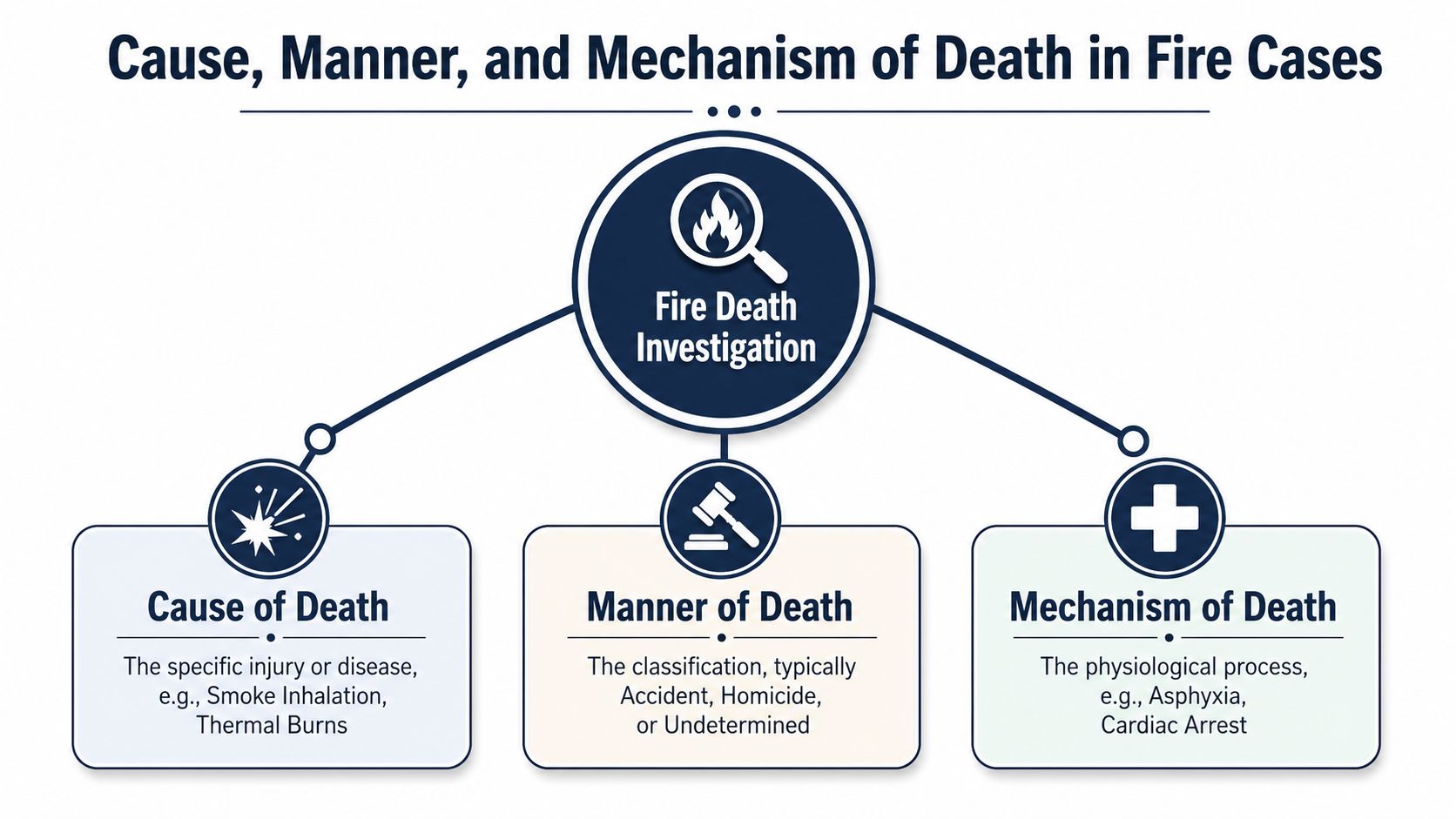
These three terms get mixed up all the time, even in formal reports. Cause of death is the injury or disease that started the chain leading to death, such as smoke inhalation or thermal burns. Manner of death is the classification assigned to the cause, usually natural, accident, suicide, homicide, or undetermined. Mechanism of death is the physiological process that stopped the body, such as carbon monoxide binding to hemoglobin.
In a fire file, those layers can point in different directions. A person with heart disease who collapses near a lit cigarette raises one set of questions. An intentionally set mattress fire raises another. A victim who breathes hot smoke and toxic gases before collapsing may have the same outward scene as someone who was placed in a fire after death, but the labels on the death certificate can be very different once the evidence is sorted.
Reading the terms correctly
A preliminary report may mention a cause, but that doesn't settle the manner. The cause can be thermal injury, inhalation injury, or another disease process that occurred in the fire setting. The manner is the forensic classification, and it depends on how the event began, not just what the body looks like.
The distinction matters because one sentence can change the meaning of the whole file. “Smoke inhalation” tells you how the person died. It does not tell you whether the fire was accidental, intentional, or secondary to another event. That judgment comes from the scene, the autopsy, toxicology, and witness history working together.
For families and attorneys reviewing paperwork, our Texas guide on manner and cause of death can help separate those terms without turning them into legal jargon. In a fire case, precision isn't academic. It determines whether the file is describing a fire-related death, a natural death in a fire, or a homicide masked by fire damage.
The Scene Comes First and the Body Is Evidence
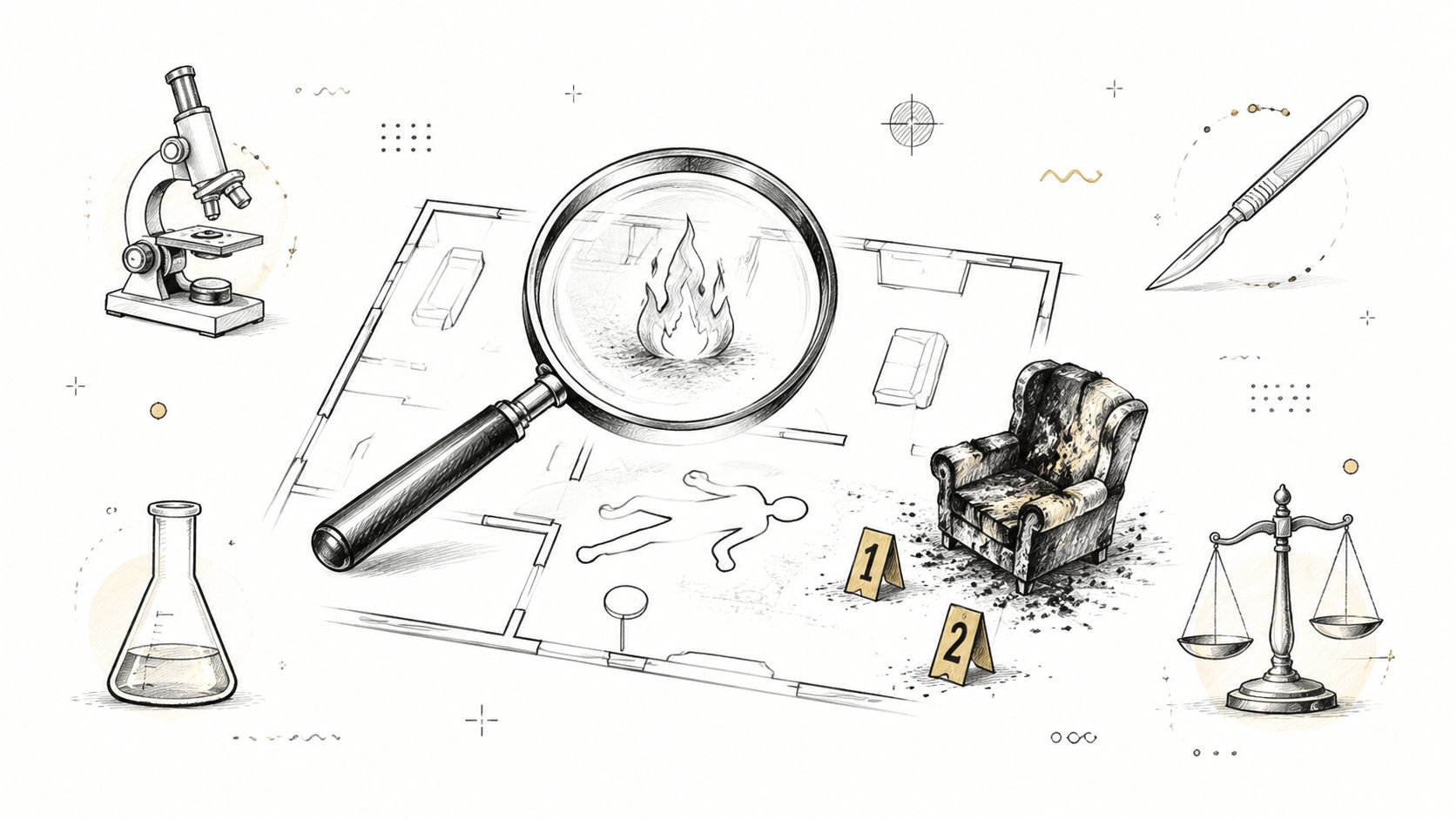
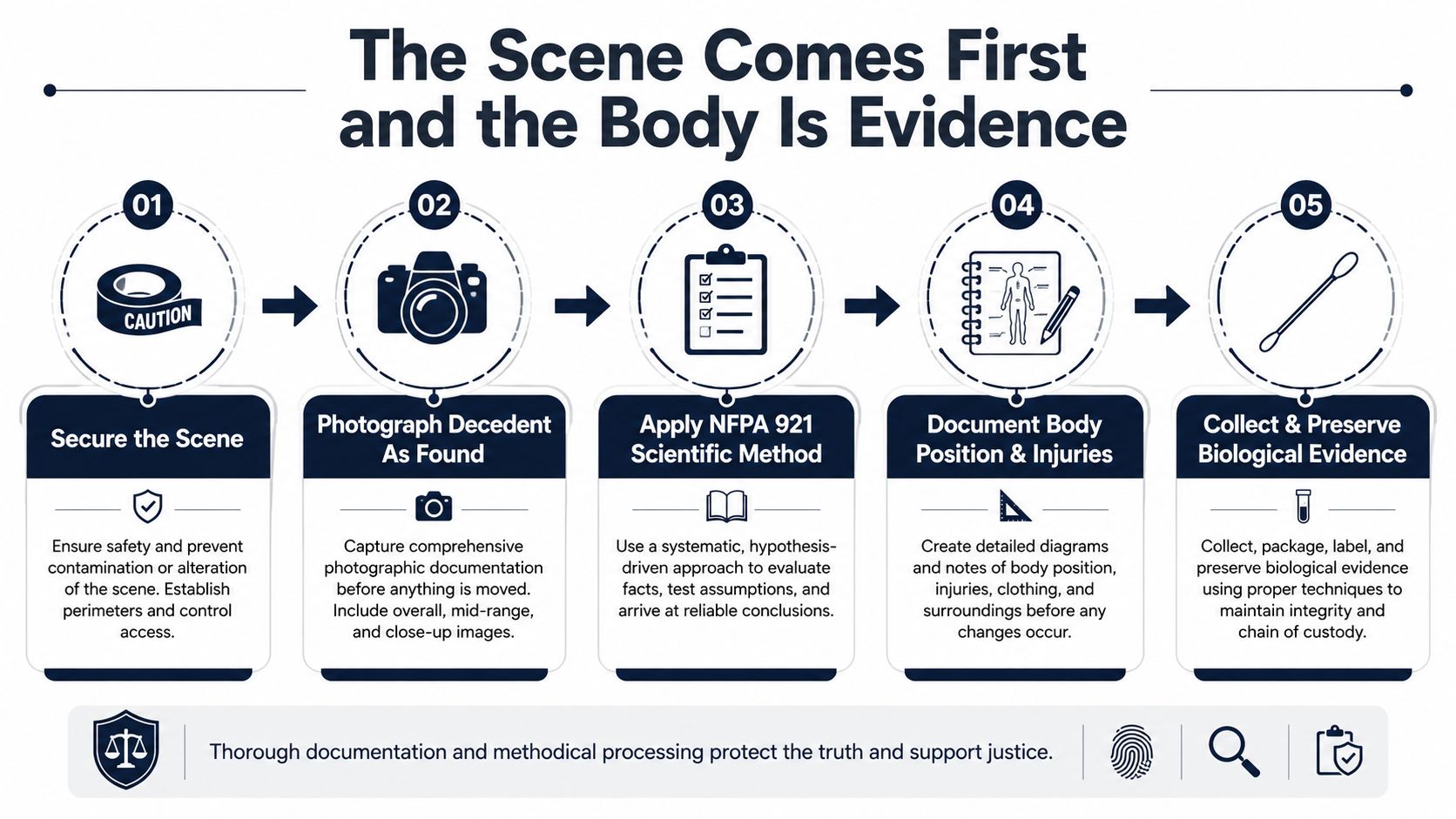
A fire scene has to be approached as a scientific problem, not a cleanup task. NFPA 921 describes a structured method with seven steps, identify the problem, define the problem, collect data, analyze data, develop a hypothesis, test the hypothesis, and select a conclusive hypothesis (NFPA 921 overview). The first walk-through usually happens before the body is moved, because the original position can be as important as any visible injury.
That is why authoritative guidance recommends photographing the decedent as found, the area beneath and around the body, and the underside after debris is removed (fatal fire investigation guidance). Protected areas under the body, or under clothing, can preserve soot patterns, trace evidence, or injuries that are lost during recovery. Once that material is disturbed, it can be impossible to reconstruct body placement or heat exposure with the same confidence.
What gets protected at the scene
The scene team is trying to preserve the chapter that the autopsy will later read. That includes body position, burn direction, nearby debris, signs of accelerants, and any evidence that the person moved before collapse. It also includes preserving the path to the body, because that route may show whether responders had to step through evidence or whether the victim was already in a fixed location.
Fire scenes are fragile. Moving remains too early can erase the information that later separates a death in the fire from a death before the fire.
Our internal guide on forensic evidence collection discusses the logic of careful preservation in more detail. In a fatal fire, the pathologist doesn't start with a blank slate. The report from the scene is part of the medical record, and if that record is thin or contaminated, the later opinion has to be more cautious.
Why the body is treated as evidence early
- Body position matters: It can support or conflict with claims about collapse, rescue, or concealment.
- Nearby debris matters: It can hold trace evidence that heat doesn't fully destroy.
- Surface patterns matter: Soot and charring can help show which areas were exposed first.
- Movement matters: Premature handling can destroy signs of whether the person was alive during the fire.
The scene is not where conclusions should be forced. It is where the evidence is protected so the conclusion can be defended later.
What the Autopsy and Toxicology Actually Look At
A fire autopsy is not a visual inspection alone. It is a multi-modal exam that combines scene information, full-body radiographs, toxicology, carbon monoxide testing, and, when indicated, cyanide analysis, along with collection of clothing for ignitable liquid analysis (fatal fire autopsy guidance). The reason is straightforward. A body can be badly burned while the lungs still hold the key to whether the person was breathing.
The external exam documents burns, soot, soot patterning, charring, and other injuries. Radiographs can identify fractures, foreign bodies, or embedded material that the eyes may miss. Toxicology can show carbon monoxide exposure, and cyanide analysis can matter when plastics or synthetics burned. Each test answers a different question, and no single finding proves the whole case.
What the findings can prove
Soot in the airway and high carboxyhemoglobin are important because they can show the person was breathing during the fire. That is a strong sign of vital exposure, not just postmortem burning. But the reverse is not absolute. The absence of a finding doesn't automatically prove the person was dead before ignition, because heat, ventilation, body position, and timing can complicate the picture.
Clothing also matters because it can preserve residue for ignitable liquid analysis. In some cases, a burned shirt or blanket is more informative than the skin beneath it. That's one reason a fire fatality review is never just “look at the burns and decide.”
What the tests cannot do by themselves
No single lab result can replace the scene. A carbon monoxide level without context can't tell you where the person was found, whether there was rescue delay, or whether the fire started before or after death. Radiographs can show injury, but they don't automatically explain timing.
Practical rule: in fire cases, the autopsy confirms patterns, it doesn't invent them.
That is why the body findings have to be read alongside the room, the witness statements, and the fire debris. A true fire death often leaves a different combination of airway soot, toxic exposure, and burn distribution than a body burned after death. The distinction is subtle, but it is central to any defensible cause-of-death opinion.
When a Fire Death Is Not Actually a Fire Death
Some of the hardest fire cases are the ones where the fire was used to hide the death. A recent review in Forensic Sciences points out that external heat injury can mislead investigators, while soot in the airways and high carboxyhemoglobin levels help distinguish breathing during the fire from postmortem burning (review on burn-masking homicides). That is the core question in these files. Was the person alive in the fire, or was the body burned later?
A true fire fatality usually leaves a biologic story that lines up with the scene. The airway may contain soot, toxic exposure may be present, and burn findings may show vital reaction. In contrast, a body placed in a fire after death may show extensive heat damage without the same respiratory evidence. The same room can therefore produce two opposite conclusions depending on what the body shows.
Why the distinction matters
This is not just an academic difference. If a victim was killed first and burned afterward, the manner of death may be homicide, even if the scene looks like an accidental house fire. If the person died from smoke inhalation during the fire, the manner may be accident or something else, depending on how the fire began. The legal question changes with the medical one.
A common mistake is to assume heavy burning means the fire caused the death. That assumption breaks down quickly when the autopsy shows no respiratory evidence of life during the fire, or when scene findings suggest the body was moved. The other mistake is the reverse, assuming the absence of one sign settles the issue. Fire cases almost always require a cluster of findings, not a single marker.
What a careful review does differently
A proper review compares the body, the room, and the timeline. It asks whether the burn patterns fit a person who was moving, collapsing, or already dead. It asks whether there is evidence of another injury, another cause, or another sequence. It also asks whether fire damage obscured trauma that should still be sought in the medical examiner file.
The most reliable conclusions come from coordination. That is why a fire death investigation can't be reduced to one body exam or one scene note. It has to answer the harder question, what happened first.
Chain of Custody, Texas Standards, and Court Admissibility
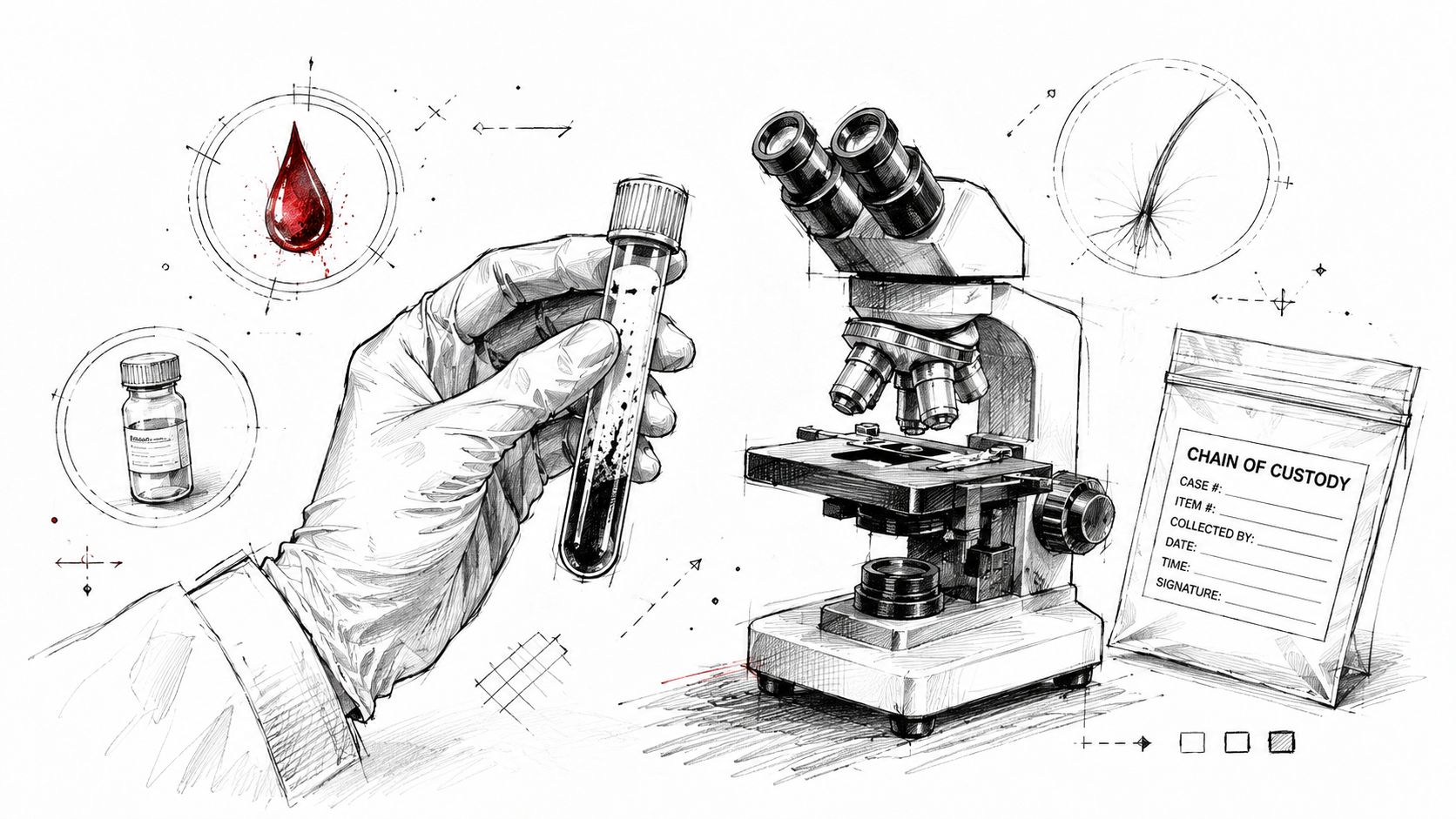
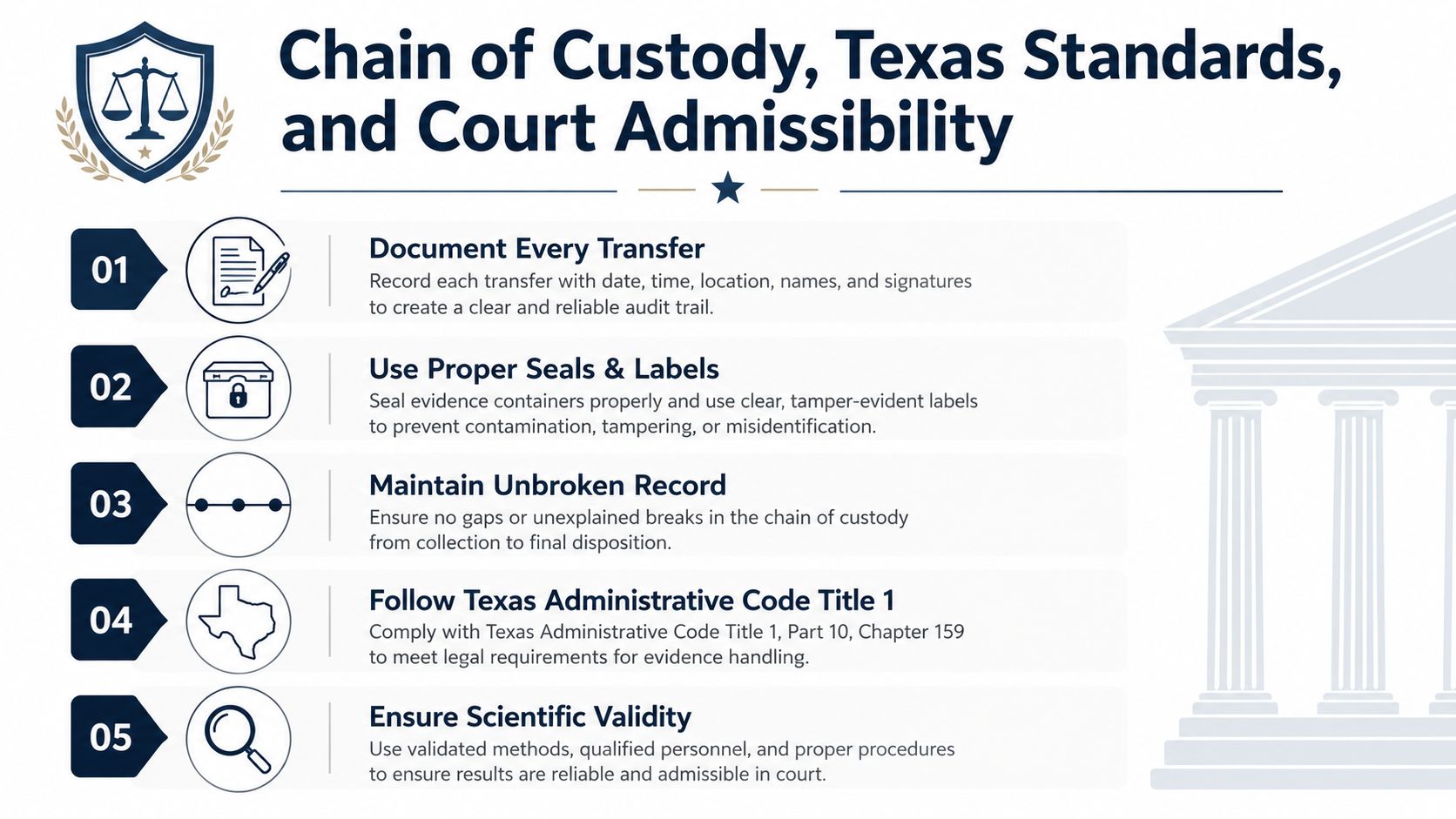
Chain of custody is the documented, unbroken transfer of evidence from scene to lab to report. If that chain has a gap, the science may still be sound, but the courtroom value can weaken because no one can prove the evidence stayed intact. In fire cases, that applies to tissue samples, clothing, debris, photographs, and any item used to support a cause-of-death opinion.
Texas adds its own legal framework. The Texas Funeral Service Commission and Texas Health & Safety Code Chapters 651, 711, and 716 govern different parts of the process, including death-related authority, cremation, and the rights of next of kin. Those statutes matter because a forensic case isn't just a medical exam, it is also a regulated legal event that affects disposition and documentation.
How Texas cases stay usable in court
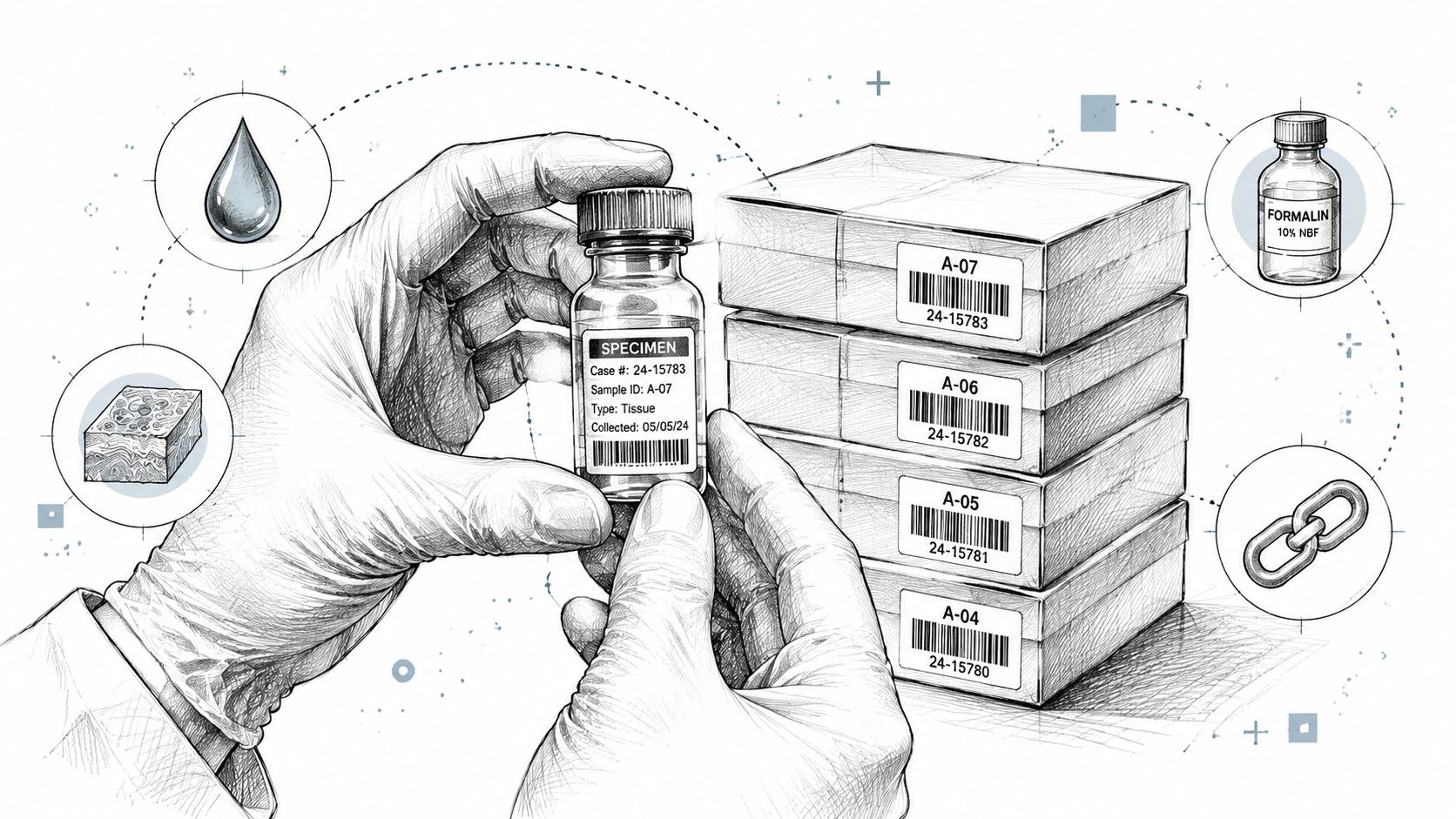
Each transfer has to be logged. Each seal has to remain intact. Each item needs a label that makes sense later, not just in the moment it was collected. Our internal chain of custody procedures guide covers the same idea from a process angle.
If a case is going to be used in litigation, the independent report has to read like a forensic record, not a summary opinion. That means clear scene history, complete body findings, toxicology, radiology when needed, and a careful explanation of what each finding does and doesn't show. When identification is difficult because of heat damage, investigators may rely on dental comparison, prior-fracture X-rays, clothing comparison, or blood-sample matching to confirm identity (fatal fire identification methods).
Court-admissible work depends on continuity, not just confidence.
For families dealing with a criminal investigation, it can also help to understand how regulated legal processes work in other contexts, because the same chain-of-custody logic shows up across Texas practice. A plain-language guide to DWI and CPS for parents is one example of how evidence handling and procedure shape outcomes in serious cases.
The bottom line is simple. If the paper trail is weak, a strong opinion can still be challenged. If the paper trail is strong, the findings are much more useful to a judge, jury, or reviewing attorney.
When an Independent Autopsy Adds Value and What Comes Next
An independent autopsy can add value when the death has already been closed, but the family still has unresolved questions. It can also help when the scene was limited, the fire cause is disputed, a product or electrical issue is being examined, or litigation needs an outside forensic opinion. In those situations, a second review doesn't replace the original file, it tests it against the medical evidence.
Our board-certified forensic pathologists typically provide preliminary findings in most cases within 24 to 48 hours, with final reports following toxicology and any other pending testing. The written report is designed to be clear enough for families and detailed enough for attorneys, county officials, and treating clinicians who need a defensible record.
| Scenario | Why an independent review helps |
|---|---|
| Closed fire death the family questions | It gives an outside medical review of scene, autopsy, and lab findings. |
| Suspected electrical or product-related cause | It can help separate burn damage from the initiating event. |
| Unattended death with limited scene documentation | It may recover context that the original response did not capture well. |
| Litigation or insurance dispute | It creates an independent forensic opinion for the legal file. |
Families often reach this point during one of the hardest weeks they'll ever face. Attorneys may be working against deadlines and incomplete records. County officials may need a neutral answer that can stand up to review.
If you need a second opinion or a private autopsy in a fire-related death, Texas Autopsy Services can help you understand what the current record does and doesn't prove. Call us at (806) 230-1889 for direct guidance from our team, and visit Texas Autopsy Services to learn how we handle independent autopsies, chain of custody, and forensic reporting with care and objectivity.