September 2, 2026 · Texas Autopsy Services
Wrongful Death Investigation: A Family Guide
Learn how a wrongful death investigation works, what families should expect, and how attorneys build a case. Expert guidance for 2026.
On this page
- What a Wrongful Death Investigation Is
- The Forensic Autopsy as the Central Examination
- Scene, Records, and the Broader Medicolegal Picture
- Evidence Preservation and Chain of Custody
- Common Wrongful Death Scenarios in Practice
- Timelines, Reporting, and What to Expect
- When and How to Pursue an Independent Review
Cause of death and manner of death are the two findings a wrongful death investigation must establish before legal action can rest on a reliable medical foundation. Cause identifies the disease or injury that began the fatal sequence, while manner identifies the circumstances, such as natural, accident, homicide, suicide, or undetermined.
A sudden death can leave a family with a death certificate, an official report, and questions that remain unanswered. An attorney may receive a file that contains medical records and photographs but offers no clear explanation of how an injury, medication, treatment, or hazardous condition led to the death. In these situations, a careful medicolegal death investigation examines the entire evidentiary picture, not only the body.
Our team at Texas Autopsy Services works with families, attorneys, healthcare professionals, and Texas county officials who need medical findings explained with precision and dignity. Every examination is performed by a forensic pathologist certified by the American Board of Pathology, and our practice serves all 254 Texas counties through an independent process that includes licensed transport, evidence documentation, and written reporting.
- Cause of death describes the disease or injury that initiated the fatal sequence.
- Manner of death describes the circumstances surrounding the death.
- A forensic autopsy is one part of a broader investigation involving the scene, records, witnesses, and laboratory testing.
- Chain of custody preserves the reliability of specimens, photographs, and other evidence for later review.
- An independent review can help clarify disputed findings without replacing the authority of the Texas justice of the peace or medical examiner.
What a Wrongful Death Investigation Is
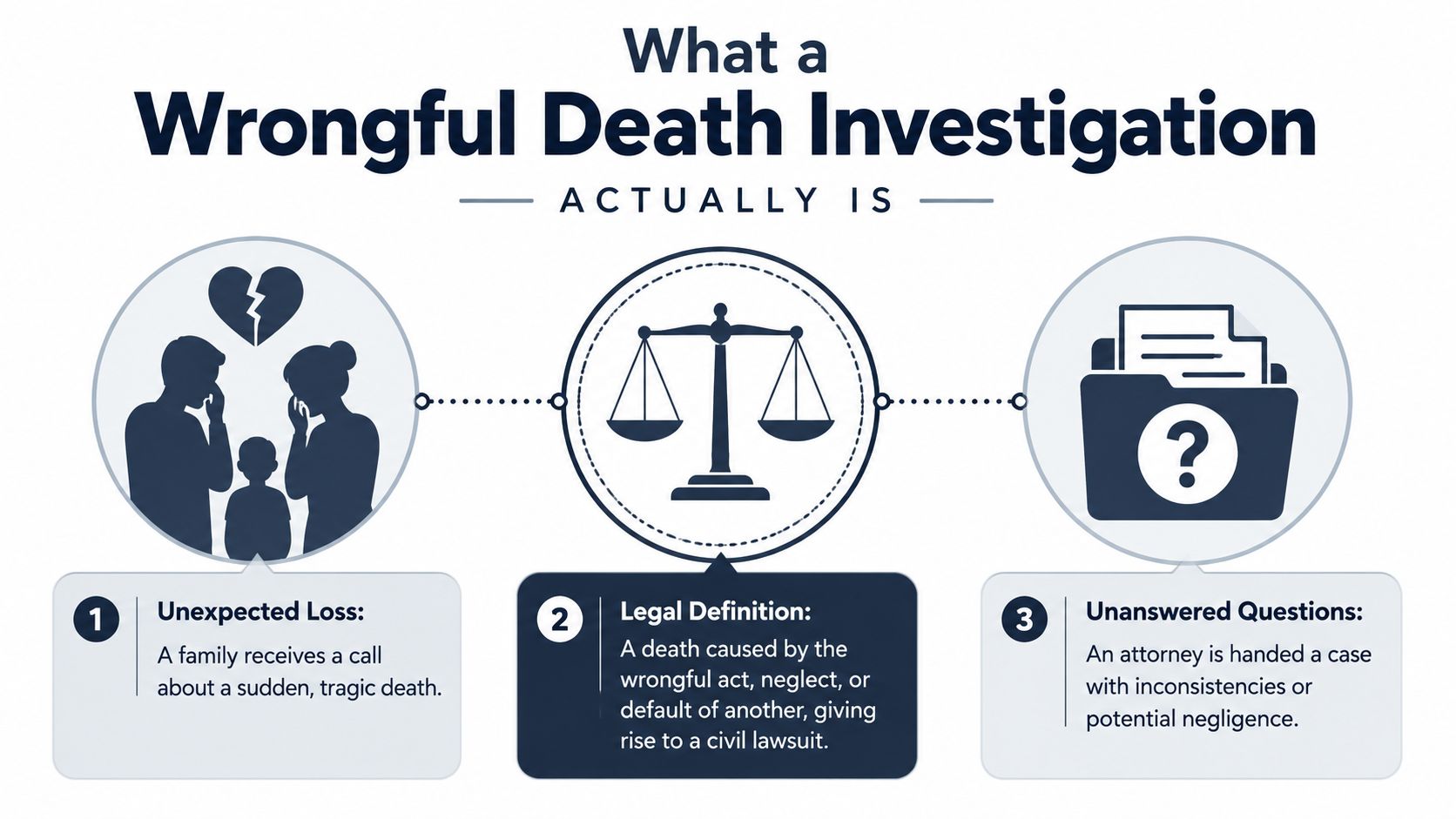
A wrongful death investigation begins with two medical-legal questions: what caused the death, and under what circumstances did it occur? The answers require more than a conclusion on a death certificate. They require a careful review of the body, the reported history, and the evidence surrounding the event.
Cause of death identifies the physical injury or disease that started the sequence leading to death. A fatal head injury, severe infection, or medication toxicity may begin that sequence. Respiratory failure or cardiac arrest may describe the final event, but those terms do not necessarily identify what set the fatal process in motion.
Manner of death describes the circumstance category in which the death occurred. Common categories include natural, accident, homicide, suicide, or undetermined. The same type of traumatic injury can lead to different manner classifications, depending on whether the evidence supports an accident, assault, self-harm, or circumstances that remain unresolved.
Why the autopsy is only one part of the investigation
A medicolegal death investigation brings together scene findings, witness or police information, medical records, laboratory results, and postmortem examination. The National Academies explains that this framework matters because a finding in the body may show how death occurred without establishing the event that began the fatal sequence. The National Academies' explanation of cause-of-death investigation offers context for that distinction.
The forensic pathologist compares physical findings with the reported history. Medication bottles, vehicle damage, treatment records, workplace conditions, and witness accounts can change how an injury or disease is understood. A forensic investigation resource explains why these sources must be examined together rather than treated as separate answers.
The investigation may produce evidence relevant to a civil wrongful death claim, an insurance dispute, a criminal proceeding, or a request for further official review. The report does not determine legal liability. It provides attorneys and decision-makers with a medically reasoned account of the death, the evidence supporting each conclusion, and the questions that remain open.
The Forensic Autopsy as the Central Examination
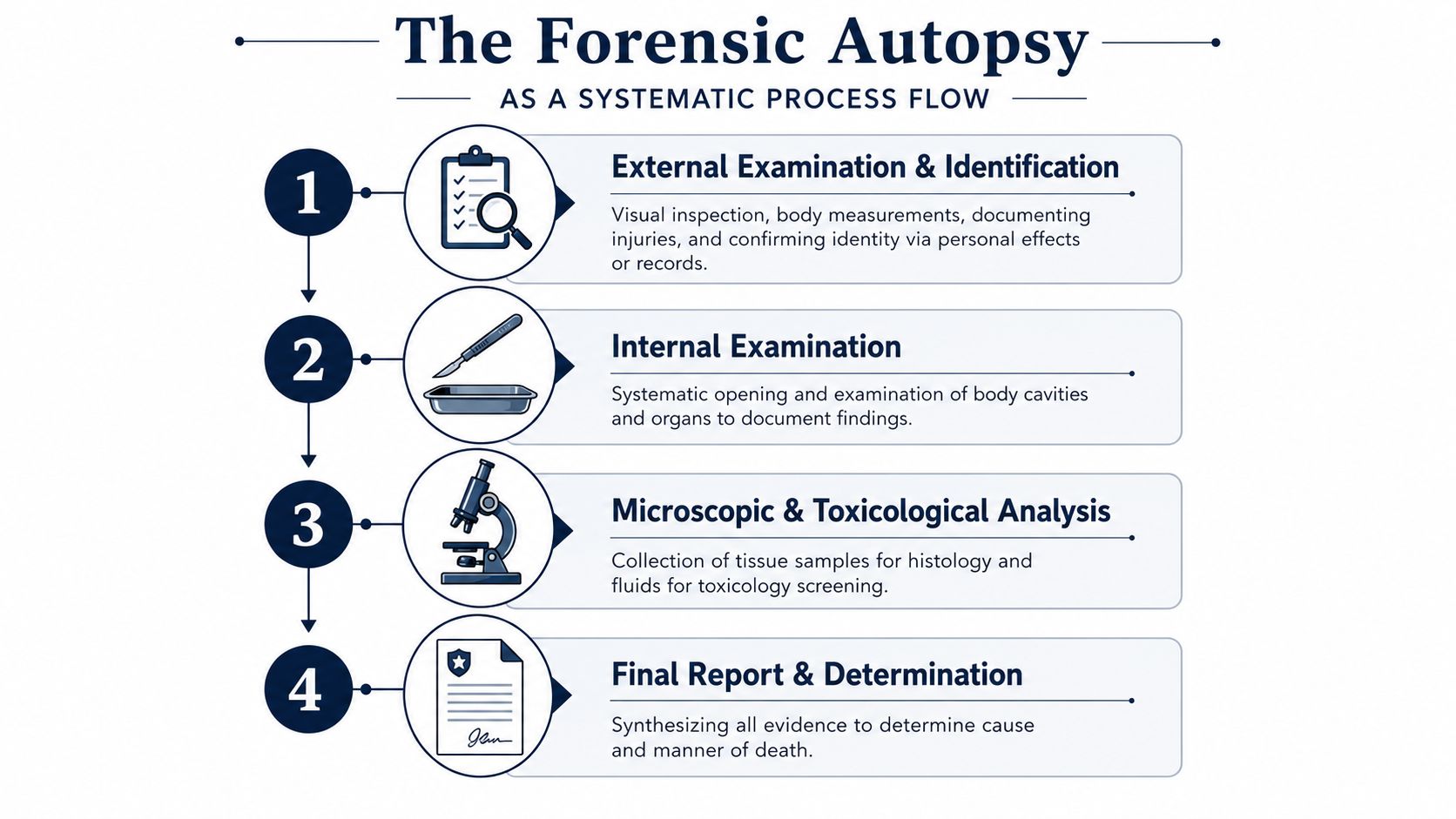
A forensic autopsy is a systematic examination designed to document findings and preserve evidence. It isn't limited to identifying one visible injury. Our board-certified forensic pathologists begin by reviewing the available history, confirming identity, and recording the condition of the body before proceeding through the examination.
The external examination documents clothing, personal effects, identifying features, injuries, medical interventions, scars, marks, and other findings visible on the body's surface. Photographs and written descriptions preserve information that may later be compared with scene photographs, witness statements, hospital records, or law enforcement reports.
The internal examination evaluates the cranial, thoracic, and abdominal cavities and examines the organs for trauma, natural disease, bleeding, obstruction, or other significant findings. Internal examination can reveal disease that wasn't recognized during life, as well as injuries that aren't apparent externally.
Laboratory testing adds essential context
Toxicology uses collected fluids and tissues to identify substances that may have caused or contributed to death. Results must be interpreted alongside prescription history, treatment records, scene evidence, and postmortem changes. Detecting a substance doesn't automatically establish that it caused the death.
Histology examines tissue under a microscope. It can help confirm microscopic disease processes, evaluate inflammation, and distinguish certain injuries from disease. Depending on the circumstances, our pathologists may also recommend microbiology, specialized stains, molecular testing, or genetic analysis.
The final determination integrates the external examination, internal findings, laboratory results, records, and investigative context. Retained tissue samples, photographs, slides, and the autopsy report may remain relevant if another expert needs to review the work years later. Families seeking a plain-language explanation can read our guide to what a forensic autopsy involves.
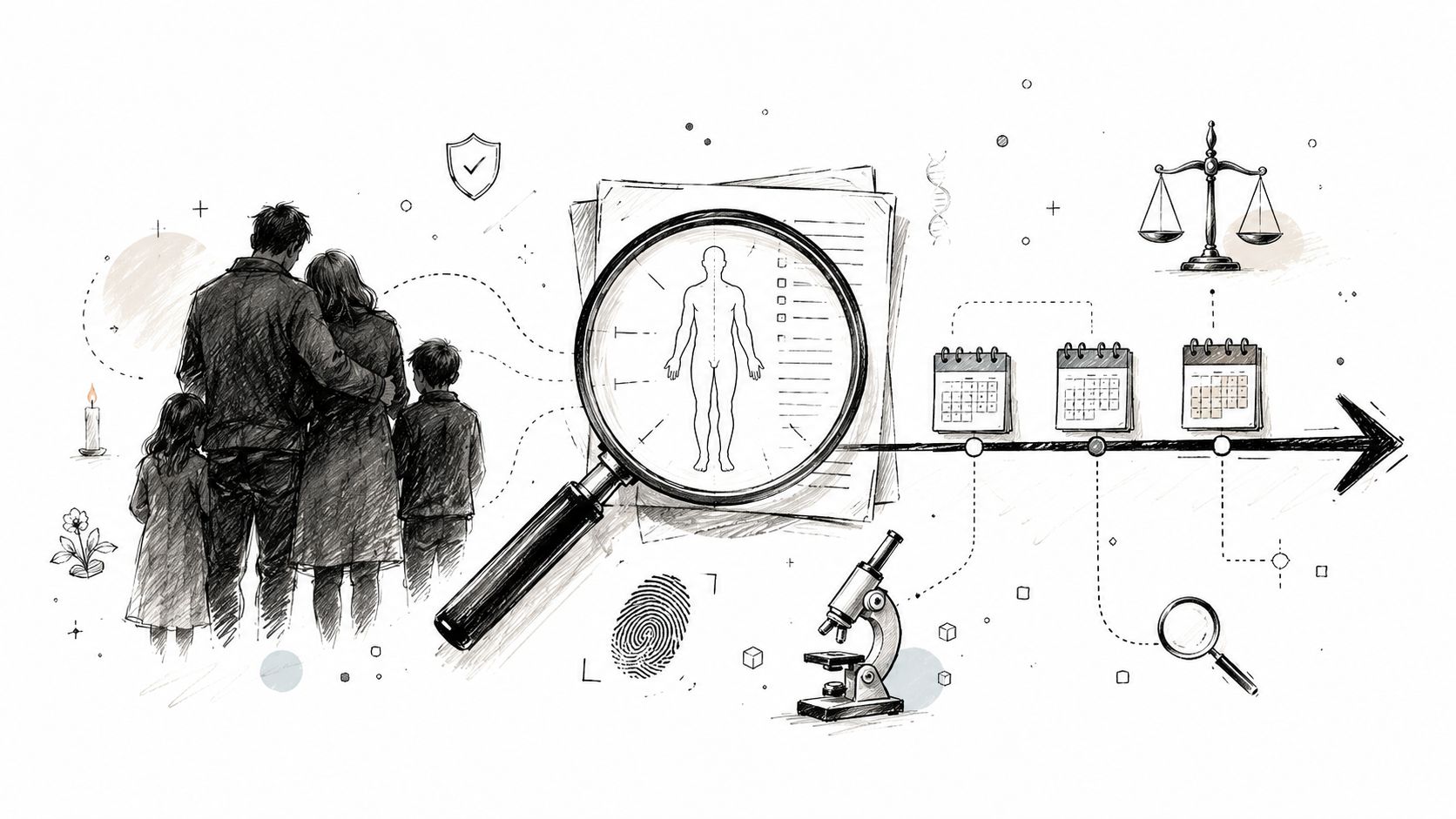
A visual explanation can help families understand the sequence without focusing on graphic detail.
Scene, Records, and the Broader Medicolegal Picture
The body may show what happened physically, but the surrounding evidence often explains how and why it happened. A complete wrongful death investigation examines the death scene, relevant records, and the accounts of people who saw the events or encountered the decedent shortly before death.
The death scene
Investigators may examine photographs, environmental conditions, vehicle damage, workplace equipment, medication containers, and the position of objects. A reported fall, for example, should be evaluated against the height, surface, lighting, footwear, and physical injuries documented at the scene. A scene that doesn't match the autopsy findings may require additional testing or reconstruction.
Records and witness context
Medical records can show prior diagnoses, treatment decisions, prescription history, procedures, and changes in condition. EMS run sheets may document the initial observations and resuscitation efforts. Law enforcement reports, facility records, employment documents, and surveillance material can add information that isn't present in the medical chart.
Witnesses may include family members, coworkers, caregivers, first responders, and treating professionals. Their statements can establish timing, behavior, symptoms, access to medications, or changes in the environment. The pathologist must assess those accounts against objective findings rather than accepting any single version automatically.
In Texas, jurisdiction may rest with a Justice of the Peace or a medical examiner's office, depending on the county and circumstances. An independent pathologist can be asked to review the complete file, including the official report and supporting materials, when a family or attorney believes the original investigation didn't address an important issue. That review doesn't replace the statutory authority of the investigating office. It provides an independent medical assessment of the evidence available.
Evidence Preservation and Chain of Custody
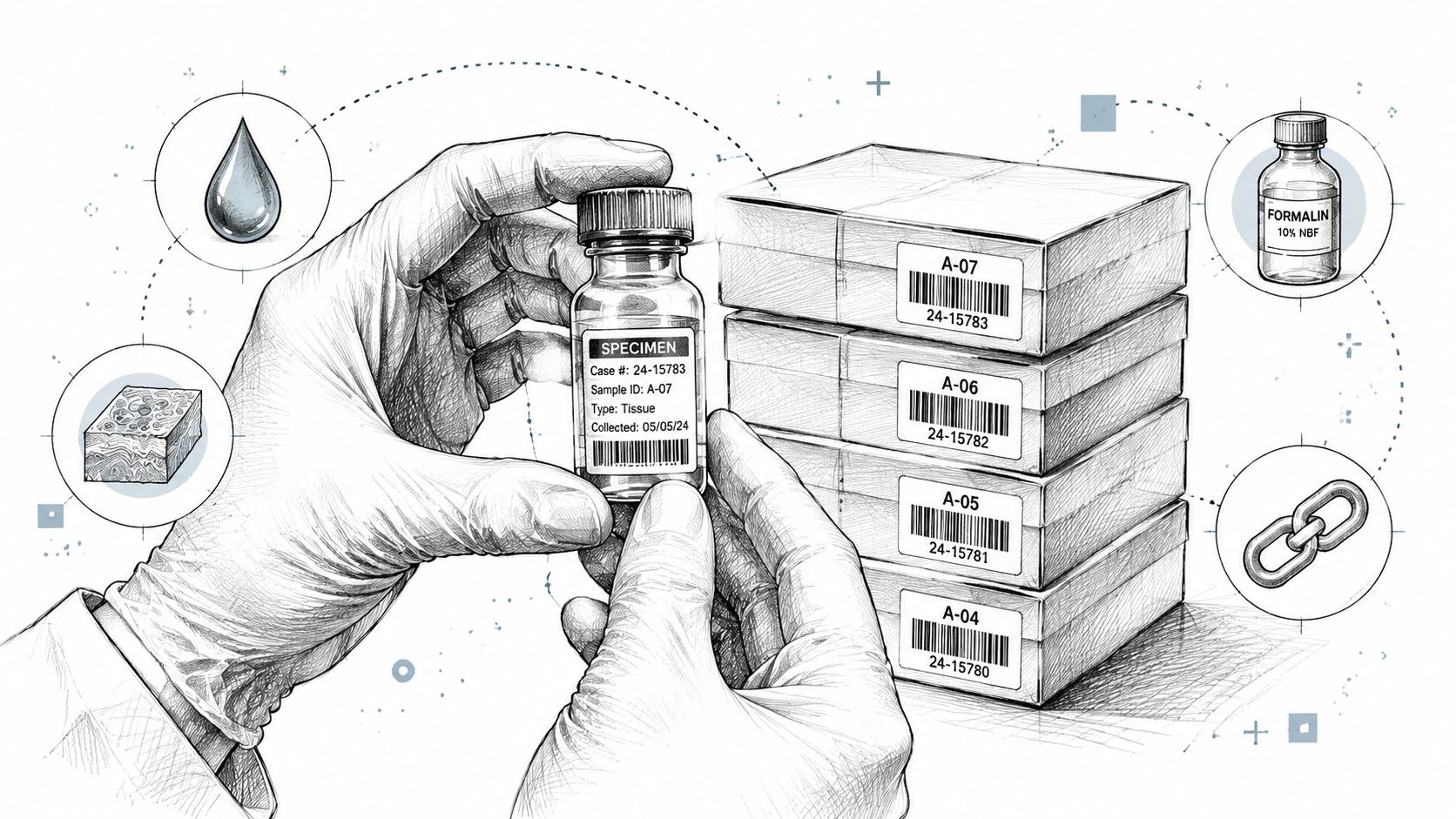
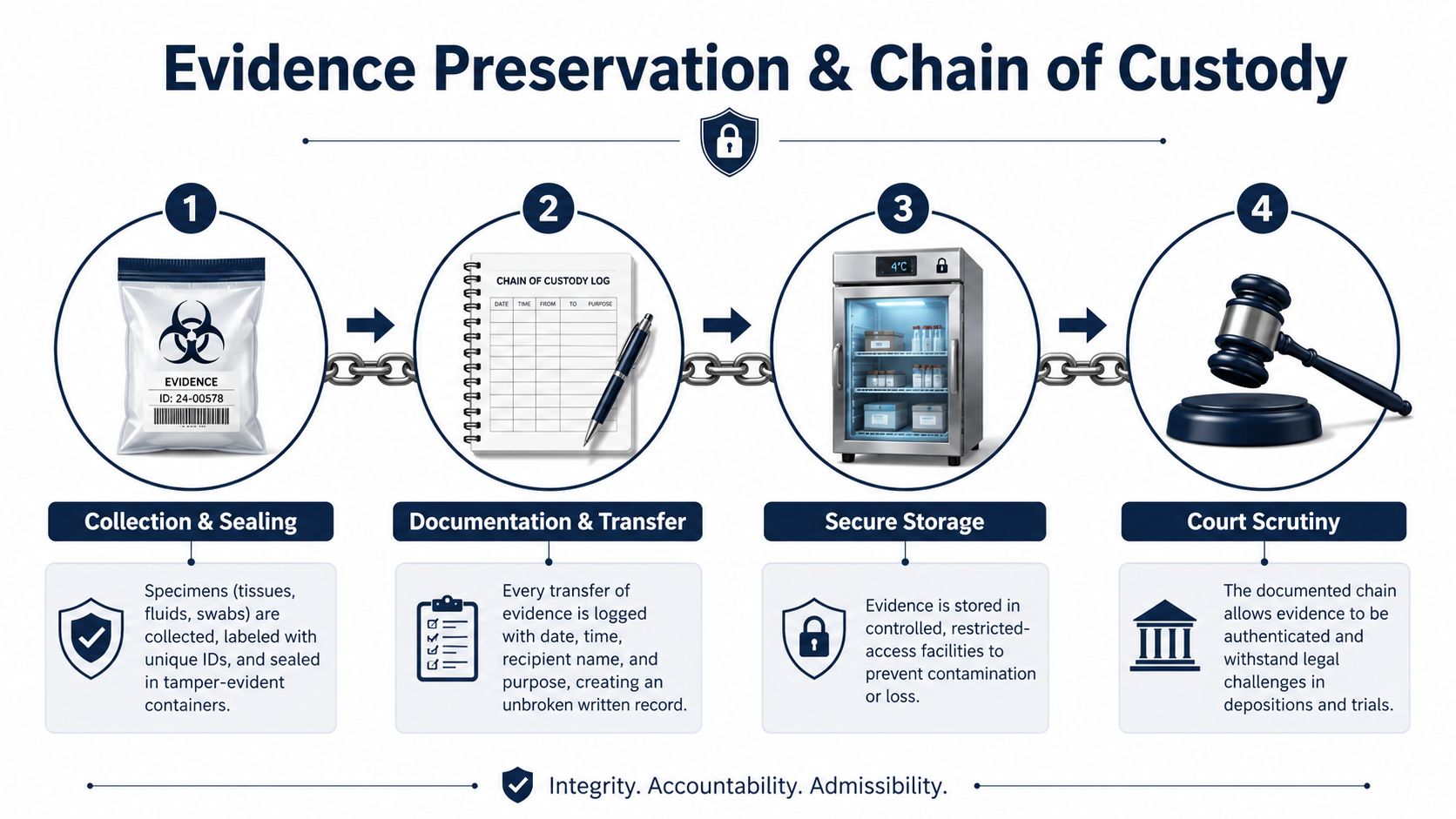
Chain of custody is the documented, unbroken record showing how evidence was collected, identified, sealed, stored, transferred, and examined. In a wrongful death case, it helps attorneys demonstrate that a specimen, photograph, tissue block, toxicology sample, or digital file is the same item collected during the investigation.
A practical chain begins when a specimen is collected. The container receives a unique identifier, the contents are recorded, and the package is sealed in a way that can reveal unauthorized access. Tissue, fluids, swabs, retained blocks, slides, and toxicology samples require clear labeling because a later laboratory result is only useful if everyone can identify what was tested and where it came from.
What documentation should show
Each transfer should record the date, time, recipient, purpose, and location. Evidence may pass between an autopsy facility, a toxicology laboratory, a storage site, and retained experts. Restricted access and appropriate temperature-controlled storage reduce the risk of contamination, degradation, loss, or unauthorized handling.
The OSAC proposed standard for medicolegal death investigation emphasizes controlled collection and documentation of specimens and property, including routine or case-specific samples when toxicology, injury documentation, or evidence recovery may affect the cause or manner determination.
- Biological specimens: Collection details, labels, seals, and storage conditions should be recorded.
- Images and digital files: Photographs, radiographs, and electronic records should remain identifiable and protected from alteration.
- Transfers: Every hand-off should have a corresponding receipt or log entry.
- Retained materials: Tissue, slides, and laboratory retains should be available for later expert review when appropriate.
A gap doesn't automatically erase every medical finding, but it gives opposing counsel a basis to challenge authenticity, contamination risk, or interpretation. Texas Autopsy Services applies full chain-of-custody procedures when private examinations and retained evidence may later be used in depositions, hearings, or trial.
Common Wrongful Death Scenarios in Practice
The same investigative method can apply to very different deaths. The following examples are representative and non-identifiable. They show how an autopsy becomes more useful when the pathologist connects the findings to records and circumstances.
Death after surgery
A patient dies after a procedure, and the family wants to know whether the death resulted from an expected complication, an undiagnosed condition, medication toxicity, or an injury related to care. An independent autopsy may document surgical sites, bleeding, infection, embolic disease, organ injury, and the effects of treatment. The review can include operative notes, anesthesia records, medication administration records, imaging, laboratory results, and the hospital course.
The pathologist may also consult relevant medical specialists when the question involves a complex procedure or disease process. The resulting opinion should separate a medical complication from a finding that supports a possible quality-of-care concern. It shouldn't imply negligence unless the medical evidence supports a connection that attorneys can evaluate under the applicable law.
Fatal motor vehicle collision
A collision investigation may involve disputed seatbelt use, toxicology, vehicle damage, roadway conditions, or a pre-existing cardiac history. Autopsy findings can document traumatic injuries and identify natural disease, but the interpretation depends on scene photographs, vehicle inspection, EMS information, and laboratory testing.
An accident reconstruction specialist may evaluate the collision dynamics, while a forensic pathologist correlates those findings with injury patterns. Families and attorneys may also benefit from a local legal resource, such as an Atascocita car accident attorney when the death involves a motor vehicle claim in that area.
Death in a nursing facility
A death attributed to natural disease may raise concerns about neglect, delayed treatment, dehydration, medication management, or pressure injuries. An independent review can examine the body, medication levels, facility chart, nursing notes, wound documentation, nutrition records, hospital transfers, and communications with the family.
The medical conclusion may confirm natural disease, identify a contributing injury or infection, or show that the available information is insufficient for a confident determination. Each conclusion should explain which evidence supports it and which limitations remain.
Timelines, Reporting, and What to Expect
Families often need to plan funeral arrangements, insurance communication, and legal preservation while laboratory work is still pending. A preliminary verbal finding may be shared within 24 to 72 hours, but it isn't the same as a final report. Early findings can change after toxicology, histology, microbiology, or specialist consultation.
The National Academies notes that medicolegal systems may prioritize homicide cases within 60 days and other manners of death within 90 days, while complicated cases can take longer when additional testing is needed. The Maryland Attorney General's audit announcement.aspx) also describes how families may wait nearly seven months for coroner results in an active wrongful death matter. These figures aren't promises or universal deadlines. They show why families shouldn't treat an early verbal answer as the complete investigation.
What can delay a final determination
Toxicology panels may require additional analysis when a result is unexpected or requires confirmation. Histology may be necessary to evaluate microscopic disease or injury. Microbiology, specialized stains, genetic testing, records requests, and consultations can extend the review when the cause or manner remains disputed.
A final report generally identifies the relevant history, examination findings, laboratory results, cause of death, manner of death, and reasoning. It should also identify limitations, pending information, or uncertainty rather than presenting an unsupported conclusion. If significant new information arrives, a supplemental report or amendment may be issued.
Planning around the investigation
Attorneys can preserve scene evidence and records while testing continues. Families can ask who will receive preliminary information, how final results will be delivered, and whether retained samples will be available for later review. Legal strategy, insurance communication, and family notifications should account for the possibility that preliminary findings may change.
A private provider may discuss a target such as most cases within 24 to 48 hours for an examination or initial communication, but the final written report still depends on the testing and records required by the case. No responsible forensic practice should guarantee a completion date before those factors are known.
When and How to Pursue an Independent Review
An independent medicolegal review may be appropriate when the official report leaves important questions unanswered, when causation is contested, or when an attorney needs a forensic pathology expert to interpret the findings for litigation. It can also help when the original office had limited workforce capacity or when documentation appears incomplete.
A review deserves prompt consideration when:
- The cause is unexplained: The death certificate or autopsy report doesn't adequately connect the findings to the fatal event.
- The manner is disputed: The available evidence may not support an accident, natural, homicide, suicide, or undetermined classification.
- Important circumstances were omitted: Scene evidence, medical records, witness statements, or medication history may not have been addressed.
- Civil or criminal proceedings are active: Counsel may need an independent opinion before depositions, settlement discussions, or trial.
- The investigation appears incomplete: Missing photographs, unclear specimen handling, or limited documentation may affect later interpretation.
Before contacting a provider, gather the death certificate, official autopsy report, toxicology results, investigative records, witness statements, medical records, prior imaging, and relevant photographs. A complete file lets the pathologist identify whether a document review is sufficient or whether an examination, additional testing, or retained-tissue analysis should be considered.
Ask about the pathologist's certification, forensic pathology experience, written-report process, testimony availability, anticipated review period, and fee structure. Families and attorneys can also request a confidential review of an autopsy case to define the next step before authorizing additional work.
The Texas Health & Safety Code, including Chapters 711, 716, and 651, and the Texas Funeral Service Commission provide important statutory and regulatory context for funeral, disposition, and professional responsibilities. A private review should be coordinated with the authority holding jurisdiction and should respect any active criminal investigation or legal preservation order.
Practical rule: An independent opinion is most useful when the reviewer receives the entire evidentiary record, not only the conclusion that someone wants challenged.
Texas Autopsy Services provides independent autopsy examinations, second-opinion reviews, licensed statewide transport, chain-of-custody documentation, and forensic pathology reporting for families, attorneys, and Texas counties. If your family needs clarity about cause or manner of death, visit Texas Autopsy Services to contact our team directly and discuss the records, authority, and next steps with dignity and confidentiality.