June 21, 2026 · Texas Autopsy Services
Chain of Custody Procedures: Texas Guide for Autopsies
Understand chain of custody procedures in Texas. Essential guide for families & attorneys on evidence handling, documentation, and legal standards
On this page
- The Importance of an Unbroken Chain
- What Is Chain of Custody in a Forensic Context
- Our Step-by-Step Chain of Custody Procedures
- Roles and Responsibilities for Maintaining Integrity
- Common Custody Errors and Our Mitigation Strategies
- The Modern Challenge of Digital and Hybrid Evidence
- Frequently Asked Questions from Families and Attorneys
When a family is waiting for answers after a death, paperwork can seem far removed from what matters. For attorneys and county officials, it can look like an administrative layer around the core work. In practice, chain of custody procedures often decide whether autopsy findings will hold up under scrutiny, support a claim, or leave room for doubt.
That concern is especially real in Texas. A decedent may need to be moved a long distance, specimens may be sent for outside testing, and digital records may become part of later litigation. If a transfer is undocumented, if storage conditions are unclear, or if a digital file cannot be tied back to its physical source, the case can become harder to defend scientifically and legally.
For grieving families, that means uncertainty at the worst possible time. For lawyers, it means avoidable challenges. For our board-certified forensic pathologists, it means the process has to be exact from the first handoff forward.
The Importance of an Unbroken Chain
A common situation looks like this. A family requests an independent autopsy after a sudden death. Months later, an insurance issue, a probate dispute, or a civil case turns on whether the findings can be trusted. No one is arguing only about medicine. They are also asking whether the body, specimens, and records remained secure from the moment custody began.
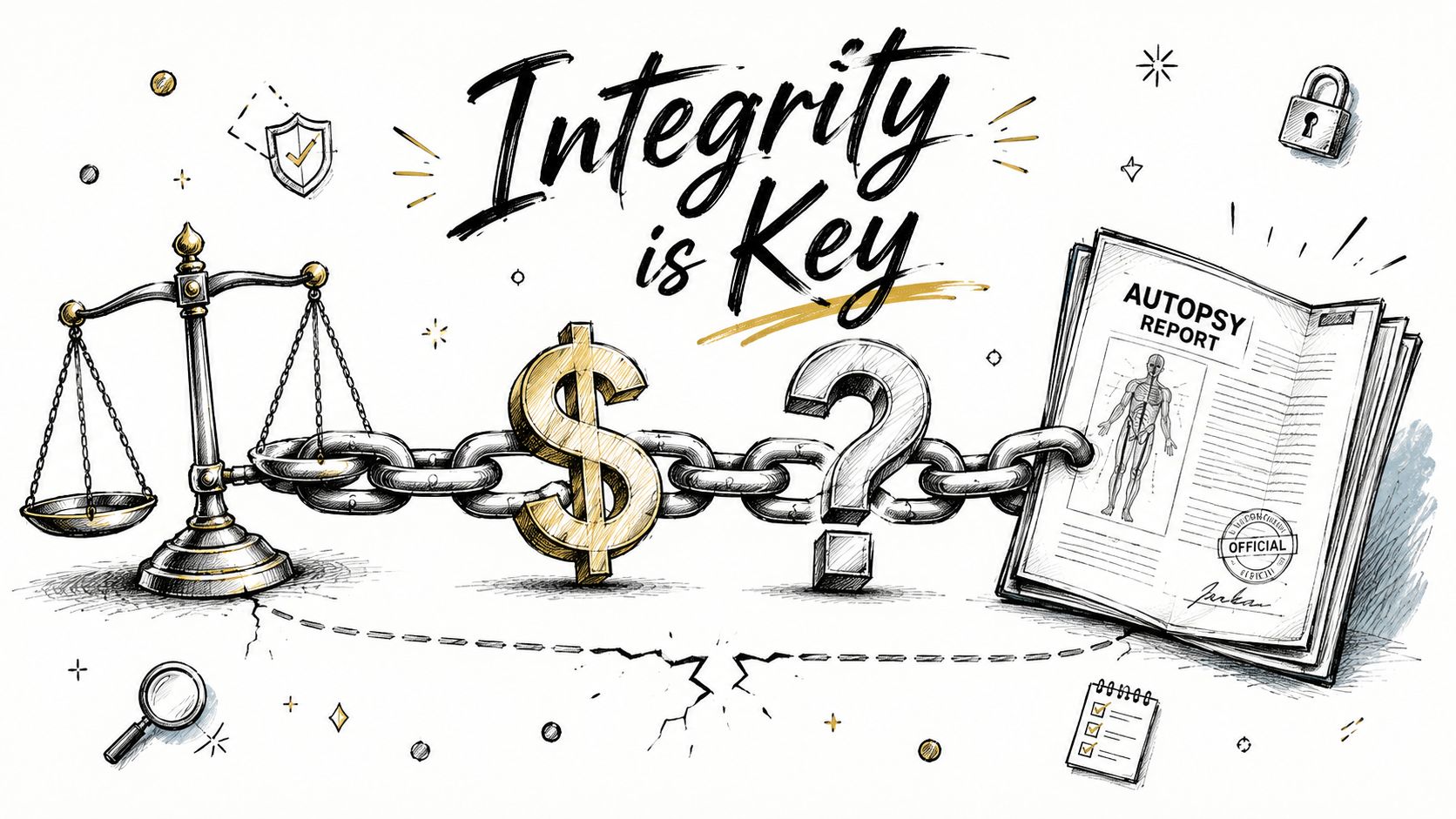
That is why an unbroken chain matters. It protects the scientific value of the examination and the legal value of the final report. If a record has gaps, even small ones, those gaps can become the focus of later testimony.
Small errors become big problems
In death investigation work, the weak points are often ordinary. A transfer occurs but the receiving party is not clearly identified. A specimen container is labeled inconsistently with the case file. Storage conditions are assumed rather than documented. None of that looks dramatic at the time. It becomes serious when someone later asks whether the evidence presented is the same evidence originally collected.
Practical rule: If a handoff cannot be reconstructed from the record, the handoff may be challenged.
This principle exists well beyond forensic pathology. In other evidence-sensitive fields, organizations preserve records of destruction and disposition for the same reason. A plain example is an official proof of asset destruction, which shows how formal documentation protects later accountability when physical items must be tracked to a final outcome.
Why families and attorneys should care
Families often want to know one simple thing. Can we rely on the findings? Attorneys usually need a more technical answer. Can the findings withstand review, cross-examination, and motion practice?
Chain of custody procedures help answer both questions. They don't replace expert analysis. They make that analysis defensible.
What Is Chain of Custody in a Forensic Context
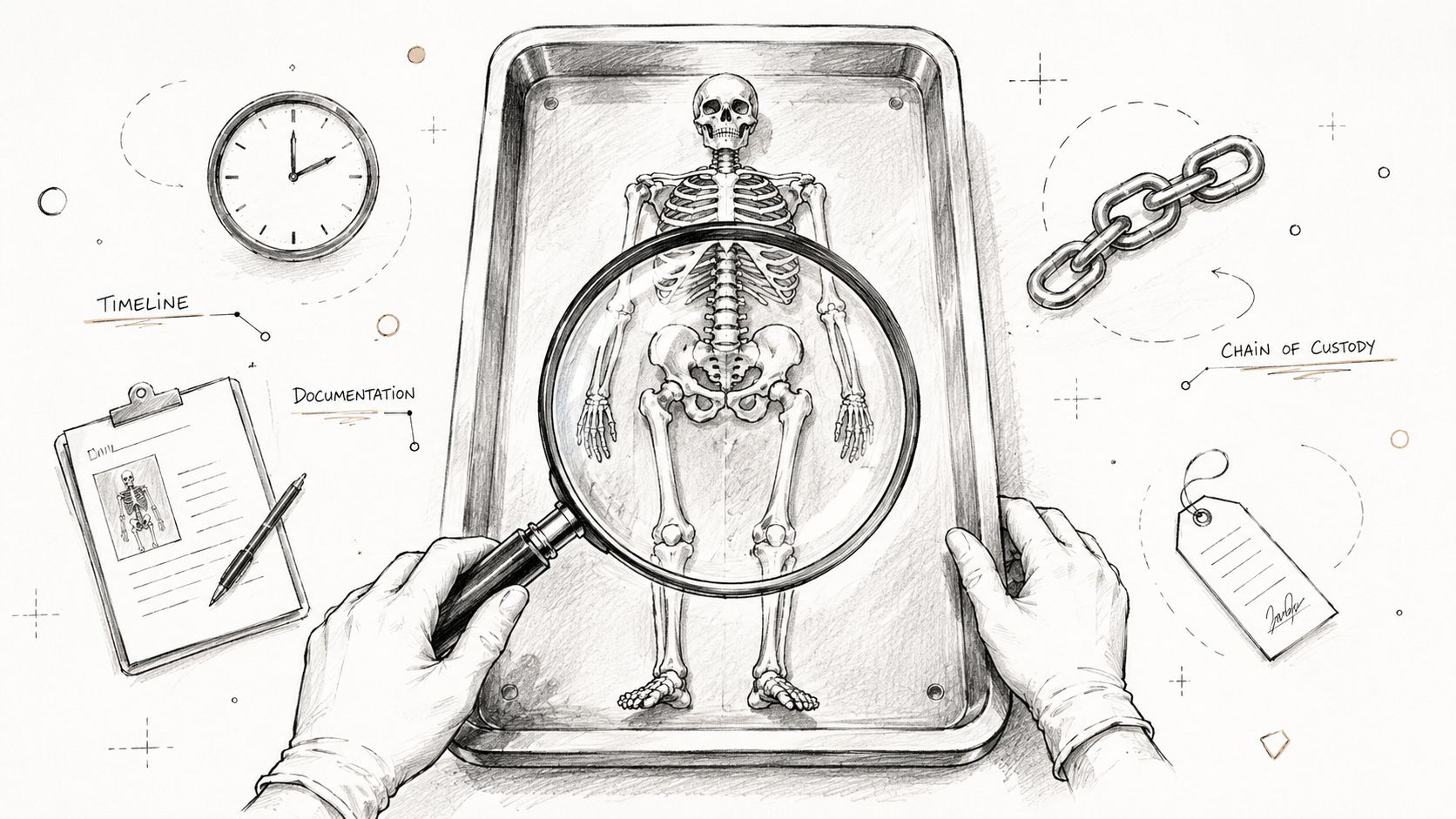
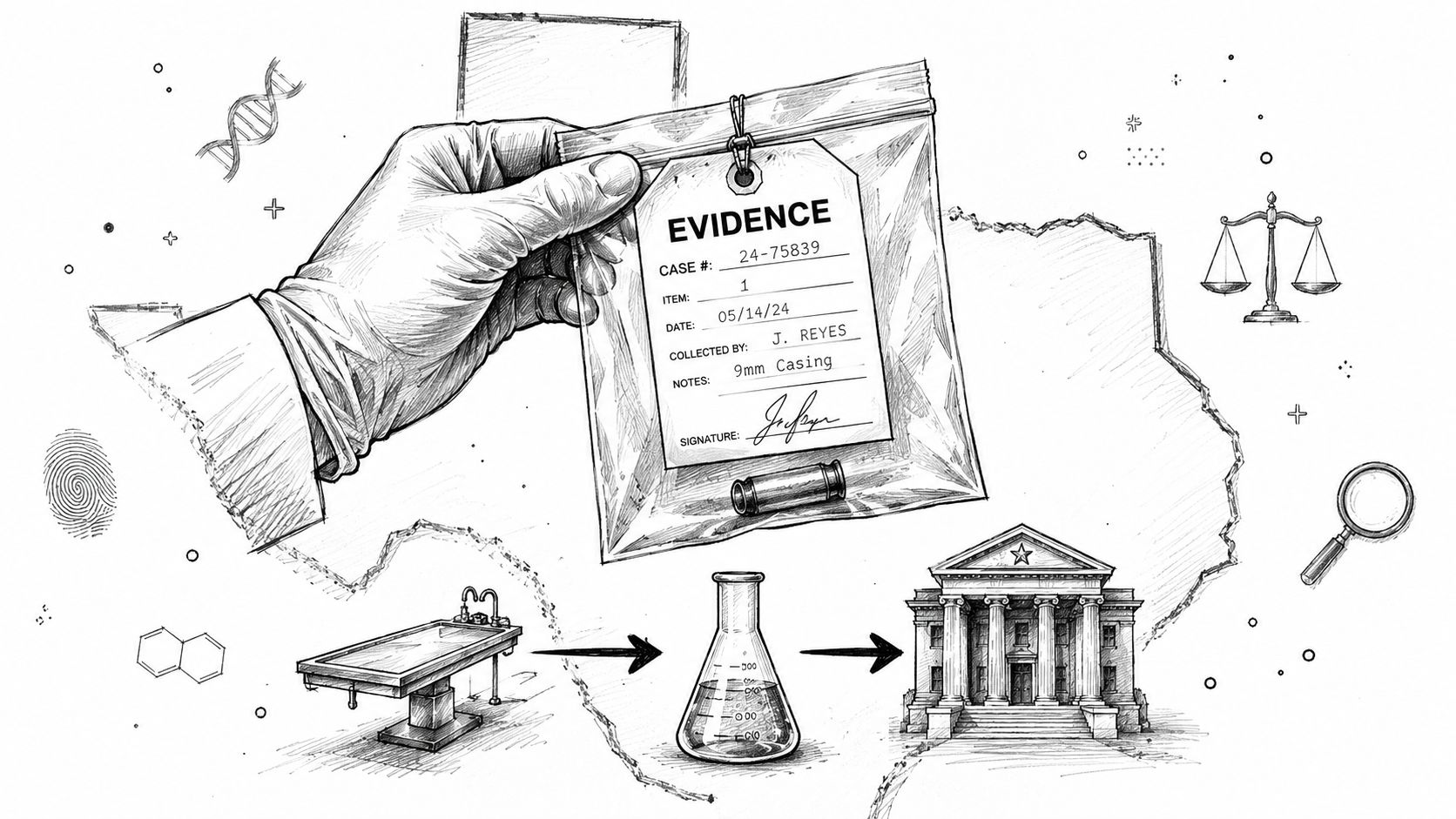
A chain of custody is the documented history of an item from the moment it enters forensic control until final release, testing, storage, or presentation in court. In our field, that record must identify who received it, who transferred it, when each handoff occurred, where it was kept, and what condition it was in at each stage.
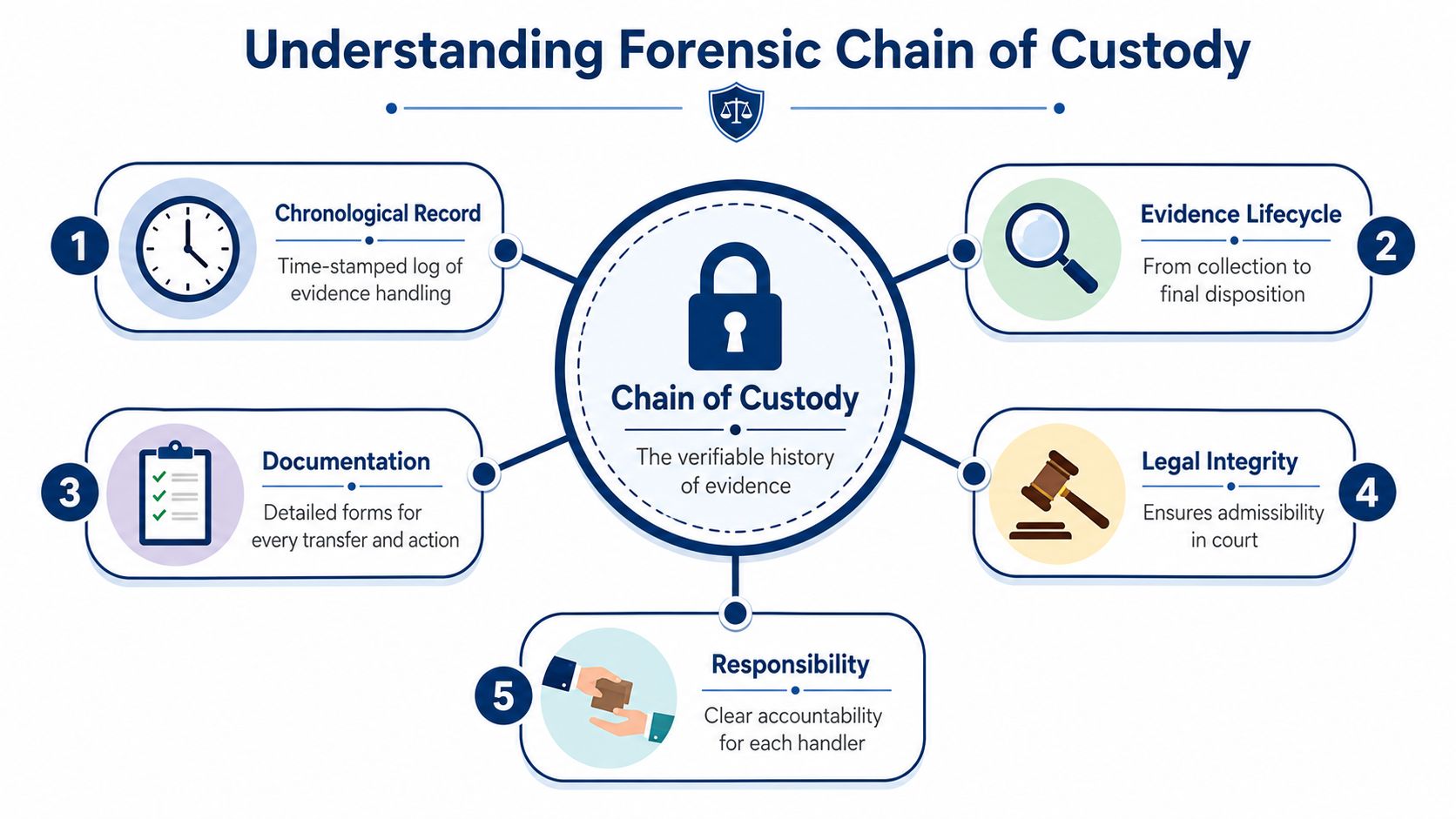
Families often picture a blood tube or sealed envelope when they hear the term. In forensic pathology, the custody trail is broader. It can apply to the decedent's body during transport across long distances, to personal effects, to tissue and toxicology specimens, and to digital files such as photographs, scans, and case data that must stay linked to the correct physical evidence.
That broader view matters in modern autopsy practice. A whole-body transfer across Texas raises one set of custody questions. Who accepted the decedent, what route was used, how long was transport, and were storage and temperature conditions documented at each point? A postmortem CT file raises another. Who created the file, where was it stored, who accessed it, and how was it tied back to the correct case and specimen set?
A package-tracking comparison is helpful up to a point. Forensic records have to do more than show movement. They must show controlled access, documented condition, and a clear reason for each transfer so the record can stand on its own months or years later.
Why the record matters
Courts, licensing bodies, and opposing experts do not accept assumptions. If a custody record is incomplete, the dispute usually shifts away from the medical findings and toward authenticity, handling, and reliability.
We see this concern from two directions. Families want confidence that the person examined, the samples collected, and the results reported all belong to the same case. Attorneys want a record that can withstand deposition, cross-examination, and record review without forcing witnesses to fill gaps from memory.
A related principle appears outside medicine. Organizations that understand IT asset disposition compliance use the same core discipline: documented control, restricted handling, and proof of final disposition.
A custody record should be strong enough that another qualified reviewer can reconstruct the history without relying on recollection.
What the record needs to show
A sound custody trail answers five practical questions:
- Who had the item at each point
- When custody changed with date and time
- Where the transfer or storage occurred
- Why the item moved such as transport, examination, imaging, testing, or release
- What condition the item was in when received, stored, and transferred
In autopsy practice, that applies to more than one category of evidence at once. The body may have one transport log and storage record. Individual specimens may have separate labels, seals, and accession entries. Digital materials may have their own access controls, timestamps, and file naming rules. For a related discussion of how physical samples are identified and tracked from collection forward, see our specimen collection procedures for forensic cases.
A weak record usually fails in ordinary ways. A receiver is unnamed. A time is missing. A specimen label does not match the case file exactly. A scan exists, but no one documented who uploaded it or confirmed that it belongs to the same decedent. Those are not minor clerical details in a forensic setting. They are the points lawyers and experts examine first.
A complete chain of custody turns handling into something that can be verified. That is the standard.
Our Step-by-Step Chain of Custody Procedures
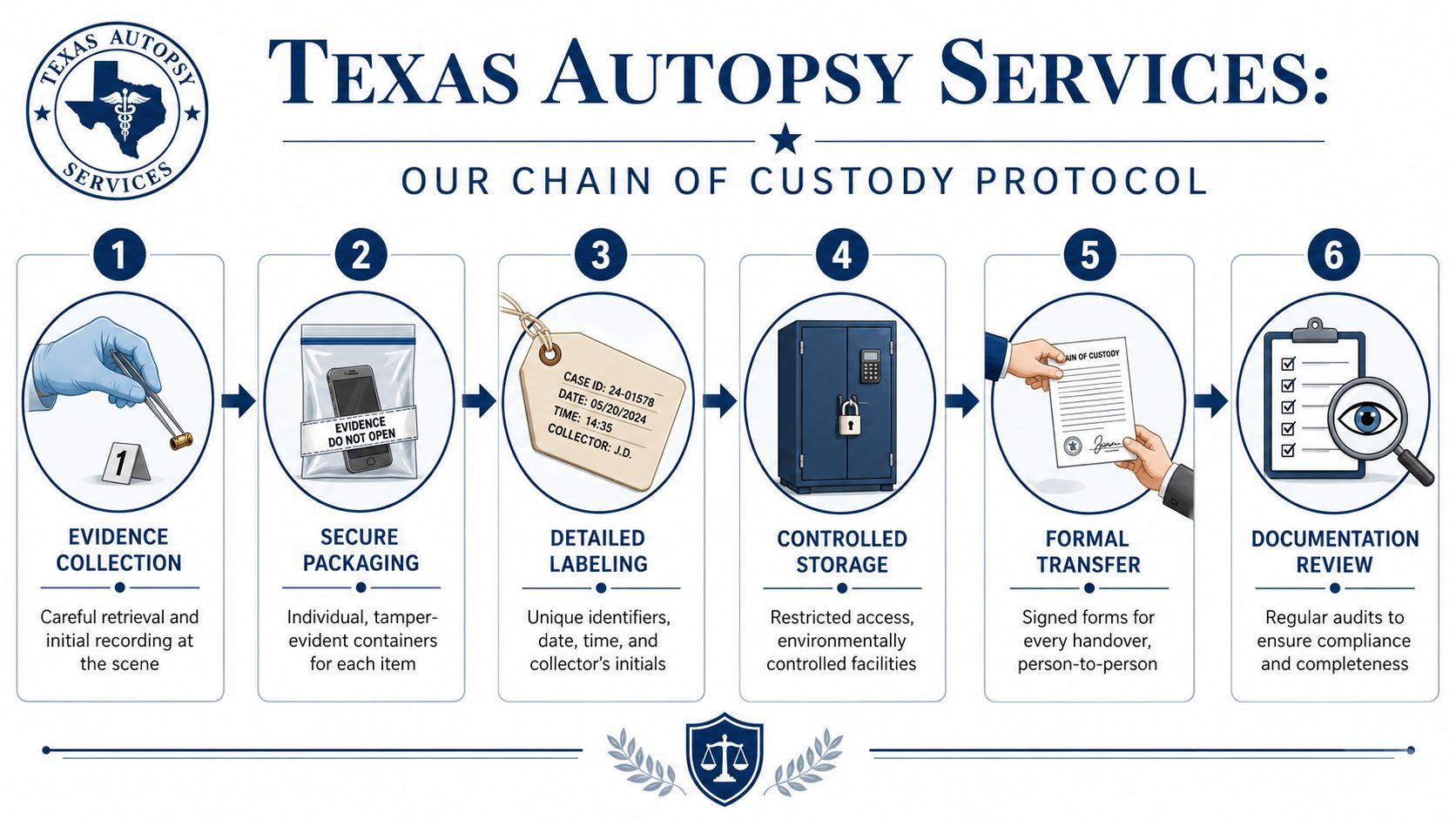
The chain starts when custody begins and continues until the item reaches its final destination, with each transfer requiring change-of-custody documentation. Technical guidance also warns that delays in digitizing records increase the risk of missing or inaccurate information, while digital logging improves traceability, access control, and auditability, as outlined in this chain of custody procedure reference.
From first custody to examination
The first stage is intake. When the decedent comes into custody, the case is logged, identifiers are confirmed, and the receiving event is recorded. If accompanying materials arrive with the body, those are documented separately so there is no confusion later about what was received and what was not.
The body is then placed into secure, controlled storage with restricted access. Many generic explanations stop at this point, but the practical issue is simple. Secure storage is only meaningful if access is limited and recorded.
For readers who want a broader explanation of evidentiary handling before and during examination, our article on forensic evidence collection provides additional context.
A brief visual overview can help clarify the sequence:
Specimens, labeling, and transfers
During the autopsy, every specimen collected must be linked back to the case clearly and consistently. That usually means the specimen container, the written record, and the digital case file all need to match. If one uses a different identifier format or incomplete description, confusion can follow.
Our team treats the following as mandatory:
- Clear identification at collection so the item is tied to the correct case at the moment it is obtained.
- Immediate labeling rather than delayed relabeling after multiple specimens are on the table.
- Secure packaging and sealing so later handlers can identify whether a container remained intact.
- Transfer logging whenever a specimen moves to storage, imaging, outside testing, or final disposition.
Working standard: The person receiving an item should not have to guess what it is, where it came from, or whether the seal remained intact.
Digital logging and review
Paper forms can work, but they are vulnerable to delay, omission, and legibility problems. For that reason, modern chain of custody procedures work better when documentation is entered promptly into a controlled digital system while preserving the original record where needed.
Our board-certified forensic pathologists review not only the scientific findings but also whether the supporting record is complete enough to stand on its own. If a transfer or identifier needs clarification, that issue is addressed while the case is active, not months later when memories are less reliable.
A practical custody file should let an outside reviewer reconstruct the path of the case from beginning to end. If it cannot do that, the process needs improvement.
Roles and Responsibilities for Maintaining Integrity
A body is collected in El Paso before sunrise, transferred across hundreds of miles, and received for examination later that day. By the time the autopsy begins, the legal question is not only whose body arrived, but who had custody at each point, whether transport conditions were preserved, and whether the digital records tied to the case still match the physical evidence. Clear role assignment answers those questions before anyone has to ask them in court.
A sound custody system depends on each person having a defined task, a defined limit, and a documented handoff. As the NIJ legal guide on chain of custody explains, the record must show who handled the evidence, when, why, and under what authority. In autopsy practice, that applies to the decedent, retained specimens, slides, photographs, scans, and exported data files.
Transport personnel
Transport personnel are the first controlled custodian in many private autopsy cases. Their job starts before the vehicle moves. They confirm the decedent's identity against the release paperwork, document the condition of the body and pouch or container at pickup, and record the time custody begins.
In a state as large as Texas, transport also has a preservation function. Long-distance movement creates a real risk that temperature drift, traffic delays, or an informal handoff will weaken later confidence in the case record. For that reason, transport documentation should account for route, receiving destination, and any transfer between drivers or agencies. If specimens accompany the decedent, those items need their own entry rather than being folded into a general transport note.
Autopsy staff and forensic pathologists
Once the decedent arrives, responsibility narrows and becomes more technical. Receiving staff document intake, verify identifiers, and place the body and any associated property or specimens into controlled storage. Technical staff then handle collection, packaging, temporary storage, and preparation for outside testing.
Our board-certified forensic pathologists direct what is collected, what must be retained, and what can be released. We also review whether the custody record matches the scientific work performed. If a tissue block was created, a toxicology specimen was sent out, or a postmortem CT file was exported for consultation, the documentation has to support that path without inference or guesswork. Families often ask what happens after blood or other specimens leave the autopsy suite. We address that process in our guide to what happens to blood after testing in an autopsy case.
Digital evidence needs an assigned custodian too. Someone must control file naming, access permissions, export logs, and the link between a scan or image set and the physical specimen or body from which it came. If no one owns that task, the record may remain intact on paper while the digital trail becomes harder to authenticate.
A reliable system usually includes:
- Defined access limits so only authorized personnel can handle the decedent, specimens, or case files
- Clear role separation between transport, intake, technical handling, pathology review, and release authority
- Documented custody changes each time responsibility shifts from one person, location, or system to another
- Assigned oversight for digital records so scans, photographs, and exported data remain tied to the correct case materials
- Final record review before release or disposition so gaps are identified while the case is still active
Role clarity protects both the science and the family. It reduces avoidable error, and it gives attorneys and outside reviewers a record they can test without finding missing links.
Common Custody Errors and Our Mitigation Strategies
Many people assume chain of custody failures happen because someone forgot to sign a form. That still happens, but it is not the only issue. In death investigation transport, the condition of the body during movement can matter just as much as the identity of the handler.
Where custody failures usually happen
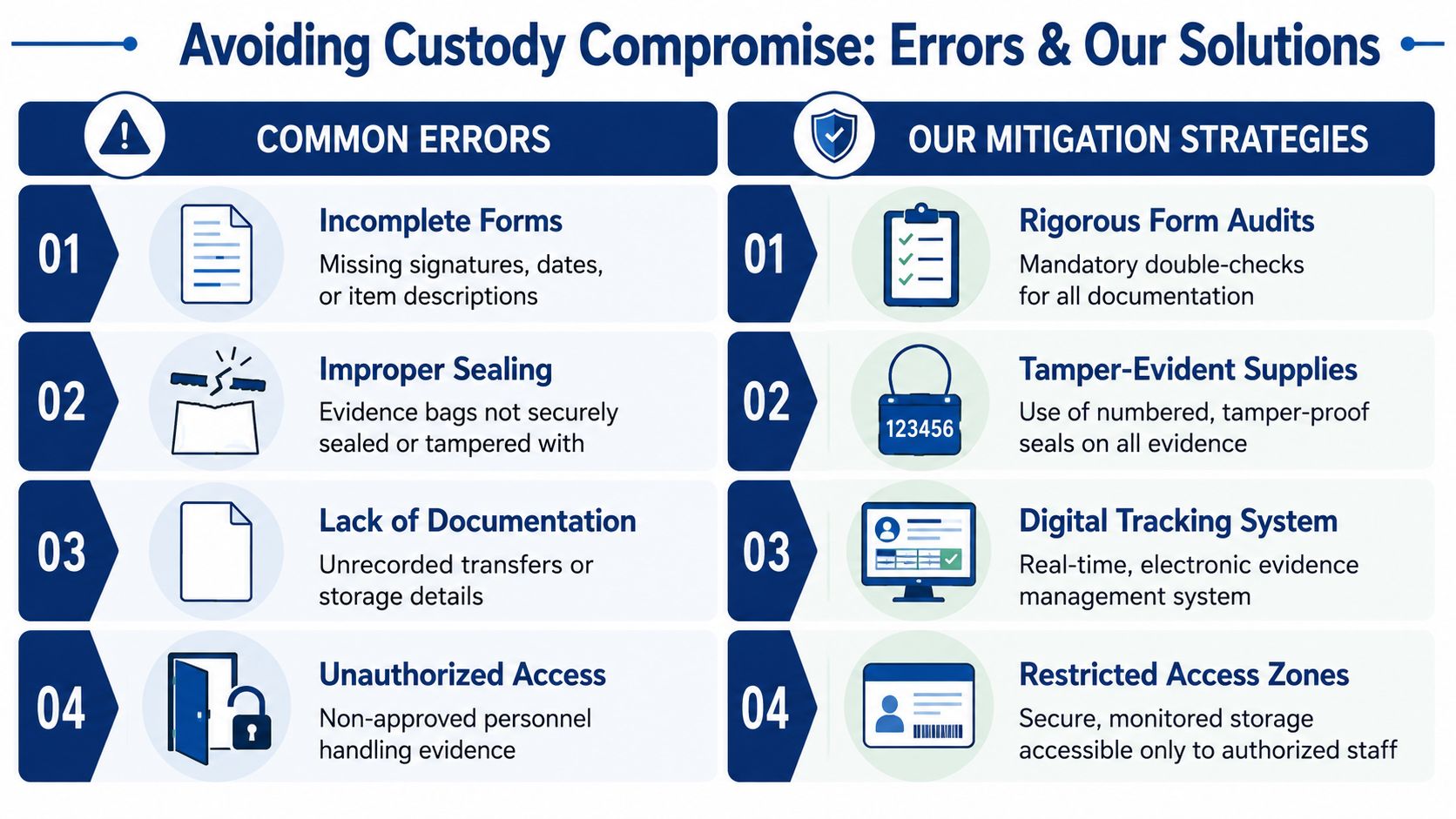
Some of the most common problems are procedural:
- Incomplete forms that leave out a date, time, or recipient
- Poor item descriptions that do not distinguish one specimen from another
- Undocumented transfers between storage, examination, and outside testing
- Unclear access history when multiple people can enter a storage area
In autopsy practice, there is another issue that many public guides barely mention. A 2024 forensic logistics study by the National Institute of Justice found that 32% of chain-of-custody failures in death investigations stem from undocumented temperature fluctuations during transport. Our practice addresses this by integrating real-time temperature monitoring logs into the custody form, a vital step absent in most procedural guides.
That matters because the condition of a body on arrival can affect later arguments about degradation, interpretation, and whether the examination remained scientifically reliable.
How we reduce those risks
For whole-body transport, especially over long distances, we treat thermal continuity as part of the custody record rather than a separate convenience issue. If custody records show who moved the body but say nothing about environmental conditions during transit, the documentation is incomplete for a biological case.
A body that arrives without a clear environmental history can create avoidable doubt, even if every signature line is filled in.
Our mitigation strategy includes documenting transport conditions as part of the permanent record, maintaining controlled storage on receipt, and matching those records to the broader custody file. This is one area where a purely paper mindset tends to fail. The record needs to capture what happened, not just who signed.
Families also ask what happens after laboratory work is done. We explain that separately in our discussion of what happens to blood after testing, because post-testing handling is part of the larger integrity question.
A good mitigation plan is not complicated in theory. It is disciplined in execution.
The Modern Challenge of Digital and Hybrid Evidence
Modern autopsies do not produce only physical specimens. They can also generate images, laboratory files, reports, and metadata that may later be reviewed in litigation. When those digital records are not tied back to the physical case in a unified trail, the file becomes easier to challenge.
Why digital evidence needs its own custody trail
A digital image is not automatically self-authenticating just because it came from a medical setting. Someone may still ask who created it, who accessed it, whether it changed, and how it connects to the physical specimen or examination event it represents.
According to 2025 American Board of Forensic Pathology guidelines, 41% of legal challenges in modern autopsy cases now involve disputes about the integrity of digital forensic data. Our use of tamper-evident audit logs creates a unified chain that legally binds physical and digital evidence, addressing this critical procedural need.
How hybrid custody works in practice
Hybrid custody means the physical and digital sides of the case are linked, not managed as separate silos. A specimen, image set, or analytical file should be traceable within one coherent case history. If a digital file exists without a clear connection to the specimen or examination event that produced it, the record is weaker than it should be.
Texas Autopsy Services uses HIPAA-compliant digital systems that generate audit logs showing access and handling history, then appends that information to the broader custody record. That approach does not eliminate legal challenge. It gives the reviewer a much clearer basis to see that the digital evidence belongs to the same documented chain as the physical findings.
For attorneys, this is often the difference between a record that can be explained cleanly and one that invites unnecessary argument.
Frequently Asked Questions from Families and Attorneys
Grief and litigation both create practical questions. Clear answers help.
| Question | Answer |
|---|---|
| What does chain of custody mean in plain language? | It is the record showing who handled the body, specimens, and related records, when each handoff occurred, and how those items were secured. |
| Why does it matter in an autopsy case? | It helps show that the findings are based on the same body, specimens, and records originally received, without undocumented changes or gaps in handling. |
| Can digital images and reports be part of the custody record? | Yes. In modern forensic practice, digital evidence should be documented and linked to the physical case so the full record can be reviewed together. |
| Can an attorney request materials for independent review? | Often yes, depending on the item, the legal posture of the case, and applicable privacy or court requirements. The request should be specific so the transfer can be documented properly. |
| Is the process confidential? | Yes. Autopsy records, specimens, and related case materials are handled under controlled access with attention to privacy, legal process, and respectful treatment of the deceased. |
Additional points often help families understand related terms:
- Cause of death means the disease or injury that led to death.
- Manner of death means the category of death, such as natural, accident, suicide, homicide, or undetermined.
- Chain of custody means the handling record that supports the integrity of the case materials.
If you are dealing with a recent loss, an insurance dispute, or a legal review, it is reasonable to ask direct questions about how the body, specimens, and records were handled. That is not mistrust. It is part of protecting the integrity of the case.
If you need help understanding autopsy documentation, transport handling, or evidentiary safeguards after a death, contact Texas Autopsy Services. Our team can explain the process clearly, discuss what records may be available, and help you understand what to expect with care and respect.