August 31, 2026 · Texas Autopsy Services
Suspicious Death Autopsy: A Guide for Families
Learn what a suspicious death autopsy entails, how it impacts legal cases, and why families and attorneys need expert guidance through the process.
On this page
A family may receive a death certificate that lists the cause as undetermined, or an attorney may find that the documented medical history doesn't explain an unexpected death. In other cases, the official findings may not address injuries, medication effects, institutional care, or other facts that matter to the people left behind. A suspicious death autopsy can provide an independent review of the physical evidence, medical records, toxicology, and circumstances surrounding the death.
At Texas Autopsy Services, we approach these examinations as medical-legal investigations. Every examination is performed by a forensic pathologist certified by the American Board of Pathology, with careful attention to documentation, evidence preservation, chain of custody, and clear communication with families, attorneys, healthcare professionals, and Texas county officials.
- A suspicious death autopsy examines more than the body. Scene information, medical records, imaging, toxicology, histology, and investigative documents may all affect the final opinion.
- Cause of death and manner of death are different findings. One identifies the medical reason for death, while the other classifies the circumstances surrounding it.
- A private autopsy can provide an independent opinion when an official examination was declined, incomplete, disputed, or insufficient for a legal matter.
- Testing takes time. Toxicology, histology, neuropathology, and administrative review can extend final reporting from weeks into months.
- Evidence handling matters. Secure transport, documented transfers, sealed samples, and complete records help preserve the report's value in court.
- Families and attorneys should act promptly when burial, cremation, decomposition, or delayed laboratory testing could affect the available evidence.
When a Death Raises Questions
A family gathers to make funeral arrangements, then notices that the death certificate says “undetermined.” The circumstances don't fit the listed explanation. Perhaps the person had no known condition that would account for the death, or the medical records describe symptoms that seem inconsistent with the final conclusion. An attorney may encounter a similar problem while reviewing an unexpected death, finding gaps between hospital documentation, witness accounts, medication records, and the official cause of death.
These situations don't automatically establish negligence or criminal conduct. They do establish a need for careful review. A suspicious death generally involves circumstances that are unexplained, unexpected, potentially violent, medically inconsistent, or connected to a legal investigation. Deaths involving possible foul play, conflicting histories, custodial care, institutional care, intoxication, unusual injuries, or uncertain timing may require closer forensic attention.
What the examination is designed to answer
A suspicious death autopsy is a structured scientific examination used to evaluate the cause of death, manner of death, and evidence that may support or contradict the initial explanation.
- Cause of death means the disease, injury, poisoning, or other medical condition that produced death.
- Manner of death describes the circumstances, commonly classified as natural, accident, suicide, homicide, or undetermined.
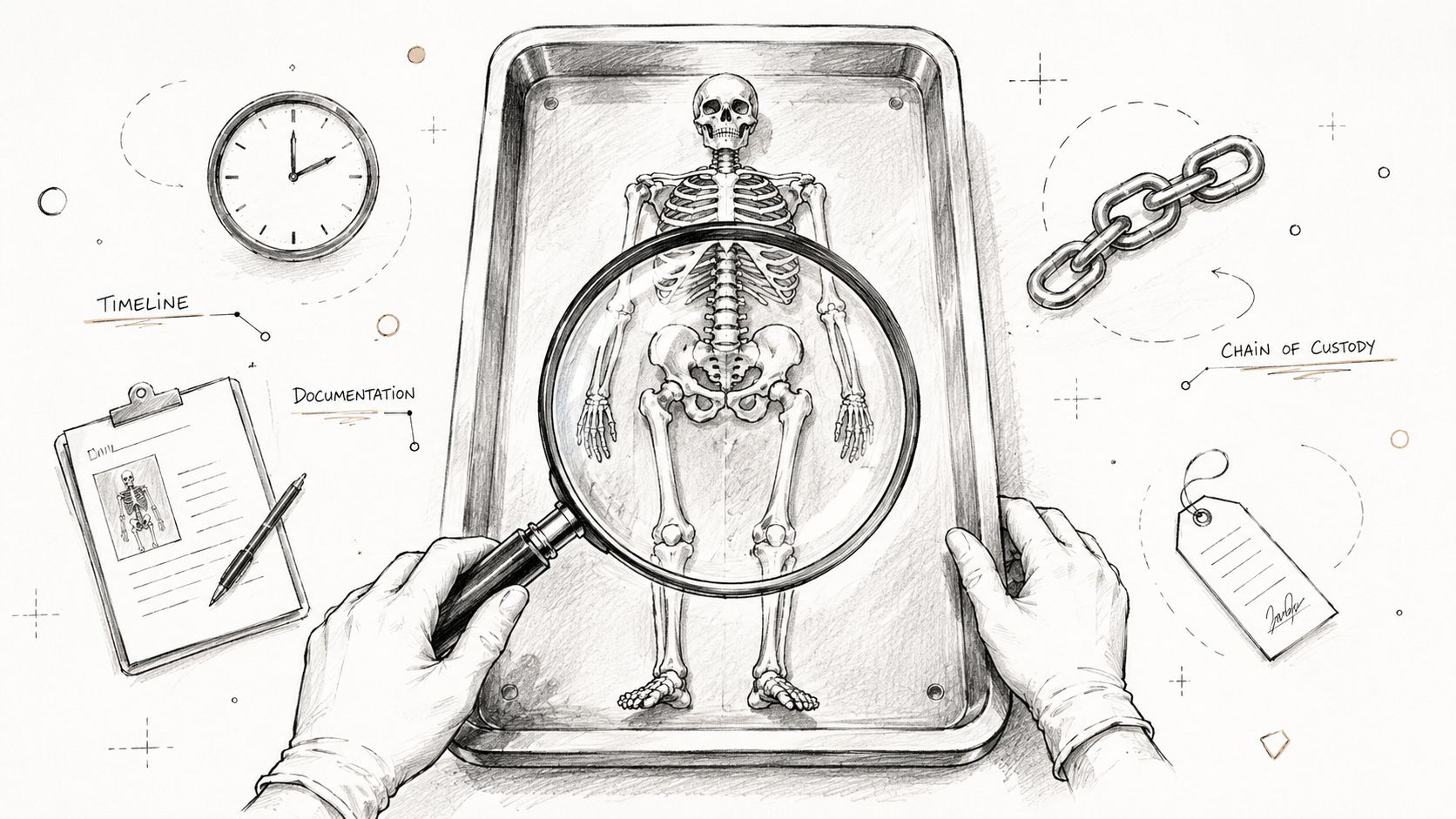
- Chain of custody is the documented history of who collected, transported, stored, tested, and released each item of evidence.
The autopsy doesn't stand alone. Forensic death investigation can include scene information, external examination, internal examination, toxicology, histology, postmortem imaging, and review of medical and investigative records. The National Center for Biotechnology Information's forensic pathology reference explains that suspicious, unexpected, and unnatural deaths require investigation and that microscopic tissue analysis or chemical testing can change the cause-of-death opinion when gross examination doesn't provide a complete answer.
Why families seek an independent examination
A 2024 forensic death statistics study found that forensic death examinations represented only 3.6% to 4.8% of all deaths over the study period, while the annual rate of forensic death examinations rose from 175 per 1,000,000 population in 2013 to 294 per 1,000,000 in 2021. The same study reported that suspicious, homicide, and suicide deaths were referred to forensic specialists for postmortem examination, illustrating that these cases are relatively uncommon within total mortality but carry significant investigative consequences. The study's data table places suspicious-death autopsies within that small but high-impact portion of death investigation.
Families may want an independent answer for emotional, medical, or legal reasons. Attorneys may need an objective review of whether the findings support a wrongful death claim, criminal defense, insurance dispute, or other proceeding. The purpose isn't to reach a preferred conclusion. It's to determine what the evidence supports, including the possibility that the available evidence cannot establish a more specific answer.
What Happens During a Suspicious Death Autopsy
The autopsy process begins before the examination table. Our team first confirms authorization, jurisdiction, identity, location, condition of the remains, and the records available for review. Texas Autopsy Services is based in Elgin and coordinates licensed transport across all 254 Texas counties, with secure handling and documented transfers.
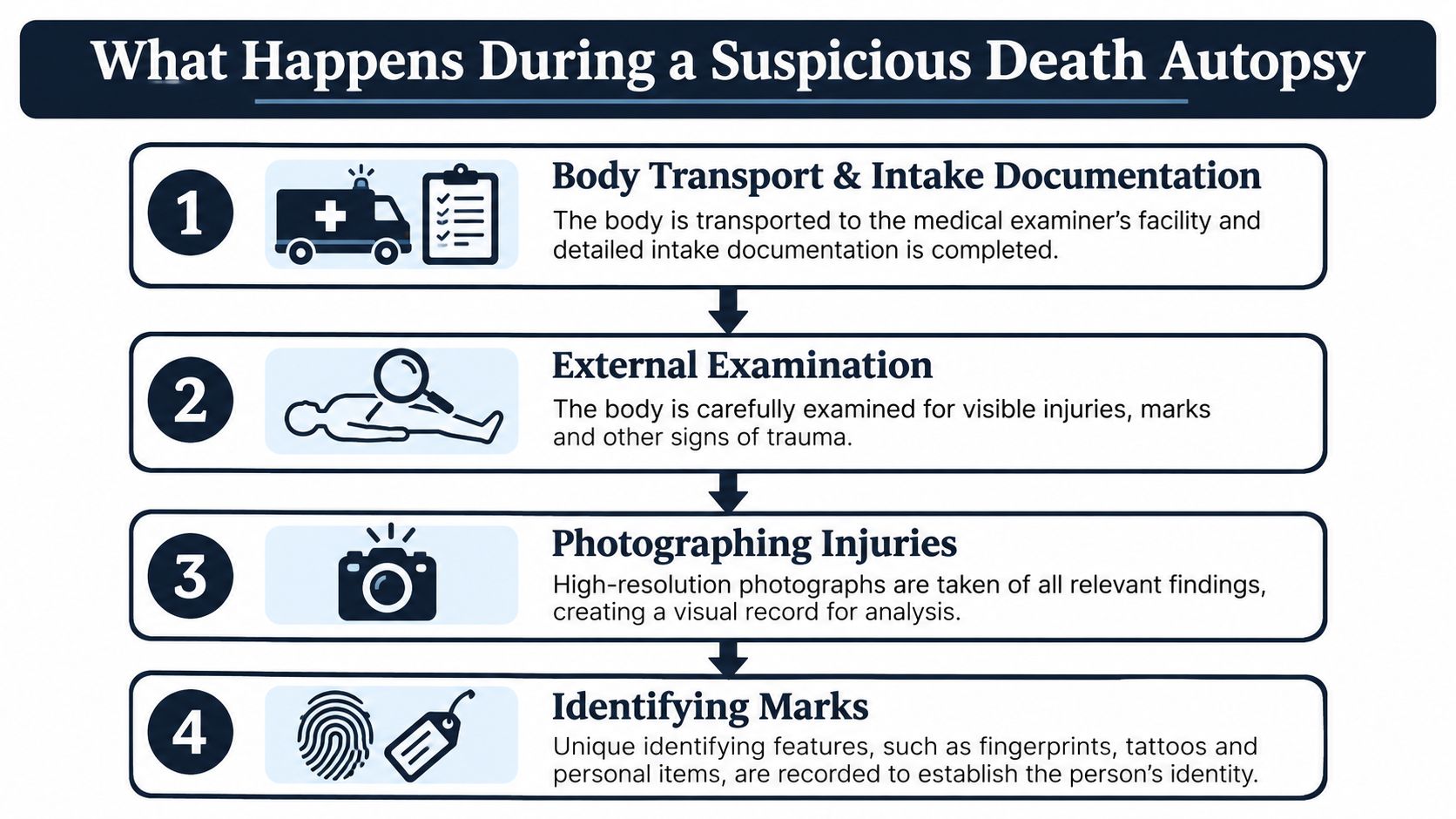
The examination in practical steps
- Intake and identification. The remains arrive with transport documentation. Staff verify identity and record condition, personal effects, seals, and the individuals who accept custody.
- External examination. Our forensic pathologists document height, weight when available, identifying marks, clothing, medical devices, visible injuries, and signs of medical intervention. Photographs preserve the findings before the body is altered.
- Evidence collection. Trace material, biological material, fingernail scrapings, swabs, clothing, and other items may be collected when the case facts support doing so. Each item receives an identifier and is packaged according to its testing and evidentiary needs.
- Internal examination. The pathologist examines the body cavities and organs, looking for trauma, disease, bleeding, obstruction, infection, and other conditions that could explain death. Organs or tissue may be weighed, sectioned, preserved, and submitted for microscopic examination.
- Laboratory testing. Toxicology can evaluate drugs, ethanol, and poisons. Histology examines tissue under a microscope. Other testing, including vitreous analysis or genetic testing, is selected when the circumstances justify it.
- Imaging and targeted review. Postmortem CT can identify fractures, bleeding, projectiles, gas, and other findings that help guide dissection. A study of suspected unnatural deaths found 85.9% agreement between forensic postmortem CT and autopsy for primary cause of death, rising to 95.3% when toxicology and histology were included. The PubMed-indexed study supports using imaging as part of a combined protocol rather than treating it as a complete replacement for autopsy.
Practical rule: Toxicology specimens should be collected before significant autopsy disruption, because drugs, ethanol, and poisons may otherwise be harder to interpret.
Reports and supporting documents
The final report explains the findings, reasoning, cause of death, manner of death, and limitations. Preliminary observations may be available sooner, but they aren't the same as a final opinion after laboratory results and record review. Families should also gather practical records early. A resource covering documents needed when someone dies can help organize death certificates, identification documents, insurance records, and related paperwork.
The physical examination may be completed before the case is administratively finished. Toxicology, histology, neuropathology consultation, record collection, and clarification of investigative facts can all affect the final report. Every transfer and retained specimen should remain traceable from intake through release or laboratory submission.
County Medical Examiner vs Private Autopsy
Texas families may encounter two different pathways. A county investigation is controlled by the public authority with jurisdiction, while a private autopsy is initiated by an authorized family member or legal representative and arranged independently.
Under Texas Code of Criminal Procedure Article 49.10, a justice of the peace handling an inquest must direct a physician to perform an autopsy or certify that no autopsy is necessary, subject to statutory exceptions. The justice must order an autopsy when necessary to determine or confirm the nature and cause of death, in certain unexpected deaths involving a child younger than six, or when directed by specified county or district attorneys. The Texas county forensic autopsy services page provides information for counties that need forensic pathology support.
| Factor | County Medical Examiner | Private Autopsy |
|---|---|---|
| Authority | Ordered or declined by the public official with jurisdiction | Authorized by the person legally entitled to approve the examination |
| Purpose | Serves the official death investigation | Provides an independent examination or second opinion |
| Scope | Determined by the county office and case circumstances | Planned around the available evidence and questions presented |
| Testing | Selected by the public pathologist | Additional testing may be considered when medically and legally appropriate |
| Communication | Families communicate through the responsible public office | Families and attorneys communicate directly with the private team |
| Cost | The public investigation is generally handled through the county system | Fees and transport arrangements apply |
| Use in disputes | Official findings may be reviewed or challenged | The report may support litigation, records review, or expert consultation |
A private examination may be appropriate when the medical examiner or justice of the peace declines jurisdiction, when the family disagrees with the official findings, or when attorneys need an independent forensic pathology opinion. It can also be useful when the first examination didn't address a specific question, when records were unavailable at the time, or when later evidence changes the interpretation.
A second opinion isn't automatically more accurate. Its value depends on the condition of the remains, the quality of the first examination, retained specimens, photographs, imaging, laboratory work, and the records available for review. Both public and private reports can be used in legal proceedings when the examination and expert opinions are properly documented and supported.
Legal Framework and Evidence Standards in Texas
Texas law separates official inquest authority from private consent. Texas Code of Criminal Procedure Article 49.10 addresses the authority of a justice of the peace in cases subject to an inquest. A justice of the peace may order an autopsy to determine or confirm the nature and cause of death, and may be directed to do so by the appropriate prosecuting authority. The statute, not the family's preference alone, controls the public investigation.
Texas law also generally requires written informed consent before a physician performs or assists with a postmortem examination or autopsy. The consent must use the form prescribed by law, subject to exceptions for examinations ordered under the applicable inquest provisions or by the Texas Department of Criminal Justice. The Texas statutory provisions governing autopsy consent should be reviewed with the responsible official or attorney when authority is uncertain.
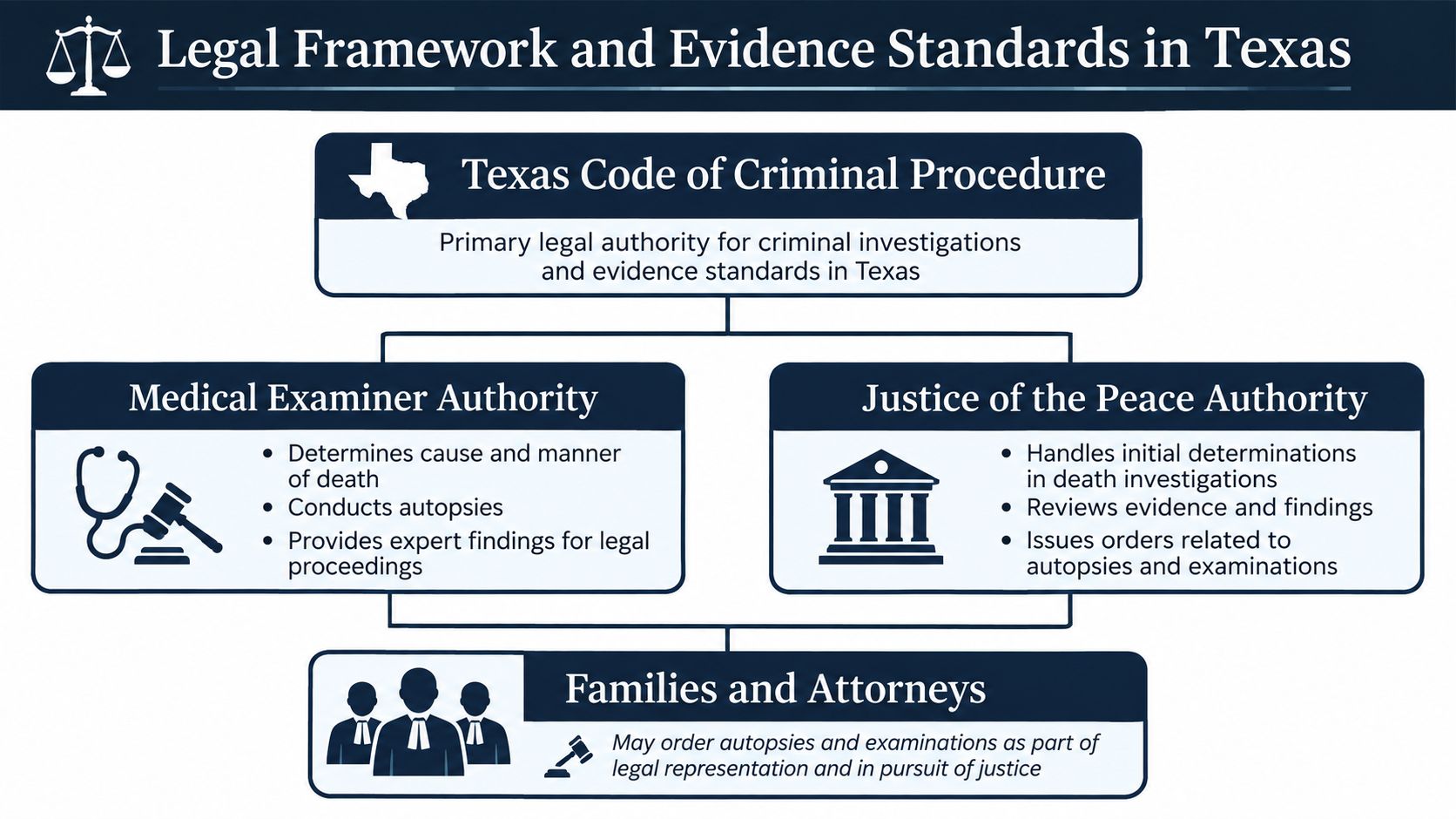
What belongs in an autopsy report
Texas Health and Safety Code Section 671.001 defines an autopsy report broadly. It includes the postmortem examination report, x-rays, photographs taken during the examination, toxicology reports, and other reports involving dissection of internal organs and structures. Investigative reports and other documents reviewed to assist in determining cause of death aren't part of the autopsy report under that statute. The designated physician must file the report with the office specified in the autopsy order no later than the 30th day after the request for the autopsy, unless an exception applies. Texas Health and Safety Code Section 671.001 contains the governing language.
A legally defensible report should identify the materials reviewed, describe the examination, distinguish observed findings from interpretation, document laboratory submissions, and explain limitations. Chain-of-custody records should show who handled evidence and when. Photographs, imaging, preserved tissue, toxicology samples, and prior reports may each become important when an attorney challenges or compares findings.
Why the questions may extend beyond death investigation
Forensic pathology can affect criminal and civil matters in different ways. A cause-of-death opinion may bear on a wrongful death claim, insurance dispute, custodial death review, or criminal allegation. Attorneys handling an intoxication manslaughter defense may need to understand how toxicology, injury patterns, timing, and medical causation interact. The pathologist's role remains limited to the postmortem medical and forensic questions, not legal representation or case strategy.
Turnaround Times and Common Misconceptions
A complete suspicious death autopsy rarely ends when the examination room closes. The pathologist may finish the gross examination while toxicology, histology, neuropathology, records review, and administrative steps remain open. Families often expect a final answer within days, but a careful report can take weeks or months when the case requires several laboratories or additional consultation.
Independent data show why turnaround varies. One study reported that workflow changes reduced mean report time from 53 to 25 days. Another found that 37% of autopsies were signed out within 90 days before lean improvements, compared with 74% afterward. A government review found that 15% of reports still weren't completed within 90 days. These findings are summarized in the available forensic autopsy turnaround research.
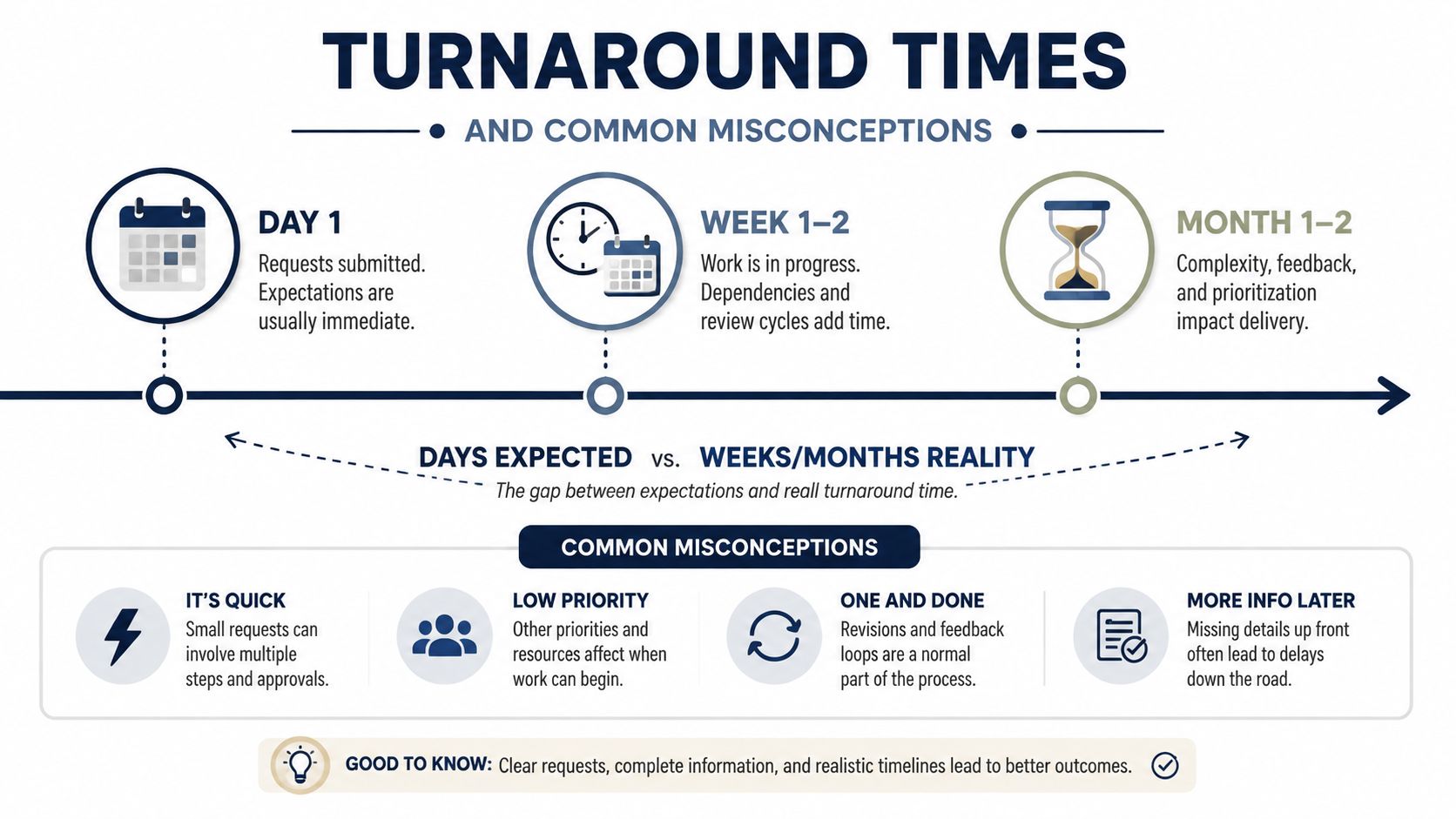
Delays that can reflect necessary work
Toxicology and tissue preservation often create the longest waits. A study of viscera preservation found that only 22% of toxicology reports arrived within six months, while 42.5% took more than a year. Another setting reported that more than 49% of viscera-analysis reports still hadn't arrived after seven years. The evidence on delayed viscera analysis shows why families and attorneys should ask what testing is pending, where the specimens are, and whether a delayed result will still answer the central question.
A preliminary finding can guide decisions, but it shouldn't be treated as the final report unless the pathologist identifies it as final.
Decomposition, embalming, or a previous autopsy can limit what a new examination can establish, but none automatically makes review pointless. Records, photographs, CT scans, tissue blocks, slides, toxicology data, and retained specimens may support a second opinion. In some cases, a pathologist may recommend exhumation support, targeted testing, or a records-only review instead of repeating every part of the original examination.
The Texas Autopsy Services explanation of autopsy results timing provides additional context for families planning around laboratory and reporting stages.
How to Request a Private Autopsy in Texas
The first step is a confidential case review. Families, attorneys, physicians, agencies, and county officials should explain what happened, where the remains are located, whether an official autopsy occurred, and what questions remain unresolved. Our team can then identify the likely authorization pathway, records needed, transport arrangements, and whether a full examination, second opinion, or targeted review is more appropriate.
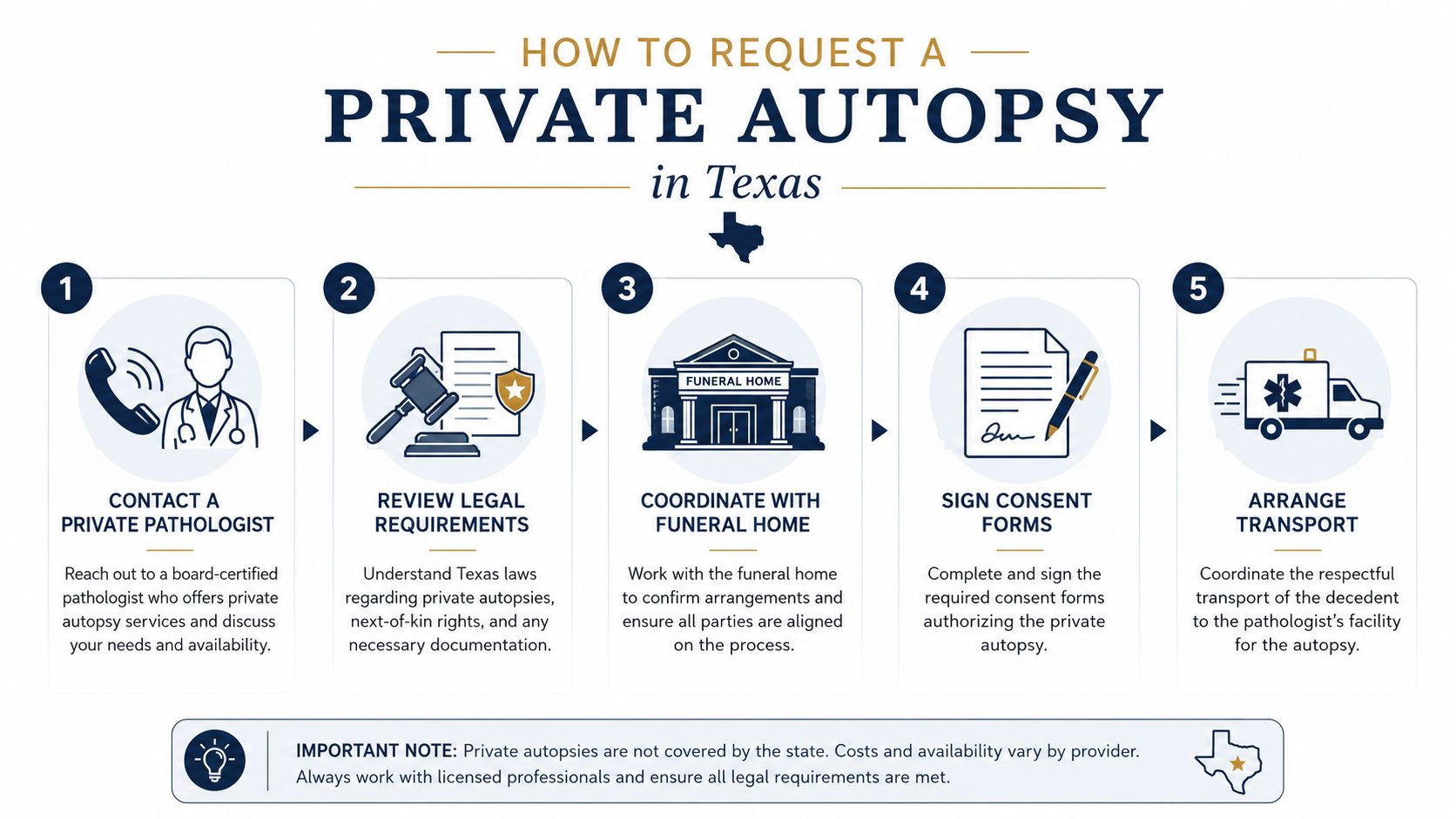
Prepare the case file
Gathering documents early reduces avoidable delays. Useful materials may include:
- Death certificate: Include the current version and any amended version.
- Medical records: Provide hospital, emergency, hospice, primary care, medication, and laboratory records when available.
- Official investigative materials: Include the medical examiner or justice of the peace report, photographs, toxicology, histology, and imaging.
- Scene information: Preserve photographs, witness details, timelines, facility records, and relevant communications.
- Legal authorization: Confirm who has authority to consent and whether an attorney, court, county official, or other agency must participate.
The Texas guidance on who can request an autopsy can help families and attorneys identify the questions to raise before signing consent documents.
Coordinate transport and examination
Our team works with funeral homes, hospitals, county facilities, and other custodians of the remains. Texas Autopsy Services maintains in-house licensed transport and statewide coverage across all 254 Texas counties. The transport plan should identify the releasing facility, receiving facility, responsible contacts, condition of the remains, and each documented transfer.
Consent forms should describe the requested examination and any agreed testing. Attorneys may also provide a written list of disputed issues, such as injury timing, medication effects, intoxication, disease, restraint, or whether the original manner-of-death classification is supported. The forensic pathologist will determine which questions can be answered medically and which require information from investigators or legal counsel.
Communication and final materials
Families should know who will answer questions, how updates will be delivered, and what the final package includes. Depending on the case, that may include the autopsy report, photographs, imaging, laboratory results, retained specimen information, and an explanation of limitations. Testing and review continue until the pathologist can issue a responsible final opinion or explain why the evidence remains insufficient.
Getting Answers When You Need Them
Seeking a suspicious death autopsy isn't an accusation by itself. It's a request for an independent medical and forensic examination when the available explanation doesn't resolve important questions. Families may need truth for personal reasons, while attorneys may need a carefully supported opinion for litigation, insurance, criminal proceedings, or a review of institutional care.
Three practical decisions matter early:
- Preserve the remains and records. Burial, cremation, decomposition, embalming, missing photographs, and delayed specimen processing can reduce the evidence available later.
- Identify the responsible authority. A county medical examiner or justice of the peace controls an official inquest, while a private examination requires lawful authorization and coordination.
- Define the question. A full autopsy may be appropriate, but a second-opinion review, imaging review, toxicology interpretation, or exhumation consultation may better fit the evidence.
Our team serves families, attorneys, healthcare professionals, agencies, and Texas counties throughout the state. Every examination is performed by a forensic pathologist certified by the American Board of Pathology, and our licensed professionals coordinate transport, documentation, communication, and reporting with respect for the deceased and the people responsible for making difficult decisions.
If the death was sudden, violent, unexplained, or medically inconsistent, direct contact can clarify what options remain before arrangements are finalized. We provide confidential guidance without promising a particular conclusion, because the responsible answer must follow the evidence.
Texas Autopsy Services provides independent autopsy examinations, second-opinion reviews, forensic pathology consultations, and licensed transport coordination across all 254 Texas counties. For confidential guidance about a suspicious death autopsy or unresolved cause of death, contact our team at (806) 230-1889 or visit Texas Autopsy Services.