November 23, 2025 · Texas Autopsy Services
Who Can Request an Autopsy in Texas
Learn who can request an autopsy in Texas. I'll explain the legal rights of families, the duties of officials, and the process for getting clear answers.
On this page
- The Two Paths to an Autopsy in Texas
- Who Can Legally Request an Autopsy? Understanding the Consent Hierarchy
- When an Autopsy Isn't a Choice, It's the Law
- How to Request a Private Autopsy for Your Family
- Guidance for Attorneys and County Officials
- Clearing Up Common Misconceptions About Autopsies
- Frequently Asked Questions About the Autopsy Process
As a board-certified forensic pathologist in Texas, one of the most common questions I'm asked is, "Who can request an autopsy?" The answer isn't always simple, as it depends entirely on the circumstances surrounding a person's death. My name is our forensic pathology team, and after performing over 1,000 autopsies, I’ve learned that providing clarity during a difficult time is one of the most important parts of my work.
- In Texas, an autopsy can be requested by the legal next of kin (a private autopsy) or mandated by a public official like a Justice of the Peace or Medical Examiner (a forensic autopsy).
- For a private autopsy, Texas law establishes a clear hierarchy for consent, starting with the surviving spouse, then adult children, parents, and siblings.
- A forensic autopsy is legally required for deaths that are sudden, violent, suspicious, or unexplained, and it does not require family consent.
- A private autopsy provides an independent, objective cause of death investigation, which is vital for families with unanswered questions or attorneys in civil cases.
The Two Paths to an Autopsy in Texas
It's important for families to understand that the decision to perform an autopsy isn't always theirs to make. Let's break down the difference between a private examination, which you choose to have, and a forensic one, which the law requires.
Private Autopsies Requested by Families
The first path is a private autopsy, requested and paid for by the next of kin. This is a deliberate choice families make when they need clear, definitive answers that the official cause of death might not fully provide. I've found that families often seek a private autopsy for very personal and important reasons:
- Unanswered Questions: A family might have lingering doubts or serious concerns about the quality of medical care a loved one received, whether in a hospital or a nursing home.
- Genetic Disease Concerns: Discovering a hereditary condition can be a critical piece of information for the health and future of surviving family members.
- Legal Clarity: For potential wrongful death or medical malpractice cases, attorneys frequently advise families to get an independent examination to secure objective evidence.
For any private autopsy, legal consent is essential. Texas law outlines a specific "next of kin" hierarchy for who can give this consent. It starts with the surviving spouse, then moves to adult children, parents, and finally, adult siblings. A significant part of my professional responsibility is ensuring we follow this protocol precisely, honoring both the family's wishes and the state's legal requirements.
Legally Mandated Forensic Autopsies
The second path is the forensic autopsy. This type isn't a choice—it's ordered by a public official, typically a Justice of the Peace (who often acts as the coroner in many Texas counties) or a Medical Examiner.
A forensic autopsy becomes a legal requirement in Texas when a death is:
- Sudden, unexpected, or unexplained.
- Violent or appears suspicious.
- The direct result of an accident.
- Happens while in police custody or at a state-run facility.
This dual system ensures that autopsies happen when they are either medically necessary for a family's peace of mind or legally essential for public justice and safety. When an autopsy is ordered by the state, the family's consent isn't required because the investigation serves a greater public duty. After one of these legally required examinations, families will need to go through a formal process to get the results. We cover those steps in our guide on how to request an autopsy report.
To make this clearer, here’s a quick summary of who can authorize an autopsy in Texas under different circumstances.
Who Can Authorize an Autopsy in Texas
| Authorizing Party | Type of Autopsy | Consent Required? | Common Scenarios |
|---|---|---|---|
| Next of Kin | Private | Yes (from legal next of kin) | Unanswered medical questions, suspected malpractice, genetic disease concerns. |
| Justice of the Peace | Forensic | No (legally mandated) | Sudden, unexplained, accidental, or violent deaths in counties without a ME. |
| Medical Examiner | Forensic | No (legally mandated) | Deaths that are suspicious, violent, or a threat to public health in their jurisdiction. |
This table helps illustrate the two distinct tracks: the family-driven private autopsy and the state-mandated forensic one. Understanding which path applies to your situation is the first step in getting the answers you need.
Who Can Legally Request an Autopsy? Understanding the Consent Hierarchy
When a family is grappling with a loss and needs the answers a private autopsy can provide, one of the first questions that comes up is, "Who has the authority to make this happen?" This isn't just a simple agreement; in Texas, the law lays out a very clear order of priority to ensure the decision is made respectfully and legally.
This legal framework, found in the Texas Health & Safety Code, establishes a specific list for the next of kin. It’s not just a suggestion—it’s a legal requirement I must follow before I can begin an examination. This structure brings order to what is often a chaotic and emotionally charged time for a family.
The Priority List for Autopsy Consent
The legal order is straightforward, starting with the person legally closest to the deceased and moving down the line from there.
Here’s how Texas law defines the hierarchy:
- The Surviving Spouse: The spouse is first in line with the primary right to consent.
- Surviving Adult Children: If there's no surviving spouse, the authority shifts to the adult children. It's important to note that a majority of the adult children must agree for the consent to be valid.
- Surviving Parents: With no spouse or adult children, the deceased’s parents are next.
- Surviving Adult Siblings: Finally, if none of the above relatives are available, the decision falls to the adult siblings.
Working through this can get complicated, especially with blended families or when relatives can't agree. A large part of my work involves guiding families through this process to make sure everything we do is both ethical and legally sound.
From my experience, nothing provides more clarity than a pre-written directive from the deceased themselves. If someone made their wishes about an autopsy clear in a legal document before they passed, that statement usually overrides the preference of the next of kin. It's the most direct way to ensure their final wishes are honored.
Private vs. Forensic Cases: A Critical Distinction
It’s vital to understand that this consent hierarchy is for private autopsies only. The rules are completely different when a death is under the jurisdiction of a Justice of the Peace or Medical Examiner.
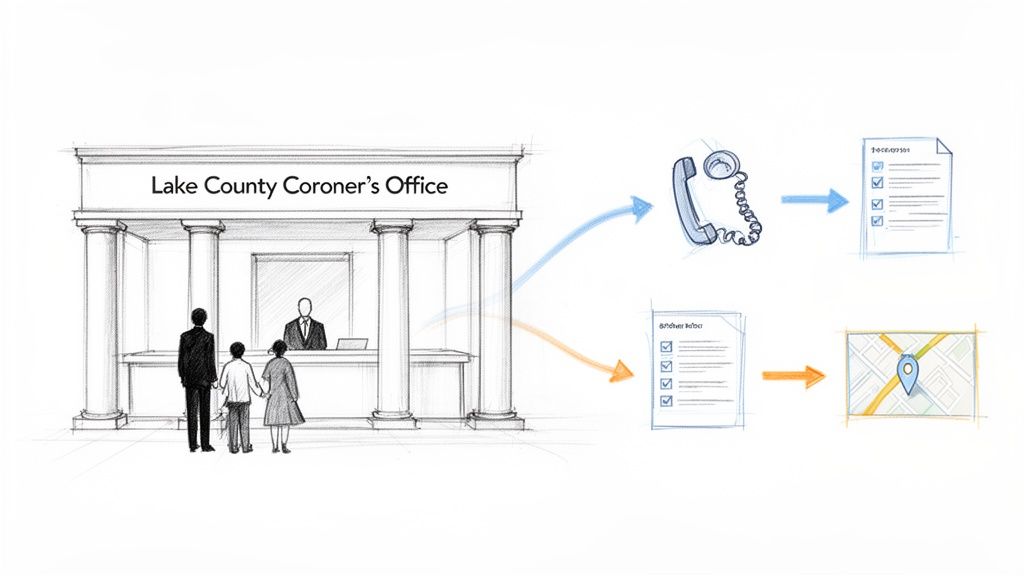
This simple visual breaks down the two distinct paths an autopsy can take, and it all hinges on consent.
As you can see, family consent is the cornerstone of a private autopsy. But a forensic autopsy is a legal investigation—it isn't optional.
In cases where a death is sudden, suspicious, or falls under certain legal categories, the Justice of the Peace or Medical Examiner is required by law to order an examination. This is done to protect public health and safety, and family consent isn't required. You can read more about these roles in my article explaining the difference between a coroner and medical examiner. In those legally mandated cases, my findings go to the state. In private cases, however, my duty is to the family who requested the autopsy. That entire process is built on a foundation of proper legal consent.
When an Autopsy Isn't a Choice, It's the Law
While families can always choose to have a private autopsy, sometimes the decision isn't up to them. There are certain circumstances where Texas law steps in and requires one. This is often a difficult situation for grieving families to navigate, so I want to clarify when and why this happens.
The power to order an autopsy falls to public officials. Depending on where you are in Texas, that will either be a Justice of the Peace or a Medical Examiner. It’s their job to step in and investigate any death that is sudden, violent, or happens under suspicious or unexplained circumstances.
When is a Forensic Autopsy Required?
Texas law is very clear about the situations that trigger an official investigation. As a forensic pathologist, I'm often called upon by county officials in these exact scenarios.
Generally, an autopsy is mandated by law when a death involves:
- Violence or Trauma: This is a broad category covering homicides, suicides, and any kind of fatal injury, whether it was accidental or intentional.
- Sudden and Unexplained Death: When someone who appeared healthy dies without warning, we need to determine why. An autopsy helps rule out hidden medical issues or other factors.
- Suspicious Circumstances: If there's even a hint of foul play, an official investigation is non-negotiable. It’s a cornerstone of the justice system.
- No Doctor Present: If someone dies and hasn't been under the recent care of a physician who can confidently state the cause of death, a forensic exam is required to fill in the missing information.
These examinations aren't just procedural—they're a critical public service. They're performed under strict legal guidelines to deliver objective, scientific answers that provide clarity for legal cases, safeguard public health, and sometimes prevent similar tragedies.
The Role of the Justice of the Peace and Medical Examiner
When a death fits one of those descriptions, the Justice of the Peace or Medical Examiner has a legal duty to open an inquest, which is a formal inquiry into how and why the person died. The autopsy itself is a vital piece of that puzzle.
From my perspective, these cases are about more than just one person. They have a much wider impact. For example, identifying an aggressive, undiagnosed infectious disease can help protect the whole community. Discovering a pattern of fatal accidents at a specific workplace can spark new safety regulations that save lives.
In legally required cases, the family's consent isn't needed. The state's responsibility to find the truth and uphold justice comes first. I know that can be a difficult reality for a family to face, but it's a necessary part of keeping our communities safe.
This isn’t unique to Texas. Legal authorities all over the world have the power to order autopsies. In England and Wales, for instance, a significant number of all deaths lead to post-mortem examinations ordered by a coroner, also without needing the family’s permission. This highlights a common legal principle: when public safety or justice is on the line, the investigation must proceed.
Why Family Consent Is Bypassed
Why is consent not part of the equation here? It’s because the investigation serves the public interest, not just the private interests of one family.
The findings from a forensic autopsy can become crucial evidence in a criminal trial. They could trigger a public health warning or force a company to change its safety rules. If consent were required, someone involved in a crime could simply refuse an autopsy and block the entire investigation. The law removes that possibility to ensure an impartial and complete investigation can be done for the good of everyone. My job in these situations is to provide objective, evidence-based findings to the officials who ordered the exam.
How to Request a Private Autopsy for Your Family
When a loved one passes away and you're left with more questions than answers, a private autopsy can be a powerful tool for finding closure. It’s an independent, scientific examination that can bring clarity when the official cause of death feels uncertain or if you have lingering doubts about the medical care they received.
Navigating this process might seem overwhelming, but it's more straightforward than many people think.
The first step is always to contact a board-certified forensic pathologist. From there, I handle the coordination directly with the funeral home or mortuary. My goal is to make sure your loved one is treated with absolute dignity and respect at every stage, removing as much of the burden from you and your family as possible.

The Initial Steps in the Process
Getting a private autopsy started requires a few prompt actions. An examination done before embalming will always deliver the most accurate and detailed results. I walk families through every requirement to make sure nothing gets missed during this critical window.
Here’s what the first few steps typically look like:
- Initial Contact: It all starts with a phone call to my office. We'll discuss the circumstances of the death and why you're considering a private examination. This helps me understand your specific concerns and confirm if an autopsy is the right path forward.
- Consent and Authorization: We must have legal consent from the next of kin. I provide the necessary authorization forms and make sure they're filled out correctly based on the legal hierarchy set by Texas law.
- Gathering Medical Records: Any medical history you can share is incredibly valuable. I'll ask for hospital records, doctor's notes, or any other documents that can provide crucial context for my physical examination.
Required Documentation and Information
To move forward, I'll need a few key documents from the family or your attorney. Having these ready will help speed things up considerably.
The essential paperwork includes:
- A Completed Authorization Form: This is the legal green light, signed by the person with the legal authority, giving me permission to perform the autopsy.
- A Copy of the Death Certificate: If you have it, the death certificate provides important baseline information.
- Relevant Medical Records: The more complete the medical history, the better. This can include records from hospitals, nursing homes, and family doctors.
Acting quickly is key. The ideal time to perform an autopsy is within 24 to 48 hours after death. While it is sometimes possible to conduct an examination after this window or even after embalming, the results are always most conclusive when the body is examined as soon as possible.
What to Expect During the Examination
Once I have the authorization and your loved one is in my care, the examination begins. This is a careful, methodical medical procedure, much like a surgery, and is always performed with the highest level of respect. My work is all about one thing: delivering factual clarity when you need it most.
After the physical examination, I prepare a detailed report. This document lays out all of my findings—from the external and internal exams to microscopic analysis and any toxicology results. It concludes with a clear, medically sound determination of the cause of death. This final, confidential report is given directly to you or your designated representative, providing the definitive answers you were looking for.
Guidance for Attorneys and County Officials
For legal professionals and public officials, an autopsy report isn't just a medical document—it's a critical piece of scientific evidence. I’ve seen time and again how the unbiased findings from a postmortem examination can become the very foundation of a case or investigation.
Attorneys frequently need private or second-opinion autopsies to get to the bottom of medical malpractice, wrongful death, or contested insurance claims. A thorough report from a board-certified forensic pathologist delivers a clear, impartial, and defensible cause of death. This is essential for litigation, providing clarity where medical records might be vague or incomplete.
Supporting Legal and Public Investigations
In a civil lawsuit, the right evidence is everything. An independent autopsy can confirm that a death was a direct result of a specific incident or uncover signs of negligence. The detailed analysis of tissues, toxicology results, and internal injuries provides the factual groundwork needed to move a case forward—or to determine it doesn't have merit.
Attorneys and county officials lean heavily on these medical findings to guide their legal strategies. You can explore the critical role of medical experts in legal proceedings to see the broader picture of how this evidence is used.
A meticulously documented autopsy, with a clear and unbroken chain of custody, produces evidence that is both scientifically sound and legally defensible. My job is to provide a clear, unbiased medical narrative that can withstand scrutiny in any courtroom.
Serving Texas Counties
My work extends beyond private cases. I also provide crucial services to county officials across Texas. Many smaller or rural counties simply don't have the resources for a dedicated medical examiner's office. In these situations, a Justice of the Peace often acts as the coroner and is legally required to investigate certain deaths.
By contracting for county forensic autopsies, these officials can meet their legal obligations with confidence. My services ensure that these mandated investigations are handled with the highest standards of forensic pathology, providing reliable answers for public records and the justice system.
It's interesting how the authority to request an autopsy shifts from one place to another. In Türkiye, for example, it's almost always legal authorities, not families, who order a forensic autopsy. A study from a Ugandan hospital, however, revealed a different challenge: physicians requested permission for an autopsy in 54% of deaths, but only 38% of families agreed. You can read more about these international autopsy practices and consent rates. This global perspective highlights the unique balance we strike here in Texas between family wishes, medical necessity, and legal requirements.
Whether I'm working on a private case or a public one, my goal is always the same: to deliver precise, impartial, and medically sound findings that serve the legal system, protect public health, and give definitive answers to those who need them most.
Clearing Up Common Misconceptions About Autopsies
When a family is dealing with a loss, the idea of an autopsy can bring up many questions and myths. I've spent my career as a forensic pathologist, and a large part of my job is simply talking with families, cutting through the confusion, and giving them straight, honest information.
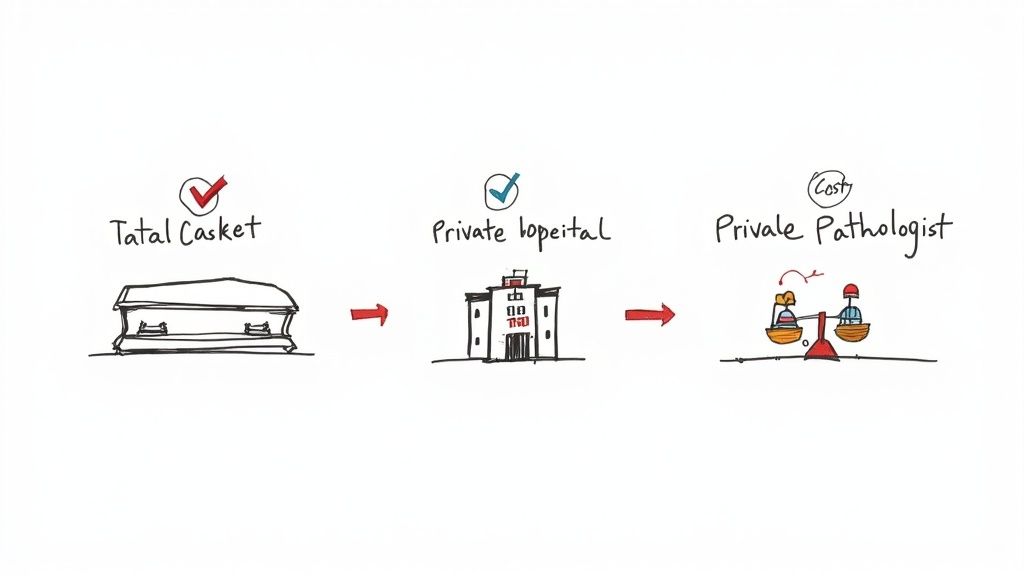
Over the years, I've heard the same concerns come up repeatedly. Let's address them directly, so you can make the best decision for your family during a tough time.
An Autopsy Will Not Prevent an Open Casket Funeral
This is, without a doubt, the number one worry I hear from families. They’re afraid an autopsy means they won't be able to have an open-casket viewing, which for many is a vital part of saying goodbye.
Let me put that fear to rest. Every examination I perform is done with the highest level of respect for your loved one. I use careful surgical techniques, and all incisions are strategically placed so they are not visible once a person is dressed for a viewing. I work closely with funeral homes to ensure that a traditional service is absolutely still an option for you.
Hospitals Rarely Perform Autopsies Today
There's a lingering idea that if someone dies in a hospital and the cause of death is unclear, the hospital will just perform an autopsy. That might have been true a few decades ago, but things have changed.
The reality is that very few hospitals have the staff or facilities for autopsies anymore. It's not part of their standard practice. This is exactly why the role of a private pathologist has become so crucial—I step in to provide the answers that the healthcare system is often no longer set up to deliver.
A private autopsy is an independent medical procedure. It is not conducted by the hospital where care was provided, which ensures a completely objective and unbiased examination of the facts. This independence is vital for families seeking clarity, especially if there are questions about medical care.
Understanding the Cost and Value
Finally, let's talk about the cost. It’s a practical and valid concern for any family. A private autopsy is not covered by insurance, so it is an out-of-pocket expense.
But it helps to see it as an investment in truth and peace of mind. The definitive answers you get from a thorough report can be invaluable. In some situations, these findings are the key to legal action, which can lead to compensation that far exceeds the initial cost of the procedure. I am always transparent about the process and fees so you can weigh the value of getting real answers against the expense.
Frequently Asked Questions About the Autopsy Process
https://www.youtube.com/embed/BhgazgHwt-Y
As a forensic pathologist, I often get practical questions from families and attorneys across Texas who are navigating a very difficult time. My goal is to give you clear answers so you can understand your options and make the best decision for your situation.
How Quickly Do We Need to Decide on a Private Autopsy?
Time is critical here. You'll want to decide within 24 to 48 hours after death if at all possible. The body begins to change very quickly, and the sooner the examination is performed, the more accurate and reliable the findings will be. This is particularly crucial if you can act before the embalming process starts. The chemicals used can alter or interfere with certain lab tests, especially toxicology. While an autopsy can sometimes be done later, acting fast provides the best opportunity for the clearest answers.
What’s the Difference Between Cause and Manner of Death?
These two terms are at the heart of what I do, but they're easily confused. Think of them as two different but related pieces of the puzzle.
- The Cause of Death is the medical reason a person died. It's the specific disease or injury that started the chain of events leading to death. Examples would be a "gunshot wound to the chest" or a "myocardial infarction" (the medical term for a heart attack).
- The Manner of Death is the legal classification of how the death happened. It's not a medical diagnosis but a judgment based on the full investigation and all the available evidence.
In Texas, every death is classified into one of five categories for the manner of death:
- Natural
- Accident
- Suicide
- Homicide
- Undetermined
Can an Autopsy Be Done After Embalming?
Yes, it can be, and I have performed them in these circumstances. However, it's far from ideal. Embalming replaces blood and other bodily fluids with preservative chemicals. This process can unfortunately destroy the very evidence we need for toxicology tests, making it difficult to detect drugs, alcohol, or other substances. It can also change how tissues look under the microscope, potentially clouding the diagnosis of certain diseases. For the most complete and accurate results, an autopsy before embalming is always the best path.
What Information Is in the Final Autopsy Report?
The final autopsy report is the definitive record of the entire examination. It’s a detailed, comprehensive medical document that pulls together all of my findings into a single summary.
You'll find several key sections in the report:
- External Examination: This is a head-to-toe description of the body, noting any identifying marks, scars, or signs of injury.
- Internal Examination: Here, I provide an organ-by-organ breakdown of my findings from the internal examination.
- Microscopic Analysis: This section covers what I found by looking at small tissue samples under a microscope.
- Toxicology Results: This is the lab report detailing any drugs, alcohol, or other substances found in the body.
The report finishes with a summary and my professional opinion on the cause of death, based on all the evidence gathered. This document is delivered directly and confidentially to the person who authorized the autopsy.
If you are facing uncertainty and need clear, compassionate, and medically sound answers, please don't hesitate to reach out. The team at Texas Autopsy Services is here to provide guidance and support. You can learn more about how we can help at https://www.texasautopsyservices.com.