September 7, 2026 · Texas Autopsy Services
Infant Autopsy: Finding Answers & Support in 2026
Understanding the infant autopsy process in Texas. Learn why it's done, what to expect, and how a private autopsy offers clear answers for grieving families.
On this page
After an infant dies unexpectedly, families are often left with questions that feel impossible to organize. What caused the death? Could an infection, developmental condition, or inherited disorder have contributed? Did the initial examination answer every important question?
An infant autopsy can provide medically and legally important information, but it cannot guarantee a single, definitive explanation in every case. Our board-certified forensic pathologists approach these examinations with careful documentation, appropriate testing, and respect for the family's need for clear answers.
- An infant autopsy may identify an infection, congenital abnormality, trauma, or another cause that wasn't visible externally.
- Microscopic tissue examination and other ancillary testing can be essential, even when organs appear normal.
- A private autopsy is separate from an examination ordered by a medical examiner or justice of the peace.
- Texas law provides a specific reporting and parent-notification pathway for sudden, unexplained deaths of children younger than two.
- A report may include written findings, imaging, photographs, toxicology, and related postmortem materials.
Understanding the Need for Answers
A family may be sitting with a funeral home, speaking with an attorney, or waiting for information from a county official. The baby may have appeared healthy, and the available medical records may not explain what happened. In that setting, asking about an autopsy isn't a sign of mistrust or blame. It's a reasonable effort to understand an irreversible event.
We hear families ask whether an examination can identify a direct cause, reveal contributing conditions, or provide information relevant to future pregnancies. Those questions deserve careful answers rather than assumptions. An autopsy may clarify what happened, narrow the possibilities, or show that available evidence doesn't support a more specific conclusion.
A careful examination has more than one purpose
Our team evaluates the medical, forensic, and legal questions together. The process may include review of medical history, external examination, internal examination, microscopy, microbiology, imaging, toxicology, or molecular testing when those studies are appropriate.
The examination also has limits. Some sudden infant deaths remain unascertained after a complete investigation. In those cases, the value may lie in excluding certain causes, identifying what additional testing could help, and documenting the basis for the final opinion.
At Texas Autopsy Services, every examination is performed by a forensic pathologist certified by the American Board of Pathology. We communicate with families, attorneys, healthcare professionals, funeral homes, and county officials in plain language while preserving medical precision and the dignity of the deceased.
Why an Infant Autopsy Is Performed
An infant autopsy usually begins through one of two pathways. The first involves a government authority, such as a medical examiner or justice of the peace, conducting or ordering an examination as part of a medicolegal death investigation. The second involves a family requesting an independent autopsy from a private practice.
These pathways aren't interchangeable. A medical examiner or justice of the peace controls the official jurisdiction in cases that fall within the county's legal death-investigation authority. A private pathologist generally cannot replace that official examination without coordination and authorization. Families should ask the responsible official what examination is planned, what questions it will address, and whether they may obtain an independent review.
When families request a private examination
A private autopsy may be considered when the official investigation does not include an autopsy, when the listed cause is undetermined, or when the family has unresolved concerns about the medical records or prior findings. Attorneys may also request a second opinion autopsy or case review when the cause or manner of death could affect litigation, insurance, guardianship, or another legal matter.
A private examination can involve review of the prior autopsy report, photographs, imaging, toxicology, medical records, and other available materials. If the body remains available, a pathologist may perform a new examination, subject to applicable legal and practical requirements. Families can learn more about the scope of private autopsies before deciding whether that option fits their circumstances.
What the examination may clarify
The purpose isn't only to look for one dramatic finding. It's to assess multiple possible explanations, including:
- Infection: Tissue examination and microbiology may help evaluate bacterial, viral, or fungal disease.
- Developmental conditions: Internal examination may identify congenital abnormalities involving the heart, lungs, brain, kidneys, or other organs.
- Inherited disease: Selected molecular or genetic testing may be considered when the findings and family history support it.
- Trauma or unsafe circumstances: The pathologist documents findings that may be relevant to accidental, natural, or inflicted injury.
- Placental and perinatal factors: For newborn and perinatal deaths, the placenta and umbilical cord can be important parts of the investigation.
In one study of sudden unexpected infant deaths, autopsy findings explained the death in 37% of infants, and histology was the deciding factor in 46% of those cases (peer-reviewed study details). That finding illustrates why a gross examination alone may not answer the family's central question.
The Infant Autopsy Process Step by Step
A private infant autopsy is organized as a sequence of documented decisions. The exact order and testing depend on the circumstances, the condition of the body, available records, legal authority, and the questions the examination needs to address.
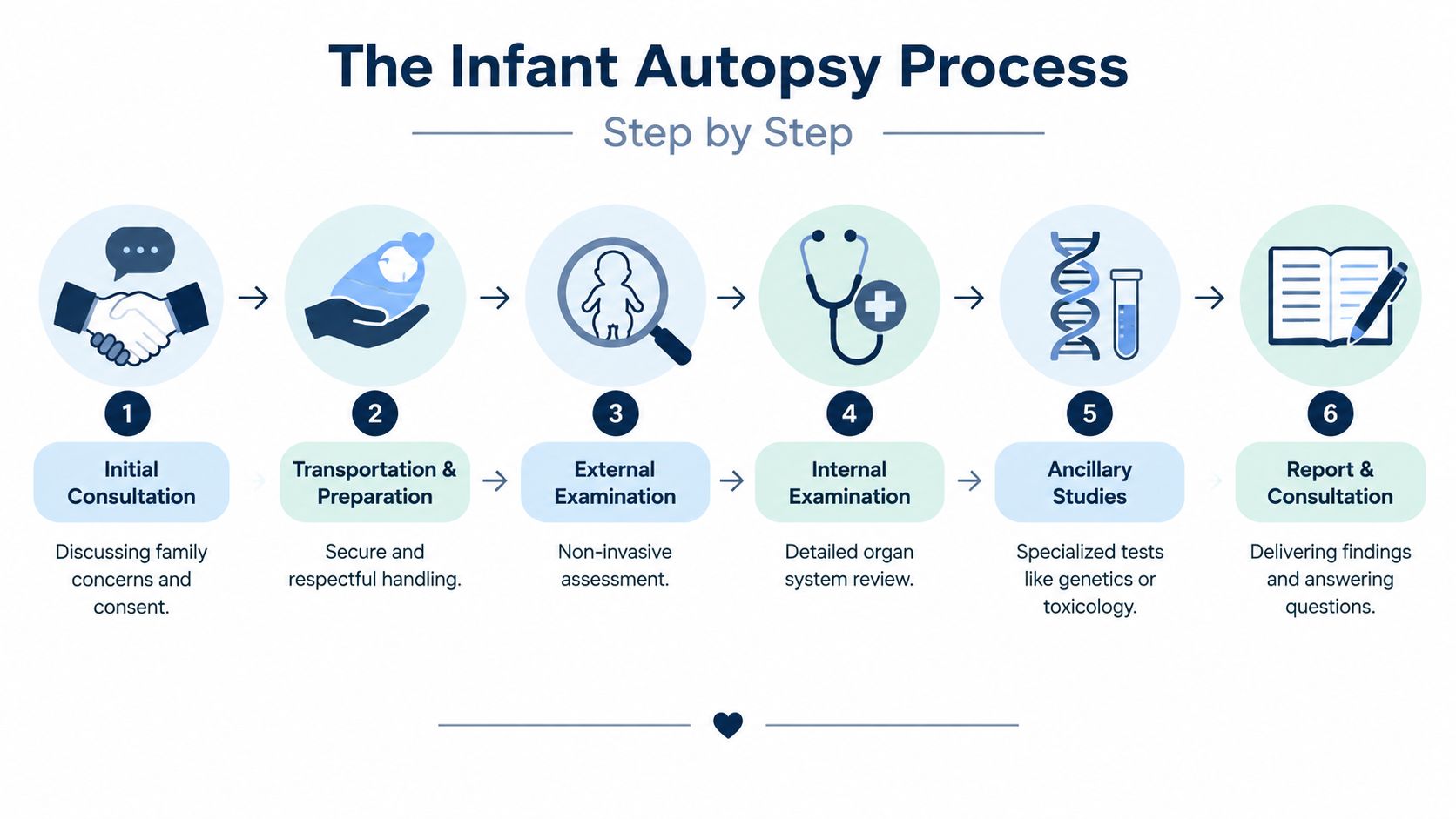
Initial consultation and authorization
The first step is a conversation about what happened, what is already known, and what remains uncertain. Our team explains the proposed examination, possible ancillary studies, documentation needs, fees, and funeral-home coordination. The person with legal authority to authorize the examination must provide consent, and a government investigation may require additional coordination with the responsible official.
Families should also raise religious, cultural, viewing, burial, cremation, or timing concerns before authorization. These details can affect planning and should be discussed openly rather than assumed.
Transportation and preparation
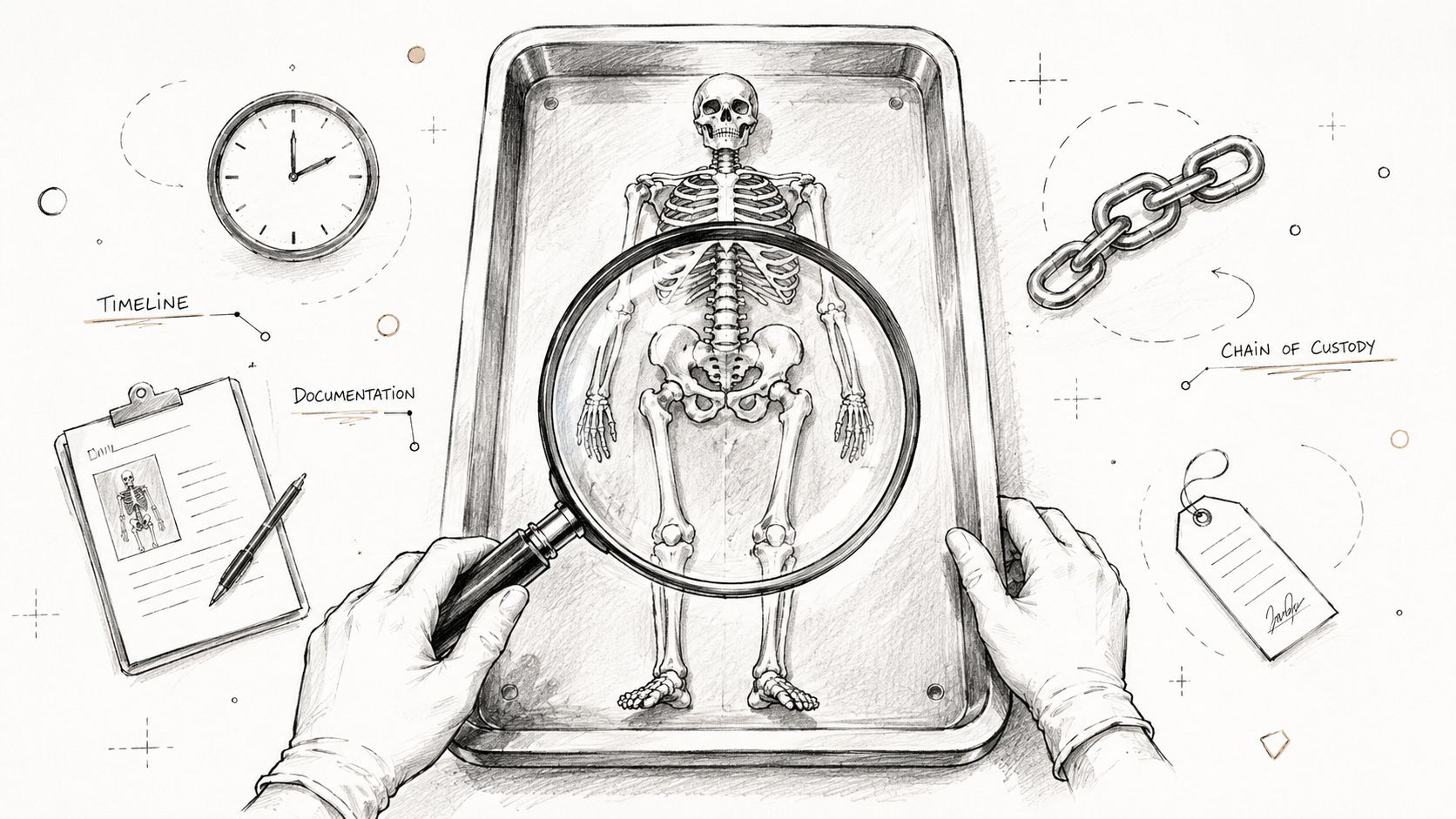
Our in-house licensed transport team can coordinate respectful transportation across all 254 Texas counties. The body is documented during transfer, and records are maintained so the chain of custody remains clear.
Chain of custody means the documented history of who had possession of the body or evidence, when custody changed, and how the material was secured. That record matters for both family confidence and legal review.
The funeral home remains part of the practical plan. We coordinate with funeral homes, including the Waterloo Mortuary pathology partnership, so the deceased can return for final arrangements after the examination.
Examination and laboratory studies
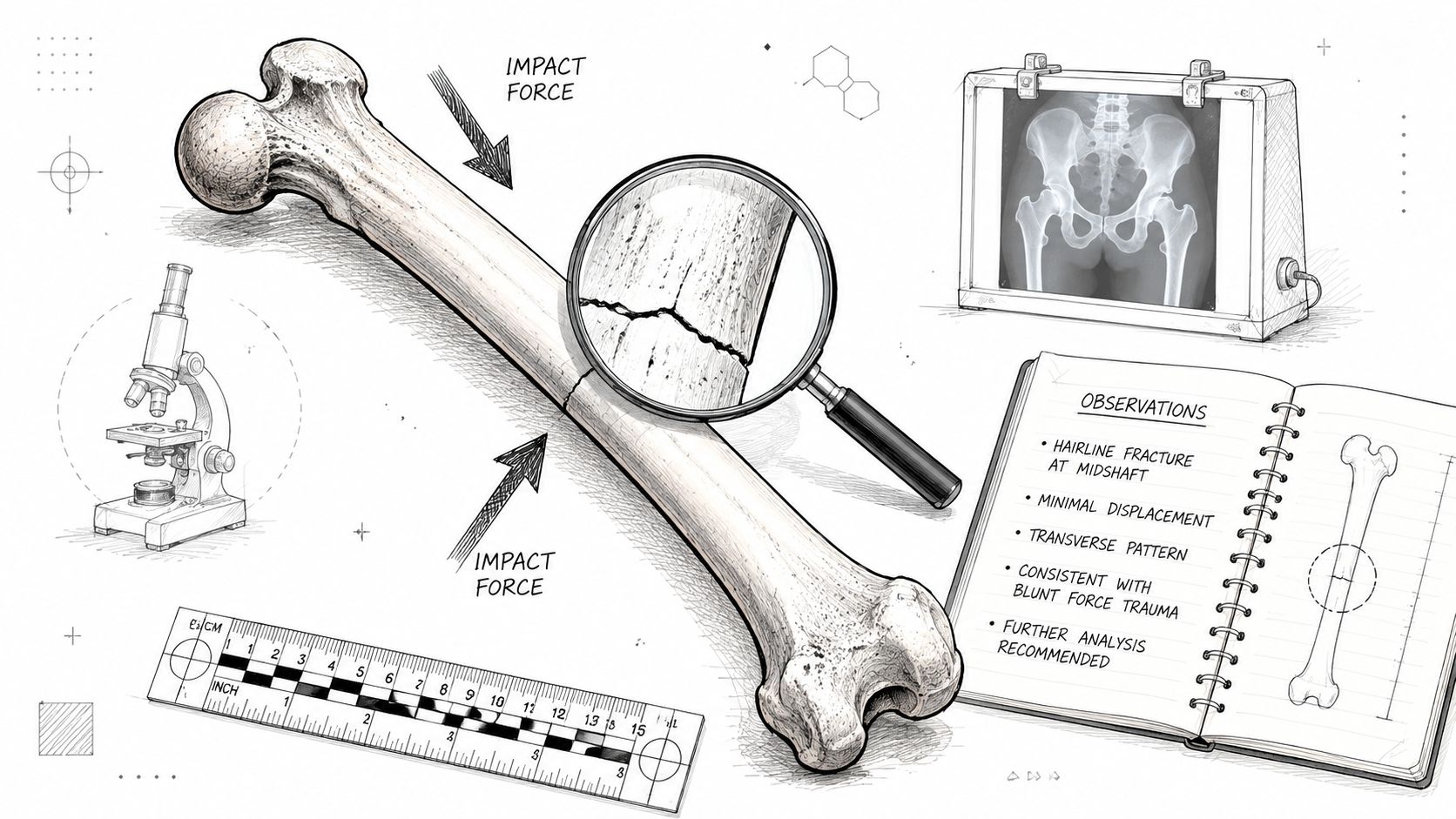
The pathologist begins with the available history and a careful external examination. The internal examination then evaluates the organs and tissues in a respectful, methodical manner. Small tissue samples may be preserved for histology, microbiology, toxicology, or other studies when indicated.
The body is handled with care, and the examination is documented through written notes and, when appropriate, imaging or photographs. Families and attorneys seeking broader context about the surrounding investigation can also review our infant death investigation guidance.
Preliminary information may be available before all laboratory studies are complete. The final interpretation must wait for the evidence needed to support it, especially when specialized testing is required.
Reporting and consultation
Our pathologists integrate the examination findings with the history and laboratory results. We then prepare a written report that distinguishes established findings from reasonable interpretations and unresolved limitations. Families and attorneys can ask questions about terminology, supporting records, and the significance of additional testing.
What an Infant Autopsy Can Reveal
The strongest autopsy conclusions come from combining different kinds of evidence. A gross examination evaluates what the pathologist can see and feel directly. Histology examines tissue under a microscope. Toxicology evaluates substances, while molecular or genetic testing may investigate inherited or spontaneous abnormalities when the case supports it.
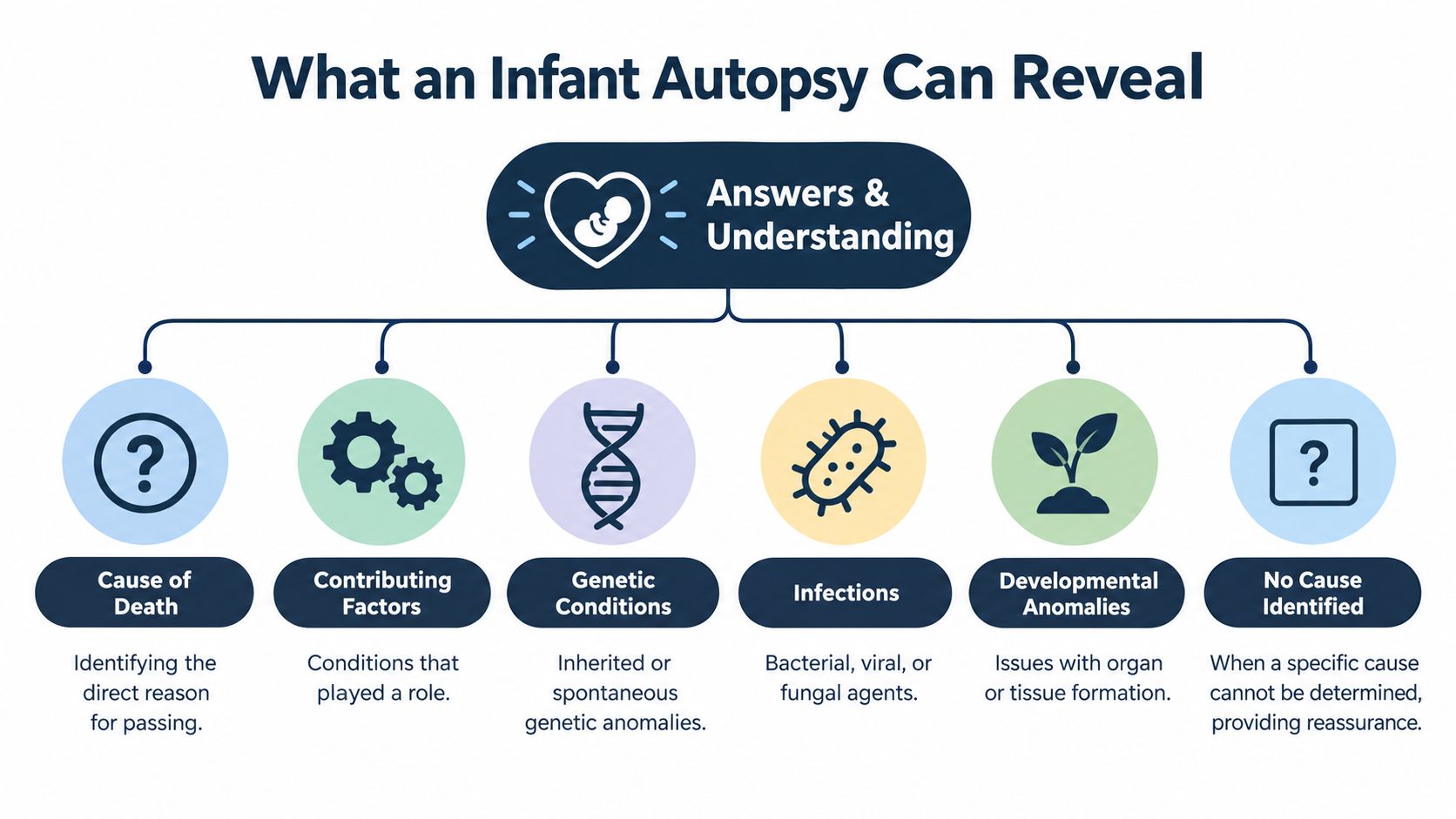
Four layers of postmortem evidence
A normal-looking organ isn't necessarily a normal organ. Systematic histological sampling of organs that appear normal to the naked eye can change the final cause of death in 5–10% of sudden unexpected child and infant deaths, according to neonatal autopsy guidance from the Royal College of Pathologists (guidance on neonatal autopsy practice).
The findings may answer different questions:
- Cause of death: The medical reason the baby died, such as an infection or a structural abnormality.
- Contributing factor: A condition that played a role but may not be the sole direct cause.
- Manner of death: The classification describing how the death occurred, such as natural, accidental, homicide, suicide, or undetermined, depending on the evidence and jurisdiction.
- Unascertained result: A conclusion reached when the available evidence doesn't support a more specific cause.
These terms shouldn't be treated as interchangeable. A cause of death describes the medical explanation, while manner of death places that explanation within a broader medicolegal classification.
Why a negative result can still matter
A “negative” autopsy doesn't mean that nothing was done or that the examination failed. It may exclude major structural abnormalities, document the absence of certain injuries, and guide microbiology, imaging, or molecular studies.
Recent postmortem diagnostic material emphasizes that many negative infant autopsies remain clinically useful when combined with those additional methods. The purpose is often to narrow the explanation rather than produce a simple yes-or-no answer. Families considering questions related to sudden unexpected infant death can find additional context in our SIDS and sudden infant death resource.
A final report should state what the evidence supports and what it cannot establish. That distinction protects families from false certainty and gives attorneys a clearer basis for evaluating the case.
Understanding the Final Autopsy Report
The final autopsy report translates the examination into a formal medical and forensic record. It generally includes the history considered, the external and internal findings, laboratory results, diagnoses, and the pathologist's cause-of-death opinion.
The main parts of the report
A report may include:
- Case information: Identifying and administrative details relevant to the examination.
- Summary of findings: The important observations in a more accessible form.
- Detailed examination: Documented external, internal, microscopic, toxicological, microbiological, imaging, or molecular findings.
- Final diagnoses: The conditions identified through the examination and testing.
- Cause and manner statements: The medical cause and, when appropriate, the medicolegal manner classification.
- Limitations: Any missing records, unavailable samples, incomplete testing, or uncertainty affecting interpretation.
Texas Health and Safety Code Chapter 671 defines an autopsy report broadly. It includes the written postmortem report, X-rays and photographs taken during the examination, toxicology results, and other reports involving examination of internal organs and structures after dissection (Texas Health and Safety Code Chapter 671).
For attorneys, structured document review tools such as AI medical report data extraction may assist with organizing large medical records. Such tools don't replace a forensic pathologist's interpretation, testimony, or responsibility for the postmortem opinion.
Timing and document integrity
The examination itself may occur promptly, but the final report depends on the testing required. Toxicology, microbiology, histology, and molecular studies can each affect when the report is complete, so we don't promise an unconditional delivery date. Most cases are completed within 24–48 hours for the examination phase, while outstanding laboratory work may require additional time.
We use secure records practices and documented handling procedures. A report intended for court, insurance, or legal review must be traceable to the correct case materials, with chain-of-custody documentation supporting the integrity of the evidence.
Legal and Family Considerations in Texas
Texas law creates a specific process for certain sudden, unexplained deaths involving young children. When a child younger than two years old dies suddenly or is found dead and the cause is unknown, the death must be reported immediately to the justice of the peace, coroner, medical examiner, or another proper official. That official must inform the parents or legal guardian that they may request an autopsy and that the state will pay the reasonable cost of that examination under the Texas Health and Safety Code framework (Texas Attorney General opinion addressing Chapter 673).
If the parent or legal guardian requests the autopsy through that statutory process, the responsible official must arrange it and notify the parent or guardian of the results. Families should still ask which official has jurisdiction, what examination is planned, and how to obtain records.
Why certification and independence matter
Every examination performed by our practice is conducted by a forensic pathologist certified by the American Board of Pathology. That credential reflects a specialized professional standard for postmortem medical and medicolegal work. It's particularly relevant when the findings may be reviewed by an insurer, attorney, court, county official, or another pathologist.
An independent autopsy or second-opinion review doesn't automatically reach a different conclusion. Its value is that the reviewer evaluates the available evidence without being responsible for the original decision. Our team may review prior reports, photographs, imaging, laboratory results, medical records, and investigative materials, then identify agreements, discrepancies, and unanswered questions.
Texas agencies and records
The Texas Funeral Service Commission and the Texas Health & Safety Code govern important aspects of funeral service, disposition, records, and related responsibilities. The exact legal procedure depends on whether the case is under county jurisdiction, a medical examiner's authority, or a privately authorized examination.
County officials who need outside forensic pathology support can review our county forensic autopsy services. Families and attorneys handling sensitive records can also consult our HIPAA-compliant release of information guidance. Legal questions about a specific case should be directed to the responsible official or qualified legal counsel.
Frequently Asked Questions About Infant Autopsies
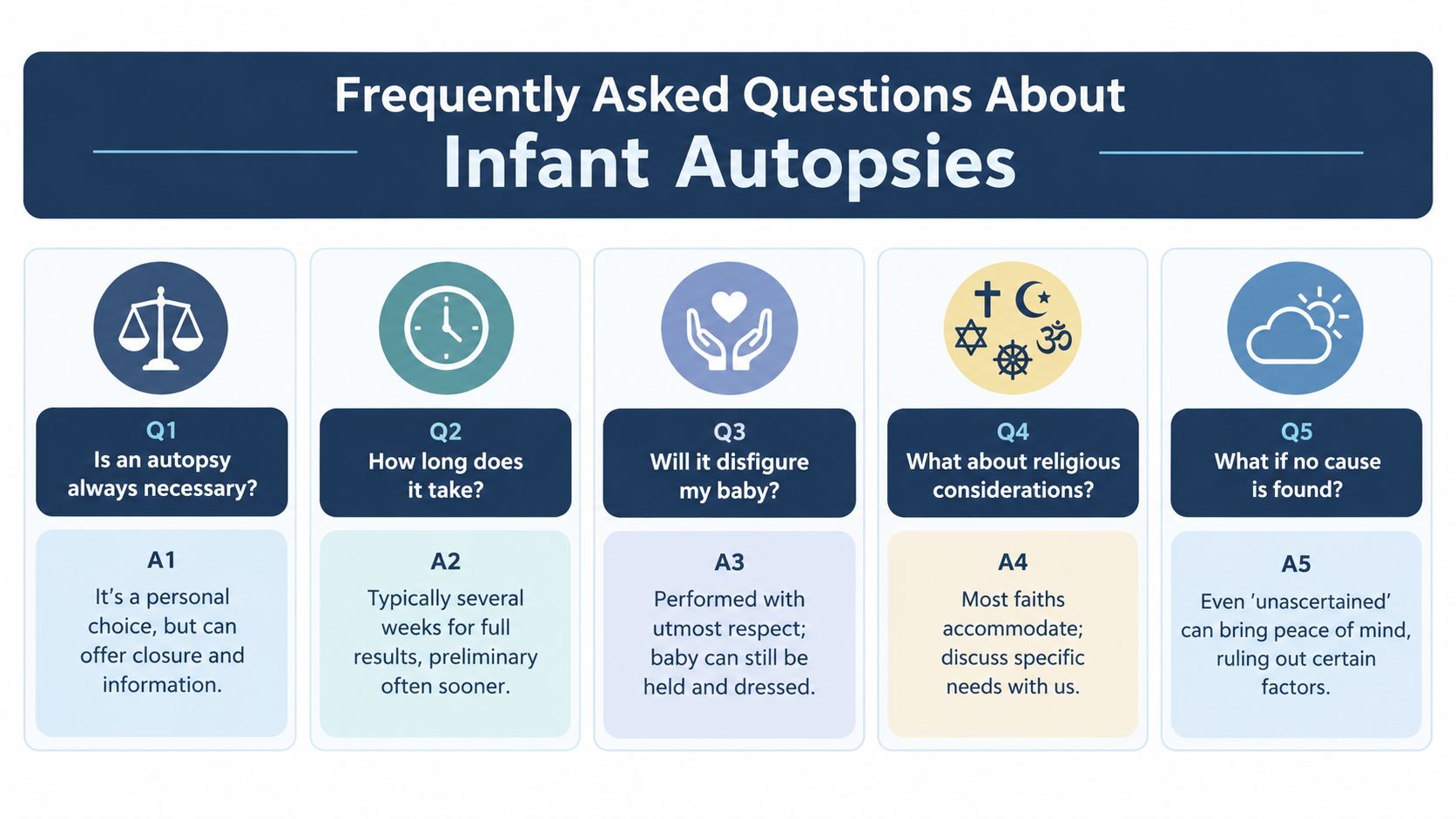
Will an autopsy prevent an open-casket funeral?
Usually, families can still plan viewing and funeral arrangements after an autopsy. Incisions are respectfully closed and can generally be covered by clothing, wrapping, or other preparation by the funeral home. Families should tell the pathologist and funeral director about viewing preferences before the examination.
What does a private infant autopsy cost?
Our practice uses flat-rate, all-inclusive pricing for private services, with the exact fee depending on the examination requested and the circumstances of the case. We explain what the quoted service includes before authorization, including transportation, examination, documentation, and any separately necessary testing. Families and attorneys should request a written estimate rather than relying on a general online figure.
What happens if no clear cause is found?
A report may remain undetermined or unascertained when the evidence doesn't support a specific cause. That conclusion can still narrow the possibilities and document which conditions, injuries, or diseases weren't identified.
Many negative examinations become more useful when paired with microbiology, imaging, and selected molecular testing. Recent review material recommends combining these approaches because the answer may depend on evidence that isn't visible during the initial examination (postmortem diagnostic review).
Can religious or cultural needs be accommodated?
Families should explain time-sensitive burial requirements, handling preferences, and religious restrictions during the first consultation. Our team can discuss what can be accommodated while preserving the integrity of the examination and complying with applicable law.
Grief support is separate from the forensic process, but families may benefit from carefully selected resources for coping with loss. Speaking with a counselor, faith leader, or support organization can provide help that an autopsy report cannot.
How do families decide?
The decision belongs to the person or authority legally entitled to authorize the examination, subject to any official jurisdiction. Families should ask what is already known, what questions remain, what testing is proposed, how the report will be handled, and whether an independent review is appropriate.
Texas Autopsy Services provides private infant autopsies, second-opinion reviews, licensed transport, and forensic pathology support across all 254 Texas counties. When you need to discuss an infant death with care and clarity, visit Texas Autopsy Services to contact our team and review the next practical step.