June 5, 2026 · Texas Autopsy Services
Forensic Specimen Collection Procedures: Expert Guide
Master forensic specimen collection procedures with a board-certified Texas pathologist. Covers blood, tissue, and swabs for accurate cause of death
On this page
- The Search for Answers Begins with a Specimen
- The Foundation of an Accurate Autopsy Report
- Core Specimen Types and Their Indications
- The Methodical Steps of Forensic Collection
- Secure Transport and Laboratory Submission
- Guidance for Complex Cases and Special Scenarios
- Questions from Families and Attorneys
What Families and Attorneys Should Know About Specimen Collection Procedures
TL;DR
- Specimen collection procedures are the foundation of a credible autopsy. If a sample is poorly collected, mislabeled, contaminated, or mishandled in transit, later testing may be less reliable.
- Chain of custody matters. In plain terms, it is the documented record of who collected a specimen, how it was labeled, where it went, and who handled it afterward.
- Different specimens answer different questions. Blood, urine, vitreous humor, tissues, swabs, hair, and gastric contents each serve a distinct forensic purpose.
- Small technical details are not minor. Rules such as gentle tube inversion, prompt processing, and careful temperature control exist to protect the truth of the findings.
- In difficult cases, transport and storage may be the biggest risk. The quality problem is not always the initial collection itself. It may be what happens after collection.
- Independent review can help families and attorneys understand what was collected and why.
A family often reaches me after a difficult stretch of uncertainty. They may have a death certificate that feels incomplete, a hospital course that raised questions, or a legal case where facts need to be documented carefully and objectively. Attorneys come with a different urgency, but the same underlying need. They want findings that can withstand scrutiny.
In those moments, people often think first about the final autopsy report. I understand that. The report is what they hold in their hands. But the report only has value if the material behind it was collected properly from the start.
At Texas Autopsy Services, every examination is performed by a board-certified forensic pathologist experienced in medicolegal death investigations. Our work centers on one principle: follow the evidence carefully, explain it plainly, and treat the deceased and their family with respect.
I've seen families gain clarity because one carefully preserved specimen answered the right question. I've also seen how confusion grows when collection and handling are treated as routine housekeeping instead of medical-legal evidence work.
A specimen is not just a sample. In a forensic case, it is part of the evidentiary record.
That is why specimen collection procedures are imperative. They are not administrative details. They are the bedrock of a trustworthy cause of death investigation, whether the case involves a natural death, a possible medication issue, trauma, neglect, or a disputed timeline.
The Search for Answers Begins with a Specimen
A small detail can change the entire case
One of the hardest moments for a family is living with an open question. They may know when someone died, but not why. They may know an event occurred, but not whether it caused death. In those cases, a carefully collected specimen can provide the clarity that conversation, assumption, and even a visual examination cannot.
A toxicology sample may help distinguish intoxication from a medical collapse. Histology may show hidden heart disease that was not apparent externally. Vitreous chemistry may remain useful when decomposition limits the value of blood. The answer does not come from drama. It comes from disciplined collection and disciplined interpretation.
Why this matters in a private autopsy
In a private or second opinion autopsy, families and attorneys are often trying to close an information gap. That gap may concern medical treatment, timing, injury, substance exposure, or whether the stated cause of death fits the physical findings. The integrity of that review depends on the integrity of the specimens.
That is why I approach collection as part of the truth-finding process itself. The autopsy room is not a place for approximation. Each specimen has to be selected for a reason, collected in a way that preserves its value, and documented so that no one later has to guess what it was, where it came from, or whether it can be trusted.
A sound forensic opinion begins long before I sign a report. It begins at the moment of collection.
The people served by this process
Families need understandable answers. Attorneys need defensible evidence. Medical professionals need a postmortem evaluation that respects clinical facts while remaining independent. Those needs overlap more than many people realize.
What all of them require is the same foundation:
- Correct identification so the specimen is tied to the right decedent
- Proper container selection so preservatives and additives match the intended testing
- Thoughtful volume collection so the laboratory has enough material without unnecessary excess
- Clear documentation so the specimen can be traced from collection through analysis
- Protected handling so contamination, leakage, or degradation does not distort the result
These are basic principles, but they are not simple in practice. They require training, repetition, and judgment.
The Foundation of an Accurate Autopsy Report
Chain of custody in plain English
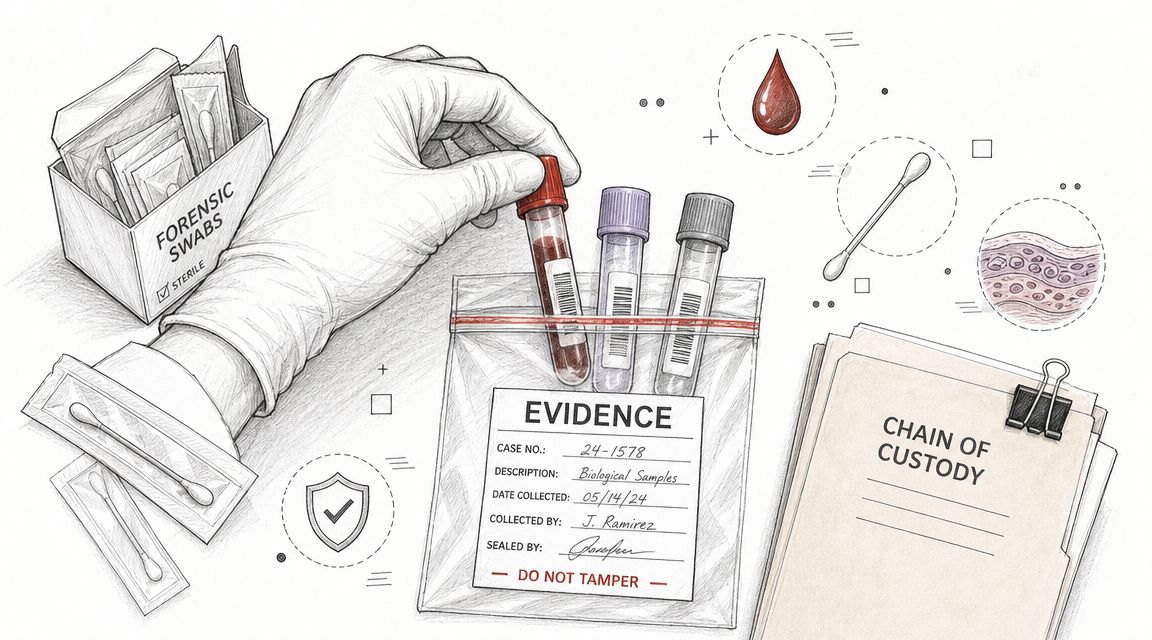
Chain of custody means the documented history of a specimen from collection to final use. It records who collected it, how it was labeled, how it was packaged, where it was stored, when it was transferred, and who received it next.
For families, that may sound formal. For attorneys, it will sound familiar. In forensic pathology, it is indispensable. If there is no reliable chain of custody, confidence in the specimen drops. If confidence in the specimen drops, confidence in the result drops with it.
A proper chain of custody usually includes these elements:
- Collection with unique identification at the point of removal
- Sealing in an appropriate container
- Documentation of date, time, specimen type, and collector
- Transfer logging when the sample changes hands
- Controlled transport to the testing facility
- Receipt and accessioning by the laboratory before analysis
Practical rule: If a specimen cannot be clearly identified and traced, it should not be treated as strong forensic evidence.
Modern specimen collection is a controlled process
The science of collection has changed over time. It is no longer enough to say that a sample was obtained. The pre-analytical phase matters. That means volume, tube choice, preservatives, labeling, timing, and storage all affect what the laboratory can do with the specimen and how much confidence can be placed in the result.
A PubMed-indexed study on specimen collection volumes reported a median discard volume of 2.8 mL per tube for complete blood cell counts and 2.0 mL per tube for electrolyte panels, and the authors concluded that most laboratories could reduce collection volumes without compromising timely, reliable results, as described in this PubMed study on specimen collection volumes. That work helped establish an important principle. Good collection is not about taking more. It is about taking the right amount in the right way.
For professionals who review laboratory records and postmortem testing, tools that help interpret complex reports can also be useful. Attorneys and clinicians who want a plain-language supplement sometimes explore PDF AI's healthcare agent to organize laboratory terminology before a formal expert review.
A short visual explanation can also help clarify why process discipline matters in evidence handling.
Why this protects the final opinion
When I sign an autopsy report, I am not just describing anatomy. I am integrating gross examination, microscopy, toxicology, scene context when available, and medical records. Every one of those later steps depends on specimen integrity.
A flawed sample can create noise. A well-collected sample creates confidence.
Core Specimen Types and Their Indications

Blood
Blood is one of the most recognized forensic specimens, but it is not interchangeable with every other fluid and it is not always the best sample in every case. In an autopsy, blood may be collected for toxicology, serology, and in some settings DNA-related analysis.
Its value depends heavily on where it is obtained, how it is preserved, and whether postmortem change has altered it. A blood result may help answer questions about medication exposure, alcohol, drugs, or disease processes. But blood also has limitations in decomposed cases or in bodies with substantial postmortem redistribution.
Urine and other body fluids
Urine can be useful in toxicology because it may contain drug metabolites that help show exposure. It does not answer every timing question, and it should never be interpreted in isolation, but it often adds context to blood findings.
Procedural details matter here. The University of Florida urology protocol specifies a minimum of 12 mL urine for routine urinalysis, notes that volumes under 5 mL may be flagged as potentially inaccurate with a QNS warning, and requires transport to the lab within 2 hours or refrigeration until transport, as outlined in the University of Florida specimen collection procedures. In a forensic setting, the exact collection approach differs from outpatient collection, but the principle is the same. Validity depends on technique and handling.
Other fluids may also matter, including cerebrospinal fluid in selected cases and vitreous humor, the clear fluid in the eye. Vitreous is especially useful when decomposition or contamination limits the reliability of blood. It can assist with chemistry interpretation and may remain informative when other fluids have degraded.
Tissue for histology
Microscopic examination often resolves questions that the naked eye cannot. Tissue sections from organs such as the heart, lungs, liver, kidneys, and brain may reveal inflammation, scarring, infection, vascular disease, tumor, or subtle injury.
Families sometimes learn that an apparently sudden death had a significant underlying natural disease process from these findings. Attorneys may also find support for or against a claim involving delayed diagnosis, treatment complications, or trauma.
For people trying to understand how laboratory toxicology fits beside histology, a sample example toxicology report can help illustrate what those findings do and do not show.
Swabs
Swabs are collected for targeted purposes. They may be used for DNA, microbiology, or documentation of possible bodily fluid transfer. Their forensic value depends on collecting material that represents the process under investigation.
For respiratory viral sampling in clinical guidance, Dr. Michael Miller emphasizes that nasopharyngeal sampling is preferred and that the swab should be rotated several times against the nasopharyngeal wall so the sample represents the disease process rather than superficial contamination, as summarized in the earlier University of Florida protocol reference. The broader point carries over to forensic work. A poorly targeted swab produces a weak answer.
The right specimen from the wrong location can still be the wrong specimen.
Hair, fibers, and gastric contents
Hair may help in trace evidence work, DNA contexts, and in some settings a broader history of exposure. Fibers may matter in scene-linked cases. Gastric contents can sometimes contribute to interpretation of ingestion, though they require caution and context.
These are not automatic collections in every autopsy. A thorough examination is not the same as collecting everything possible. It means selecting specimens that are scientifically useful for the questions at hand.
A practical way to think about specimen choice
| Specimen | Common forensic use |
|---|---|
| Blood | Toxicology, serology, selected identification work |
| Urine | Drug exposure context, metabolite detection |
| Vitreous humor | Chemistry support, decomposition cases |
| Tissue | Histology, disease and injury evaluation |
| Swabs | DNA, microbiology, transfer evidence |
| Hair or fibers | Trace evidence, selected exposure history |
| Gastric contents | Possible ingestion context |
The Methodical Steps of Forensic Collection
Technique is where reliability is won or lost
Families sometimes assume that once an autopsy begins, specimen collection is automatic. It is not. Good forensic collection is methodical. The right specimen has to go into the right container, under the right conditions, with the right label, and with contamination controlled at every stage.
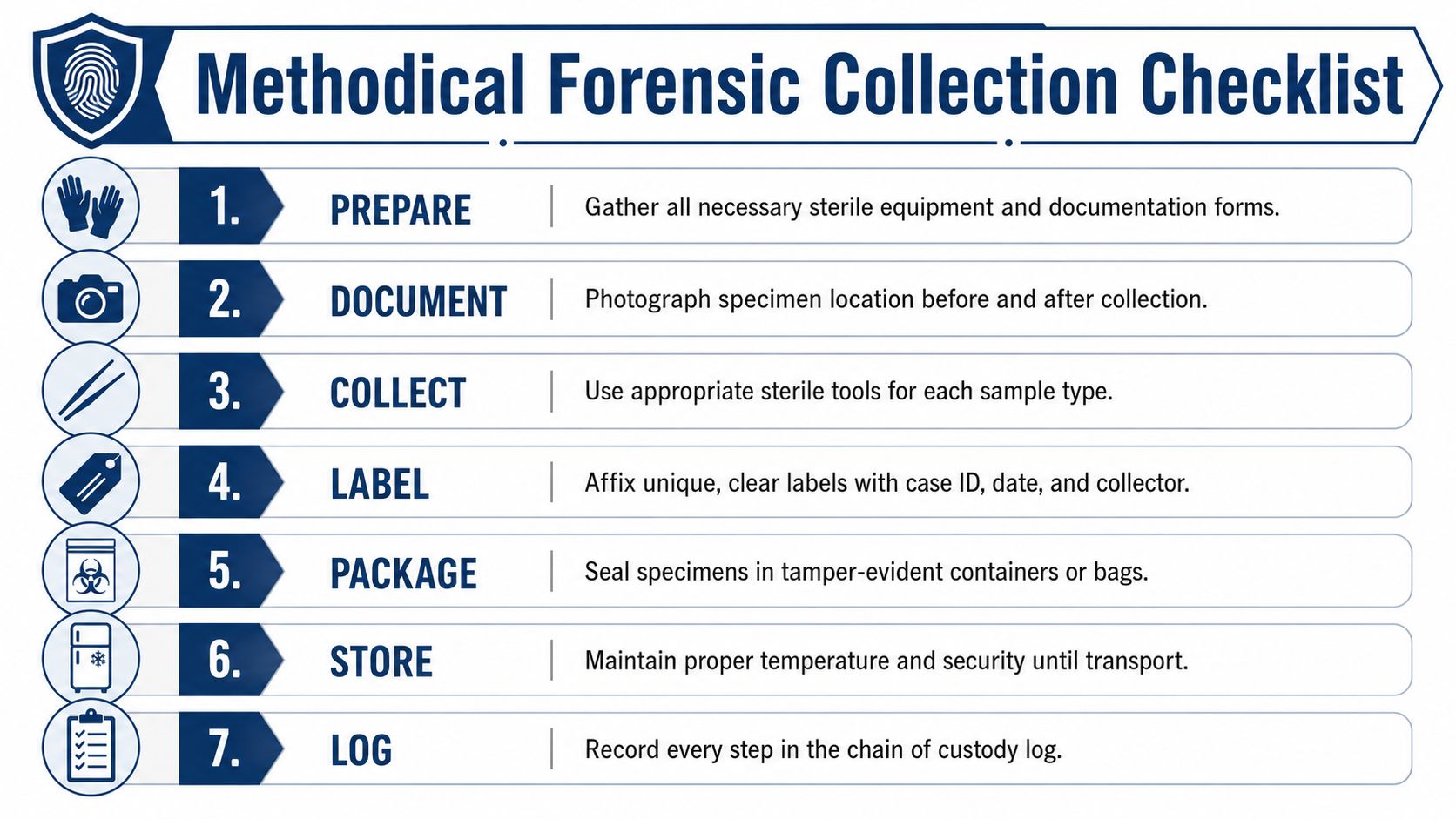
The sequence matters:
- Preparation first. Equipment, sterile tools, preservative tubes, labels, and documentation materials should be ready before collection begins.
- Specimen-specific tools. The instrument and container should fit the sample. Blood, tissue, swabs, and trace evidence are not handled the same way.
- Immediate labeling. A specimen should be labeled at the time of collection, not later from memory.
- Separation of tasks. Clean areas, dirty areas, and preserved evidence areas should not blur together.
- Storage control. Once collected, the specimen must be kept under conditions that preserve its intended use.
Why standardized steps use exact numbers
Precision is not arbitrary in laboratory practice. Lab guidance commonly requires mixing additive tubes by gentle inversion 5 to 10 times, separating serum from red cells within 2 hours of venipuncture, and not leaving a tourniquet on for more than 1 minute, according to Labcorp's introduction to specimen collection. Those numbers exist to reduce hemolysis, clotting error, contamination, and other avoidable distortions.
A forensic autopsy is not the same as outpatient phlebotomy, but these principles remain highly relevant. Preservatives must be mixed properly. Tubes must be filled appropriately. Delay can matter. A sample that clots unexpectedly or degrades in the wrong container may narrow what the laboratory can validly report.
What works and what fails
The best collection habits are disciplined and somewhat repetitive. That is exactly why they work.
What works
- Using the correct tube for the test so preservatives match the laboratory purpose
- Changing gloves or tools when needed to reduce cross-contamination
- Writing labels clearly and completely with case identifiers, specimen type, date, time, and collector
- Photographing and documenting when appropriate so the record reflects what was collected and from where
What does not work
- Batch labeling at the end of the procedure
- Using one surface for everything from tissue handling to swab packaging
- Assuming transport staff will correct documentation gaps
- Treating contamination prevention as optional because the case “seems straightforward”
For readers who want a practical outside reference on contamination control, Herbilabs has a useful guide on maintaining lab purity for reliable results. The setting is broader than forensic pathology, but the lesson is the same. Once contamination is introduced, later interpretation becomes harder.
A detailed overview of how an autopsy is performed step by step can also help place specimen collection within the larger postmortem examination.
Careful collection does not slow the truth. It protects it.
The one point families should remember
Most disputed findings do not become disputed because the microscope failed. They become disputed because someone later asks whether the sample itself was sound. That is why specimen collection procedures deserve as much attention as the final diagnosis.
Secure Transport and Laboratory Submission
Collection is only half the job
A perfectly collected specimen can still lose value if transport is careless. This is one of the least visible parts of forensic work, but it is one of the most important. The specimen has to arrive intact, correctly identified, and kept under conditions appropriate for the planned testing.
In practice, that means leak-resistant primary containers, absorbent material where needed, secure secondary packaging, and a rigid outer container for transport. Labels must remain legible. Seals must remain intact. The documentation traveling with the specimen has to match the specimen itself.
Temperature and timing are real forensic issues
Not every sample travels the same way. Some specimens should remain refrigerated. Some may require freezing. Others are kept at controlled room conditions depending on the laboratory protocol and the test requested. The collection team cannot improvise these details after the fact.
This matters even more in Texas, where geography itself creates logistical demands. Rural recoveries, long transport distances, weather, weekends, and laboratory cutoffs can all influence how a specimen moves from the autopsy setting to final analysis.
A useful overview of this downstream phase appears in this post-mortem toxicology guide, especially for readers trying to understand why the path from collection to final toxicology result is not always simple.
Coordination has to be quiet and exact
Families rarely see this part of the process, and that is appropriate. It should feel orderly, not dramatic. If a case requires coordinated handling with funeral professionals or mortuary partners, the goal is continuity, security, and respect for the decedent throughout the process, including arrangements such as the Waterloo Mortuary Partnership.
What works here is consistency. What fails is assumption.
A specimen should never be treated as if the next person in the chain will “know what was meant.” In forensic work, what was meant is never enough. What was documented is what matters.
Guidance for Complex Cases and Special Scenarios
When routine specimens are no longer available
Not every case presents with ideal specimens. Advanced decomposition may make peripheral blood unusable or unavailable. In those settings, the forensic pathologist has to adapt without overpromising what any one test can establish.
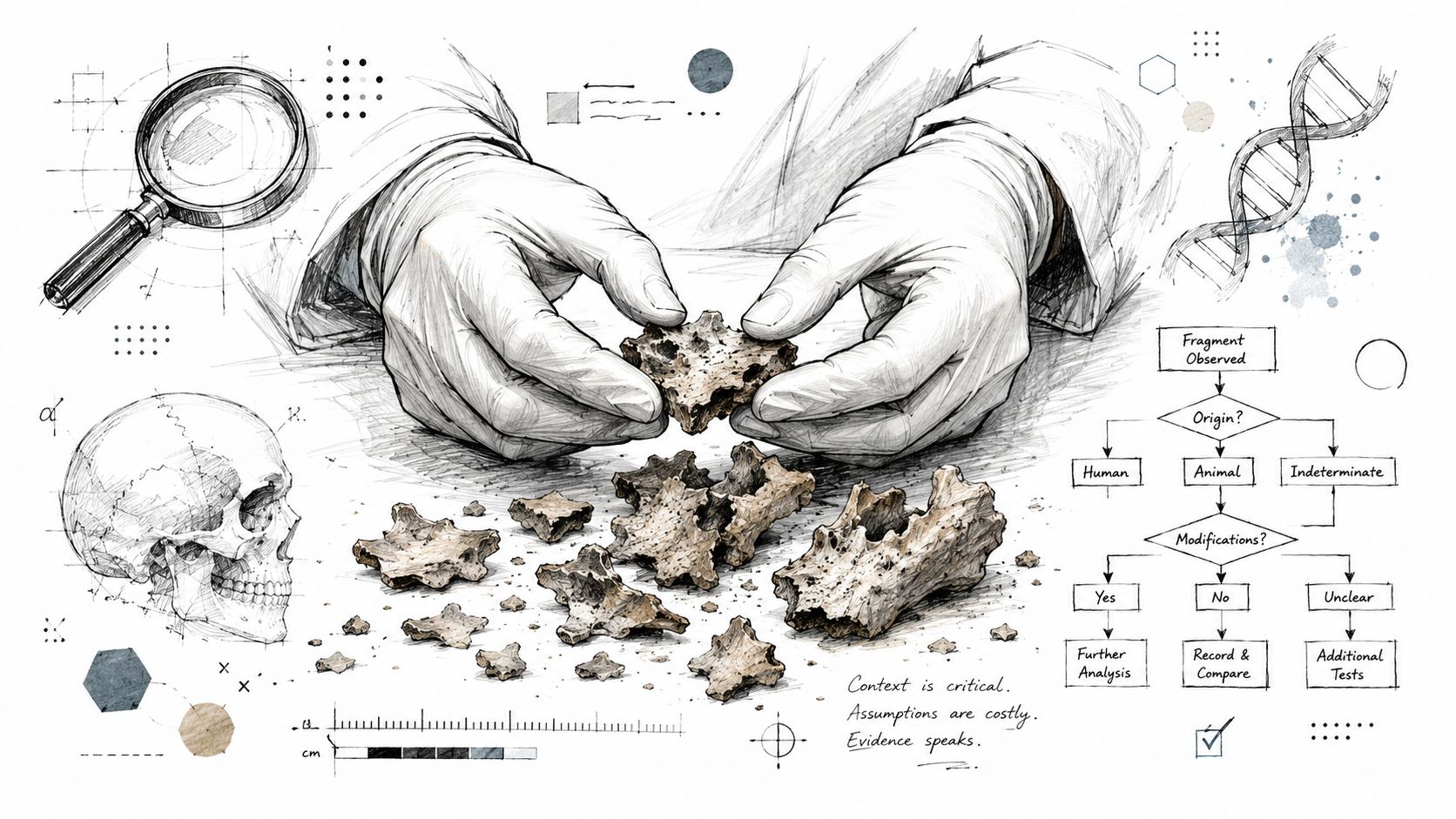
Alternative specimens may include vitreous humor, tissue, bone, hair, or other preserved material depending on the condition of the remains and the question being asked. These are not substitutes in the simplistic sense. They are different evidence streams, each with strengths and limits.
For example, vitreous may remain informative after other fluids have deteriorated. Bone and hair may be relevant where identity or long-term exposure is at issue. Tissue still may allow histology even when fluid analysis is constrained.
Delayed transport and low-resource settings
One of the biggest practical problems in specimen collection is that many protocols assume ideal conditions. Real cases are often less accommodating. Some deaths occur far from major laboratory infrastructure. Some involve delays for legal release, scene access, or transfer. Some arise in settings where refrigeration and prompt shipping are harder to secure.
Guidance from UCHealth notes that a significant challenge in specimen collection is handling cases with unavoidable delays and that the biggest quality risk may be transport time and temperature control challenges after collection, as discussed in the UCHealth specimen collection and handling guide. I agree with that practical point. In difficult cases, the weakness in the chain is often not the initial swab or tube. It is what happens afterward.
In forensic work, the specimen's journey can be just as important as its collection.
This is especially relevant for county and regional service work, including County Forensic Autopsies, where distance and timing can complicate otherwise straightforward protocols.
Pediatric, fetal, and infectious-risk cases
Pediatric and perinatal autopsies require a different scale of handling. The specimen volumes are smaller. The margin for error is narrower. Collection has to be planned so that essential testing is preserved without exhausting limited material.
Cases with suspected infection require another adjustment. Staff protection, sterile technique, and contamination prevention become even more central. In these settings, the discipline of forensic pathology is not only about discovering cause of death. It is also about protecting laboratory validity and personnel safety.
Experience matters most when conditions are imperfect
Routine cases test a pathologist's habits. Difficult cases test judgment.
That is where experience matters most. The right response is not collecting more indiscriminately. It is selecting the most informative specimens available, documenting limitations accurately, and interpreting results with restraint.
Questions from Families and Attorneys
Can we request specific tests on the specimens
Yes, often you can raise specific concerns, and you should. If a family is worried about a medication, a possible toxin, an inherited condition, or a treatment complication, that information can help guide specimen selection and laboratory requests. Attorneys should do the same when there is a defined legal theory or disputed factual issue.
The important limit is scientific usefulness. Not every requested test is appropriate in every case. Some tests require a particular specimen type, a certain amount of material, or a condition of preservation that may not be present. My role is to decide which requests are valid, informative, and interpretable in the context of the autopsy.
What happens to the specimens after the autopsy
Specimens are treated as part of the medical and forensic record. They are labeled, stored securely, and handled according to laboratory and legal requirements. In some cases, remaining material may be retained so that follow-up testing or later review remains possible if new questions arise.
Disposition is handled respectfully and in compliance with applicable rules and laboratory practice. This is not an informal process. It is documented and controlled.
How long do toxicology and other test results take
There is no single answer that fits every case. The autopsy examination itself may be completed well before laboratory testing is finalized. Toxicology, histology, microbiology, and specialized consultation all have their own workflows.
That can be hard for families. I understand that. But speed cannot replace accuracy. A rushed answer is not a better answer if it rests on incomplete laboratory work or premature interpretation.
What should attorneys provide at the outset
The most useful material is usually specific, not broad. Medical records, pharmacy records, emergency response records, timeline summaries, and the precise legal questions at issue are more helpful than generalized concern. Clear communication early often leads to better targeted specimen use.
For attorneys managing a high volume of dictated notes and case chronology, some use tools like Voicy for legal professionals to organize details before expert review. Whatever system is used, the goal is the same. The forensic questions should be concrete.
What do cause of death, manner of death, and chain of custody mean
A few plain-language definitions help:
- Cause of death is the medical reason the person died, such as a disease, injury, or complication.
- Manner of death is the classification of how the death occurred, typically natural, accident, suicide, homicide, or undetermined.
- Chain of custody is the documented record showing who collected, handled, transferred, and received a specimen or other evidentiary item.
These terms sound technical, but they exist to create clarity, not confusion.
If you need help understanding what specimens may be appropriate in a death investigation, or you need an independent review after a loss, you can contact Texas Autopsy Services. My role is to provide objective, respectful forensic evaluation grounded in sound specimen collection, careful documentation, and clear communication.