December 24, 2025 · Texas Autopsy Services
Understanding How an Autopsy Is Performed Step by Step
Discover how is an autopsy performed step by step in this clear, compassionate guide from a board-certified forensic pathologist.
On this page
For many families, the word “autopsy” brings to mind a clinical, impersonal procedure seen on television. The reality, at least in my experience as a board-certified forensic pathologist, is quite different. When a family in Texas asks me to perform a private autopsy, they’re seeking truth and clarity during a difficult time. My role is to provide definitive, objective answers by conducting a methodical investigation that honors their loved one while uncovering the facts.
This process is more than a medical examination; it’s a systematic search for answers, beginning long before the first incision is made.
Here’s what you should know about the process:
- An autopsy begins with legal authorization from the next of kin and a thorough review of the decedent's medical and case history.
- The examination has two main parts: an external inspection to document the body's condition and an internal examination to assess the organs.
- Laboratory analysis of tissue and fluid samples is essential for uncovering microscopic diseases or the presence of drugs and toxins.
- A comprehensive final report synthesizes all findings to determine the official cause of death.
- The entire procedure is conducted with respect, ensuring that a family can still hold an open-casket viewing.
Authorizing The Autopsy And Reviewing Case History
Before I begin any physical examination, the most critical steps involve securing legal permission and immersing myself in the decedent's history. This isn't just about paperwork; it's about building the ethical and medical foundation for the entire investigation. Every action from this point forward must be legally sound, respectful, and informed by the full context of the case.
This groundwork is fundamental. A professional autopsy begins with diligence, compassion, and a clear purpose.
Securing Legal Authorization
When a family contacts Texas Autopsy Services for a Private Autopsies examination, my first step is to secure informed consent from the legal next of kin. This is a crucial requirement under Texas law, and I handle this process with the utmost sensitivity.
The Texas Health & Safety Code establishes a specific order of priority for who can provide this consent:
- The surviving spouse
- An adult child of the decedent
- The decedent’s parents
- An adult sibling of the decedent
I ensure this authorization is properly documented before any other actions are taken. This differs from County Forensic Autopsies ordered by a Justice of the Peace or Medical Examiner, which are mandated by law and do not require family consent. Understanding who can request an autopsy is the first step in the process, defining the legal grounds for the entire procedure.
Compiling And Analyzing The Case History
With legal authorization in place, my focus shifts to understanding the decedent’s life and final moments. An autopsy performed in a vacuum is merely a collection of observations; the case history provides the context that gives those findings meaning.
This involves gathering and analyzing a wide range of documents:
- Medical Records: I review hospital charts, physician’s notes, and past diagnoses. These can point to pre-existing conditions that may have contributed to the death.
- Law Enforcement Reports: For sudden or unexpected deaths, police reports provide valuable information about the circumstances and the scene.
- Paramedic and EMS Records: These documents offer a snapshot of the decedent's condition when found and what life-saving measures were attempted.
This flowchart illustrates how these initial steps—consent, review, and preparation—must be completed before the hands-on work begins.

As you can see, a solid legal and informational foundation must be built first.
By synthesizing this information, I can form preliminary ideas. For instance, a history of heart disease means I'll pay extra attention to the coronary arteries. A police report mentioning a fall prompts me to look carefully for subtle fractures or hidden internal bleeding.
My job as a forensic pathologist is to be an objective finder of fact. The case history provides a roadmap, but it does not dictate the destination. I use it to guide my examination, not to jump to conclusions.
This preparatory work sets the stage for a thorough and accurate investigation. It ensures that when I start the physical examination, I am armed with the knowledge needed to uncover the truth and provide definitive answers.
A Quick Overview of the Autopsy Process
Here is a summary of the key phases involved in a comprehensive autopsy.
| Phase | Objective | Key Activities |
|---|---|---|
| Authorization & History Review | Establish legal and medical context. | Obtain consent, collect medical records, review police/EMS reports. |
| External Examination | Document the body's condition and identify external evidence. | Photography, measurements (height/weight), noting scars, tattoos, injuries. |
| Internal Examination | Inspect internal organs and systems for disease or injury. | "Y" incision, organ removal and dissection, weighing and measuring organs. |
| Sample Collection | Gather specimens for further analysis. | Collect tissue, blood, urine, and other fluids for toxicology and histology. |
| Documentation & Reporting | Create a comprehensive legal and medical record. | Dictate findings, analyze lab results, write the final autopsy report. |
This table provides a high-level view, but each phase involves immense detail and care. The ultimate goal is to create a complete picture that explains what happened.
The Meticulous External Examination
With the legal and historical groundwork complete, I can begin the hands-on examination. The first step is the external examination, a methodical, top-to-bottom process of observation and documentation. The goal is to create a detailed record of the body's condition exactly as it arrived, before a single incision is made.
I start with the basics, recording the person's height, weight, hair color, and eye color. Then, I document any unique characteristics like scars, tattoos, or surgical marks. Each is photographed and carefully described in my notes. These features are not just for confirming identity; a scar can sometimes provide clues about a person's medical history.
Documenting Trauma and Collecting Evidence
Next, I conduct a careful head-to-toe search for any sign of injury. This is a slow, deliberate process. I look for everything from major wounds to faint bruises or abrasions that could easily be overlooked. A tiny, almost hidden contusion on the scalp, for example, might be the only outward sign of a significant underlying head injury.
This is also when I shift into evidence collection mode. Using specific techniques, I might gather:
- Fibers from clothing or other materials on the body.
- Hairs that do not belong to the decedent.
- Gunshot residue or other material on the hands or under the fingernails.
Every item is meticulously collected, packaged, and labeled to maintain an unbroken chain of custody. This is absolutely critical for legal integrity. Fingerprints might also be taken at this stage for definitive identification.
Looking for Subtle Clues
My examination covers every inch of the body, including the eyes. I look for things like petechial hemorrhages, tiny red spots that can sometimes suggest specific types of asphyxia. Discovering these subtle clues can change the direction of an investigation.
The external examination is a conversation with the decedent. Every mark, every scar, and every subtle finding tells a piece of a story. My job is to listen carefully and record it all with complete objectivity.
If I suspect internal injuries like broken bones or believe a foreign object is present, I'll order imaging before starting the internal exam. X-rays or a CT scan provide a valuable roadmap of what’s happening under the skin, helping guide the next steps and ensuring I don’t disturb crucial evidence.
The external examination phase, including photography and measurements, typically takes 15 to 45 minutes. If extensive evidence collection is needed, it can add another 30 to 90 minutes. Only then do I move on to the internal examination. Every observation is dictated and recorded, creating a permanent, unbiased record that becomes the foundation for determining the cause of death.
Examining the Body's Internal Systems
Once the external examination is complete, I proceed to the internal examination. This is where I methodically inspect the body's organ systems to uncover disease, injury, or other clues that help explain why a person died. This process is always conducted with the utmost respect, focused on finding clear answers for the family while preserving the dignity of their loved one. Our partnership with facilities like Waterloo Mortuary Partnership ensures this standard of care is maintained throughout.
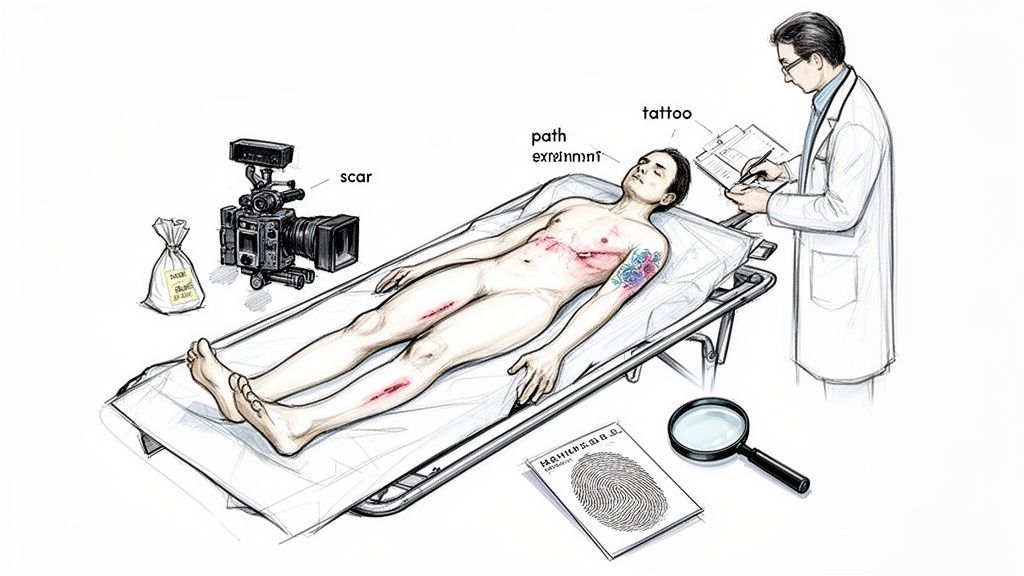
I begin with a primary incision on the torso. The most common is a "Y" shape, running from each shoulder to the center of the chest and then straight down to the pubic bone. This approach provides a clear, unobstructed view of the chest and abdominal cavities, enabling a thorough examination.
My responsibility here is to carefully and systematically piece together the complete medical story the body has to tell.
Evaluating the Thoracic and Abdominal Organs
With the cavities open, I first inspect the organs as they sit naturally. The goal is to check for anything out of the ordinary, such as signs of disease, trauma, or unusual fluid buildups, before removing them for a closer look.
Each organ is then carefully removed, weighed, and measured. I compare these figures to established normal ranges for a person of the same age, sex, and size. A significant deviation can be the first hint of a chronic condition or a sudden, acute event. For example, a heart that is much heavier than normal often points to long-term high blood pressure.
After weighing, I dissect each organ to examine its internal structures. This is where many crucial discoveries are made.
- Heart: I examine the coronary arteries for blockages (atherosclerosis) that could cause a heart attack. I also inspect the valves and heart muscle for damage.
- Lungs: I check for blood clots (pulmonary emboli), pneumonia, tumors, or chronic diseases like emphysema.
- Liver and Kidneys: These organs provide a window into the body's filtering systems. I look for infection, cirrhosis, tumors, or damage from toxins or medications.
- Gastrointestinal Tract: The stomach and intestines are checked for ulcers, bleeding, or blockages. Stomach contents can help pinpoint the time of the last meal.
The Brain and Central Nervous System
Examining the brain requires a separate procedure because it is protected by the skull. I make a careful incision across the back of the scalp, hidden within the hairline, which allows me to remove the top of the cranium and gently lift out the brain.
This part of the exam is essential for identifying:
- Strokes, caused by a clot (ischemic) or bleeding (hemorrhagic).
- Traumatic injuries, such as bruising (contusions) or bleeding around the brain (subdural or epidural hematomas).
- Tumors or infections like meningitis.
- Evidence of degenerative diseases, though a final diagnosis usually requires microscopic confirmation.
Because the brain is very soft, I often preserve it in a formalin solution for about two weeks before dissection. This firms the tissue, allowing for a more precise examination of its delicate structures.
The internal examination is like assembling a complex puzzle. Each organ is a piece of the story. My responsibility is to put those pieces together until a clear and accurate picture emerges.
Collecting Samples for Further Analysis
What I can see with my eyes is only part of the investigation. A major component of the autopsy involves collecting specimens for laboratory analysis. From each major organ, and especially from any abnormal areas, I take small tissue samples.
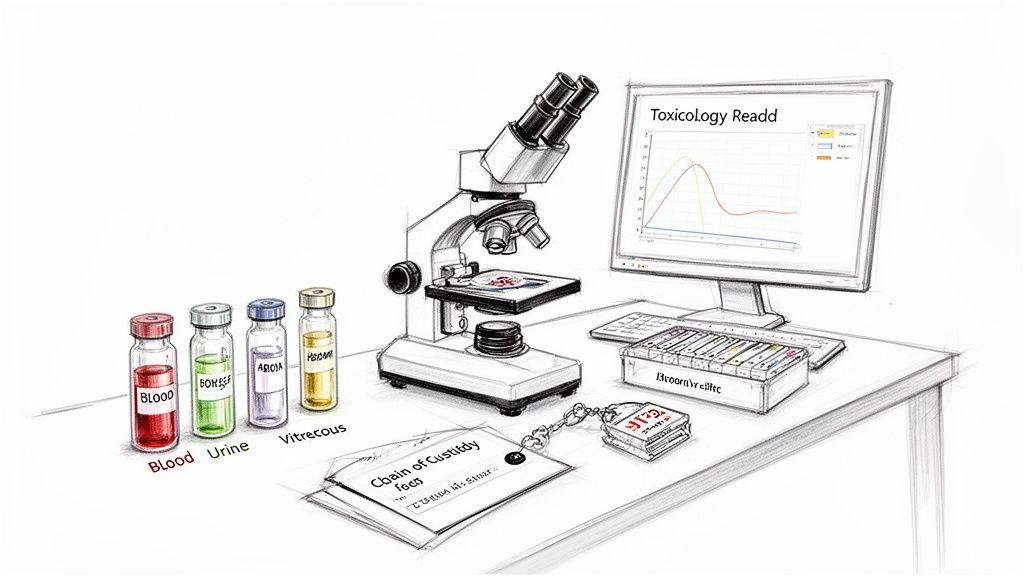
These samples, about the size of a postage stamp, are preserved in formalin. Later, they are processed into slides for microscopic examination, a process called histology. This view reveals cellular-level details invisible to the naked eye. I also collect fluid samples, including blood, urine, and vitreous humor (from the eye), for toxicology testing. These tests determine if alcohol, prescription medications, or illicit drugs were present.
Once the examination is complete, all incisions are carefully closed. The body is always treated with the highest level of respect and prepared for release to the family’s chosen funeral home.
Using Lab Analysis to Uncover Hidden Clues
The physical examination provides a great deal of information, but some of the most important clues are invisible. This is where laboratory work becomes essential. What I can see with my own eyes is just one part of the story; microscopic and chemical details often provide the final, definitive answers.
This phase translates physical evidence into hard data. I use specialized testing to connect my observations with the hidden biological events that led to death.
Collecting the Right Samples
During the internal exam, I am deliberate about the biological samples I collect. Each one serves a specific purpose, and together they create a complete picture.
Crucial samples include:
- Blood: The primary sample for toxicology, ideal for detecting alcohol, prescription medications, or illicit drugs active at the time of death.
- Urine: Shows substances the body has started to process, providing a different and often longer detection window than blood.
- Vitreous Humor: The gel from inside the eye. It is protected from postmortem changes, making it highly reliable for checking substances like alcohol or glucose.
- Tissue Samples: Small sections from every major organ, and any abnormal areas, are preserved in formalin for histology.
What We See Under the Microscope
Those tissue samples are sent for histology. A lab processes them into thin slices, mounts them on glass slides, and stains them with special dyes. I then examine them under a microscope.
This microscopic view is incredibly powerful. It allows me to identify conditions invisible during the gross examination. For instance, I might find cellular evidence of an early heart attack, subtle inflammation in the lungs indicating pneumonia, or cancer cells that had not yet formed a noticeable tumor.
The microscope helps reveal the ground truth. It can confirm or challenge my initial theories from the physical exam, often showing the precise disease process that caused the death.
The Role of Toxicology
While histology focuses on disease, toxicology is about identifying substances. Blood, urine, and other fluid samples are tested to identify and measure any drugs or chemicals present.
A full toxicology screen is essential when the cause of death isn't immediately obvious. To learn more about these tests, you can read my detailed article explaining what a toxicology report is.
This analysis answers critical questions. Was alcohol involved? Were prescription drugs taken at the correct dose? Did illicit substances play a role? Toxicology results are often the key to determining not just the cause, but also the manner of death.
This part of the process takes time. Preparing tissue samples for microscopic review usually takes a minimum of 24–72 hours. Toxicology is more involved; a full screen can take from one to four weeks, depending on the complexity of the testing. In some cases, I may order specialized tests, like microbiology to search for a specific infection. The final synthesis of all these results—physical exam, histology, and toxicology—allows me to build a complete and accurate picture.
Bringing All the Evidence Together in the Final Report
After the physical examination is complete and all lab results are in, my final task begins: assembling all the pieces into the final autopsy report. This isn't just a list of findings; it's a clear and accurate narrative of what happened.
This single document is the culmination of the entire investigation. It connects medical history, external and internal findings, and laboratory results to provide definitive answers.
Synthesizing the Data
The first step in writing the report is synthesis. I compare my notes from the gross examination with the toxicology and histology lab reports, looking for connections.
For instance, if I noted a severely narrowed coronary artery, I'll look for the histology report to show microscopic damage to the heart muscle. When those two findings align, it paints a clear picture of a fatal heart attack. In another case, the body might appear anatomically normal, but the toxicology report may show a lethal level of a prescription drug, explaining everything.
This is where the 'why' and 'how' of the death come into focus.
Structuring the Autopsy Report
A good autopsy report must be understandable to everyone from grieving family members to attorneys and other physicians. It needs to be logical and precise. At Texas Autopsy Services, I follow a clear, standardized structure.
My reports always include these key sections:
- Circumstances of Death: A brief summary of what was known before the autopsy.
- External Examination Findings: A detailed, head-to-toe description of the body, noting all identifying features, scars, or injuries.
- Internal Examination Findings: A system-by-system breakdown of my observations for each organ.
- Microscopic Examination (Histology): A summary of what the tissue samples revealed at a cellular level.
- Toxicology Results: A clear list of any drugs or substances found and their concentrations.
This structured format ensures the information is easy to find and digest. You can learn more about the importance of structured documentation in my guide to synoptic pathology reports.
My responsibility is to translate complex medical data into a clear, factual narrative. The final report is the definitive record of the investigation, providing the objective truth that families and the legal system depend on.
Distinguishing Cause from Manner of Death
One of the most critical parts of the final report is clearly defining the cause and manner of death. These are not the same, and the distinction must be made with precision.
The cause of death is the specific medical reason—the disease or injury that initiated the chain of events leading to death. Examples include:
- Coronary artery disease
- Gunshot wound to the head
- Fentanyl intoxication
The manner of death is a legal classification describing the circumstances. There are five official options:
- Natural: Death from disease or old age.
- Accident: An unintentional event caused the death.
- Suicide: The person intentionally took their own life.
- Homicide: Another person caused the death.
- Undetermined: There is not enough information to select one of the other four.
My report provides the medical foundation—the cause of death—which then helps legal authorities determine the correct manner of death. This is the final piece of the puzzle, bringing the investigation to a close and delivering the answers families need.
Common Questions We Hear About the Autopsy Process
When a loved one passes away, families understandably have many questions. It's a difficult time, and the idea of an autopsy can be daunting. As a forensic pathologist with over 1,000 autopsies performed, I've dedicated my career to helping people navigate this process. Here are straightforward answers to the questions I'm asked most often.
Can We Still Have an Open-Casket Funeral?
This is often the first concern families express, and the answer is a definitive yes. I am board-certified by the American Board of Pathology and approach every examination with the utmost respect. My incisions are placed and closed with meticulous attention to detail, ensuring they are completely hidden by clothing. My goal is to provide answers without interfering with a family’s ability to say goodbye in the way they choose, including a traditional viewing.
How Long Until We Get the Final Report?
While the physical part of the autopsy is usually finished in a few hours, compiling the final, comprehensive report takes longer. We must wait for specialized lab results, like toxicology and histology. This part of the process is critical for accuracy and cannot be rushed. In most cases, you can expect to receive the complete, finalized report within 60 to 90 days.
Who Can Legally Request a Private Autopsy in Texas?
In Texas, the authority to consent to an independent autopsy rests with the legal next of kin. There's a clear legal order of priority for this, established in the Texas Health & Safety Code: it starts with the surviving spouse, then moves to adult children, followed by the parents, and finally the adult siblings of the deceased. Before I begin an examination, I ensure we have received and documented proper legal consent from the appropriate individual, maintaining both legal and ethical standards.
If you have questions about the autopsy process or need to discuss a specific case, please do not hesitate to reach out. My team and I are here to provide clear, compassionate guidance.