August 5, 2026 · Texas Autopsy Services
American Board of Pathology Certification Explained
Learn what American Board of Pathology certification is, how to verify a pathologist's credentials, and why it matters for forensic autopsy services in Texas.
On this page
- Introduction to Board Certification in Forensic Pathology
- What American Board of Pathology Certification Means
- Eligibility and Examination Requirements
- Maintaining Certification Through Continuing Requirements
- How to Verify a Pathologist's Certification
- Why Certification Matters for Forensic Pathology Services
- FAQ and Key Takeaways
Families and attorneys often reach the same difficult point at the same time. A death has to be understood, records have to be checked, and someone has to choose a forensic pathologist for a private autopsy or second opinion. In that moment, American Board of Pathology certification is more than a credential on paper. It helps show that the person doing the examination has met formal training, examination, and maintenance standards that support independent, court-aware work.
For grieving families, that matters because the answer has to be medically sound and explained in plain language. For attorneys and county officials, it matters because the report may later be reviewed in a legal setting. At Texas Autopsy Services, we see this choice as part of the trust-building process, not a formality. A verified credential helps separate a real forensic practice from a claim.
Introduction to Board Certification in Forensic Pathology
A family may call after an unexpected death and want a second opinion. An attorney may need a clear, defensible cause-of-death opinion before a filing deadline. In both settings, the first question is often simple, even if the answer isn't. Who is qualified to do this work, and how can that qualification be checked?
Board certification helps answer that question. In pathology, it shows that a physician has gone through a defined pathway rather than relying on general medical experience alone. That matters in forensic work because the findings can affect death certificates, insurance matters, civil claims, criminal reviews, and family understanding.
Practical rule: If the report may be reviewed by a court, county, or attorney, the pathologist's credential should be verifiable, current, and tied to the actual area of practice.
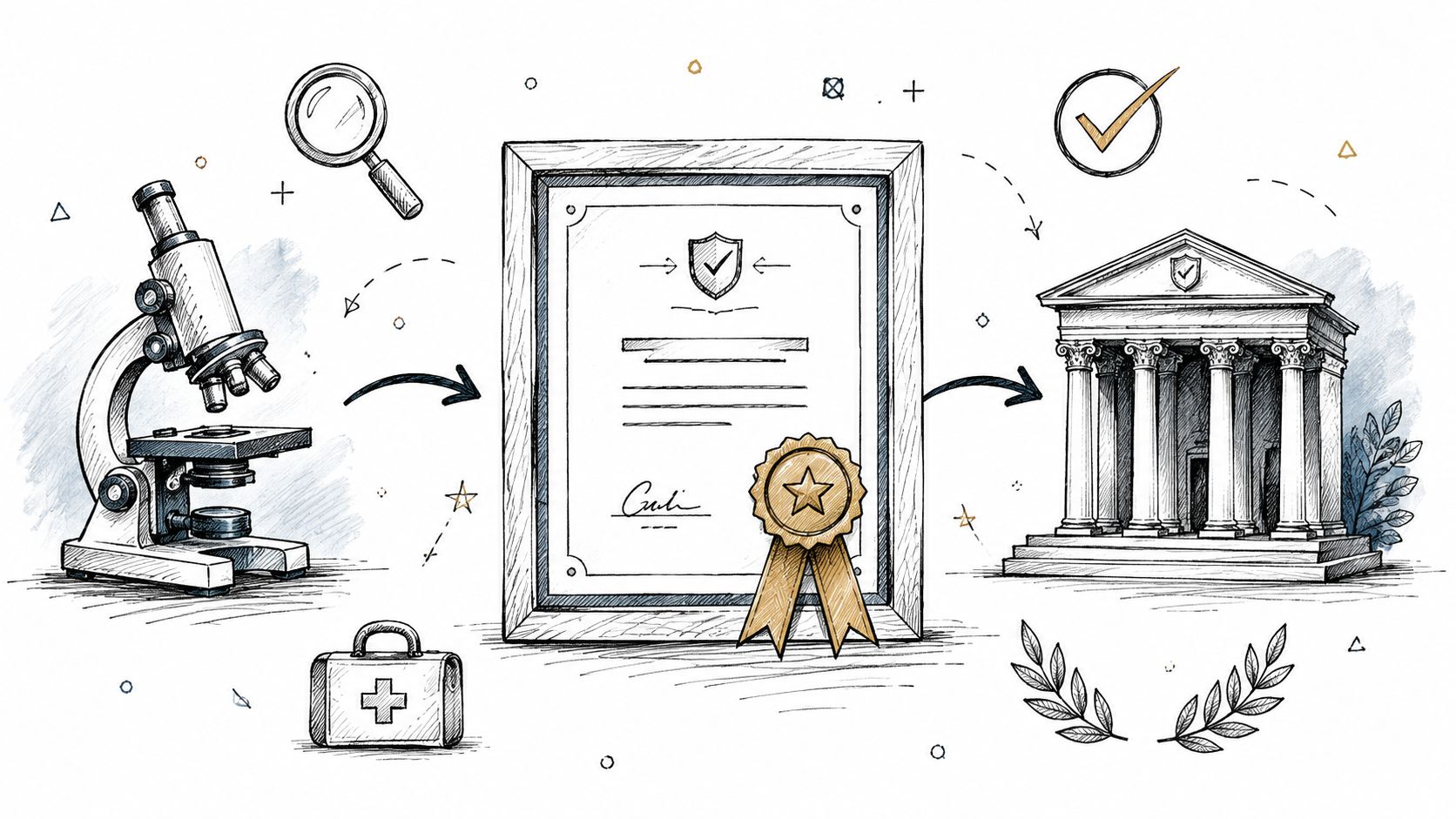
The American Board of Pathology, often called ABPath, is the certifying board that matters here. Its process is not a casual title. It includes primary certification, subspecialty certification, and continuing certification requirements, all of which help show that the pathologist's training and competency are not static. That distinction is especially important for families who want clarity and for attorneys who need a reliable medical-legal record.
Texas Autopsy Services approaches this issue with the same standard we use in the examination room. Every examination is performed by a forensic pathologist certified by the American Board of Pathology, and that certification is part of how we maintain consistency, transparency, and accountability in our work. The next sections explain what that certification means, how it is earned, and why it matters in real cases.
What American Board of Pathology Certification Means
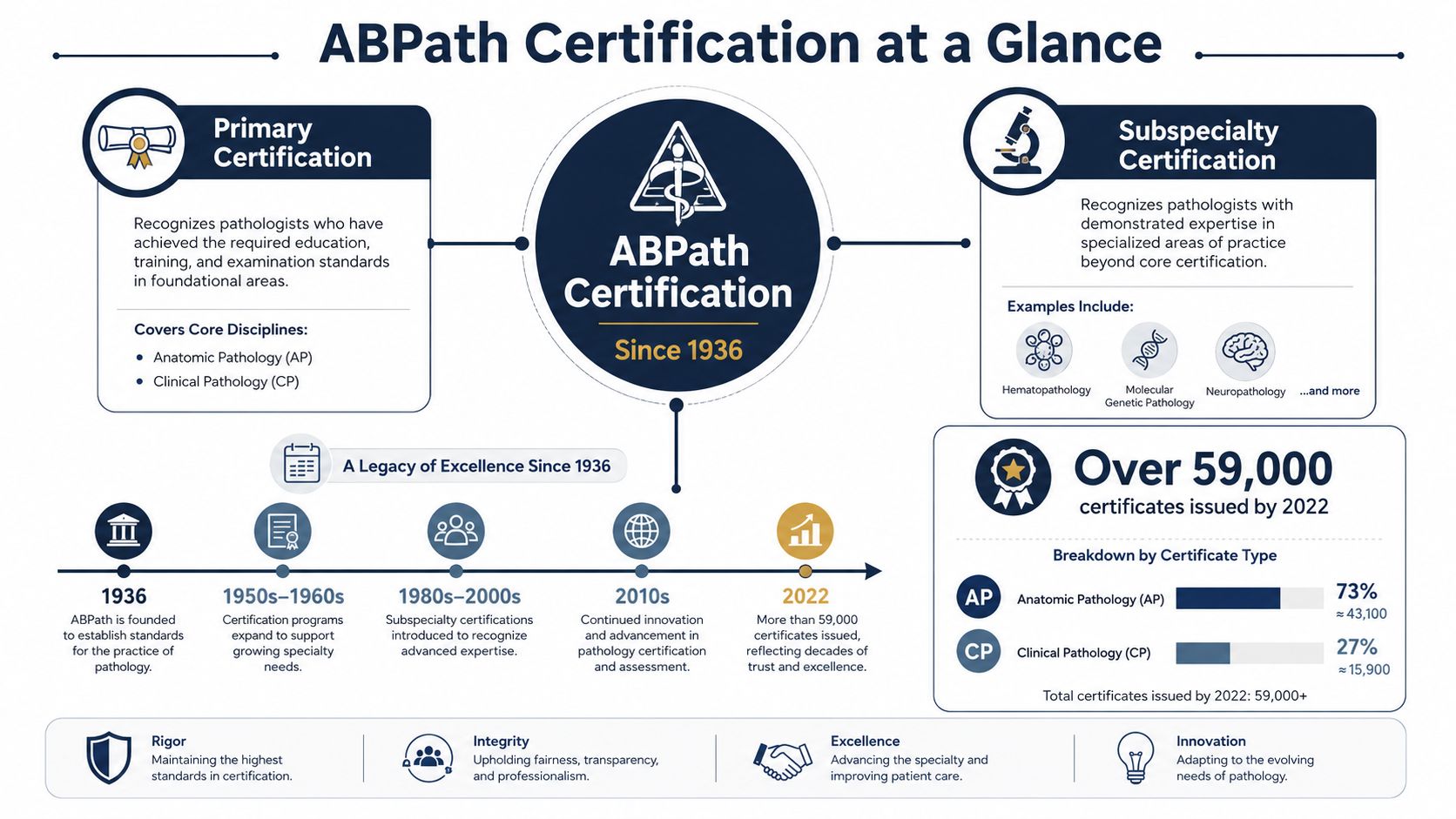
ABPath began issuing its first primary certifications in 1936. By the 2022 annual report, it had issued more than 59,000 total certificates across all pathways since then, including 9,711 certificates in Anatomic Pathology, 25,265 in Anatomic Pathology and Clinical Pathology, and 3,975 in Clinical Pathology. Those numbers show how ABPath certification is embedded in U.S. pathology training and practice, not just in one narrow subspecialty. ABPath 2022 Annual Report
What the credential actually proves
ABPath certification tells you that a pathologist has passed through structured primary or subspecialty training and has met the board's standards for certification. It does not mean the credential is a blanket guarantee about every possible setting or every legal issue. It does mean the physician has met a formal pathway that is tied to training, examination, and, in later years, ongoing certification.
That distinction matters in forensic pathology. ABPath is an ABMS member board, and its certification is tied to primary and continuing pathways, not a one-time lifetime label for everyone. The practical question for a family or attorney is not just, “Is this person a doctor?” It's, “Is this person certified in a way that matches the work being asked of them, and is that certification current?”
Why scale matters
A large certification history doesn't replace individual verification, but it does show that ABPath certification is a long-standing professional standard. In pathology, that history supports the role of certification as a real gatekeeper for training quality and professional standing. For forensic work, that is useful because the stakes are often higher than a routine review.
A pathologist with ABPath certification has met a pathway that is more specific than general licensure. That is why we treat it as one of the first things to confirm when a family or legal team is choosing a private autopsy provider, a second-opinion reviewer, or a forensic pathology expert.
Eligibility and Examination Requirements
ABPath primary certification is built around concrete thresholds. A physician has to complete pathology residency, hold a full and unrestricted medical license, and meet case and training requirements before applying. For primary certification, applicants also must have completed at least 30 autopsies by the application submission date, and that deadline matters. If the requirement isn't met in time for the spring exam, ABPath says the applicant waits until the next exam session. ABPath requirements
The training paths are specific
ABPath says applicants for primary certification must complete training within a five-year eligibility window from the year of training completion. The eligible pathways include 48 months of full-time AP/CP training, 36 months of AP-only training with at least 24 months of structured AP, or 36 months of CP training with at least 24 months of structured CP. ABPath BOI PDF
| ABPath Primary Certification Pathways | Duration | Autopsy Requirement | Eligibility Deadline |
|---|---|---|---|
| AP/CP training | 48 months | At least 30 autopsies by submission date | Five-year eligibility window |
| AP-only training | 36 months, with at least 24 months of structured AP | At least 30 autopsies by submission date | Five-year eligibility window |
| CP training | 36 months, with at least 24 months of structured CP | At least 30 autopsies by submission date | Five-year eligibility window |
Timing and licensure are part of the credential
ABPath administers primary certification exams in spring and fall, while subspecialty exams are in fall only. For the spring primary exam, training must end by July 1. For the fall primary exam, training must end by November 1. ABPath also requires all applicants, candidates, and diplomates to hold a currently valid, full, and unrestricted medical license. Training or temporary licenses do not meet that requirement. ABPath get certified
A board-certified forensic pathologist is not just someone with medical training. The credential reflects completed residency, required case experience, proper licensure, and successful examination at the right time.
For readers comparing providers, these rules matter because they show why ABPath certification carries weight in independent autopsy work. The path is designed to screen for readiness, not convenience. For a deeper discussion of how that standard applies in practice, see our related guidance on board certification requirements.
Maintaining Certification Through Continuing Requirements
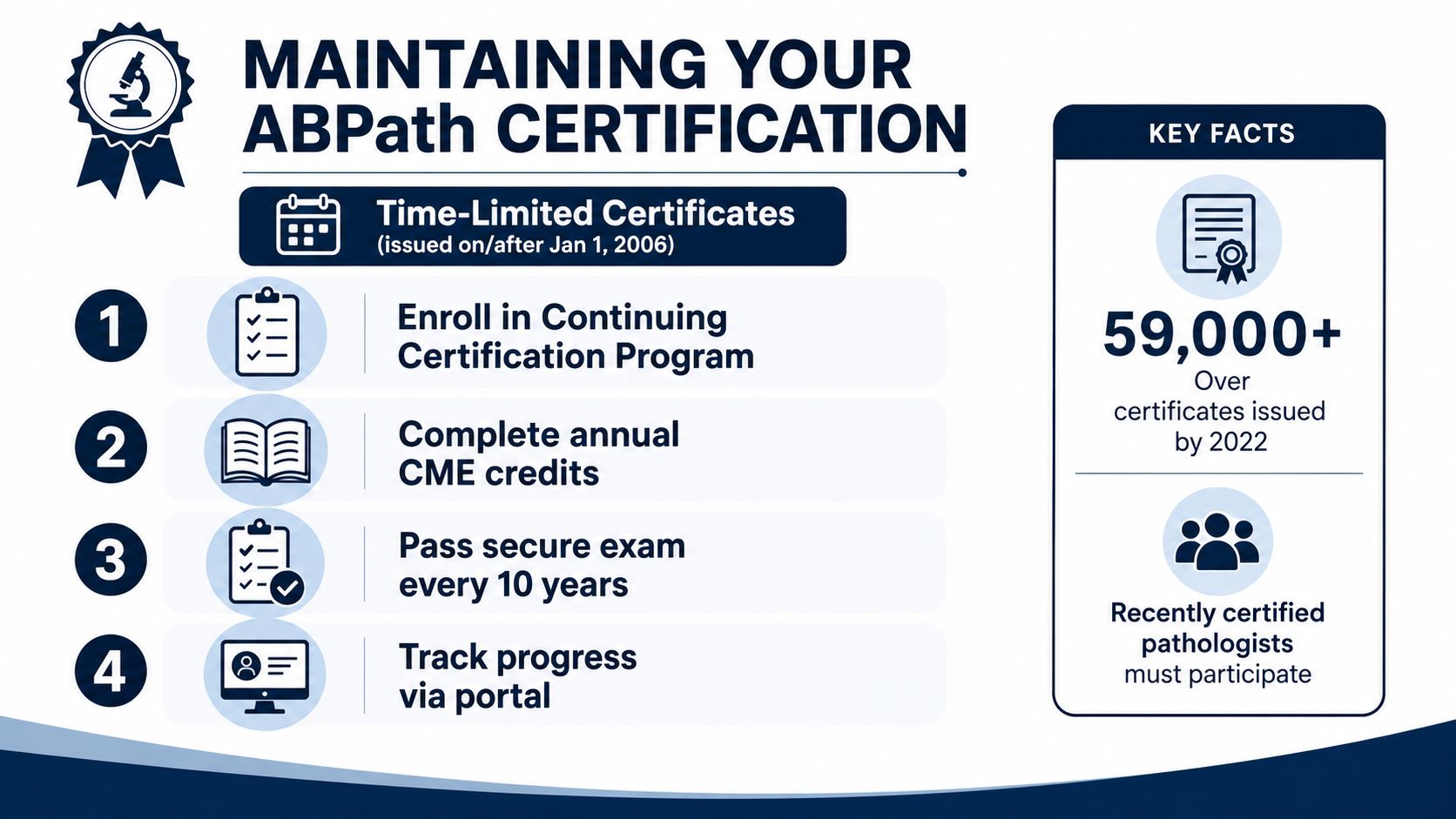
For certificates issued on or after January 1, 2006, ABPath certification is time-limited. Those diplomates must stay in the Continuing Certification Program to keep the credential valid. Only pre-2006 certificates are lifetime certificates. That makes certification an ongoing professional status, not a one-time milestone. ABPath about certification
What ongoing maintenance looks like
ABPath's 2025 materials show that 12,205 diplomates were enrolled in its Continuing Certification Program and 12,423 were participating in ABPath CertLink®. The same materials reported primary exam performance of 695 AP candidates with 84% passing and 617 CP candidates with 83% passing. Among first-time takers, pass rates were 92% for AP and 90% for CP, while repeaters passed at 48% and 42%. ABPath exam performance 2025 primary
That data matters because it shows two things at once. First, the board keeps a large group of pathologists inside an active maintenance system. Second, the exam remains selective enough that preparation and current competency both matter.
Why families and attorneys should care
A time-limited credential means a pathologist's status can change if maintenance lapses. For families, that affects confidence in the reviewer. For attorneys and counties, it affects how current the credential is at the time of service. A certificate that was valid years ago is not the same as a current credential tied to ongoing reporting and compliance.
Texas Autopsy Services also understands that readers often want to know how a credential remains active in practical terms. The simplest answer is that ABPath expects continued participation, not passive ownership of a certificate. We track that kind of status because a current credential supports stronger medical-legal work.
Practical takeaway: A current board certificate is part of the reliability check, especially when the findings may later be read by a judge, insurer, or opposing expert.
How to Verify a Pathologist's Certification
Verification should be part of the hiring process, not an afterthought. Families can ask for the exact ABPath certification status, the area of certification, and whether the credential is current. Attorneys and county officials should do the same, especially when the work may be reviewed in deposition, negotiation, or court.
A simple verification checklist
- Check the exact specialty: Confirm that the certification matches forensic pathology or the relevant pathology area.
- Confirm current status: Make sure the credential isn't expired or inactive under continuing certification rules.
- Match the service to the credential: A general pathology certification is not the same thing as a certification that fits the forensic question at hand.
- Keep a record: Save the verification for the file, since status should be easy to document later.
The practical reason for verification is simple. ABPath certification shows that a pathologist has moved through structured pathways and continuing requirements, not just held a lifetime title. That is especially important in legal and family settings, where a report may carry weight long after the exam is finished. Our own verification guidance for board-certified pathologists is available in our article on board-certified pathologist.
Why this check protects the case
A verified credential helps reduce confusion between licensure, training, and certification. Licensure allows a physician to practice medicine. Certification shows that the physician has met specialty standards. In a cause-of-death case, those are not the same thing, and a careful reader should not treat them as interchangeable.
You can also use this educational video to understand the broader verification mindset before you speak with a provider.
For families, the goal is peace of mind. For attorneys, the goal is a defensible record. Verification supports both.
Why Certification Matters for Forensic Pathology Services
In forensic pathology, certification is part of the quality signal. It doesn't replace experience, good documentation, or careful review, but it tells the reader that the pathologist has met a recognized national standard. That matters when the service has to support a court-admissible report, an unbiased cause-of-death determination, or a second opinion that may be compared against prior findings.
The real-world value in Texas cases
Texas families often need clarity after a sudden or unexplained death. Attorneys often need a record that can hold up under challenge. County officials may need a forensic autopsy service that fits legal and operational expectations. In each situation, ABPath certification helps show that the examination is being performed by a specialist whose status is tied to formal training, current credentialing, and structured maintenance.
Texas law adds another layer of responsibility. Texas Health & Safety Code Chapters 711, 716, and 651 shape the broader context in which autopsies, cremation, and related services are handled. A board-certified forensic pathologist working in that environment should understand not just medicine, but the documentation and custody standards that make the work usable later.
Practical rule: If the findings may influence a lawsuit, estate issue, or county decision, the pathologist's credential should support both medical and legal scrutiny.
Why objectivity depends on structure
Forensic pathology works best when it is independent from the parties who may benefit from a result. That's one reason certification matters. It helps set a professional baseline before the examination starts. A pathologist who meets ABPath standards is working inside a framework that expects competence, renewal, and accountability.
That framework is also why we encourage readers to think beyond labels. A provider may call itself forensic, private, or independent. The better question is whether the pathologist's certification is current, relevant, and verifiable. Our related article on forensic pathology service discusses how that service model fits Texas cases.
Families sometimes also compare forensic reports with information from wrongful death or fatal accident claims. In that broader legal context, a resource such as fatal accident claim guidance Ohio from Spivak & Sakellariou can help explain how medical findings may intersect with civil questions, though local law and facts still control each case.
Texas Autopsy Services uses ABPath certification as one part of our standards because it supports the kind of reporting families, attorneys, and county officials need. It is a credential with practical consequences, not a decorative line on a biography.
FAQ and Key Takeaways
Is ABPath certification required for a forensic autopsy?
Not every autopsy question is governed the same way, but ABPath certification is a strong professional standard for forensic pathology work. It helps show that the pathologist has completed specialty training and current maintenance requirements.
How is certification different from licensure?
Licensure allows a physician to practice medicine. ABPath certification shows specialty qualification in pathology and, where applicable, continuing certification. They serve different purposes.
What should families ask before hiring a forensic pathologist?
Ask whether the pathologist is ABPath certified, whether that certification is current, and whether it matches the forensic question in your case. Also ask who will perform the examination and how the report will be delivered.
What matters most in a Texas second opinion autopsy?
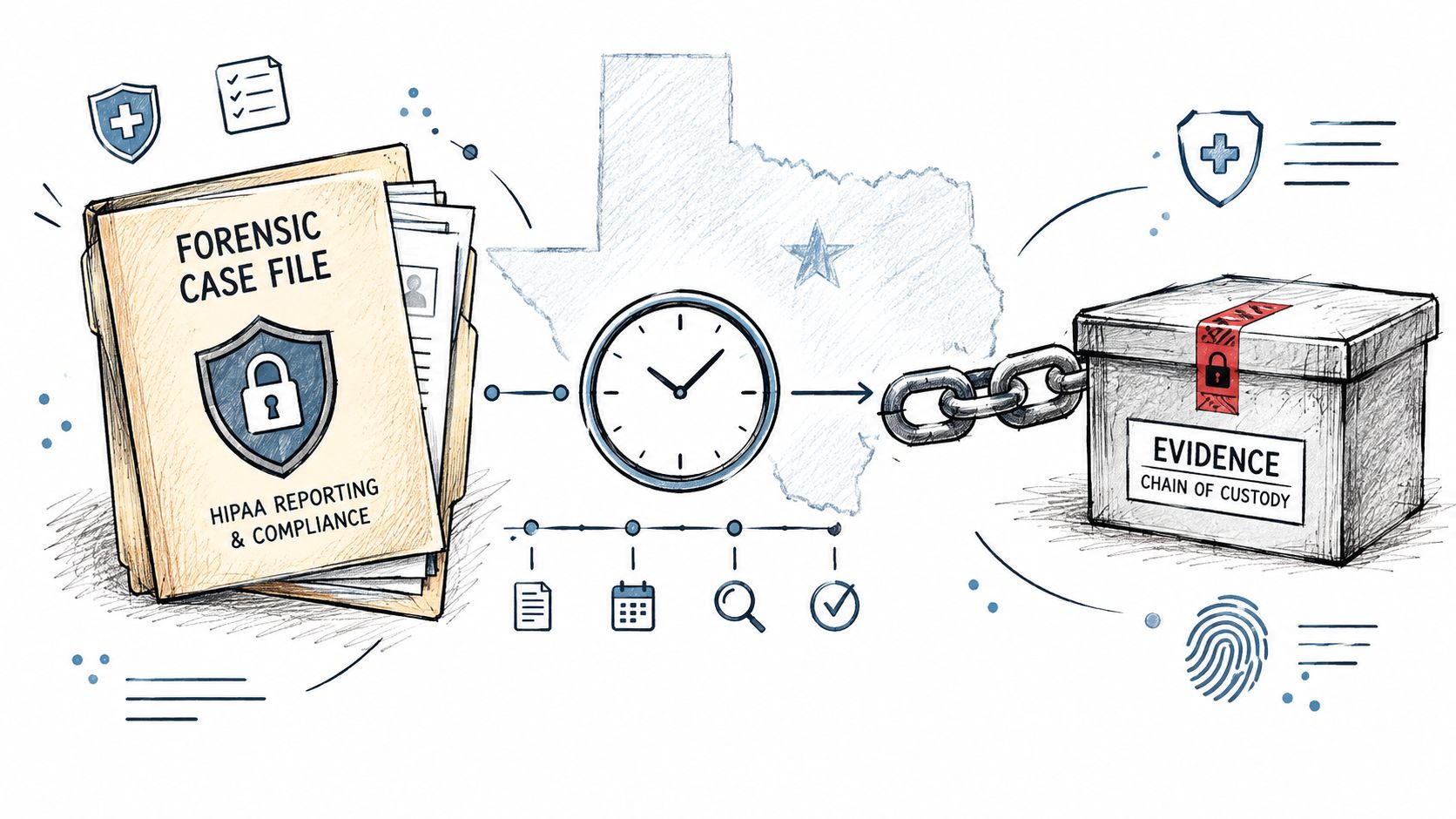
Clear credentials, independent review, and a documented chain of custody. Those elements support trust in the final findings.
If you need guidance after a death and want a careful review of credentials, case handling, and report quality, our team is available to help. Texas Autopsy Services provides independent forensic pathology services across Texas with direct communication, full chain of custody, and board-certified examination standards. Please visit Texas Autopsy Services if you'd like to speak with us about a private autopsy, second opinion, or county forensic need.