October 19, 2026 · Texas Autopsy Services
Autopsy Toxicology Reports Explained for Texas Families
Learn how autopsy toxicology reports work in Texas, from specimen selection and chain of custody to turnaround times and limits of interpretation.
On this page
- What an Autopsy Toxicology Report Actually Shows
- Specimens Collected During a Postmortem Examination
- Testing Methods and Panels Used in Forensic Labs
- How Results Become an Interpreted Cause of Death
- Chain of Custody and Court Admissibility in Texas
- Limits and Pitfalls Families Should Understand
- Turnaround Expectations and Working With Our Team
When a death is unexpected, families often receive technical documents before they receive a clear explanation. A toxicology report may list substances and concentrations, but that list doesn't answer by itself whether a drug caused or contributed to the death. Understanding how the samples were collected, what the laboratory tested, and how the findings fit the autopsy can help families and attorneys read the report with care.
At Texas Autopsy Services, we interpret toxicology as part of a broader cause-of-death investigation. Our practice is based in Elgin, Texas, and serves families, attorneys, healthcare professionals, and county officials across Texas. Every examination is performed by a forensic pathologist certified by the American Board of Pathology.
What an Autopsy Toxicology Report Actually Shows
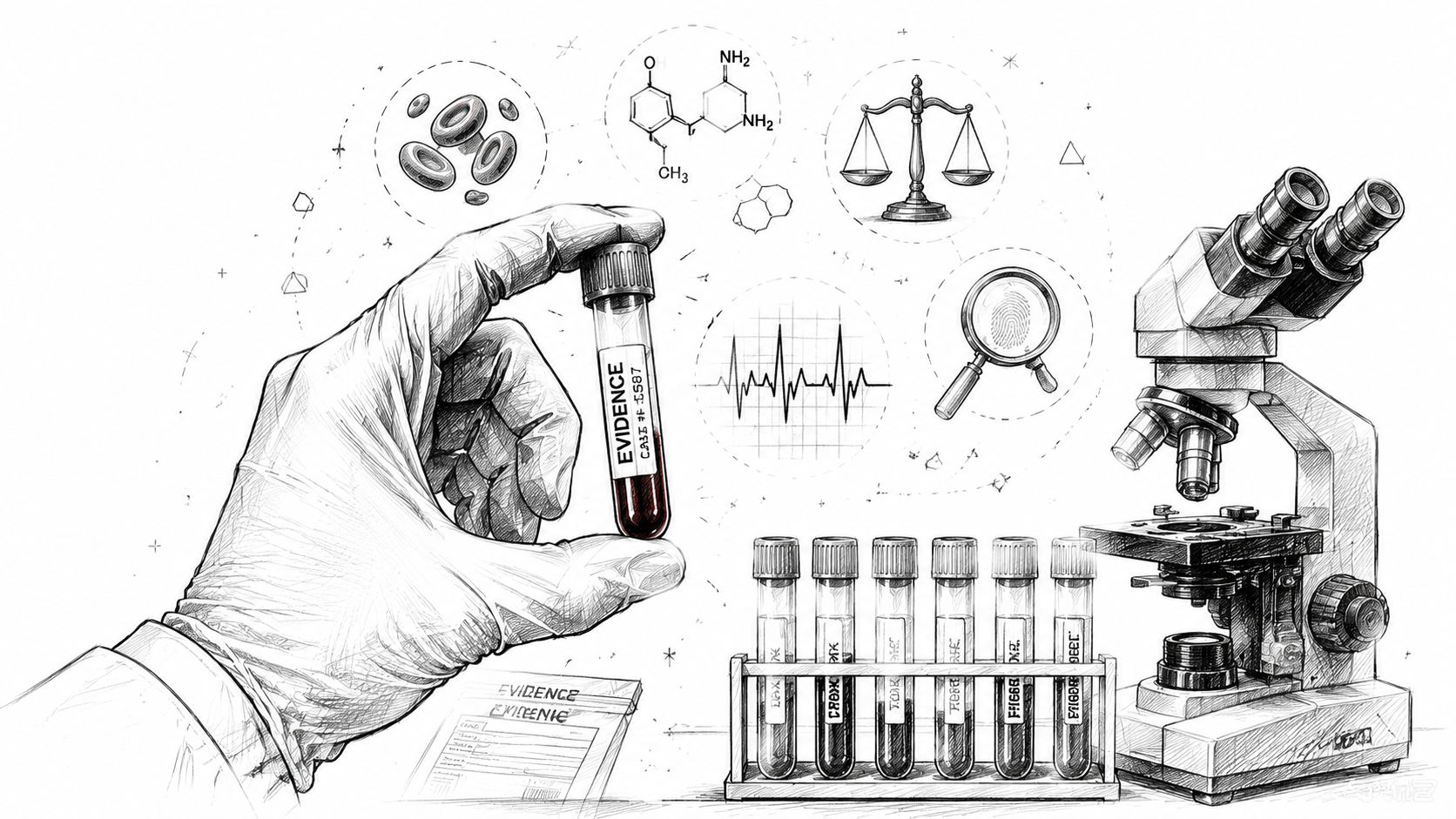
A family reviewing a report may see the name of a medication, a measured concentration, and a laboratory comment, then wonder whether the finding explains the death. An autopsy toxicology report is a structured laboratory document that records substances identified in submitted specimens and, when measured, their concentrations. It may also identify the specimens tested, the analytical methods used, and relevant laboratory interpretation.
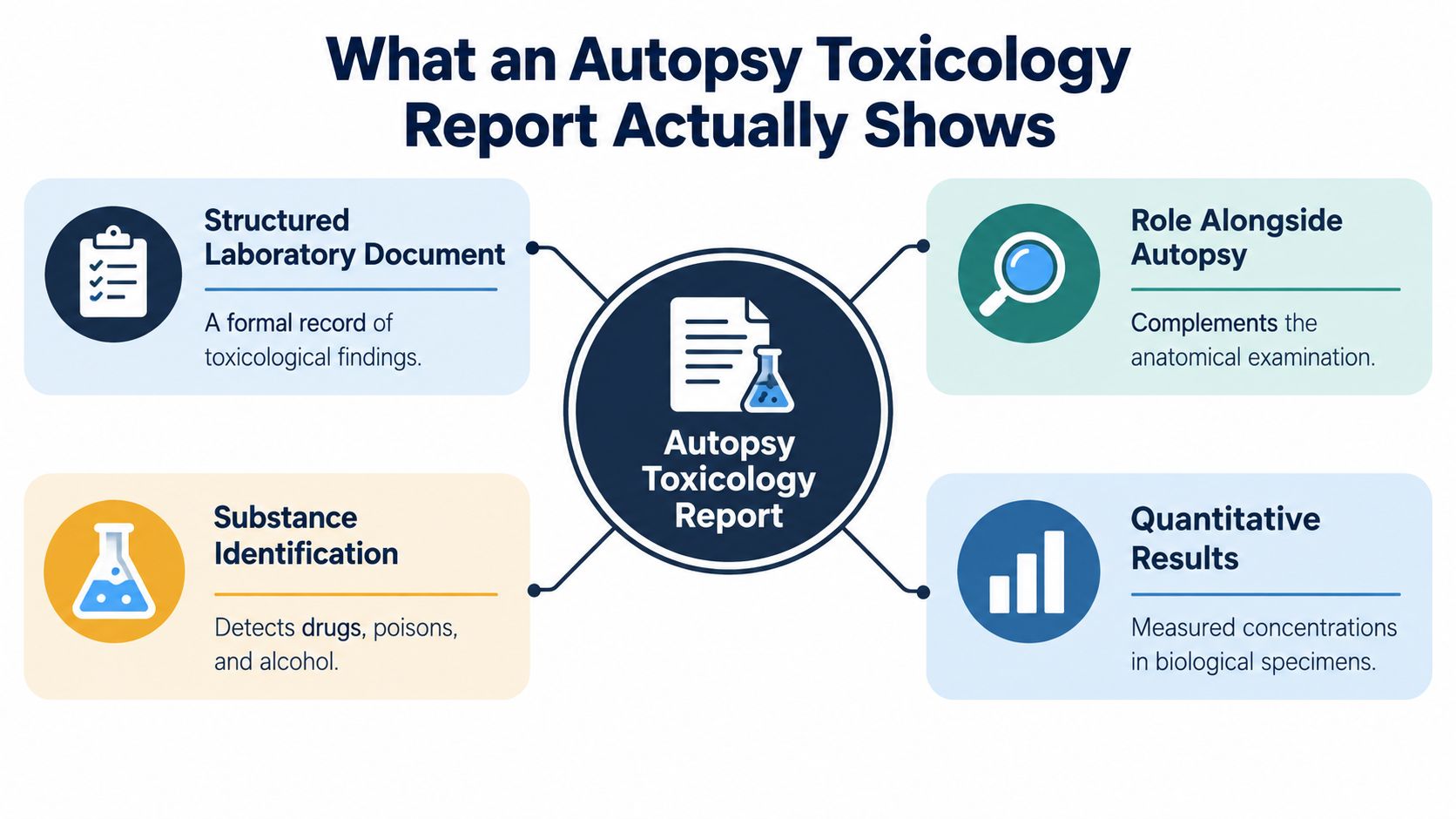
The report answers a specific question: what did the laboratory detect in the submitted samples, and what did its methods establish about those findings? It doesn't independently determine the cause or manner of death. The pathologist weighs toxicology with the autopsy, medical history, prescription information, scene evidence, and circumstances surrounding the death.
That distinction matters. Detection establishes presence, not causation. A drug may be present because it was prescribed or taken before death, while natural disease or another process explains the death. In a different case, the combination of toxicology findings and other evidence may support a conclusion that a substance contributed.
Practical rule: Read the laboratory result as one part of the case, not as a verdict.
The public-health importance of this work is clear in a CDC-reviewed analysis of unintentional overdose deaths in Marion County, Indiana. Specific drug information was missing from the death certificate in 58% of cases; after researchers incorporated toxicology findings and applied standardized interpretation thresholds, estimated opioid involvement rose from 34% in vital-statistics data to 86% (CDC-reviewed Marion County analysis). For families, attorneys, and officials, that illustrates how toxicology can clarify a record while still requiring medical judgment to interpret what the findings mean in an individual death.
Specimens Collected During a Postmortem Examination
A laboratory can only analyze the specimens it receives. During a postmortem examination, the collection site and type of sample matter because substances may be present at different levels in different parts of the body, and postmortem changes can affect measured concentrations.
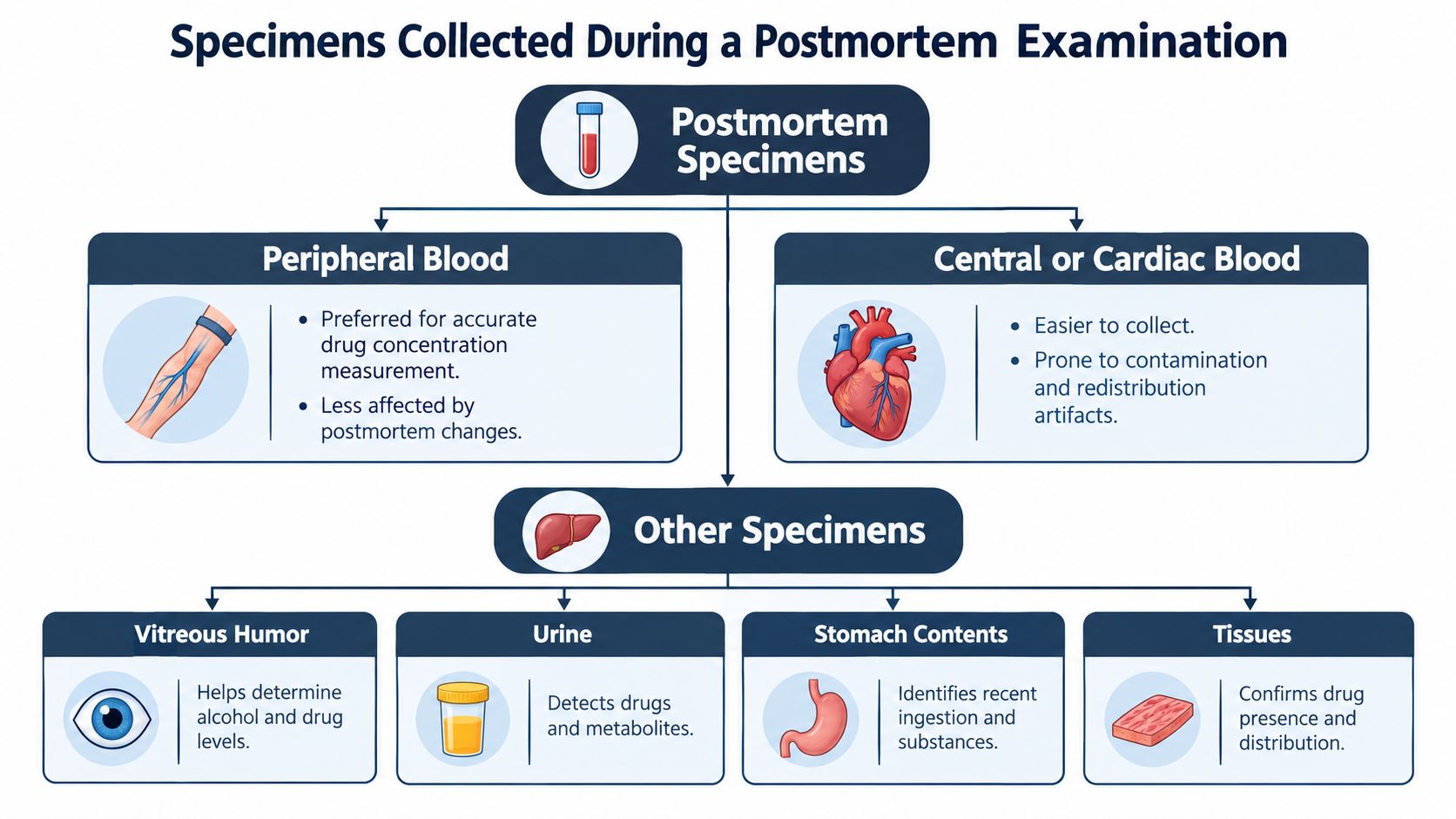
Peripheral blood, usually collected from the femoral or iliofemoral vein, is generally preferred for interpreting drug concentrations. If that site isn't available, another peripheral source, such as the subclavian or axillary vein, is preferred over central cardiac or cavity blood. National forensic recommendations identify femoral or iliofemoral blood as the preferred source because central and cavity samples can be less reliable after postmortem redistribution (national forensic specimen recommendations).
Other specimens add different information:
- Vitreous humor, the fluid inside the eye, can provide a separate specimen for testing.
- Urine may help identify substances or metabolites, though it doesn't directly show the concentration in blood.
- Liver, brain, and other tissues may be collected when the case calls for additional testing.
- Gastric contents can be relevant when ingestion is suspected; the collection and any visible contents should be documented.
Collection and storage procedures protect the samples from avoidable changes. Guidance recommends separate, leak-resistant, labeled containers and documentation of the anatomical source and collector. Blood may be collected with preservatives such as sodium fluoride, and specimens should be refrigerated when promptly analyzed or frozen when longer storage is needed. The appropriate handling depends on the specimen and testing plan.
The report should name the specimen source, not just state “blood.” A measured concentration from central blood may not be directly comparable with one from peripheral blood, so collection-site information helps the pathologist assess how much weight to give the number.
The following video provides additional visual context on postmortem specimen collection.
Testing Methods and Panels Used in Forensic Labs
Forensic toxicology testing may involve an initial screen followed by more specific testing. A screening result can flag a possible drug class, but it may not identify a particular compound or establish a reliable concentration. When a screen indicates a substance of interest, a laboratory may use a confirmatory method, such as gas chromatography-mass spectrometry (GC-MS) or liquid chromatography-tandem mass spectrometry (LC-MS/MS), to identify and measure compounds more specifically.
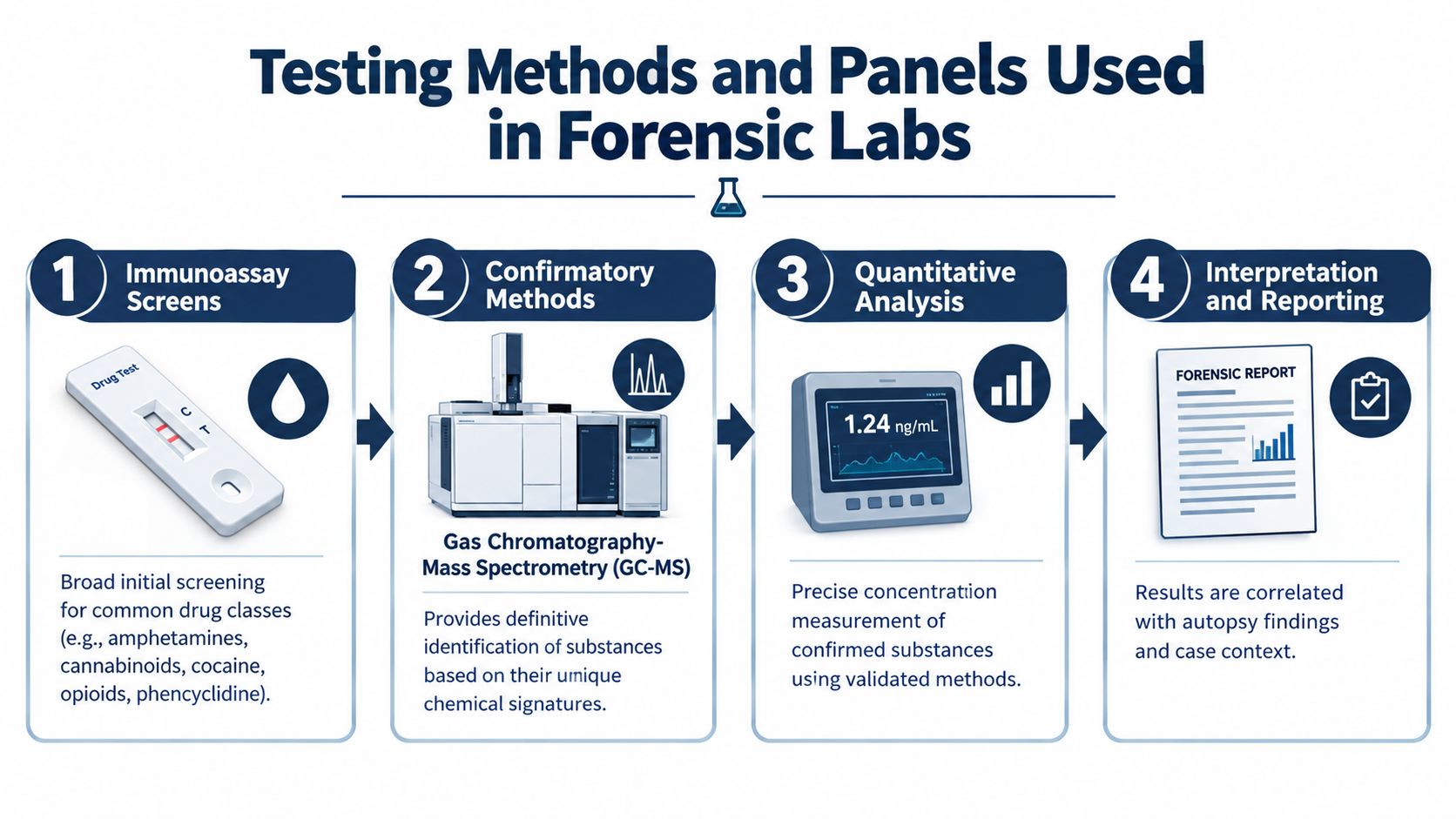
A targeted panel tests for a defined group of substances. A laboratory can select or expand the panel based on the case information, such as a medication history, scene evidence, or a concern about a particular substance. No single panel tests for every possible drug, poison, metabolite, or new compound.
The distinction between a screen and confirmation is important when someone reads a preliminary result. A screen can guide further testing; confirmation helps establish which substance is present. Quantitative analysis measures the amount detected in the specimen. The laboratory's methods and reporting threshold affect what appears in the final document. A substance below a method's reporting threshold may not appear as a reported positive, even if trace material is present.
The analytical challenge changes as the range of substances grows. One U.S. forensic laboratory confirmed 141 different drugs or metabolites across 544 cases in 2025, illustrating the breadth of substances laboratories may need to address (Sedgwick County Forensic Science Laboratory 2025 annual report). The figure doesn't mean every case receives testing for every substance. It shows why test selection and case-specific follow-up matter.
For families and attorneys, useful questions include which specimens were tested, which substances the panel covered, whether a result was a screen or a confirmation, and whether quantitative results were reported. Those details help distinguish what the laboratory tested from what the case may still need to address.
How Results Become an Interpreted Cause of Death
The same laboratory finding can carry different meaning in different cases. An opioid detected in blood, for example, might reflect prescribed treatment, prior use, or a substance that contributed to death. A concentration alone can't settle which explanation applies. The pathologist must examine it alongside the specimen source, autopsy findings, medical and prescription history, scene evidence, tolerance, and possible interactions among substances.
Cause of death describes the injury or disease that initiated the sequence leading to death. Manner of death classifies the circumstances of death, such as natural, accident, suicide, homicide, or undetermined. Toxicology may inform both determinations, but it doesn't decide either one without the rest of the case record.
A person may have more than one substance detected. The pathologist considers whether the substances could have acted together, whether any were prescribed, and whether the autopsy and circumstances are consistent with a toxicologic contribution. A drug can also be incidental: someone may have a substance in their system and die from natural disease.
A number has meaning only when the pathologist knows what specimen produced it and how it fits the case.
Postmortem changes can further complicate interpretation, particularly when a measured concentration is compared with values from other circumstances. For that reason, the final conclusion isn't a simple comparison against a single reference number. Detection, contribution, and cause of death are distinct conclusions, and the report should make clear which conclusion the evidence supports.
At Texas Autopsy Services, our board-certified forensic pathologists integrate laboratory findings with the examination and available case information. The written interpretation explains how the evidence supports the conclusion, while recognizing that toxicology is one component of a cause-of-death investigation. This approach is relevant to families seeking an explanation, attorneys evaluating forensic evidence, and officials responsible for documenting a death.
Chain of Custody and Court Admissibility in Texas
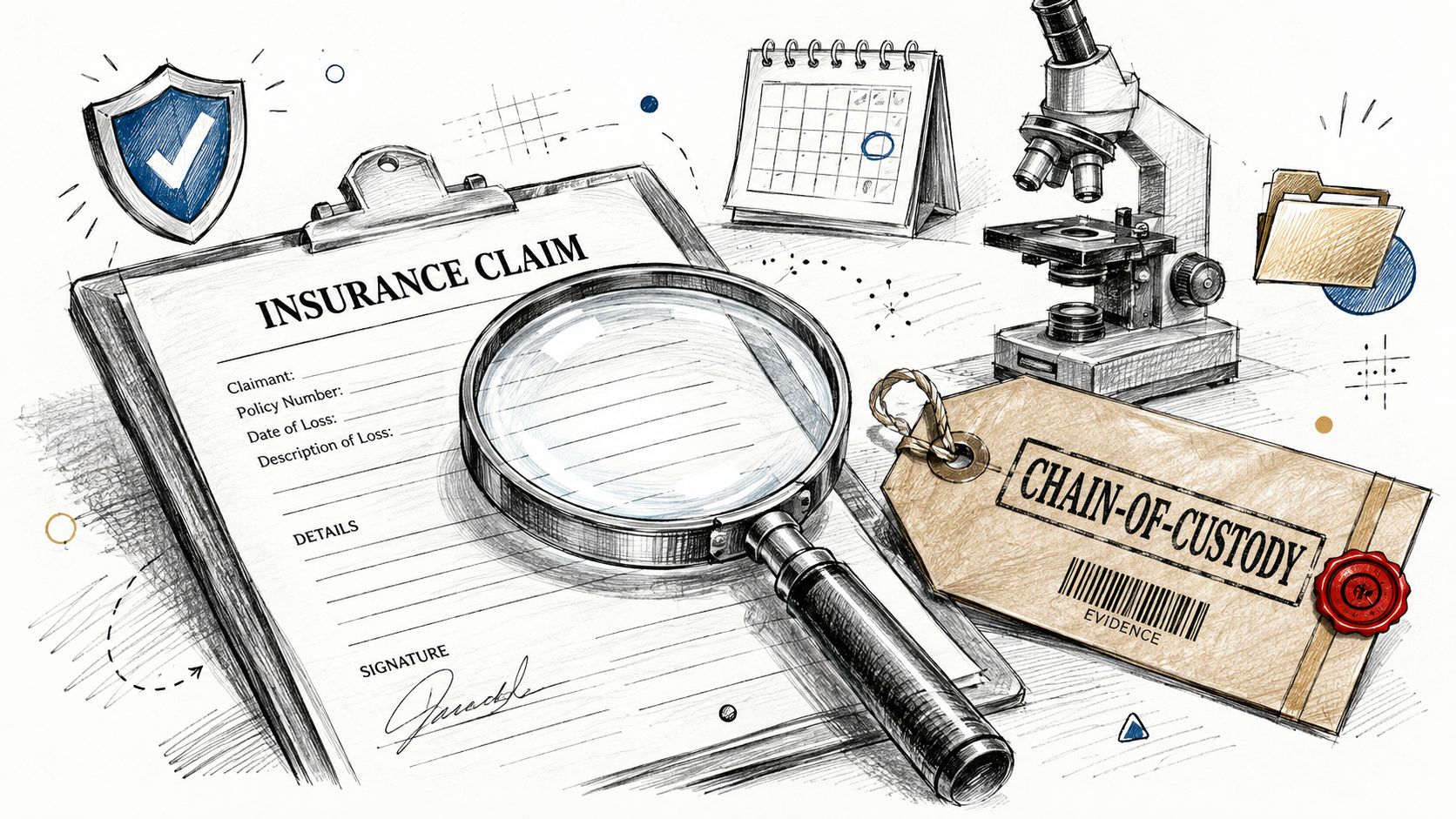
A toxicology result is more useful when the case record shows where each specimen came from and how it was handled. Chain of custody is the documented history of a specimen from collection through transfer, laboratory receipt, testing, and retention. It helps establish that the sample tested is the one collected for the case and that its handling can be reviewed.
Professional guidance recommends collecting samples before substantial autopsy manipulation when feasible, placing each specimen in a separate, leak-resistant, properly labeled container, and recording the collector and anatomical source (Royal College of Pathologists autopsy guidance). Documentation can also identify the container, preservative, collection details, and transfers between personnel or facilities.
| Documentation element | Why it matters |
|---|---|
| Case and specimen identifiers | Links each result to the correct case and sample. |
| Anatomical source | Shows whether the sample was peripheral, central, or another specimen type. |
| Collector and collection details | Records who obtained the sample and the relevant collection information. |
| Container and preservative | Helps explain how the sample was protected before analysis. |
| Transfers and receipt | Tracks movement and handling between collection and laboratory testing. |
| Storage and retention records | Helps reviewers understand preservation and whether further testing may be possible. |
In Texas, the Texas Funeral Service Commission and Texas Health & Safety Code Chapters 711, 716, and 651 are part of the wider regulatory context for funeral service, disposition, and related professional responsibilities. The specific rules that apply depend on the service and circumstances. A toxicology report's evidentiary value also depends on sound collection, laboratory methods, complete documentation, and interpretation within the case. No single form or label can guarantee that a report will be admitted in court.
For more detail on documentation practices, see our explanation of chain of custody in forensic cases. Families and legal teams can ask which specimens were retained, how they were stored, and whether the laboratory's report identifies the sample source and testing methods.
Limits and Pitfalls Families Should Understand
A positive result doesn't automatically prove that drugs caused the death. A substance may have been present without contributing, and a fatal overdose may not leave a distinctive anatomical finding. The pathologist has to evaluate the toxicology alongside the autopsy and the circumstances rather than treating either the laboratory document or the physical examination as a complete answer on its own.
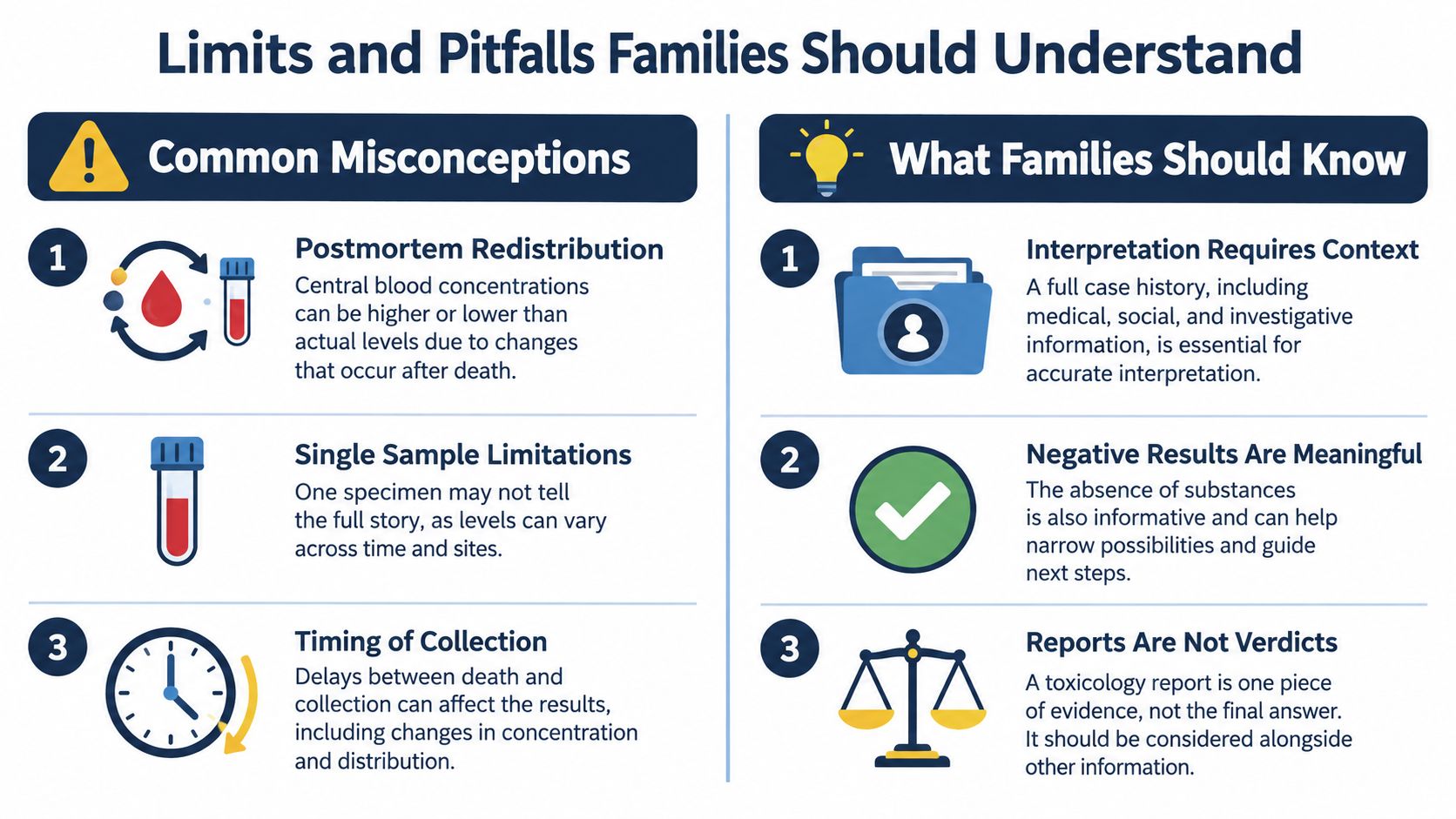
One common source of confusion is postmortem redistribution. After death, drugs can move from organs and tissues into nearby blood. As a result, central blood may show misleadingly high or otherwise altered concentrations, especially for substances with substantial tissue reservoirs (NAME opioid position paper). That's one reason collection site belongs in the interpretation.
Timing and specimen condition matter, too. Decomposition and other postmortem changes can affect the stability of some substances. If the expected substance wasn't included in the laboratory's panel, or if the sample wasn't suitable for a particular analysis, a negative report doesn't necessarily establish that the substance was absent. It means the laboratory didn't report it under the testing conditions and methods used.
A negative result has limits as well as value. It can help the investigation assess what the tested specimens and methods did not detect, but it doesn't rule out substances outside the panel or below its reporting threshold. Families and attorneys can ask which specimens were tested, which analytes were included, and whether additional testing may be appropriate.
A report also can't establish intent or exact dose from concentration alone. Tolerance, treatment before death, interacting substances, specimen location, and case circumstances may all affect the interpretation. Our discussion of therapeutic drug levels in postmortem cases explains why a comparison with a reference range must be considered in context.
Turnaround Expectations and Working With Our Team
Toxicology timing depends on the specimens available, their condition, the scope of testing, laboratory workload, and whether confirmatory or additional analysis is needed. Some cases may receive preliminary findings before the final interpretation is complete; expanded panels or retesting can take longer. Families and attorneys should ask which results are preliminary, what testing remains, and when the team expects to provide an update, without treating any estimate as a guarantee.
Keeping relevant information organized can help the pathologist and laboratory select appropriate testing. Share available medication and medical history, hospital records, scene information, and any specific concern about a substance. Ask which samples were submitted and whether they'll be retained for additional analysis. National Association of Medical Examiners recommendations call for retaining blood, urine, and vitreous humor when available so additional testing can be considered if questions arise later (NAME recommendations on death investigation).
Texas Autopsy Services coordinates postmortem examinations and toxicology for families, attorneys, healthcare providers, and county officials across Texas. We provide private autopsy services in Texas and county forensic autopsy services, and our team can discuss second-opinion reviews when an existing report leaves questions. For more context on testing delays, see our guidance on why toxicology reports can take time.
If you're waiting for answers or need help understanding what a report can support, contact our team directly. We'll explain the examination and toxicology process with care and can discuss whether an independent autopsy or second opinion may be appropriate.
Texas Autopsy Services provides independent autopsy and forensic pathology services across all 254 Texas counties, including toxicology review and second-opinion examinations. If you're facing questions about a toxicology report, contact Texas Autopsy Services to speak with our team about your situation and the available next steps.