November 20, 2025 · Texas Autopsy Services
Understanding the Texas Death Certificate and Why It Matters
Learn what is a death certificate from a forensic pathologist. Understand its purpose, how it's created, and its legal importance for families in Texas.
On this page
- The Purpose of a Death Certificate After a Loss
- Understanding Key Information on a Texas Death Certificate
- How an Autopsy Informs the Cause of Death
- How a Texas Death Certificate Is Officially Created
- How to Amend a Death Certificate in Texas
- The Legal and Financial Impact of an Accurate Death Certificate
- Common Questions About Texas Death Certificates
As a forensic pathologist, I've seen firsthand how a single document, the death certificate, becomes the key to moving forward after a loss. It's the official government record that confirms a death has occurred, but its role goes far beyond that. For families and legal teams, this document is essential for everything from planning a funeral to settling a loved one's final affairs. It provides the clear, factual answers everyone needs during a difficult time.
- A death certificate is the official legal proof of death required by government agencies, banks, and insurance companies.
- It contains critical information, including the medical cause of death and the legal manner of death.
- An autopsy provides the definitive medical evidence needed to ensure the cause of death is accurate.
- Mistakes or "pending" statuses on a death certificate can delay insurance claims and estate settlement.
- In Texas, the process for creating and amending a death certificate is governed by specific state laws to ensure accuracy.
The Purpose of a Death Certificate After a Loss
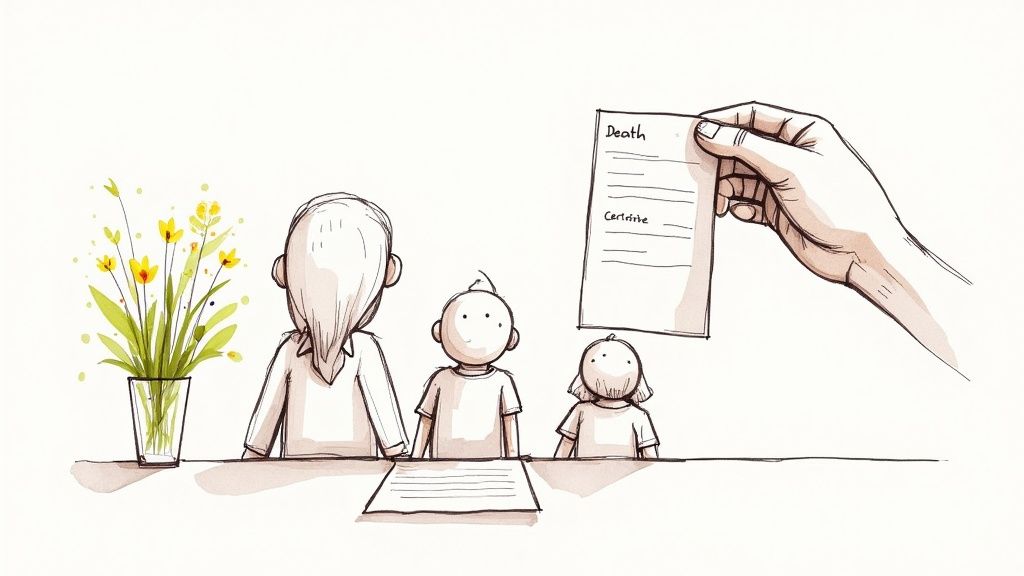
The death certificate's most immediate purpose is practical, it serves as the official proof of death that dozens of organizations require. Without a certified copy, families often find themselves at a standstill. Handling these administrative tasks while grieving is difficult, but they are an unavoidable part of the process.
Immediate and Long-Term Functions
The death certificate plays a vital role from the very first days after someone dies to legal and financial matters that can stretch on for months or even years.
- Funeral and Burial Arrangements: Funeral homes need it to proceed with services and obtain the proper permits.
- Estate Settlement: It’s the document that unlocks the probate process, allowing for the transfer of property titles and access to bank accounts.
- Benefits and Insurance Claims: Life insurance companies, the Social Security Administration, and the VA all require a certified copy before they can process and pay out benefits to survivors.
The death certificate's function doesn't stop there. It also contributes significantly to public health. Every certificate feeds into a vital registration system that helps track mortality trends and shape public health policy. While we take this for granted in the United States, data from 2015 to 2019 shows that globally, only about 68% of countries register at least 90% of deaths. You can learn more about this global data from Our World in Data.
In my professional experience, I view an accurate death certificate as the final act of care for an individual. It provides families with closure and ensures the facts of their loved one's passing are recorded with integrity for the permanent record.
My work performing private autopsies often supplies the concrete medical evidence needed to complete this document correctly, ensuring families receive the answers they need and the official record they deserve.
Understanding Key Information on a Texas Death Certificate
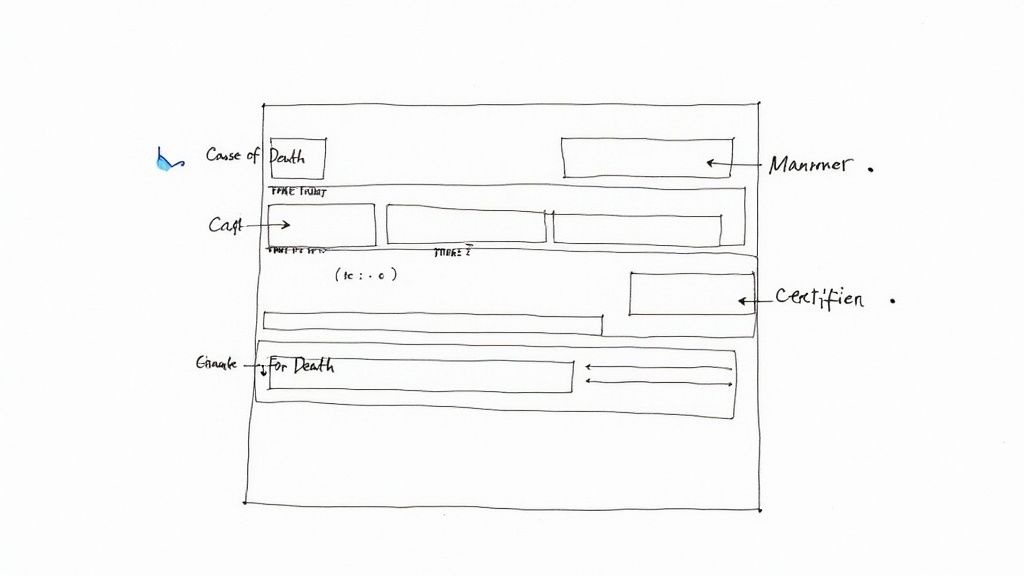
A Texas death certificate can seem overwhelming at first glance, a formal document filled with boxes, codes, and official terminology. Once you understand its structure, however, you'll see that each field tells an important part of a story.
Think of it as the final official summary of a person's life and passing. It's divided into sections covering personal details, the circumstances of the death, and the official certification. The personal information is usually straightforward, but the medical certification section is where things become complex, and it’s where my work as a forensic pathologist comes into play.
Let's break down the most critical parts of the document so you know exactly what you're looking at.
Cause of Death vs. Manner of Death
People often use these terms interchangeably, but on a death certificate, they mean very different things. Getting them right is essential for legal accuracy and for a family’s peace of mind.
The Cause of Death is the medical reason someone died. It pinpoints the specific disease or injury that started the chain of events leading to death.
- Part I of this section lists the immediate cause, followed by the underlying conditions. For instance, the immediate cause might be a "cerebral hemorrhage" (a stroke), which was caused by "hypertension" (high blood pressure).
- Part II notes other significant conditions that contributed but were not the primary cause, such as diabetes or chronic kidney disease.
The Manner of Death, however, is a legal classification. It describes the circumstances surrounding the death. In Texas, a medical examiner or justice of the peace will choose from five categories:
- Natural: Death resulting solely from disease or the aging process.
- Accident: An unintentional event led to the fatal injury.
- Suicide: An intentional, self-inflicted act caused the death.
- Homicide: Death was caused by the actions of another person.
- Undetermined: There isn't enough information to confidently choose one of the other four categories.
A simple way to think about it is this: a gunshot wound is a cause of death. Whether the manner is homicide, suicide, or an accident depends on what the investigation reveals. This distinction can dramatically impact everything from insurance payouts to criminal investigations.
The table below breaks down the most important fields on a Texas death certificate, explaining what each one means and why it matters.
Key Fields on a Texas Death Certificate
| Field Name | What It Means | Why It's Important |
|---|---|---|
| Cause of Death | The specific medical condition, disease, or injury that resulted in death. | This is the medical foundation of the certificate, used for public health data, insurance claims, and family medical history. |
| Manner of Death | The legal classification of how the death occurred (Natural, Accident, etc.). | This has major legal implications for life insurance policies, criminal investigations, and workers' compensation claims. |
| Certifier | The official (physician, medical examiner, or justice of the peace) who signs the document. | Their signature makes the certificate a legal document and confirms the information is accurate to the best of their knowledge. |
| Date and Time of Death | The official recorded time when the person was pronounced dead. | Critical for legal timelines in probate, estate settlement, and resolving matters of inheritance. |
| Disposition | Information about the final arrangements (e.g., burial, cremation) and the funeral home. | This provides an official record of the final steps taken and is often required by cemeteries or crematories. |
Understanding these fields helps families and legal professionals navigate the next steps with clarity and confidence.
The Role of the Certifier
Another crucial element on the certificate is the signature of the certifier. This is the person, a physician, medical examiner, or justice of the peace, who legally vouches for the cause and manner of death.
Their signature isn't just a formality; it's what gives the document its legal weight. It confirms that the information is accurate based on all available evidence. Sometimes, when an investigation is ongoing, a certificate might be temporarily marked as "Pending." This isn't the final word. It's a placeholder until more information, often from an autopsy or toxicology report, becomes available. This is a situation where a private autopsy can provide the clarity needed to finalize the certificate, giving families the definitive answers they deserve.
How an Autopsy Informs the Cause of Death
The information on a death certificate needs to be medically and legally sound. When there are unanswered questions, a forensic autopsy provides the hard evidence needed to complete the certificate with confidence. This is where my expertise as a board-certified forensic pathologist comes in.
An autopsy is a meticulous, postmortem medical examination. Its primary goal is to determine the exact cause and manner of death. Whether it’s a private autopsy requested by a family or one that's legally required, the objective is always the same: find the truth through science.
My work goes far deeper than a surface examination. By carefully evaluating organs and tissues internally, I can uncover diseases, hidden injuries, or other abnormalities that might have gone unnoticed. This detailed process provides the concrete medical facts required for an accurate death certificate.
The Critical Role of Toxicology
Many deaths aren't caused by a simple physical injury or a clear-cut disease. This is where toxicology, the study of how drugs, chemicals, and other substances affect the body, plays a vital part in my examinations. It frequently provides the final piece of the puzzle.
A toxicology screening can detect and measure a range of substances, including:
- Prescription medications
- Illegal drugs
- Alcohol
- Poisons or environmental toxins like carbon monoxide
The results don't just tell us if a substance was present; they tell us how much. There's a significant difference between a therapeutic dose of a medication and a fatal overdose. These findings directly shape the cause of death listed on the certificate, turning a vague guess into a specific, evidence-backed conclusion.
Tying It All Together for the Final Certificate
Once the physical examination is complete and all test results are back, including toxicology, I synthesize the data. The final step is to translate these complex findings into a clear, medically sound cause-of-death statement.
This statement is written in a specific sequence. For instance, the immediate cause of death might be "acute fentanyl toxicity." That specific finding is then listed in Part I of the death certificate's cause-of-death section. The detailed evidence supporting that conclusion is documented in my full autopsy report. If you're interested in learning more, I've written about what is in an autopsy report in another article.
This rigorous process ensures that the death certificate is built on verifiable medical facts, not assumptions.
The ultimate goal of an autopsy is to replace uncertainty with clarity. By providing definitive medical evidence, we ensure the death certificate serves as a true and accurate final record, which is vital for both a family's emotional closure and for legal integrity.
Why a Death Certificate Might Say 'Pending'
It can be frustrating for a family to see the word "Pending" on an initial death certificate. It’s important to understand that this isn’t the final word. It’s a temporary hold placed on the document to ensure the final version is 100% accurate.
A "Pending" status is used when the cause and manner of death cannot be confirmed immediately. This usually happens when we are waiting on toxicology reports or other specialized lab tests, which can take several weeks to return.
Instead of putting down incomplete or speculative information, the certifier marks it as "Pending." As soon as my autopsy and all associated tests are complete, I provide my official findings to them. They then file an amendment to the death certificate, replacing "Pending" with the scientifically determined cause and manner of death. While the delay can be difficult, it guarantees the permanent record is correct.
How a Texas Death Certificate Is Officially Created
Understanding how a death certificate is created in Texas can make a difficult time a little easier to navigate. It’s a specific, step-by-step process designed to ensure everything is accurate and legally sound, from the moment a death is reported until the final document is in your hands.
The process begins as soon as a death is officially pronounced. A physician, justice of the peace, or medical examiner is required to report the death within 24 hours. After that, a funeral director usually manages the paperwork. They work with the family to gather the necessary personal information for the certificate and coordinate with the medical certifier who provides the cause of death.
The funeral director handles the "who, where, and when," while the medical professional provides the "why." Once all the information is compiled, the funeral director has 10 days from the date of death to file the completed certificate with the local registrar.
From Local Filing to State-Issued Copies
Once the local registrar approves the certificate, the document is sent to the Texas Department of State Health Services (DSHS) Vital Statistics Unit in Austin. This is the central repository for all of Texas's vital records. It's their job to formally register the death and issue the official, certified copies needed for legal and financial matters.
This process is about more than one family's records. Data from every death certificate contributes to the larger public health picture. For example, the National Vital Statistics System (NVSS) uses this information to help the CDC track everything from heart disease trends to infectious disease outbreaks. You can see how vital statistics systems function globally to inform health policies worldwide.
The system is intentionally methodical. Every detail is checked because this document is a permanent legal record. Its accuracy is crucial for everything that comes next.
After the death certificate is filed, one of the next steps often involves navigating the requirements for a burial transit permit to move forward with funeral arrangements.
Who Can Get a Certified Copy in Texas?
To protect the privacy of the deceased and their family, Texas law is very clear about who can obtain a certified copy of a death certificate. You must have a direct, legitimate interest.
Generally, the following individuals are authorized to request copies:
- Immediate Family: This includes the surviving spouse, parents, children, siblings, and grandparents.
- Legal Representatives: An attorney handling the estate or representing the family is authorized to obtain copies.
- Funeral Directors: As part of their services, they can obtain copies for the family.
- Anyone with a Direct Legal Claim: If you are the beneficiary of a life insurance policy or have another legal right tied to the person's death, you can usually request a copy, but you will have to provide proof.
You can make a request at the local registrar's office in the county where the death occurred or order one directly from the DSHS Vital Statistics Unit. In either case, you'll need to provide proper identification to prove your eligibility.
How to Amend a Death Certificate in Texas
A death certificate feels final. But what happens when it’s not quite right? It’s more common than you might think for a certificate to have missing information or a mistake that needs correction. This is especially true when a cause of death is listed as “Pending” while awaiting further tests.
In my work, providing conclusive findings from a private autopsy is one of the primary reasons for an amendment. This process updates the official record with scientific evidence, ensuring the document tells the complete story. This isn't just about administrative accuracy; it’s about giving families real answers.
When Is an Amendment Necessary?
Correcting a death certificate is a formal process for a vital state record. In Texas, you need a valid reason and the proper documentation to make it happen.
These are the most common situations that require an amendment:
- Updating a ‘Pending’ Status: This is the most frequent reason I encounter. An amendment is filed to replace the "Pending" status with specific, definitive findings from an autopsy and toxicology report.
- Correcting Clerical Errors: Simple mistakes happen. This could be a misspelled name, an incorrect date, or any other demographic detail that was entered incorrectly.
- Introducing New Evidence: Sometimes, new medical information comes to light that changes the understanding of why someone died. An amendment ensures the record reflects that new information.
The infographic below shows the basic steps for issuing the initial death certificate, the document that might later need to be amended.
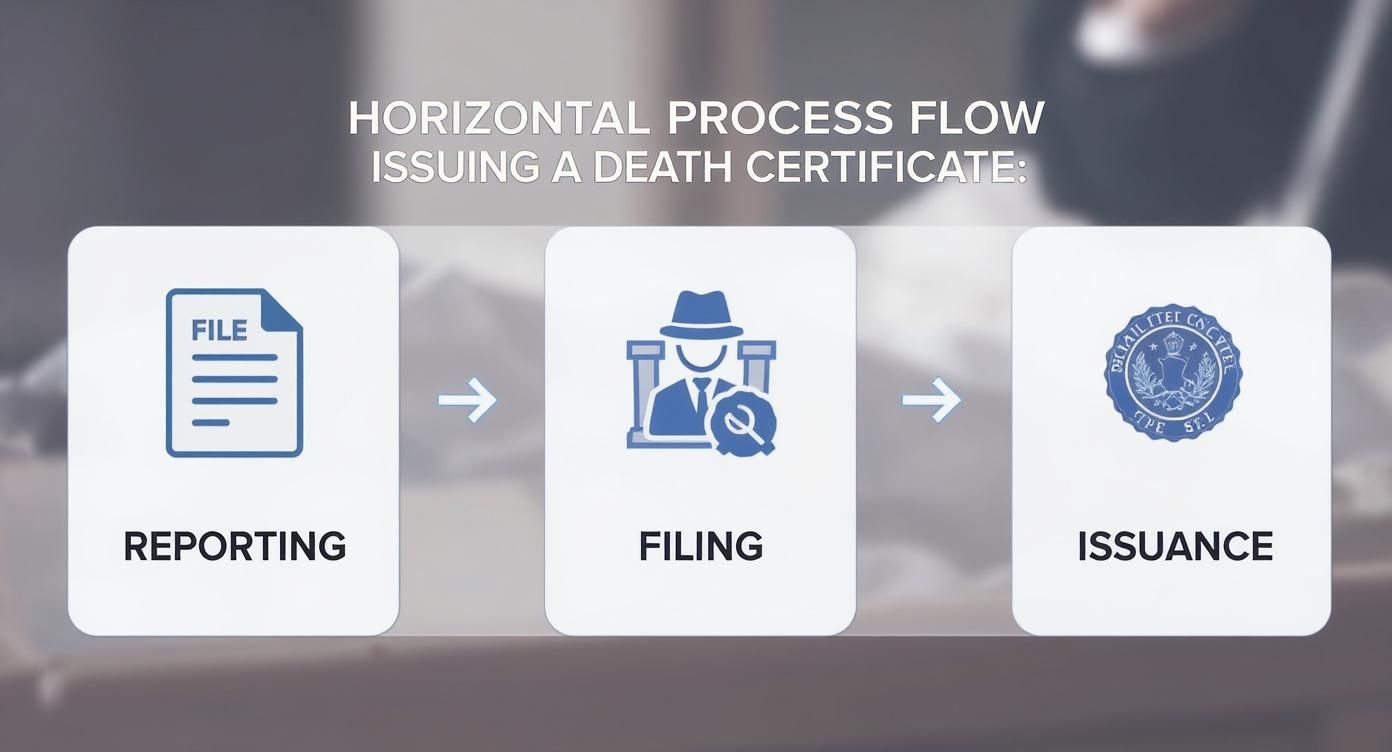
This standardized process ensures every death is recorded properly from the start. It creates the official document that can be corrected once new, conclusive information is available.
The Amendment Process in Texas
To amend a death certificate, the original certifier, the physician, medical examiner, or justice of the peace who signed it, must submit a formal amendment form to the Texas Vital Statistics Unit. They need solid evidence to support the change.
My comprehensive autopsy report often serves as that critical piece of evidence. It provides the detailed medical findings needed to justify changing the cause of death from "Undetermined" to something precise, like "Myocardial Infarction" or "Acute Fentanyl Toxicity."
The amendment process is a safeguard for accuracy. It ensures that any change to a permanent legal document is based on verifiable facts, not speculation, upholding the integrity of the record for legal and public health purposes.
This level of accuracy is crucial. Death certificates are the foundation for public health statistics worldwide. These documents are used to calculate death rates, which can vary significantly depending on a country's population and healthcare system. Some nations report crude death rates over 13 per 1,000 people, while others with younger populations and better medical care have rates as low as 1.5 per 1,000. You can see how these numbers compare globally on World Population Review.
Who Is Involved in the Amendment?
Amending a certificate is a team effort, usually involving three key parties:
- The Original Certifier: The official who signed the first certificate is typically the one who must file the amendment. They rely on experts like me to provide the necessary evidence.
- The Forensic Pathologist: My role is to provide a detailed, signed report that clearly explains the cause and manner of death. This gives the certifier the grounds to make the correction.
- The Funeral Director: They often assist the family and the certifier in preparing and submitting all the necessary paperwork to the state.
Once the Texas Vital Statistics Unit reviews the evidence and approves the amendment, it becomes a permanent part of the official record. Any new certified copies issued will show the corrected information, giving families an accurate document to settle their loved one’s affairs.
The Legal and Financial Impact of an Accurate Death Certificate
Many families I work with believe the death certificate is the last piece of paperwork after a loved one passes. In reality, it’s the first key needed to unlock numerous legal and financial responsibilities. This single document is the foundation for settling a person's entire estate, and even a small error can cause frustrating and expensive delays.
It's much more than a formality. The death certificate is the official proof that every financial institution and government agency will demand. Without a clear, correct certificate, trying to close accounts, claim benefits, or transfer property becomes nearly impossible.
Navigating Insurance and Benefits Claims
Life insurance is often the first place families feel the impact. Insurance companies scrutinize death certificates, focusing on the cause and manner of death. Many policies have clauses for accidental death, while others may have exclusions for suicide. The information on that certificate can be the deciding factor between a claim being approved or denied.
If the cause of death is listed as "Pending" or "Undetermined," the insurance company will almost certainly pause any payout until they receive an amended certificate with a definitive answer. This can leave a family in financial limbo at the worst possible time.
The same holds true for other critical benefits:
- Social Security Survivors Benefits: The Social Security Administration will not process payments for a surviving spouse or children without a certified copy.
- Veterans Affairs (VA) Benefits: To access burial allowances or dependency compensation, you must provide an accurate death certificate.
- Pension Plans and Annuities: These accounts require official proof of death before they will release funds to the named beneficiaries.
The Role in Probate and Estate Settlement
Beyond immediate benefits, the death certificate officially initiates the probate process in Texas. The probate court’s job is to validate a will and oversee the transfer of assets to the rightful heirs, and they cannot begin without this document.
An accurate death certificate isn't just about emotional closure. It's a fundamental tool for protecting a family's financial future and ensuring the legal system can work as it should, without unnecessary roadblocks.
This document is essential for everything from changing the name on a property title to accessing bank accounts and distributing investments. For a deeper understanding of the specific laws around inheritance and wills, the Texas Estates Code is the governing statute.
Why Accuracy Matters in Legal Proceedings
For attorneys, the death certificate is a cornerstone document in any case related to a person's death. In a wrongful death lawsuit or a workers' compensation claim, the certified manner of death, whether it’s ruled an Accident, Homicide, or something else, can shape the entire legal strategy.
This is where my work as a forensic pathologist is so vital. My findings from a private autopsy provide the hard medical evidence that supports the words on that certificate. Those scientific details can be what makes or breaks a case in court.
Ultimately, pursuing an independent autopsy to get a clear cause of death is a proactive step. It gives families and their legal teams the solid, factual document they need to navigate the financial and legal systems ahead, ensuring everything is handled fairly and efficiently.
Common Questions About Texas Death Certificates
Over my career, I've sat with countless families and attorneys, and they often have the same questions. In the midst of grief, getting straight answers about an official document like a death certificate can provide some stability. Here are the questions I hear most often.
How Long Does It Take to Get a Death Certificate in Texas?
The timeline can vary. By law, a funeral director must file the death certificate with the local registrar within 10 days of the death. Once it’s filed, you can usually order certified copies within a few days from the local office. Ordering from the state's Vital Statistics Unit may take longer.
However, if the cause of death isn't immediately clear, the certificate might be filed as "Pending." This happens when an autopsy or toxicology tests are needed. You can still get an initial copy right away for some immediate tasks, but the final, updated version with the definitive cause of death will take several weeks until all laboratory results are complete.
How Many Certified Copies Will I Need?
There’s no single right answer, but in my experience, it’s always more than you expect. I usually advise families to start with at least 5 to 10 certified copies. Most institutions will not accept a photocopy; they require an original certified copy with a raised seal.
Consider all the places you'll need to provide one:
- Life insurance companies (one for each policy)
- Banks and credit unions (one for each account)
- The Social Security Administration
- Pension, 401(k), or retirement fund administrators
- Credit card companies
- The Department of Veterans Affairs (if applicable)
- For transferring titles for vehicles or real estate
It's almost always easier and more cost-effective to order a batch upfront than to request more later.
What Should I Do If I Believe the Cause of Death Is Wrong?
If you suspect the cause of death on the certificate is incorrect, the first step is to seek a clear, medical-based answer. This is where an independent or private autopsy is invaluable. It provides an unbiased, scientific investigation to determine the true cause of death.
After I complete my examination, I issue a detailed report. This report serves as the official medical evidence required for the original certifier to file an amendment with the state, ensuring the permanent record accurately reflects the facts.
An autopsy is the most reliable method to challenge or clarify an uncertain cause of death. It replaces doubt with medical certainty, which is essential for both emotional closure and legal accuracy.
Can a Cause of Death Be Changed from Undetermined?
Yes, absolutely. When a manner of death is listed as "Undetermined" or the cause is marked "Pending," it isn't the final word. It simply means the official who signed the certificate did not have enough information at that moment.
The findings from an autopsy and toxicology analysis provide the concrete evidence needed to change that status to a definitive conclusion, such as "Natural" due to a heart attack or "Accident" due to an overdose. Making this change is crucial for properly settling insurance claims and other legal matters.
Navigating these details while grieving can feel overwhelming, but you don't have to do it alone. If you have questions about a loved one's cause of death or need the clarity that only a thorough medical examination can provide, please contact my office at Texas Autopsy Services. My team and I are here to provide the answers and support you need.
Learn more at https://www.texasautopsyservices.com.