November 16, 2025 · Texas Autopsy Services
What Is an Autopsy Report A Guide for Families in Texas
Learn what is an autopsy report from a forensic pathologist. I explain how to read the key sections, understand the findings, and get clear answers.

On this page
After losing a loved one, an autopsy report often serves as the final document in a difficult journey. It is a detailed medical record, but its purpose is to provide clear answers during a time of great uncertainty. As a board-certified forensic pathologist in Texas, my work involves meticulously documenting the findings of a postmortem examination to determine the cause and manner of death with medical precision and legal integrity.
Whether I am performing a Private Autopsies for a family seeking clarity or a forensic examination for a county, my goal is always the same: to deliver an unbiased, factual account that brings resolution.

The Foundational Role of an Autopsy Report
At its core, an autopsy report is the final summary of a complex medical investigation. My responsibility is to translate my findings—from initial external observations to the microscopic analysis of tissues—into a structured, understandable document. It’s not just a collection of medical terms; it's a narrative built on hard evidence. Every detail is a piece of a puzzle, and when assembled, it tells the story of what happened.
This document is crucial for families trying to understand a loved one's passing, for attorneys needing solid evidence in Texas courts, and even for public health officials tracking disease trends.
Why This Document Is So Important
The report serves several critical functions that go far beyond summarizing medical findings.
- Provides Definitive Answers: It establishes the specific medical reason for death, such as a heart attack, stroke, or infection, which can be a vital step for a family seeking closure.
- Supports Legal Processes: In legal settings, the report is a cornerstone of evidence, used in insurance claims, wrongful death lawsuits, and criminal investigations.
- Identifies Genetic Conditions: The findings can sometimes reveal hereditary diseases. This information can be incredibly valuable, giving living family members important knowledge about their own health risks.
- Ensures Medical Accuracy: Autopsies are a powerful tool for quality control in medicine. For instance, a major study looking at over 28,000 cases found that in 22.4% of deaths from infectious diseases, there was a major disagreement between the doctor's diagnosis and what the autopsy actually revealed.
The ultimate purpose of the report is to provide truth based on scientific fact. It replaces speculation with certainty, an invaluable service to grieving families and the legal system.
Reading through an autopsy report can be an emotionally difficult experience. For many, professional grief counselling is an essential resource during this time. I know that behind every case I handle is a family searching for answers, and my commitment at Texas Autopsy Services is to provide those answers with both compassion and unwavering objectivity.
How to Navigate the Key Sections of the Report
At first glance, an autopsy report can look intimidating. It’s a dense, highly structured medical document, but if you know how it’s organized, you can find the information you need. I think of it as a roadmap, where each section logically builds on the last, guiding the reader to a clear conclusion.
When I write a report, I follow a methodical process. I start with the big picture—basic identifying information—and gradually narrow my focus to specific medical findings. This approach ensures every detail is captured accurately, creating a transparent record for families and legal professionals.
The Administrative and Contextual Foundation
Before delving into the medical examination, every report begins with foundational information. This part sets the stage, establishing who the person was and what was known about the circumstances surrounding their death before the autopsy began.
- Identifying Information: This is basic administrative data—full name, age, date of birth, and any case numbers from my office or a referring agency. It anchors the entire document.
- Clinical Summary: Here, I outline the person's known medical history. This may include past illnesses, previous surgeries, chronic conditions like heart disease or diabetes, and any recent hospitalizations or health complaints.
- Circumstances of Death: This section is a brief narrative describing how the individual was found. It might include notes from first responders, police, or family about the events leading up to the death.
This initial information is critical. For instance, if the clinical summary notes a history of heart disease, that immediately tells me to pay special attention to the cardiovascular system during the internal exam.
The Core Medical Examination
This is the heart of the report, where I document my findings during the postmortem examination. I break this down into two main parts: what I observe on the outside of the body and what I find on the inside.
Every observation is documented, no matter how small it seems. Sometimes, the absence of an injury is just as significant as the presence of one. This meticulous approach ensures my final conclusions are built on a solid foundation of evidence.
The external examination is a careful, head-to-toe inspection. I look for any signs of injury, evidence of medical intervention (like IV lines or surgical scars), identifying marks like tattoos, and general characteristics such as height, weight, and overall physical condition.
Next is the internal examination, which is a systematic, organ-by-organ evaluation. Each organ system—cardiovascular, respiratory, gastrointestinal—is carefully dissected, weighed, and inspected for any signs of disease or injury. More often than not, this is where the direct cause of death reveals itself.
Ancillary Studies and Final Diagnosis
The last sections of the report bring all the pieces of the puzzle together. This is where I include the results from laboratory tests and present my official medical opinion. These ancillary studies are essential in cases where the cause of death isn’t immediately obvious from the physical examination alone.
For a deeper look at interpreting these detailed findings, our guide on how to read a pathology report offers more context that builds on this structural overview.
To help you get familiar with the layout, here’s a quick breakdown of what you can expect to find in a standard report.
Components of a Standard Autopsy Report
This table outlines the essential sections you'll find in a comprehensive autopsy report and what kind of information each one contains.
| Section of Report | Purpose and Key Information |
|---|---|
| Administrative Data | Contains the decedent’s name, age, case number, and dates of examination and death. This is for legal identification and record-keeping. |
| External Examination | A detailed description of the body's external appearance, including height, weight, identifying marks, and any evidence of injury or medical intervention. |
| Internal Examination | A systematic, organ-by-organ description of the internal findings, noting the weight, size, and appearance of each major organ. |
| Ancillary Studies | Lists the results of specialized tests, such as toxicology (drugs, alcohol), histology (microscopic tissue analysis), and microbiology (infections). |
| Final Diagnosis | A summary list of all significant pathological findings, culminating in the official Cause and Manner of Death determination. This is the conclusion of the investigation. |
Understanding this structure is the first step in making sense of what can be a very complex and emotional document.
Interpreting the Cause and Manner of Death
After I’ve pieced together all the evidence—from the initial external exam to the deep dive into internal organs and the lab results—I can draw my conclusions. This is the part of the report that families and attorneys are waiting for. It’s where I provide a clear medical reason for the death.
To do this, I separate two important concepts that are often confused: the cause of death and the manner of death. Think of it this way: the cause is the what (the medical issue), and the manner is the how (the circumstances surrounding it). Getting this distinction right is crucial.
This infographic breaks down how all the different parts of the report build on one another to reach that final diagnosis.

As you can see, it's a methodical process. Every step provides another piece of the puzzle, all leading to a conclusion backed by solid evidence.
Defining the Cause of Death
The cause of death is the specific disease or injury that directly led to the person’s life ending. It's a purely medical finding based on what I observe during the autopsy. Sometimes it's a single event, but other times it's a cascade of issues.
For instance, if my internal exam shows that the arteries supplying the heart are severely blocked and the heart muscle is damaged, I would list the cause as "Acute Myocardial Infarction due to Coronary Artery Atherosclerosis." This doesn't just say "heart attack"—it explains why the heart attack happened.
Sometimes, it's a chain reaction. A person might fall and break their hip, then develop pneumonia in the hospital while recovering. In that scenario, pneumonia is the immediate cause, but the fall is what set everything in motion. My job is to document that entire sequence to give a complete picture.
Classifying the Manner of Death
While the cause is medical, the manner of death classifies the circumstances. As a forensic pathologist, I assign the death to one of five categories used across the United States.
- Natural: The death was caused entirely by disease or old age. This is the most common category.
- Accident: The death was the result of an unintentional event, like a car crash, a fall, or an accidental drug overdose.
- Suicide: The death was caused by a person intentionally harming themselves.
- Homicide: Another person was responsible for the death. This is a medical ruling, not a legal one; it doesn’t automatically mean a crime was committed.
- Undetermined: This is used when there isn't enough evidence to confidently pick one of the other four categories.
My role is to determine the manner based on the physical evidence and the information I have about the circumstances. For example, if a heart attack is the cause of death, the manner is almost always Natural. But if the cause is a gunshot wound, the manner could be homicide, suicide, or accident, depending on the context.
This detailed classification is more than just an administrative step; it's crucial for public health. For example, studies looking at autopsy findings have confirmed cardiovascular disease as the leading cause of death for adults with hypertension (31.2% of cases). This kind of data, pulled from thousands of reports, helps researchers spot trends and save lives in the future.
We dive even deeper into this topic in our guide on the difference between cause and manner of death. Ultimately, this section of the autopsy report delivers the objective, science-based answers that families need.
The Role of Toxicology and Special Testing
An autopsy often goes deeper than what I can see with my own eyes. Some of the most critical questions can only be answered by sending biological samples to specialized labs for analysis. These tests are essential for building a complete picture of what was happening inside the body at a microscopic and chemical level.
This is also why it can take several weeks to get a final autopsy report. While the physical exam is done in a few hours, I must wait for these detailed lab results to come back before finalizing my conclusions. Rushing the process would mean issuing an incomplete or, worse, an inaccurate report.

Uncovering the Unseen with Toxicology
Toxicology is one of the most powerful tools in my practice. It's the science of detecting and identifying drugs, alcohol, medications, and other chemical substances in the body. I collect fluid and tissue samples during the autopsy and send them to a toxicology lab for analysis.
The report that comes back tells me two key things:
- What was present? It identifies specific substances, from prescription medications and illegal drugs to common things like ethanol (alcohol).
- How much was present? It also provides the concentration of these substances, which is often the most important part.
For instance, finding a prescribed pain medication is one thing. Finding it at a level 10 times higher than the therapeutic dose can change the entire case, potentially shifting the manner of death from natural to accidental. My job is to put these numbers into context with the person's medical history and the physical findings from the autopsy.
A toxicology report isn't just a list of chemicals; it's a chemical snapshot of the body at the time of death. It can confirm a suspected overdose, reveal an unknown substance, or rule out intoxication, providing objective data that is crucial for determining the final cause of death.
Microscopic and Specialized Examinations
Beyond toxicology, other specialized tests give us insights the physical examination can't. I choose which tests to run based on the specific circumstances of the death and my findings during the initial exam.
- Histology: This is the study of tissue under a microscope. I take tiny, paper-thin sections of organs, which are then stained and put on glass slides. This lets me see cellular-level changes invisible to the naked eye, like the early signs of a heart attack, subtle inflammation from an infection, or the presence of cancer cells.
- Microbiology: If I suspect an infection played a role, I can send tissue or fluid samples for testing. These cultures can grow and identify specific bacteria, viruses, or fungi, confirming if an overwhelming infection was the ultimate cause of death.
- Genetic Testing: In certain cases, especially with sudden, unexplained deaths in young, otherwise healthy people, genetic testing might provide answers. This can uncover inherited conditions, like certain heart rhythm disorders, that could have caused the death and may be important for living family members to know about.
Each of these tests adds another layer of evidence, ensuring my final opinion is backed by hard, scientific analysis from multiple angles.
Why Families in Texas Choose a Private Autopsy
When a loved one passes away, the last thing anyone wants is uncertainty. While many autopsies are handled by a county medical examiner's office, sometimes that's not the case. An increasing number of families and attorneys in Texas are choosing to arrange for a private, independent autopsy to get the answers they need.
This kind of examination offers a dedicated investigation into the cause of death, especially when official channels aren't an option or when there are lingering questions that need to be addressed.
My work at Texas Autopsy Services is about providing that clarity. Families come to me for many reasons, but at the heart of it, they’re all looking for the same thing: definitive, unbiased answers that only a thorough medical examination can deliver. A private autopsy puts them back in control and ensures their specific concerns are investigated.
When an Independent Examination Is Necessary
So, when does a private autopsy make sense? In my experience performing over 1,000 autopsies, families and their legal teams usually reach out when they find themselves in situations where the answers are either missing or don’t feel right.
- When a Hospital Declines an Autopsy: Many people are surprised to learn that hospitals perform far fewer autopsies today than in the past. If a death occurs in a medical facility and they choose not to conduct a postmortem, a private exam is often the only path to getting answers.
- Unanswered Questions or Suspicions: Sometimes the official explanation doesn't align with what the family knows about their loved one’s health or the circumstances of their death. A private autopsy provides a completely impartial review of the facts.
- Legal and Insurance Matters: For a Texas attorney, an independent autopsy report can be a game-changer. It's crucial evidence for investigating potential medical malpractice, challenging a denied insurance claim, or bringing clarity to a workers' compensation case.
- Sudden or Unexplained Deaths: When someone who seemed healthy dies unexpectedly and their death doesn't fall under the medical examiner’s jurisdiction, a private autopsy can be incredibly revealing. It can uncover hidden genetic conditions or other underlying medical issues.
The Value of an Unbiased Second Opinion
A private autopsy brings a fresh set of eyes to the case—a perspective focused only on the medical facts. As a board-certified forensic pathologist, my only duty is to the evidence and to the family who has trusted me. That kind of objectivity is everything.
This independence is critical. A recent case in Kenya is a powerful example where an independent autopsy revealed that a blogger who died in police custody had actually been assaulted, directly contradicting official statements. The findings from multiple independent pathologists were key in the demand for accountability, showing the power of a second look.
Navigating the Process with Dignity
I understand that arranging a private autopsy can feel daunting. I handle every step with the sensitivity and professionalism it deserves, in full compliance with Texas laws, including the Texas Funeral Service Commission regulations. The process starts with obtaining consent from the legal next-of-kin. From there, I coordinate directly with the funeral home, including our partners at Waterloo Mortuary Partnership, to ensure everything is seamless and respectful.
My commitment is to perform the examination with the utmost dignity, ensuring it doesn't interfere with the family's plans for a viewing or funeral. The goal is simple: provide answers without adding to the family’s burden.
This is more than a medical procedure; it’s a service for those in search of truth and closure. If you're considering this option, our detailed guide on the private autopsy service offers more information on what you can expect.
Common Questions About Autopsy Reports
When families first encounter an autopsy report, they naturally have many questions. I've walked many people through this process, and a few key concerns come up time and again. Let's address some of the most common ones.
How Long Does It Take to Get a Final Autopsy Report?
This is probably the number one question I get. While the physical examination is usually done in a few hours, putting together the final, detailed report is a much longer process. The timeline depends on the complexity of the case and the specialized testing needed.
For a straightforward case, a final report might be ready in 4 to 6 weeks. However, if we need extensive toxicology screens, microscopic tissue analysis, or other in-depth tests, it can take 12 weeks or more. I won't sign off on a report until every piece of data is back and I've analyzed it thoroughly—accuracy is my highest priority.
Who Can Request a Private Autopsy in Texas?
In Texas, the authority to consent to a private autopsy belongs to the legal next-of-kin. The Texas Health & Safety Code establishes a clear order of priority for who can give that consent:
- The surviving spouse
- Any surviving adult child
- The surviving parents
- Any surviving adult siblings
While an attorney can recommend that a family get an independent autopsy, the actual consent form must be signed by the person with the legal authority. This is a crucial legal step that I am very strict about.
Understanding this chain of authorization is vital. It protects the integrity of the process and ensures we're honoring the wishes of the deceased's closest family, just as Texas law requires.
Will an Autopsy Prevent an Open Casket Funeral?
This is a deeply personal and completely valid concern for families. I can tell you that in the vast majority of cases, the answer is a clear no—an autopsy does not prevent an open-casket viewing.
As a forensic pathologist, I make every incision with great care and in locations that won't be visible once the body is dressed. I work closely with talented funeral directors who know exactly how to prepare a loved one for viewing after an autopsy. We share the same goal: to treat every person with dignity and respect your family’s wishes for a final goodbye.
While on the topic of the tools pathologists use, families sometimes ask about the technology involved. You can learn more about how comprehensive reports are often managed with specialized medical documentation software.
How Can I Get a Copy of an Autopsy Report?
How you get a copy depends on who performed the autopsy.
- For a private autopsy with Texas Autopsy Services: The report is a confidential medical record. We release it only to the person who legally authorized the procedure, which is usually the next-of-kin or their attorney.
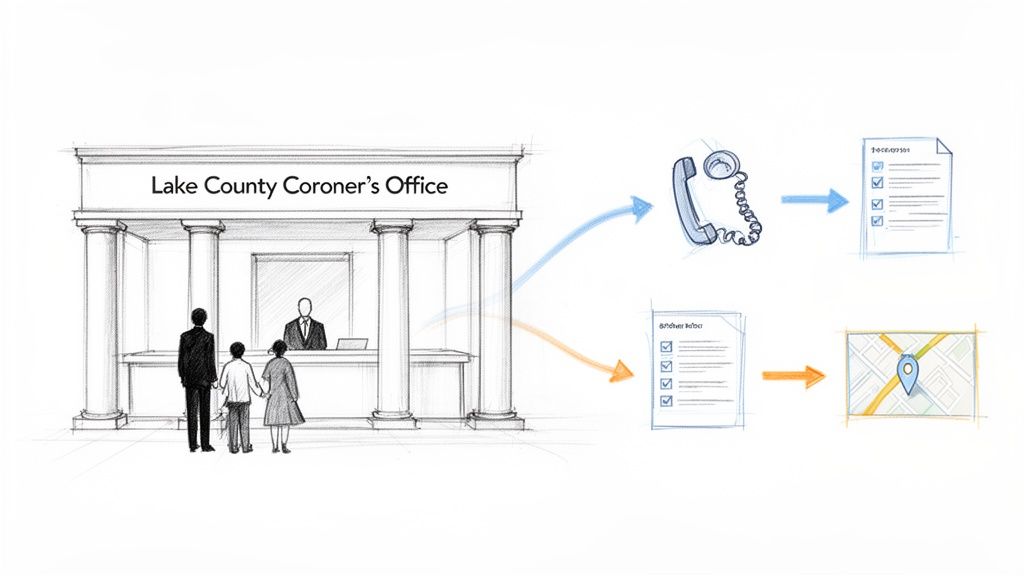
- For an autopsy done by a county Medical Examiner's Office: These reports are often considered public records. You’ll need to file an official request with the specific county office that handled the case, and each office has its own protocol.
Going through the loss of a loved one is one of life's most challenging experiences, and you deserve clear, straightforward answers. If you have questions or feel a private autopsy could bring your family the clarity you need, please reach out to Texas Autopsy Services for a confidential consultation.