December 17, 2025 · Texas Autopsy Services
Are Autopsy Reports Public Record in Texas? A Pathologist Explains
autopsy report public record texas: Learn who can access records, when they are private, and how a board-certified forensic pathologist interprets them.

On this page
- A Forensic Pathologist’s Perspective on Public Records
- Why Most Autopsy Reports Are Considered Public
- Understanding the Limits on Public Access
- How to Formally Request an Autopsy Report
- The Alternative: A Confidential Private Autopsy
- What You'll Find Inside an Autopsy Report
- Common Questions We Hear From Families
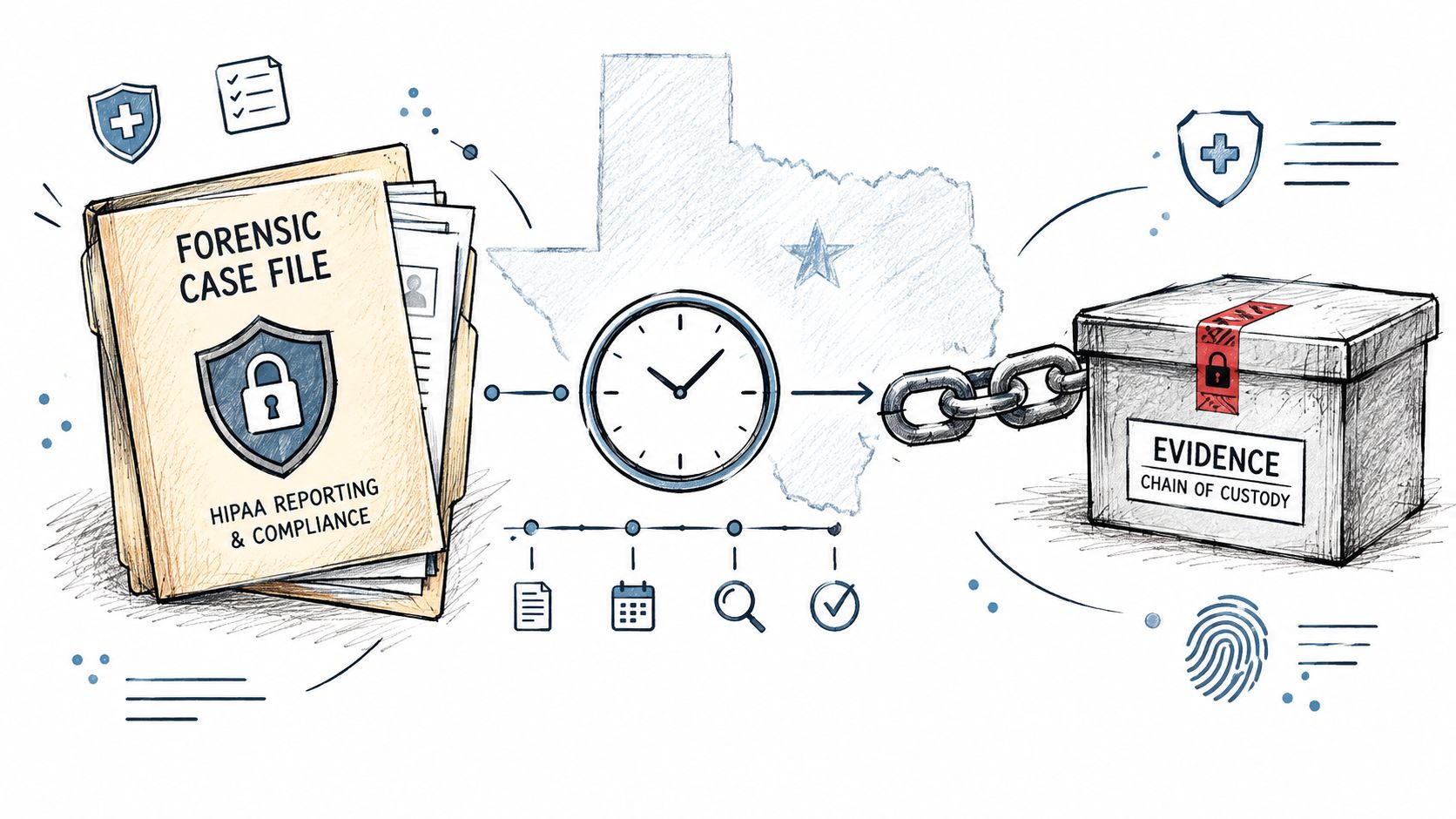
As a board-certified forensic pathologist in Texas, I'm often asked, "Is my loved one's autopsy report a public document?" The simple answer is yes, in most cases. The Texas Public Information Act generally classifies reports from a medical examiner or justice of the peace as public information.
However, that simple answer doesn't capture the full picture. The law includes critical exceptions designed to protect grieving families and the integrity of law enforcement investigations. My goal is to explain how this works in Texas, balancing the public’s right to know with a family's fundamental need for privacy.
- An autopsy report from a Texas medical examiner is usually a public record under the Texas Public Information Act.
- Key exceptions protect sensitive information, such as graphic photos or details from an active criminal investigation.
- A private autopsy, which I perform at Texas Autopsy Services, is a confidential medical document controlled by the family.
- To request a public report, you must identify the correct county agency and provide the deceased’s details.
- The final report is a detailed document that includes external, internal, microscopic, and toxicology findings.
A Forensic Pathologist’s Perspective on Public Records

For many families, the idea that such a personal document could be available to the public is deeply unsettling. It’s created during a time of immense grief, and Texas law acknowledges this. The statutes carefully balance the public's right to government transparency with a family's need for dignity and privacy.
My work as a forensic pathologist, both for counties and for private families, involves navigating this balance every day. As the owner of Texas Autopsy Services and a pathologist certified by the American Board of Pathology in anatomic, clinical, and forensic pathology, I ensure every examination and report meets the highest ethical and legal standards. The reports I author provide clear, scientific answers while always honoring the dignity of the deceased.
Key Principles of Autopsy Report Access
This balance between transparency and privacy rests on three core principles:
- Accountability: Death investigations funded by taxpayers, like those performed by a medical examiner, are generally open to public review. This holds the system accountable.
- Investigative Integrity: If releasing information could compromise an active criminal investigation, the law allows for it to be withheld until the case concludes.
- Family Privacy: Certain parts of the case file, especially graphic photos, are strictly protected from public release to shield families from further trauma.
To clarify this, the table below summarizes who can typically access what information from a government-mandated autopsy.
Texas Autopsy Record Access at a Glance
| Record Type | General Public Access | Next of Kin Access | Governing Principle |
|---|---|---|---|
| Final Autopsy Report | Yes, usually after a case is closed. | Yes, often with fewer restrictions. | Public Information Act |
| Autopsy Photos/Videos | No, explicitly protected. | Yes, with proper identification. | Family Privacy/Texas Code |
| Investigative Notes | No, if part of an active case. | Limited, depends on case status. | Investigative Integrity |
This table provides a good starting point, but every situation is unique. The main takeaway is that while the final written report is often public, the most sensitive materials are almost always protected. The field of forensic pathology is dedicated to finding truth through medicine and science. If you want to learn more about the expertise behind these reports, you can read about what a forensic pathologist is and understand the role we play in the justice system.
Why Most Autopsy Reports Are Considered Public
To understand why an autopsy report is usually a public document, you have to start with one key piece of legislation: the Texas Public Information Act (TPIA). This law, found in Texas Government Code Chapter 552, establishes a powerful default rule: if a government body creates a record, the public has a right to see it.
A medical examiner’s office is a government agency funded by taxpayer dollars. The work it performs, including the official findings from an autopsy, is considered public business. This is no different than city council meeting minutes or a county’s budget; it’s all part of ensuring accountability. When I perform a forensic autopsy for a Texas county, my report becomes part of that public record.
This isn’t just a loose concept; it's a firmly established legal standard.
The Legal Foundation for Transparency
At its core, the TPIA is about giving citizens access to the information they’ve paid for. When a death investigation is handled by a public official, like a medical examiner or a justice of the peace, the documents they produce fall squarely under this act. The final autopsy report is a prime example.
This legal framework means that anyone, from a journalist to a concerned citizen, can file a request and get a copy of that report. It's the reason why, in Texas, an autopsy report is public by default.
The legal presumption is clear: autopsy reports are public records under the TPIA. This has been confirmed repeatedly by Texas Attorney General opinions. One well-known example, ORD-7790 from 2004, explicitly states that medical examiner reports are subject to required disclosure unless a specific legal exception applies. You can explore more about these legal precedents and what they mean for public records.
How This Works in Practice
The process itself is designed to be straightforward. You submit a written request to the government agency that holds the record, in this case, the medical examiner’s office that conducted the autopsy. That office is then legally obligated to provide the information, unless they can cite a specific exception in the law that allows them to keep it private.
- Who holds the record? Usually, it's the medical examiner or justice of the peace for the county where the death occurred or was investigated.
- What is released? The primary document considered public is the final, signed autopsy report.
- What does it cost? Agencies can charge a nominal fee to cover the cost of copying and sending the documents, as outlined in the TPIA.
This entire system is built on a foundation of transparency. But, as I mentioned, it’s not an open book. The law creates very important exceptions to protect ongoing criminal investigations and the privacy of families, which we'll discuss next.
Understanding the Limits on Public Access
While the law defaults to openness, it's not absolute. There are important exceptions designed to protect both ongoing legal cases and the privacy of grieving families. This is where the simple "yes, it's public" answer becomes more complex. As a forensic pathologist, I view these limits as essential boundaries that balance transparency with compassion.
The most common reason a report might be withheld, or at least delayed, is an active law enforcement investigation. Releasing certain details about injuries or the circumstances of a death could compromise a criminal case.
For example, in a homicide investigation, the Medical Examiner might publicly state the cause of death was a gunshot wound. But the specific findings from the internal examination, like the bullet's trajectory or unique markings on internal structures, might be kept confidential. That is information only the perpetrator might know, and releasing it could jeopardize the investigation.
Protecting Privacy and Dignity
Beyond active cases, Texas law is very specific about shielding certain information to protect the dignity of the deceased and their family. This isn't a legal gray area; the statutes are quite clear.
The most sensitive materials from an autopsy are never available to the general public. These protected records include:
- Autopsy photographs and X-rays: These images are graphic and deeply personal. They are legally shielded from public requests to prevent misuse and to protect families from seeing them circulate.
- Body-camera footage: Any video recorded as part of the death investigation is also restricted.
- Audio recordings: This covers any audio captured during the autopsy process or related investigation.
Typically, only the legal next-of-kin or someone with a specific court order can access these materials. It’s a crucial measure that ensures a family’s privacy is respected during an unimaginably difficult time.
How County Policies Reflect State Law
These rules aren't just suggestions; they come from statutory exceptions and Attorney General rulings that create firm limits on disclosure. So, while an autopsy report public record in Texas is the general rule, specific sections of the Texas Government Code allow, and sometimes require, that certain information be withheld.
You'll see this reflected in the policies of major county systems in Dallas, Harris, and Bexar counties. Their online case search portals often have built-in date limits, and they state clearly that sensitive materials like photos and X-rays are not released to the public. To obtain those, the next-of-kin must submit a notarized request. You can read more about these open government rules and exceptions to see the legal framework behind these policies.
In my experience performing over 1,000 autopsies, these exceptions are not loopholes; they are necessary safeguards. They ensure the public’s right to know doesn’t trample a family’s right to grieve in private or an investigator's ability to solve a crime. The system is designed to provide answers without causing more harm.
These legal and ethical lines are fundamental to my work at Texas Autopsy Services. They allow me to conduct a thorough, objective investigation while making sure the deceased and their family are always treated with the respect they deserve.
How to Formally Request an Autopsy Report
Trying to get a copy of an autopsy report can feel overwhelming, especially during a difficult time. Let's walk through the process step-by-step to make it as straightforward as possible.
The first thing you must do is identify which agency actually has the report. In Texas, this will be the medical examiner's office (or sometimes the justice of the peace's office) for the county that handled the death investigation. This isn't always the same county where the person passed away, so confirming the correct jurisdiction is a crucial first step.
Gathering the Necessary Information
To ensure your request is processed smoothly, you’ll need to have some specific details ready. This information helps the office find the correct file quickly.
Here's what they will almost always ask for:
- The deceased’s full legal name
- Their date of birth and date of death
- The case number, if you have it (this is the fastest way for them to locate the record)
It's important to know that procedures can vary between Texas counties. Large counties like Harris or Dallas often have online portals where you can submit a request digitally. In smaller, rural counties, you'll likely need to send a formal written request by mail or email.
This flowchart gives you a general idea of how a public request for an autopsy report moves through the system in Texas.

As you can see, a request initiates an internal review. During this review, legally protected information is redacted before the final, approved version of the document is released.
Submitting Your Formal Request
Once you know where to send your request and have the details handy, it's time to submit it. If the office doesn't provide a specific form, a simple, clear letter will work.
Sample Request Language:
"To the Custodian of Records,Pursuant to the Texas Public Information Act, I am requesting a copy of the full autopsy report for [Deceased's Full Name], date of death [Date]. The case number is [Case Number, if known]. Please let me know the costs associated with this request.
- Call our office for guidance: (806) 230-1889.> Thank you,
[Your Name]
[Your Contact Information]"
It’s also important not to confuse an autopsy report with a death certificate. They are two completely different documents. An autopsy report is a detailed forensic file created by a medical examiner. A death certificate is a vital record issued by the Texas Department of State Health Services.
The rules for who can obtain one and how long it takes are different for each. The state’s vital records system and the county medical examiner systems are separate and do not follow the same rules.
For a deeper look into this process, you can read our detailed guide on how to request an autopsy report for more tips. And while it’s a different area, learning how to conduct a Form 990 nonprofit search can give you a feel for the formal processes involved in accessing public records in general.
The Alternative: A Confidential Private Autopsy
What happens when you need definitive answers about a loved one's death, but you also need to protect your family's privacy? The public nature of a medical examiner’s report can be a source of anxiety for families. This is where a private autopsy offers an invaluable, confidential alternative.
When a family or their attorney hires a private forensic pathologist like myself to perform an independent examination, the final report is a confidential medical document, not a government record. The family who authorizes the autopsy has total control over who sees the findings.
This level of privacy is crucial in many sensitive situations.
When to Consider a Private Autopsy
A private autopsy is often the best choice when a county medical examiner declines to perform one, but the family still has unanswered questions. It’s also the go-to option for getting a second opinion to either confirm or challenge the county’s findings, especially when medical error is suspected and discretion is critical.
Common reasons families choose this path include:
- Unanswered Questions: Seeking closure when the official cause of death feels incomplete or doesn't align with the circumstances.
- Medical Complexity: Investigating whether a misdiagnosis, a treatment error, or a hospital-acquired infection contributed to the death.
- Legal Scrutiny: Gathering impartial evidence for a potential civil case, such as a medical malpractice or wrongful death claim.
- Hereditary Disease Concerns: Determining if a genetic condition was involved, which can provide critical health information for living family members.
The Assurance of Confidentiality
Here’s the key difference: while a county-mandated autopsy report is a public record in Texas, a private autopsy report belongs solely to the person who requested it. It isn't filed with any public office, so it is not subject to the Texas Public Information Act. This keeps sensitive personal and medical information securely within the family’s control.
A private autopsy delivers two critical things: objective, scientific clarity and the absolute assurance of privacy. It gives control back to families over deeply personal information during an incredibly difficult time.
My role in these cases is to provide an independent, unbiased cause-of-death determination directly and only to the family. We offer these Private Autopsies to deliver not just the medical truth, but also the peace of mind that comes from knowing your family’s privacy is secure. The entire process is designed to give you answers without sacrificing dignity or control.
What You'll Find Inside an Autopsy Report

Once you have the autopsy report in hand, whether it's from a Texas county or a private examination, the next challenge is understanding what it all means. These documents can seem intimidating because they are filled with technical jargon and medical details. But they follow a logical and systematic structure. Let's break it down so you can make sense of the findings.
Think of an autopsy report as a detailed story told in reverse. It’s a systematic medical investigation, with each section building on the last to create a complete picture of a person's health at the moment of death.
Core Sections of the Report
Every report I author follows a strict format to ensure nothing is missed. While every case is unique, the basic framework is always consistent. Here are the key sections you'll see:
- External Examination: This is a head-to-toe description of the outside of the body. We document everything from height and weight to identifying marks like scars and tattoos. We also note any visible signs of injury or medical intervention.
- Internal Examination: Here, we proceed organ by organ. I carefully inspect each organ, weigh it, and describe its condition. This is where we uncover evidence of disease, damage, or other abnormalities not apparent from the outside.
- Microscopic Findings: This section provides a cellular-level view. We take small tissue samples from the organs and examine them under a microscope. This can reveal crucial details, such as hidden heart disease, infections, or other underlying conditions.
- Toxicology Results: This section is critical and often takes the longest to get back from the laboratory. It lists any drugs, alcohol, or other substances found in the body and at what concentrations. These results provide essential context for the final conclusions.
My job as a forensic pathologist is to assemble these pieces into a coherent medical narrative. The final report isn't just an opinion; it’s a medical conclusion built on evidence, scientific analysis, and a methodical process.
Processing the dense medical information in these reports can be challenging. It's interesting to see the expanding role of AI summarization tools in healthcare for making sense of such complex data.
Cause and Manner of Death
Everything in the report leads up to two critical conclusions: the cause of death and the manner of death. It's very important to understand the difference between these two terms.
The cause of death is the specific injury or disease that resulted in death, for example, a "gunshot wound" or "atherosclerotic cardiovascular disease."
The manner of death classifies the circumstances. In Texas, there are five possibilities: natural, accident, suicide, homicide, or undetermined. Understanding these terms is key for families and legal teams to grasp the complete story the evidence tells.
Common Questions We Hear From Families
When you're dealing with the loss of a loved one, the last thing you need is more confusion. Here are some straightforward answers to the questions I'm most often asked by families and attorneys trying to make sense of the autopsy process in Texas.
How long does a final autopsy report take in Texas?
It's a common misconception that the report is ready immediately after the examination. While the physical autopsy is completed quickly, the final, detailed report typically takes 8 to 12 weeks to finalize. The reason for the delay is the detailed laboratory work. Toxicology screens require precise and careful analysis to get right, and that simply takes time. In more complex cases that require consultation with other specialists, the timeline can sometimes extend longer.
Is there a cost to get an autopsy report?
If the autopsy was ordered and performed by a county Medical Examiner's office, the family doesn't pay for the procedure itself. However, you may encounter a small administrative fee when you request a copy of the report. This is standard practice and covers the cost of copying and sending the documents, as permitted by the Texas Public Information Act.
Can we have an open-casket funeral after an autopsy?
Yes, absolutely. This is a very common and understandable concern for families. As forensic pathologists, we are deeply committed to treating the deceased with the utmost respect and dignity. We are trained to make all incisions in places that are easily concealed by clothing. Your funeral director is also very skilled and experienced in preparing for a viewing after an autopsy, ensuring you can have the open-casket service you desire.
If you have questions specific to your situation or feel a second opinion on an existing report would bring you peace of mind, please do not hesitate to reach out. My purpose is to provide clear, compassionate, and expert answers when you need them most.