December 9, 2025 · Texas Autopsy Services
What Families Should Know About Determining Cause of Death in Texas
Forensic guide to death records cause of death: how the cause is determined, the role of autopsy, and how findings are interpreted.

On this page
- The Difference Between Cause of Death and Manner of Death
- Cause of Death vs Manner of Death Explained
- How a Forensic Pathologist Determines Cause of Death
- When an Autopsy is Crucial for an Accurate Death Record
- Understanding Texas Death Records
- When to Seek a Second Opinion on a Death Record
- Frequently Asked Questions About Cause of Death
- A private autopsy provides an independent, objective investigation to determine the precise medical cause of death.
- The process is led by me, our forensic pathology team, a board-certified forensic pathologist with experience in over 1,000 autopsies.
- Understanding the difference between the medical cause of death and the legal manner of death is essential for interpreting a death certificate.
- A comprehensive autopsy report can provide the evidence needed to correct a death record, settle insurance claims, or answer lingering questions.
- All examinations are confidential, respectful, and fully compliant with Texas law.
A family in Central Texas recently contacted me after receiving their father’s death certificate. He had passed away unexpectedly at home, and the certificate listed his cause of death as “cardiac arrest.” While medically true at a basic level, this offered no real answers. They knew what happened at the final moment, but they didn’t know why. Was it a sudden heart attack? An undiagnosed condition? This uncertainty left them unable to process their grief and concerned about their own family’s medical history. Their story highlights a critical need: the need for a clear, definitive cause of death.
The Difference Between Cause of Death and Manner of Death
As a forensic pathologist, my most important duty is providing a clear, evidence-backed explanation for why a person died. This explanation becomes the official cause of death on the death certificate, a legal document with significant weight for insurance, inheritance, and public health. Families often tell me the language on death records cause of death is confusing, but it’s structured for medical and legal precision.
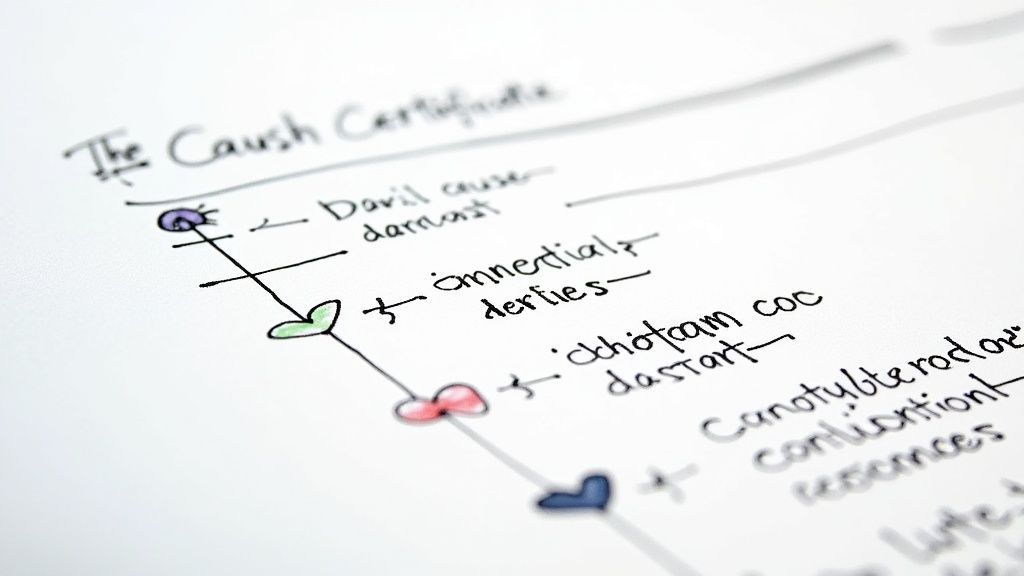
The official Texas Certificate of Death separates this information into two parts to tell the complete story.
Part I: The Causal Sequence
Part I of the death certificate shows a logical sequence of events. It’s laid out in lines, starting with the final condition and working backward.
- Immediate Cause of Death: This is the final complication or condition right before death, like the last domino to fall. A "pulmonary embolism" (a blood clot in the lung) is a common example.
- Underlying Cause of Death: This is the most critical piece of information. It's the disease or injury that started the fatal chain of events. For instance, if someone fell, broke their hip, was immobilized during recovery, and then developed a fatal blood clot, the underlying cause would be the "fall with hip fracture."
Part II lists other significant conditions that contributed to the death but weren't part of the direct sequence in Part I. Long-term diabetes or high blood pressure might be listed here for the person who fell.
As a forensic pathologist, my role is to construct this medical narrative accurately. The distinction between the immediate and underlying cause isn't just a technicality; it’s the difference between knowing what happened at the moment of death versus understanding the full story of why it happened.
This methodical approach ensures all death records cause of death listings are consistent and medically sound. It provides the clarity families need for closure and gives legal proceedings a foundation of fact. If the details on a certificate seem confusing or don't match what you understand to be true, a private autopsy can provide the in-depth investigation needed to either confirm or correct the official record.
Cause of Death vs Manner of Death Explained
When you’re looking at a death certificate, two terms are easy to mix up: the cause of death and the manner of death. As a forensic pathologist, I draw a sharp line between these two. Getting this distinction right is the key to truly understanding any death record.
The cause of death is the purely medical reason a person died. It’s the specific disease or injury that started the chain of events leading to death. This is the “what”—the biological reason the body stopped working.
On the other hand, the manner of death is a legal classification. It tells the story of how the death came about by describing the circumstances surrounding it.

The Five Official Manners of Death
In Texas, a medical examiner or certifying physician must choose from one of five official manners of death.
- Natural: This is the most common manner. It means the death was due to disease or the natural aging process, with no outside influence like an injury. A death from a heart attack or cancer falls into this category.
- Accident: This manner is used when an unintentional event, like an injury or poisoning, results in death. Examples include a car crash, a fall, or an accidental drug overdose.
- Suicide: This is assigned when the investigation shows the person intentionally took their own life. This determination requires evidence confirming their intent.
- Homicide: This means the actions of another person led to the death. This is a medical-legal finding, not a criminal one. It doesn’t automatically mean "murder"—it just states that one person caused another’s death.
- Undetermined: Sometimes, there isn't enough information to confidently choose one of the other four categories. This might happen when evidence is conflicting or when a body is found too late for a clear conclusion.
The same medical cause can have different manners. For example, a "gunshot wound to the head" is the cause of death. But was it suicide, homicide, or an accident? The manner depends entirely on the evidence found during the investigation.
This distinction has real legal and financial consequences, especially for life insurance claims or wrongful death lawsuits. An incorrect manner of death could lead to a denied claim.
| Concept | Cause of Death | Manner of Death |
|---|---|---|
| Definition | The specific disease or injury that led to death. | The legal classification of the circumstances. |
| Nature | A medical opinion. | A legal determination based on evidence. |
| Example | Asphyxiation due to drowning. | Accident, Suicide, or Homicide. |
| Determined By | Physician, Forensic Pathologist. | Medical Examiner, Justice of the Peace, or Forensic Pathologist. |
This clear separation ensures that death records cause of death information provides a full, accurate picture. If you're struggling to make sense of a loved one's death certificate, an independent review can bring the clarity your family needs.
How a Forensic Pathologist Determines Cause of Death
Determining why someone died is a medical investigation. As a forensic pathologist, my work isn't just about the autopsy. It’s about piecing together a complex puzzle to build an evidence-based story of what happened. The final cause of death on the record has huge implications, which is why my conclusion is never based on a single finding.
The Investigative Process
It all starts with gathering every piece of information available. This initial review gives me context before I begin the physical examination. Key sources I rely on include:
- Medical History: I review all available medical records to understand pre-existing conditions, recent surgeries, or medications. This history often points to vulnerabilities.
- Circumstances of Death: Reports from law enforcement, paramedics, or family members are important. They tell me where, when, and how the person was found.
- External and Internal Examination: The autopsy is a systematic, head-to-toe examination. I look for external signs of injury and then internally assess every organ system for clues.
Beyond the Physical Examination
The autopsy is a major part of the investigation, but it's just one piece. I often need other scientific tests that can reveal things invisible to the naked eye.
Toxicology is the analysis of blood, urine, and tissues to check for drugs, alcohol, or poisons. A toxicology report can be the key that unlocks a case—it might reveal an overdose or identify an unexpected toxin. This step is often essential for accurately completing the death records cause of death section.
Histology, or the microscopic examination of tissue, is another vital tool. By looking at tissue samples under a microscope, I can spot subtle signs of disease like inflammation or infection that explain why an organ failed. A heart that looked normal on the outside might show clear evidence of a microscopic heart attack.
A forensic pathologist's conclusion is the sum of all parts: the deceased's history, the physical findings, and the laboratory results. Each element must be carefully weighed to arrive at the most accurate and objective determination possible.
An independent autopsy from Texas Autopsy Services guarantees that no detail is overlooked and that every conclusion is based purely on medical evidence. My role is to provide objective answers and bring clarity to complex situations. This evidence-based approach ensures that every death certificate I complete is backed by a thorough investigation.
When an Autopsy is Crucial for an Accurate Death Record
Sometimes, reviewing medical records or examining the deceased isn't enough to understand why someone died. I've worked with many families and attorneys facing a death certificate that doesn't tell the whole story.
While most deaths are certified based on known medical history, there are times when only a complete autopsy can deliver the real answers. This often happens with sudden, unexpected deaths or in cases with suspicion of medical negligence. When information is conflicting, the official cause of death on the death record might be listed as "undetermined." For a family, that ambiguity can be incredibly difficult.
What an Autopsy Can Reveal
An autopsy is a comprehensive medical investigation that identifies conditions that may have been missed or unknown.
- Undetected Genetic Conditions: I can identify hereditary diseases, like certain cardiac conditions, which could be a crucial warning for living relatives.
- Toxicological Evidence: A detailed screening can pinpoint poisons, environmental toxins, or medication errors that would have otherwise gone unnoticed.
- Confirming or Refuting a Diagnosis: An autopsy provides definitive evidence to confirm if a clinical diagnosis was correct or if a misdiagnosis contributed to the death, an essential fact in potential medical malpractice cases.
Providing Clarity When It Matters Most
An accurate cause of death is often required for:
- Settling Insurance Claims: A clear determination can be the difference between a paid claim and a denial.
- Wrongful Death Lawsuits: The autopsy report becomes the cornerstone of medical evidence needed to build a strong legal case.
- Workers' Compensation: If a death was caused by a workplace injury, the autopsy can provide the proof needed for the family to receive benefits.
Across the United States, heart disease and cancer are the leading causes of death. In 2023, for example, heart disease was responsible for about 22% of all deaths, with cancer close behind at nearly 20%, according to the CDC. But those are just broad statistics. An autopsy provides the specific, individual-level detail needed to know for certain.
A private autopsy offers an independent, unbiased investigation focused entirely on the medical facts. It’s a process that stands apart from any hospital or institutional pressures, dedicated to giving answers directly to the family.
My role is to conduct that investigation with precision and compassion, delivering a clear, comprehensive, and scientifically sound final report. For a closer look at how this examination is performed, you can read our guide on what a forensic autopsy involves. This independent review ensures the final cause of death on the death record is a medical certainty.
Understanding Texas Death Records
When you're grieving, navigating paperwork is the last thing you want to do. But if you need a death certificate, knowing where to go and what to look for can make the process less intimidating.
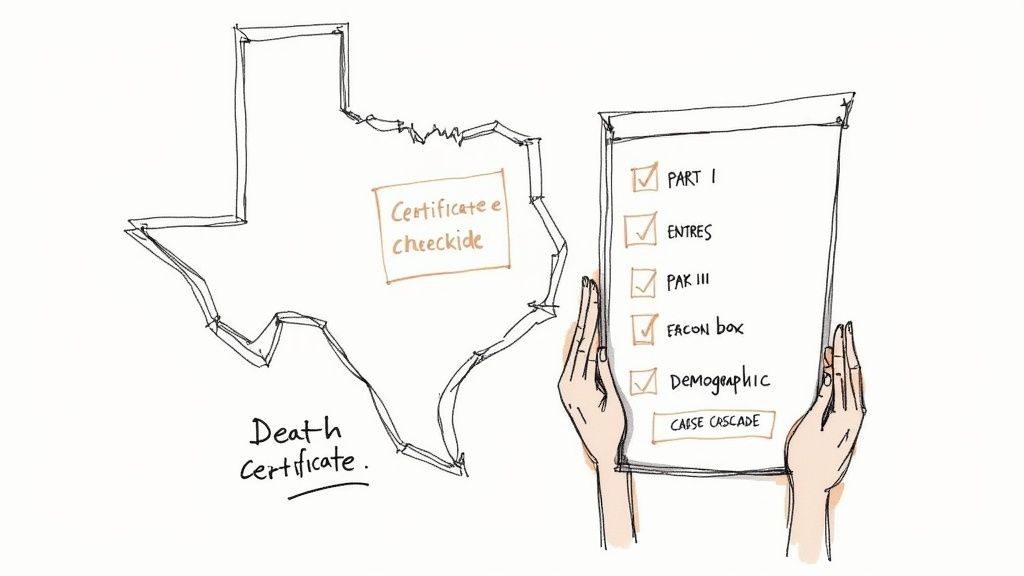
In Texas, the Department of State Health Services (DSHS) manages these records. Texas law is strict about protecting the privacy of the deceased and their loved ones.
Who Can Request a Death Certificate in Texas?
According to the Texas Health & Safety Code, you must be an immediate family member or have a direct, tangible interest in the record. This includes:
- The person's spouse, parent, child, brother, or sister.
- The legal guardian or the legal representative of the person's estate.
- Someone with a legal right to property connected to the person who passed away.
- An agent of a funeral home handling the arrangements.
These rules prevent fraud and keep personal details private. You'll need to show proper ID and prove your relationship to the person.
Reading the Information on the Record
A death certificate can look like a jumble of codes and medical jargon. It’s designed to be a complete, legal summary of the facts. Think of it as a story told in four parts:
- Personal Details: The full name, date of birth, date of death, place of death, social security number, and parents' names.
- Final Arrangements: This part explains whether it was a burial or cremation and names the funeral home involved.
- The Official Signature: The name and signature of the person who certified the death, such as a physician or medical examiner.
- Cause of Death: For most families, this is the most important section. It's carefully structured to tell the full medical story.
You have to understand the cause-of-death section as a sequence of events, not just a single phrase. Part I shows the direct chain of events that led to the death, while Part II lists other significant conditions that played a role.
For a more in-depth look, our guide on what is on a death certificate breaks it all down. If you spot something that doesn't seem right, that's often when a family decides to seek an independent autopsy for clear answers.
When to Seek a Second Opinion on a Death Record
Sometimes the official cause of death doesn't sit right. It might not align with what you know about your loved one's health or the circumstances of their passing. This uncertainty can leave you with more questions than answers. As a forensic pathologist, I've worked with many families who felt the initial findings were incomplete or missed the full picture. Getting a second opinion with a private autopsy is often the only way to get real clarity.
Common Reasons for a Second Opinion
Questioning an official document is about finding the whole truth. Certain situations should raise red flags that warrant a closer look.
- New Information Comes to Light: Crucial details sometimes surface after the death certificate is signed, like a previously unknown medical condition or conflicting witness accounts.
- Concerns About Medical Care: If you have suspicions about medical negligence, an independent review provides an objective look at the facts.
- A Vague or Undetermined Cause: A finding like "undetermined" is often not enough for legal or insurance purposes and doesn't help a family find closure.
- Insurance Claim Disputes: The specific cause and manner of death can make or break a life insurance claim. When the official record is in doubt, especially with denied benefits, understanding how to navigate accidental death insurance claim denials becomes critical.
A second-opinion autopsy offers an unbiased, science-based review focused solely on the medical evidence. It ensures every stone is unturned, free from institutional pressures, giving families the factual certainty they deserve.
Amending a Death Certificate in Texas
If a private autopsy finds new and significant information that changes the cause or manner of death, the official record can be changed. It’s not an easy process, but it is possible with solid proof.
In Texas, the new evidence—typically the detailed report from the second autopsy—must be presented to the original certifying official. The Texas Health & Safety Code outlines the procedure for filing an amendment. My final report provides the clear, comprehensive, and medically sound evidence needed to support that correction. This formal document can be the key to resolving legal disputes and giving a family an accurate final record.
Frequently Asked Questions About Cause of Death
In my work as a forensic pathologist, I find that families and attorneys often share the same urgent questions. Here are straightforward answers to some of the most common concerns I hear.
Can a Cause of Death Be Changed on a Death Record?
Yes, a death certificate can be amended in Texas, but it requires significant new evidence to formally update the record. You can't request a change simply because you disagree. A comprehensive report from a second-opinion autopsy is often the powerful evidence required. These new findings are presented to the official who originally signed the certificate, who can then file a legal amendment with the state.
How Long Does It Take to Get a Final Cause of Death?
The timeline can vary. Some causes are straightforward and certified within a day or two. In other cases, extensive testing is required.
- Toxicology Testing: A full analysis can take several weeks or even a couple of months in complex cases.
- Microscopic Examination (Histology): Preparing and analyzing tissue samples can add a week or more to the process.
- Specialist Consultations: In some situations, I may need to consult another expert, which extends the timeline.
When these tests are needed, the death certificate is often first filed with the cause of death listed as "pending." This allows the family to proceed with funeral arrangements. Once all results are back, an amended certificate is issued with the final cause of death.
Is an Autopsy Required to Determine a Cause of Death?
Not always. In many situations where a person has a well-documented medical history, their attending physician can certify the cause of death using those records. This is common for deaths in a hospital or under hospice care. However, an autopsy is critical in certain circumstances:
- Sudden, unexpected, or violent deaths.
- Deaths where medical negligence might be a factor.
- Cases where the person appeared to be in good health.
- Situations where the initial death records cause of death is "undetermined."
In these instances, an autopsy is often the only way to reach a medically certain and legally sound conclusion.
If you have more questions or need to discuss your specific situation, my team at Texas Autopsy Services is here to help with professional expertise and compassion. Please don't hesitate to reach out to us directly for a confidential consultation.