December 15, 2025 · Texas Autopsy Services
Expert Witness Forensic Science A Guide for Texas Attorneys and Families
Learn how attorneys and families in Texas find, vet, and work with an expert witness forensic science for objective, science-based legal testimony.
On this page
- Bridging Science and The Law in the Courtroom
- How to Find and Vet the Right Forensic Expert
- The Engagement Process What to Expect
- Preparing for Testimony and Courtroom Presentation
- Understanding the Costs and Value of Forensic Expertise
- The Growing Need for Independent Forensic Science Experts
- Frequently Asked Questions About Forensic Expert Witnesses
When a legal case depends on scientific facts, a forensic science expert witness is essential for translating complex evidence into clear, understandable testimony. As a board-certified forensic pathologist, my work involves determining the cause and manner of death through postmortem examinations. I then convey those objective findings to help the court understand what happened. This role is crucial in legal matters across Texas, from civil litigation and insurance disputes to criminal trials.
Key Takeaways
- An expert witness in forensic science provides impartial, evidence-based testimony to clarify complex medical and scientific facts for the court.
- Credibility is paramount and is built on verifiable credentials, such as board certifications from the American Board of Pathology, and extensive hands-on experience.
- The process involves a confidential initial consultation, a thorough review of all evidence, and a comprehensive, unbiased written report.
- I work closely with legal teams to prepare for testimony, ensuring scientific concepts are explained clearly and can withstand cross-examination.
- Hiring an expert early allows for a more robust analysis and helps shape a stronger legal strategy from the outset.
Bridging Science and The Law in the Courtroom
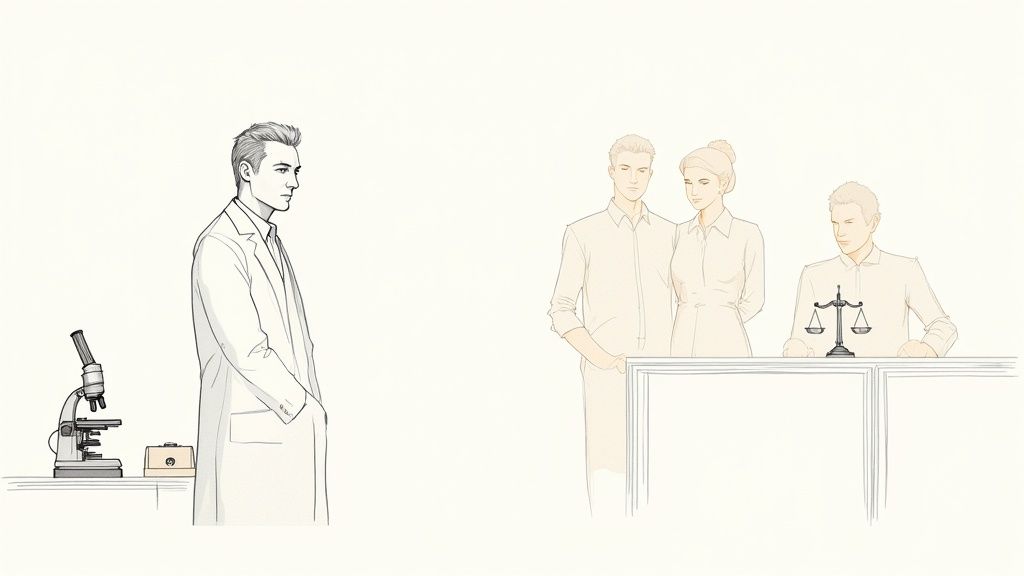
My role extends beyond the autopsy suite and often leads directly into the courtroom. The purpose of an expert witness forensic science professional is not to advocate for one side but to serve as an educator for the court. I translate complex scientific data into testimony that a judge and jury can understand, enabling them to make an informed decision based on facts.
Attorneys and families engage my services to achieve several key objectives:
- Clarify Ambiguity: When the circumstances surrounding a death are unclear, a forensic pathologist can establish a definitive cause and manner of death based on medical evidence.
- Challenge Initial Findings: An initial medicolegal investigation may be incomplete or contain errors. An independent review can provide a crucial second opinion autopsy or analysis.
- Provide Objective Analysis: My work is grounded in scientific evidence and established medical principles. This ensures the legal process is driven by facts, not assumptions.
This impartial function is essential for maintaining the integrity of our justice system.
The Foundation of Credible Testimony
The value of any expert witness rests on credibility, which is built through rigorous training, extensive experience, and an unwavering commitment to impartiality.
As a forensic pathologist board-certified by the American Board of Pathology in Anatomic, Clinical, and Forensic Pathology, my opinions are held to the highest medical standards. Having performed over 1,000 autopsies, I’ve developed a depth of experience that is critical when dealing with complex or subtle evidence.
The core responsibility is to ensure that scientific truth guides legal outcomes. It’s about presenting objective facts derived from medical examination, which can be the pivotal element in a case.
This level of detail makes all the difference. In a civil lawsuit over a workplace accident, my testimony could determine whether a death was caused by a pre-existing medical condition or was a direct result of an on-the-job injury. In a criminal case, it might establish a critical timeline or pinpoint the exact mechanism of injury. For more on this, you can learn about the specific duties of a forensics expert witness in our guide.
My ultimate goal is to provide the legal system with precise, unbiased scientific information. This requires not only medical expertise but also the ability to communicate those findings clearly and confidently, even under intense questioning.
How to Find and Vet the Right Forensic Expert
Choosing the right forensic expert is a critical decision. When a case hinges on complex scientific evidence, you need a professional who can not only analyze the facts but also explain what those facts mean to a judge and jury.
I always advise starting with professional credentials. Board certifications are not just titles; they represent proof of intensive training and validation by professional peers. As a forensic pathologist, I hold triple-board certifications from the American Board of Pathology. Credentials like these demonstrate a serious and verifiable dedication to the field.
Look for Hands-On, Real-World Experience
Certifications are crucial, but they don't tell the whole story. You need to know what an expert has actually done.
An expert who has performed over 1,000 autopsies, like myself, has encountered a wide variety of cases. That volume of hands-on work is invaluable, particularly when a seemingly minor detail could change the entire outcome. It signifies a move from theory to practical, real-world application.
You also need someone who can remain composed in a courtroom. A skilled expert witness is an effective communicator under pressure. When vetting an expert, ask about their testimony history. Can they:
- Explain highly technical concepts in simple, everyday language?
- Remain calm, professional, and objective during cross-examination?
- Demonstrate a clear understanding of legal procedures, such as maintaining the chain of custody?
A Commitment to Unbiased Science
The best experts have a deep respect for scientific integrity. Their methods must be objective and reliable. This isn't just my opinion; a global survey of forensic professionals showed a massive consensus on the need for valid methods, proficiency testing, and transparency about potential error rates in court.
A great expert witness doesn’t just provide answers; they provide clarity. Their role is to translate complex forensic findings into an understandable narrative grounded in fact, enabling the legal system to make an informed decision.
Taking the time to properly vet an expert ensures you partner with a professional who can deliver credible, defensible opinions. To dig deeper, I’ve written more about what to look for in a pathologist expert witness on our blog. The right expert builds a foundation of trust and ensures scientific truth is presented with authority.
The Engagement Process What to Expect
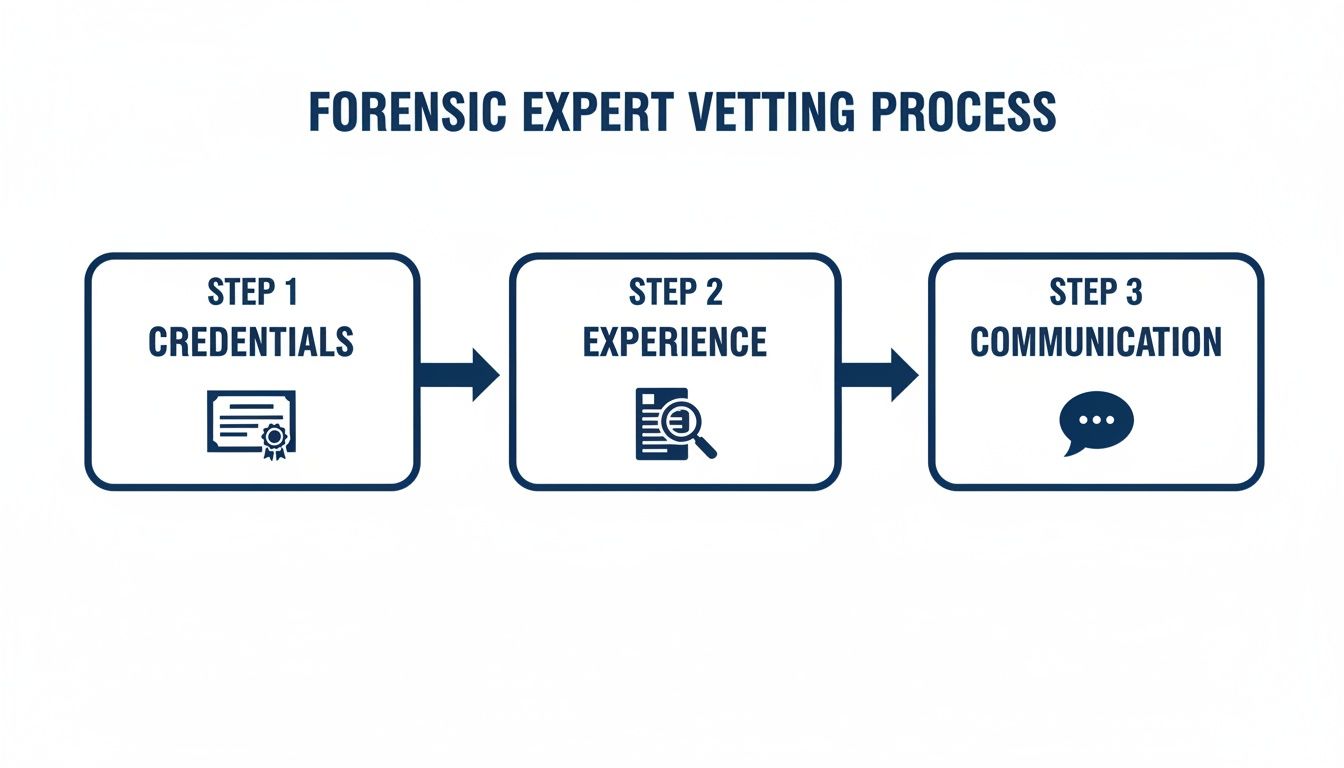
When you engage a forensic expert, there is a structured process we follow to ensure clarity, objectivity, and confidentiality. It starts with an initial consultation where I listen to the attorneys or family members to understand the core issues and the questions you need answered.
Next, I conduct a preliminary review of case files, such as police reports, medical records, or an initial autopsy report. This first look is critical. It helps me determine if my expertise as a forensic pathologist can genuinely add value to the case. I must be confident I can provide a meaningful, evidence-based opinion before we move forward.
Formalizing the Scope of Work
If we both agree to proceed, the next step is a formal engagement letter. This document serves as our roadmap, clearly outlining the scope of my work, the fee structure, and a realistic timeline for completing the analysis. It ensures everyone is on the same page from the beginning.
Once the formalities are complete, the detailed work begins. I conduct an exhaustive review of all provided evidence. Depending on the case's unique circumstances, this might involve performing a second autopsy to gather new information or to verify and challenge original findings.
Communication and Reporting
Throughout the process, I maintain open communication with the legal team. You’ll receive periodic updates and preliminary findings as they develop, so you are never left wondering about the status of the case.
The final deliverable is a comprehensive, unbiased written report. This document details my complete analysis, the scientific reasoning behind my findings, and my ultimate conclusions. It’s the foundation for any deposition or trial testimony that might follow.
A successful partnership is built on trust from day one. Every step, from our first conversation to the final report, is handled with strict confidentiality and the highest ethical standards. This ensures my findings remain independent and impartial, which is precisely what is needed in a court of law.
Preparing for Testimony and Courtroom Presentation
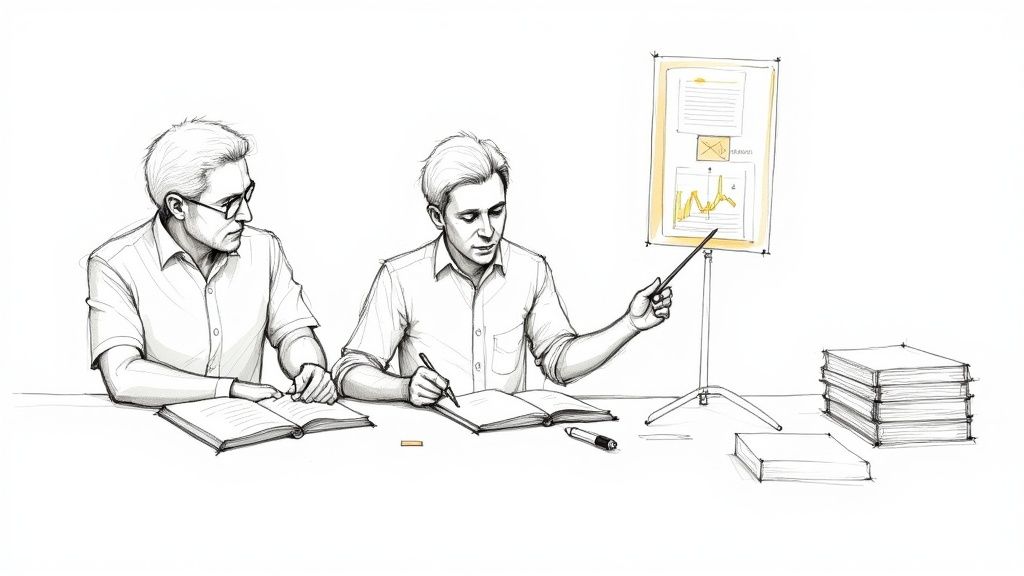
The courtroom is where all the analysis and review are put to the test. Preparation is everything.
My approach is to work closely with the legal team to ensure they have a solid grasp of the scientific evidence, my conclusions, and any potential weaknesses in the opposing side's forensic case.
We spend considerable time reviewing the questions I’ll likely face during direct and cross-examination. This isn't about scripting answers; it’s about ensuring complex scientific points can be explained with clarity and precision, leaving no room for misunderstanding.
The Expert as an Educator on the Stand
On the stand, my role shifts from investigator to educator. I serve as a calm, clear guide for the judge and jury. I walk them through my findings methodically, breaking down complicated concepts like cause of death, specific injury patterns, or the sequence of events into understandable terms.
Visual aids can be very helpful in this context. Answering every question directly and honestly is non-negotiable. Every statement I make is tied directly to established scientific principles and the evidence from the case. The goal is always to remain objective and professional.
To keep information organized, it helps to use well-designed case summary templates for distilling complex forensic details into a clear presentation for the legal team.
My duty is to the truth and the court, not to a particular outcome. Effective testimony isn’t about winning a debate; it’s about giving the court the reliable scientific information it needs to reach a just conclusion.
This dedication to impartiality is what makes expert testimony credible.
Maintaining Composure and Credibility
Cross-examination is designed to challenge an expert's opinion. A significant part of my preparation involves anticipating every possible challenge to my methodology, findings, and qualifications. By remaining calm and sticking to the documented facts, I can address these challenges without becoming defensive.
The entire point is to demonstrate that my conclusions are the product of an unbiased, systematic scientific process. This approach maintains credibility and keeps the jury focused on the evidence. An expert witness forensic science professional must be unwavering in their commitment to objective facts.
This level of preparation is what it takes to translate intricate science into a language the legal system can understand and use.
Understanding the Costs and Value of Forensic Expertise
When considering an independent forensic expert, one of the first questions is, "What will this cost?" It’s a fair question, and the answer depends on the specifics of the case.
The final cost hinges on factors like the complexity of the case, the volume of medical records and evidence to review, and whether new procedures, like a second autopsy, are required. All these elements contribute to the total investment.
Breaking Down the Investment
The fee structure is typically based on an hourly rate. This covers distinct phases of the investigation, from the initial case review and detailed report writing to depositions and, if necessary, courtroom testimony. Each stage requires a different level of time and focus.
While cost is a real factor, it’s helpful to view it as an investment in truth. An independent forensic analysis provides a level of clarity that is difficult to put a price on. I’ve seen cases where my review uncovered a critical piece of evidence missed in an initial examination or corrected a flawed interpretation.
For families, the value often comes from getting definitive answers. A science-based explanation for a loved one's death can provide a sense of closure. In a legal context, the value is even more direct. Clear, impartial testimony from a seasoned expert witness forensic science professional can be the linchpin that determines a case's outcome.
A Look at Industry Rates
While every case is unique, industry data provides a general idea of what to expect. Hourly rates for expert witnesses typically fall between $175 and $450 per hour.
Experts with highly specialized skills may command higher rates. These fees usually cover time spent in depositions, preparing reports, and delivering testimony. You can explore expert witness compensation data to see how these rates are calculated across different fields.
To give you a clearer picture, here’s a breakdown of how services are typically billed.
Typical Forensic Expert Witness Fee Structure
| Service | Common Billing Method | Typical Factors Influencing Cost |
|---|---|---|
| Initial Case Consultation & Review | Retainer + Hourly Rate | Volume of documents, complexity of initial evidence, urgency of the case. |
| Evidence Examination & Analysis | Hourly Rate | Type of evidence (e.g., digital, biological), lab testing requirements, specialized equipment needs. |
| Written Report Preparation | Hourly Rate or Flat Fee | Length and complexity of findings, number of exhibits, required formatting for legal submission. |
| Depositions & Meetings | Hourly Rate (often with a daily minimum) | Travel time and expenses, duration of the deposition, preparation time with legal counsel. |
| Courtroom Testimony | Daily Rate (half-day or full-day) | Travel, pre-trial preparation, time spent on standby, complexity of the testimony. |
This table should help you anticipate how the different phases of an investigation are structured from a financial standpoint.
When you're weighing the cost, think about the alternative. An unanswered question or an unchallenged finding can have consequences that stretch for years, both emotionally for a family and legally for a case.
The goal is to provide an unbiased, scientific perspective that brings clarity when it’s needed most. The decision to hire an independent expert is about balancing the financial investment against the profound need for truth.
The Growing Need for Independent Forensic Science Experts
The demand for an independent expert witness forensic science professional is increasing, particularly here in Texas. This reflects a shift in our legal system toward recognizing that an objective, outside perspective is often essential for a fair outcome.
Many official jurisdictions are stretched thin, with teams that are overworked and under-resourced. This can lead to rushed investigations where critical details are overlooked, leaving families and attorneys with more questions than answers. An independent expert provides a necessary check and balance.
Why Cases Are Getting More Complicated
As science advances, so do the cases in our courtrooms. They have become far more technical. Explaining the nuances of a complex toxicology report or intricate DNA evidence to a jury requires someone who is not just a master of their field but also a skilled teacher.
This is a primary reason for the rising demand for private forensic experts. They bridge the gap between dense scientific data and understandable facts for a judge or jury.
Market data supports this observation. The global Expert Witness Services market was valued at USD 2.3 billion in 2023 and is projected to reach nearly USD 4.1 billion by 2032. With North America accounting for about 40% of that market, it’s clear that litigation in our region is a major driver. You can read more about the expert witness services market on dataintelo.com.
This move toward professionalization means that anyone needing a second opinion—whether it's a family seeking closure or a legal team building a case—can find a qualified expert. It ensures justice is built on a foundation of sound, verifiable science.
The increasing reliance on independent experts is a direct response to a more sophisticated legal environment. Objective, third-party scientific validation is no longer a luxury but a necessity for ensuring that justice is both fair and fact-based.
Frequently Asked Questions About Forensic Expert Witnesses
As a forensic pathologist, I receive many questions from families and attorneys navigating difficult situations. Engaging a forensic science expert can feel like a significant step, but it is often the key to finding clarity and justice. Here are answers to some of the most common questions I hear.
When Is the Right Time to Hire a Forensic Expert?
My advice is consistent: as early as possible. Involving an expert from the beginning provides a significant strategic advantage. It allows me to review the physical evidence promptly, helping you understand the scientific strengths and weaknesses of your case before you are too far along.
I can analyze the opposing side's forensic reports with a critical eye, identifying flaws, omissions, or alternative interpretations of the data. Waiting until just before trial limits the time available for a thorough analysis and can put your case at a disadvantage.
What’s the Difference Between a Consulting and a Testifying Expert?
This is a crucial distinction. A consulting expert serves as a behind-the-scenes scientific advisor. In this confidential role, I work directly with your legal team. My analysis and opinions are generally protected by attorney work-product privilege, allowing for frank discussions about the evidence without disclosure to the opposing side.
A testifying expert, on the other hand, is officially named in the case. I prepare a formal report and am prepared to provide sworn testimony in a deposition or courtroom. Once designated as a testifying expert, my opinions and the work supporting them are discoverable by the other party. I can serve in either capacity, depending on your case's specific needs.
An expert’s job is always to provide objective scientific clarity. The real difference is how that clarity is used: privately to shape your legal strategy or publicly to educate a judge and jury.
The Autopsy Is Done Can Another Expert Still Help?
This is a very common scenario. Even after an official autopsy has been performed, an independent review by another forensic pathologist provides a vital second look. I can meticulously examine the original autopsy report, photographs, and microscopic slides to either confirm the initial findings or, in some instances, uncover errors or omissions.
In certain situations, a second autopsy may be necessary to address questions left unanswered by the first examination. This independent review ensures the cause of death is assessed with complete, unbiased rigor, which is critical when the stakes are high in both civil and criminal court.
For attorneys and families in Texas seeking objective, science-based answers in a complex legal case, Texas Autopsy Services is here to provide clarity. Please feel free to reach out to our office to discuss how my expertise can assist you.