April 21, 2026 · Texas Autopsy Services
Texas Society Pathologists: Expert Insights 2026
Learn about how texas society pathologists sets standards for forensic pathology. We explain finding trusted private autopsy services for 2026.
On this page
- The First Question After an Unexpected Loss
- What Is the Texas Society of Pathologists
- How the TSP's Mission Protects Texans
- The Link Between TSP Membership and Autopsy Expertise
- How to Verify a Pathologist and Find Trusted Services
- Navigating the Current Challenges in Pathology
- Your Path to Clear Answers
- Frequently Asked Questions
our forensic pathology team
Board-certified forensic pathologist
TL;DR
- The Texas Society of Pathologists matters because standards matter. It is the primary professional organization for pathologists in Texas, and its work supports education, ethics, and professional accountability.
- TSP is not a licensing board. It does not authorize a physician to practice medicine. For autopsy work, board certification in forensic pathology remains the key credential to verify.
- Texas has real access gaps. Rural communities may have limited local forensic pathology access, which is one reason independent autopsy services are often necessary.
- Professional involvement and board certification serve different purposes. One reflects engagement in the field. The other reflects specialized training and examination.
- Families and officials need clarity, not confusion. A trustworthy forensic pathologist should explain the process plainly, document findings carefully, and handle the deceased with dignity.
When a death is sudden, the first practical problem is rarely medical terminology. It is trust. Families want to know who can answer their questions truthfully. Attorneys want to know whether the findings will withstand scrutiny. County officials want to know whether the examination will be handled correctly, lawfully, and without avoidable delay.
That is where professional standards start to matter in a very real way. As a board-certified forensic pathologist, I don't view organizations like the texas society pathologists community as abstract professional clubs. I view them as part of the framework that helps keep pathology in Texas serious, accountable, and connected to current practice.
The First Question After an Unexpected Loss
The first conversation after an unexpected death is often quiet and direct. A family member may say they were told no further examination would be done, but they still don't understand what happened. An attorney may already be thinking about records, timelines, and whether the case may require a wrongful death investigation. The words differ, but the need is usually the same. They want clear answers from someone qualified to provide them.
In my field, that request has to be handled carefully. A private autopsy is not just a technical procedure. It is a medical, legal, and human responsibility. Before anyone agrees to an examination, they should know who is performing it, what training that physician has, how the findings will be documented, and whether the process complies with Texas law.
Families also need practical guidance early. In some cases, the next step may be understanding the legal and logistical side of requesting an autopsy in Texas. That helps separate urgent decisions from assumptions, which is important because confusion often builds quickly after a death.
What people are really asking
Individuals are not asking for a lecture on pathology. They are asking four grounded questions:
- Who is qualified: They want to know whether the physician has the right training for death investigation work.
- Will the findings be independent: They need to understand whether the examination is objective and free from outside pressure.
- Will the process be respectful: They want the deceased treated with dignity and the family treated with clarity.
- Will the report be useful: Attorneys, agencies, and clinicians need documentation that is medically sound and plainly written.
A good forensic opinion starts before the examination begins. It starts with honest communication about what can be answered, what may remain uncertain, and what records or testing may be needed.
That is the practical doorway into understanding why professional organizations matter. They do not replace individual skill or board certification. They help shape the professional environment in which those skills are maintained.
What Is the Texas Society of Pathologists
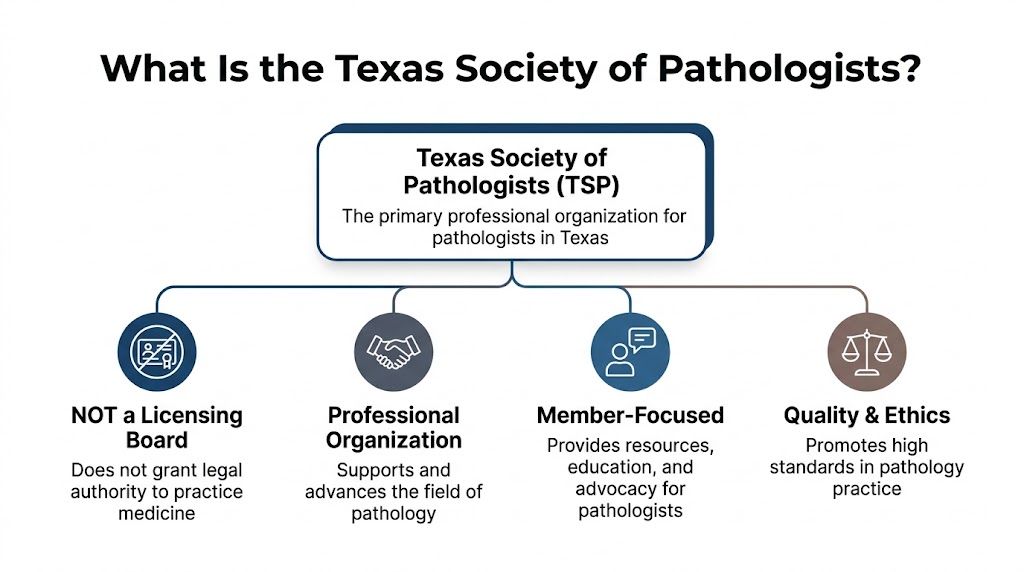
The Texas Society of Pathologists, often shortened to TSP, is the main professional organization for pathologists in this state. For families and attorneys, the simplest way to understand it is this: it supports the profession of pathology in Texas, but it does not function as a medical licensing board.
What TSP is
TSP was founded on May 9, 1921, when 16 Texas pathologists gathered in Dallas, and it is recognized as the oldest state pathology society in continuous existence in the USA according to this historical review of the Texas Society of Pathologists. The same source explains that TSP is a 501(c)(6) business league and now serves over 1,000 practicing pathologists and trainees, making it the largest state pathology society in the nation.
That history matters because it shows continuity. A profession develops differently when it has a long-standing state society that promotes knowledge, professional communication, and standards. In pathology, that translates into better peer discussion, better continuing education, and stronger advocacy for the conditions required to do careful work.
What TSP is not
TSP does not grant the legal authority to practice medicine. That authority comes from state licensure, not from society membership. It also does not replace specialty certification.
This distinction is important because families often see a physician's memberships listed with credentials and assume those items mean the same thing. They do not.
Here is the practical difference:
| Item | What it means | Why it matters |
|---|---|---|
| TSP membership | Participation in the professional pathology community in Texas | Shows engagement with the field and state-specific professional issues |
| Texas medical licensure | Legal authority to practice medicine in Texas | Confirms the physician is licensed to practice |
| Board certification | Specialty credential based on training and examination | Confirms recognized expertise in a specific discipline |
Why that matters in autopsy practice
For the public, the value of texas society pathologists is not that the society chooses your doctor for you. Its value is that it helps maintain a stronger professional culture in the state. That benefits hospital pathology, laboratory medicine, consultation work, and independent examinations such as Private Autopsies.
Practical rule: Use society involvement as one sign of professional engagement, not as a substitute for checking licensure and board certification.
That distinction prevents a common mistake. People sometimes stop at the first reassuring credential they see. In forensic pathology, that is not enough.
How the TSP's Mission Protects Texans
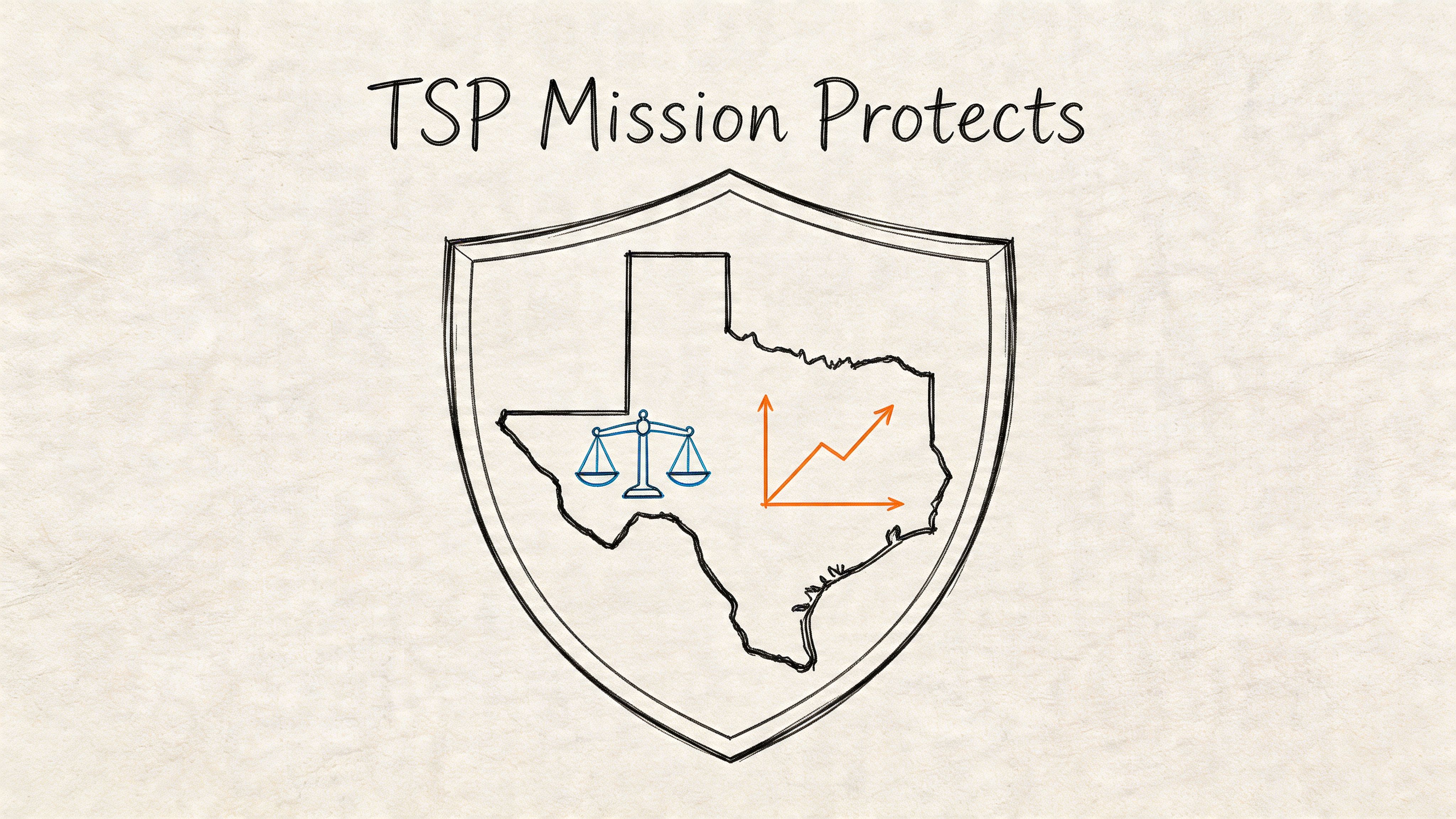
A professional society protects the public indirectly but meaningfully. It does that by supporting the physicians who carry out diagnostic and forensic work across the state. In pathology, quality is not maintained by goodwill alone. It depends on ongoing education, peer exchange, and advocacy for the conditions that let pathologists practice carefully.
Education and shared standards
Pathology changes with new testing methods, updated classification systems, and evolving practice expectations. A state society helps keep members connected to those changes. That matters in forensic work because cause-of-death investigation is strongest when the pathologist is not professionally isolated.
TSP's stated mission includes promoting optimal health for Texans through pathology in practice, education, and research. From a practitioner's perspective, that matters less as a slogan and more as a working structure. It creates regular opportunities for pathologists to compare approaches, discuss difficult cases, and stay current on issues that affect patient care and death investigation.
Building the next generation
One of the clearest examples of TSP's practical role is its Young Pathologists' Section, established in 1997. According to the College of American Pathologists article on TSP's Young Pathologists' Section, the program gives pathologists-in-training and early-career physicians dedicated engagement opportunities, including a board seat and focused events.
That matters for the public because workforce quality is not an accident. It has to be cultivated. A state with a strong pipeline of pathologists is better positioned to meet diagnostic and forensic needs over time.
Why families and officials should care
The effects are practical, not theoretical:
- Better professional communication: Pathologists who stay connected to peers are more likely to approach unusual findings carefully and consult when needed.
- Stronger workforce development: Early-career support helps maintain future access to pathology expertise in Texas.
- More informed advocacy: State societies can speak to legislative and economic issues that affect pathology services.
When pathology is well supported as a profession, Texans are more likely to have access to physicians who can explain findings clearly and defend them responsibly.
For families, that may mean a clearer explanation of cause of death. For county officials, it may mean access to physicians who understand both the medical science and the procedural duties that come with a forensic examination.
The Link Between TSP Membership and Autopsy Expertise
Professional membership and professional qualification are related, but they are not the same. That distinction becomes critical when someone is hiring a forensic pathologist for a private autopsy, a second opinion, or a case that may later be reviewed in court.
What TSP membership tells you
TSP membership can suggest that a physician values professional connection within Texas. That can be helpful. State societies often keep physicians engaged with regional practice issues, local advocacy, and specialty relationships that matter in day-to-day work.
But membership does not, by itself, prove forensic expertise. A pathologist may be active in a professional organization and still not have the subspecialty training needed for a medicolegal death investigation.
What board certification tells you
For autopsy work involving medical, legal, or evidentiary concerns, the most important credential is board certification in forensic pathology through the American Board of Pathology. In my own practice, my certifications in Anatomic Pathology, Clinical Pathology, and Forensic Pathology serve different but complementary purposes. They reflect formal training, examination, and a national standard of specialty knowledge.
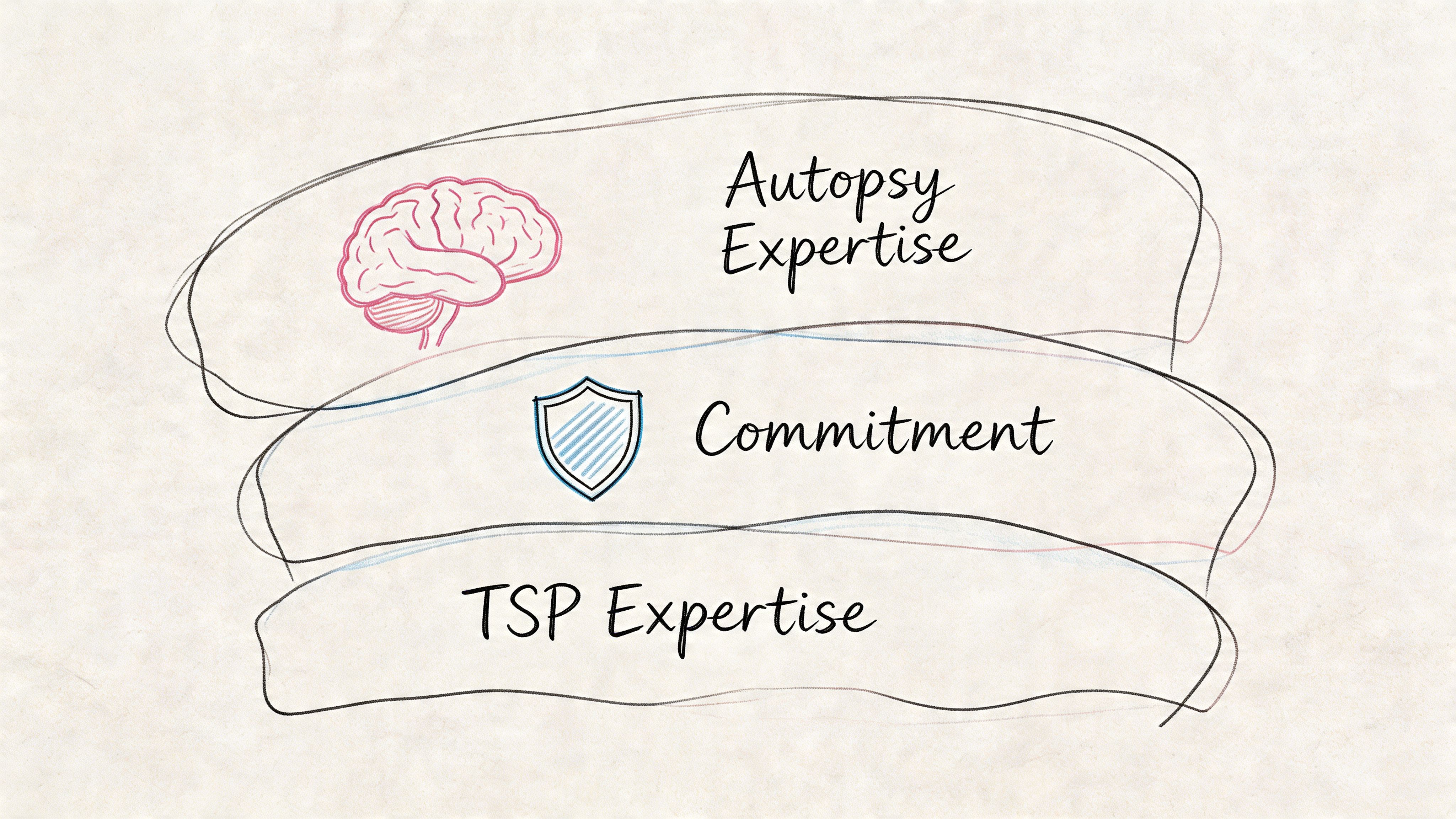
If you are reviewing a pathologist's background, think in layers:
- Licensure confirms the physician may practice medicine.
- Board certification confirms recognized specialty training and examination.
- Professional involvement shows engagement with the field and its standards.
That layered review is especially important in cases where records, toxicology, microscopy, or expert testimony may become central. Precision in language matters too. Anyone who has worked with multilingual records or cross-border materials understands why resources on clinical precision in medical document translation can also become relevant in complex legal and medical reviews.
Why families should be selective
If someone tells me they are looking for an independent autopsy, I advise them to verify the physician's specialty training rather than relying on broad labels. "Pathologist" is not a single uniform role. A physician trained in surgical pathology or laboratory medicine may be highly skilled in those areas but may not be the right expert for a death investigation.
For readers who want more detail on this training path, I have explained the process in education required for a forensic pathologist.
The right expert is not simply a doctor who can perform an examination. It is a doctor whose training matches the question being asked.
That is the standard I would use for my own family. It is the same standard I recommend to others.
How to Verify a Pathologist and Find Trusted Services
When people begin searching for a forensic expert, they often start broadly. They search online, ask a funeral home, contact a hospital, or look through a society directory. Those are reasonable starting points, but they should never be the final step.
A practical verification checklist
If you need a private or county forensic autopsy in Texas, verify the physician in this order:
- Check Texas licensure: Confirm the physician is licensed through the Texas Medical Board.
- Confirm forensic board certification: Make sure the doctor holds forensic pathology certification through the American Board of Pathology.
- Review actual scope of practice: Look for experience in postmortem examination, cause-of-death investigation, and report writing.
- Ask about process: Clarify consent, transportation coordination, records review, toxicology options, and how findings are communicated.
- Ask who signs the report: The reporting physician should be clearly identified and appropriately qualified.
A society listing can be useful, but it does not answer all of those questions. That is why a directory should be treated as a lead, not a conclusion.
The Texas access problem
The reason this matters so much in Texas is geography. According to the ASCP report discussing forensic pathology shortages in underserved areas, there are only 500-600 forensic pathologists nationally, and the shortage is especially pronounced in rural Texas counties. In practice, that can leave families and officials without local access to timely forensic autopsy services.
That shortage creates a gap between what people need and what may be locally available. In metropolitan areas, there may be more direct access to specialty resources. In smaller communities, there may be none.
What trusted service looks like
A trusted service should not rely on vague assurances. It should provide a clear process, explain legal boundaries, and state whether it can serve the location involved. For many readers, the search begins with questions such as how to find forensic pathologists near me in Texas. That is a reasonable first search, but the better question is whether the physician has the right training and can realistically handle the case.
For county officials, access also means logistics. A physician may be excellent on paper but unavailable for transport coordination, record review, or follow-up communication. For families, trust often comes down to whether the doctor explains the process in plain language and avoids overstating certainty.
Navigating the Current Challenges in Pathology
Pathology does not operate outside the economic pressures affecting the rest of medicine. Reimbursement changes, staffing shortages, and competing institutional demands all shape how pathology services are delivered. Families may never see those pressures directly, but they can feel the effects when services are harder to access or less transparent.
One current pressure point is reimbursement. According to the College of American Pathologists update on March 4, 2025, recent Medicare payment cuts set to take effect in 2025 are expected to worsen pathologist shortages, and hundreds of pathologists contacted Congress to warn about the impact on services. That matters because workforce strain does not stay confined to billing policy. It can affect staffing, availability, and how quickly systems respond to complicated cases.
What this means in practice
In public settings, financial pressure can contribute to triage decisions, staffing gaps, or delayed access to specialty expertise. That is not a criticism of public offices or hospital systems. It is a reality of limited resources.
For families and attorneys, the practical lesson is that independent services often become more important when institutional systems are stretched. The value is not just speed. It is clarity about what is being done, who is doing it, and how the work will be documented.
What does not work
Some approaches create more confusion than answers:
- Assuming every autopsy service is equivalent: Training, scope, and reporting quality vary.
- Focusing only on price: A low initial quote may leave key testing or review steps unclear.
- Waiting for certainty before making arrangements: In many cases, preserving options early matters.
Financial pressure in medicine makes transparency more important, not less.
That is why I believe autopsy services should be explained plainly. People deserve to understand the likely process, the role of records and ancillary testing, and the limits of what can be concluded from an examination.
Your Path to Clear Answers
The texas society pathologists community helps create a professional environment where pathology in Texas can remain educated, connected, and accountable. That benefits the public even if most families never interact with the society directly. The effect shows up in the standards physicians bring to difficult cases.
When someone needs an independent autopsy, the right choice is rarely the first name they encounter. It is the physician whose qualifications fit the task, whose process is transparent, and whose communication remains steady under scrutiny. In forensic pathology, that means scientific discipline, respect for legal boundaries, and respect for the deceased.
I approach this work as a physician, but also as someone who understands what families and officials are trying to solve. They want the most accurate answer the evidence can support. They want the opinion explained clearly. They want the process handled with dignity.
If you are facing those decisions now, careful verification is the best place to start. A trustworthy expert will welcome that scrutiny.
Frequently Asked Questions
Can the TSP recommend a pathologist for my private autopsy
TSP is a professional organization, not a case referral service. It supports the pathology profession broadly. If you use a member directory as a starting point, you should still verify licensure, forensic board certification, and actual autopsy experience before hiring anyone.
Is TSP membership the same as board certification
No. TSP membership reflects involvement in the professional pathology community in Texas. Board certification through the American Board of Pathology reflects specialty training and examination. For private or second-opinion autopsy work, forensic pathology certification is the most important specialty credential.
How do I know whether a pathologist is in good standing
Check two things separately. Verify medical licensure with the Texas Medical Board, and verify specialty certification with the American Board of Pathology. Those are different questions, and both matter.
What is the difference between cause of death and manner of death
Cause of death is the disease or injury that led to death. Manner of death is the classification of how the death occurred, such as natural, accident, suicide, homicide, or undetermined. A forensic pathologist may address both, depending on the case and legal setting.
What is chain of custody
Chain of custody is the documented handling of evidence or specimens from collection through transfer and testing. It helps preserve integrity and traceability, especially in cases with legal significance.
If you need help understanding whether an independent autopsy is appropriate, Texas Autopsy Services can help you think through the next step with clarity and respect. I understand that these calls often come during grief, uncertainty, or active legal review. My goal is to provide medically sound guidance, explain the process plainly, and help families, attorneys, and Texas officials obtain answers in a careful, lawful, and dignified way.