December 2, 2025 · Texas Autopsy Services
What Families Should Know About Postmortem Care
Understand the postmortem care definition and process from a forensic pathologist. This guide explains the steps, purpose, and what Texas families can expect.
On this page
As a forensic pathologist, I often meet families during the most difficult moments of their lives. In these times, terms like "postmortem care" can sound cold and clinical. I've learned that this process is the final act of dignity we offer a person. It is a series of careful, respectful steps to prepare someone for their final viewing, burial, or cremation. My goal is to explain this process with the clarity and compassion your family deserves.
Key Points on Postmortem Care
- Postmortem care is the respectful handling and preparation of a deceased person for their family, funeral, or further examination.
- Clinical care in a hospital focuses on dignity and presentation for viewing, while a forensic examination seeks to determine the cause of death.
- A forensic autopsy is a meticulous medical procedure performed by a board-certified pathologist to provide definitive answers.
- The process is always conducted with deep respect for the deceased, allowing for open-casket viewings and accommodating cultural beliefs.
- As a board-certified forensic pathologist at Texas Autopsy Services, I provide independent, unbiased findings for families and legal counsel across Texas.
The Foundation of Respectful Postmortem Care
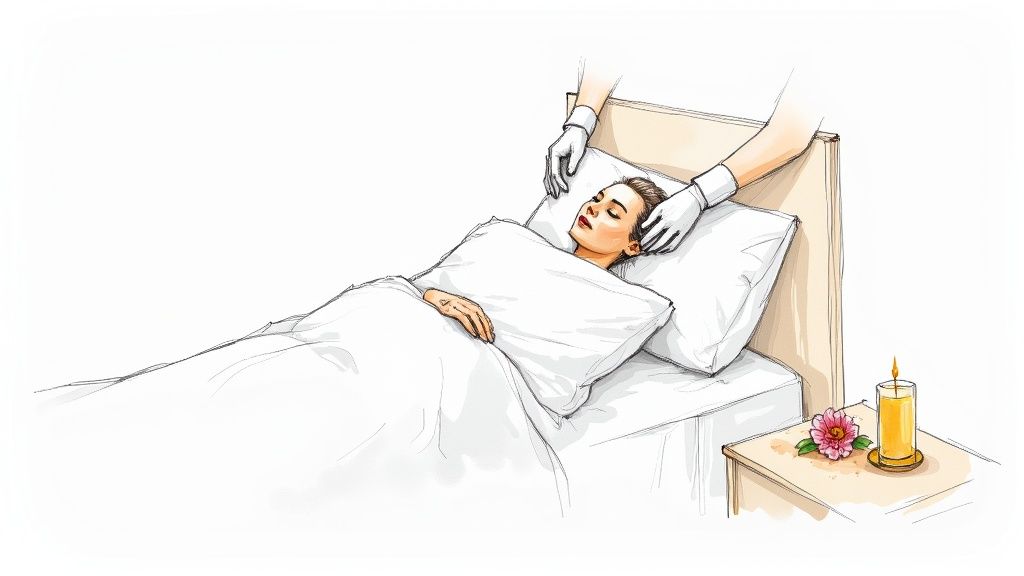
At its heart, postmortem care is about handling the deceased with reverence while preparing them for what comes next. This process isn't just a checklist of tasks; it’s about giving grieving families a sense of peace by ensuring their loved one is treated with profound respect.
This is a universal need. The World Health Organization (WHO) noted in 2024 that approximately 60 million individuals die globally each year, which highlights how critical it is to have standardized, dignified care everywhere.
This care starts as soon as a death is officially pronounced and usually involves several key actions.
Immediate Actions and Goals
The very first steps are focused on ensuring the person looks peaceful and is treated gently.
Here’s a look at what’s involved in standard postmortem care.
| Component | Purpose |
|---|---|
| Gentle Cleansing | The body is carefully washed to ensure cleanliness and dignity. |
| Respectful Positioning | The individual is placed in a natural, peaceful position, often with hands crossed. |
| Medical Device Removal | Any tubes or lines from medical treatment are removed, unless a forensic exam is needed. |
| Proper Identification | Clear and accurate identification is confirmed and maintained throughout the process. |
These steps lay a compassionate foundation, helping families navigate an incredibly difficult time with more clarity and comfort.
To understand the full range of support available to families, it's helpful to know the difference between a death doula and an end-of-life doula and the unique roles they play.
My work as a forensic pathologist builds on this foundation. Even in complex cases that require a medical-legal investigation, the principles of respect and dignity are always paramount. You can learn more about my field by reading our guide on what forensic pathology is.
Clinical Care Versus Forensic Examination
Not all care after death looks the same. The path forward depends on the circumstances surrounding the passing.
Most families will only encounter what’s known as clinical postmortem care. This typically happens in a hospital or hospice after someone passes from a known illness. The main goal here is dignity—preparing the body for the funeral home and for family viewing, making sure everything is handled with respect and care.
But the script flips when a death is sudden, unexpected, or happens under questionable circumstances. That’s when a forensic examination becomes necessary.
When a Forensic Examination is Necessary
In these situations, the focus instantly shifts. It's less about preparing for burial and more about preserving potential evidence to figure out an accurate cause and manner of death. This is where I, as a forensic pathologist, get involved. The entire approach becomes a medical-legal one, following strict rules to protect the integrity of a potential investigation.
This distinction is important because the procedures, personnel, and timelines are worlds apart. Clinical care is often handled by nursing staff, while a forensic examination is a specialized medical procedure. To get a better sense of the officials involved, it’s helpful to understand the difference between a coroner and medical examiner and how each system works.
A key difference is that a forensic examination, whether it's a county-mandated or a private autopsy, is designed to answer specific legal and medical questions that go beyond the scope of routine end-of-life care.
Comparing the Two Paths
Knowing which path applies to your situation can help manage expectations. Each has a different purpose, and that purpose dictates what happens next.
Here’s a straightforward breakdown:
| Aspect | Clinical Postmortem Care | Forensic Examination |
|---|---|---|
| Primary Goal | Prepare the deceased for viewing and funeral services with dignity. | Determine the medical cause and manner of death; preserve evidence. |
| Typical Setting | Hospital, hospice, or long-term care facility. | Medical Examiner's office, specialized pathology facility. |
| Performed By | Nursing staff or mortuary professionals. | Board-certified forensic pathologist. |
| Circumstances | Expected death from a known medical condition. | Sudden, unexpected, violent, or suspicious death. |
Ultimately, both approaches are grounded in respect for the deceased. The forensic path adds a crucial layer of scientific and legal investigation needed to give definitive answers to families, the courts, and public health officials.
The Autopsy Process Step by Step
For many families, the word “autopsy” can be unsettling. I want to explain what a postmortem examination actually involves. It’s a methodical and deeply respectful procedure designed to give you definitive answers.
My approach is meticulous, ensuring every step builds toward a clear picture of what happened. Everything starts with a thorough external examination.
External Examination
The first phase is a careful, non-invasive inspection. I document all physical characteristics—height, weight, hair and eye color, and any identifying marks like scars or tattoos. I also record any signs of injury or medical intervention, like IV lines or surgical scars.
This external review creates a baseline and gives us critical context before we go any further. It's about observation and documentation, setting the stage for more detailed work.
Internal Examination
After the external review is complete, the internal examination begins. This involves a careful, organ-by-organ inspection to find any underlying disease, trauma, or abnormalities that weren't visible on the outside. This part of the process is performed with the utmost respect for the deceased.
During this phase, I’ll collect very small tissue samples from major organs. These samples are preserved and prepared for microscopic analysis, which can reveal details at the cellular level that are crucial for a conclusive diagnosis. It's often in these microscopic details that we find the subtle clues that tell the whole story.
The infographic below shows how a clinical situation can lead to a forensic exam, helping to place this process within the broader context of postmortem care.

As you can see, a forensic exam is a specialized path taken when clear answers are necessary, distinct from routine post-death procedures.
Ancillary Studies and Reporting
The final phase involves ancillary testing, which is often essential for reaching a final conclusion. Fluid samples are sent for toxicology analysis to detect the presence of medications, alcohol, or other substances. Depending on the case, we might also run microbiology tests to check for infections or even genetic studies.
Each step of the autopsy, from the initial external exam to the final toxicology report, is designed to build a complete and accurate medical narrative. I break down the examination into these logical phases to replace uncertainty with a clear understanding of this thorough and professional process.
Once all analyses are back, I compile every finding into a single, comprehensive report. This document details the external and internal findings, the microscopic analysis, and toxicology results, all culminating in a clear determination of the cause and manner of death.
For those wanting a deeper look, you can learn about the specific steps in an autopsy in our dedicated guide. Ultimately, this final report provides the definitive answers that families and legal professionals need.
Finding Answers and Ensuring Justice
When a family asks me why an autopsy is necessary, my answer is always the same: to find the truth. My most important job as a forensic pathologist is to uncover the cause and manner of death with medical certainty. This process gives families a definitive conclusion, which can be a vital comfort when they're grappling with the grief of a sudden or unexpected loss.
But it’s about more than personal peace of mind. The detailed report from a private autopsy often becomes key to untangling complex practical matters. It can help resolve an insurance claim, verify the terms of a will, or provide critical evidence in a lawsuit. In short, it replaces doubt with objective, scientific fact.
Protecting Public and Family Health
Many people don't realize the public health implications of this work. A thorough postmortem examination can uncover undiagnosed genetic conditions, like certain heart diseases or hereditary cancers. This discovery gives living family members a heads-up, allowing them to get screened and seek medical care that could save their lives.
An autopsy might also identify an infectious disease that could pose a risk to the wider community, giving public health officials the information they need to act. So, the value of postmortem care ripples far beyond a single case.
Each death is a unique event with a story to tell. An autopsy is a medical procedure that carefully interprets that story, providing a voice for the deceased and clear, unbiased answers for the living.
The impact of end-of-life care is significant. Roughly 56 million deaths occur globally each year, and each one directly affects about five other people through caregiving and grieving. That means postmortem care and the answers it brings touch the lives of around 300 million people annually. You can explore more about these global end-of-life care statistics to see the full scope of this essential work.
An Unbiased and Objective Process
As an independent forensic pathologist serving communities across Texas, my role is to deliver unbiased findings. I am not attached to a hospital or government agency that might have its own interests in the outcome. My only duty is to the truth, which I uncover through a careful, scientific process.
Whether I'm performing a private autopsy for a family seeking peace of mind or a county forensic autopsy for a legal investigation, my standard never changes. I provide a clear, medically sound conclusion based strictly on the evidence. It’s how I help ensure justice is served and families get the honest answers they deserve.
Respecting Cultural and Religious Beliefs
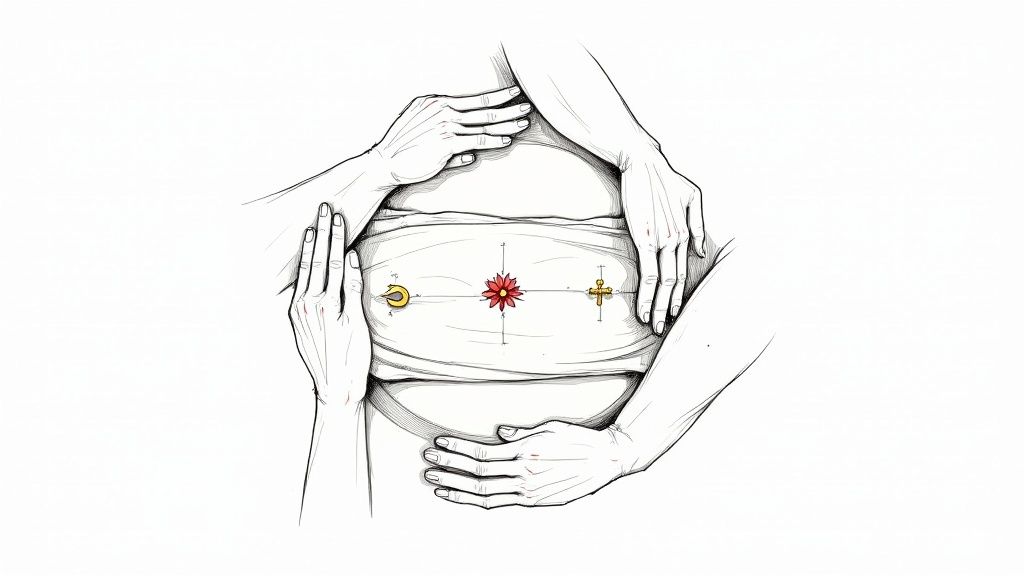
Postmortem care is not just about clinical procedures. It’s about providing dignified care that honors a person’s life, and that means respecting their family's cultural and religious traditions. I take this responsibility to heart in every examination I perform.
To me, a clinical definition of postmortem care is incomplete if it doesn't acknowledge the deeply held beliefs that guide families through grief. My team and I work closely with families and trusted partners like Waterloo Mortuary to accommodate specific requests whenever we can, while still working within the necessary legal and medical framework. This collaboration makes truly compassionate care possible.
Accommodating Faith and Tradition
Respectful accommodation means recognizing that every family is unique. Sometimes this involves modifying a procedure or adjusting our timeline to better suit their needs.
Here are a few common considerations we navigate:
- Minimal Disturbance: Some faiths require the body to remain as untouched as possible. In these situations, we can adapt our examination to be less invasive while still getting the answers we need.
- Expedited Timelines: Certain traditions call for a prompt burial, often within 24 hours. We always prioritize these cases to ensure families can uphold their religious duties without added stress.
- Ritual Washing: We can coordinate with a family or their community members to allow for specific ritual washings and other preparations after our examination is complete.
Beyond the practical steps, supporting a family's emotional needs through thoughtful expressions of sympathy is a core part of this respectful approach.
My commitment is to provide care that understands the deceased was part of a family and a community. Medical precision and cultural respect can and should coexist as vital parts of postmortem care.
This balanced approach is becoming more important. The global death care services market was valued at USD 107 billion in 2024, and a recent death care market analysis highlights a growing demand for services that are both medically sound and culturally sensitive. Every family deserves a process that honors their loved one's life and beliefs.
Answering Your Questions About Postmortem Care
When a loved one passes away, families and their legal counsel often find themselves with urgent questions. As a board-certified forensic pathologist, I've compiled some of the most common questions I hear to give you clarity during a tough time. My hope is to demystify the process and help you understand what to expect.
Will an Autopsy Delay the Funeral?
This is probably the number one concern, and it's completely understandable. In most situations, an autopsy does not cause a major delay.
My team and I work efficiently to complete the examination, usually within 24 to 48 hours. We coordinate closely with your chosen funeral home to make sure everything transitions smoothly, allowing you to move forward with viewings and services as planned.
Can We Still Have an Open Casket?
Yes, absolutely. An autopsy should not prevent an open-casket viewing. I approach every examination with the deep respect the deceased and their family deserve.
All incisions are placed strategically so they won't be seen, and they are meticulously closed afterward. A talented funeral director can then prepare your loved one for viewing, and our work remains completely hidden. We always prioritize a family's wish to see their loved one a final time.
Who Has the Right to Authorize a Private Autopsy?
In Texas, the authority to consent to a private autopsy rests with the legal next-of-kin. There's a clear legal hierarchy for this: it starts with the spouse, then moves to adult children, parents, and other relatives in a specific order defined by the Texas Health & Safety Code.
Sometimes, a document like a healthcare power of attorney might have instructions about postmortem wishes. Attorneys for the estate also frequently play a role in securing the proper authorization.
Understanding legal lines of authority is critical. The Texas Health & Safety Code strictly defines who can authorize an autopsy and access the final report. This ensures that the process is confidential and legally sound from start to finish.
At Texas Autopsy Services, my goal is to give you clear, compassionate answers and accurate medical findings when you need them most. If you have more questions or need to discuss your specific situation, please don't hesitate to reach out to my office.
You can learn more about my private autopsy services and how I can help your family find answers.