December 23, 2025 · Texas Autopsy Services
Why Are Autopsies Performed? The Common Reasons
Discover why are autopsies performed from a board-certified forensic pathologist. Get clear answers on the process for families and attorneys in Texas.

On this page
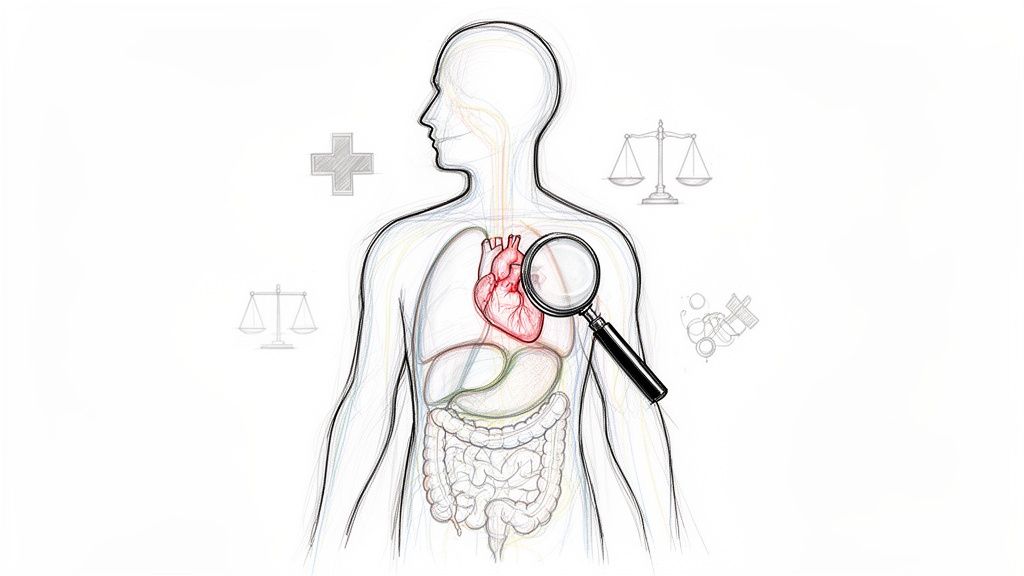
As a board-certified forensic pathologist, I often meet families during their most difficult moments—grappling with unanswered questions after an unexpected loss. An autopsy, in its simplest form, is a medical procedure to find concrete answers. It establishes a clear, medically sound cause of death when the reason is unknown, uncertain, or requires a second, independent look.
- An autopsy provides an independent, objective cause-of-death determination when answers are needed.
- The examination is performed by a forensic pathologist to address medical, legal, or personal questions.
- Families and attorneys can request a private autopsy for clarity in cases of medical malpractice, wrongful death, or to understand hereditary health risks.
- The process is confidential, respectful, and fully compliant with all Texas legal and ethical standards.
- My role is to provide a comprehensive report that gives families the unbiased facts they deserve.
- At Texas Autopsy Services, we ensure the process is handled with both medical precision and genuine compassion.
Finding Answers After an Unexpected Loss
A young man in Central Texas died suddenly after a routine medical procedure. The hospital attributed his death to known complications, but his family felt the explanation was incomplete. They couldn't shake the feeling that something had been missed. Seeking clarity, they reached out to me for a private autopsy. My examination revealed an undiagnosed and aggressive allergic reaction to a medication administered during the procedure, a finding that provided the family with the truth and changed the course of their legal case. This scenario highlights why autopsies are performed: to replace uncertainty with medical fact.
After performing over 1,000 autopsies here in Texas, I've learned that every examination is a search for truth. It is far different from what's portrayed on television; it serves vital functions in medicine, law, and for a family's peace of mind. My job is to bring that clarity with both professional precision and compassion.
An autopsy provides crucial information:
- Medical Certainty: It can confirm or correct a clinical diagnosis, providing a definitive answer on the illness or injury that led to death.
- Legal Clarity: In legal proceedings, objective findings from an independent pathologist are essential for establishing facts in civil lawsuits or criminal investigations.
- Family Health Insights: The examination can uncover genetic conditions, such as specific heart problems or cancers, that are important for the health of living relatives.
- Emotional Closure: For many families, receiving a factual answer lifts the weight of uncertainty and allows them to begin grieving with a sense of truth.
The Role of an Independent Forensic Pathologist
As the owner and forensic pathologist at Texas Autopsy Services, my sole focus is conducting an unbiased, thorough, and medically accurate investigation into the cause and manner of death. Unlike a hospital or government-mandated autopsy, a private autopsy is initiated by the family or their legal representatives. This means the entire investigation is centered on their specific questions and concerns. Understanding who can request an autopsy in Texas is a critical first step in this process.
Ultimately, we perform autopsies to replace speculation with facts. It's a final act of care that honors the deceased by providing answers and brings a measure of peace to those left behind.
Why Do We Perform Autopsies?
At its core, an autopsy is a detailed medical examination performed after death to answer critical questions. In my years of practice, I've seen how this procedure brings clarity to diverse and complex situations. The reasons for performing one boil down to a handful of essential needs that serve families, the legal system, and public health.
The primary goal is to replace assumption with medical evidence. For a family navigating a sudden loss or an attorney building a case, the concrete findings from an autopsy provide a solid foundation when it's needed most.
For Legal and Forensic Investigations
When a death is sudden, violent, or occurs under suspicious circumstances, a forensic autopsy is often necessary. The examination aims to determine two key elements: the cause of death (the specific injury or disease, such as a heart attack or blunt force trauma) and the manner of death (the legal classification: natural, accident, suicide, homicide, or undetermined). This information is the bedrock of any subsequent legal case.
My role as a pathologist is to meticulously document all findings, collect tissue and fluid samples for toxicological analysis, and ensure all evidence is handled according to strict legal protocols. The objective findings from an independent autopsy, like those provided by Texas Autopsy Services, give legal professionals the hard facts required to pursue justice. The examination can corroborate or disprove a narrative, making it an indispensable component of a thorough investigation.
For Medical Diagnosis and Family Health
Autopsies are not limited to criminal cases. In a medical or clinical setting, an autopsy can confirm a treating physician's diagnosis, reveal a previously missed condition, or clarify the extent to which a known disease had progressed. This isn't just for the medical record; it can be vital for the surviving family.
For instance, discovering a hereditary cardiac condition can serve as an important alert for the deceased’s children and siblings. It informs them of a potential genetic risk, empowering them to seek medical evaluation and take preventive measures. It provides a final, accurate diagnosis that can bring closure to a family wondering if anything more could have been done.
For Public Health and Community Safety
On a broader scale, autopsies act as a silent guardian of public health. They can be the first indicator of an infectious disease outbreak, such as a novel influenza strain or a cluster of meningitis cases, prompting a public health response that saves lives. They also uncover patterns linked to environmental hazards or unsafe consumer products that might otherwise go undetected.
This work ensures death certificates are accurate. When health officials have precise data on mortality trends, they can better allocate resources and design effective public health initiatives.
For Improving Medical Care
Finally, an autopsy is one of the most effective quality control tools in healthcare. It allows physicians and hospitals to compare a clinical diagnosis made during life with the definitive pathological findings after death.
This creates an invaluable feedback loop. It helps clinicians deepen their understanding of disease processes, refine their diagnostic skills, and ultimately improve the quality of care for future patients. By establishing a clear and final medical narrative, an autopsy ensures that important lessons are learned, advancing medical knowledge and patient safety.
| Objective | Description | Who It Helps |
|---|---|---|
| Legal/Forensic | Determine the cause and manner of death in suspicious, violent, or unexplained cases. | Law enforcement, attorneys, courts, and families seeking justice. |
| Medical/Diagnostic | Confirm a diagnosis, identify missed conditions, or understand the extent of a disease. | Families (especially for hereditary conditions) and treating physicians. |
| Public Health | Identify infectious disease outbreaks, environmental hazards, and track mortality trends. | Public health agencies, communities, and government policymakers. |
| Quality Improvement | Verify clinical diagnoses and improve the accuracy and quality of medical care. | Hospitals, medical professionals, and future patients. |
The Critical Role of Forensic and Medico-Legal Autopsies
When a death is sudden, suspicious, or violent, the focus shifts from a purely medical question to a legal one. This is the domain of the forensic autopsy, which serves as a bridge between medicine and the justice system by providing objective answers when circumstances are unclear.
In Texas, these medico-legal examinations are often required by law and are typically overseen by a medical examiner or justice of the peace. Their purpose extends beyond understanding what happened medically; they provide scientific evidence for legal and public safety investigations.

Uncovering the Cause and Manner of Death
At the heart of every forensic autopsy are two key questions: what was the cause of death, and what was the manner of death? These terms are often used interchangeably, but in my field, they have distinct meanings.
- Cause of Death: This is the specific medical reason a person died. It could be a gunshot wound, a heart attack, or an infection. It's the direct biological event that stopped life.
- Manner of Death: This is the legal classification of how the death occurred. There are five categories: natural, accident, suicide, homicide, and undetermined.
As a forensic pathologist, my job is to interpret the medical evidence to establish these two facts. These findings become the unbiased foundation for an investigation.
A Rigorous, Evidence-Driven Examination
A real forensic autopsy is a methodical and painstaking process. Every detail is documented. We meticulously record all external and internal findings, collect samples for toxicology and other laboratory tests, and carefully preserve anything that could be considered evidence.
One of the most crucial elements is maintaining a strict chain of custody. This legal protocol ensures that every piece of evidence, from a tissue sample to an item of clothing, is rigorously tracked from collection to potential presentation in court. It guarantees the integrity of our work. The conclusions from a forensic autopsy are powerful evidence that can support or challenge witness statements, create a timeline of events, and give a voice to the deceased in court.
I am often called upon by Texas counties to perform these specialized County Forensic Autopsies. We provide the high-level expertise needed to ensure these critical investigations are handled with precision. You can read more about what a forensic autopsy involves on our blog.
When a Private Autopsy Is Necessary
Sometimes, a hospital or medical examiner decides not to perform an autopsy. The death might not meet the strict legal requirements for a state-mandated exam, yet families are left with unanswered questions. This is where a private autopsy becomes so important. It is a path families and their attorneys can choose to pursue definitive answers and an unbiased, expert opinion.
One of the most common reasons families contact my office is when a loved one dies in a hospital, care facility, or at home, and the official explanation doesn't align with what they observed. The cause of death on the certificate may feel rushed or incomplete. A private, independent examination offers a fresh set of expert eyes on all available medical evidence.
Seeking a Second Opinion for Clarity and Legal Action
The need for a second opinion is another key reason for a private autopsy. A family might have the results from an official autopsy but feel unsatisfied. Perhaps the conclusions were vague, or they suspect something important was missed. An independent forensic pathologist can review the entire case and provide a thorough analysis that either confirms, clarifies, or challenges the original findings.
This is not about distrust; it is about thoroughness. It is critical in several situations:
- Legal Proceedings: Attorneys often require a second-opinion autopsy to build a strong case, especially in matters of medical malpractice, wrongful death, or disputed insurance claims. An independent report can be a powerful piece of evidence.
- Peace of Mind: For many families, it’s about finding closure. A second opinion can provide the final confirmation needed to accept a difficult truth or validate their instincts, allowing them to begin the healing process with confidence in the facts.
- Correcting the Record: If an initial autopsy was flawed, a private examination can set the record straight. This is vital, as it can change the official death certificate and correct the family’s medical history for future generations.
A private autopsy empowers families to seek answers on their own terms. At Texas Autopsy Services, we conduct private autopsies in Texas with the same meticulous care and scientific rigor as any official investigation. I provide a comprehensive, unbiased report that delivers objective medical facts for legal cases, insurance claims, or a family’s fundamental need to know.
The Impact of Declining Autopsy Rates
Autopsies are becoming increasingly rare. Despite their value, the number performed has dropped sharply over the past several decades. In the mid-20th century, nearly half of all hospital deaths were followed by an autopsy. Today, that rate has fallen to single digits. This decline has real consequences for medical quality, public health, and family knowledge.
We are losing one of our most powerful tools for quality control in medicine.

Gaps in Medical Knowledge and Quality Control
The autopsy has long been considered the "gold standard" for verifying clinical diagnoses. When an autopsy is not performed, any discrepancies between the presumed and actual cause of death remain unknown. This creates a knowledge gap. It denies physicians and hospitals a crucial opportunity to learn from complex cases, refine diagnostic skills, and improve care for future patients.
The decline also affects public health. Officials rely on accurate mortality statistics to track disease outbreaks and allocate resources. If death certificates are based on clinical assumptions rather than pathological fact, our national health data becomes less reliable. For families, the stakes are personal. An autopsy can reveal hereditary conditions that affect living relatives. Without this examination, critical genetic clues are often lost. You can learn more about the findings on declining autopsy rates and their implications. Research shows significant gaps between clinical diagnoses and postmortem findings, underscoring the diagnostic value of autopsies from this study.
Common Questions About the Autopsy Process
Over my years of working with families and attorneys, certain questions arise frequently. An autopsy is an unfamiliar process, and my goal is to provide clear, direct answers to demystify it.
Will an autopsy interfere with a funeral service?
No. An autopsy is a surgical procedure performed with the utmost respect for the deceased. All incisions are carefully placed so they are not visible after the person is dressed for viewing. We coordinate closely with funeral homes, such as our partners at the Waterloo Mortuary Partnership, to ensure the process is dignified and does not cause delays for the family.
Who can authorize a private autopsy in Texas?
Under the Texas Health & Safety Code, the legal next-of-kin has the authority to consent to a private autopsy. The order of priority typically begins with the surviving spouse, followed by an adult child, then the parents of the deceased. An attorney can help guide the family through this process, but consent must come from the legally recognized individual.
How long does it take to get autopsy results?
The timeline depends on the complexity of the case. The physical examination is usually completed within a day or two. However, specialized tests required for a complete analysis take longer. Toxicology screening can take several weeks, as can the microscopic examination of tissue samples. A preliminary report with initial findings can often be provided quickly, but the final, comprehensive report is issued only after all test results are back and have been fully analyzed. I make it a priority to keep the family or their attorney updated throughout the process.
What is the difference between cause and manner of death?
These two terms are central to my work. The cause of death is the specific medical reason—the disease or injury—that initiated the chain of events leading to death. Examples include a heart attack, stroke, or gunshot wound. The manner of death is the legal classification of how the death occurred. There are five recognized manners of death: natural, accident, suicide, homicide, and undetermined. A primary goal of a forensic autopsy is to establish both with medical certainty.
Navigating the loss of a loved one is an overwhelming experience, and seeking clear answers shouldn't add to that burden. If you have questions that remain unanswered, I encourage you to contact my office for a confidential consultation. https://www.texasautopsyservices.com