December 18, 2025 · Texas Autopsy Services
What Is the First Step in an Autopsy and Why It Matters
Discover what is the first step in an autopsy with clear guidance on identification, external examination, documentation, and legal safeguards.
On this page
TL;DR
- The first step is the initial external examination confirming identity and documenting surface details
- It includes verifying identity, reviewing authorization, photographing clothing and personal effects, and noting livor and rigor mortis
- A clear chain of custody and precise external documentation uphold forensic integrity and legal credibility
- Private and medicolegal autopsies share identical external protocols but differ in authorization under Texas Health & Safety Code
- Starting the external exam within 24 hours and maintaining proper refrigeration minimizes decomposition artifacts
Opening Hook
A family in Central Texas requested a second-opinion autopsy after routine findings didn’t align with their loved one’s history. When the body arrived at Texas Autopsy Services, the very first task was a full external exam. I confirmed identity, reviewed consent forms, photographed clothing and noted early postmortem signs. Those surface observations proved essential for every conclusion that followed.

What a Private Autopsy Is and When It’s Appropriate
At Texas Autopsy Services I perform both Private Autopsies and County Forensic Autopsies. A private autopsy under Texas Health & Safety Code Chapter 651 begins with next of kin consent. Families and attorneys often provide medical records and imaging in advance, allowing me to tailor the external exam with context. Private cases can include detailed interviews about implants or surgeries before any incision.
When a coroner or law enforcement orders an autopsy, we work under Chapters 711 and 716. Authorization comes via court order. Regardless of track, the initial external examination follows the same rigorous steps to ensure accuracy and trust.
How the Autopsy Process Works
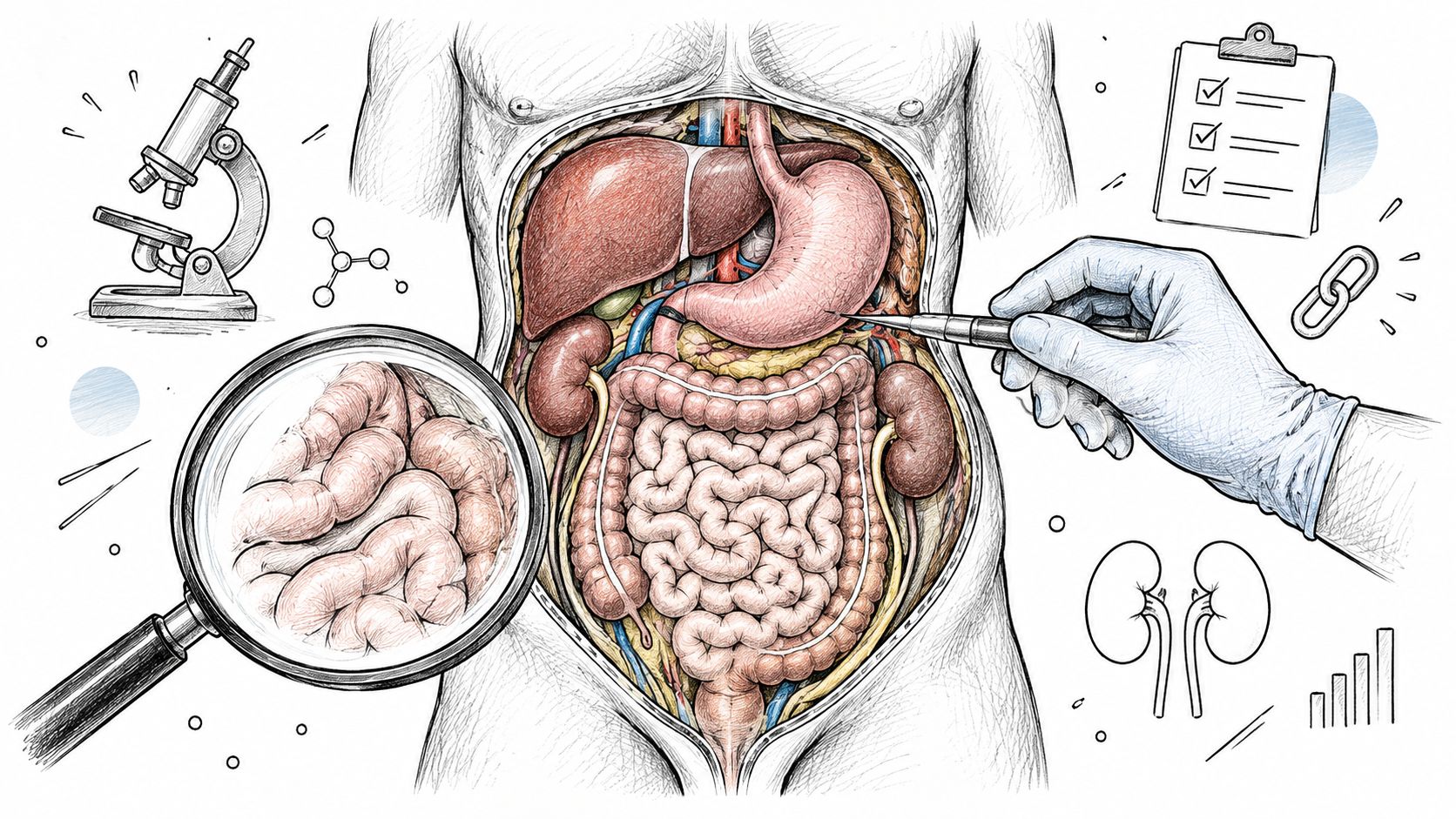
The autopsy process at my practice unfolds in defined phases. The first is the external examination. I verify identity, review legal clearance, log chain-of-custody details, photograph the body, and document livor mortis, rigor mortis and early decomposition. This external survey takes up to one hour before any incision.
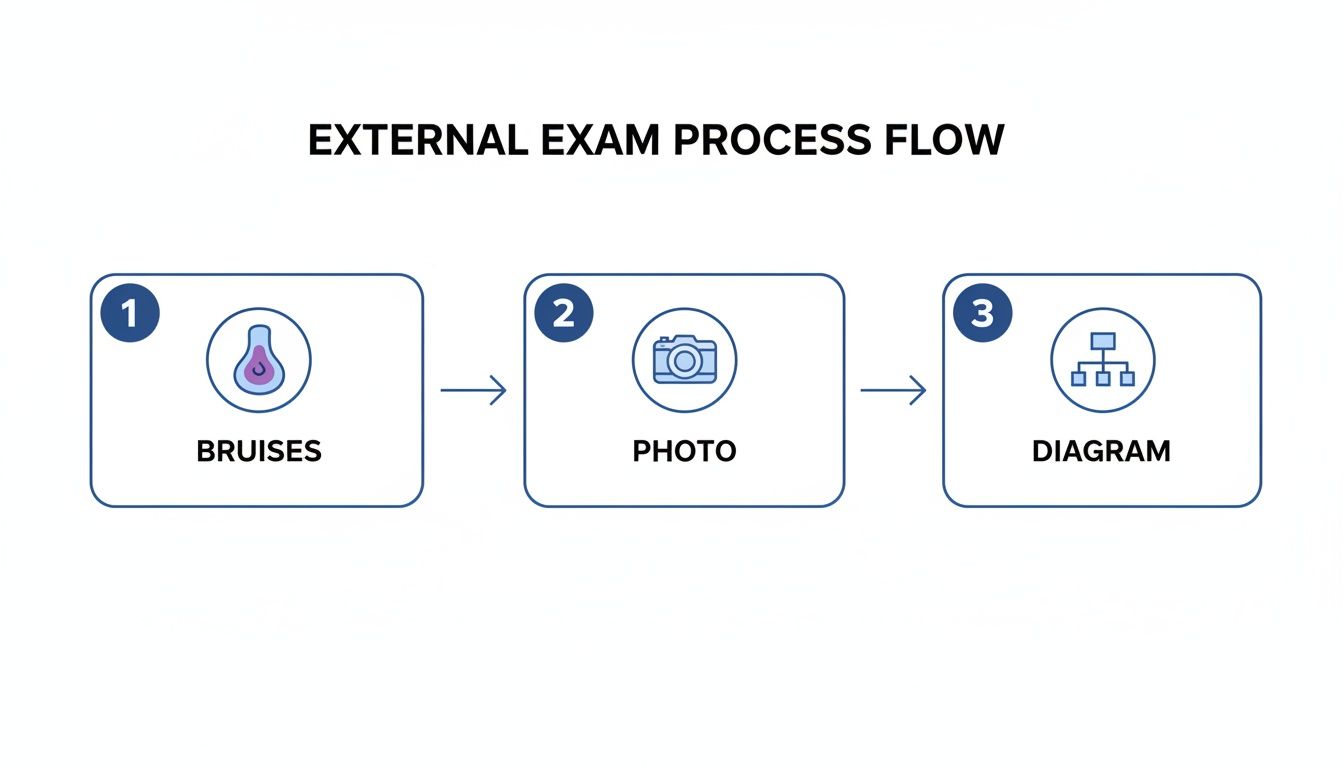
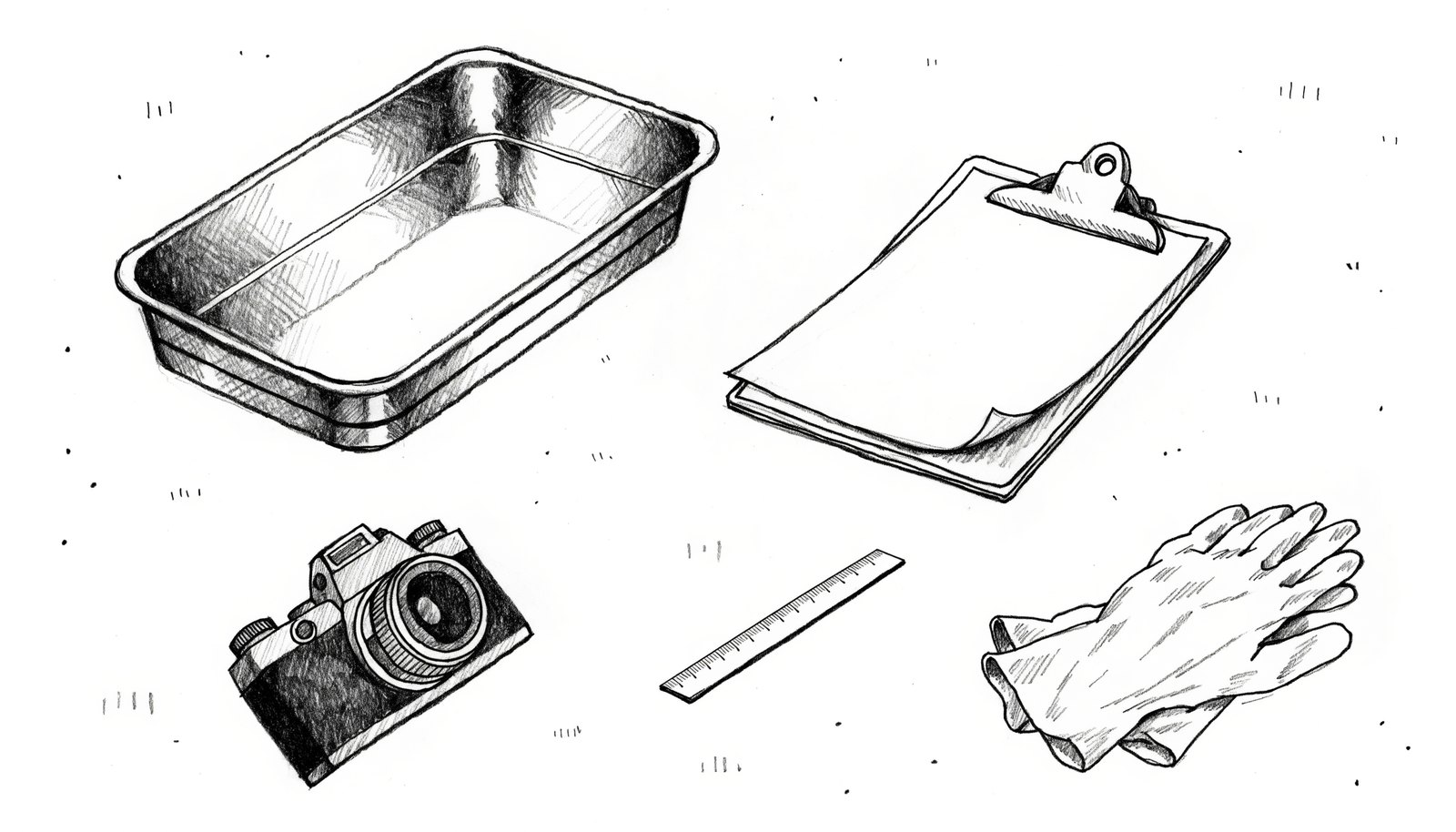
Key tasks in the initial external examination:
- Confirm identity via wristbands, dental records, fingerprints or DNA
- Review death certificate, consent forms and medical charts for legal clearance
- Photograph clothing, jewelry and personal effects in place
- Record height, weight, scars, tattoos and implant locations
- Note livor mortis, rigor mortis and early decomposition signs
For a full overview of every autopsy phase, see our guide on Steps in an Autopsy.
What Families and Attorneys Can Expect
Families receive a transparent, comprehensive report that begins with external findings. Photographs, diagrams and detailed notes become the baseline for internal organ review. Attorneys can trace every signature, timestamp and chain-of-custody form. If questions arise about authorization, visit who can request an autopsy.
Timelines:
- Body receipt and refrigeration at 2–4 °C immediately on arrival
- External exam started within 24 hours
- Final report completed after internal and ancillary studies, often within two to three weeks
The Role of Independence and Objectivity in Forensic Pathology
As a board-certified forensic pathologist accredited by the American Board of Pathology, I maintain strict neutrality. Independent autopsies remove potential conflicts of interest. My affiliation with Waterloo Mortuary Partnership ensures impartial access to specialized labs and imaging. A clear chain of custody backed by tfsc standards reinforces trust for families and courts.
Common Misconceptions About Autopsies
- Autopsies only serve criminal cases
Private autopsies address medical-legal questions for families and attorneys. - The external exam is optional
It sets the foundation for every internal finding. - Autopsies always delay funeral arrangements
A prompt external exam often completes within 24 hours, minimizing delays. - Only coroners can confirm identity
Private pathologists follow the same protocols using dental records, fingerprints and DNA.
Ethical and Legal Safeguards in Texas
Autopsies in Texas adhere to Texas Health & Safety Code Chapters 651, 711 and 716 and rules from the Texas Funeral Service Commission.
- Only next of kin or court-appointed officials may authorize examinations
- Consent forms must clearly state scope and parties involved
- Chain-of-custody logs record every movement, temperature check and handler signature
- Tamper-evident seals secure identification tags
These controls protect decedent dignity, evidentiary integrity and family trust.
FAQ
What Is the Difference Between an External and Internal Autopsy Exam?
The external exam documents identity, wounds, scars, tattoos and postmortem signs. The internal exam dissects organs to reveal hidden disease or trauma.
Who Can Authorize a Private Autopsy in Texas?
Next of kin or legal representatives consent under Texas Health & Safety Code Chapter 651. Coroner or court orders govern medicolegal cases.
How Soon Should the First Step Be Performed?
Within 24 hours postmortem to preserve skin patterns, bruises and livor mortis for accurate timing and interpretation.
Can a Private Pathologist Perform the Same First Step as a Coroner?
Yes. Both follow identical external examination protocols. Differences lie in authorization and oversight, not methodology.
For compassionate, expert autopsy services aligned with Texas standards, please reach out.
Texas Autopsy Services