February 13, 2026 · Texas Autopsy Services
What Families Should Know About External Autopsy Examinations
Learn what an external examination autopsy reveals and why it's a critical step for families and legal teams seeking clear answers about a cause of death.
On this page
Many families I speak with assume an autopsy must be a full, invasive procedure. That isn't always true. In many cases, an external examination autopsy is the critical first step, and sometimes, it provides all the answers a family needs. I see it as a non-invasive, systematic investigation focused on gathering objective facts to determine the cause of death with dignity.
As a board-certified forensic pathologist with over 1,000 autopsies performed, my first responsibility is to meticulously inspect the deceased’s body, clothing, and personal items. This is not a quick look. It's a structured process of detailed documentation, high-resolution photography, and precise measurements. My work is designed to identify injuries, external signs of disease, and trace evidence. This methodical, scientific approach forms the bedrock of any postmortem examination. The goal is to create a permanent, objective record of the body's condition exactly as it was received, allowing me to provide clear, factual answers to families and attorneys.
- An external examination is a non-invasive, head-to-toe inspection to document the body's condition and identify evidence.
- It is performed by a forensic pathologist to establish an objective record of injuries, disease indicators, and identifying features.
- This process is foundational for any cause of death investigation and helps determine if an internal examination is necessary.
- Findings from an external examination do not interfere with plans for an open-casket viewing.
What an External Examination Really Involves
An external examination is much more than a simple visual inspection. It’s a systematic, head-to-toe evaluation where every surface of the body is closely examined. I document all identifying features—height, weight, hair and eye color, scars, and tattoos. This not only confirms the identity of the deceased but also notes any characteristics relevant to the investigation.
I also pay close attention to the clothing. Garments can hold critical evidence like fibers, gunshot residue, or signs of a struggle. Every detail, from the condition of the clothes to the contents of the pockets, is carefully noted before anything is removed. This initial phase helps me build a complete picture of the circumstances surrounding the death. You can get a better sense of this in my post detailing the first step in an autopsy.
Why It Matters in Modern Forensics
The importance of the external examination has grown significantly. It plays a central role in investigating deaths from external causes like accidents, homicides, or suicides. Data from the National Vital Statistics Reports illustrates this shift. In 1972, only 19% of autopsies were for deaths from external causes. By 2020, that number had jumped to 60%, while disease-related cases requiring autopsy declined.
This data highlights why a meticulous external exam is so crucial today. It's often the key to uncovering trauma, foul play, or other non-natural events that demand a deeper investigation. For families and attorneys, the external examination provides the first layer of concrete evidence. It’s where the story of what happened begins to take shape, based on physical facts rather than speculation. I perform every step with the utmost respect for the deceased, ensuring families get the answers they deserve. The findings from this external review guide what comes next, helping us decide if an internal examination is needed to fully understand the cause and manner of death.
The Step-By-Step External Examination Process
When families or attorneys need answers, it’s important to understand what happens during an external examination. It’s a highly detailed and methodical investigation where every observation contributes to the final picture. As the owner of Texas Autopsy Services, I've refined a process grounded in precision and respect.
The work starts before the examination itself. I begin by reviewing the case files—medical records, first responder reports, and any other available information about the circumstances of the death. This context is vital. It frames the investigation and helps me know what to look for, turning a general examination into a focused search for specific clues.
Initial Documentation and Identification
Once the deceased arrives, the hands-on process begins with careful documentation. I start with height, weight, hair, and eye color. From there, I create a detailed map of the person’s unique physical landscape.
This isn't just about identification; it's about building an unchangeable record. I meticulously note and photograph:
- Scars and Surgical Marks: These tell a story of past injuries or medical procedures.
- Tattoos: I describe each one—its design, colors, and location—as they are powerful identifiers.
- Birthmarks and Moles: Natural features are just as important for creating a complete picture.
This first step is foundational. It confirms we are working with the correct individual and establishes a baseline for the entire cause of death investigation.
Clothing and Trace Evidence Examination
The clothing a person was wearing can hold an incredible amount of information. Each garment is examined for tears, stains, or other damage that might correspond with injuries on the body.
I’m also looking for trace evidence—tiny clues like fibers, hairs, or soil that could connect the individual to a particular place or situation. Every item is handled with care to preserve this fragile evidence. After everything is cataloged, the clothing is respectfully removed to allow for the full examination of the body.
The infographic below shows the simple, logical flow of the hands-on part of the examination.

As you can see, one step naturally leads to the next, creating a comprehensive and objective record.
Head-to-Toe Physical Inspection
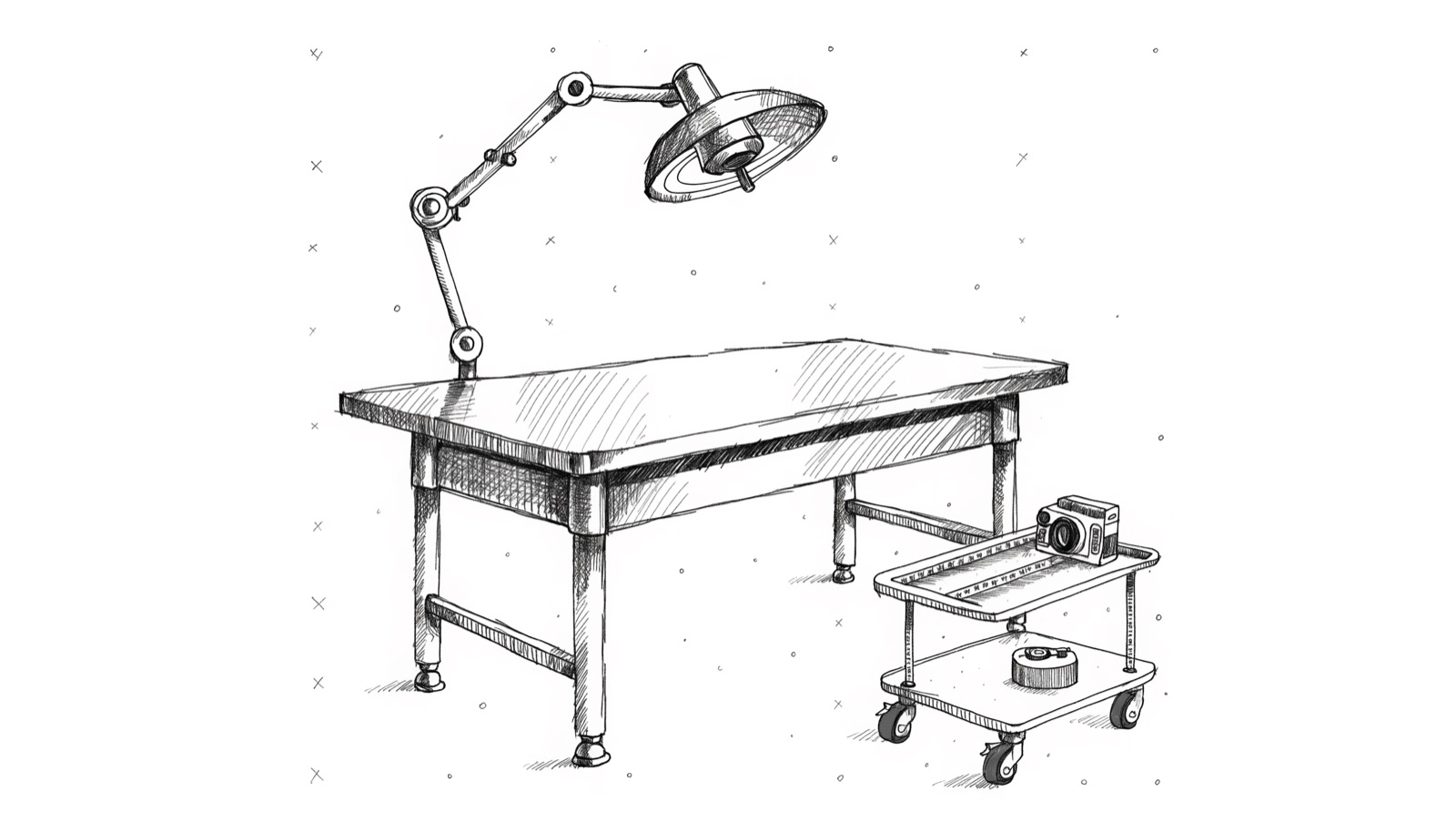
The heart of the external examination autopsy is the systematic, head-to-toe inspection. Using specialized lighting that can reveal even faint bruises, I methodically examine every inch of the body, starting from the head and working my way down.
During this critical phase, I'm looking for and documenting:
- Signs of Injury: This includes everything from subtle scrapes and bruises (abrasions and contusions) to more obvious cuts (lacerations) that could indicate trauma.
- Medical Intervention: I carefully note the presence of IV lines, defibrillator pads, or old surgical scars—anything that points to recent or past medical care.
- Indicators of Disease: Sometimes, the body's exterior shows signs of an internal illness, like the yellowing skin of jaundice or the swelling of edema.
To help you understand the structured nature of this process, here’s a breakdown of the key stages and their objectives.
Components Of A Standard External Examination
This table outlines the key stages and objectives of a thorough external examination, providing families and legal professionals with a clear checklist of what the process involves.
| Examination Stage | Objective And Key Actions |
|---|---|
| Case File Review | Gain context by reviewing all available medical records and reports from first responders. |
| Identification & Documentation | Confirm identity by recording height, weight, scars, tattoos, and other unique physical features. |
| Clothing Examination | Inspect garments for damage and collect any potential trace evidence (hairs, fibers, soil). |
| Photography | Create a complete and permanent visual record of the body's condition and any specific findings. |
| Head-to-Toe Inspection | Systematically examine every body region for signs of injury, disease, or medical intervention. |
| Measurement & Description | Precisely measure and describe all marks, injuries, or abnormalities in detailed written notes. |
This methodical approach ensures that no detail, no matter how small, is overlooked. Every finding is documented with precision. I use high-resolution photography to create a permanent visual record, and all injuries or marks are carefully measured and described in my notes. This isn’t just about collecting data; it’s about piecing together a story based on verifiable physical evidence. The thoroughness of this process is what allows me to find subtle but critical clues that lead to an accurate conclusion.
What An External Examination Can And Cannot Reveal
When families are facing difficult decisions, one of the most important things I can do is help set clear expectations. An external examination autopsy is a powerful first step, but it’s crucial to understand what it can tell us and, just as importantly, what it can't.
Think of it as the first layer of an investigation. This careful, non-invasive process gives us a huge amount of information and often helps us decide if a full internal autopsy is needed to get the final, definitive answers.
What We Can Find On The Outside
The real strength of an external exam is in what we can see, touch, and measure on the surface of the body. It’s incredibly good at spotting and documenting direct physical evidence.

During my meticulous review, I can typically find and document clear signs of:
- Blunt and Sharp Force Injuries: Things like scrapes (abrasions), bruises (contusions), tears in the skin (lacerations), and clean cuts (incised wounds) that point to falls, accidents, or assaults.
- Gunshot Wounds: I can identify where a bullet entered and exited, note the specific characteristics of the wounds, and sometimes even find projectiles lodged in the clothing.
- Signs of Asphyxia: Evidence like ligature marks on the neck (from strangulation or hanging) or tiny, pinpoint red dots in the eyes (petechiae) can be strong indicators.
- Evidence of Drug Use: Track marks from IV drug use or residue around the nose can suggest that toxicology testing will be a critical next step.
- Fire-Related Injuries: Burns and soot are obvious signs, but I also look for more subtle thermal injuries.
- Environmental Exposure: The skin can show tell-tale signs of death from extreme heat (hyperthermia) or cold (hypothermia).
Every one of these findings is carefully photographed and measured, creating an objective, factual record that becomes invaluable for any investigation that follows.
What Stays Hidden From View
Just as important is being honest about what an external exam alone can't tell us. Many causes of death are completely silent on the outside. For these, we have to look deeper.
An external exam, for example, cannot confirm:
- Most Natural Diseases: A fatal heart attack, a stroke, a blood clot in the lung (pulmonary embolism), or an internal cancer are all invisible from the surface.
- Internal Injuries: Someone can die from massive internal bleeding, like a ruptured spleen, with only a very faint bruise on their skin—or sometimes no mark at all.
- Toxicology Results: I might see needle marks, but I can't know what was in the person's system without sending blood and tissue samples to a lab.
- Infections: Diseases like pneumonia or meningitis can only be confirmed by looking at the lungs or brain internally and under a microscope.
The external examination provides the "what"—the physical evidence on the body. An internal examination and lab tests provide the "why"—the underlying disease or hidden injury that caused the death. This is a key distinction for families and their attorneys. The external findings might strongly point in one direction, but they often serve as the foundation, showing us that a full autopsy is necessary to get irrefutable proof.
Scope Of Findings: External Vs. Internal Autopsy
| Finding Or Condition | Detectable In External Exam? | Requires Internal Exam Or Labs? |
|---|---|---|
| Gunshot Wounds | Yes (entrance/exit wounds) | Yes (to trace wound path, recover projectiles) |
| Heart Attack | No | Yes (internal inspection of the heart) |
| Bruises / Lacerations | Yes (obvious on the skin) | Sometimes (to determine the depth of injury) |
| Stroke | No | Yes (internal inspection of the brain) |
| Drug Overdose | Sometimes (needle marks, residue) | Yes (toxicology tests are definitive) |
| Pneumonia | No | Yes (internal inspection of the lungs, histology) |
| Strangulation | Yes (ligature marks, petechiae) | Yes (to examine neck structures internally) |
| Ruptured Aneurysm | No | Yes (internal inspection of blood vessels) |
This table illustrates why a full autopsy is sometimes the only way to get a complete and accurate picture of what happened.
Sadly, overall autopsy rates have fallen dramatically. In the United States, the rate dropped from 19.1% of deaths in 1972 to only 7.4% in 2020. This decline makes the initial external exam even more vital, as its findings are often what trigger the few medicolegal autopsies that are still performed. This trend highlights a gap that independent services like Texas Autopsy Services can fill, providing thorough assessments when a public autopsy isn't an option. You can discover more insights about this global trend and its impact on forensic science.
Why a Second Opinion Autopsy Might Be Necessary
Sometimes, the official findings from a government-ordered autopsy don't seem right. Families or their attorneys might read the report and find the stated cause of death doesn't match the circumstances they know, leaving them with more questions than answers.
This is exactly when a second opinion autopsy becomes so important. It isn’t about creating conflict; it’s about pursuing the objective truth with a fresh set of expert eyes. This process almost always starts with a careful re-evaluation of all the available evidence, including a new look at the external findings from the first examination.
When to Consider an Independent Review
A family or their legal counsel might consider getting an independent review when there is a direct disagreement with the official manner of death. A ruling of "suicide" or "accident" might not align with the known facts, or a death labeled "natural" could seem unlikely based on the person's health history.
Another critical situation is when subtle injuries might have been missed or misinterpreted the first time around. In complex cases, things like faint bruises or small abrasions can seem minor, but they can be the key to piecing together what really happened. A fresh, unbiased analysis can bring these crucial details to the forefront.
At Texas Autopsy Services, my role in these cases is to provide that essential check and balance. I approach every second opinion with an unwavering commitment to impartial analysis, looking at everything from the initial external exam reports to any new findings. You can learn more about the dedicated process behind a second opinion autopsy at my practice.
The Impact of a Fresh Perspective
A second autopsy offers an independent verification of the original findings. It can either confirm the first report, which can give a family much-needed reassurance, or uncover new evidence that completely changes the understanding of the case. This fresh perspective is vital for legal challenges, insurance claims, or a family's peace of mind.
While second autopsies aren't performed every day, their impact can be profound. While statistics are limited in the United States, research from other parts of the world shows that independent reviews have changed the official cause of death in nearly 25% of cases. Often, this is because the second examination—starting with the external evidence—identifies inconsistencies or missed injuries that are critical for attorneys contesting the initial findings. My commitment in a second opinion case is to provide an unbiased, scientifically rigorous assessment. The goal is to deliver clarity and certainty, ensuring that the final conclusions are based on a comprehensive and dispassionate evaluation of the medical facts.
Ultimately, getting a second opinion is about making sure every possible avenue has been explored in the search for truth. It's a way to honor the deceased by demanding the highest standard of accuracy and helps provide grieving families with the definitive answers they deserve.
Understanding The Autopsy Report
Receiving an autopsy report can be overwhelming. It's a clinical, technical document that often arrives during an incredibly difficult time. My goal is to prepare a comprehensive report that provides clear answers, not more confusion.
The report is the final narrative of the entire examination. I write it to be medically precise for legal and insurance purposes but also clear enough for a family member to understand the important takeaways. It is a careful synthesis of all the findings that lead to a logical conclusion.
Structure Of The Final Report
The document usually starts with a summary of the case history before detailing what was found externally. This section describes everything I observed during the external examination autopsy, from identifying marks like scars and tattoos to any signs of injury. This is a purely objective account of what was physically present.
From there, the report moves on to the results from any internal examination or additional tests we performed. This might include:
- The results from toxicology tests, which check for medications, drugs, alcohol, or other substances.
- The findings from histology, which involves looking at tiny tissue samples under a microscope.
- The conclusions from any other specialized testing that was needed.
The Final Diagnosis And Cause Of Death
All of this information builds toward the final diagnoses. This is the section where I list every significant medical condition and injury found during the examination. It’s where I formally state the official cause of death—the specific disease or injury that started the chain of events leading to the person's passing.
Following that, you'll find the manner of death. This is a classification based on all the evidence, with five options: Natural, Accident, Suicide, Homicide, or Undetermined. It's a conclusion drawn from the totality of the evidence. Translating all spoken observations into a precise written document is a critical step, often handled by a skilled medical transcriptionist.
My commitment is to deliver not just a document, but clear, actionable answers. The report should provide a definitive medical narrative that brings closure and clarity. My work isn’t done once the report is delivered. I make it a point to personally review the findings with the family, explaining any complex medical terms and answering their questions. I have also put together a guide on how to read a pathology report. This final report is the culmination of a process dedicated to finding the truth with dignity and precision.
Your Questions About External Examinations Answered
When families and attorneys consider an autopsy, many questions arise. That's completely understandable. Here are direct, clear answers to some of the most common questions I hear.
Can we still have an open-casket viewing?
Yes, absolutely. This is often the first question families ask. An external examination is completely non-invasive. We do not make any incisions. The entire process involves careful visual inspection, photography, and taking measurements. Your loved one is treated with the utmost respect, and nothing we do will alter their appearance or interfere with your plans for a traditional open-casket viewing.
How long does an external examination take?
While the hands-on examination usually takes a few hours, the entire process from start to finish is typically completed within 24 to 48 hours. This timeline includes receiving your loved one, completing the examination, finalizing all initial paperwork, and coordinating their release to your chosen funeral home. My team at Texas Autopsy Services works closely with your funeral director to ensure a seamless process without delays.
What is the difference between cause and manner of death?
This is an important distinction.
- The cause of death is the medical reason someone died. It's the specific injury or disease that started the chain of events leading to death. Examples include "coronary artery disease" or "gunshot wound."
- The manner of death is the legal classification of how the death happened. It falls into one of five categories: Natural, Accident, Suicide, Homicide, or Undetermined.
An external examination provides vital clues for both. The final manner of death is a conclusion drawn from all the evidence, including the circumstances surrounding the death.
How long until we receive the final report?
With an external-only examination, the turnaround time for the final report is quicker. You can typically expect the complete written report within 30 to 60 days. If additional tests like toxicology are needed, that can add time for lab processing. However, I can almost always provide preliminary verbal findings much sooner—often within a day or two—to give your family initial answers while the formal report is being prepared.
If you have other questions or need to discuss your specific situation, please reach out to my office. We are here to provide clear, compassionate guidance.