March 25, 2026 · Texas Autopsy Services
A Pathologist's Guide to Heat Related Deaths in Texas
A forensic pathologist explains the rise in heat related deaths in Texas, how autopsies find the truth, and when families should seek independent answers.
On this page
As a forensic pathologist, I provide objective, science-based answers for families navigating the complex questions that arise after a sudden death.
I have seen the tragic impact of Texas summers firsthand. Heat is not just uncomfortable; it can be a silent factor in many deaths, often mistaken for a heart attack or stroke. For families seeking clear answers, a thorough investigation is essential.
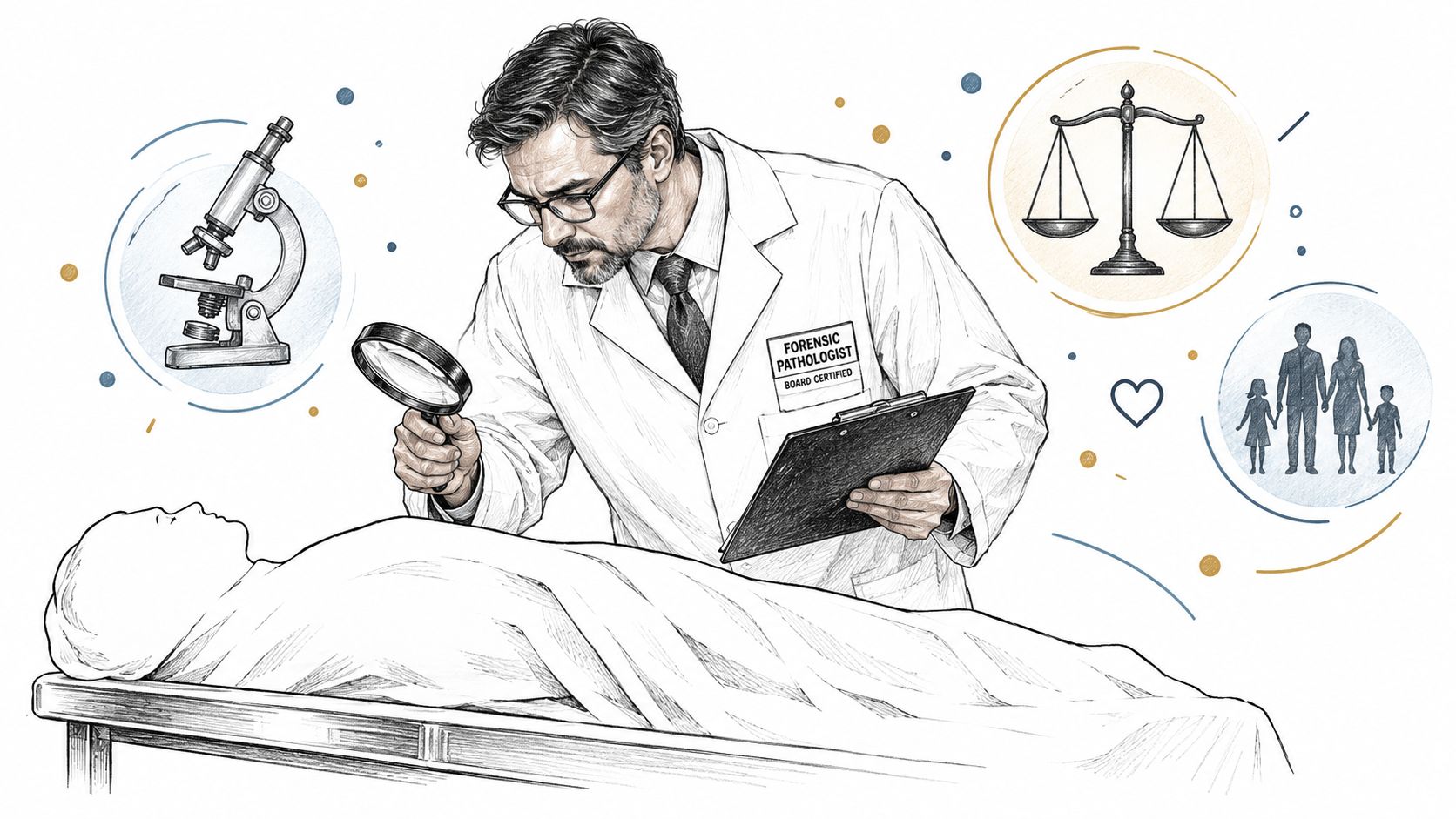
My name is our forensic pathology team. I am a board-certified forensic pathologist and the owner of Texas Autopsy Services. In my work performing over 1,000 autopsies, I've learned that determining an accurate cause of death is a critical service for grieving families. This is particularly true for suspected heat related deaths, where the evidence is often subtle and requires careful, expert analysis.
This guide is intended to help families, attorneys, and medical professionals understand the forensic approach to these cases. My goal is to explain the process with the medical precision and compassion that every family deserves during a difficult time.
The Forensic Challenge of Hyperthermia
Every summer, cases arrive at my office that tell a similar, sad story. Consider a real-world scenario, with details changed to protect the family's privacy. We investigated the death of a middle-aged man with known high blood pressure who was found in his Central Texas home during a July heatwave. His air conditioner had failed.
On the surface, his death appeared to be a cardiac event. Without a complete postmortem examination, his death certificate likely would have listed heart disease as the cause.
However, a detailed investigation revealed the tell-tale signs of hyperthermia, the medical term for a dangerously overheated body. The extreme heat is what pushed his cardiovascular system past its breaking point. This is not a minor detail. It is the crucial difference between a death from natural causes and a death caused by a hazardous environmental condition.
Why an Accurate Cause of Death Matters
Establishing the correct cause of death is my primary responsibility. For grieving families, knowing the truth is the first step toward closure. It can also be critical for legal and insurance purposes, especially if unsafe housing, workplace conditions, or negligence played a role.
As a forensic pathologist certified by the American Board of Pathology in Anatomic, Clinical, and Forensic Pathology, my job is to uncover that definitive answer. This goes beyond the autopsy itself. A proper cause of death investigation is a comprehensive process where I assemble a complete picture, analyzing:
- Environmental Context: What were the conditions where the person was found? Was it a sweltering apartment, an outdoor construction site, or a parked vehicle?
- Medical History: Did the person have pre-existing conditions like heart disease, diabetes, or obesity that made them more vulnerable to heat?
- Toxicology Analysis: We must rule out other potential causes. Were medications, drugs, or alcohol a factor?
Many heat related deaths are missed because the signs can be subtle, often mimicking other medical emergencies. An independent autopsy cuts through assumptions and provides scientific clarity.
With Texas summers becoming hotter, a functioning air conditioner is essential. Knowing where to turn for emergency air conditioning repair can be critical, particularly for the elderly, young children, and those with chronic health issues.
How Extreme Heat Overwhelms the Body
The human body is designed to maintain a stable internal temperature around 98.6°F. When faced with relentless, extreme heat, even this robust system can fail. Understanding how the body’s defenses break down is where a forensic investigation often begins.
The body has two main cooling mechanisms. First, it sweats. As sweat evaporates, it pulls heat from the skin. Second, the body pushes more blood to the skin’s surface, allowing heat to radiate away. This system is usually very effective.
However, it has limits. When it is not just hot but also humid, sweat cannot evaporate properly, which reduces its cooling power. If the surrounding air is hotter than the skin, radiating heat away becomes impossible. The body's cooling efforts start to fail, and the core temperature begins to rise. This is the start of hyperthermia.
The Progression from Heat Exhaustion to Heat Stroke
The first warning sign is usually heat exhaustion. At this stage, the body is working overtime, sweating profusely to cool down. A person may feel weak, dizzy, or nauseous. This is a critical signal that the body is losing its battle against the heat.
If the person does not get to a cool place and rehydrate, heat exhaustion can escalate to heat stroke. This is a medical emergency. The body's internal thermostat fails completely, and the core temperature can rise to 104°F or higher. At that point, cellular damage begins.
Heat stroke is a catastrophic failure of the central nervous system. The body often loses its ability to sweat, leaving the skin hot and dry. Confusion, seizures, and unconsciousness are common as internal organs begin to shut down. This rapid internal collapse is why heat related deaths can be so deceptive. From the outside, there may be no signs of injury. In my work as a forensic pathologist, I have learned to distinguish between two main types of heat stroke.
Classic vs. Exertional Heat Stroke
Distinguishing between the two primary classifications of heat stroke is critical for an accurate death investigation. They affect different people in different situations.
- Classic (Non-Exertional) Heat Stroke: This type often develops over several days. It is most common in individuals whose bodies already struggle to regulate temperature, such as the elderly, young children, or those with chronic conditions like heart disease. A common example is an elderly person living alone in a home with a broken air conditioner during a heatwave.
- Exertional Heat Stroke: This form is aggressive and develops in just a few hours. It typically affects younger, healthy people who are pushing their bodies to the limit in hot, humid weather. Examples include athletes, military recruits, or construction workers. Their bodies generate so much heat from physical exertion that their natural cooling mechanisms are overwhelmed.
This table highlights the key differences I look for when conducting a cause of death investigation.
| Characteristic | Classic (Non-Exertional) Heat Stroke | Exertional Heat Stroke |
|---|---|---|
| Typical Victim | Elderly, infants, chronically ill | Healthy, active individuals (athletes, laborers) |
| Onset | Slow, developing over several days | Rapid, developing in a few hours |
| Sweating | Often absent (hot, dry skin) | Often present (profuse sweating) |
| Underlying Cause | Environmental heat exposure | Intense physical activity in heat |
| Common Scenario | Living in an un-air-conditioned space | Training or working outdoors in summer |
Both paths lead to multi-organ failure. The brain, kidneys, liver, and heart cannot withstand that level of extreme heat. This is why a death that appears to be a heart attack may have been triggered by hyperthermia. Understanding this distinction is crucial for families and attorneys who need to know the true cause of a sudden death during hot weather.
The Forensic Autopsy in Suspected Heat Deaths
Some causes of death are straightforward. Heat related deaths are the opposite. They are among the most difficult puzzles a forensic pathologist must solve because the evidence is often subtle.
Hyperthermia is what we call a diagnosis of exclusion. This means that before I can state with certainty that heat was the cause, I must meticulously rule out every other possibility. The process of elimination begins long before the autopsy itself. The circumstances of the death are just as critical as the findings from the body.
The Importance of Scene and Circumstance
My investigation always begins with context. Was the person found in a cramped, unventilated apartment? Were they a roofer working on a job site in July? These details provide the initial framework for the case.
Next, I review the person's medical history. Conditions like heart disease, diabetes, or obesity can impair the body's ability to cool itself. The same is true for certain medications. Common prescriptions for blood pressure, like diuretics or beta-blockers, can increase risk by interfering with the body's natural temperature controls.
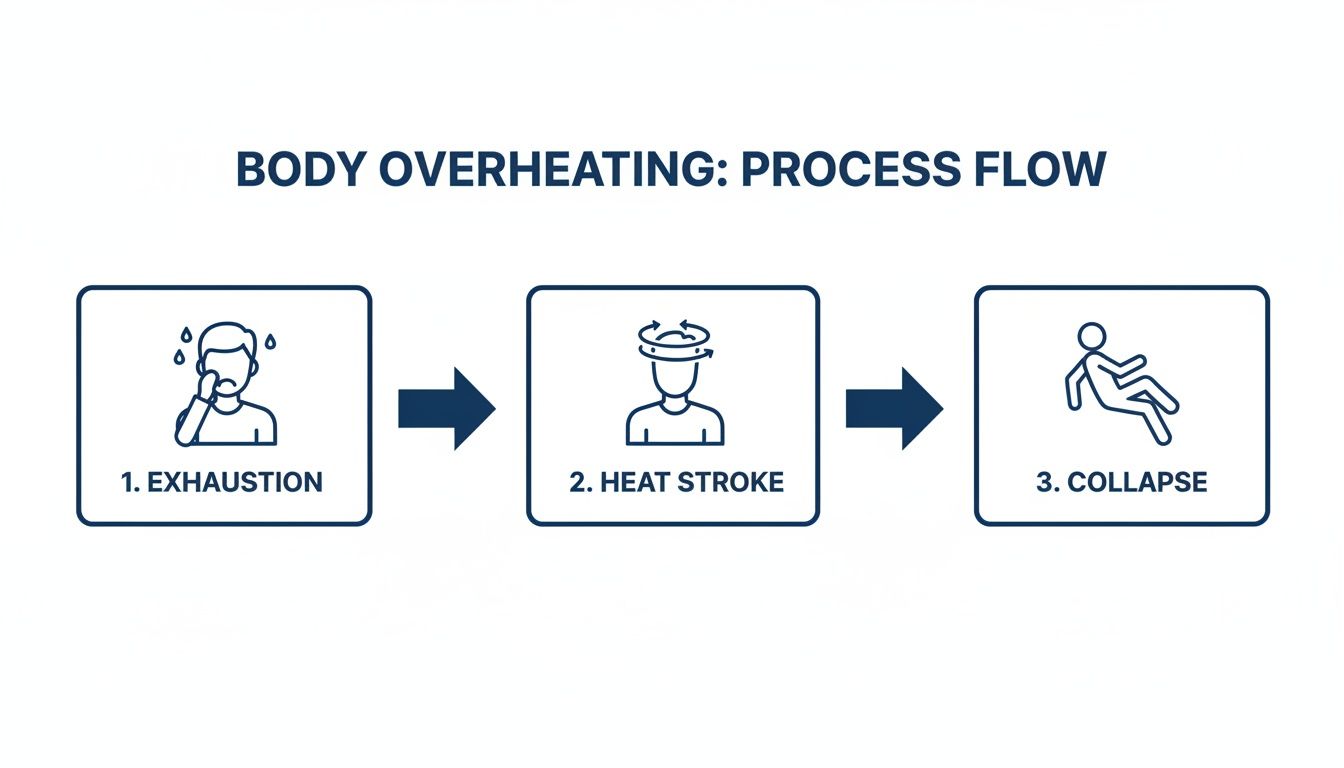
This chart shows how the body’s coping mechanisms can quickly become overwhelmed, leading to system failure.
Subtle Findings of the Postmortem Examination
During an autopsy, the physical signs of a heat death are frustratingly non-specific. The clues I find could point to several different causes, which is why the examination cannot stop there.
Common, though not definitive, signs include:
- Cerebral Edema: Swelling in the brain.
- Petechial Hemorrhages: Tiny, pinpoint spots of bleeding on the surface of internal organs.
- Signs of Dehydration: This can be a key clue but is not always present.
Since these findings alone do not prove hyperthermia, laboratory testing becomes essential. Accurate documentation is also critical in my field. Technology is evolving to assist with this, and tools that generate AI SOAP notes are showing promise for improving the efficiency of autopsy reporting.
The Crucial Role of Toxicology and Lab Testing
A full toxicology screening is non-negotiable. I run one in every case to see if drugs, alcohol, or prescription medications played a role.
One of the most powerful tools I have is a small sample of vitreous humor, the clear gel from inside the eyeball. It is a forensic goldmine because it is protected from the rapid decomposition that affects the rest of the body. By measuring the electrolytes—sodium, potassium, and chloride—in this fluid, I can get a clear picture of severe dehydration and the metabolic chaos that hyperthermia causes.
It is not one single finding that provides the answer. It is the combination of the scene information, the subtle physical clues, and the hard data from the lab. Only by weaving these threads together can my team at Texas Autopsy Services confidently determine if heat was the cause of death and give families the definitive answers they need.
The Alarming Rise in Heat Fatalities
In my work, I examine each death as a unique story. But with heat related fatalities, it's impossible to ignore the larger trend. These are not just isolated accidents; they are part of a disturbing pattern that is accelerating in Texas and around the world.
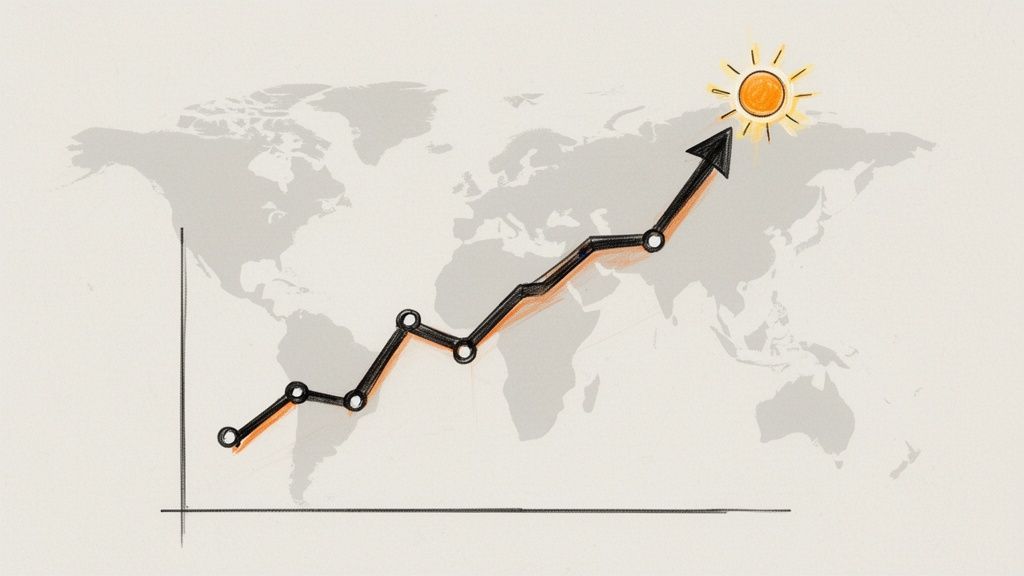
The statistics are sobering. In the United States, the annual average of heat related deaths has more than doubled in the last two decades. We have gone from around 620 deaths per year in the early 2000s to over 1,700 deaths per year more recently. This is a sharp, dangerous increase.
A Global and National Crisis
This is not just an American problem. Between 2000 and 2019, experts estimate that heat caused about 489,000 deaths annually worldwide. During that same period, heat-related mortality for people over 65 increased by 85%.
Major events like the 2003 European heatwave (70,000 deaths) and the 2010 Russian heatwave (56,000 deaths) are grim reminders of how deadly extreme heat can be. For more on these global trends, the World Health Organization provides extensive data.
Here in Texas, I see how these global patterns affect our communities. Our climate puts many of our neighbors at risk. The data confirms what I see in my casework, which is why I approach every potential heat-related death so carefully.
The consistent rise in heat related deaths signals a critical need for better recognition and investigation. We must shift our perspective from viewing these as rare accidents to seeing them as a predictable and often preventable outcome of extreme environmental conditions. This is why a private, independent autopsy can be so vital. Official systems are often overwhelmed and may not have the resources to dig deeper, sometimes missing the subtle signs of hyperthermia.
Why Data Is Crucial for Justice and Closure
When a family comes to me at Texas Autopsy Services, they are often trying to understand how a seemingly healthy loved one could die so unexpectedly. This broader data helps them realize that their situation, while intensely personal, is not an anomaly. It is part of a worsening public health crisis.
Understanding the numbers helps in practical ways:
- For Families: It gives them confidence that their suspicions about the heat are valid, empowering them to seek real answers.
- For Attorneys: It builds a fact-based foundation for legal actions involving workplace safety, inadequate housing, or negligence.
- For Public Health: It highlights the urgent need for better awareness, prevention programs, and protections for vulnerable populations.
My job is to connect the statistics to the human story behind each loss. By providing a medically precise and unbiased cause of death, I offer families the clarity they need. At the same time, this work contributes to a more accurate picture of the true toll of extreme heat.
How a Private Autopsy Provides Critical Answers
When a loved one dies unexpectedly during a Texas summer, the official cause on the death certificate may not tell the whole story. This is common if they had other health issues, like heart disease. An overworked Medical Examiner's office might see the pre-existing condition, attribute the death to it, and decide an autopsy is not necessary. The case is closed.
For the family, that simple explanation can feel unsatisfying. You are left wondering if the heat played a more direct role. This is where a private autopsy can make all the difference.
An Objective and Unbiased Perspective
A private autopsy is a separate investigation authorized by the next-of-kin. Unlike a government-run examination, its only purpose is to give your family a definitive, unbiased cause of death. At Texas Autopsy Services, my work is not influenced by heavy caseloads or external pressures. I focus strictly on the medical facts to uncover the complete truth.
For example, imagine a construction worker collapses on a job site on a 100-degree day. An initial report might list "heart attack." A private autopsy could reveal that exertional heat stroke was the actual trigger. That distinction can have significant implications for a family. A private autopsy serves as a crucial second opinion when the official story does not add up.
The Value of a Definitive Report
A detailed, conclusive report from an independent forensic pathologist is a powerful tool for clarity, closure, and justice. It can be invaluable in several ways:
- Answering Lingering Questions: For most families, this is the primary benefit. Knowing the exact reason for your loss helps you process grief without the burden of doubt.
- Supporting Legal Actions: If you believe negligence was a factor in a heat related death, such as unsafe working conditions or neglect in a care facility, an independent autopsy report provides credible, scientific evidence for a legal case.
- Clarifying Insurance Claims: A clear cause of death can prevent disputes with life insurance companies, helping ensure your family receives the benefits you are entitled to without delays.
As a board-certified forensic pathologist, my entire approach is built on a commitment to medical precision and objectivity. Every examination I perform follows strict Texas laws and the highest ethical standards. This ensures the final report is a robust, factual account. You can learn more by reading our comprehensive guide on private autopsies.
Frequently Asked Questions
Is an autopsy always necessary for a heat-related death?
No, an autopsy is not always performed by the county, especially if the deceased had known health issues. However, it is often the only way to confirm hyperthermia as the cause of death. A private autopsy provides a focused, independent investigation to ensure environmental factors like heat are properly considered.
What signs do you look for in a heat death autopsy?
Hyperthermia is a diagnosis of exclusion. My process includes reviewing the scene circumstances, a full physical examination for subtle clues like cerebral edema, and comprehensive lab testing. I analyze the vitreous humor (eye fluid) to confirm dehydration and metabolic collapse, which is a key indicator of a heat-related death.
Can medications contribute to a heat-related death?
Yes. This is a critical factor that is often overlooked. Many common prescription drugs can disrupt the body's cooling systems. These include diuretics ("water pills"), beta-blockers, some antidepressants, and antihistamines. A full review of a person’s medications is a standard part of my investigation.
What is the difference between a county and a private autopsy?
A county autopsy serves a public function, determining cause and manner of death for official records. A private autopsy is a service hired by a family or attorney to get a definitive, independent second opinion. My responsibility in a private case is solely to the family, allowing for a deep investigation into their specific questions.
Losing someone you love is hard enough. Living with unanswered questions makes it harder. Heat related deaths are a growing danger in Texas, but the true cause can be missed. My hope is that this guide has provided clarity.
If you have questions about the loss of a loved one and suspect heat may have played a role, please do not hesitate to contact our office. At Texas Autopsy Services, my team and I are here to provide clear, compassionate, and medically sound answers to help you find closure. As a forensic pathologist, my work comes down to one thing: finding objective, scientific answers for families. You can learn more about how the final cause of death determination is documented on death certificates or visit our website at https://www.texasautopsyservices.com.