March 8, 2026 · Texas Autopsy Services
What to Do When You Suspect Foul Play in a Death
If you suspect foul play in a loved one's death, your next steps are critical. A forensic pathologist explains how to act on your intuition and seek answers.
On this page
- When you suspect foul play, your first actions to preserve the scene and document details are critical.
- "Foul play" can range from violence to neglect or medical errors; your gut instinct is worth investigating.
- Independent autopsies provide objective, medically sound answers when official findings are incomplete or unavailable.
- A board-certified forensic pathologist can uncover evidence that is vital for legal action and personal closure.
- Navigating this process requires careful coordination with law enforcement, legal counsel, and forensic experts.
When a loved one dies, and the official story doesn't feel right, you're left with a heavy, gut-wrenching feeling. This intuition, the sense that something is deeply wrong, is a difficult burden to carry, especially during grief.
As a forensic pathologist, I've seen "foul play" encompass many scenarios. It can be obvious violence, but it can also be as subtle as a medication error, poisoning, or severe neglect that went unnoticed. If you have this suspicion, your actions in the first few hours and days are crucial. They can either preserve the path to answers or unintentionally close it forever.
Your First Actions When You Suspect Foul Play
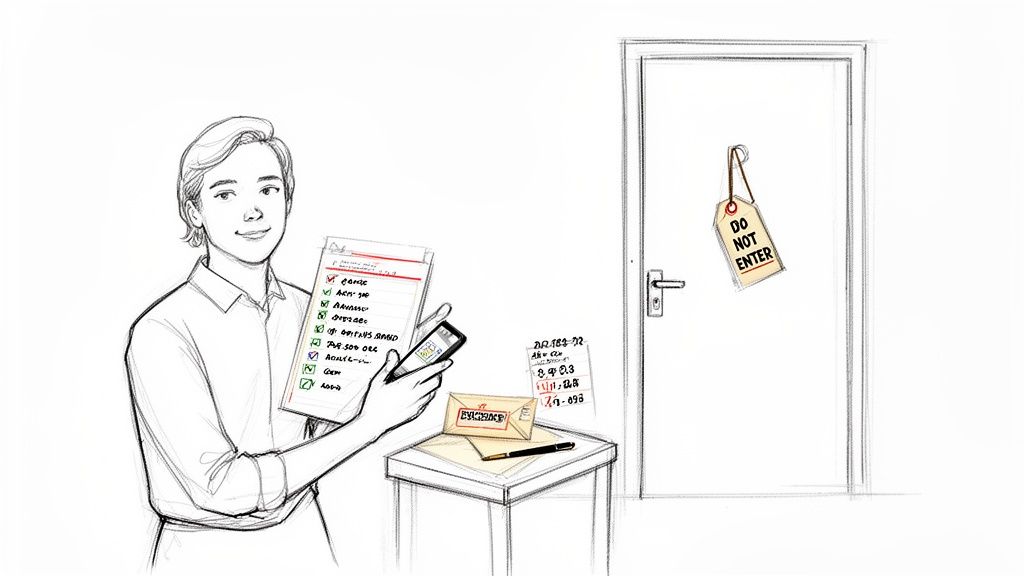
I've sat with countless Texas families and their attorneys as they wrestle with this exact situation. More often than not, that initial instinct is the start of uncovering a difficult truth. The key is to remain as calm and methodical as you can. It isn't your job to be a detective, but it is vital that you become a careful observer and protector of potential evidence.
Secure the Scene if Possible
If you're at the location where the death occurred, your priority is to prevent the scene from being disturbed. This isn't always possible, especially if police or paramedics are present. But if you have any control over the situation, do what you can.
- Do not touch, move, or clean anything. This is the golden rule. Leave everything as you found it—bedding, clothes, dishes, pill bottles, everything.
- Limit access to the area. Politely ask others to stay out of the room or immediate vicinity until law enforcement has secured it.
- Take photos or video with your phone. If you can do so without disturbing a single thing, document the scene exactly as you found it.
From my experience, the smallest details—a misplaced prescription, a spilled glass, a messy room that's out of character—can offer crucial clues for a later investigation. Protecting those details is everything.
Document Everything Immediately
Your memory is an essential but fragile resource right now. Shock and grief can make details fuzzy almost instantly, so you need to start a written record as soon as you can. Grab a notebook or open a notes app on your phone and just write. Don't worry about editing or organizing it perfectly; just get it down.
Try to include:
- The exact time you found out about the death and who told you.
- Names and contact information for everyone who was at the scene.
- Anything anyone said about what happened. If you can remember direct quotes, write them down.
- The deceased's state of mind recently. Were they sick, depressed, or acting strangely?
- Any recent arguments, financial troubles, or changes to important documents like a will.
This timeline becomes an unbiased record that can be invaluable for police, your attorney, and a forensic pathologist. Many families also find our guide on how to go about requesting an autopsy useful for understanding what comes next.
Identify the Right People to Contact
Making the right phone calls is crucial. Your first call should be to 911. When you speak with the operator, state clearly that you're reporting an unattended death. If you have a strong reason to, don't be afraid to say you suspect foul play. Using those specific words can trigger a more thorough response from the start.
After contacting law enforcement, your next call should be to an attorney. Look for someone who specializes in probate litigation or even criminal law. A good lawyer will immediately start protecting your family’s interests and guide you on how to interact with the police and other officials. They can also be instrumental in helping you arrange for an independent examination if one is needed.
Recognizing Signs of Potential Foul Play
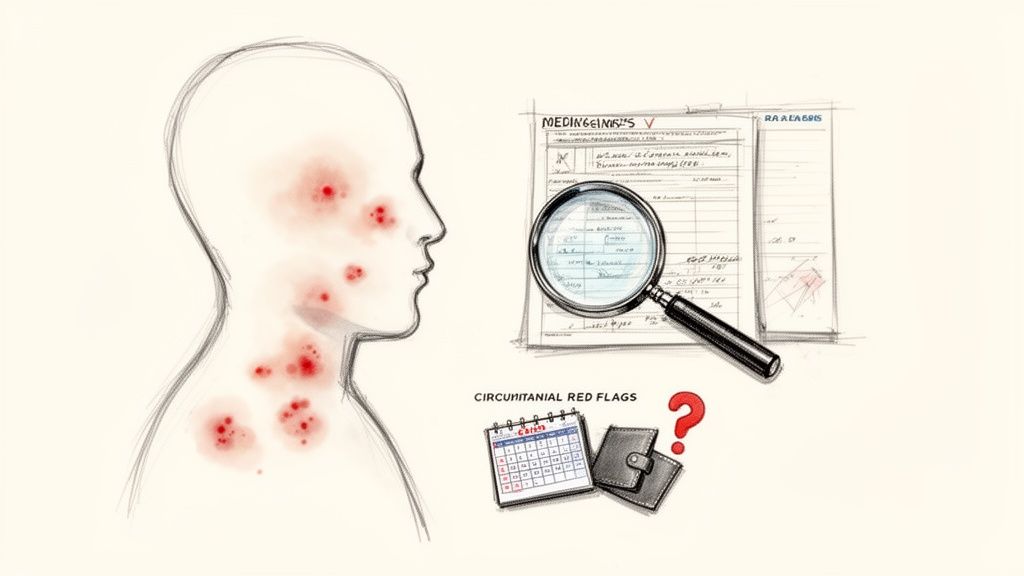
After performing over 1,000 autopsies, I can tell you that clues pointing to foul play are rarely as dramatic as what you see on TV. Some are obvious, but most are subtle. They're the kind of details that can easily be missed or misinterpreted without a trained eye and the time to look for them.
When a family or an attorney calls me because they have a gut feeling that something is wrong, it’s usually because of a mix of physical observations and circumstantial red flags. Learning to recognize these signs is the first step. It gives you the language to voice your concerns to law enforcement and helps you decide if getting a second opinion from an independent forensic pathologist is the right move.
What the Body Can Tell Us
Even thorough government-funded autopsies can be hampered by overwhelming caseloads, and sometimes subtle evidence gets overlooked. An independent autopsy offers a focused examination designed to answer your family’s specific questions.
Here are some of the physical signs I look for that often raise questions:
- Petechial hemorrhages: These are tiny, pinpoint red spots that can appear in the eyes or on the skin of the face and neck. While they don't always mean foul play, they are a classic sign of asphyxia, which can happen during strangulation or suffocation.
- Unusual bruising: Bruises tell a story. A simple fall usually leaves bruises on bony areas. I pay close attention to bruising in protected spots like the inner arms, the back, or the neck. The shape and pattern can point to a struggle or someone being held down.
- Defensive wounds: When a person fights for their life, their body shows it. I look for cuts, scrapes, or broken fingernails on the hands and forearms. Wounds on the feet can even indicate someone was kicking to get away.
- Signs of poisoning or overdose: This is more than just finding a substance in the system. The key is context. Was there an unexpected drug present? Was a prescribed medication found at a lethal level? Toxicology requires careful, expert interpretation.
I often see cases where an elderly person with several health issues dies suddenly. It’s easy to assume it was from natural causes. But a closer look might reveal faint bruising on the upper arms consistent with being shaken, or a lethal dose of a medication that a caregiver was in charge of administering.
When the Circumstances Don't Add Up
Sometimes, the strongest evidence has nothing to do with the body. The story surrounding the death—the context—is just as critical. These non-medical factors are often what justify a deeper, more skeptical investigation.
The following table summarizes some of the key indicators, both physical and circumstantial, that might suggest the need for a closer look.
Indicators of Potential Foul Play
This table outlines various physical and circumstantial signs that could indicate foul play and may warrant a more detailed investigation.
| Category | Potential Signs |
|---|---|
| Physical Evidence | • Petechial hemorrhages in the eyes or on the neck • Bruises in protected areas (inner arms, back, behind ears) • Defensive wounds (cuts on hands, broken fingernails) • Signs of restraint on wrists or ankles • Unexplained presence of drugs or lethal levels of medication |
| Circumstantial Evidence | • Inconsistent or changing stories from witnesses • Sudden, unexplained changes to wills or financial documents • Unusual financial activity just before death • Isolation of the deceased from family and friends • A known history of conflict, threats, or domestic abuse |
This is by no means an exhaustive list, but if you've noticed any of these signs, your intuition is likely telling you something important.
These situational red flags provide a roadmap. When a family tells me about a last-minute change to a will or conflicting stories from a "friend," it guides my examination. It tells me to look for specific types of injuries or to request specialized toxicology tests. Your concerns provide the logical foundation for a second look, ensuring no stone is left unturned.
How to Work with Law Enforcement and Legal Counsel
After you raise the alarm about a potential foul play situation, you’ll start dealing with police, detectives, and possibly lawyers. It can feel like you've been thrown into a world you don't understand, but knowing who does what is key to navigating it all.
Think of it as a team effort, but with each player having a very different goal. As a forensic pathologist, I often find myself right in the middle of these interactions. I've seen firsthand how a family, their attorney, and law enforcement working together can bring answers to light. I've also seen how a breakdown in communication can let critical details slip through the cracks.
Understanding Who's on the Field
When you suspect foul play, you'll encounter three main groups of professionals. It's vital to know their individual roles because confusing them can lead to frustration.
Law Enforcement: This is the police or sheriff's department. Their job is to investigate if a crime was committed. They collect evidence, interview people, and try to build a criminal case. Their focus is proving guilt "beyond a reasonable doubt."
The Medical Examiner or Justice of the Peace: This is the government official tasked with determining the cause and manner of death. They are a neutral party conducting a medical-legal investigation, but they work for the county or state, not for you. You can learn more about these roles in Texas in our article on the difference between a coroner and a medical examiner.
Your Attorney: This is the only person in the entire process whose sole duty is to you and your family. They protect your legal rights, advise you on what to say (and what not to say), and can take legal action on your behalf, like filing a wrongful death suit.
Here's the most important thing to remember: The police work for the state. The medical examiner works for the county. Your attorney works for you. Their loyalties don't overlap.
Talking to the Investigators
When you speak with detectives, your job is to be a clear, credible source of information. Bring the notes and timeline you prepared. Present the facts as you know them without adding your own theories or speculation. Stick to what you saw and heard.
They will likely ask you some tough questions. Just be honest. It’s also perfectly fine, and smart, for you to ask questions, too. Get some basic information to establish a good line of communication:
- "Who is the lead detective I should be speaking with?"
- "What's the best way to contact you if I think of something else?"
- "Could I have the case number for my records?"
This shows you're organized and serious, not just emotional, and helps keep everything documented.
The Power of Independent Medical Evidence
This is where your attorney and a private autopsy can work together to give your family a real advantage. The police are running their criminal investigation and the medical examiner is issuing an official opinion, but your lawyer can use independent findings to build a separate legal strategy.
For example, if I perform a private examination and discover a subtle injury the initial exam missed, or find signs of a specific drug that wasn’t tested for, I give that report directly to your lawyer. That single piece of medical evidence can completely change the situation.
It might give them the proof they need to file a wrongful death lawsuit, challenge an insurance company that denied a claim, or even pressure law enforcement to reopen a case they had already closed. Confidentiality is key in these matters, which involves understanding attorney-client privilege rules.
An attorney with independent, objective medical facts is in the strongest possible position to fight for you and get to the truth.
When an Independent Autopsy Becomes Necessary
You might think every questionable death would get a thorough, official forensic examination. The reality is that many county medical examiners and coroners are simply overloaded. Their resources are stretched thin, and they must follow strict jurisdictional rules about which cases they can accept.
This means some deaths, even suspicious ones, don't get the in-depth look they deserve. When the official report doesn't add up, or when there's no official investigation at all, you're left with a painful void. This is where an independent autopsy can be your most powerful tool for finding the truth. It's a medical investigation you commission directly, focused entirely on your family's questions.
When Is a Private Autopsy the Right Move?
A government-funded autopsy, performed by a medical examiner or justice of the peace, serves the state's interests. Its main job is to decide if a death fits a legal category: homicide, suicide, accident, or natural causes. They have a specific checklist and a high bar to meet.
A private autopsy, on the other hand, serves your interests. It’s for when you need answers the official system can't or won't provide.
I've seen families turn to an independent autopsy in many situations, but these are some of the most common:
- The County Declines to Perform an Autopsy. This happens more often than you’d think. If a death is assumed to be from natural causes (especially in an older person with known health problems), the county may see no reason to investigate. If you suspect neglect, an unreported fall, or something more sinister, a private autopsy is often the only path to a real medical review.
- The Official Findings Just Don't Make Sense. You've read the report from the medical examiner, but it feels incomplete or just plain wrong. It might completely ignore the history of domestic abuse you knew about, or the story of "how it happened" simply doesn't align with the medical conclusion. You know your loved one, and you know the story isn't right.
- The Manner of Death is Ruled "Undetermined." This is one of the most frustrating outcomes for a family. It means the medical examiner couldn't definitively say what happened. An "undetermined" ruling provides zero closure and can be a massive roadblock for getting accountability or even life insurance benefits.
- You Suspect Poisoning or a Specialized Substance. A standard toxicology screen only looks for a limited list of common drugs. If you’re worried about poisoning with a less common chemical, pesticide, or a specific medication, you need a specialized analysis. A private autopsy allows us to order targeted tests that go far beyond the standard panel.
The Power of an Unbiased Second Look
Getting a second opinion is standard practice in medicine, and forensic pathology is no different. A fresh, independent examination by a board-certified forensic pathologist can uncover evidence that was missed the first time, providing a clear-cut answer that brings peace or provides critical leverage for legal action.
The data backs this up. Research on discrepancy rates and autopsy findings shows that autopsies frequently reveal major, clinically missed diagnoses that directly relate to the cause of death. An independent review can be the difference between a case being closed and justice being served.
As a forensic pathologist, my role in a private autopsy is to be an objective, neutral expert working for you. I'm not constrained by jurisdictional checklists. My sole focus is on the evidence presented in the body, which I then translate into clear, medically sound answers for your family and legal counsel.
At Texas Autopsy Services, I provide this independent, unbiased examination. My purpose is to find the definitive truth, whether that means identifying subtle trauma, detecting signs of poisoning, or confirming medical neglect. These findings can become the foundation for holding someone accountable, giving your family closure, and ensuring the full story of your loved one's death is finally told. A private autopsy gives you back a measure of control when you feel you have none.
The Independent Autopsy Process What Families Can Expect
Deciding to have a private autopsy performed is a significant decision, and I know it comes at an incredibly difficult time. As a forensic pathologist, I believe my duty is to make this process as clear and straightforward as possible. I want you to know exactly what happens from the moment you call my office to the day you receive the final report.
It all starts with respectful coordination. My team and I will work directly with your chosen funeral home to handle every detail with care and dignity. I often partner with trusted professionals, like our colleagues at Waterloo Mortuary, to ensure your loved one is transported and cared for professionally and compassionately at every turn.
The Examination: A Meticulous Medical Procedure
The autopsy itself is a quiet, respectful, and highly detailed medical procedure. Forget what you’ve seen in movies. My focus is entirely on a methodical search for objective medical facts.
The process begins with a careful external examination, followed by an internal one. During this time, I collect small tissue samples for microscopic study and toxicology samples to test for drugs or other chemicals. When foul play is a possibility, even the smallest detail can be the key to understanding what really happened. It's a search for truth, and it must be done with scientific precision.
The chart below shows some of the most common reasons families come to us for a second opinion or an independent examination.
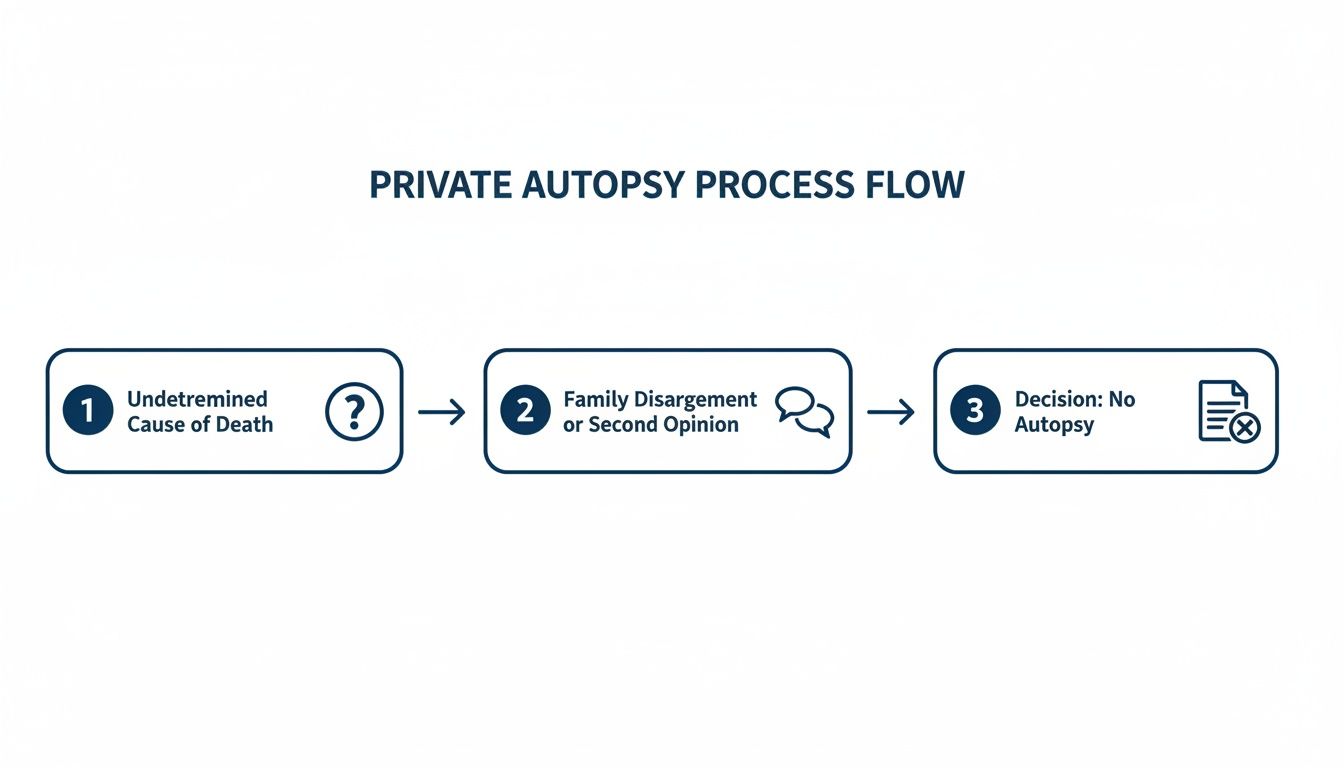
Often, it's that lingering feeling of uncertainty or a direct disagreement with an official finding that leads people to seek the clarity a private autopsy can provide.
Maintaining the Chain of Custody
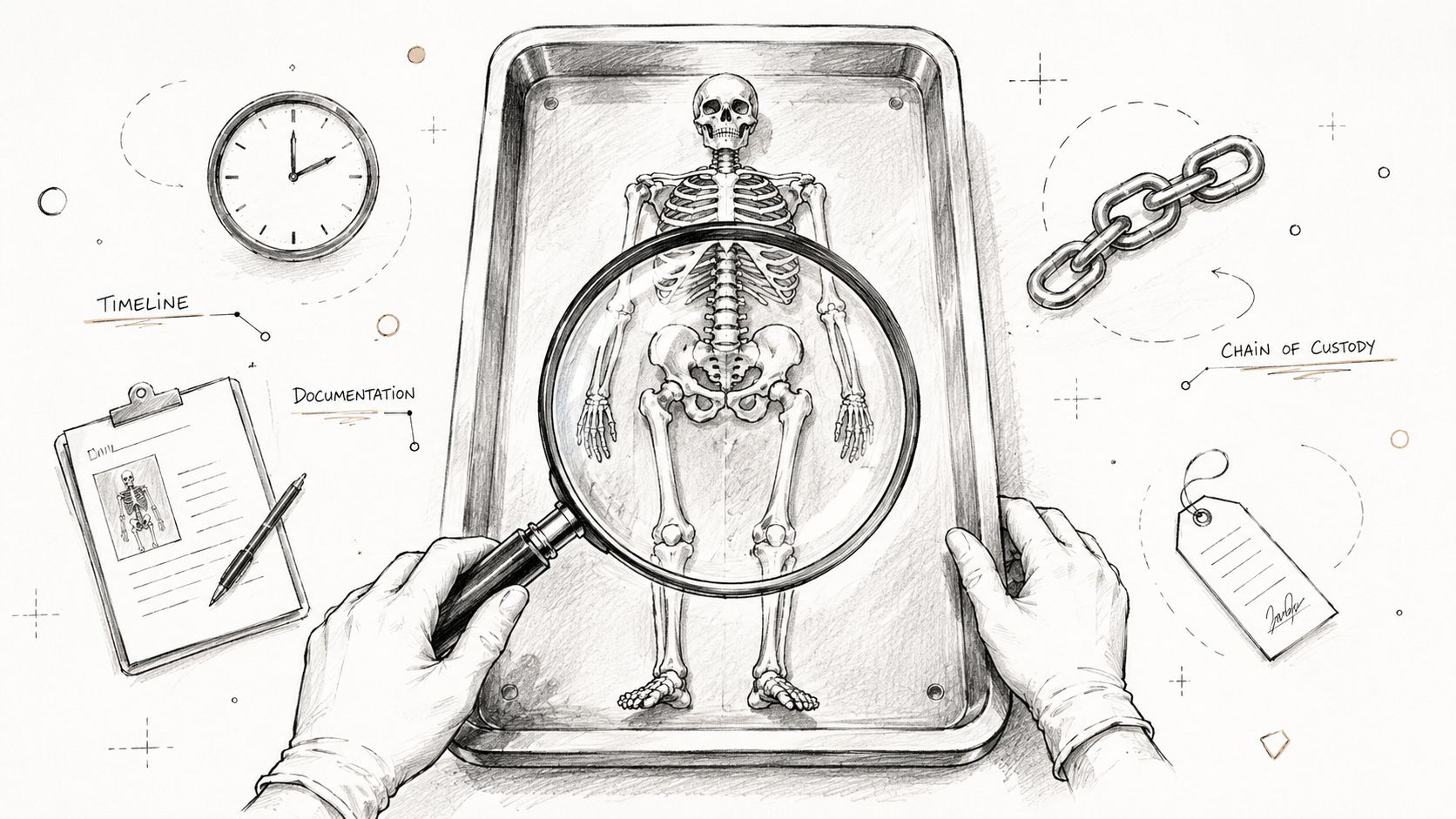
When foul play is on the table, every single piece of evidence must be handled perfectly. We use a strict protocol called chain of custody, which is a legal requirement. It means we document the exact movement and control of every sample we collect, from tissue slides to toxicology specimens. This creates an unbroken, documented trail.
This is critical because it ensures that all evidence is secure and will be admissible in court if a legal case moves forward.
From the moment an examination begins until the final report is signed, every piece of evidence is logged, secured, and tracked. This protocol is non-negotiable. It protects the integrity of our findings and ensures they can stand up to legal scrutiny.
This intense level of detail is a hallmark of a quality forensic examination. The National Association of Medical Examiners (NAME) recommends a workload of no more than 250 autopsies per pathologist per year to maintain these high standards.
With fewer than 700 board-certified forensic pathologists in the entire country, many government offices are simply overwhelmed. As an independent pathologist, I have the ability to give each case the focused time it truly deserves. You can review the professional guidelines yourself to understand why this is so critical for maintaining quality in forensic autopsies.
The Findings and Final Report
After the physical examination is complete and all lab tests are back, I compile all the pieces into a single, comprehensive report. This document lays out every finding in clear medical language and provides a definitive cause and manner of death based on the evidence.
But I don’t just send you a report. I personally walk you and your attorney through the findings. My goal is to explain any complex medical terms, answer all of your questions, and give you the clarity you’ve been searching for.
At Texas Autopsy Services, we are set up to provide this dedicated service across all 254 counties in Texas. While the physical exam is a key part of it, you can get a more detailed look at the entire process by reading our guide on the complete steps of an autopsy. Our entire process is built on a foundation of scientific rigor, full transparency, and deep respect for the families we serve.
Common Questions About Foul Play Investigations
When a loved one’s death doesn’t add up, your head is spinning with questions. It’s a confusing and overwhelming time, and you need straight answers to figure out your next steps. I've worked with countless families and attorneys across Texas, and I find that the same pressing concerns come up again and again.
Here are answers to some of the most common questions I hear. My hope is to give you the clear, practical information you need to move forward.
How much does a private autopsy cost?
The cost is understandably one of the first concerns for most families. A private autopsy is not a one-size-fits-all service. The final price depends on the complexity of the case, the extent of toxicology testing needed, and transportation logistics.
At Texas Autopsy Services, my office provides a clear, all-inclusive quote from the start. There are no hidden fees or surprises. That quote typically covers everything: arranging transportation with the funeral home, the complete forensic exam which I perform myself as a board-certified forensic pathologist, standard toxicology and tissue testing, and the final, detailed report.
It's a significant investment, but for many families and legal teams, the definitive answers it provides are essential for their peace of mind and for building a strong legal case.
Can a body be exhumed for an autopsy?
Yes, a body can be exhumed in Texas for an autopsy, but it is a complex process. It's not something you can decide on your own; it requires a court order. Your attorney will have to file a petition with a judge to make it happen.
To be successful, you need a very good reason, especially if an autopsy wasn't done in the first place. This usually involves presenting new evidence that has surfaced or pointing to strong signs of foul play that were missed. It's an emotionally difficult and time-consuming process, but in some situations, it's the only way to uncover the truth.
The decision to pursue an exhumation is a serious one, but I have seen cases where it was the critical step that finally provided a family with answers and uncovered evidence of a crime that would have otherwise remained buried.
How long does the entire process take?
Families are understandably anxious for answers, and I respect that. While the physical autopsy is completed relatively quickly, the full process takes time because of the meticulous lab work involved.
Here’s a general timeline of what you can expect:
- Physical Examination: Usually done within 1-2 days after your loved one arrives at our facility.
- Preliminary Findings: I can often share initial verbal thoughts with the family or attorney within 24-48 hours after the exam.
- Toxicology and Lab Work: This is the longest phase. Specialized tests can take several weeks to come back from the lab.
- Final Report: Once all data is in, I put together the final, comprehensive report. The entire process, from exam to signed report, typically takes 8 to 12 weeks.
My team and I make it a priority to keep you informed. If there are any delays, you'll be the first to know.
What happens if your findings differ from the official report?
This is often the very reason a family comes to me. If my investigation leads to a different conclusion about the cause or manner of death than what’s on the official death certificate, my report becomes a powerful tool.
With a new, independent report from a board-certified expert, your attorney can take action. They can use it to:
- Challenge the official findings and petition the county to amend the death certificate.
- Push to have a closed police investigation reopened.
- Build the foundation for a wrongful death lawsuit.
- Fight a denied life insurance claim.
An independent report provides the objective, scientific evidence needed to demand accountability. This need for precision is being recognized industry-wide; the market for advanced autopsy equipment is on track to hit about $680 million by 2025. This growth is driven by a simple fact: while hospital autopsies have declined, the need for forensic accuracy in suspicious deaths has only grown. You can learn more about the importance of modern tools in forensic investigations. An independent examination ensures that the sharpest expertise is focused entirely on your case.
When you are dealing with so much doubt, getting clear answers is the first step toward finding justice and peace. If you have other questions or believe an independent autopsy is the right path for your family, please don't hesitate to reach out to my office at Texas Autopsy Services.