April 27, 2026 · Texas Autopsy Services
Forensic Analysis of Medical Records in Autopsies
We explain the forensic analysis of medical records in autopsies, a crucial step for finding answers for families and attorneys in Texas.
On this page
- An Introduction to Medical Record Analysis in Forensic Pathology
- The Paper Trail of Life What Records We Analyze
- From Documents to Diagnosis Core Methods of Forensic Analysis
- The Legal Framework Upholding Integrity and Compliance
- The Integrated Investigation Records Autopsy and Toxicology
- Requesting an Analysis with Texas Autopsy Services
- Frequently Asked Questions About Medical Record Reviews
A family once brought me records after being told a death was straightforward. Buried in the chart was a medication change and a sequence of symptoms that shifted the medical story in an important way.
That’s why the analysis of medical records matters in forensic pathology. In many deaths, the records don’t just support the autopsy. They help define the questions that need to be answered.
- Medical record analysis is a core part of death investigation. It helps reconstruct symptoms, treatment, timing, and prior disease before I reach conclusions about cause and manner of death.
- Records can be wrong or incomplete. More than 1 in 5 patients identify mistakes in their electronic health records, and 42.3% of those patient-identified errors are medically serious, according to patient record accuracy data summarized here.
- A forensic review is different from routine clinical reading. I’m not just asking what treatment was given. I’m asking whether the documents, the body, and the toxicology findings fit together.
- Chronology matters. In legal and forensic review, timelines often clarify whether an event caused harm or whether a preexisting process was already underway.
- Families and attorneys need plain answers. Good review work translates difficult medical language into a factual, defensible narrative.
An Introduction to Medical Record Analysis in Forensic Pathology
A family once sat across from me with a stack of records and one hard question. They had been told the death was explained. After I read the chart closely, the timeline told a more complicated story.
At Texas Autopsy Services, every examination is performed by a board-certified forensic pathologist experienced in medicolegal death investigations. Our work centers on one principle: follow the evidence carefully, explain it plainly, and treat the deceased and their family with respect.
A hospital chart, EMS report, clinic note, or pharmacy history can shift the meaning of a death. A symptom documented two days earlier may support a natural disease process. A medication omission may point to a prescribing issue, a documentation problem, or simple confusion during a chaotic admission. A prior diagnosis may explain a sudden collapse that otherwise looks unexplained.
Clinical review versus forensic review
A treating physician reads the record to guide care. A forensic pathologist reads it to reconstruct events, test competing explanations, and decide whether the documented course fits the physical evidence.
The questions are specific:
- What medical process was underway before death
- When meaningful changes occurred
- Whether the record matches the injuries, disease, or toxicology findings
- Whether a different explanation fits the sequence better
- Whether the documentation is reliable enough to support an opinion
Those distinctions matter in practice. A small charting gap may be manageable in routine care. In a death investigation, the same gap can affect a cause-of-death opinion, a malpractice review, an insurance dispute, or a family’s confidence that they have been told the truth.
Practical rule: The discharge summary is rarely the full story. Time-stamped medication records, nursing notes, and consultant entries often carry the details that matter most.
Why independent review matters
Independent review matters because records are created by many people, in different settings, under time pressure. They are useful. They are also imperfect.
In my reports, I do not assume that one note settles the issue. I compare the emergency record to the inpatient chart, the medication administration record to the pharmacy list, and the documented history to the autopsy findings. If the pieces fit, that strengthens the opinion. If they do not, the inconsistency needs to be identified and explained rather than ignored.
This is often where families and attorneys benefit from a formal medical records review for forensic cases. The goal is not to create suspicion where none exists. The goal is to determine whether the written medical story is complete, accurate, and consistent with the death investigation.
What families often need most
Grieving families usually want a clear answer to a plain question: what happened, and does the record support that explanation?
Attorneys need the same truth presented in a different form. They need chronology, citations, medical reasoning, and careful limits on what can and cannot be concluded. In both settings, the standard is the same. Read closely. Verify dates and times. Separate fact from assumption. State opinions with the degree of certainty the evidence allows.
The Paper Trail of Life What Records We Analyze
When I perform an analysis of medical records, I rarely rely on a single chart. A death investigation usually involves records from multiple settings collected over very different periods of time.
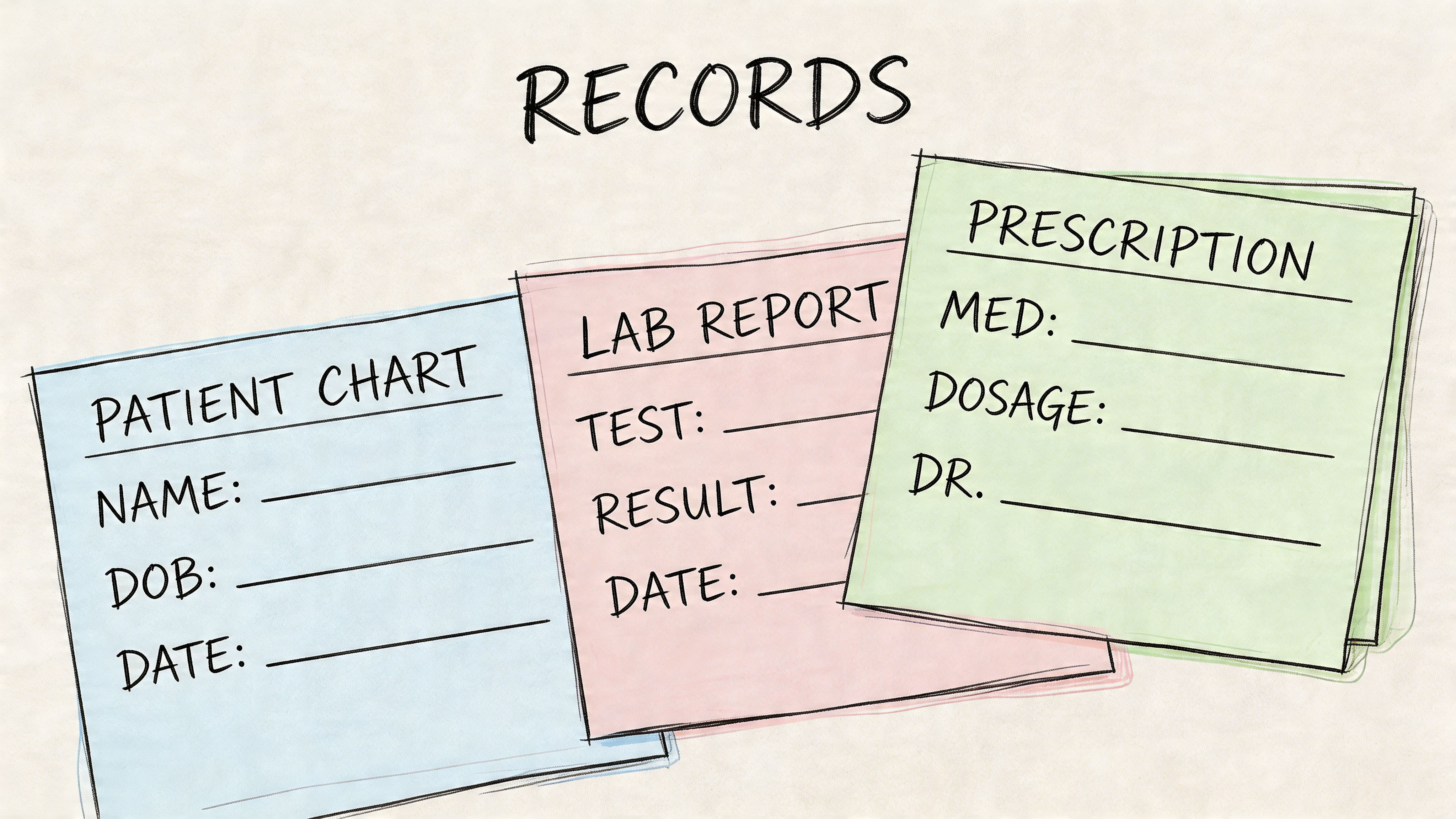
The historical value of this work is well established. The National Hospital Discharge Survey, using medical records from 1990 to 2010, helped track disease prevalence and healthcare use, showing how record analysis has long supported public health policy, as outlined by the National Library of Medicine educational summary.
Core hospital records
Hospital charts usually form the spine of the review. I pay close attention to several parts of the file because each serves a different purpose.
- Admission and discharge summaries help identify the stated reason for care, major diagnoses, and the official clinical framing.
- History and physical notes often show what the patient reported at the start and what the clinician believed was most important.
- Progress notes document changes over time. These notes can reveal whether a patient improved, declined, or developed new symptoms.
- Nursing notes are often undervalued. They may contain bedside observations, symptom complaints, changes in mental status, falls, medication responses, or refusals of care.
- Medication administration records show what was given, when it was given, and sometimes what was held or delayed.
- Operative and procedure reports can clarify exactly what was done, by whom, and under what circumstances.
Records outside the hospital
Some of the most useful records come from outside the final hospitalization.
A typical file may include:
| Record type | Why it matters in forensic review |
|---|---|
| EMS run sheets | Establish the earliest observed condition, scene details, and prehospital treatment |
| Outpatient clinic notes | Show chronic illness, recent complaints, referrals, and missed warning signs |
| Pharmacy records | Confirm what was dispensed and when prescriptions changed |
| Imaging reports | Provide objective findings that can support or contradict later summaries |
| Laboratory data | Reveal trends that may matter more than any single abnormal value |
| Prior hospitalizations | Show preexisting disease, earlier complications, and patterns of decline |
A sudden death may not be understandable unless I can see months or years of prior records. That’s especially true in cases involving heart disease, seizure disorders, substance exposure, pregnancy-related complications, or allegations of delayed diagnosis.
Why completeness matters more than volume
A large chart isn’t always a complete chart. I often see records with missing pages, absent medication logs, or references to outside specialists whose records were never included.
That’s why organization comes first. For families or lawyers trying to understand what a formal review involves, this overview of medical records reviews reflects the practical reality that the work begins with finding all the relevant sources, not just reading the packet already in hand.
A one-page summary may be accurate, incomplete, or both. The problem is that you often can’t tell which one it is until you compare it against the rest of the file.
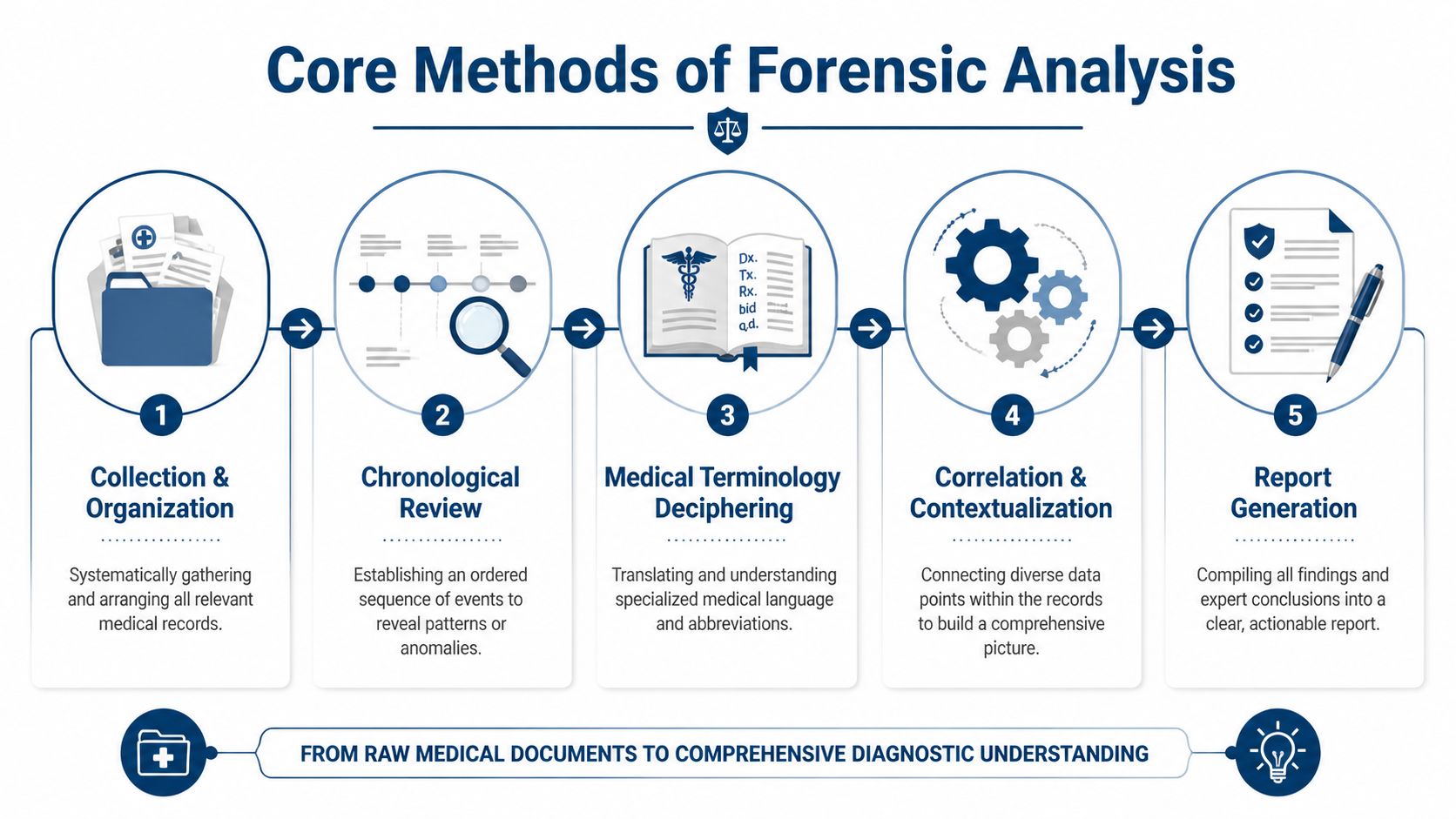
From Documents to Diagnosis Core Methods of Forensic Analysis
Collecting the records is only the starting point. The actual analysis of medical records requires method, discipline, and a willingness to slow down.
Timeline reconstruction
The first thing I build is a chronology. Not a rough sequence. A real timeline.
That means identifying dates, times, providers, symptoms, tests, procedures, medication changes, and turning points. If the records are long, I index them by provider and date so every event can be traced back to a page.
The reason is simple. Causation depends on order. If chest pain began before a documented injury, that matters. If neurological decline started after a procedure, that matters too. According to this discussion of how to review medical records, building timelines helps strengthen or weaken causation claims in over 70% of negligence cases by clarifying symptom, diagnosis, treatment, and outcome pathways.
Gap analysis and inconsistency review
I spend a great deal of time looking for what isn’t there.
A complete-looking chart may still omit outside imaging, pharmacy fill history, prior admissions, or consent documentation. Even when the file is technically complete, the narrative may conflict internally. A nursing note may describe distress while a physician note describes stability. A lab result may support sepsis while the assessment minimizes infection. A family report may mention repeated falls that never appear in the clinic notes.
Here are common red flags:
- Missing intervals where major clinical changes seem to occur without documentation
- Conflicting descriptions of symptoms, timing, or mental status
- Unexplained treatment shifts such as a medication stop without rationale
- Imported chart text that repeats old information after the condition changed
- Outside references to records that were never obtained
These inconsistencies don’t automatically prove negligence or error. They do tell me where the record needs closer scrutiny.
Sometimes the most important fact in a case is not a positive finding. It is the absence of documentation where careful documentation should exist.
Medication and toxicology correlation
Medication review is one of the most misunderstood parts of forensic work. A prescription list is not proof that a medication was taken. A toxicology result is not meaningful unless it’s interpreted in clinical context.
I compare the prescribed medications, dose changes, refill history, administration records, and charted effects against toxicology findings and autopsy evidence. If a sedating drug is documented, I consider whether the levels and circumstances are consistent with therapeutic use, overuse, accumulation, interaction, or nonuse. If the chart says a critical medication was started, I look for evidence that it was given and whether the patient responded.
This comparison becomes especially important in deaths involving pain treatment, psychiatric medications, seizure medication, insulin, anticoagulants, and substance exposure.
Terminology, abbreviations, and machine-generated records
Modern medical records can be harder to interpret than older handwritten charts. Many systems copy forward text, auto-populate sections, and generate long note templates that bury the clinically important details.
That’s one reason some legal and medical teams use tools for automated document processing to extract structured information from large files before a physician completes the final interpretation. Used carefully, these tools can help with sorting, indexing, and locating repeated data points. They do not replace medical judgment.
Turning evidence into a defensible opinion
At the end of the review, the question isn’t whether I can write a summary. The question is whether the summary is reliable.
A defensible review usually includes:
- A dated chronology with source references
- An index of providers and records received
- A list of missing or disputed materials
- A medical interpretation tied directly to the documents
- Clear limits on what can and cannot be concluded
That structure helps families understand the case and helps attorneys test the strength of their arguments without overstating the evidence.
The Legal Framework Upholding Integrity and Compliance
Medical record review in a death investigation has to be more than careful. It has to be lawful, documented, and defensible.
In Texas, that means I pay close attention to who is authorized to release records, who is authorized to request them, how copies are handled, and how opinions are formed from the material received. Families deserve privacy and dignity. Attorneys need a record trail they can trust.
Chain of custody for records
Chain of custody means maintaining a documented path showing where evidence came from, who handled it, and whether it remained intact. People often associate that term with blood samples or physical evidence from a scene, but the same principle matters for records.
For a record review, that usually includes:
- Documenting the source of each file or packet
- Tracking receipt dates and whether the production appeared complete
- Keeping records in their original form when possible
- Separating supplemental productions so later additions are identifiable
- Preserving page references so every conclusion can be traced back
That level of tracking becomes important when there are disputes about missing pages, altered scans, late-produced materials, or differences between what one party received and what another party reviewed.
Privacy after death
Families often ask whether privacy protections disappear after death. The short answer is no. Postmortem records still require careful handling, and access should be grounded in proper legal authority.
The specific path can depend on the type of record, the identity of the requester, and whether the matter involves litigation, next-of-kin authorization, or official investigative authority. For small organizations trying to understand the operational side of privacy rules, a plain-language practical guide to HIPAA compliance can be a useful starting point, though case-specific legal questions should be directed to counsel.
Records should be requested narrowly, stored carefully, and discussed only with people who have a legitimate role in the case.
Texas standards and medical-legal use
My work also has to fit the legal framework that governs autopsies, disposition of remains, and related postmortem procedures in Texas, including Texas Health and Safety Code Chapters 711 and 716, along with other applicable rules. Those laws matter because a technically sound opinion can still become difficult to use if the process behind it was sloppy.
For attorneys who need a more litigation-focused view of what makes a review usable, this discussion of reviewing medical records for attorneys reflects the practical point that medical facts and legal process have to line up.
Plain-language definitions that matter
A few terms often get blurred together:
| Term | Plain-language meaning |
|---|---|
| Cause of death | The disease or injury that produced death |
| Manner of death | The classification of how the death occurred, such as natural, accident, suicide, homicide, or undetermined |
| Chain of custody | The documented handling history of evidence, including records and specimens |
Those definitions sound simple, but in practice they depend on disciplined review. That is especially true when records are fragmented or disputed.
The Integrated Investigation Records Autopsy and Toxicology
I have had families bring me a hospital chart that seemed to answer everything, only for the autopsy to raise harder questions. I have also seen the reverse. An autopsy may point strongly in one direction until the records and toxicology show a different sequence of events. In death investigation, those pieces have to be read together if the goal is an opinion that can withstand medical and legal scrutiny.
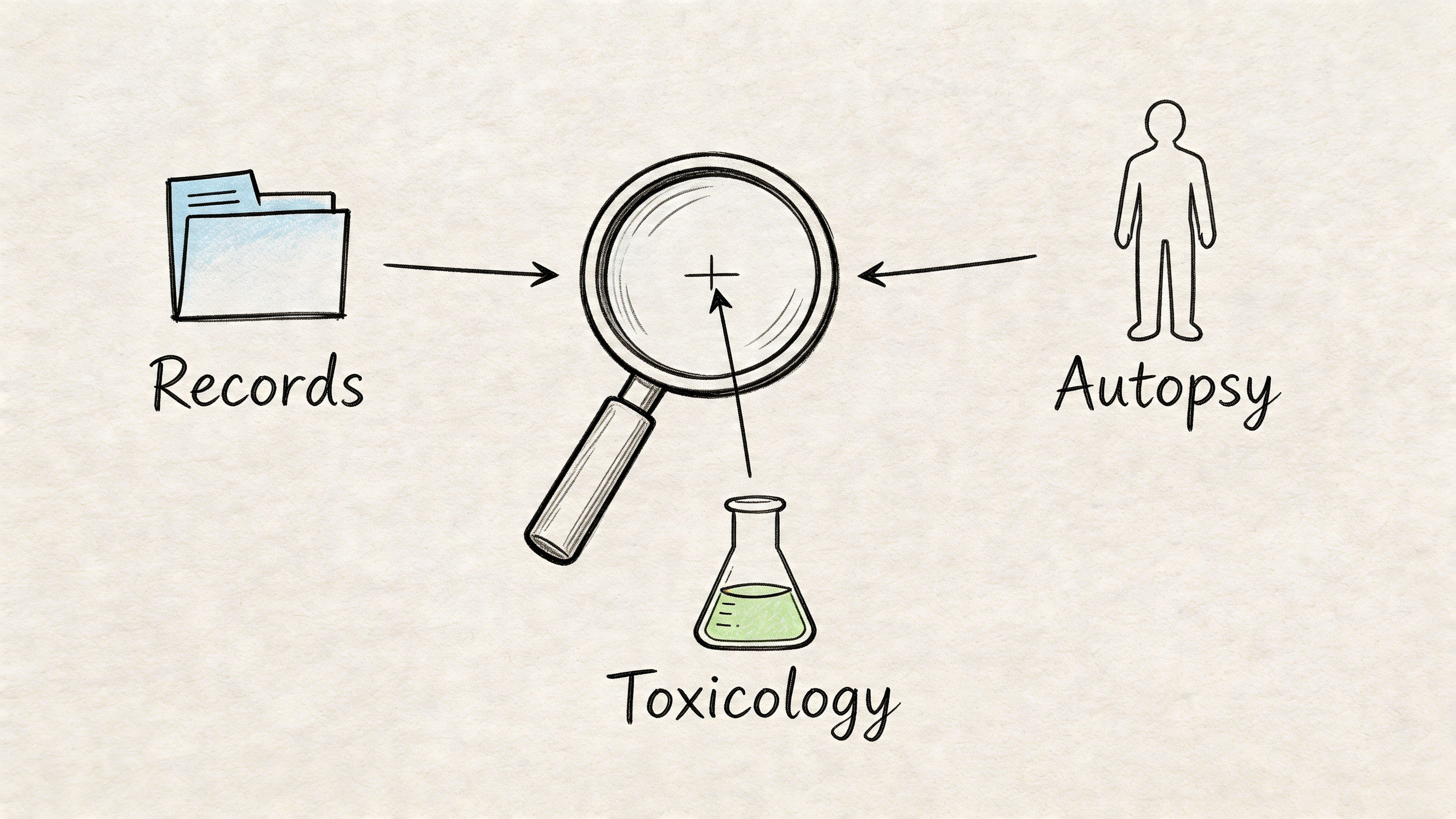
Records document reported symptoms, prior diagnoses, treatment decisions, and timing. The autopsy documents what the body shows after death. Toxicology identifies drugs, alcohol, and other substances that may have played a role. Each source has limits on its own. Together, they often clarify whether a death was driven by natural disease, medication effect, trauma, delayed treatment, or some combination of factors.
When one finding changes the interpretation of another
A chart may describe chest pain, shortness of breath, and a recent medication change. At autopsy, I may find severe coronary artery disease, pneumonia, or an enlarged heart. Toxicology may then show whether a prescribed drug was present at an expected level, missing despite reported use, or present in a range that raises concern for interaction, accumulation, or impaired clearance.
That process also works in reverse.
If I find aspiration, pulmonary edema, needle marks, healing injuries, or advanced organ disease, I go back to the records with narrower questions. Was there a recent fall. Was a sedating medication added. Was there a seizure history, a substance use history, or a missed opportunity to recognize deterioration. Those are not academic questions. They affect cause of death analysis, manner of death classification, and, in some cases, whether a family or attorney should seek a second opinion.
Standard-of-care questions require restraint
Families often ask whether the records prove malpractice. Attorneys may ask the same question in different terms. The honest answer is that records, autopsy findings, and toxicology can support or weaken that concern, but they do not convert every inconsistency into negligence.
A discrepancy is a signal, not a verdict.
In practice, I look for whether the clinical record fits the pathology, whether the treatment timeline makes physiologic sense, and whether toxicology supports the reported history. Sometimes the concern is well founded. Sometimes the care was reasonable, but the disease was aggressive. Sometimes the available material is incomplete, and saying "I cannot answer that reliably yet" is the most responsible opinion.
Toxicology only matters in context
Toxicology is one of the most misunderstood parts of a forensic review. A positive result does not automatically mean causation. A negative result does not automatically clear a drug or substance from consideration.
Interpretation depends on dose, timing, metabolism, tolerance, organ function, route of administration, postmortem redistribution, and the clinical history. I read toxicology beside medication administration records, prescribing history, EMS reports, and the autopsy findings. Families who want a clearer explanation of how these results are interpreted can review this discussion of an autopsy toxicology report.
A short video can also help people see how the different parts of an investigation fit together.
Handling records and results carefully
Integrated review brings together records, specimen findings, imaging, and consultant opinions. That increases the risk of privacy mistakes if material is shared casually or stored poorly. For organizations building internal safeguards, a comprehensive HIPAA risk assessment can help identify where privacy failures are most likely to occur.
What integration looks like in real casework
The work usually follows a repeating sequence:
- Records raise a specific question about symptoms, treatment, or prior disease
- Autopsy findings test that question against physical evidence
- Toxicology adds chemical and pharmacologic context
- The records are reviewed again to see whether the full picture remains consistent
That repetition matters. In my experience as a forensic pathologist in Texas, some of the most important opinions come from going back to the chart after the body and laboratory findings have narrowed the issue. That is often where a private autopsy review or second-opinion consultation becomes useful. The purpose is not to produce more paperwork. The purpose is to determine whether the medical evidence is consistent with the story told about the death.
Requesting an Analysis with Texas Autopsy Services
When families or attorneys seek a record review after a death, the first challenge is usually practical. Who can request it. What do you need. How do the records get gathered.
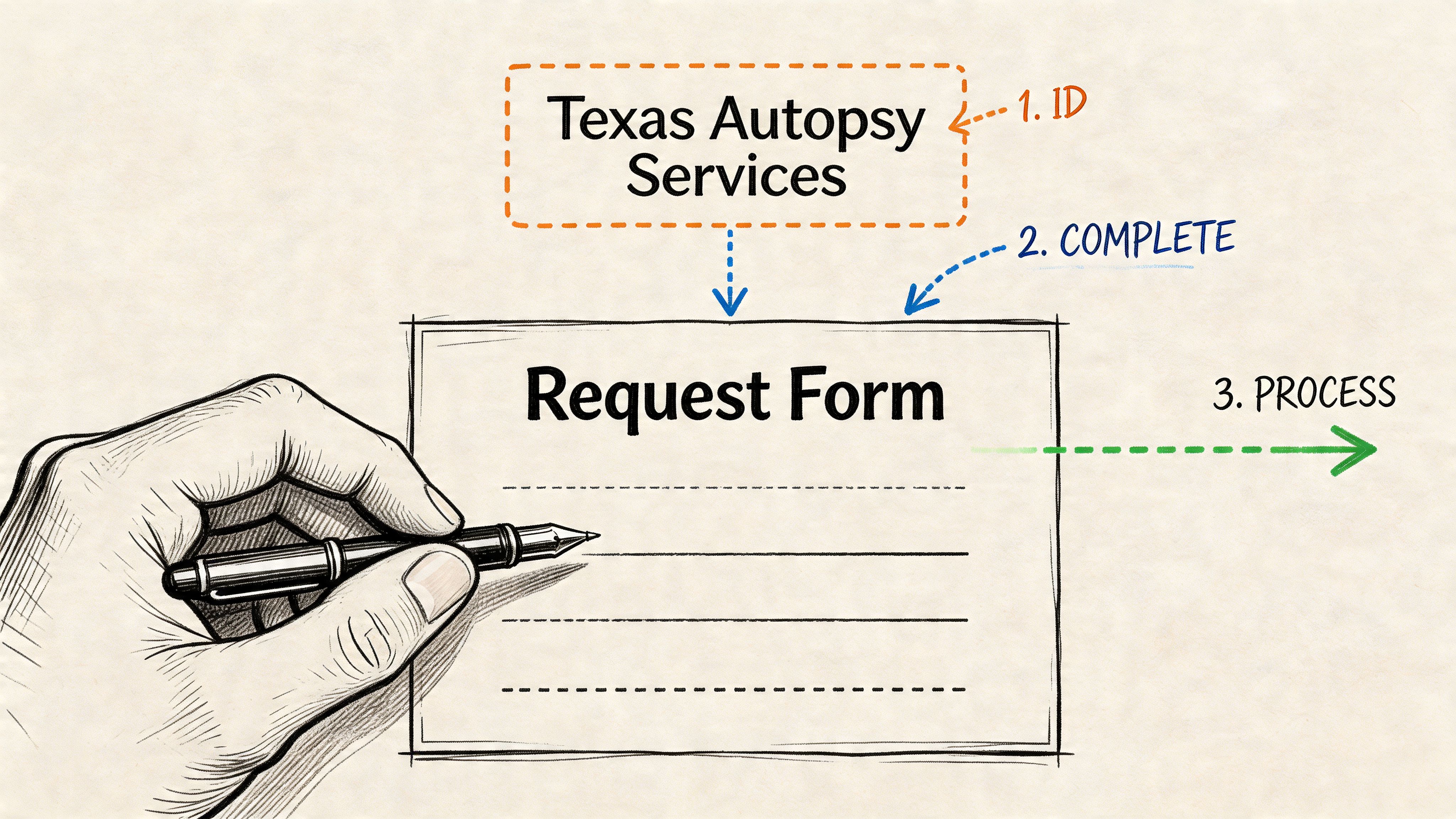
The process is rarely difficult, but it does require clear authority and complete information.
Who can start the process
In most situations, the request comes from one of these groups:
- Next of kin or authorized family representatives
- Attorneys with appropriate authorization
- Healthcare professionals or agencies seeking forensic consultation
- County officials needing postmortem services within their jurisdiction
The key issue is lawful access. Before records are requested or reviewed, the authorization pathway has to be clear.
What information helps at the start
A review moves faster when the initial request includes a basic case outline. That doesn’t need to be lengthy. It needs to be accurate.
Helpful starting information includes:
| Needed item | Why it matters |
|---|---|
| Decedent’s identifying information | Prevents record mismatch and duplicate retrieval errors |
| Date and place of death | Helps define the relevant record window |
| Known hospitals, clinics, or physicians | Creates the provider list |
| Reason for concern | Focuses the review on unanswered medical or legal questions |
| Existing reports | Allows comparison with prior conclusions if one already exists |
If a family has only partial records, that’s still enough to begin the intake conversation. In many cases, the first step is identifying what is missing.
Review alone or as part of a private autopsy
Sometimes the analysis of medical records is requested as a standalone consultation. In other cases, it is part of a broader private autopsy services in Texas request.
A standalone review may be appropriate when there has already been an autopsy and the question is whether the prior conclusion fits the full medical history. A combined approach may be more appropriate when there has been no autopsy, when the records are complex, or when toxicology and physical findings need to be interpreted together.
Other practical pathways
Some requests come from public entities rather than families. For county-level needs, the service model differs from a private family consultation, and that work is addressed through county forensic autopsy services. In Central Texas and nearby areas, logistics may also involve the Waterloo Mortuary pathology partnership, depending on the case circumstances.
Bring what you have. Missing records can often be identified early, but they can’t be identified if no one starts the process.
What to expect from the review
I don’t promise an outcome, and I don’t promise that every case will produce a neat answer. Some records clarify the death. Some expose uncertainty. Some show that a prior conclusion was sound.
What families and attorneys should expect is a disciplined review, plain communication, and a clear statement of what the evidence supports. Timing depends on the volume of records, whether outside providers are slow to respond, whether toxicology is involved, and whether the matter requires a written report or expert consultation.
Frequently Asked Questions About Medical Record Reviews
Can you still do a review if the records are incomplete
Yes. Incomplete records are common.
A partial file can still be useful if it helps identify the treatment timeline, the likely missing providers, and the key questions that need follow-up. In practice, a good review often begins by listing what is absent, not just by summarizing what is present. Missing ICU notes, outside imaging, pharmacy records, or EMS reports can materially affect interpretation.
Can a medical record be corrected after someone has died
Sometimes, but the process is not simple.
General medical record correction requests are made by about 6.5% of living patients, yet there is very little formal guidance for families seeking amendments to autopsy reports or other postmortem records, as discussed in this PMC article on patient access and correction issues. In practice, families often need help identifying which document is wrong, who controls it, and what supporting evidence exists for a requested correction.
How do you handle handwritten or hard-to-read notes
Carefully, and with context.
I compare difficult handwriting against surrounding entries, medication records, timestamps, lab sequences, and other provider notes. A single illegible word shouldn’t control a major conclusion if the broader chart clarifies the event. If a critical passage remains uncertain, I say so plainly rather than forcing an interpretation.
Is a medical record review alone enough to determine cause of death
Sometimes, but not always.
If the records clearly document a natural disease process and the question is narrow, the records may provide enough information for a medical opinion. In other cases, records alone are not enough. Sudden unexpected death, trauma, possible intoxication, unexplained collapse, and disputed care often require correlation with autopsy findings, scene information, or toxicology.
What do attorneys usually need from a forensic record review
They usually need more than a summary.
The useful work product is a medically accurate chronology, source-linked findings, identified gaps, and a clear explanation of how the records affect causation, damages, or standard-of-care questions. A defensible review should help an attorney see both the strengths and limits of the case.
If you need help understanding a death, a disputed diagnosis, or a prior autopsy conclusion, contact Texas Autopsy Services. I approach these reviews with the same priorities in every case: accuracy, clarity, lawful process, and respect for the person who died and the people left to seek answers.