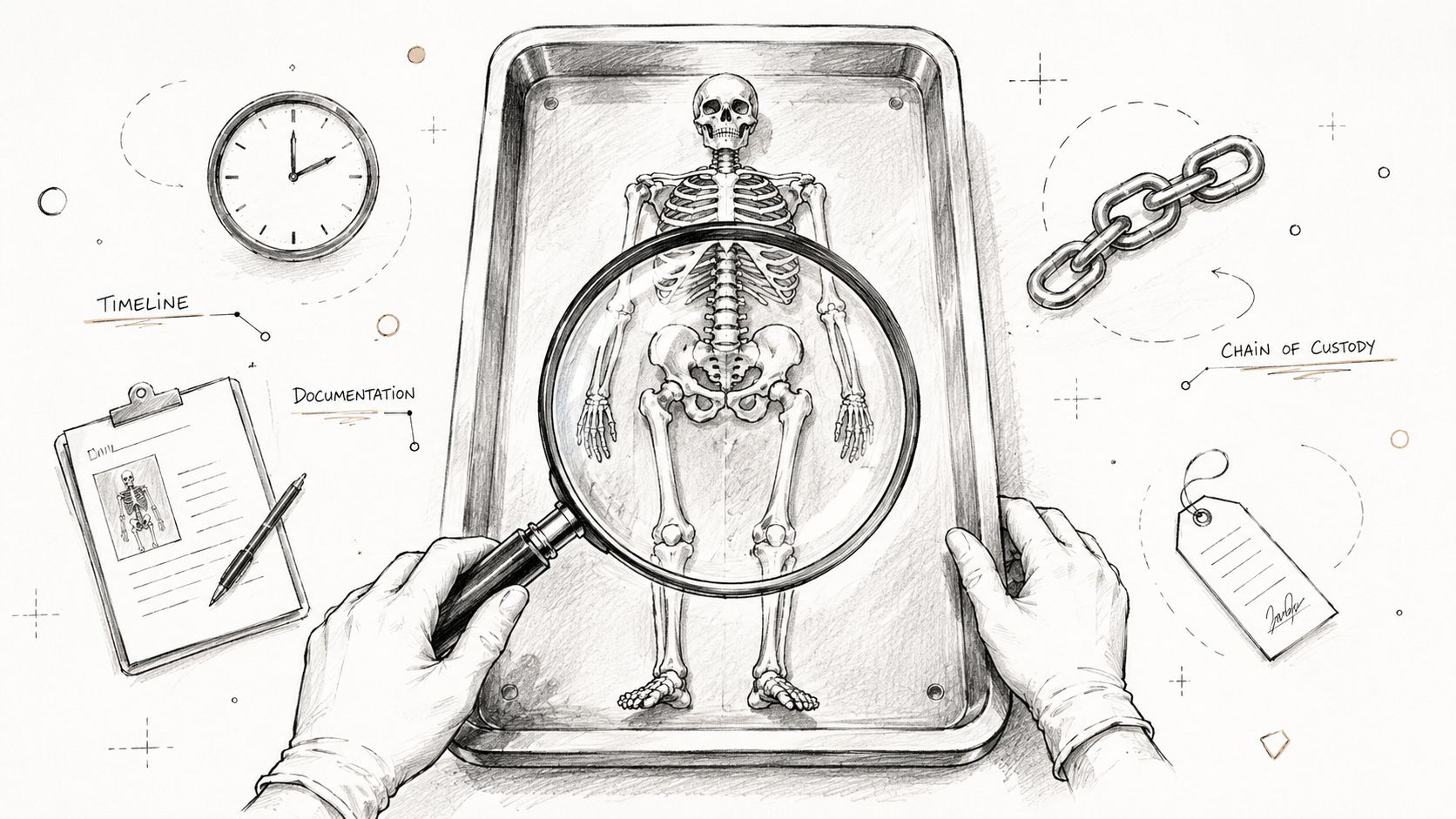
April 12, 2026 · Texas Autopsy Services
Death From Falling Down Stairs An Expert Explainer
Understand the forensic complexities of a death from falling down stairs. A pathologist explains injury patterns, autopsy findings, and next steps for families.
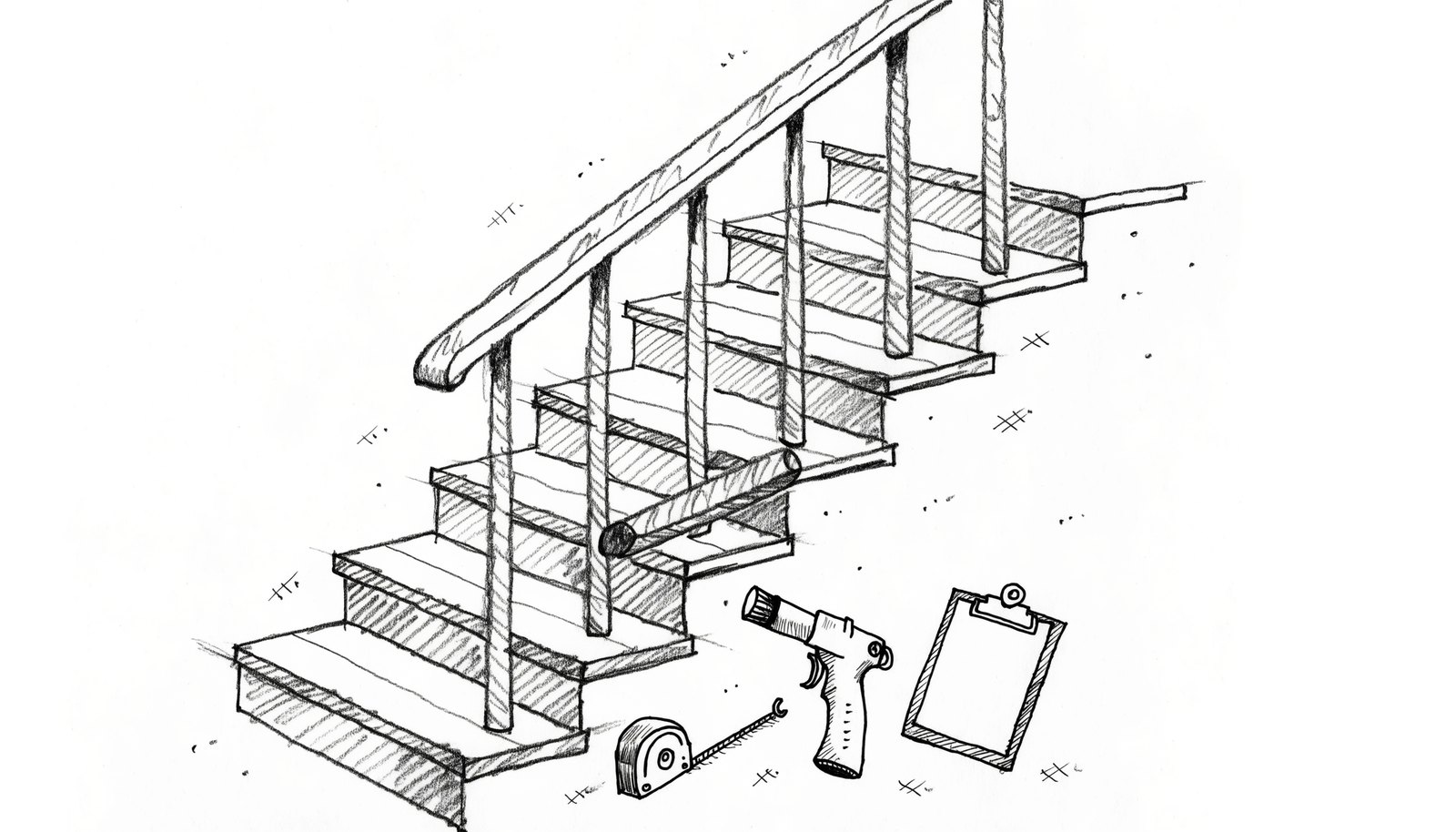
On this page
A husband is found at the bottom of the stairs before sunrise. There is blood on the trim, a scalp wound, and a history of heart disease no one has mentioned to the investigator yet. By afternoon, the family has heard a simple explanation. He fell. In forensic practice, that may be true and still incomplete.
TL;DR
- Fatal stair falls often involve head injury, but the head injury may be only part of the story. The injury that caused death can be clear while the reason the person fell remains uncertain.
- The central forensic question has two parts. What injuries caused death, and what caused the fall itself. A collapse from an arrhythmia, stroke, seizure, intoxication, or another medical event can precede the stair fall.
- An “accident” classification does not answer every medically important question. It is a manner of death label. Families and attorneys usually need a more specific explanation of mechanism, timing, and contributing conditions.
- Scene findings and injury patterns must be interpreted together. A stair fall, an assault, and a natural collapse followed by impact can overlap in appearance, especially when the review is limited.
- Timing affects options. If an independent review or private autopsy may be needed, early action helps preserve records, photographs, toxicology, and body examination findings.
Families usually contact me after the first phone calls have been made and before anyone has offered a clear medical explanation. They have one sentence from the scene or the hospital, but they do not yet have an answer they can rely on. “She fell down the stairs” describes an event. It does not tell them whether she slipped, fainted, seized, had a cardiac event, or was injured before the fall began.
That distinction carries real weight. The cause of death may be blunt force injuries from the fall. The cause of the fall may be a heart rhythm disturbance, intracranial hemorrhage, intoxication, low blood sugar, or another condition that changes how the death should be understood. In some cases, that distinction affects insurance coverage, civil litigation, workplace claims, and whether the family accepts the official conclusion.
The terminology also causes confusion. If you need a plain-language explanation of how certifiers use these terms, this guide to cause of death versus manner of death lays out the difference.
My job in cases like this is to separate sequence from assumption. Did a medical event lead to the fall. Did the fall produce injuries severe enough to explain death. Do the injuries match the reported stairway mechanics. Those are different questions, and they deserve separate answers.
When a Simple Fall Raises Difficult Questions
I’ve had many conversations with families who describe nearly the same moment. A parent, spouse, or sibling is found at the bottom of the stairs. There may be blood on a landing, bruising to the head, or a story from a witness that seems incomplete. The scene looks simple at first glance. The death does not.
The official answer may be too broad
A stair fall death can be classified as accidental and still leave major uncertainties. “Accident” is a manner of death. It describes the circumstances in broad terms. It doesn’t explain whether a medical event triggered the fall, whether intoxication contributed, or whether the injuries fit the history being told.
That distinction is often where families get stuck. They aren’t asking only for a label. They want a medically grounded explanation.
For readers who need a plain-language foundation, I’ve explained the difference between these terms in more detail in this discussion of manner and cause of death.
A common real-world pattern
The call often starts with a sentence like this: “We were told he fell, but that’s not enough for us.” That concern is reasonable.
Sometimes the person had chest pain earlier in the day. Sometimes there was known heart disease. Sometimes there were medications nearby. In other cases, the family is troubled by the scene itself. A bruise appears to be in the wrong place. The history changes. A witness account sounds rehearsed or vague.
A stair fall can be a tragic accident. It can also be the final event in a larger medical or forensic story.
Why this topic deserves careful review
Stairs are a common part of daily life, which makes these deaths easy to underestimate. But the injuries can be severe, fast, and medically complex. Even before the legal questions begin, there are often several separate medical issues to sort out:
- What injury caused death
- Whether the fall was triggered by disease
- Whether alcohol, drugs, or medication played a role
- Whether the pattern of injuries matches the reported event
For families, that uncertainty can intensify grief. For attorneys, it can shape liability, negligence, or criminal defense. My role as a forensic pathologist is to evaluate the body, the records, and the surrounding facts without advocacy for either side. The work is not to confirm a theory. It is to test one.
How a Fall Down Stairs Becomes Fatal
A fatal stair fall often begins with a question that sounds simple and turns out not to be simple at all. Did the person die because they fell, or did they fall because something else happened first?
That distinction matters in forensic practice. A heart rhythm problem, seizure, stroke, intoxication, or sudden fainting episode may cause the fall. The injuries from the fall may still be the cause of death. Families are often told only one part of that story, and that can leave major medical and legal questions unresolved.
A staircase also creates a different injury event than a collapse onto a level floor. The body may rotate, strike multiple surfaces, and lose any realistic chance to protect the head or neck after the first impact. In some cases, the lethal injury occurs almost immediately, before the person reaches the bottom landing.
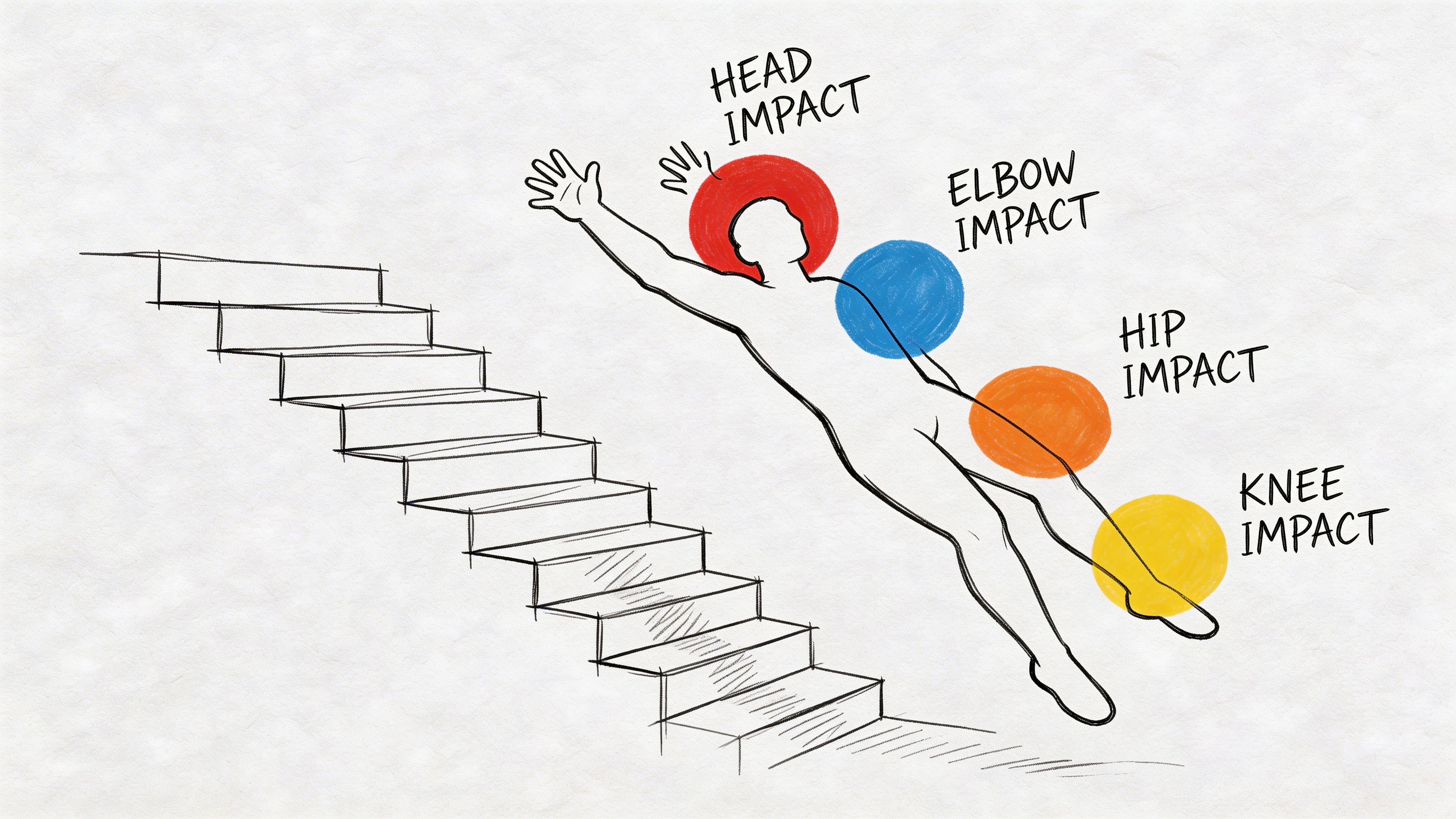
I’ve written separately about how forensic medicine distinguishes an injury from the underlying mechanism of death in an autopsy finding. Stair falls are a good example of why that distinction is useful. “Fell down stairs” describes an event. It does not explain which injury was fatal, how quickly death occurred, or what set the fall in motion.
What the body is exposed to
The injuries depend on direction of travel, body position, speed, stair geometry, railing placement, and the surface struck first. A short staircase with a hard landing can be deadlier than a longer fall with interrupted impacts.
Common fatal patterns include:
- Head injuries such as skull fractures, bleeding around the brain, and bruising of brain tissue
- Neck injuries when the head and torso move in opposite directions with force
- Chest and torso trauma from contact with steps, walls, railings, or a landing surface
- Extremity injuries from attempts to brace, grab, or twist during descent
One point is easy to miss. External injuries may look modest while the internal injuries are catastrophic.
Why head trauma often determines the outcome
The brain tolerates blunt impact poorly. A strike to the back or side of the head can produce rapid bleeding, swelling, loss of consciousness, and loss of airway protection. In the most severe cases, survival is unlikely even with immediate emergency care.
From a forensic standpoint, the main task is specificity. “Died from the fall” is too broad to be useful. The medical cause may be subdural hemorrhage, subarachnoid hemorrhage, cerebral contusions, diffuse brain injury, high cervical spinal trauma, or a combination of injuries.
That level of detail matters. If a person suffered a fatal head injury after a sudden cardiac event caused the initial collapse, the cause of the fall and the cause of death are related but not identical. That difference can affect insurance disputes, premises liability claims, criminal allegations, and a family’s understanding of what happened.
Practical rule: In a stair fall death, visible bruises and lacerations rarely tell the whole story. The fatal injury is often inside the skull or upper neck.
Stair falls are common, which can lead investigators, witnesses, and even institutions to treat them as routine. They are not routine for the family living with the unanswered questions, and they should not be routine in the medical analysis either.
The Autopsy A Search for Objective Truth
When I examine a death from falling down stairs, I’m not looking only for trauma. I’m looking for a complete explanation. That requires careful definitions and a disciplined process.
Cause of death and manner of death
Cause of death is the disease or injury that led to death. In a stair fall case, that might be a subarachnoid hemorrhage, a skull fracture, or blunt force injuries of the head.
Manner of death is the broader classification of how the death occurred. The standard categories include accident, natural, homicide, suicide, and undetermined.
Those two conclusions are related, but they are not the same. A person may die from blunt head trauma, yet the manner could depend on whether they slipped, were pushed, or suffered a medical collapse first.
What a forensic autopsy examines
The work starts with the body, but it doesn’t end there. A proper review usually includes several layers.
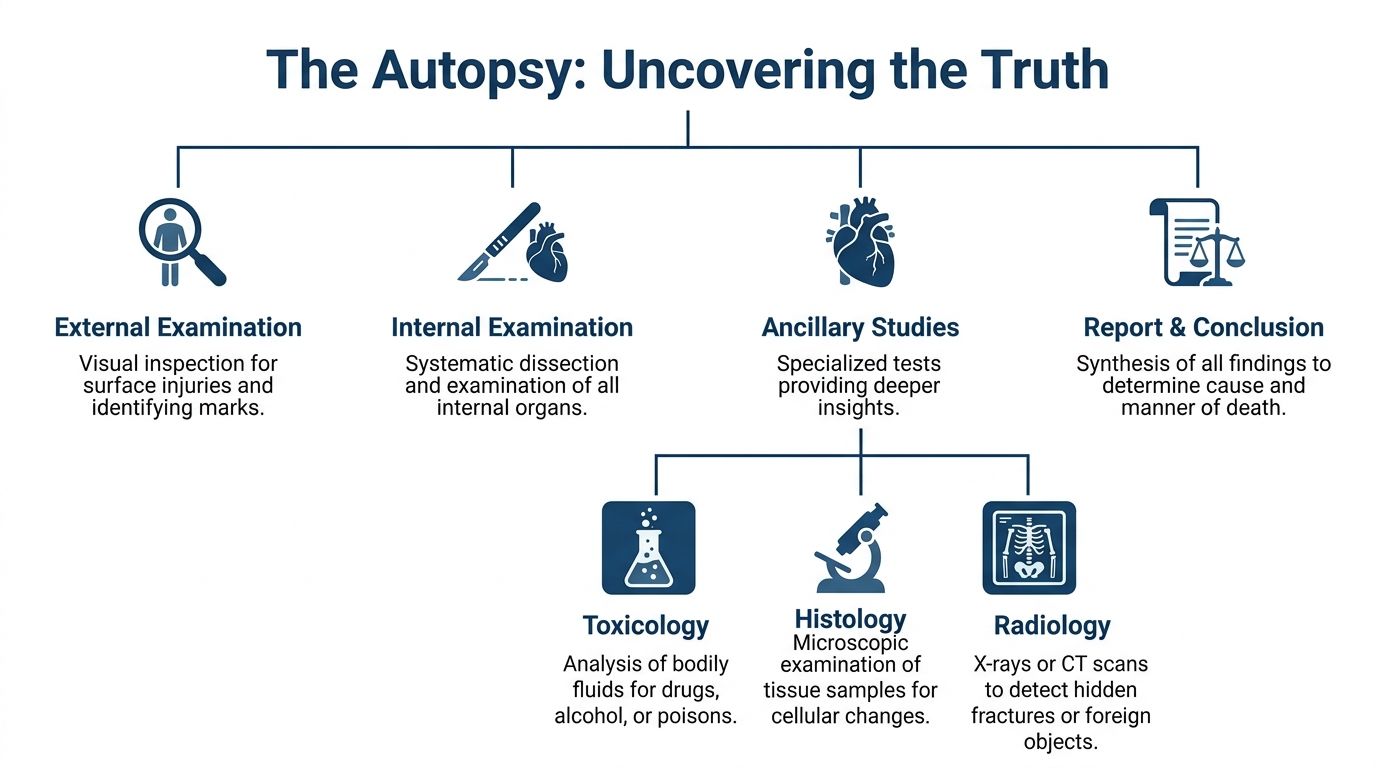
External findings
I begin by documenting visible injuries, clothing, medical devices, and identifying features. Pattern matters. So does location.
In fatal stair falls, a retrospective analysis of 159 confirmed cases found that traumatic head injury was the predominant cause of death, with skull fractures most often involving the temporal, parietal, and occipital bones, along with subarachnoid hemorrhages and brain contusions as major fatal mechanisms (retrospective analysis of fatal stair falls).
The same study discusses the hat brim rule, which suggests that injuries above the hat brim line are characteristic of downward stair falls. It is not a magic answer, but it is a useful forensic observation when considered with the rest of the case.
A practical explainer of the steps involved is available in this overview of the procedure of an autopsy.
Internal examination
The internal exam evaluates the skull, brain, neck structures, chest organs, abdominal organs, and skeletal injuries. This examination often clarifies the distinction between “fall caused death” and “medical event caused fall.”
I’m looking for evidence of disease that could explain a collapse before the descent. Depending on the history, that may include severe coronary artery disease, an enlarged heart, hemorrhage in the brain unrelated to impact, pulmonary embolic disease, or other natural conditions.
A body can show both major trauma and serious natural disease. The job is to decide which came first and which findings were terminal.
Here is a helpful visual summary of how those pieces fit together:
Ancillary studies
A full answer often depends on tests beyond gross examination.
- Toxicology helps identify alcohol, prescription medication, illicit drugs, or toxic exposures that may have impaired balance or judgment.
- Histology examines tissue under the microscope and can reveal disease processes not obvious to the naked eye.
- Radiology can document fractures, foreign objects, and injury relationships in ways that are sometimes easier to interpret than dissection alone.
Why pre-existing disease matters so much
One of the most overlooked issues in stair fall deaths is causal sequence. The fatal injury may be obvious, but the trigger for the fall may not be.
A person can die from cranio-cerebral trauma after falling, yet the fall itself may have been caused by a heart attack, pulmonary embolism, seizure, stroke, or another event. Without a full autopsy, those possibilities can be missed or left unresolved.
The hardest question is often not “What injury killed this person?” It is “Why did this person go down the stairs in the first place?”
That question matters medically and legally. It can affect premises claims, criminal allegations, insurance disputes, and whether a family feels they’ve been given the truth.
Accident or Something Else Uncovering the Full Story
A fatal stair fall can be accidental, suspicious, or impossible to classify with confidence. The difficulty is that the body does not always separate those categories neatly.
Why differentiation is hard
Forensically differentiating accidental stair falls from homicides is challenging because injury profiles can overlap, and classic texts note that autopsy findings may be indistinguishable in some cases. Advanced methods such as postmortem CT combined with photogrammetry can help by allowing virtual injury-to-stair matching, including the identification of findings like anterior chest bruising that may suggest a shove rather than a simple backward fall (discussion of accidental fall versus homicide and PMCT-photogrammetry).
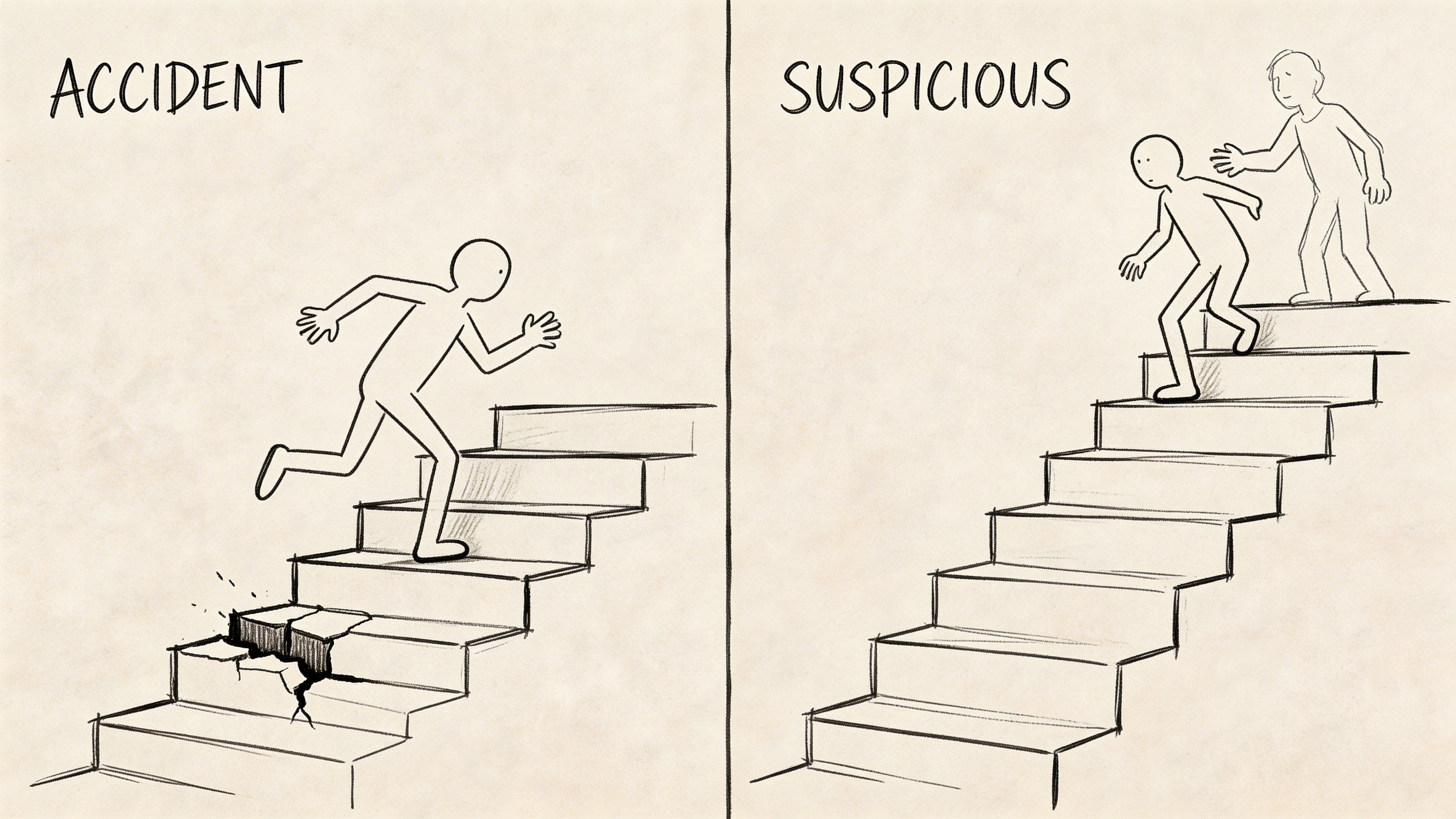
That overlap is why no responsible pathologist should promise certainty before reviewing the full case. The body may support the history, conflict with it, or remain compatible with more than one scenario.
What supports an accidental history
An accidental fall tends to show a pattern that makes biomechanical sense when matched against the stairs, the landing, and the decedent’s condition.
Common points of support include:
- Injuries that track with tumbling dynamics rather than concentrated assault.
- Head trauma in a pattern compatible with descent, especially when scene findings support the body’s path.
- Evidence of impairment or instability, such as disease, intoxication, poor balance, or environmental hazards.
- No injuries clearly outside the expected sequence of a fall.
That does not mean every bruise is explained easily. It means the total picture hangs together.
What raises concern
Other findings create friction with the reported story. These cases demand a wider lens.
| Feature | More compatible with accident | More concerning for alternate scenario |
|---|---|---|
| Injury distribution | Follows expected tumble path | Includes injuries that don’t fit the described motion |
| Front-of-body bruising | Can occur, depending on movement | May be important if inconsistent with a claimed backward fall |
| Scene correlation | Stair geometry and injuries make sense together | Body findings and scene details conflict |
| Witness account | Stable and medically plausible | Changing, incomplete, or contradicted by findings |
One example often discussed in forensic review is a backward fall that should produce one pattern, while the body shows notable anterior injuries that are difficult to reconcile without another force entering the event.
If the injury map and the scene map don’t line up, the case needs more than a quick label.
What does not work
Families sometimes assume there will be one obvious “smoking gun” injury that proves homicide or proves accident. Most of the time, that isn’t how these cases work.
What usually does not work is relying on a single bruise, one photograph, or one sentence from an initial report. Better answers come from layered analysis:
- Injury pattern
- Toxicology
- Medical history
- Scene documentation
- Witness statements
- Radiology and reconstruction when available
The strongest opinions are built from convergence, not from one dramatic finding.
Seeking Clarity A Private Autopsy in Texas
A family is told, “He died from injuries after falling down the stairs.” That may be true, but it may still leave the hardest question unanswered. Did the stairs cause the event, or did a stroke, seizure, arrhythmia, intoxication, or sudden collapse cause the fall that then caused the fatal injuries?
That distinction matters in both medicine and law. Cause of death may be blunt force injuries from the fall. Cause of the fall may be something else entirely. Standard summaries often stop at the first part.
A private autopsy becomes worth considering when the official explanation is incomplete, disputed, or too broad to answer the underlying issue. In my practice, the concern usually falls into one of four categories:
- No autopsy was performed. Some deaths are certified without the internal examination needed to separate traumatic injury from natural disease.
- The history does not fit comfortably. Family members may report chest pain, confusion, collapse, recent illness, or other symptoms before the fall.
- Litigation depends on sequence. Attorneys may need to know whether trauma started the fatal process or followed a medical event.
- The report names injuries but leaves mechanism unresolved. That gap is common in stair deaths.
As noted earlier, published forensic literature on fatal stair falls shows why this is difficult. Disease, trauma, and end-stage physiologic changes can overlap. Without a full examination, a death certificate may identify how the person died while leaving substantial uncertainty about why the fall happened in the first place.
An independent autopsy adds value because it asks narrower, harder questions. Was there evidence of a brain hemorrhage that preceded the fall? Severe coronary artery disease with a plausible sudden arrhythmia? Aspiration, intoxication, seizure disorder, or diabetic emergency? Or do the injuries and records support a primary accidental tumble with no sign of an initiating medical event?
That review may include:
- medical records from the hours, days, or weeks before death
- EMS and emergency department documentation
- toxicology and hospital laboratory data
- postmortem imaging, if available
- scene and body photographs
- witness accounts tested against the medical findings
- direct examination of the body, when timing permits
If county-level forensic review is part of the background, that system has its own role and limits. Families or attorneys who need that framework can review County Forensic Autopsies.
Texas timing and logistics matter. Burial, cremation, embalming, and transport can limit what can still be examined, so delays can close off useful options. Chain of custody also matters if the findings may later be used in court.
A few terms help families ask better questions. Cause of death is the injury or disease that led to death. Manner of death is the classification, such as accident, natural, homicide, suicide, or undetermined. Those are not the same as the cause of the fall, which may or may not be fully addressed in an initial report.
The emotional side of this process is real, especially after a sudden and violent death. Families dealing with that shock may find support in Grieving a Sudden or Traumatic Death.
When families are considering an independent examination, the practical starting point is understanding the process for Private Autopsies. If the unanswered question is what started the fall, time matters.
Navigating What Comes Next
A family may be told, within hours, that a death was caused by injuries from a stair fall. That may be true. It does not always answer the separate question of what caused the fall in the first place. In practice, those are two different forensic questions, and the difference can affect insurance disputes, civil litigation, and a family’s understanding of what happened.
The next decisions often need to be made quickly. Burial, cremation, embalming, and transport can narrow what can still be examined, so it helps to preserve information early and ask direct questions.
- Keep scene photographs and video if they exist.
- Write down witness accounts promptly while memories are fresh.
- Save medication lists and medical history, including recent symptoms such as chest pain, dizziness, confusion, or a recent collapse.
- Ask where the body is being held and whether an autopsy has been ordered.
Those steps do not prove the answer. They preserve the chance of getting one.
What families and attorneys should expect
A private forensic review usually begins with authorization, transport arrangements, and collection of records and scene materials. The practical goal is to determine whether the stair injuries explain the death, whether a natural disease process or intoxication may have triggered the fall, or whether the history and injuries do not fit a simple accident.
That distinction matters. I often explain it this way to families and attorneys. The cause of death may be blunt force injuries from the fall. The cause of the fall may be severe heart disease, a seizure, a stroke, intoxication, or something external. A careful report should address both questions when the evidence allows, and state clearly when the evidence does not.
In Central Texas, coordination may involve experienced mortuary support such as the Waterloo Mortuary Partnership.
A final report is a medical-legal document. It should set out the examination findings, testing, diagnoses, and formal opinion on cause and manner of death in language that can stand up to review. If the main dispute is whether disease or another event preceded the fall, that issue should be discussed directly rather than left to implication.
Grief and the need for answers
Families often worry that seeking forensic clarity will make grief harder. In my experience, uncertainty is often what prolongs it. People replay the same moments when the medical explanation feels incomplete, especially after a sudden and violent death.
A thoughtful mental health resource on this experience is Grieving a Sudden or Traumatic Death. Medical answers and emotional support serve different needs, but both matter.
It is reasonable to ask for a careful explanation. Wanting facts is also a human response to sudden loss.
Common Questions About Stair Fall Investigations
Below are practical questions I hear from families, attorneys, and healthcare professionals after a fatal stair fall.
| Question | Answer |
|---|---|
| Can a death certificate say “accident” even if the trigger for the fall is unknown? | Yes. The manner may be listed as accident while the initiating cause of the fall remains uncertain. That is one reason a more detailed forensic review can be important. |
| Can an autopsy tell whether someone had a medical event before falling? | Sometimes, yes. A full autopsy can identify disease such as severe heart disease, stroke, embolic disease, or other conditions that may have caused collapse before the fall. It cannot answer every question in every case, but it is the best medical tool for evaluating that possibility. |
| Is it always possible to tell whether the fall was accidental or due to an assault? | No. Some cases remain difficult because injury patterns can overlap. The best opinions come from combining autopsy findings, toxicology, records, and scene information rather than relying on one finding alone. |
| What does chain of custody mean in this setting? | It means there is documented control over evidence, specimens, and handling. That documentation helps preserve reliability if the findings later matter in court or in a contested insurance matter. |
| Where can families find support while waiting for answers? | Many families benefit from grief support that specifically addresses sudden loss. One plain-language resource on grief after sudden death can help people understand common reactions while the forensic process is still unfolding. |
If you’re facing unanswered questions after a stair fall death, it helps to gather the records, preserve the scene information you have, and speak with a qualified forensic pathologist early. Delay can limit what can still be examined.
If your family, law firm, hospital, or county needs a careful independent review, Texas Autopsy Services can help you understand the options for a private autopsy, second opinion autopsy, or forensic pathology consultation in Texas. My office approaches each case with medical precision, objectivity, and respect for the person who died. If you need guidance, please reach out directly.