May 2, 2026 · Texas Autopsy Services
Board Certification in Pathology A Guide for Families
Learn what board certification in pathology means for your case. An expert guide on types, verification, and why it's critical for a reliable autopsy.
On this page
- TL;DR
- The Unanswered Question After a Loss
- What Board Certification in Pathology Really Means
- The Different Fields of Pathology Certification
- The Rigorous Path to Earning Certification
- Why Certification Is the Gold Standard for Reliability
- How to Verify a Pathologist’s Certification
- Frequently Asked Questions About Pathology Certification
Board certification in pathology matters most when the answer will carry weight after death. Families may rely on it to understand what happened. Attorneys may rely on it to evaluate negligence, causation, or damages. County officials may rely on it when public duty and medical judgment intersect.
At Texas Autopsy Services, every examination is performed by a board-certified forensic pathologist experienced in medicolegal death investigations. Our work centers on one principle: follow the evidence carefully, explain it plainly, and treat the deceased and their family with respect.
TL;DR
- Board certification in pathology means a physician has completed accredited specialty training and passed national examinations set by the American Board of Pathology.
- For death investigation work, forensic pathology certification matters because it reflects added training in medicolegal autopsies, toxicology, and courtroom testimony.
- A board-certified pathologist’s work is more trustworthy because certification is not just initial testing. It also requires continued participation in ongoing professional assessment.
- Families and attorneys should verify not only that a doctor is a pathologist, but also whether the doctor holds the right type of certification for the case.
- If you need an independent review after a death, credential verification is one of the first practical steps to take.
The Unanswered Question After a Loss
A family often comes to me after the official paperwork is already done. The death certificate may list a cause of death, but the explanation still feels incomplete. Sometimes the wording is broad. Sometimes the circumstances don’t fit what the family saw in the hospital, at home, or in the hours before death.
That uncertainty creates practical problems, not just emotional ones. A spouse may need clarity for insurance or estate issues. An attorney may need to know whether the medical record and the death findings align. Adult children may need a medically sound answer they can trust.
In those moments, the quality of the physician matters. It matters a great deal.
I don’t mean bedside manner alone. I mean whether the doctor interpreting the findings has gone through the formal process that tests knowledge, judgment, and specialty-specific skill. In pathology, that process is board certification. In a death investigation, it can be the difference between a conclusion that sounds plausible and one that is supported by training, examination, and method.
When families ask about an independent postmortem examination, they are often really asking a deeper question. Can this report be trusted? That is one reason people seek private autopsy services in Texas. They want a fresh review that is objective, careful, and medically grounded.
A death investigation should not rely on assumptions, titles alone, or informal experience. It should rely on demonstrated specialty competence.
Board certification doesn’t remove grief. It doesn’t guarantee that every answer will be simple. Some deaths remain medically complex even after a thorough examination. But it does tell you that the physician has met a national standard in the field and has been tested in the work they claim to do.
For families and attorneys, that credential is not decoration. It is one of the clearest signals that the opinion in front of you deserves serious weight.
What Board Certification in Pathology Really Means
A family receives an autopsy report after an unexpected death. An attorney reads the same report before deciding whether to challenge it. Both are asking the same practical question. Was this opinion written by a physician whose training was specifically tested in pathology, or by someone whose title sounds reassuring but does not answer that narrower question?
Board certification in pathology is the formal credential that addresses that concern. It is separate from a medical license and separate from a medical degree. A license gives a physician legal permission to practice medicine. Board certification shows that the physician completed specialty training in pathology and passed specialty board examinations in that field.
In the United States, that credential is issued by the American Board of Pathology, or ABPath.
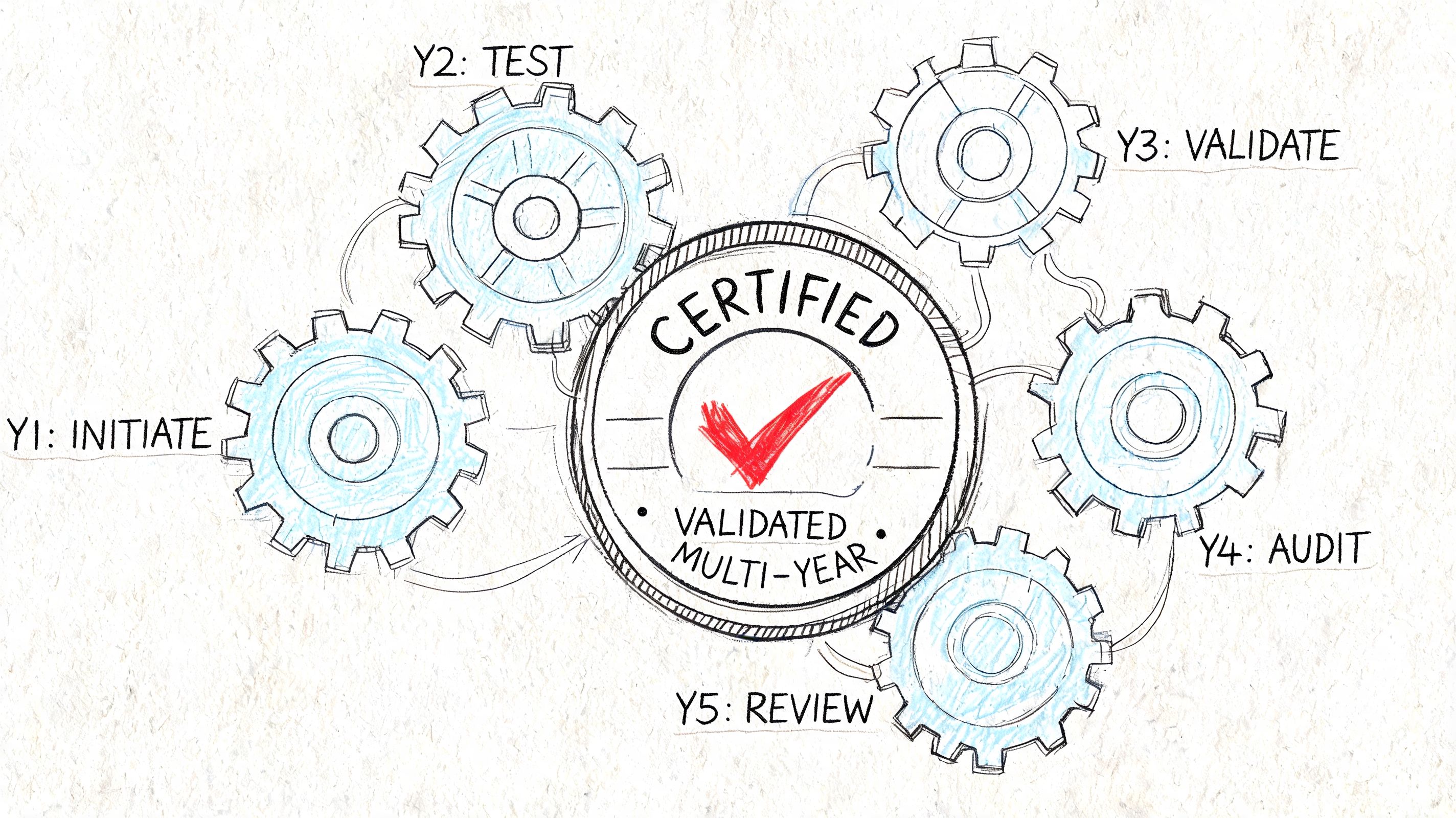
What the credential tells you
For families and attorneys, the value of board certification is concrete. It means the physician has been assessed against national standards in the discipline that produced the opinion you are reading. In pathology, that discipline involves examining tissues, organs, laboratory findings, and sometimes postmortem evidence to reach a medically defensible conclusion.
That affects reliability in real cases.
An autopsy report is not just a summary of observations. It is an interpretation. The pathologist has to decide which findings matter, which do not, what alternatives must be considered, and whether the evidence supports a clear cause of death, an uncertain one, or no firm conclusion at all. Board certification does not make a pathologist infallible, but it does mean the physician has been trained and tested in the methods used to make those judgments.
ABPath has existed since 1936 and has issued tens of thousands of primary and subspecialty certificates over time, with thousands of physicians participating in continuing certification as noted earlier. That matters because it reflects an established national system of specialty review and ongoing professional maintenance, not a self-described area of interest.
What it does not mean
Board certification does not tell you that every pathologist does the same work. It does not mean every board-certified pathologist performs autopsies, handles injury interpretation, or has training in medicolegal death investigation.
That distinction matters more than many people realize. In a cancer case, the right expert may be a surgical pathologist. In a laboratory error case, it may be a clinical pathologist. In a disputed death, the relevant training is often forensic pathology. If you need help understanding that role, this explanation of what a forensic pathologist does gives the clearest starting point.
I tell families and lawyers to verify two things. First, is the physician board-certified? Second, is the certification aligned with the actual question in the case?
That is what board certification really means in practice. It is a tested specialty credential that gives an autopsy opinion more weight, more accountability, and a stronger basis for trust.
The Different Fields of Pathology Certification
A family may be holding an autopsy report that answers one question but leaves another untouched. An attorney may have a death case where the records are complete, yet the key issue is still unresolved. In both situations, the pathologist’s title matters because different certifications prepare doctors for different kinds of opinions.
Pathology is not one job. It is a group of related specialties, and the distinctions affect whether an opinion is reliable for the question in front of you.
The main categories
According to its 2024 annual report, ABPath offers several primary and subspecialty certification paths. For families and attorneys, the most useful distinction is between Anatomic Pathology, Clinical Pathology, and Forensic Pathology.
Anatomic Pathology, or AP, centers on diagnosis through direct examination of tissues, organs, surgical specimens, and autopsies. A physician in this field may spend much of the day reading biopsies, reviewing surgical pathology slides, and correlating disease findings with what is seen in the body.
Clinical Pathology, or CP, centers on laboratory medicine. That work includes blood banking, chemistry, microbiology, hematology, and quality systems that support test accuracy. In a case involving transfusion problems, lab error, or disputed test results, CP training may be the better fit than autopsy experience.
Forensic Pathology is a subspecialty built on pathology training, usually after anatomic pathology training, with focused expertise in medicolegal death investigation. The work includes scene and history correlation, injury interpretation, cause-and-manner-of-death analysis, toxicology review, and testimony in court. For readers who want a clearer sense of the training involved, this overview of the education required for a forensic pathologist explains the path in plain terms.
Types of Pathology Board Certification
| Certification Type | Area of Focus | Common Tasks |
|---|---|---|
| Anatomic Pathology | Tissues, organs, surgical specimens, autopsies | Reviewing biopsies, examining organs, evaluating disease processes, performing hospital or nonforensic autopsy work |
| Clinical Pathology | Laboratory medicine | Interpreting lab systems, blood bank oversight, chemistry, microbiology, quality control |
| Forensic Pathology | Medicolegal death investigation | Determining cause of death, determining manner of death, injury analysis, toxicology integration, courtroom testimony |
Why the distinction matters after a death
Families and lawyers can be misled by a broad label. A physician may be board-certified in pathology and still not have the training that a disputed death case requires.
If the issue is whether a cancer diagnosis was missed on a biopsy, anatomic pathology may be the right specialty. If the issue is a transfusion reaction, contaminated specimen, or lab reporting failure, clinical pathology may be more relevant. If the issue is a sudden death, restraint death, overdose, custody death, gunshot wound, blunt force injury, or competing explanations for how a person died, forensic pathology is the specialty that fits the question.
I tell people to match the certification to the problem, not just to the word "pathologist." That choice affects how injuries are interpreted, whether postmortem findings are put in the right medical and legal context, and how well the final opinion stands up when a family, a court, or an agency asks hard questions.
For families seeking a second opinion after an unexpected death, and for officials reviewing jurisdictional needs through county forensic autopsy services, this difference affects the quality of the answer they receive. In practice, it often determines whether an autopsy report reads like a generic medical summary or a defensible explanation of what happened and why.
The Rigorous Path to Earning Certification
A family receives an autopsy report after an unexpected death. An attorney reads the cause and manner of death and asks the right question: what training stands behind these conclusions? In pathology, the answer matters because certification is earned through years of supervised practice, formal case requirements, and board testing.
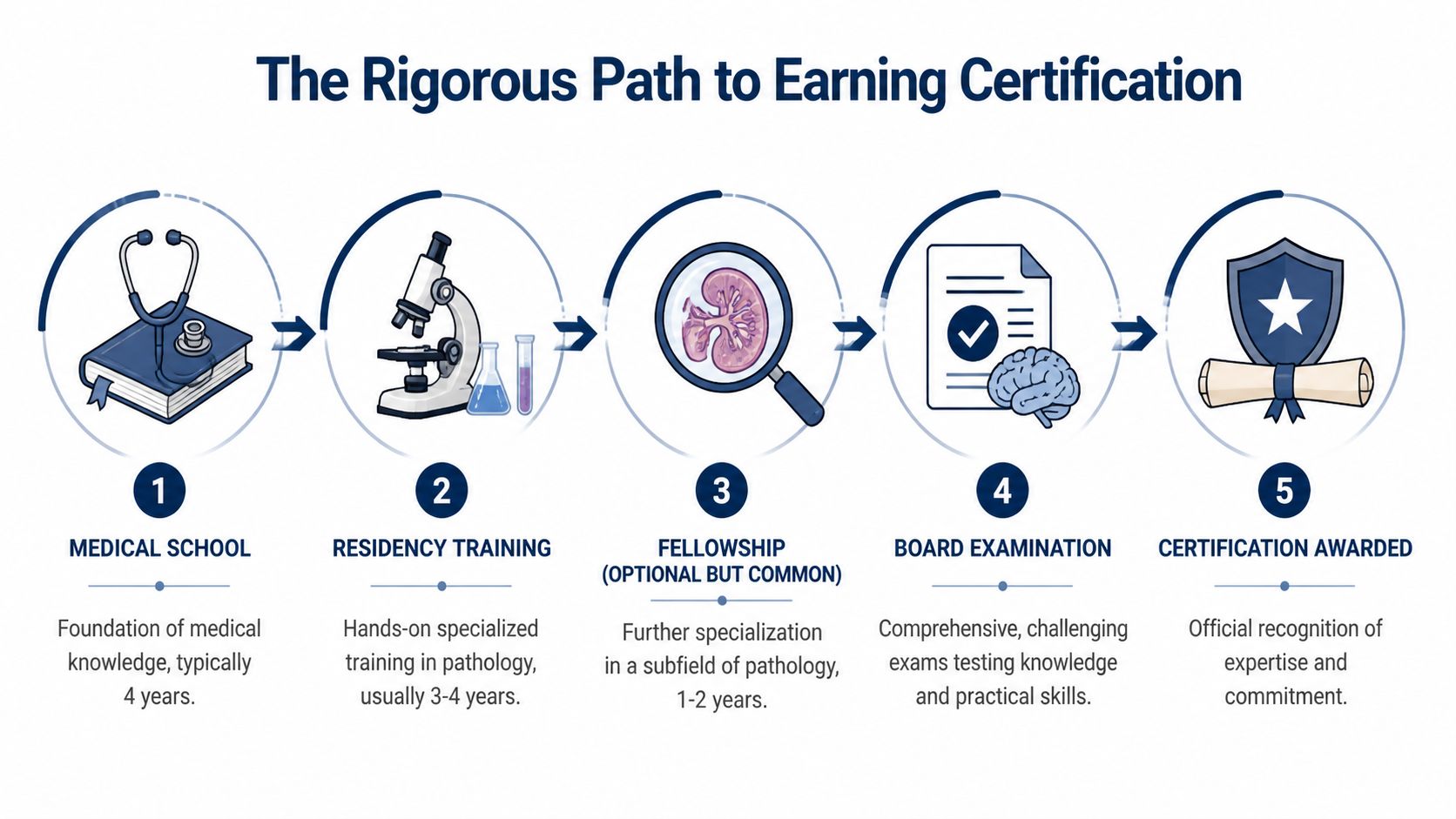
Training before the exams
The process starts with medical school, followed by accredited residency training in pathology. Residency is not abstract study. It is where physicians learn, under supervision, how to examine organs and tissues, correlate findings with records and laboratory data, recognize disease patterns, and document conclusions in a way that can withstand medical and legal scrutiny.
For Anatomic Pathology certification, one public-facing requirement is especially meaningful. The American Board of Pathology requires at least 30 autopsies during residency training, as described in the ABPath certification requirements. That experience matters because postmortem examination is a hands-on discipline. A physician has to learn how to distinguish artifact from injury, expected disease from significant disease, and isolated findings from a coherent cause-of-death opinion.
A physician who intends to practice forensic pathology then completes an additional fellowship year in an ACGME-accredited forensic pathology program. That year is centered on medicolegal death investigation. It includes autopsy performance, evidence handling, toxicology correlation, injury interpretation, and the discipline required to defend an opinion under questioning. For readers who want a fuller explanation of that path, this guide on the education required for a forensic pathologist lays it out clearly.
What the testing process shows
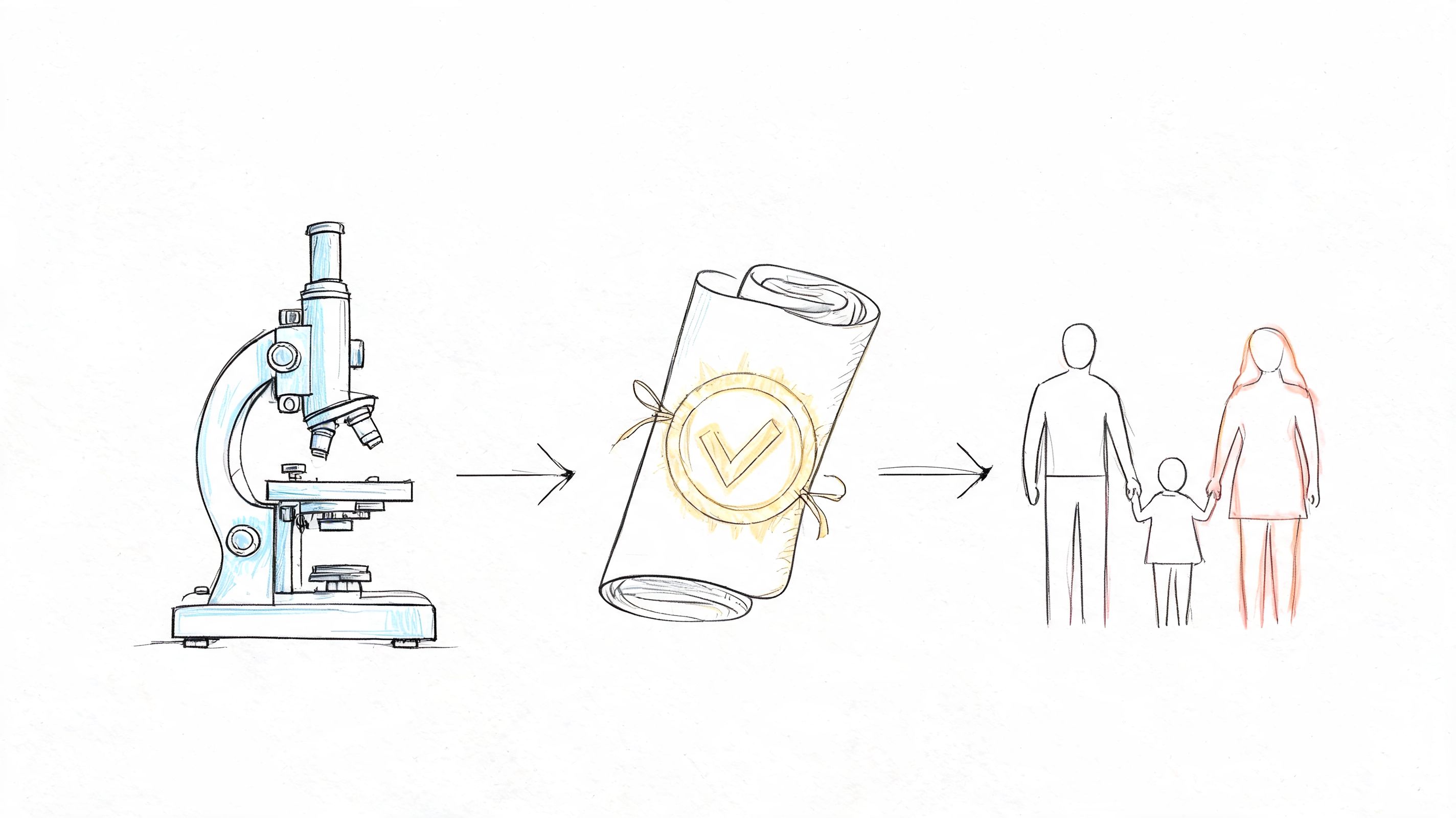
After training, candidates must pass board examinations. These exams test medical knowledge, but they also test judgment. In pathology, that means applying facts to real diagnostic problems rather than reciting textbook language.
This overview may help visualize the process in a broader way.
That distinction has practical consequences. In a death investigation, the physician must decide which findings matter, which do not, and how to reconcile autopsy findings with history, scene information, laboratory results, and toxicology. Families need an answer they can trust. Attorneys need an opinion that can be explained, examined, and defended.
Why the training path matters in a real case
The value of this long training process is concrete.
- Autopsy case experience: Formal autopsy requirements mean the physician has trained in actual postmortem examination, not only in theory.
- Forensic fellowship training: Subspecialty training adds experience with medicolegal deaths, evidence issues, and the legal consequences of wording and classification.
- Board examination: The specialty board requires the physician to demonstrate competence under standardized testing rather than relying on claimed experience.
I would put it this way: by the time a board-certified forensic pathologist signs an autopsy report, that opinion should reflect years of supervised correction, repeated case review, and specialty-specific testing. For a grieving family or a lawyer evaluating whether the report can be relied on, that background is not a formality. It is part of what makes the final answer trustworthy.
Why Certification Is the Gold Standard for Reliability
When a death becomes the subject of family concern or legal review, reliability is everything. The report must be medically sound, carefully reasoned, and understandable to people outside medicine. Board certification in pathology is the strongest general signal that the physician has been trained and tested to meet that standard.
Why families should insist on it
For families, the central issue is trust. A cause of death is not just a line on a certificate. It may shape how relatives understand the final illness, whether an inherited condition should be considered, and whether concerns about treatment, trauma, or neglect deserve further review.
A board-certified forensic pathologist is trained to separate possibility from probability. That sounds simple, but it is one of the hardest parts of the work. Many deaths involve overlapping disease, incomplete records, medication history, or conflicting witness accounts. In those cases, confidence should come from method, not guesswork.
Why attorneys look for it
For attorneys, credentials are never the whole case, but they matter. When a report may be examined in deposition, mediation, or trial, the physician’s qualifications will be scrutinized. Opposing counsel may ask about training, examinations, subspecialty focus, and whether the doctor remains current in the field.
That is one reason continuing oversight matters. Primary board certificates are time-limited and require ongoing participation in the ABPath Continuing Certification Program, which includes self-assessment, practice improvement modules, and knowledge exams, according to ABPath program information. ABPath also states that participation in continuing certification has been linked to significantly fewer diagnostic discrepancies in high-stakes cases.
Reliability is more than intelligence
What works in pathology is disciplined process. Careful gross examination. Appropriate ancillary testing. Respect for toxicology and medical history. Clear distinction between cause of death and manner of death.
What does not work is overstatement. A pathologist should not force certainty where the evidence does not support it. A good forensic opinion is often strong because it is precise about both what can be concluded and what cannot.
Clinical point: Reliability in a postmortem report comes from training, method, and restraint working together.
Here are three plain-language terms families and attorneys should know:
- Cause of death: The disease or injury that led to death.
- Manner of death: The classification of how the death occurred, such as natural, accident, suicide, homicide, or undetermined.
- Chain of custody: The documented handling of evidence so that materials can be traced and defended if questioned later.
My own board certification matters because difficult death cases rarely stay in one box. Autopsy findings may intersect with disease processes, lab interpretation, toxicology, and medicolegal standards at the same time. Broad certification does not replace careful case review, but it does strengthen the foundation for it.
How to Verify a Pathologist’s Certification
Families and attorneys should verify credentials directly. Don’t rely only on a website biography, a business card, or a verbal claim. Verification is simple, and it is worth doing before you rely on a report.
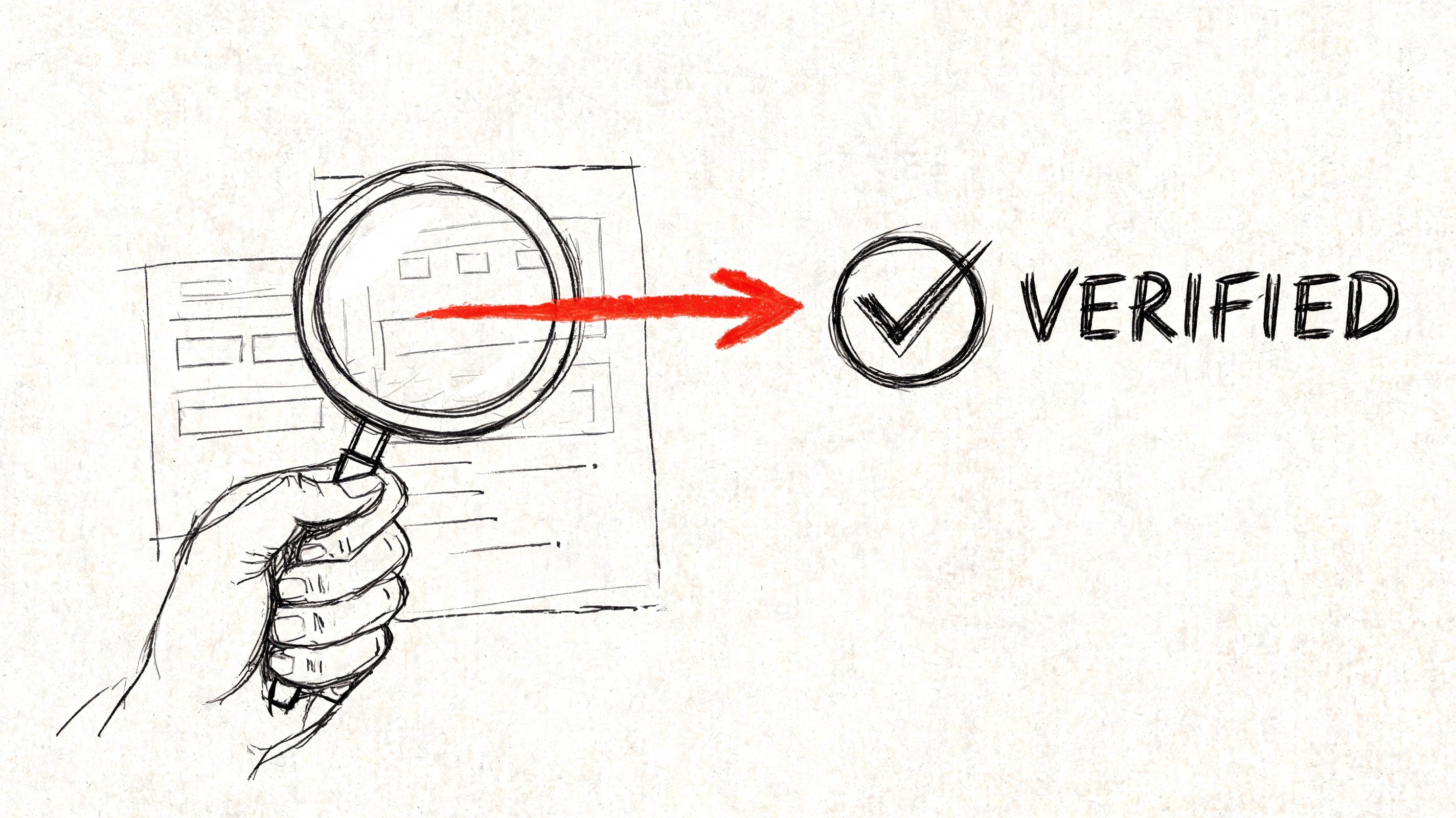
What to check
Start with official certification verification tools such as the American Board of Medical Specialties’ public resources and the American Board of Pathology’s own verification channels. The key is not just whether the physician is certified somewhere in pathology, but whether the certification matches the work at issue.
Look for the specific credential. In a disputed death case, that usually means confirming Forensic Pathology in addition to the doctor’s primary pathology certification.
If you are unsure who typically performs an autopsy in different settings, this overview of who performs autopsies can help frame the issue.
A practical verification checklist
- Confirm the full name: Make sure the physician’s legal professional name matches the record you are reviewing.
- Check the specialty listed: “Pathology” alone may not answer the question. Look for the relevant primary certification and, when needed, the forensic subspecialty.
- Review current status: If the board reports current participation in continuing certification, that is meaningful.
- Match the credential to the case: Hospital pathology experience is not the same as medicolegal death investigation training.
- Ask direct questions: It is reasonable to ask whether the physician personally performed the examination, reviewed the records, or supervised others.
Red flags that deserve caution
Some concerns are straightforward. A claimed credential that cannot be verified through official channels is a problem. So is a medicolegal opinion offered by someone without forensic pathology training when the case turns on injury interpretation, scene correlation, or manner-of-death analysis.
Another concern is imprecise self-description. “Board eligible,” “trained in pathology,” or “experienced with autopsies” are not interchangeable with active board certification.
If a credential matters enough to influence a death opinion, it matters enough to verify before you rely on it.
Frequently Asked Questions About Pathology Certification
FAQ
| Question | Answer |
|---|---|
| Does every pathologist perform forensic autopsies? | No. Pathology includes different practice areas. A physician may be trained in tissue diagnosis or laboratory medicine without subspecialty training in medicolegal death investigation. |
| Is a medical license the same as board certification in pathology? | No. A medical license permits the practice of medicine. Board certification shows that the physician completed specialty training and passed specialty examinations in pathology. |
| Why does forensic pathology certification matter in a second opinion autopsy? | Because second opinion work often involves disputed cause of death, injury interpretation, toxicology review, and opinions that may be examined in legal settings. Those issues fit forensic pathology, not general medical practice alone. |
| If a report is clear and well written, does certification still matter? | Yes. A polished report is useful, but clarity in writing is not a substitute for specialty training. The question is whether the findings and conclusions were reached by the right method and within the right field of expertise. |
| What should families ask before hiring a pathologist? | Ask what board certifications the doctor holds, whether forensic pathology is included, whether the doctor will personally perform or review the case, what records and specimens will be considered, and how findings will be communicated. |
Two practical points that often get missed
Families sometimes worry that asking about credentials will seem confrontational. It won’t. In serious postmortem work, credential questions are appropriate and expected.
Attorneys sometimes focus first on conclusions and only later on qualifications. In my experience, that order should be reversed. A conclusion is only as dependable as the training and method behind it.
A note for Texas families and counsel
Texas cases often involve coordination with funeral homes, hospitals, county systems, and transport logistics. Those practical details matter, but they should never overshadow the central issue, which is the quality and independence of the medical opinion.
A dignified process also matters. When postmortem arrangements involve facility coordination, established professional relationships such as the Waterloo Mortuary partnership can support respectful handling while the medical work proceeds.
If you are sorting through a difficult death, keep the first question simple. Ask whether the physician offering the opinion has the board certification that matches the case. That question usually leads to better decisions.
If you need help understanding whether a case calls for an independent postmortem review, you can contact Texas Autopsy Services. My office can explain the process, answer credential questions directly, and help families, attorneys, and officials determine the appropriate next step with clarity and respect.