May 20, 2026 · Texas Autopsy Services
Where Do Pathologists Work? Discover Their Roles
Learn where do pathologists work, from hospitals to labs. A Texas forensic pathologist offers guidance on private or second-opinion autopsies.
On this page
- An Introduction from a Forensic Pathologist
- The Broad Landscape Hospital Commercial and Academic Pathologists
- The Government Pathologist Medical Examiners and Coroners
- The Independent Pathologist A Private Resource for Answers
- What Families and Attorneys Should Expect from a Private Autopsy
- Choosing a Forensic Pathologist in Texas
- Frequently Asked Questions About Private Autopsy Services
Where Do Pathologists Work and Why That Matters After a Death
- Most pathologists work in hospitals, laboratories, academic centers, and government facilities, not in a typical outpatient clinic.
- The type of pathology work depends on the specimen and the question being asked. Surgical diagnosis, lab oversight, autopsies, and forensic investigations happen in different settings.
- Forensic pathology is its own niche, usually based in medical examiner offices, coroner systems, government hospitals, or independent forensic practices.
- Independent pathologists fill an important gap when families or attorneys need a private autopsy, a second opinion, or review outside a hospital or county system.
- In Texas, qualifications and process matter. Board certification, legal compliance, communication, and careful chain of custody all affect the value of the final findings.
A family calls after a sudden death in a hospital. They have a death certificate, but not much clarity. An attorney calls after a disputed injury case and needs to know whether a prior conclusion can be independently reviewed. A county office calls because a jurisdiction needs forensic autopsy coverage that can stand up to scrutiny.
Those conversations all begin with a similar question, even if people don't phrase it that way. Where do pathologists work, and which kind of pathologist do we need?
At Texas Autopsy Services, every examination is performed by a board-certified forensic pathologist experienced in medicolegal death investigations. Our work centers on one principle: follow the evidence carefully, explain it plainly, and treat the deceased and their family with respect.
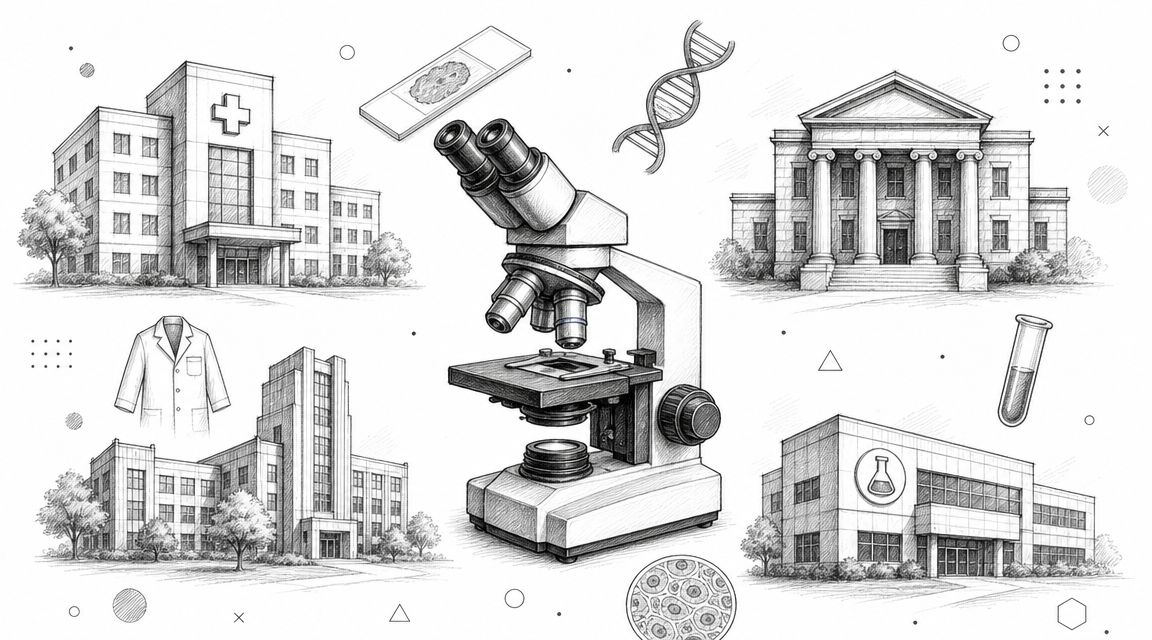
Pathology is a broad diagnostic field. Some pathologists spend their day reviewing biopsies from surgery. Some direct hospital laboratories. Some teach and sign out difficult cases at academic centers. Some investigate deaths for a medical examiner office. Others work independently and provide private or second-opinion review when a family, lawyer, or agency needs answers outside the usual system.
An Introduction from a Forensic Pathologist
The question usually comes at a hard moment. A family has been told that an autopsy won't be done. Or one was done, but the report doesn't answer what they needed to understand. Attorneys often face a different version of the same problem. They need a medically grounded opinion, but the available record was created for hospital care or county jurisdiction, not for the specific dispute in front of them.
That gap matters because pathology is not one job in one building. It is a set of related specialties working in different environments for different purposes. If you need to know why a biopsy was called malignant, the right setting is usually a hospital or reference laboratory. If you need cause and manner of death in a sudden or suspicious death, the right setting may be a medical examiner office. If you need an independent autopsy or a second opinion autopsy, that often points to private forensic practice.
Why the workplace changes the answer
Where a pathologist works affects what they are asked to do, who they report to, and how narrowly or broadly the case is framed.
- Hospital pathologists usually support patient treatment.
- Government forensic pathologists answer public and legal questions within official jurisdiction.
- Independent forensic pathologists can review a case directly for a family, attorney, or agency when a separate examination or opinion is needed.
Practical rule: Before you ask who can help, identify what kind of answer you need. Diagnostic treatment support, official death investigation, and private review are not the same service.
That distinction is especially important in Texas, where families, counsel, healthcare professionals, and county officials often need a clear understanding of what forensic pathology can and cannot do. My work sits in that postmortem and medical-legal space, but it only makes sense when you first see the larger map of where pathologists work.
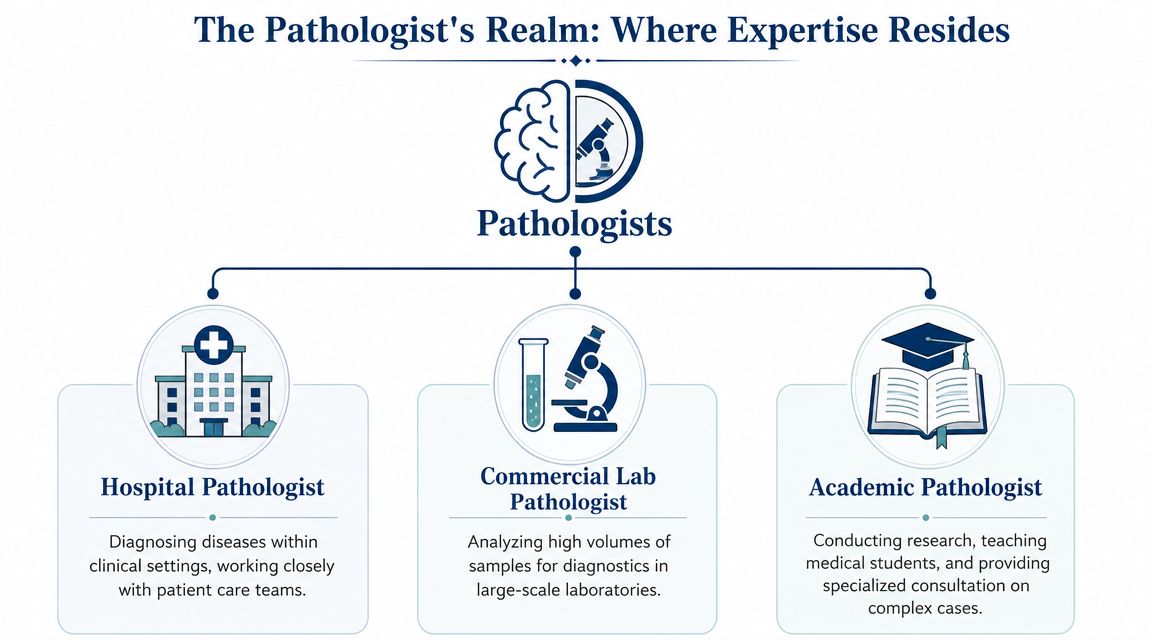
The Broad Landscape Hospital Commercial and Academic Pathologists
Encounters with pathology often occur without direct interaction with a pathologist. That's because much of the work happens behind the scenes, in laboratories and diagnostic departments rather than exam rooms.
Johns Hopkins notes that pathologists work across community and university hospitals, private labs, and government facilities, and that anatomical pathologists focus on tissues and autopsies while clinical pathologists manage lab testing. Many are trained in both areas through combined practice and certification, which is why pathology often functions as a bridge between tissue diagnosis and laboratory medicine in one service line. Johns Hopkins overview of the pathologist's role
Hospital pathology
Hospitals are the center of day-to-day pathology work in most major markets. Surgical specimens, frozen sections, blood bank oversight, microbiology, chemistry, hematology, and urgent clinical decisions all depend on pathologists and laboratory teams.
In that setting, the work is usually tied to living patients. A surgeon removes tissue. A pathologist examines it. The report affects treatment. Clinical pathology also supports round-the-clock specimen handling, including blood, urine, and other body fluids, because hospitals need rapid turnaround for acute care.
A practical way to think about it is simple. Hospital pathologists help answer, “What disease process is present, and what does the treating team need to know now?”
Commercial and independent laboratories
A large share of pathology also happens in independent and commercial diagnostic laboratories. These settings are built around specimen volume, standardized workflow, subspecialty review, and consultation.
That model works well when clinicians need efficient processing of biopsies or laboratory studies from many sites. It also supports second reads and narrower areas of expertise that a small hospital may not have on site. For readers who want a broader overview of the profession itself, this pathologist job profile gives useful background on how the role is structured.
Academic centers
Academic pathology looks different again. University hospitals and medical schools combine patient care, teaching, and research. These departments often handle difficult referral cases, train residents and fellows, and support subspecialty interpretation.
Academic settings tend to be where complex diagnostic questions and teaching missions meet.
That doesn't make academic practice “better” than community practice. It makes it different. The trade-off is often depth of subspecialization versus speed and local accessibility.
The Government Pathologist Medical Examiners and Coroners
When people ask where a forensic pathologist works, they often mean a medical examiner office or a coroner system. That is one major part of the field, but it is only one part.
Forensic and autopsy work is usually based in medical examiner offices, coroner systems, government hospitals, or dedicated forensic practices because those cases require toxicology coordination, evidence handling, and chain of custody procedures that are not part of routine outpatient medicine. The American Society for Clinical Pathology describes this as a distinct niche within pathology rather than an extension of standard hospital sign-out. ASCP description of forensic pathology work settings
What government offices are there to do
A medical examiner or coroner system serves a public function. The office investigates deaths that fall within legal jurisdiction, such as deaths that are sudden, unexpected, violent, unattended, or otherwise reportable under local law and procedure.
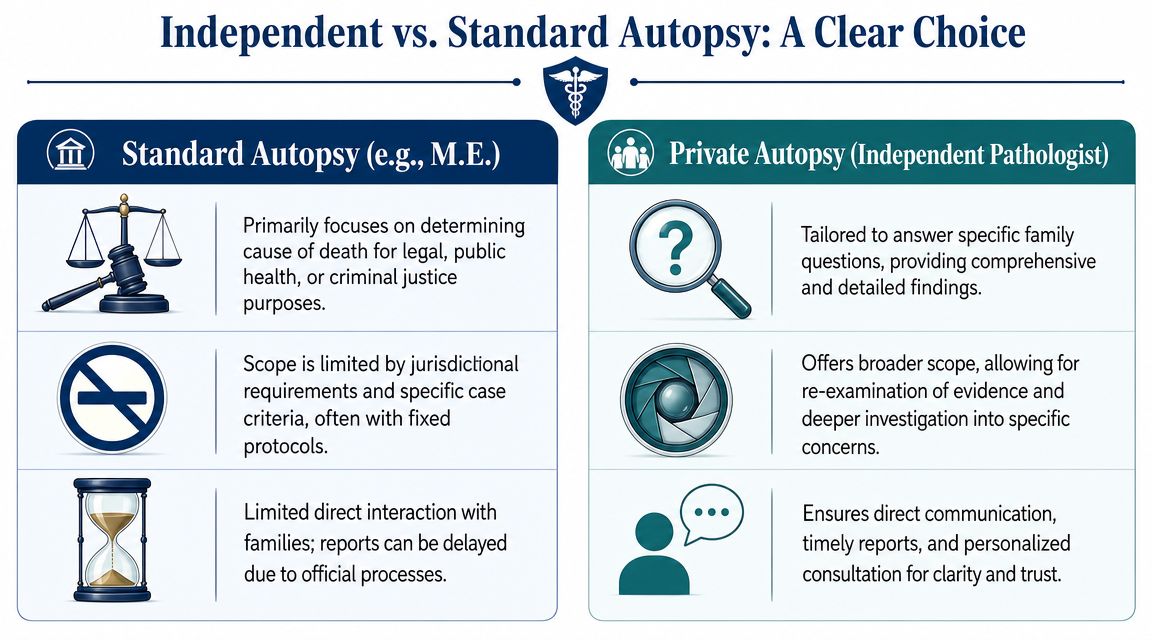
That means the “client” is not the family in the ordinary sense. The office works for the county or state. It answers the official questions that matter for public health, criminal law, and death certification.
At this point, expectations often become mismatched. Families may want a broad, personal explanation. The official system may only need to answer narrower legal questions.
Cause of death, manner of death, and chain of custody
Three terms matter here.
| Term | Plain-language meaning |
|---|---|
| Cause of death | The disease or injury that led to death |
| Manner of death | The classification of how the death occurred, such as natural or accident |
| Chain of custody | The documented handling of evidence and specimens so their integrity can be shown later |
In forensic work, chain of custody is especially important. If specimens, photographs, toxicology samples, or physical evidence may later be reviewed in court, every transfer and handling step has to be documented carefully.
If you need a fuller explanation of how these public systems differ, this discussion of the difference between coroner and medical examiner can help.
A government autopsy can be thorough and appropriate, but it is still shaped by jurisdiction, statutory duties, and office priorities.
That's why a county investigation and a family's unanswered questions are not always the same thing.
The Independent Pathologist A Private Resource for Answers
Independent pathology exists because the hospital system and the government system do not answer every question every time.
A family may be told that a death doesn't meet medical examiner criteria. An attorney may need a fresh review of records, photographs, slides, or reported findings. A physician or risk manager may need an outside perspective that isn't tied to the original treating institution. In those situations, an independent forensic pathologist becomes the right resource.
Cleveland Clinic's overview of pathology reflects a broader shift in the field. Pathology is becoming more networked, with selected work increasingly performed outside a single hospital system through independent second opinions and remote consultation where appropriate. Cleveland Clinic discussion of networked pathology and independent consultation
When private forensic pathology makes sense
An independent pathologist can be helpful in several common situations:
- No official autopsy will be performed. Some deaths do not fall within county jurisdiction even though the family still has serious unanswered questions.
- A second opinion is needed. That may involve records, prior reports, pathology materials, or a completed autopsy that needs another review.
- The legal question is narrower or broader than the government question. Civil litigation, insurance disputes, and negligence review often require analysis framed differently from a county investigation.
- Geography is part of the problem. Families and attorneys may need access to expertise outside the institution where the death occurred.
Private review does not mean advocacy for a predetermined result. It means independence from the original system and a clear assignment focused on the actual question being asked.
What works and what does not
What works is a defined scope, timely record gathering, and direct communication about whether a full autopsy, record review, or second-opinion review is the best fit. What does not work is assuming every concern requires the same level of examination.
Sometimes a full postmortem examination is necessary. Sometimes the more useful service is a focused forensic review of records, toxicology, histology, or prior conclusions. That kind of judgment matters. It protects families and counsel from paying for the wrong process and helps preserve evidentiary value in the right one.
For law firms and healthcare practices, the same principle applies in administrative work. A focused process usually performs better than a generic one. In that broader operational sense, even a resource on how physician groups reduce medical billing denials reflects the same reality. Clear documentation, defined workflow, and the right specialist at the right stage prevent avoidable problems later.
Why independence matters in Texas
In Texas, distance, jurisdiction, and timing often shape postmortem decisions. An independent practice can serve families and legal professionals who need review outside a hospital system or outside county autopsy criteria. This is the role of a private autopsy service when the goal is objective clarification rather than institutional routine.
Independence matters most when the original system was not built to answer your specific question.
That is where private forensic pathology has real value.
What Families and Attorneys Should Expect from a Private Autopsy
A private autopsy should be clear, respectful, and well documented. Families do better when they know the sequence in advance. Attorneys do better when the scope, records, specimens, and custody procedures are identified early.
The basic process
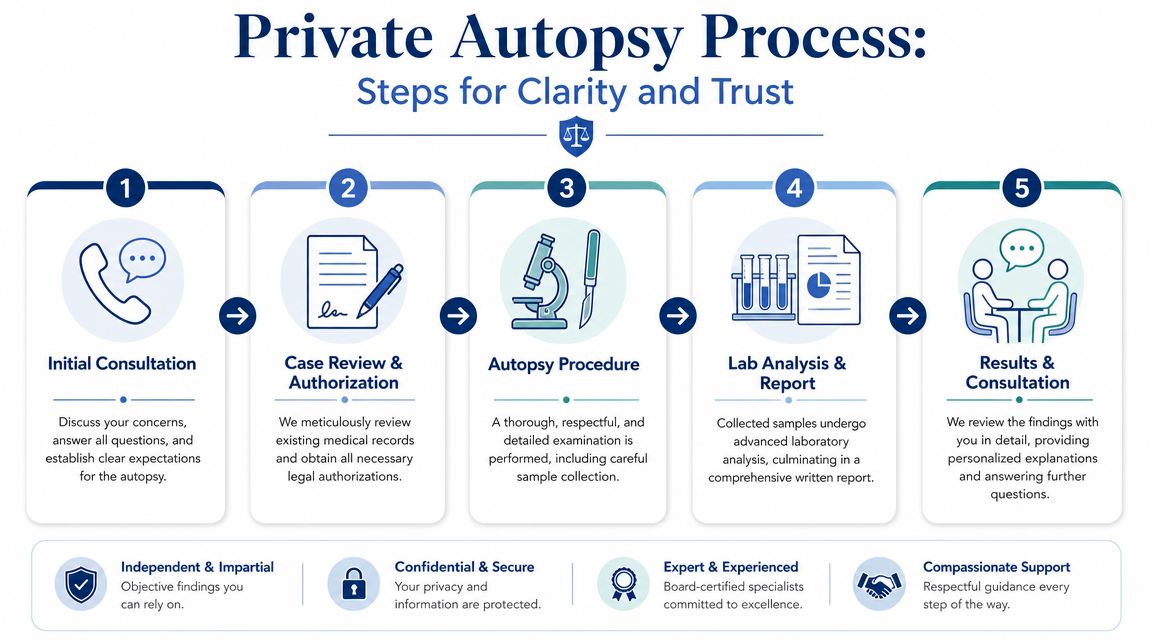
The first step is consultation and case screening. That means understanding the death circumstances, what records exist, whether an official investigation occurred, and what question the family or attorney needs answered.
Next comes authorization and logistics. For a lawful private autopsy in Texas, permissions and disposition details have to be handled correctly. This may involve coordination with the funeral home, next of kin, counsel, or other authorized parties, and the process must respect applicable Texas law, including the parts of the Texas Health & Safety Code that govern remains, disposition, and related procedures.
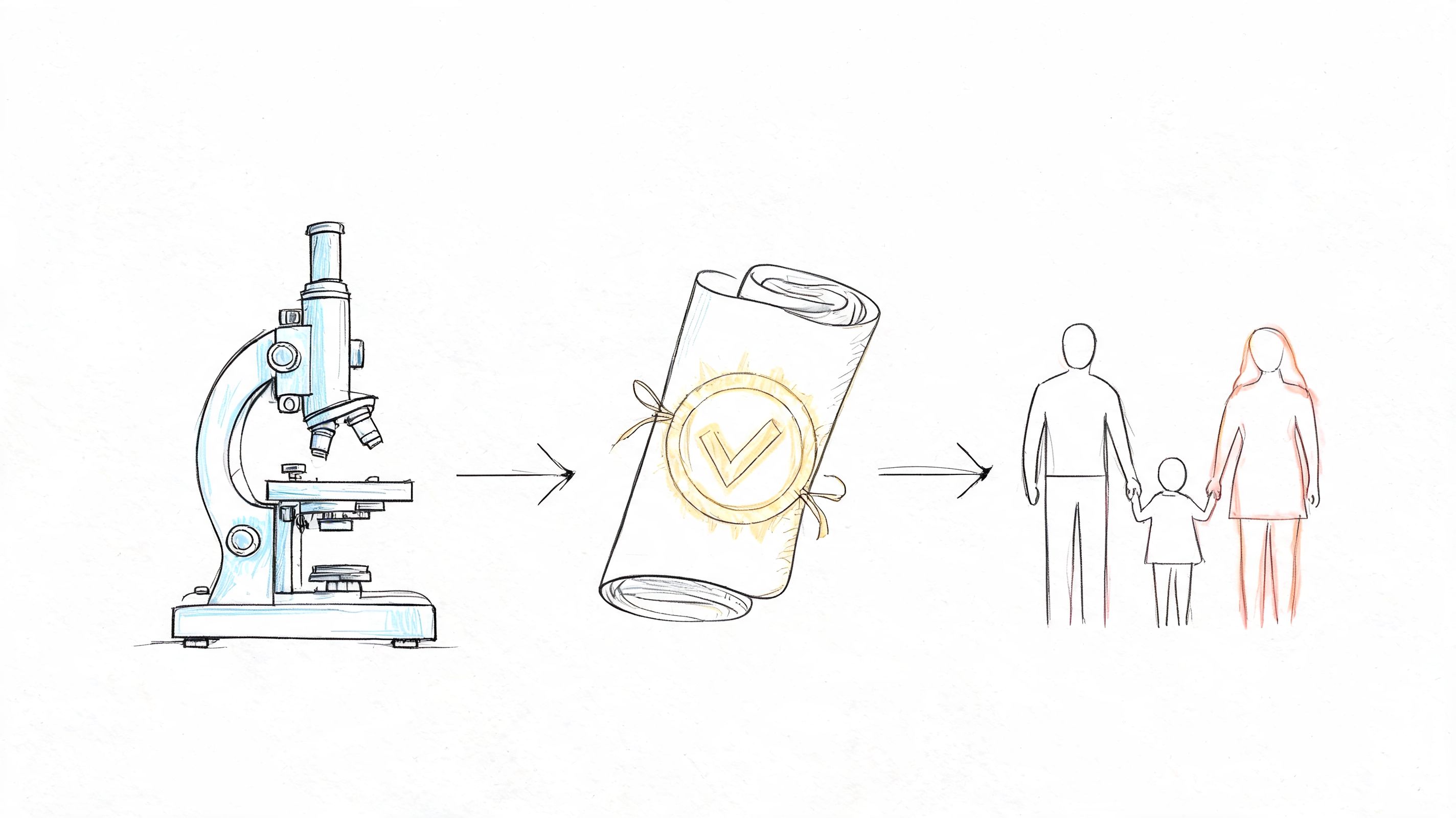
A respectful overview of the process is often easier to understand visually:
The examination and reporting phase
The autopsy itself may include an external examination, internal examination, specimen collection, histology, and toxicology or other laboratory testing when indicated. Not every case needs every possible test. The right workup depends on the history, the scene information if available, prior medical care, and the precise forensic question.
The final report should explain findings in plain but accurate language. That includes:
- Cause of death. The injury or disease that produced death.
- Manner of death. The classification of how the death occurred.
- Major findings. What the examination showed and how those findings support the conclusion.
- Limits of the opinion. Any missing records, unavailable specimens, or pending tests that affect interpretation.
Special issues in legal cases
If the matter may lead to litigation, evidence handling becomes more important. That includes retention practices, documentation, and a careful chain of custody for materials that may later be reviewed by another expert or offered in court.
- For families: The process should be explained without unnecessary technical language.
- For attorneys: The report should connect medical findings to the actual forensic issue in dispute.
- For both: No ethical pathologist should promise a preferred conclusion before the work is done.
The most useful report is not the longest one. It is the one that explains the findings, the reasoning, and the limits with precision.
In a private setting, clarity is part of the service. So is dignity.
Choosing a Forensic Pathologist in Texas
Not every pathologist performs autopsies. Not every doctor who has seen postmortem cases is trained in forensic pathology. In Texas, those distinctions matter.
Credentials to check first
Start with board certification. For postmortem and medical-legal work, the most relevant training is in pathology, and for forensic death investigation specifically, forensic pathology credentials matter. My own practice is built on board certification in Anatomic Pathology, Clinical Pathology, and Forensic Pathology through the American Board of Pathology.
Experience matters too. A pathologist who regularly performs autopsies will usually be better positioned to recognize the difference between routine findings, significant disease, injury patterns, and artifacts that can mislead a less experienced reviewer.
A broader workforce point is useful here. A 2020 JAMA Network Open analysis reported 21,292 active pathologists in the American Medical Association listing as of June 10, 2019, and found that 40.6% practiced in groups of one to five full-time pathologists. That supports something families and lawyers often don't realize. Much of pathology is delivered through compact, specialized practices rather than giant public-facing groups.
Practical selection criteria
A strong forensic referral choice usually includes these features:
- Clear communication: You should understand the scope of the work, what materials are needed, and what the final work product will include.
- Texas process awareness: The physician should understand the legal and practical issues that affect postmortem work in this state.
- Funeral home coordination: Respectful handling of transportation and disposition is part of competent case management.
- Ability to work with agencies or counsel: Some cases are family-centered. Others involve county obligations or litigation standards.
For readers comparing options, Waterloo Mortuary pathology coordination is an example of how funeral home relationships can support logistics, and county forensic autopsy coverage shows how a pathologist's role can extend into jurisdictional service as well.
A practical standard
When you choose a forensic pathologist, look for someone whose training matches the question, whose process is transparent, and whose opinion is independent enough to be useful. Credentials open the door. Method and judgment are what make the opinion reliable.
Frequently Asked Questions About Private Autopsy Services
Can there still be a funeral after an autopsy
Yes, in many cases a funeral, including open-casket arrangements, can still proceed after an autopsy. The specific planning details depend on timing, transportation, funeral home preparation, and the condition of the body. Those logistics should be discussed early so the examination and the family's memorial plans can be coordinated respectfully.
Who can request a private autopsy in Texas
That depends on legal authority over the decedent's remains and the circumstances of the death. In practice, the request often comes from next of kin or an attorney acting within an appropriate legal framework. If a government office has jurisdiction, that official process may affect what can be done and when.
How long does a final report take
There is no honest one-size-fits-all timeline. A straightforward case and a complex case are not the same. Records may be incomplete. Toxicology and microscopic review can add time. If legal review or outside specimen transfer is involved, that can also affect timing.
What is the difference between cause of death and manner of death
Cause of death is the disease or injury that led to death. Manner of death is the classification of how the death occurred. Those are related but not identical. A careful report explains both, along with the findings that support the opinion.
Can a private pathologist give a second opinion without repeating the entire autopsy
Sometimes, yes. In some cases the most appropriate service is a review of records, prior autopsy findings, slides, photographs, or toxicology rather than a new full examination. That decision depends on what materials exist and what question needs to be answered.
If you need help understanding whether a private autopsy, second-opinion review, or forensic consultation is appropriate, you can contact Texas Autopsy Services for direct guidance. These decisions often come during grief, uncertainty, or active litigation. A clear conversation at the outset can help you choose the right process and avoid unnecessary delay.