May 3, 2026 · Texas Autopsy Services
Forensic Science Law: Evidence, Experts, Autopsies
A Texas pathologist explains forensic science law. Learn about evidence admissibility, expert witnesses, and private autopsies for crucial answers.
On this page
- TL DR
- Introduction The Unanswered Question After a Loss
- The Bridge Between Medical Findings and Legal Truth
- How Courts Decide What Forensic Evidence Is Valid
- The Forensic Pathologist as a Courtroom Expert
- Maintaining Evidence Integrity The Chain of Custody
- When a Second Opinion Autopsy Is Your Path to Clarity
- Your Questions About Private Autopsies in Texas
Families usually reach out after they’ve already received a document that should have answered the central question, but didn’t. A death certificate may list undetermined. An official summary may feel too brief. An attorney may have records, photographs, and witness statements that don’t fully fit the medical conclusion. At that point, grief and legal uncertainty often arrive together.
At Texas Autopsy Services, every examination is performed by a board-certified forensic pathologist experienced in medicolegal death investigations. Our work centers on one principle: follow the evidence carefully, explain it plainly, and treat the deceased and their family with respect.
TL DR
A family gets a death certificate, an attorney gets the records, and neither gets a clear answer. In that situation, forensic science law determines whether a medical opinion will hold up in court or fall apart under challenge.
- Forensic science law sets the legal standard for whether pathology findings are admissible, persuasive, and useful in litigation.
- Cause of death answers what physiologically led to death. Manner of death addresses how the death is classified. Those are separate judgments with different legal consequences.
- In Texas cases, a private autopsy has value only if the work is medically sound, carefully documented, and defensible under expert-evidence standards such as Rule 702 and Daubert.
- Courts do not accept a conclusion just because it appears in a report. The expert must be able to explain the method, the facts reviewed, and the reasoning behind the opinion.
- A forensic pathologist may serve families and attorneys in two roles at once: finding medical truth and preparing that opinion for depositions, hearings, and trial testimony.
- Chain of custody matters. If specimens, photographs, clothing, or records are not handled correctly, the evidentiary value of the case can drop quickly.
- A second-opinion autopsy can clarify an undetermined death, test an official conclusion, or preserve evidence before burial or cremation closes that opportunity.
Introduction The Unanswered Question After a Loss
A common call to my office starts the same way. A family has lost someone unexpectedly. They have spoken with law enforcement, a funeral home, sometimes a hospital, and sometimes a county office. They’ve waited for paperwork, and when it arrives, it still doesn’t tell them what they need to know.
The wording might be brief. It might say the cause is pending, or that the manner is undetermined. For a family, those words don’t feel neutral. They affect burial decisions, insurance claims, civil litigation, and the simple human need to understand what happened.
Attorneys often come into the process at the same point. They may suspect that a medical event, injury pattern, toxic exposure, or missed diagnosis hasn’t been fully evaluated. They need more than a general impression. They need a conclusion that can stand up under scrutiny.
A good forensic opinion doesn’t remove grief. It does remove avoidable uncertainty.
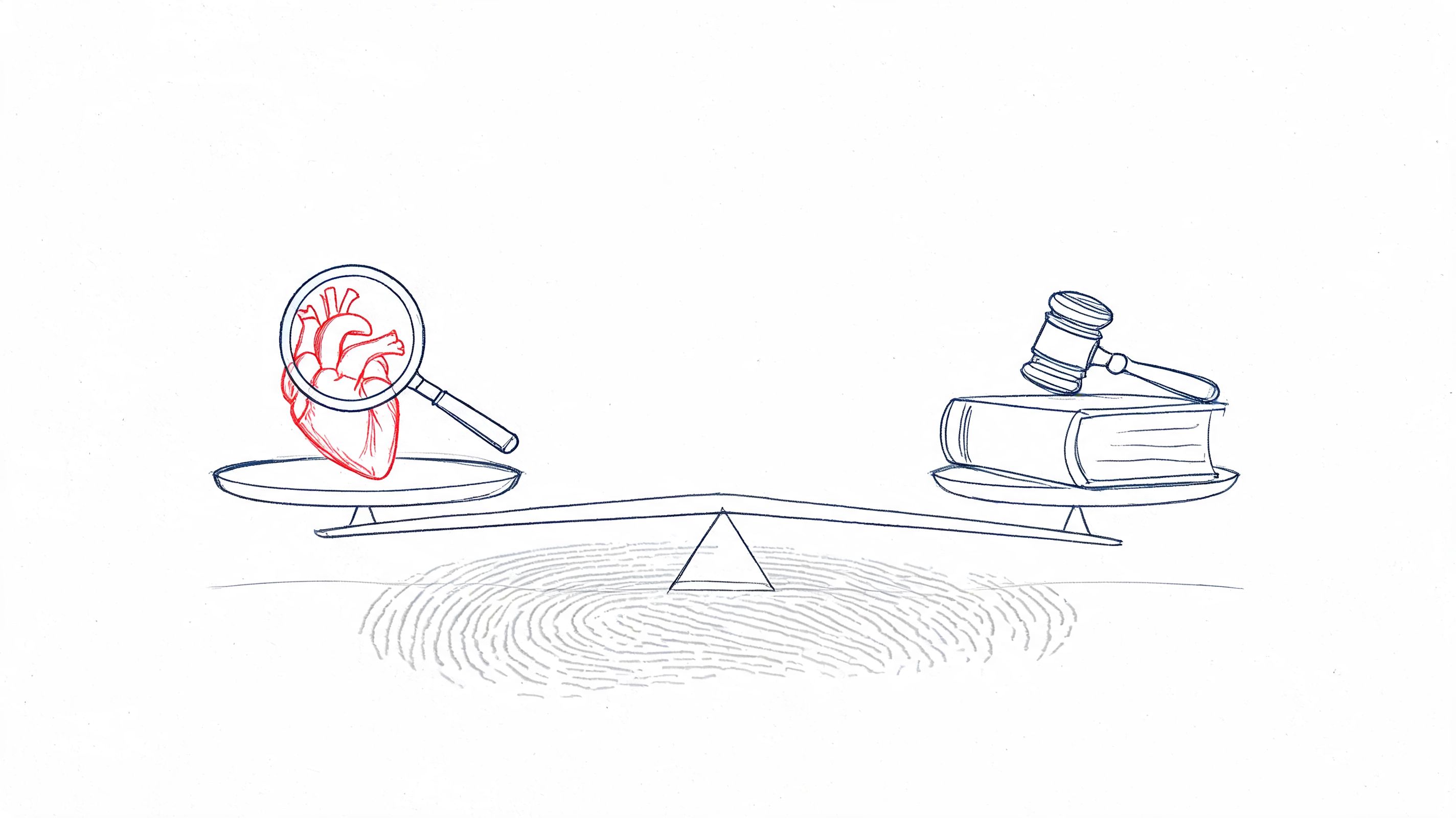
That’s where forensic science law matters. It isn’t an abstract field reserved for textbooks or appellate opinions. It’s the set of legal standards that determines whether medical findings can help answer real questions in a courtroom, an insurance dispute, or a family’s search for clarity.
In my work as a forensic pathologist, I see that gap often. People don’t just need an autopsy. They need a process that respects the deceased, documents findings carefully, preserves evidence correctly, and produces conclusions that can be explained and defended. Without that structure, even strong medical observations can lose legal value.
The Bridge Between Medical Findings and Legal Truth
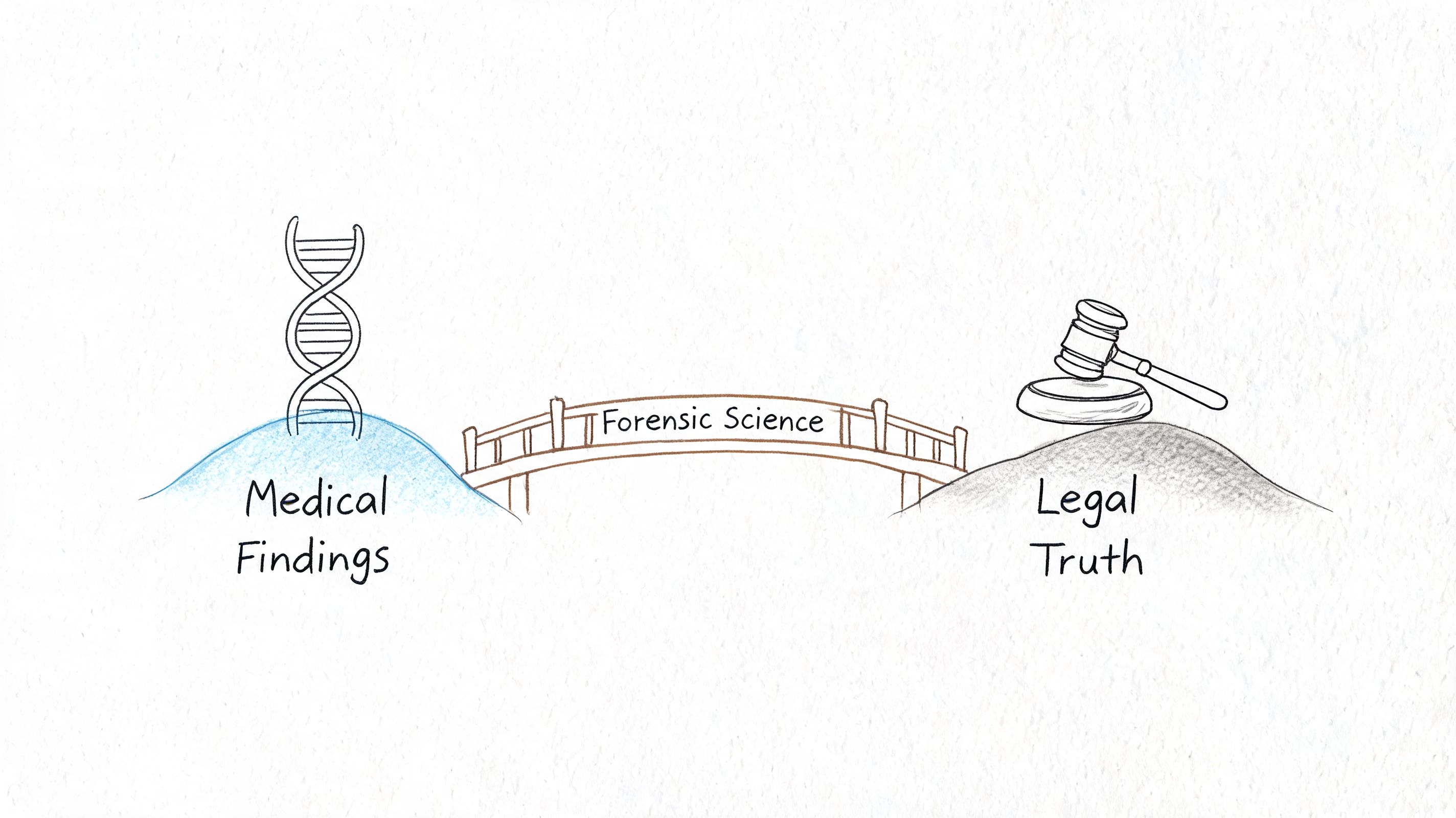
Forensic pathology works as a bridge between what the body shows and what the law can recognize as evidence. That bridge has to hold under pressure. A medical conclusion that sounds reasonable but isn’t well documented may fail when challenged. A legally important question without a sound medical basis should not be forced into certainty.
Cause of death and manner of death
These terms are related, but they aren’t interchangeable.
Cause of death is the disease or injury that led to death.
Manner of death is the medicolegal classification. In practice, that may be natural, accident, suicide, homicide, or undetermined.
A simple example helps. A person may die from a gunshot wound. That is the cause. Whether that death is classified as homicide, suicide, accident, or undetermined depends on the surrounding facts, scene information, investigative records, and medical findings together.
That distinction matters because legal disputes often arise from the manner classification as much as the physical injury itself. Insurance cases, criminal charges, and civil claims may turn on that difference.
Why modern forensic testimony demands more than observation
Forensic science law developed over time because courts learned that unsupported impressions aren’t enough. The development of fingerprint analysis in 1880 marked a major turning point, moving identification evidence from subjective observation toward scientifically grounded proof accepted in courts, as outlined in this history of forensic science.
That history still shapes autopsy practice. Courts expect empirical support, careful methodology, and clear documentation. In postmortem work, that means photographs, tissue examination when appropriate, record review, scene correlation when available, and disciplined reporting.
Practical rule: If a conclusion can’t be explained step by step, it usually won’t hold up when the stakes are high.
What the pathologist actually does
A forensic pathologist is not merely a physician who performs a dissection. The role includes:
- Documenting injuries and disease in a way that another reviewer can follow
- Interpreting significance rather than listing findings without context
- Separating observation from opinion so the reader knows what was seen and what was inferred
- Preparing for legal review because a report may later become evidence
That last point is often missed. A private autopsy or second opinion has value only if the work is done with both medical precision and legal discipline.
How Courts Decide What Forensic Evidence Is Valid
A family may have a death certificate, an autopsy report, and a strong sense that something was missed, yet none of that guarantees the court will hear the opinion they later obtain. In litigation, the first question is often not whether an expert is qualified. It is whether the opinion was reached through methods the court will accept.
Frye and Daubert in practical terms
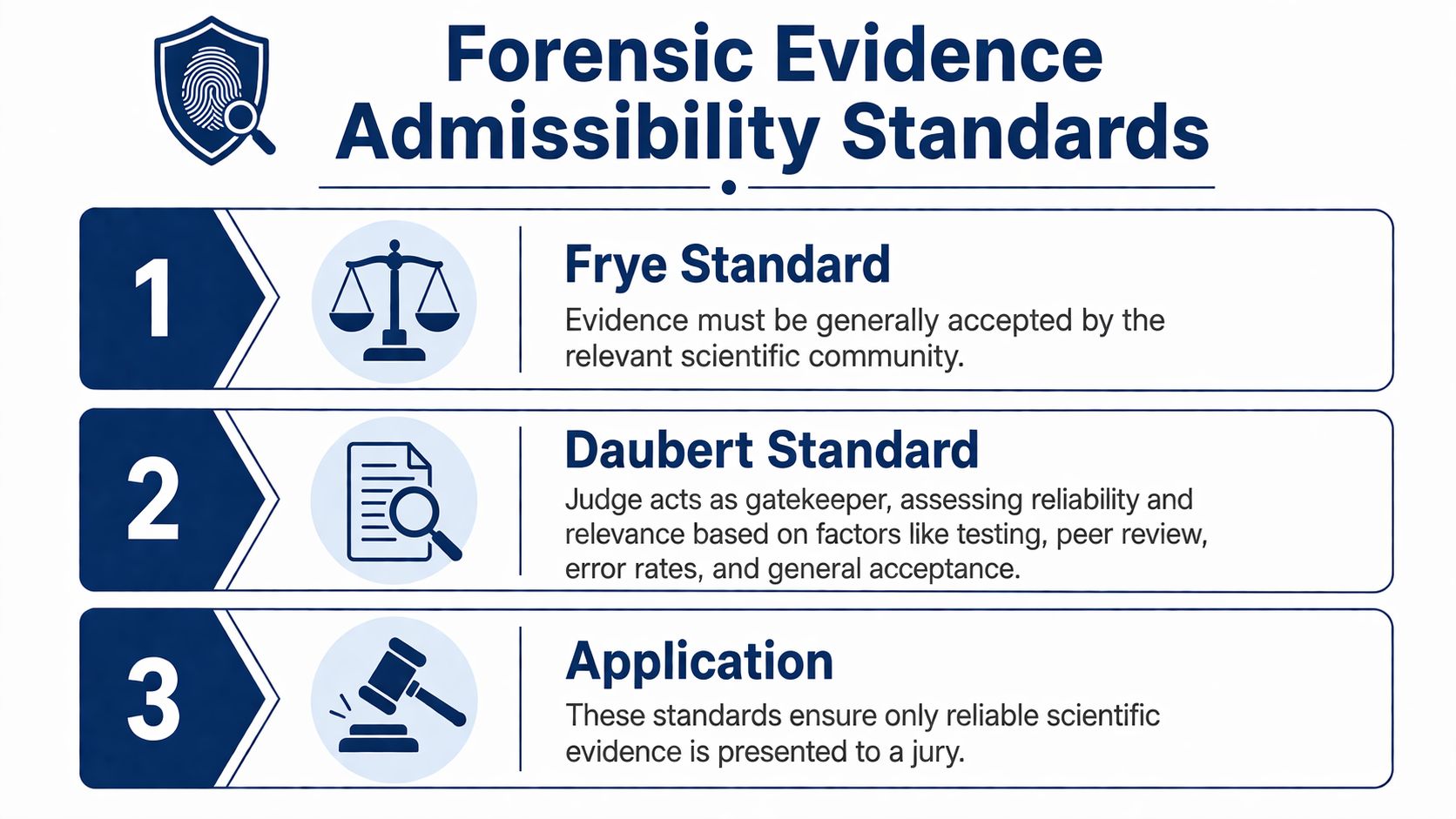
Courts use gatekeeping standards to screen forensic opinions before a jury ever hears them. Under the older Frye approach, the central question was general acceptance within the relevant scientific community. Under Daubert and Federal Rule of Evidence 702, the judge takes a closer look at the reasoning and method behind the opinion, including whether the approach can be tested, whether it has been subjected to peer review, whether error rates are understood, and whether the method is accepted in the field.
For a private pathologist in Texas, that standard has direct consequences. An independent autopsy is valuable only if the work can withstand that scrutiny. A conclusion about cause or manner of death must rest on documented findings, a sound medical basis, and a method another qualified pathologist can evaluate. Reputation helps no one if the file is thin, the photographs are incomplete, or the opinion outruns the evidence.
I tell attorneys this early. A persuasive opinion and an admissible opinion are not always the same thing.
What that means for an autopsy report
A legally useful autopsy report answers medical and legal questions at the same time. It should allow a judge, lawyer, or opposing expert to trace the path from observation to conclusion without guessing what happened in between.
| Question | Why it matters |
|---|---|
| What was observed | The record must distinguish objective findings from later interpretation |
| What methods were used | The court needs to see how the opinion was formed |
| How were samples handled | Problems with specimen handling can weaken confidence in the result |
| What alternatives were considered | A reliable opinion addresses other reasonable explanations |
In practice, that means details matter. If toxicology influenced the conclusion, the report should say how. If scene information shaped the manner of death opinion, that reliance should be stated plainly. If the evidence does not allow certainty, the report should say that too. Careful limits usually strengthen testimony. Overstatement usually weakens it.
What holds up under scrutiny
The reports that hold up best are transparent. They show the injuries, the disease, the records reviewed, the specimens collected, and the reasoning used to exclude competing causes. In my work, the strongest second-opinion autopsies are not the ones with the boldest language. They are the ones with the clearest foundation.
Attorneys can help that process before the autopsy ever starts. Organized medical records, EMS records, hospital imaging, scene photographs, and a reliable timeline make a measurable difference in the quality of the final opinion. Firms that need help assembling those materials sometimes use services such as Hire Paralegals so the expert receives a usable record set instead of fragments.
For a fuller discussion of how courts evaluate testimony from medical experts, see my article on expert witness standards in forensic science.
The Forensic Pathologist as a Courtroom Expert
A second-opinion autopsy can answer a family’s medical questions and still fail to help them in court if the opinion cannot withstand deposition or trial. I see that problem often enough in referral work. The medicine may be sound, but the explanation is too vague, too absolute, or too disconnected from the records and specimens that support it.
Why courtroom communication matters
Court testimony asks for a different discipline than autopsy practice. The pathologist has to explain cause of death, timing, injury interpretation, toxicology limits, and competing possibilities in language a judge or jury can follow without losing medical accuracy.
That is where training and experience meet. I am board-certified by the American Board of Pathology in anatomic pathology, clinical pathology, and forensic pathology. Those credentials show formal qualification. They do not replace the harder task, which is explaining why a conclusion was reached, what facts support it, and where the opinion should stop.
In Texas cases, that practical distinction matters because judges apply reliability standards that can narrow or exclude expert testimony. A pathologist who overstates certainty can damage a good case. A pathologist who explains the evidentiary limits clearly often helps the court more, even when the opinion is narrower than the attorney hoped.
Courts need an opinion that is medically grounded, carefully limited, and understandable under cross-examination.
The expert has to defend method, not just conclusion
In private autopsy work, I prepare every report with the expectation that someone may ask hard questions about each step. Why was this injury interpreted as antemortem? Why was this natural disease process considered significant? Why does the toxicology change, or not change, the final opinion? Those questions are not side issues. They are the work.
That is also why forensic testimony changed after Melendez-Diaz v. Massachusetts. Once forensic findings are treated as testimony that may require live cross-examination, the person whose name is on the opinion has to be prepared to account for the testing, the interpretation, and the limits. For families and attorneys seeking an independent autopsy in Texas, that has a direct consequence. The value of the opinion depends not only on whether the findings are correct, but also on whether the pathologist can explain them in a way that meets legal scrutiny.
Attorneys evaluating an expert should ask practical questions early:
- Can the expert explain the methodology in plain English
- Can the expert separate inference from speculation
- Can the expert identify what additional records or testing would change the opinion
- Can the expert stay within the medicine instead of arguing the case
I explain that role in more detail in my piece on the forensic pathologist as an expert witness.
A short overview of courtroom testimony can also be helpful before a hearing or deposition:
Maintaining Evidence Integrity The Chain of Custody
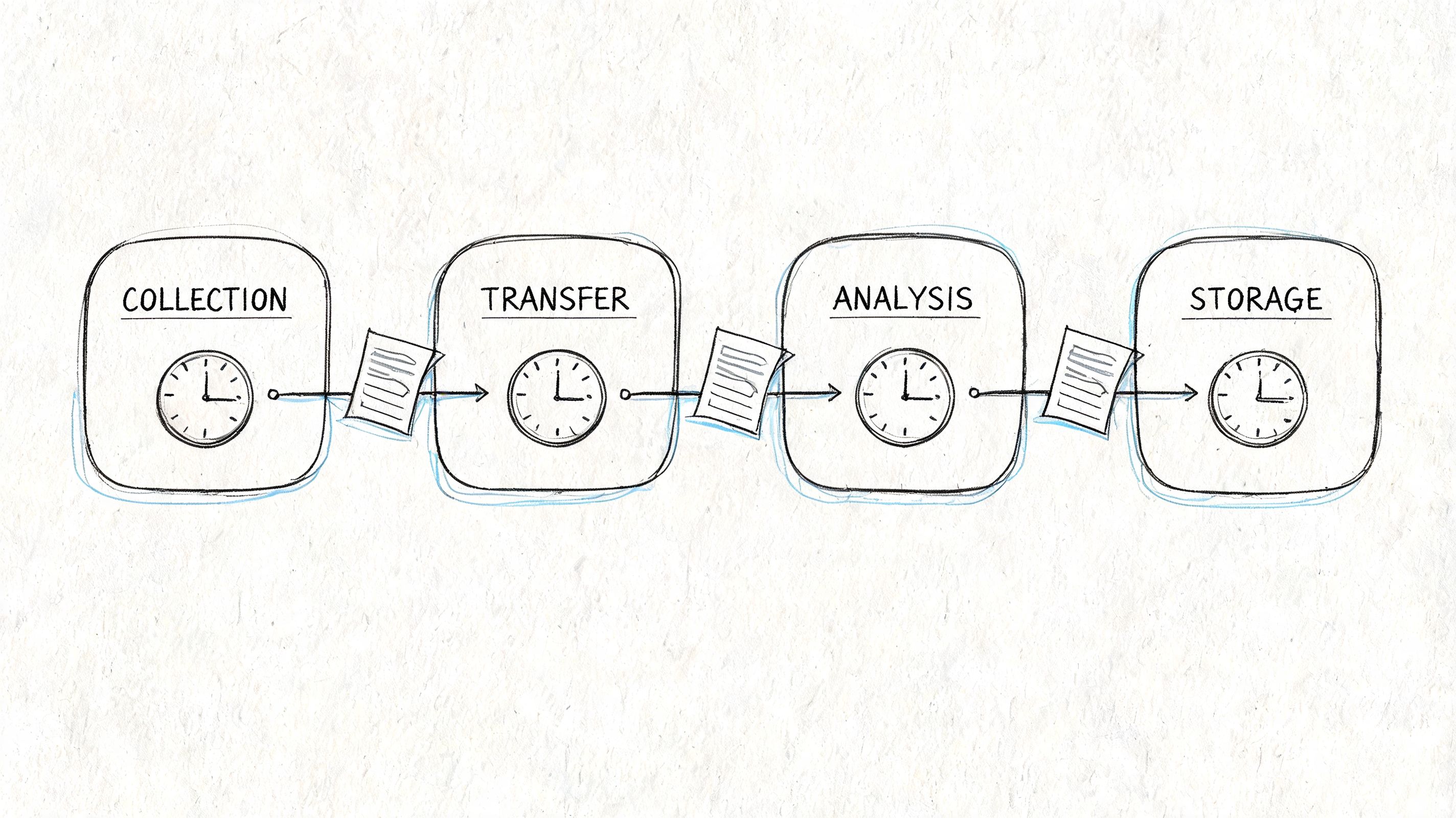
Some of the most important forensic work is administrative in appearance and absolutely critical in effect. Chain of custody is the documented history of who collected, labeled, transferred, received, stored, and analyzed a specimen or item of evidence. If that history is incomplete, the science may be challenged even when the underlying finding is sound.
Why this matters so much
A specimen doesn’t become reliable merely because it was tested. The court may also ask whether the specimen tested was in fact the right specimen, whether it was secure, and whether anyone can account for each transfer.
That is especially important in postmortem toxicology, retained tissue, slides, and photographs. A break in documentation creates room for argument. Sometimes that argument is decisive.
The steps that protect integrity
In practice, chain of custody should be visible and routine, not improvised.
Collection
Samples are identified at the time they are taken. Labels need to be clear and consistent with the case file.Transfer
Each handoff should be logged. That includes when a specimen leaves the autopsy setting and when a laboratory receives it.Analysis
The testing laboratory should be identifiable, and the relationship between the sample submitted and the result reported should remain clear.Storage and retention
Materials that may need later review should be stored according to protocol and documented so they can be retrieved if litigation follows.
What families and attorneys should ask for
You don’t need to manage the evidence yourself, but you should know what to request.
- Specimen documentation that shows what was collected
- Transfer records for anything sent out for toxicology or other testing
- Laboratory identification so the source of results is clear
- Retention information for slides, blocks, and other reviewable material
In Texas practice, coordination with the mortuary and laboratory side matters as much as the medical interpretation. That’s why some cases are handled through established pathology workflows connected to facilities such as Waterloo Mortuary Partnership, where logistics and documentation are built into the process from the outset.
When a Second Opinion Autopsy Is Your Path to Clarity
A family has a death certificate, a brief explanation, and the sense that the medical story is still incomplete. An attorney has a case with exposure, timing, or injury questions that the existing file does not answer. In that setting, a second opinion autopsy can bring the case back to the evidence.
From my work as a private forensic pathologist in Texas, the point is not to dispute an official conclusion for its own sake. The point is to test whether the conclusion is medically supported, whether the unanswered questions can still be answered, and whether the available findings will hold up if the case reaches deposition or trial. Sometimes the original opinion is confirmed. Sometimes it is narrowed. Sometimes the review shows that the initial record never addressed the key issue.
Situations where independent review is often appropriate
Certain patterns come up repeatedly in practice.
No full autopsy was performed
A limited external examination or sparse records may leave important medical and legal questions unresolved.The findings remain inconclusive
Cause of death, manner of death, or injury timing may still be uncertain after the initial investigation.The history and conclusion do not fit well together
Medical records, witness statements, scene facts, or injury patterns may point in different directions.Civil litigation needs a medical opinion that is better developed
Wrongful death, medical negligence, workplace fatality, and insurance disputes often turn on details that require a closer forensic review.
Independent review also matters because forensic opinions are only as useful as the methods behind them. Courts examine reliability. Attorneys do too. Families may not use that language, but they feel the problem immediately when the explanation they have does not match what they were told, what they observed, or what the records later show.
Independent review has the most value when it begins early, while records, specimens, imaging, and witness information are still available.
What a second opinion adds
A second opinion adds independent medical judgment grounded in documented findings. It can involve review of the body, histology, toxicology, imaging, scene information, medical records, and any prior autopsy report or photographs. In some cases, that process supports the original conclusion. In others, it changes the medical interpretation in a way that affects settlement value, pleading strategy, or whether a case should be filed at all.
That is the practical trade-off. A full private autopsy provides more direct information, but it must be arranged promptly and may not be necessary in every case. A records-based review is narrower, but it can still identify whether the existing opinion is medically sound or whether further examination is justified. Families and counsel who are weighing those options can review the process for a second opinion autopsy in Texas.
Timing often determines usefulness. Once a case hardens into fixed positions, the medical questions are harder to sort out cleanly. In my experience, the best second-opinion work happens before assumptions settle in, while the evidence can still be examined with discipline and without avoidable gaps.
Texas Autopsy Services is one available option for families, attorneys, and counties seeking independent postmortem review in Texas, including private autopsies, second opinions, and related forensic pathology services.
Your Questions About Private Autopsies in Texas
Can a private autopsy be used in a legal case
Yes, if the work is performed and documented in a way that meets legal standards. The report should identify findings, methods, and the basis for the opinions offered. Legal admissibility depends on the facts of the case and the governing court rules, so attorneys should review strategy early.
What does chain of custody mean in plain language
It means there is a written record showing where each specimen or evidentiary item has been from collection through testing and storage. If that record is incomplete, the other side may challenge whether the evidence remained reliable.
Do families in Texas have practical options if public systems are delayed
Often, yes. Public forensic systems in some areas face staffing and backlog problems. A review of rural forensic challenges reports that 70% of public forensic labs face staffing shortages, and that private pathology services may provide 2-4 week turnarounds, which can be important for families and legal matters, according to this analysis of forensic staffing and delays.
That doesn’t mean every case moves at the same pace. Timing depends on transport, records, toxicology, and whether additional consultation is needed. But private review can reduce the uncertainty that comes from waiting indefinitely.
What should an attorney gather before contacting a forensic pathologist
The most useful starting materials are usually:
- Medical records from the final hospitalization or recent treatment
- Scene information including investigative summaries or witness timelines
- Photographs and imaging when available
- Death certificate and prior autopsy materials if any exist
- Specific legal questions so the review is targeted
How do funeral homes and private autopsies work together
Coordination is usually straightforward when arranged early. The funeral home, transport provider, pathologist, and laboratory each have separate roles. Clear communication matters because delays often arise from paperwork, release authorization, or uncertainty about who is responsible for transfer and specimen handling.
Is a private autopsy only for criminal cases
No. Many requests arise from civil litigation, insurance disputes, hospital care concerns, occupational deaths, or a family’s need for a clear answer. The medical question may be the same even when the legal setting is very different.
Loss is difficult enough without unclear records or unanswered questions adding to the burden. Families and attorneys deserve plain communication, careful work, and honest limits.
If you need help understanding whether an independent review is appropriate, you can contact Texas Autopsy Services for a confidential discussion. I handle these conversations with the same approach I bring to the medical work itself: careful attention to facts, respect for the deceased, and clear guidance about what can and cannot be concluded.